Showing posts with label Blood Pressure Control. Show all posts

Monday, November 13, 2023


Fluctuating blood pressure: A warning sign for dementia and heart disease
blood pressure
Credit: Pixabay/CC0 Public Domain

A new study by Australian researchers has shown that fluctuating blood pressure can increase the risk of dementia and vascular problems in older people.

13 nov 2023--Short blood pressure (BP) fluctuations within 24 hours as well as over several days or weeks are linked with impaired cognition, say University of South Australia (UniSA) researchers who led the study.

Higher systolic BP variations (the top number that measures the pressure in arteries when a heart beats) are also linked with stiffening of the arteries, associated with heart disease.

The findings have been published in the journal Cerebral Circulation—Cognition and Behaviour.

Lead author Daria Gutteridge, a Ph.D. candidate based in UniSA's Cognitive Aging and Impairment Neuroscience Laboratory (CAIN), says it's well known that high blood pressure is a risk factor for dementia, but little attention is paid to fluctuating blood pressure.

"Clinical treatments focus on hypertension, while ignoring the variability of blood pressure," Gutteridge says.

"Blood pressure can fluctuate across different time frames—short and long—and this appears to heighten the risk of dementia and blood vessel health."

To help explore the mechanisms that link BP fluctuations with dementia, UniSA researchers recruited 70 healthy older adults aged 60–80 years, with no signs of dementia or cognitive impairment.

Their blood pressure was monitored, they completed a cognitive test, and their arterial stiffness in the brain and arteries was measured using transcranial doppler sonography and pulse wave analysis.

"We found that higher blood pressure variability within a day, as well as across days, was linked with reduced cognitive performance. We also found that higher blood pressure variations within the systolic BP were linked with higher blood vessel stiffness in the arteries.

"These results indicate that the different types of BP variability likely reflect different underlying biological mechanisms, and that systolic and diastolic blood pressure variation are both important for cognitive functioning in older adults."

The links were present in older adults without any clinically relevant cognitive impairment, meaning that BP variability could potentially serve as an early clinical marker or treatment target for cognitive impairment, the researchers say.

More information: D.S. Gutteridge et al, Cross-sectional associations between short and mid-term blood pressure variability, cognition, and vascular stiffness in older adults, Cerebral Circulation—Cognition and Behavior (2023). DOI: 10.1016/j.cccb.2023.100181

Tuesday, December 06, 2022


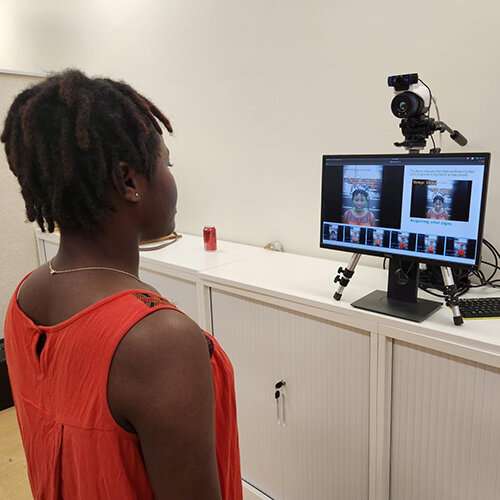
Checking blood pressure in a heartbeat, using artificial intelligence and a camera

Checking blood pressure in a heartbeat, using artificial intelligence and a camera
The new technology that demonstrates how a camera and artificial intelligence can be used to extract cardiac signals from a person's forehead. Credit: University of South Australia

Monitoring blood pressure using a digital camera could soon be the norm, thanks to an innovative technique demonstrated by Australian and Iraqi researchers.

05 dec 2022--Using the same remote-health technology they pioneered to monitor vital health signs from a distance, engineers from the University of South Australia and Baghdad's Middle Technical University have designed a non-contact system to accurately measure systolic and diastolic pressure.

It could replace the existing uncomfortable and cumbersome method of strapping an inflatable cuff to a patient's arm or wrist, the researchers claim.

In a new paper published in Inventions, the researchers describe the technique, which involves filming a person from a short distance for 10 seconds and extracting cardiac signals from two regions in the forehead, using artificial intelligence algorithms.

The systolic and diastolic readings were around 90% accurate, compared to the existing instrument (a digital sphygmomanometer) used to measure blood pressure, that is itself subject to errors.

Experiments were performed on 25 people with different skin tones and under changing light conditions, overcoming the limitations reported in previous studies.

"Monitoring blood pressure is essential to detect and manage cardiovascular diseases, the leading cause of global mortality, responsible for almost 18 million deaths in 2019," UniSA remote sensing engineer Professor Javaan Chahl says.

"Furthermore, in the past 30 years, the number of adults with hypertension has risen from 650 million to 1.28 billion worldwide.

"The health sector needs a system that can accurately measure blood pressure and assess cardiovascular risks when physical contact with patients is unsafe or difficult, such as during the recent COVID outbreak.

"If we can perfect this technique, it will help manage one of the most serious health challenges facing the world today," Prof Chahl says.

The cutting-edge technology has come a long way since 2017, when the UniSA and Iraqi research team demonstrated image-processing algorithms that could extract a human's heart rate from drone video.

In the past five years the researchers have developed algorithms to measure other vital signs, including breathing rates from 50 meters away, oxygen saturation, temperature, and jaundice in newborns.

Their non-contact technology was also deployed in the United States during the pandemic to monitor for signs of COVID-19 from a distance.

"Contactless blood pressure estimation system using a computer vision system" is published in Inventions.

More information: Ali Al-Naji et al, Contactless Blood Pressure Estimation System Using a Computer Vision System, Inventions (2022). DOI: 10.3390/inventions7030084
Provided by University of South Australia 

Tuesday, November 04, 2014

'Mild' control of systolic blood pressure in older adults is adequate: 150 is good enough

'Mild' control of systolic blood pressure in older adults is adequate: 150 is good enough
Blood pressure tests are quick and convenient, but can help prevent what's called the 'silent killer.' Credit: Amanda Mills, Centers for Disease Control

04 nov 2014--A broad review of the use of medications to reduce blood pressure has confirmed that "mild" control of systolic pressure is adequate for adults age 65 or older - in the elderly, there's no clear benefit to more aggressive use of medications to achieve a lower pressure.
Historically, most medical practitioners tried to achieve control of systolic pressure – the higher of the two blood pressure readings – to 140 or less. Recently changed guidelines now suggest that for adults over 60, keeping the systolic pressure at 150 or less is adequate, and this extensive analysis confirms that.
However, researchers also say in the report that more work needs to be done studying blood pressure in older populations, since most of the research, and the medical guidelines based on them, were done using predominately younger adults.
The review was just published in Drugs & Aging, a professional journal, by scientists from the College of Pharmacy at Oregon State University and Oregon Health & Science University.
"The goal of a systolic pressure at or below 140 has been around a long time, and there's still skepticism among some practitioners about accepting a higher blood pressure," said Leah Goeres, an OSU postdoctoral fellow and lead author on the publication.
"Keeping systolic blood pressure in older adults below 150 is important, it's what we consider a mild level of control," Goeres said. "But for older people that level is also good enough. After an extensive review, there was no significant evidence that more intensive management is necessary."
The issue about how low is low enough, researchers say, is important because blood pressure medications can have unwanted side effects that increase as higher dosages of medications are used. The problem is common – in the United States, about 70 percent of adults age 65 or older have hypertension, and millions of people take medication to control it.
One of the more significant side effects is what's called "orthostatic hypotension," a condition in which a person's blood pressure can suddenly fall when they rise or stand, making them feel light-headed or dizzy, and sometimes leading to dangerous falls. More than 30 percent of people over the age of 80 have this problem.
High blood pressure is a serious health concern, but also one of the most treatable with medication, if such things as diet, exercise, weight management or lifestyle change prove inadequate. Hypertension is often called the "silent killer" because it causes few obvious symptoms, but it weakens blood vessels and has been linked to higher levels of heart attacks, kidney disease and especially stroke.
"There's clearly a value to controlling blood pressure, enough to keep it at 150 or less," said David Lee, an OSU assistant professor of pharmacy practice. "Keeping blood pressure within acceptable levels will lower death rates. But as people get older, there's less clear evidence that stringent control of systolic blood pressure is as important."
The researchers said a goal for the future should be to do more studies specifically with older adult populations and try to identify health situations and conditions that might benefit from different types of management. Such "individualized" treatments, they said, would consider a person's entire health situation instead of treating them based on findings made with large groups.
In this study, the researchers did not find that one approach or another to lowering blood pressure stood out and was clearly better than other alternatives. A variety of medications can be used to treat the condition.
Provided by Oregon State University

Sunday, May 04, 2008

AHA Quality: Educating Patients and Providers Boosts BP Control

By John Gever
BALTIMORE, 05 may 2008-- More patients were able to control their hypertension after an education program targeting both patients and healthcare providers, a researcher said here.
Note that this study was published as an abstract and presented as a poster at a conference. These data and conclusions should be considered preliminary until published in a peer-reviewed journal.
In two Veterans Affairs hospitals and nine clinics where the program was implemented, the percentage of patients achieving their target blood pressure levels increased to 64.3%, versus 61.8% at baseline (P<0.0001), reported Christianne L. Roumie, M.D., M.P.H., of the VA Tennessee Valley Healthcare System in Nashville.
With 53,936 patients under treatment at these facilities during the study, the improvement translated into 1,349 additional people achieving blood pressure control, Dr. Roumie said in an interview prior to her presentation at the American Heart Association's Conference on Quality of Care and Outcomes Research in Cardiovascular Disease and Stroke.
She noted that hypertension is the most common chronic condition among patients treated in the VA health system.
The program had four components:
Standardizing blood pressure measurement procedures using a protocol to increase accuracy and improve documentation
Educating patients about achieving and maintaining adequate control
Developing and distributing pocket cards and posters for providers outlining VA-sanctioned treatment algorithms
Developing a review process for individual providers' and institutions' performance relative to program goals.
Patients' blood pressure measurements were obtained from the VA health system records.
Baseline data on 28,620 patients were collected for the 21 weeks before implementation of the program. The program's effectiveness was determined from data collected over 18 weeks, on the basis of 25,316 patients' last recorded blood pressure measurement.
Adequate control was defined as systolic pressure less than 140 mm Hg and diastolic pressure less than 90 mm Hg.
Dr. Roumie said there was wide variation among the participating facilities in how well the program worked.
One of the hospitals had an absolute improvement in the prevalence of adequate control from baseline of 2.8 percentage points (63.5% before versus 66.3% after, P=0.001), whereas the other hospital showed no improvement at all (59.9% before versus 59.7% after).
She said most of the team members who developed the program were based at the first hospital. "They may have had more ownership of the program," she said.
Only one of the team members worked at the second hospital, where more than 7,000 patients were treated, and other staff there were less enthusiastic about the program, Dr. Roumie said.
She said there was also significant variability in the success of the program among the nine outpatient clinics.
"One had a huge improvement, more than 7 percentage points," she said.
The prevalence of blood pressure control at the outpatient clinics overall increased 1.9 percentage points (61.9% before versus 63.7% after, P=0.053).
Dr. Roumie said the experience in this effort, as well as previous published research, indicates that dedicated and enthusiastic leaders are needed to make such programs work.
"You need champions of your cause," she said.
She said improvements of two or three percentage points are clinically important, given that hypertension is so common.
She also noted that these percentage points were gained at relatively little monetary cost.
No external funding was reported. No potential conflicts of interest were reported.
Primary source: AHA Quality of Care and Outcomes ConferenceSource reference:Not available until May 27

Tuesday, April 29, 2008

Tight Blood Pressure Control Fails to Stall Kidney Disease in Blacks

By Charles Bankhead ,
BALTIMORE, 29 April 2008 -- Many African Americans getting tight blood pressure control had worsening chronic kidney disease nonetheless, a large multicenter trial found.
During a 10-year follow-up, more than half the patients had deterioration of renal function, progression to end-stage renal disease, or they died, Lawrence J. Appel, M.D., of Johns Hopkins, and colleagues reported in the April 28 issue of Archives of Internal Medicine.
Neither the choice of antihypertensive medication nor a lower blood pressure target affected a patient's likelihood of disease progression.
"These results highlight the importance of preventing initial kidney damage, the critical need to identify modifiable risk factors, and the requirement to test promising therapies at the earliest stages of [chronic kidney disease]," the authors concluded.
The findings came from an extension phase of the African American Study of Kidney Disease and Hypertension (AASK) study. The primary findings of the study were that treatment with an ACE inhibitor reduced the risk of death or progression of kidney disease by 48% compared with a calcium-channel blocker and by 22% compared with a beta-blocker.
Upon completion of the AASK trial, participants were invited to enroll in a cohort study to evaluate the use of therapy targeting the renin-angiotensin system (ACE inhibitors or angiotensin receptor blockers) to treat blood pressure to a target of 130/80 mm Hg. The study involved 1,094 original participants in the AASK trial, all with hypertensive chronic kidney disease. They were followed from 2002 to 2007, and the primary endpoint was the same composite used in the primary trial.
Use of an ACE inhibitor or ARB ranged from 83.7% to 89% during each year of the cohort study, and mean blood pressure during the follow-up study was 133/78 mm Hg.
More than half the patients (567 of 1,094) reached the endpoint during follow-up, resulting in a 10-year cumulative incidence of 53.9%. Among 567 participants with at least seven years of follow-up, 33.5% had a slow decline in kidney function, defined by a mean annual decline in estimated glomerular filtration rate of less than 1 mL/min/1.73 m2.
Acknowledging that the data paint a "sobering picture," the authors emphasized that the findings "do not alter current recommendations for use of [ACE inhibitors or ARBs] and a low blood pressure goal in persons with hypertensive chronic kidney disease. The rate of chronic kidney disease progression would likely have been even greater without renin-angiotensin sysem-blocking therapy."
The authors suggested several strategies to manage modifiable risk factors early in the course of hypertensive kidney disease: nocturnal blood pressure control, aldosterone blockade, combined ACE inhibitor-ARB therapy, fish oil supplementation, bicarbonate therapy, and sodium restriction.
"There are a lot of ideas but none of them has been adequately tested," Dr. Appel said in an interview. "It's hard to say whether there is any blockbuster treatment that is about ready to take off. I don't see one at this point."
In the meantime, clinicians should continue treating patients with hypertensive kidney disease to a low blood pressure target, he added. The means using three or four drugs, if necessary, and frequent blood pressure monitoring in the office or clinic.

Primary source: Archives of Internal MedicineSource reference:Appel LJ, et al "Long-term effects of renin-angiotensin system-blocking therapy and a low blood pressure goal on progression of hypertensive chronic kidney disease in African Americans" Arch Intern Med 2008; 168: 832-839.