Showing posts with label Palliative Care. Show all posts

Saturday, April 10, 2021


How specialist palliative care services around the world coped in response to COVID-19

care home
Credit: Pixabay/CC0 Public Domain

Specialist palliative care services have been flexible, highly adaptive and have embraced a low-cost "frugal innovation" model in response to the COVID-19 pandemic say researchers.

10 appril 2021--The CovPall study, published in Palliative Medicine, is a collaborative project between Lancaster University, Cicely Saunders Institute at King's College London, Hull York Medical School and the University of York.

It aims to understand the multinational specialist palliative care response to COVID-19 through an online survey of more than 450 hospice and specialist palliative care providers throughout the world.

Lesley Dunleavy, Professor Catherine Walshe and Professor Nancy Preston from the International Observatory on End of Life care at Lancaster University led on mapping and analyzing the types of innovations and practice changes made by specialist palliative care services in response to the pandemic.

Examples included:

  • creating a single point of access for patients, family carers and health care professionals,
  • using communication technology to provide clinical care
  • developing COVID-19 symptom control guidelines and providing training in end of life care.

Services reported a number of challenges and concerns when responding to the pandemic that included working within a climate of heightened fear and anxiety, a lack of IT infrastructure, how to sustain out of hours cover without adequate funding and how to keep abreast of the ever-changing situation. There was evidence that services sometimes duplicated guideline and policy development.

The study highlighted that specialist palliative care services need better financial support but also need to build organizational resilience and drive forward innovation through greater collaboration to manage the impact of the COVID 19 pandemic or any future crisis.

Lesley Dunleavy, Senior Research Associate and lead author said: "Services have demonstrated considerable flexibility and adaptability in response to the COVID-19 pandemic and have played an important role in the crisis, but going forward greater financial support as well national and international collaboration is needed to manage the impact of this and any future crisis."


More information: Lesley Dunleavy et al. 'Necessity is the mother of invention': Specialist palliative care service innovation and practice change in response to COVID-19. Results from a multinational survey (CovPall), Palliative Medicine (2021). DOI: 10.1177/02692163211000660
Provided by Lancaster University 

Wednesday, April 08, 2020

COVID-19: Evidence-based advice for health workers having difficult conversations about end of life

A Loughborough University academic is providing guidance to clinicians who are likely to be having—and training people who will have—difficult conversations with patients suffering from COVID-19 or those closest to them.
08 april 2020--Professor Ruth Parry, an expert in healthcare communication and interaction, has outlined a series of evidence-based principles with the help of her Loughborough colleague Becky Whittaker, Sharan Watson, of the University of Derby, and Dr. Ruth England, of Royal Derby Hospital.
The team shared the recommendations with NHS Health Education England and these have been used to develop a series of open access resources that aim to support healthcare staff who will be having difficult conversations in relation to the coronavirus.
The principles, which have also been added to the International Association for Hospice and Palliative Care's COVID-19 resources list*, are based on research by Professor Parry and other communication scientists worldwide who have recorded and analysed thousands of difficult conversations across various health and social care settings in the UK, Australia, Japan, and the US.‌‌
Professor Parry, who receives funding from the National Institute for Health Research (NIHR), says her guidance steers away from providing recommended phrases or scripts as it is important to equip health workers with the tools to communicate flexibly according to individual circumstances.
Having a conversation by phone, conversations where the staff member who is to do the talking is wearing PPE (Personal Protection Equipment), and conversations with people who have varying degrees of knowledge and distress are all examples of circumstances that can impact how a conversation should be constructed.
What's more, Professor Parry says giving difficult news over the phone or when wearing Personal Protection Equipment are circumstances that staff would normally want to avoid—in normal circumstances, the health services strive to ensure that these difficult conversations are led by highly experienced professionals, face-to-face, and in calm environments.
Professor Parry has divided her advice into key areas. They include (with a brief overview of what they cover):
Prepare yourself and the environment as best you can
Health workers should clarify in their mind what they want to say and why, and find a comfortable and private setting, as best they can.
Start the conversation with 'signposting'
Conversations should be started by giving the person on the receiving end an outline of what will follow—for instance, if it is an update, and/or that there is a decision to be made.
How to show compassion and empathy throughout
This can be portrayed through tone of voice, phrases that attend to emotion, and showing understanding without claiming one can possibly fully understand how the person on the receiving end is feeling.
What does the person you are talking to know, expect, and feel?
Health workers should find out what the person they are talking to already knows and how they feel about it as this will help them fit what they go on to say to the individual person they are talking to.
Are they with someone, can they talk to someone afterward?
If this is a phone call, finding out who is with a person or who they could talk to afterward is important, says Professor Parry, but this question should not be asked right at the start of a conversation as it could easily be heard as very bad news. Even when there is very bad news to come, building toward it gradually is better than clearly signalling it from the start; a gradual move toward the news reduces the risk of sending the person on the receiving end into severe shock.
Bring the person (further) toward an understanding of the situation—how things are, what has happened or is likely to happen
Professor Parry's advice is to describe some of the things that are wrong with the unwell person, in such a way that the person speaking is forecasting that bad news is going to come. The point is to bring about gradual recognition, rather than shock.
Dealing with crying
Deliveries should be modified to be softer and more lilting if this happens. Speakers should allow silence, repeat brief further sympathy – "I'm so sorry," and acknowledge the distress before moving on and giving more information
Moving toward the end of the conversation with 'screening' – 'are there things you would like to ask, that I have not said, or explained enough?"
Phrases like 'anything else' should be avoided because, in some circumstances, this can be interpreted as the speaker not expecting there to be anything else. Offering "Are there things I have not covered or explained enough?" removes the implication that the person has not understood things.
Moving toward the end of the conversation with words of comfort and attention to what happens next
If possible, health workers should try to deliver something that is of comfort and that they can say truthfully, says Professor Parry. They should also explain what happens next, advise who the person they are talking to can contact for support and, if necessary, explain how pain or other symptoms will be controlled.
Professor Parry has also provided advice to help somewhat reduce the emotional burden on the healthcare worker—for example, she recommends they find someone to debrief with before and after a difficult conversation.
Of the importance of the guidance and what she hopes it will achieve, Professor Parry said: "Healthcare workers are now having to have break bad news and have difficult conversations on an unprecedented scale.
"The kind of research I do makes it possible to pin down, to articulate, precisely how skilled, compassionate healthcare staff communicate, and pass this on to others.
"I hope that our guidance will help all staff having to break bad COVID-19 news to patients or their loved ones, to feel confident and able to communicate well, whilst looking after their own wellbeing."

More information: The full guidance document: www.realtalktraining.co.uk/app … -conversations-2.pdf
Provided by Loughborough University 

Friday, December 20, 2019

Research finds that just 14% of people in the world have access to palliative care

Research finds that just 14% of people in the world have access to palliative care
Credit: University of Glasgow
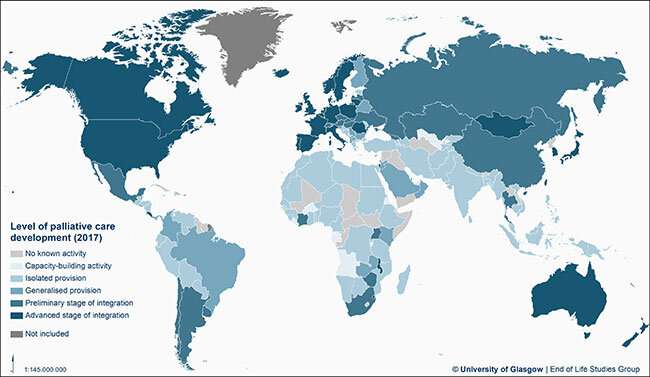
Just 14 percent of people in the world population have access to palliative care services that allow people to die with dignity and alleviate their suffering, according to new research led by the University of Glasgow.
20 dec 2019--And more than half of the world's population – mainly in low and middle-income countries – have very poor or non-existent access to palliative care.
The delivery of palliative care is now seen as a global health issue - but the new study shows that palliative care services are lagging behind the rapidly growing need for specialised care that can relieve suffering at the end of life.
Led by Professor David Clark at the University of Glasgow, the study found that only 30 countries from 198 in the world have sophisticated levels of palliative care provision that are fully integrated into the health and social care system, covering just 14 percent of the global population.
Study collaborator Professor Carlos Centeno, of the University of Navarra in Spain, added: "Our research shows how much there is still is to do in this field. It is time to demand from policy-makers greater efforts to improve access to palliative care education and training for professionals and to incorporate palliative care into national health systems."
With an 87 percent increase predicted by 2060 in serious health-related suffering that can be relieved by palliative care services, the study calls for a major review of global policies to promote palliative care.
Study collaborator and Chief Executive of the Worldwide Hospice and Palliative Care Alliance Dr Stephen Connor said: "The 2014 World Health Assembly resolution calling for the strengthening of palliative care in all countries is not being realised and millions of patients and families are suffering unnecessarily due to the slow progress in global palliative care development."
Professor Clark said the research team had significantly improved the methods for conducting this study when compared to its two previous versions, incorporating appropriate indicators of palliative care development drawn from the recent literature and using a more transparent, statistically justified algorithm for the analysis.
"This is the most robust analysis to date of the level of palliative care development in almost all countries of the world. We categorise each country into one of six levels of development, show how many countries are now at each level, and also map these onto the proportions of the global population in each category - revealing that half the global population has little access to specialised palliative care," he added.
Policy-makers, activists and third-party funders involved in palliative care are acutely aware of the limited evidence that exists about development in the field, particularly in low and middle-income countries, said Professor Clark.
The World Health Assembly has endorsed the need for all countries to develop national strategies for palliative care provision. The research team's analysis of 198 countries in 2017 casts some doubt, however, on the effectiveness of recent global strategies.
"It provides powerful evidence for a renewed focus on palliative care development and implementation, building on the infrastructure we have identified, if the growing levels of health-related suffering at the end of life are to be addressed," he concluded.

Provided by University of Glasgow 

Tuesday, April 09, 2019

Alzheimer’s Disease as a Model for Palliative Care


By Claudia Burlá, MD, PhD


Dementia is a model disease for palliative care, which should begin at the time of diagnosis.
Worldwide, the age group increasing the most is that of people aged 60 and over, which is growing at a rate of 3% a year and currently accounts for 13% of the world’s population1.
As populations age, the pattern of diseases that people suffer from and die of also changes. Increasingly, more people die as a result of serious chronic and degenerative conditions than from acute diseases. A typical condition for which age is a risk factor is dementia. Dementia is a syndrome, usually of a chronic and progressive nature, caused by a variety of brain illnesses that affect memory, thinking, behavior, and the ability to perform everyday activities. Therefore, dementia is one of the major causes of disability and dependency among older persons worldwide, posing an increasingly heavy burden on family members and caregivers throughout the course of the disease until the death of the patient.
A major achievement of humankind has been the increase of life expectancy. Advances in medical technology, improvement of living conditions, and greater access to health care services (such as vaccination) have resulted in a change from high fertility and high mortality rates to one of low fertility and low mortality. It is the triumph of life over time.

1 new case diagnosed every 3 seconds

Over time, the pattern of diseases that people suffer from and die of also changes. Nearly 10 million people develop dementia each year (an average of one new case every three seconds)2,4. The number of people currently living with dementia worldwide is estimated at 50 million; Alzheimer’s disease is the most common form of dementia, accounting for approximately 60% to 70% of cases4.

A major cause of global deaths
Risk factors for the development of dementia include ageing, midlife hypertension, poor formal education, diabetes mellitus, tobacco use, physical inactivity, obesity, unbalanced diets, excessive use of alcohol, mid-life depression, social isolation, and cognitive inactivity.
Dementia rose swiftly to become the fifth leading cause of global mortality in 2016, more than doubling since 20003.
According to the 2018 IAHPC definition of palliative care, palliative care is the active holistic care of individuals across all ages with serious health-related suffering due to severe illness, and especially of those near the end of life. It aims to improve the quality of life of patients, their families and their caregivers, and addresses the need to provide support to the family and the caregivers during the patient’s illness, and in their own bereavement.

PC as part of the continuum of care

Palliative care should be applied as a continuum, in step with other treatments pertaining to the case, based on the diagnosis of an incurable and progressive illness. Considering that dementia is incurable from the time of diagnosis, albeit available therapies aimed at slowing the rate of progression — it may take years until death — and managing related symptoms, it is a model disease for palliative care, which should begin at the time of diagnosis. Palliative care is, indeed, the necessary therapeutic approach to persons with dementia evolving towards the end of life.

References
  1. United Nations, Department of Economic and Social Affairs, Population Division. 2017. World Population Ageing 2017 (ST/ESA/SER.A/408).
  2. Alzheimer’s Disease International (ADI). London, 2018. World Alzheimer Report 2018. Accessed online on March 17, 2019.
  3. World Health Organization. Fact Sheet, May 2018. The Top 10 Causes of Death.
  4. World Health Organization. December 2017. Dementia: Key Facts.

Saturday, March 02, 2019

Polypharmacy decreases quality of life for palliative care patients

Fifteen percent of adults in the United States take more than five prescription drugs each day and 39 percent of older adults are prescribed five or more daily medications.
02 mar 2019--New research from the University of Pittsburgh School of Medicine suggests that taking a large number of medications – 'polypharmacy' – isn't just expensive and burdensome to remember, but it's also associated with a worse quality of life for patients with advanced illness. The study is published this month in the Journal of General Internal Medicine.
"Polypharmacy is most common in patients with advanced illness," explained Yael Schenker, M.D., M.A.S., director of palliative care research at Pitt and lead author of the study. "Patients with advanced illness often experience what is called a 'prescribing cascade' when the side effects of drugs result in more prescriptions."
The study analyzed data from a large, multi-center randomized clinical trial conducted by the Palliative Care Research Cooperative Group. It included 372 participants with life-limiting illnesses and assessed their medication regimen, both prescribed and over-the-counter, as well as their quality of life and symptom burden—including depression, nausea, fatigue and pain. Nearly half of participants were over age 75 and about one-third were enrolled in hospice care.
Schenker and colleagues placed study participants into three equal groups: low (taking 0-8 medications), medium (taking 9-13 medications) and high (taking more than 14 medications). The researchers then compared patient-reported quality of life and symptom burden by medication consumption.
Patients taking more daily medications had a lower quality of life and higher symptom burden than those who took fewer medications per day, and this trend held up even considering that patients on more medications also were likely more ill. The results also suggested that poor quality of life associated with polypharmacy may be related to medication-associated symptoms.
Schenker suggests that all clinicians caring for older or seriously ill patients should learn targeted approaches to deprescribing—appropriately withdrawing medications to reduce the number of total medications a patient takes. Schenker also recommends that clinicians discuss options with their patients to determine their preferences, particularly when the trade-off between risks and benefits is uncertain.
"We were not completely surprised by the results," Schenker said. "We've known for a while that polypharmacy is a burden for patients near the end of life, and the study confirms the importance of addressing appropriate  use and developing systematic approaches to deprescribing."

More information: Yael Schenker et al. Associations Between Polypharmacy, Symptom Burden, and Quality of Life in Patients with Advanced, Life-Limiting Illness, Journal of General Internal Medicine(2019). DOI: 10.1007/s11606-019-04837-7
Provided by University of Pittsburgh

Sunday, December 17, 2017

ESMO publishes new position paper on supportive and palliative care

ESMO, the leading professional organisation for medical oncology, published a position paper on supportive and palliative care in its leading scientific journal, Annals of Oncology today.

17 dec 2017--Taking stock of new evidence in the field and building on previous ESMO statements and dedicated Clinical Practice Guidelines, ESMO is calling attention to the evolving and growing gap between the needs of cancer patients and the actual provision of patient centred care, from the time of diagnosis, including supportive, palliative, end-of-life and survivorship care.
"New studies in the field of supportive and palliative care show that there may be a gap between what doctors think is important or disturbing for patients, and what patients really need. With this new position paper, we wanted to call attention to the fact that, as well as anti-tumour treatment, cancer patients need physical, psychological, social, and spiritual support, at every stage of the disease, from diagnosis. We refer to this as patient centred care," said Dr Karin Jordan, Department of Medicine V, Haematology, Oncology and Rheumatology, University of Heidelberg, Germany, ESMO Faculty Coordinator for Supportive and Palliative Care, ESMO Clinical Practice Guidelines subject editor for the supportive care section, as well as main author of the paper. Jordan continued: "Patients must 'set the tone' in supportive and palliative care. We need to make it easy for them to tell us how they feel, what they need and, of course, allow them to be fully involved in decision-making if we are to provide optimal patient centred care."
"The concept of patient centred cancer care is described in this paper (encompassing both supportive and palliative care), along with key requisites and areas for further work. We chose this term because we believe in a continuum of care focused on alleviating patients' physical symptoms and psychological concerns," explained Jordan.
Dr Matti Aapro, Cancer Centre, Clinique de Genolier, Switzerland, co-author of the position paper, ESMO Faculty member, Past-president of the Multinational Association of Supportive Care in Cancer (MASCC), said: "Recent studies show that palliative and supportive care not only improves treatment, it also contributes to better use of existing resources, avoids waste and may ultimately also reduce the cost of treatment."
The ESMO Position Paper states that individual cancer patients will express different physical, psychological, social, existential and spiritual needs at different stages of the disease, that will often evolve over time. Therefore, patient centred care cannot be standardised, even though it is provided through a standard framework. To ensure that patients can voice their needs, oncologists should incorporate detailed and routine physical and psychological assessments allowing for supportive and palliative interventions to be personalised and integrated in the continuum of care. Patient reported outcomes (PROs) should be highly encouraged as requesting them has shown to be associated with better quality of life, fewer hospitalisations and even increased survival compared with usual care.
"A cancer diagnosis, the disease itself and the effects of anticancer treatment are major stress factors for patients. Around 14 million people are diagnosed with cancer around the world every year (6)," explained Jordan. "Over the last decade clinicians have accepted that, while survival and disease-free survival are both fundamental factors, overall quality of life is also crucial for patients."
"Patient centred interventions should be routinely discussed and evaluated by the multidisciplinary team (supervised by the oncologist) together with tumour directed treatment," said Jordan. "Of course, patient preferences and cultural specificities should be respected."
"We hope that this paper will contribute to develop a generalised culture and acceptance of supportive and palliative care, worldwide," said Aapro. "Basic patient needs such as pain relief are still not being widely met (7). Education is vital to make sure that essential supportive care is accessible to all cancer patients, everywhere. Quoting Dorothy Keefe, past MASCC president, I would say: 'supportive care makes excellent cancer care possible'."
"ESMO is committed to increasing awareness and education to bring patient centred care closer to all professionals; to improving collaboration between healthcare providers for the good of patients; and to promoting research, so that patient centred interventions are not only integrated, but also based on the best evidence," said Andrés Cervantes, Chair of the ESMO Educational Committee.
"Despite growing awareness of the need to develop patient centred care and recent progress in the field, more and better scientific evidence is required so that effective interventions can be proposed to cancer patients at each stage of their illness," said Jordan.
"This paper is important because it takes ESMO's long standing interest in supportive and palliative care - shown, for example in its Designated Centres of Integrated Oncology and Palliative Care accreditation programme (8) - a step further. Developments since the last ESMO position statement in supportive and palliative care in 2003 show that, not only do these interventions improve patient's quality of life (QoL), but also overall outcomes."
"ESMO appeals to health authorities in Europe and beyond to ensure that cancer patients have equal access to the best possible patient centred cancer care that resources allow," concludes Jordan. "This is a medical and ethical imperative."
The ESMO position paper includes chapters on:
  • Key patient centred care interventions
  • End of life care
  • Need for specific training in patient centred care
  • The role of multidisciplinary teams
  • Integrating healthcare resources
  • Research needs and resources in supportive and palliative care
More information: K Jordan et al, European Society for Medical Oncology (ESMO) position paper on supportive and palliative care, Annals of Oncology (2017). DOI: 10.1093/annonc/mdx757
N. I. Cherny. ESMO takes a stand on supportive and palliative care, Annals of Oncology (2003). DOI: 10.1093/annonc/mdg379


Provided by European Society for Medical Oncology

Sunday, November 06, 2016

ASCO updates guidelines on integration of palliative care


ASCO updates guidelines on integration of palliative care
The American Society of Clinical Oncology Clinical Practice Guideline on the integration of palliative care into standard oncology care has been updated. The update was published online Oct. 28 in the Journal of Clinical Oncology.

06 nov 2016--Betty R. Ferrell, Ph.D., from City of Hope Medical Center in Duarte, Calif., and colleagues updated the 2012 American Society of Clinical Oncology provisional clinical opinion on the integration of palliative care into standard oncology care. An expert panel was convened to develop an update; members of the panel conducted an updated systematic review of randomized clinical trials, systematic reviews, and meta-analyses, as well as secondary analyses of randomized controlled trials in the 2012 provisional clinical opinion.
The authors note that early in the course of disease, inpatients and outpatients with advanced cancer should receive palliative care services concurrent with active treatment. Ideally, patients should be referred to interdisciplinary palliative care teams, and services may complement existing programs. Family and friend caregivers of patients with early or advanced cancer may be referred to palliative care services.
"To enhance and strengthen the evidence base on palliative care, the dissemination of research results, and the quality and equity of palliative care, more research is needed," the authors write.
Several authors disclosed financial ties to the pharmaceutical industry.

More information: Full Text

Tuesday, April 19, 2016

Palliative care viewed as a stigma, despite improving quality of life

The term palliative care carries a stigma for patients and their caregivers, who regard it as synonymous with impending death. Education, and possibly a name change, will be necessary to be able to integrate palliative care into routine advanced cancer care, according to new research in CMAJ (Canadian Medical Association Journal).

19 april 2016--Palliative care is designed to improve the quality of life of patients with a serious illness and their families. The World Health Organization and all major national and international cancer societies encourage early access to palliative care. Research indicates that for people with advanced cancer, early palliative care benefits both physical and mental health and can even extend life.
However, a new study found that even patients who have benefited from early palliative care feel stigmatized because they see it as being associated with the end of life.
The study, conducted at Princess Margaret Cancer Centre, Toronto, Ontario, included 71 participants (48 patients and 23 caregivers) in a randomized clinical trial of early palliative care versus standard cancer care. Of the participants, 40 had received early referral to palliative care (in addition to standard cancer care), and 31 had received standard cancer care alone. Participants had cancers from the five most common types: lung, gastrointestinal, genitourinary, breast and gynecologic, and had an estimated survival (by their oncologist) of 6-24 months. At the end of the trial, researchers interviewed the 71 patients and caregivers about their attitudes and perceptions to palliative care.
"Patients with advanced cancer and their caregivers described palliative care as carrying a negative stigma associated with death and with care at the very end of life, which provoked fear and avoidance," writes Dr. Camilla Zimmermann, Princess Margaret Cancer Centre, University Health Network, Toronto, and her coauthors. "Participants' perceptions often originated from interactions with health care professionals."
"A prominent theme was that palliative care should be explicitly rebranded," the researchers found, with participants suggesting public education, better explanation by health care professionals and routine involvement of palliative care at cancer diagnosis to break down stigma.
The authors suggest that the study has implications for clinical practice and health care policy.
"[Our findings show that] the persistence of the definition of palliative care as end-of-life care in the minds of patients and their caregivers, despite an international change in that definition more than a decade ago," write the authors. "A name change may be considered, but would achieve nothing without a fundamental shift in the manner in which palliative care is practised and portrayed."
The authors caution that the way in which physicians inform patients and their caregivers about palliative care has a major impact on how it is perceived. Many health care professionals still suggest palliative care as a final option or as an alternative to further treatment.
In a related commentary, Dr. Anthony Caprio, Department of Family Medicine, Carolinas HealthCare System, Charlotte, North Carolina, writes that the study shows that "patients and caregivers view health care professionals as having an important role in explaining and recommending palliative care. Although changing the name to supportive care may help promote a more positive view of palliative care, the stigma will persist if this type of care is recommended only as default treatment when curative or life-prolonging treatments are deemed ineffective or undesired."
Palliative care should begin at diagnosis and continue throughout cancer care, regardless of prognosis.

More information: Canadian Medical Association 

Journal, www.cmaj.ca/lookup/doi/10.1503/cmaj.151171
Canadian Medical Association Journal, www.cmaj.ca/lookup/doi/10.1503/cmaj.160206

Provided by Canadian Medical Association Journal

Friday, December 04, 2015

Palliative care specialist explains how end-of-life conversations help families and patients alike

In the late 1990s, Dawn M. Gross was headed for a prominent career in immunology. As a dual M.D./Ph.D. candidate at Tufts School of Medicine, she worked with scientists Allen Steere and Brigitte Huber and was the sole student researcher on a scientific breakthrough that identified the precise cause of an autoimmune reaction in the joints of patients with arthritis due to Lyme disease.

04 dec 2015--Then Gross' career took a sharp turn. During medical school, she found herself drawn to patients undergoing bone marrow transplants, an arduous and risky procedure. The candid discussions she had with them led her to think about death and dying, and she found working with these patients immensely rewarding.
She decided to become a practicing physician after receiving her M.D. and Ph.D. in 2000. Now she is the attending physician in the palliative care service at the University of California, San Francisco School of Medicine and a member of the board of directors of the Zen Hospice Project. She is also working on a book about the end of life.
She has written extensively about death and dying, and urges her patients to have frank talks with family and friends about the issue. She's spreading the word. The New York Times published an essay of hers this summer in which she encouraged doctors to find out what their patients' end-of-life wishes are.
She spoke to Tufts Now about why she changed careers, and what she thinks people should do to prepare for their deaths.
Tufts Now: Why did you make the change from research scientist to physician?
Dawn Gross: I didn't envision myself being a practicing physician. I was going to be a scientist, a lab rat. I was very focused and very curious as a scientist, and as I was approaching my fourth year of medical school, I was looking for a match between my science background and my interest in medicine. My husband, who had already finished medical school and knew me well, introduced me to bone marrow transplants, which are complicated and intense. The science was there, and it's an utterly amazing process involving immunology.
What was your experience during the transplant rotation?
It blew me away. I was with people who had the most profound courage I had ever seen in my life. For the most part, they seemed to be really aware of the life-threatening illness they had been diagnosed with, and they knew they were undergoing a risky procedure to treat it. And furthermore, they were in the hospital, isolated for a long time because of the nature of how transplants were done at that time. You would see the same people in the same room for weeks, if not months, at a time; they couldn't even leave their room and were in complete isolation.
How did this affect your career choice?
The level of trust and courage and the intensity of those relationships were unlike anything I had seen in medicine. I did not expect that. What surprised me, and what I can't really explain, is my gravitation toward conversations I now realize are called "goals of care." I found myself becoming a black sheep in the field. I started to have conversations with my patients that I'd never seen anyone have.
What were you doing that was different from other physicians?
I would ask people why they wanted chemo or a transplant instead of assuming they did, and talk to them about what it meant, and make sure they really knew. With a transplant, you may never go home again. The way the immune system works is to recognize things that don't belong in your body. No matter how close the match, the body is good at picking up what's different. No matter how hard we try to quiet the immune system, the body can ultimately reject the transplant and kill you. So I became interested in people and how they make these choices. My colleagues weren't having these conversations.
Can you give an example of these conversations?
One husband and wife in particular clearly hadn't talked about it. The husband asked if it would be possible to have his wife, who was undergoing chemo, be admitted to the hospital when the time came for her to die, because he didn't want her to die at home. I looked at the wife and asked her in front of him, "Have you thought about where you would like to die?" He was shocked that I asked the question, and he tried to answer for her. But she said, "I want to die at home." They had never talked about it. It was an epiphany for me to watch this couple listen to each other for the first time, simply because I wasn't afraid to ask this question in front of them.
What else influenced your career change?
At the same time I was talking to people who were dying, my father was relapsing from cancer, and was entering the last six months of his life. I started to have conversations with him and he told me he didn't want any heroic measures taken. While he was in his last six months of life he taught me how to ask questions about what he needed versus what he wanted. He ultimately requested hospice from his primary care physician four days before he died. I still had not learned how to recognize that as an option and therefore had no ability to offer or suggest it even though I knew he was dying.
At the same time, I began to notice how much I actually—and unexpectedly—enjoyed being a clinician and particularly how much I liked having end-of-life conversations that can make a profound difference for people in the moment, which was very different from working in the lab on a question that will likely take years to resolve. It's a time when people are their most authentic. What's essential becomes paramount, and everything else falls away.
How are you getting the word out about that?
I'm writing a book about end-of-life care. It's a collection of true stories about patients I have been honored to care for as well as stories from the last six months of my father's life. I am also creating a live radio program as another way to invite people to engage in these conversations. Everyone has a unique life, and each story is a perspective that allows all of us to find resonance in our own lives, to see we are not alone here. These conversations may seem scary, but they give us our lives, the legacy we give to our families and those we love.
What do you want people to know?
There are ways to approach the end of life that don't have to be scary or taboo. The legacy we leave people by not having conversations is damaging, creating a burden on families for the rest of their lives, wondering if they did the right thing, wondering if they should have done something else.
Having conversations with people when we are healthy and not in crisis is what gives life meaning. It's not about death at all; it's about what's extraordinary. What's amazing is when people start telling their stories, they are the deepest, richest, most gratifying stories.
What can people do who have trouble talking about end of life?
My favorite tool is a deck of cards called "Go Wish" that facilitates this conversation. The cards have simple phrases that ask people what they want, such as "to be with my family," "to maintain my sense of humor," "to have my finances in order." People then ask questions based on the cards. By being curious, we invite the stories of our lives to be shared. This isn't ultimately about what you want when you die, it is actually about what matters most while you are alive.
For example, one of my favorite cards is "to have family with me." But the next question would be, "Who is family? Do you want them in the house? In your room? Do you want them 24/7? Do you want everyone at once?" You get really specific, and, importantly, it's not a one-time thing that you write down and you're done. It's a lifelong conversation when we are well, because our priorities change. Your life is not static, so what matters changes.
I often tell people death is for the living. I never had anyone tell me how it went for them, but I sure as heck know how it went for those who are still here, and that's what they live with for the rest of their lives.


Provided by Tufts University
Wednesday, October 07, 2015

Britain tops world 'Quality of Death' index

Britain topped an 80-country "quality of death" study released Tuesday, which warned that ageing and booming populations would make palliative care a growing worldwide issue.
The 2015 Quality of Death Index, compiled by the London-based Economist Intelligence Unit, found Britain to be the best at palliative care.

07 oct 2015--"Its ranking is due to comprehensive national policies, the extensive integration of palliative care into the National Health Service, a strong hospice movement, and deep community engagement on the issue," the EIU said.
Britain was followed by Australia, New Zealand, Ireland, Belgium and Taiwan.
Palliative care provision was found to be worst in Iraq among the 80 countries studied, with Bangladesh, the Philippines, Nigeria and Myanmar rounding out the bottom five.
The report praised progress made by less wealthy states.
"Many developing countries are still unable to provide basic pain management due to limitations in staff and basic infrastructure," it said.
"Yet some countries with lower income levels demonstrate the power of innovation and individual initiative."
It said Panama (31st) was building palliative care into its primary care services, Mongolia (28th) had seen rapid growth in hospice facilities, while Uganda (35th) had made impressive advances in the availability of opioid painkillers.
China (71st) was found to be among the most vulnerable from population ageing and rising incidences of conditions such as cardiovascular disease.
"The adoption of palliative care in China has been slow, with a curative approach dominating healthcare strategies," the study found.
"Many other developing countries will also need to work hard to meet rising future need as the incidence of non-communicable disease increases and their populations grow older," the report said.
The study found that income levels correlated strongly with success in delivering palliative care, though some, such as Singapore (12th), Hong Kong (22nd) and Saudi Arabia (60th), were lagging.
The study said that, overall, palliative care was rising up the agenda as "seismic demographic shifts" force governments to confront the reality of providing for ageing populations.
Wealthy nations will have to shift from curative care to managing long-term conditions.
Meanwhile developing countries would have to deal with booming populations and increasingly unhealthy lifestyles that will force healthcare systems to adapt to chronic condition like diabetes.

Top 10 (scores out of 100):

93.9—Britain
91.6—Australia
87.6—New Zealand
85.8—Ireland
84.5—Belgium
83.1—Taiwan
82.0—Germany
80.9—Netherlands
80.8—United States
79.4—France

Bottom five:
17.1—Myanmar
16.9—Nigeria
15.3—Philippines
14.1—Bangladesh
12.5—Iraq

Wednesday, June 03, 2015

Researchers develop palliative care app to help GPs

Researchers develop palliative care app to help GPs
The palliAGED app is availabled on iTunes, the Windows Phone Story and Google Play.

A new, free smartphone app is giving GPs access to specialist medical advice to care for older palliative patients at home or in residential care across Australia.
03 jun 2015--The Decision Assist Program app, called palliAGED, helps GPs to plan and provide palliative care by informing clinical processes and prescribing support for common symptoms that patients experience in the terminal phase.
The app, which was launched last week (and featured on ABC News on Sunday evening), was designed and developed following a review of available digital resources for palliative and aged care, which revealed limited existing tools to support GPs in providing care to patients nearing the end of their life.
Chief Investigator of the Decision Assist Program, Associate Professor of Palliative and Supportive Services at Flinders University, Jennifer Tieman, said the app brings together a unique set of resources and information accessible to GPs across Australia, including those in rural and remote areas.
"The Decision Assist Program has highlighted the importance of ensuring our health professionals are well trained and have access to specialist medical advice in the area of palliative care," said Associate Professor Tieman.
"The app is just one of a suite of free resources for GPs on palliative care and advance care planning that have developed by Decision Assist," she said.
Assistant Director of Metro South Palliative Care Service, Dr Greg Parker, said the new smartphone app provided many benefits for doctors.
"GPs who are called upon to treat elderly patients in a residential care or at home setting may have limited experience providing palliative care," Dr Parker said.
"The app provides information that will help them manage and care for their  in the final stages of their life," he said.
The palliAGED app can be downloaded at the following stores:
Provided by Flinders University

Friday, October 31, 2014

ASCO: Burnout reported by most palliative care clinicians

ASCO: burnout reported by most palliative care clinicians

31 oct 2014—More than 60 percent of palliative care clinicians report burnout, according to a study presented at the American Society of Clinical Oncology's inaugural Palliative Care in Oncology Symposium, held from Oct. 24 to 25 in Boston.
Arif Kamal, M.D., from the Duke University Medical Center in Durham, N.C., and colleagues examined the prevalence and predictors of burnout among palliative care providers. Data were collected from surveys from 1,241 clinicians who were members of the American Academy of Hospital and Palliative Medicine who had completed the Maslach Burnout Inventory. Burnout severity was assessed across two domains: emotional exhaustion (EE) and depersonalization (DP).
The researchers found that 68 percent of the respondents were physicians, 57 percent were older than 50 years, and 65 percent were females. Forty-two percent reported regularly receiving overnight calls and 30 percent reported working at least 50 hours per week. Of the respondents, 24, 59, and 62 percent, respectively, reported high DP, high EE, and high burnout symptoms on either EE or DP scales. The greatest risk of burnout was reported for younger colleagues, those working more than 50 hours per week, and those with fewer colleagues within their practice (P < 0.02).
"Further studies on how burnout affects sustainability of the palliative care workforce are needed, especially since this workforce is so critical to the provision of high-quality cancer care," the authors write.
More information: Abstract
More Information

Monday, October 20, 2014

Study shows inpatient palliative care reduces hospital costs and readmissions

Palliative care provided in the hospital offers known clinical benefits, and a new study shows that inpatient palliative care can also significantly lower the cost of hospitalization and the rate of readmissions. Further, the study shows the hospital can get the expertise it needs through a collaborative relationship with a community hospice. The results of a comparative study are published in Journal of Palliative Medicine, a peer-reviewed journal from Mary Ann Liebert, Inc., publishers. The article is available free on the Journal of Palliative Medicine website until November 15, 2014.
20 oct 2014--the article "A Hospice-Hospital Partnership: Reducing Hospitalization Costs and 30-Day Readmissions among Seriously Ill Adults," John Tangeman, MD, Christopher Kerr, MD, PhD, and Pei Grant, PhD, Center for Hospice and Palliative Care (Cheektowaga, NY), and Carole Rudra, PhD, MPH, Rudra Research (Buffalo, NY), compared cost per hospital admission and readmission rates among patients who received inpatient palliative care to those who did not at two hospitals in western New York.
"Palliative care has been proven to deliver on the value equation," says Charles F. von Gunten, MD, PhD, Editor-in-Chief of Journal of Palliative Medicine and Clinical Professor of Medicine, Ohio University. "To be successful, every health system will want to maximize its investment in palliative care to deliver the highest quality of care at the lowest cost."
More information: "Hospice-Hospital Partnership: Reducing Hospitalization Costs and 30-Day Readmissions among Seriously Ill Adults." Tangeman John C., Rudra Carole B., Kerr Christopher W., and Grant Pei C.. Journal of Palliative Medicine. September 2014, 17(9): 1005-1010. DOI: 10.1089/jpm.2013.0612.
Provided by Mary Ann Liebert, Inc

Saturday, September 20, 2014

Patients with advanced, incurable cancer denied palliative care

Many patients with advanced, incurable cancer do not receive any palliative care, reveals new research to be presented later this month at the ESMO 2014 Congress in Madrid, Spain, 26-30 September. The findings are astonishing as they come at the same time as 15 new oncology centres in Europe, Canada, South America and Africa are being awarded the prestigious title of 'ESMO Designated Centre of Integrated Oncology and Palliative Care.'
20 sept 2014--SR I Dr Alexandru Grigorescu, medical oncology consultant at the Institute of Oncology Bucharest, Romania, member of the ESMO Palliative Care Working Group, said: "The integration of palliative care in oncology is a challenge. This is especially the case for countries with few resources, where the healthcare budget is low, with insufficient palliative care specialists and some drugs are unavailable as hospitals do not have the funds to buy them."
"ESMO brings a new approach to palliative care, namely by integrating it with specific anticancer treatment conducted in medical oncology departments," continued Grigorescu. "In this context, we conducted a study to assess palliative care needs and delivery in patients with advanced, incurable cancer."1
The research was conducted in five Romanian and one Swiss institutes. It found that 17% of patients received no palliative care interventions and 26% did not have their symptoms addressed. One-fifth of patients wanted to discuss end-of-life issues with a healthcare professional, but it occurred in just 15% of cases. Only 10% of patients had a care plan.
Grigorescu said: "Our study shows that there are significant gaps in the delivery of palliative care for patients with advanced, incurable cancer. Our findings argue for healthcare decision-makers to increase the budget for palliative care. We hope the study will make a point about the importance of treating patients during this period. In Romania we do not have an independent speciality of palliative care, so it should be the responsibility of medical oncologists."
ESMO promotes good practice in palliative care for cancer patients through –among others— the ESMO Designated Centres of Integrated Oncology and Palliative Care accreditation programme.2 The designation recognises that centres have achieved a high standard of integration of medical oncology and palliative care and is valid for three years.
Prof Nathan Cherny, former chair of the ESMO Palliative Care Working Group and initiator of the Designated Centres programme, said: "The ESMO Designated Centres programme is the premier initiative worldwide for providing incentives and a structured model to enable centres to develop integrated programmes in oncology and palliative care. The ESMO designation is widely recognised and indicates that the centre has made philosophical and infrastructural commitments to meet the physical and psychological challenges of patients and families with advanced cancers."
Cherny, an oncologist and palliative medicine specialist who is chair of humanistic medicine at Shaare Zedek Medical Centre, Jerusalem, Israel, added: "The designation also indicates that the centre is not only providing a clinical service but that it has programmes developed both to push the boundaries of knowledge through research and to teach the essential skills required for the provision of palliative care to cancer patients."
Since the programme began in 2003, the Designated Centre accolade has been awarded to 175 centres, of which 25 are in resource and/or regulation restrictive countries. In addition to the 15 new centres joining the prestigious group this year, 44 centres have achieved reaccreditation.
Commenting on ESMO's activities in the field of palliative care, Cherny said: "ESMO has a 15 year history of a commitment to the improvement of the quality of palliative care for cancer patients in Europe and around the world. ESMO was the first major oncology organisation to develop a dedicated working group to this task, and to develop policies for individual clinicians, for cancer centres and for the training of oncologists. ESMO has researched its own membership to identify deficits in knowledge and practice and has developed educational tools to address the shortcomings that were identified."
ESMO has been a leading player in identifying barriers to the availability and accessibility of essential pain relieving medication in Europe and in the developing world. Cherny said: "The findings from the Global Opioid Policy Initiative (GOPI) study3have major policy implications that are relevant to over five billion of the world's population. We are working with our partners to promote legislative reforms to guarantee that all patients have access to affordable, effective pain medication to relieve the tragedy of needless suffering caused by undertreated cancer pain."
To promote better care for patients with advanced cancer ESMO published a guide for patients and their families4 and a companion volume for oncologists5. The ESMO Guidelines Working Group is developing evidence-based clinical practice guidelines to assist oncologists in the provision of palliative care. This month three new guidelines have been published.6 Cherny said: "Together these publications help patients with advanced and incurable cancer ask appropriate questions and have meaningful discussions with their oncologist that lead to coordinated and holistic care. The patient book has been translated into 11 languages and is an invaluable resource."
"With its strong commitment to research, best practice and palliative care, ESMO has become a key partner in palliative care initiatives," added Rolf A. Stahel, ESMO President.
Cherny concluded: "Palliative care has been a central part of ESMO's work in research, education and public health policy initiatives both in Europe and around the world. This year's new and reaccredited ESMO Designated Centres will ensure that more patients with cancer receive appropriate, high quality palliative care along with the best of their cancer care - and this makes a difference."
More information: 1 Abstract 1347P, Poster Display session, 28.09.2014, 12:45 - 13:45, Poster area
2 ESMO's Designated Centres programme: www.esmo.org/Patients/Designat… -and-Palliative-Care
3 ESMO Global Opioid Policy Initiative (GOPI): www.esmo.org/Policy/Global-Opi… id-Policy-Initiative
4 A guide for patients with advanced cancer: Getting the most out of your oncologist: www.esmo.org/Patients/Getting-… t-of-Your-Oncologist
5 User's manual for oncology clinicians: oncologypro.esmo.org/Publicati… -Oncology-Clinicians
6 ESMO Clinical Practice Guidelines for the management of refractory symptoms at the end of life and the use of palliative sedation. N. I. Cherny, on behalf of the ESMO Guidelines Working Group. Ann Oncol 2014 25: iii143-iii152.
ESMO Clinical Practice Guidelines on palliative care: advanced care planning. D. Schrijvers, N. I. Cherny, on behalf of the ESMO Guidelines Working Group. Ann Oncol 2014 25: iii138-iii142.
Bone health in cancer patients: ESMO Clinical Practice Guidelines. R. Coleman, J. J. Body, M. Aapro, P. Hadji, J. Herrstedt, on behalf of the ESMO Guidelines Working Group. Ann Oncol 2014 25: iii124-iii137.
Provided by European Society for Medical Oncology

Tuesday, July 15, 2014

Early palliative care cuts costs for critically ill patients

Early palliative care cuts costs for critically ill patients
Palliative care delivered early during hospitalization can help cut costs for critically ill patients, finds a new study in Health Services Research.
15 july 2014--"Palliative care programs are increasingly prevalent in U.S. hospitals but the financial incentives for hospitals to deploy them are not well-understood," explains lead author Ian McCarthy, Ph.D., an assistant professor of economics at Emory. Today, 88 percent of large hospitals have palliative care teams and, said McCarthy, palliative care programs have proven "highly effective at addressing a wide range of needs felt by…patients and their families."
Palliative care aims to relieve suffering, be it physical, emotional, social or spiritual. Unlike hospice, palliative care is not limited to the last six months of life. Nor must palliative care patients be considered terminally ill: they often continue to receive disease-modifying treatments along with palliative care services.
Palliative care is a "fairly new medical specialty that has proven to substantially improve patient outcomes when it's delivered alongside routine treatments," says Sean Morrison, M.D., director of the National Palliative Care Research Center and a professor at Mount Sinai's School of Medicine. With palliative care, said Morrison, "symptoms are better managed, families are better cared for, and patients have better quality of life" with reduced pain and suffering.
The new study had two objectives: (1) to quantify potential savings from in-hospital palliative care teams; and (2) to provide guidance to hospital systems on structuring appropriate care teams and the best ways to use palliative care teams for maximal savings.
The researchers analyzed data gathered between January 2009-to-June 2012 at five hospitals within one Dallas-Fort Worth area hospital system. The sample comprised data from 38,475 inpatient stays for people 18 or older hospitalized for 7 to 30 days; and noted whether patients did or did not receive a palliative care consult.
The results, the authors wrote, revealed that "among patients who died in the hospital, there was a significant cost savings from palliative care of $3,426 per inpatient stay." Contrary to previous research, however, they found no cost savings difference for patients discharged alive. This finding, however, can be explained by difference in timing of palliative care, the patient's diagnosis and make-up of the palliative care team, noted the researchers.
They found that savings associated with palliative care were highest for patients who had a consult with a palliative care team within the first 10 days of their hospital stay and for patients diagnosed with cancer. Savings also reached their highest levels when a palliative care team included more involvement of physicians and registered nurses.
The findings showed potential savings for palliative care teams even in facilities with high hospice utilization. Hospitals can achieve the highest quality of care and greatest savings by implementing both hospice and palliative care when appropriate.
Morrison called the work "a well designed study with robust findings." Society today is seeking improved health care quality and costs savings, he said, and palliative care has demonstrated that it can contribute on both fronts. He called for requirements to be put in place for hospitals to routinely use palliative care, and to make the regular use of palliative care a condition for participation in Medicare.
Provided by Health Behavior News Service

Thursday, June 13, 2013

Home palliative care services double people's chances of dying at home and reduce symptoms

Home palliative care services double people's chances of dying at home and reduce symptoms
13 jun 2013—A new Cochrane review led by King's College London has found that providing home palliative care doubles the odds that someone with a terminal illness can die at home if they want to, and leads to better control of their symptoms.
Based on this evidence the researchers are calling for the development of specialist home palliative care services to be included in national healthcare strategies, to ensure people who wish to die at home receive the best possible care. Researchers also say that providing palliative care at home could reduce avoidable and often expensive hospital admissions.
Previous studies show that most people with a terminal illness would prefer to die at home if possible. However, often multiple severe symptoms such as pain, breathlessness, nausea, fatigue, or a lack of home support means that they are admitted to hospital as their disease progresses. Earlier research from the Cicely Saunders Institute at King's found that people with diseases such as advanced cancer, respiratory failure and late stageneurological diseases, can suffer as many as 12-14 different symptoms that need treatment and care.
In this new study, funded by Cicely Saunders International and the Calouste Gulbenkian Foundation, King's researchers analysed and combined studies from across the globe that compared home palliative care services with usual care, such as that from general practitioners, district nurses and hospital outpatients. The research team at the Cicely Saunders Institute collaborated in this work with colleagues at the King's Centre for the Economics of Mental and Physical Health and at the geriatrics unit of the Princess Grace Hospital Centre in Monaco. The review gathered information about over 37,500 patients who suffered from terminal illnesses including cancer, heart failure, respiratory diseases and neurological conditions, such as multiple sclerosis. In addition information and views from over 4,000 family caregivers were analysed.
The results showed that expert home palliative care teams improved the odds of dying at home by 2.21 – i.e. more than double. This result was highly significant and so is not likely to have occurred by chance. In addition, home palliative care services improved symptom control and reduced the burden of symptoms for patients. These palliative care teams were working from hospices, home care services and hospitals, and comprised doctors, nurses, and other professionals specially trained in delivering palliative care to ensure that they have the right expertise, skills and experience.
Dr Barbara Gomes from King's, who led the study, said: 'These are important findings as they show for the first time clear and reliable evidence of benefits that justify the provision of home palliative care to allow more people to die at home and to reduce patients' symptoms. Home palliative care is key to narrowing the gap between where people wish to die and where they actually die, which we know exists in many countries. The research shows these services work. Their development must therefore be central in national strategies to improve the care people receive towards the end of their life."
Professor Irene J Higginson, Director of the Cicely Saunders Institute at King's, added: 'With the number of deaths in England and Wales expected to increase by 17 percent by 2030, we need to find ways of improving palliative care for our ageing population.
'This review shows the need to provide specialist, dedicated home palliative care services to provide an additional layer of individualised support for people reaching the end of life, and their families. Specialist care teams should work with existing services, and people with progressive and far advanced illness or their families should be able to ask for these services, which should be made available where they are lacking. The goal is to control symptoms, improve quality of life and support individual patients and families where they want to be cared for at the end of life.
'As well as providing better care for patients, this approach could minimise unwanted and often expensive hospital admissions, reducing the burden on the NHS.'
Provided by King's College London