Showing posts with label cardiovascular health. Show all posts

Saturday, June 12, 2021


Central retinal artery occlusion may indicate a cardiovascular problem, say researchers
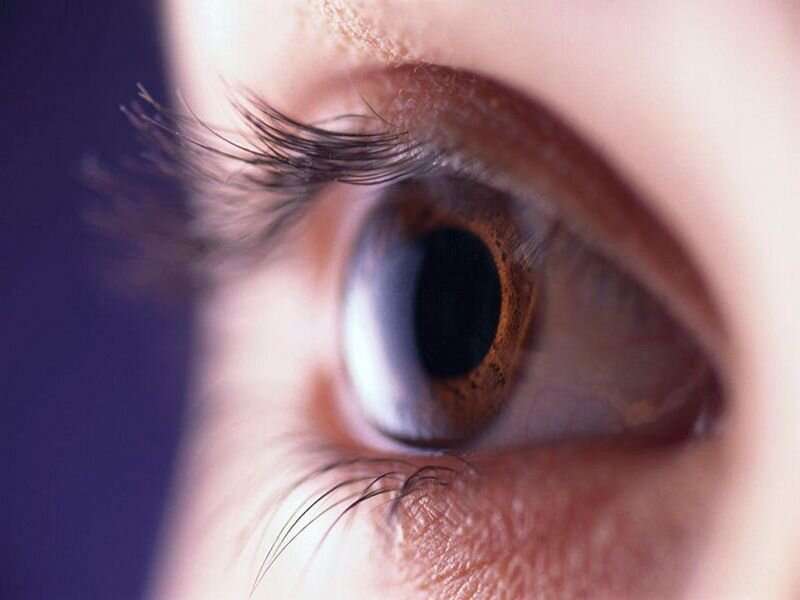
AHA issues statement on central retinal artery occlusion

Acute central retinal artery occlusion (CRAO) is a medical emergency, and patients should be immediately triaged to an emergency department for appropriate management, according to a scientific statement issued by the American Heart Association and published online March 8 in Stroke.

12 jun 2021--Brian Mac Grory, M.B., B.Ch., from the Duke Comprehensive Stroke Center at the Duke University School of Medicine in Durham, North Carolina, and colleagues conducted a review of the literature relating to management of CRAO. A panel of experts synthesized the data, submitted considerations for practice, and revised the drafts until consensus was achieved.

In the setting of CRAO, two additions to the stroke code process are needed: A funduscopic examination to confirm diagnosis and exclude alternative causes, and a screening for arteritis. Sudden, painless, monocular vision loss most often results from CRAO and should be emphasized in public outreach campaigns as a symptom of potential stroke. Treatment with intravenous tissue plasminogen activator is suggested and may be considered for patients who have disabling visual deficits and who meet criteria after a thorough risk-benefit discussion. Secondary prevention should include collaboration between neurology, ophthalmology, and primary care medicine; risk factor modification is recommended for secondary prevention.

"Central retinal artery occlusion is a cardiovascular problem disguised as an eye problem," Mac Grory said in a statement. "Unfortunately, a CRAO is a warning sign of other vascular issues, so ongoing follow-up is critical to prevent a future stroke or heart attack."

Several authors disclosed financial ties to the pharmaceutical industry.


More information: Abstract/Full Text (subscription or payment may be required)


Wednesday, September 30, 2015

A walk around the office can reverse vascular dysfunction caused by hours at a computer

A walk around the office can reverse vascular dysfunction caused by hours at a computer
Jaume Padilla, Ph.D., an assistant professor of nutrition and exercise physiology at the University of Missouri School of Medicine Credit: Justin Kelley/MU Health
Across the country, many employees are seated at desks for the majority of an eight-hour workday. As technology creates an increase in sedentary lifestyles, the impact of sitting on vascular health is a rising concern. 

30 sept 2015--Now, researchers from the University of Missouri School of Medicine have found that when a person sits for six straight hours, vascular function is impaired—but by walking for just 10 minutes after a prolonged period of sitting, vascular health can be restored.
"It's easy for all of us to be consumed by work and lose track of time, subjecting ourselves to prolonged periods of inactivity," said Jaume Padilla, Ph.D., an assistant professor of nutrition and exercise physiology at the MU School of Medicine and lead author of the study. "However, our study found that when you sit for six straight hours, or the majority of an eight-hour work day, blood flow to your legs is greatly reduced. We also found that just 10 minutes of walking after sitting for an extended time reversed the detrimental consequences."
During the study, the researchers compared the vascular function of 11 healthy young men before and after a period of prolonged sitting. The findings indicated that blood flow in the popliteal—an artery in the lower leg—was greatly reduced after sitting at a desk for six hours. Researchers then had the participants take a short walk, and found that 10 minutes of self-paced walking could restore the impaired vascular function and improve blood flow.
"When you have decreased blood flow, the friction of the flowing blood on the artery wall, called shear stress, is also reduced," Padilla said. "Moderate levels of shear stress are good for arterial health, whereas low levels of shear stress appear to be detrimental and reduce the ability of the artery to dilate. Dilation is a sign of vascular health. The more the artery can dilate and respond to stimuli, the healthier it is."
Many workplaces are sedentary environments, and the researchers said it's important that people understand the effects of sitting on their vascular health. By breaking up desk time with a short walk, workers can offset the harm caused to vascular blood vessels.
"Studies have shown that sitting less can lead to better metabolic and cardiovascular health," Padilla said. "However, more research is needed to determine if repeated periods of reduced vascular function with prolonged sitting lead to long-term vascular complications."

The study, "Impact of Prolonged Sitting on Lower and Upper Limb Micro- and Macrovascular Dilator Function," recently was published in Experimental Physiology, the peer-reviewed scientific journal of The Physiological Society.


Provided by University of Missouri-Columbia

Thursday, April 19, 2012

Positive feelings may help protect cardiovascular health

Over the last few decades numerous studies have shown negative states, such as depression, anger, anxiety, and hostility, to be detrimental to cardiovascular health. Less is known about how positive psychological characteristics are related to heart health. In the first and largest systematic review on this topic to date, Harvard School of Public Health (HSPH) researchers found that positive psychological well-being appears to reduce the risk of heart attacks, strokes and other cardiovascular events.

19 april 2012--The study was published online April 17, 2012 in Psychological Bulletin.

The American Heart Association reports more than 2,200 Americans die of cardiovascular disease (CVD) each day, an average of one death every 39 seconds. Stroke accounts for about one of every 18 U.S. deaths.

"The absence of the negative is not the same thing as the presence of the positive. We found that factors such as optimism, life satisfaction, and happiness are associated with reduced risk of CVD regardless of such factors as a person's age, socioeconomic status, smoking status, or body weight," said lead author Julia Boehm, research fellow in the Department of Society, Human Development, and Health at HSPH. "For example, the most optimistic individuals had an approximately 50% reduced risk of experiencing an initial cardiovascular event compared to their less optimistic peers," she said.

In a review of more than 200 studies published in two major scientific databases, Boehm and senior author Laura Kubzansky, associate professor of society, human development, and health at HSPH, found there are psychological assets, like optimism and positive emotion, that afford protection against cardiovascular disease. It also appears that these factors slow the progression of disease.

To further understand how psychological well-being and CVD might be related, Boehm and Kubzansky also investigated well-being's association with cardiovascular-related health behaviors and biological markers. They found that individuals with a sense of well-being engaged in healthier behaviors such as exercising, eating a balanced diet, and getting sufficient sleep. In addition, greater well-being was related to better biological function, such as lower blood pressure, healthier lipid (blood fat) profiles, and normal body weight.

If future research continues to indicate that higher levels of satisfaction, optimism, and happiness come before cardiovascular health, this has strong implications for the design of prevention and intervention strategies. "These findings suggest that an emphasis on bolstering psychological strengths rather than simply mitigating psychological deficits may improve cardiovascular health," Kuzbansky said.Link

More information: "The Heart's Content: The Association between Positive Psychological Well-Being and Cardiovascular Health," Julia K. Boehm and Laura D. Kubzansky, Psychological Bulletin, online April 17, 2012

Provided by Harvard School of Public Health

Wednesday, October 28, 2009

Decline in Cardiorespiratory Fitness Speeds Up After 45

Study suggests progression also depends on smoking status, weight and exercise levels

28 oct 2009-- Aging does not necessarily spell a linear decline in cardiorespiratory fitness, with lifestyle factors playing an important role, according to a study in the Oct. 26 issue of the Archives of Internal Medicine.

Andrew S. Jackson, of the University of Houston, and colleagues conducted a study of 3,429 women and 16,889 men aged 20 to 96 years who underwent between two and 33 health examinations from 1974 to 2006 as part of the Aerobics Center Longitudinal Study, looking at lifestyle variables such as body mass index, smoking behavior and aerobic exercise levels, as well as cardiorespiratory fitness measured by a maximal Balke treadmill exercise test.

The decline in cardiorespiratory fitness as the study cohort aged was not linear, the researchers found, with current smokers, for example, having lower cardiorespiratory fitness, and increased body mass associated with a decline in cardiorespiratory fitness. However, those who self-reported physical activity had better cardiorespiratory fitness.

"These Aerobics Center Longitudinal Study results confirmed that lifestyle was related to cardiorespiratory fitness independent of aging. With lifestyle statistically controlled, the nonlinear decline in cardiorespiratory fitness with aging remained," the authors write. "Maintaining a low body mass index, being physically active, and not smoking are associated with higher cardiorespiratory fitness across the adult life span."

Abstract
Full Text (subscription or payment may be required)

Monday, March 26, 2007

Fresh approach to diet and medication improves recovery after heart attack

NEW ORLEANS, La. (March 25, 2007) — After a heart attack, cardiovascular health and even survival can be improved by intensive dietary therapy and early dosing with a medication that blocks the harmful hormonal effects in the heart, according to research presented today at the American College of Cardiology's 56th Annual Scientific Session in New Orleans, La. ACC.07 is the premier cardiovascular medical meeting, bringing together cardiologists to further breakthroughs in cardiovascular medicine.
American Heart Association or Mediterranean Diet Improves Cardiovascular Outcomes After Myocardial Infarction Trial (Presentation Number 404-7)
A low-fat, low-cholesterol diet, as recommended by the American Heart Association (AHA), is equally beneficial for people who have had a heart attack as a Mediterranean-style diet rich in fish, monounsaturated fats, and other sources of omega-3 fatty acids, according to a community-based study that featured intensive nutrition counseling and tracked patients for an average of nearly four years.