Showing posts with label cognitive abilities. Show all posts

Wednesday, March 09, 2022


How long-term benzodiazepine use leads to cognitive impairments
How long-term benzodiazepine use leads to cognitive impairments
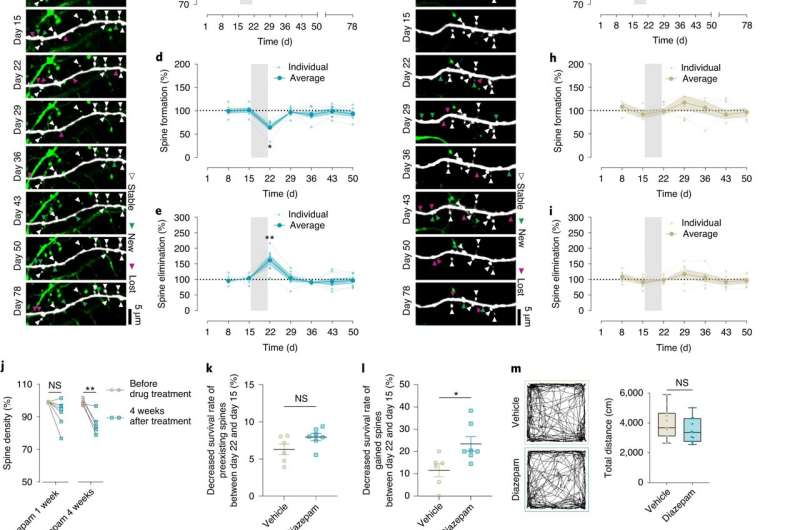
Fig. 1: Diazepam alters dendritic spine density and dynamics in vivo. Credit: Nature Neuroscience (2022). DOI: 10.1038/s41593-022-01013-9

Benzodiazepines are effective and widely used drugs for treating states of anxiety and sleep disorders. While short-term treatments are considered safe, their long-term intake can lead to physical dependence and, particularly in the case of older people, to cognitive impairments. The mechanisms by which benzodiazepines trigger these changes had previously been unknown. Researchers led by Jochen Herms and Mario Dorostkar from LMU's Center for Neuropathology and Prion Research and the German Center for Neurodegenerative Diseases (DZNE) have now been able to demonstrate in an animal model that the active ingredient leads to the loss of neural connections in the brain.

09 mar 2022--A key role is played by immune cells of the brain known as microglia. Benzodiazepines bind to a specific protein, the translocator protein (TSPO), on the surface of cell organelles of the microglia. This binding activates the microglia, which then degrade and recycle synapses—that is, the connections between nerve cells. Experiments carried out by the scientists showed that the synapse loss in mice that had received a daily sleep-inducing dose of the benzodiazepine diazepam for several weeks led to cognitive impairments.

"It was known that microglia play an important role in eliminating synapses both during brain development and in neurodegenerative diseases," say Dr. Yuan Shi and Mochen Cui, co-authors of the study. "But what really surprised us was that such well-researched drugs as benzodiazepines influence this process." When diazepam treatment was discontinued, the effect persisted for some time, but was ultimately reversible.

In the opinion of the researchers, the study could have effects on how sleep disorders and anxiety are treated in people at risk of dementia. "Drugs that are known to have no binding affinity to TSPO should be preferred where possible," say the authors.


More information: Yuan Shi et al, Long-term diazepam treatment enhances microglial spine engulfment and impairs cognitive performance via the mitochondrial 18 kDa translocator protein (TSPO), Nature Neuroscience (2022). DOI: 10.1038/s41593-022-01013-9
Journal information: Nature Neuroscience 

Saturday, January 29, 2022


Ozone exposure linked to cognitive decline in older adults

Ozone exposure linked to cognitive decline in older adults
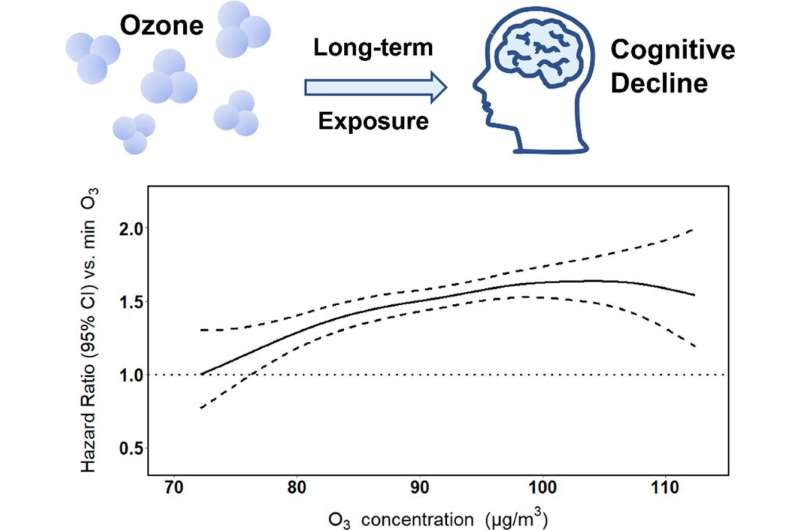
Graphical abstract. Credit: DOI: 10.1016/j.envint.2021.107072

A new, large-scale study led by scientists at the Yale School of Public Health has established a robust link between long-term ozone exposure and an increased risk of cognitive impairment in older adults.

29 jan 2022--Air pollution has long been considered a major risk factor for an aging society. Fine particulate matter floating in increasingly high concentrations around the globe can lead to dementia and other cognitive disabilities, and those affected can easily burden health care systems in areas with populations that skew older. But beyond airborne particles, little is known about the way in which other pollutants can pose a similar danger.

For their study, which was published in Environment International in January 2022, the researchers instead chose to focus on ambient ozone, a highly reactive gas that exists in much of smog at ground level. They then observed health outcomes in nearly 10,000 older adults across China and analyzed the extent to which long-term ozone exposure may have impacted their cognitive ability over time.

The results, they found, were startling. For every 10 microgram increase of yearly average ozone exposure, the risk for cognitive impairment grew by more than 10%. Through their analysis, the researchers also found that this association held even when they abstracted away individual risk factors such as smoking, drinking and education level. That is, older adults in China who were exposed to high levels of yearly ozone pollution were more likely to develop cognitive disabilities later in life, no matter what other activities they were involved in.

"Our findings suggest potential benefits in delaying the progression of cognitive decline among older adults if ozone levels are reduced below the new WHO Global Air Quality Guideline for ozone pollution," said Kai Chen, Ph.D., assistant professor at the Yale School of Public Health and the study's lead author.

There are limitations to their findings, however. The Yale-led team of researchers noted in their paper that the observational data alone are insufficient to establish a causal link between ozone and cognitive decline in older adults. More studies are needed to explore the mechanisms behind ozone's destructive capabilities in humans before such a claim can be made, they wrote. And since many older adults in China spend most of their time inside, indoor levels of ozone pollution could be different from the open-air averages the researchers used in their study.

Nonetheless, the study is the first to establish this link across large swaths of the Chinese population over several years. And they match what other researchers have found in areas across the globe: Over the past several years, studies have traced a similar link in adults in the United States and in Taiwan, and have also found an association between ozone exposure and other neurological diseases.

The results point to an urgent need to curtail ozone exposure across the globe, they wrote in their study, in an effort to keep healthcare systems from being overwhelmed as pollution rises and the world population gets older.

YSPH Professor Robert Dubrow, M.D., Ph.D., faculty director at the Yale Center on Climate Change and Health and a co-author of the study, said what makes this issue more urgent is that "ozone pollution is projected to be worsening under climate change." Strategies to reduce this threat, Dubrow said, "may help maintain a higher quality of life among older adults and bring significant public health benefits to an aging society."


More information: Qi Gao et al, Long-term ozone exposure and cognitive impairment among Chinese older adults: A cohort study, Environment International (2022). DOI: 10.1016/j.envint.2021.107072

Monday, October 27, 2014

Changing lifestyle may improve cognitive function in the elderly


A randomized controlled trial published in the current issue of Psychotherapy and Psychosomatics indicates that modifications in lifestyle may improve cognitive function in the elderly. Since a healthy lifestyle may protect against cognitive decline, the authors examined outcomes in elderly individuals after 18 months of a five-group intervention program consisting of various modalities: physical activity, antismoking, social activity, cognitive activity, alcohol drinking in moderation, and leaning about body mass and a healthy diet.
27 oct 2014--Between 2008 and 2010, a cluster randomized controlled trial assessing 460 community-dwelling individuals aged 60 years and older, was conducted in a geriatric community mental health center in Suwon, Republic of Korea. The intervention program based on the principles of contingency management was developed in a way that could be delivered by ordinary primary health workers. According to the research design, group A (n = 81) received standard care services, group B (n = 80) received bimonthly (once every 2 months) telephonic care management, group C (n = 111) received monthly telephonic care management and educational materials similar to those in group B, group D (n = 93) received bimonthly health worker-initiated visits and counseling and group E (n = 94) received bimonthly health worker-initiated visits, counseling, and rewards for adherence to the program.
The primary outcome was the change in Mini-Mental State Examination (MMSE) scores from baseline to the final follow-up visit at 18 months. Group E showed superior cognitive function to group A (adjusted coefficient β = 0.99, p = 0.044), with participation in cognitive activities being the most important determining factor among several health behaviors (adjusted coefficient β = 1.04, p < 0.01). The study showed that engaging in cognitive activities, in combination with positive health behaviors, may be most beneficial in preserving cognitive abilities in community-dwelling older adults.
More information: Lee K.S., Lee Y., Back J.H., Son S.J., Choi S.H., Chung Y.-K., Lim K.-Y., Noh J.S., Koh S.H., Oh B.H., Hong C.H. "Effects of a Multidomain Lifestyle Modification on Cognitive Function in Older Adults: An Eighteen-Month Community-Based Cluster Randomized Controlled Trial." Psychother Psychosom2014;83:270-278.
Provided by Journal of Psychotherapy and Psychosomatics

Saturday, September 21, 2013

Study finds brain training enhances brain health of adults over 50

Study finds brain training enhances brain health of adults over 50
The structural connection (in green) between the temporal and frontal lobe (in blue), improved after 12 hours of directed brain training. Credit: Cerebral Cortex, Oxford University Press publication

Strategy-based cognitive training has the potential to reverse age-related brain decline, according to the results of a study conducted by researchers at the Center for BrainHealth at The University of Texas at Dallas.
21 sept 2013--The findings were published online by Cerebral Cortex. The study has found that complex cognitive training significantly improves cognitive brain health.
"The world's aging population is growing disproportionately. Our expected lifespan has reached an all-time high of more than 78 years, yet previous research shows cognitive decline may begin in the early 40s," said Dr. Sandra Bond Chapman, founder and chief director of the Center for BrainHealth and Dee Wyly Distinguished University Chair at UT Dallas. "Until recently, cognitive decline in healthy adults was viewed as an inevitable consequence of aging. This research shows that neuroplasticity can be harnessed to enhance brain performance and provides hope for individuals to improve their own mental capacity and cognitive brain health by habitually exercising higher-order thinking strategies no matter their age."
The study found that one-hour sessions of directed brain training per week for 12 weeks can alter brain function, inducing increased blood flow, enhanced information communication across key brain regions, and expansion of the structural connections between brain regions related to new learning.
Using three MRI-based measurements, researchers examined brain changes across three time points in a randomized sample of individuals ages 56 to 71. The study found three significant training-related brain changes at rest: increases in global and regional cerebral blood flow (CBF), greater synchrony in important brain networks, and increased white matter integrity, which is the wiring of the brain that allows information to travel betweenbrain cells.
"Advances in imaging are allowing us to measure brain change in a short time period," said Dr. Sina Aslan, founder and president of Advance MRI and collaborator on the study. "Through this research we are able to see that cognitive training increases brain blood flow, which is a sensitive physiological marker of brain health. Previous research shows brain blood flow decreases in people beginning in their 20s. The finding that global brain blood flow can be increased with complex mental activity, as this study demonstrates, suggests that staying mentally active helps reverse and potentially prevent brain losses and cognitive decline with aging."
The capacity to increase whole brain blood flow after complex mental training may have clinical implications in both healthy aging populations and those diagnosed with brain disease such as Alzheimer's, Aslan said.
"Greater levels of brain blood flow are associated with higher cognitive performance," Chapman said. "With upwards of 8 percent increase in brain blood flow, this research shows that participants are regaining measurablebrain health. The brain and cognitive gains may help achieve a younger working brain with all the benefits of rich experience, knowledge base and wisdom as manifested in an older brain."
Chapman also suggested that the findings are important for younger adults and encourages adoption of healthy brain habits in early adulthood to stave off cognitive decline.
Also noteworthy was that researchers found significant improvement in cognitive performance, as well as a significant relationship between brain changes and improved cognitive performance. Among the participants who were randomized into the brain training group, researchers saw improvement in two cognitive domains: strategic reasoning, which is the ability to synthesize generalized meanings or extract larger ideas from lengthy input, and a measure of executive function that demonstrates the ability to abstract concepts. As a follow up to the study, researchers have investigated how long the improvements have been maintained and have found that the brain gains measured have been maintained at one year post-training and longer.
Both the brain and cognitive plasticity changes in response to strategy-based mental training demonstrate the neurogenerative potential in the cognitively healthy aging brain.
"We are increasingly interested in examining cognitive change with age," said Dr. Molly Wagster of the National Institute on Aging, part of the National Institutes of Health, which co-funded the study.
"Most older Americans likely will experience subtle changes in their ability to learn and remember, and studies such as this – examining one way to possibly affect cognitive change – are important," Wagster said. "It advances our understanding of how cognitive training might affect brain changes associated with cognitive decline. While further study is needed, this research suggests that it may never be too late to participate in activities to maintain or even improve our cognitive health."
Provided by University of Texas at Dallas

Wednesday, September 03, 2008


Activity ups seniors' cognitive abilities somewhat


03 sept 2008--Participation in an at-home physical activity program can modestly improve cognition in older adults with memory problems, but who do not have dementia, new research shows.
Previous studies have suggested that physical activity can reduce the odds of mental decline in older adults, the researchers note in this week's issue of the Journal of the American Medical Association, but confirmation from clinical trials has been lacking.
For their study, Dr. Nicola T. Lautenschlager of the University of Melbourne in Victoria, Australia, and colleagues randomly allocated 170 subjects, 50 years of age or older, to a physical activity program or to a comparison "control" group that received usual care.
Participants in the activity program were encouraged to perform moderate-intensity physical activity for at least 50 minutes three times a week. A total of 138 subjects completed an assessment after18-month.
On average, patients in the exercise group performed 142 minutes more physical activity per week than did the controls.
At the 6-month mark, the average score on a standard cognitive test increased by 0.26 points in the activity group, whereas it fell by 1.04 points in the control group. At 18 months, improvements of 0.73 points and 0.04 points were noted in the physical activity and control group, respectively.
"To our knowledge, this trial is the first to demonstrate that exercise improves cognitive function in older adults with subjective and objective mild cognitive impairment," the researchers conclude. Although the improvements were small, they are "potentially important when one considers the relatively modest amount of physical activity undertaken by participants in the study."
SOURCE: Journal of the American Medical Association, September 3, 2008.

Thursday, August 28, 2008

Sharp Verbal and Other Cognitive Declines Signal Impending Death

By Michael Smith
GOTEBORG, Sweden, 28 aug 2008 -- Even in the absence of frank dementia, cognitive abilities begin to drop off sharply several years before death, researchers here said.
The so-called "terminal decline" in verbal ability begins to occur on average 6.6 years before death, according to Valgeir Thorvaldsson, M.Sc., of Goteborg University and colleagues.
Declines in spatial ability and perceptual speed begin on average 7.8 years and 14.8 years before death, respectively, they reported online in Neurology ahead of the Sept. 16 issue.
"There is substantial acceleration in cognitive decline many years prior to death among individuals without dementia, the researchers concluded, and the "time of onset and rate of terminal decline vary considerably across cognitive abilities."
The terminal decline is an accelerated change in abilities associated with mortality and differs from the changes associated with simple aging, the researchers said.
Thorvaldsson said the terminal decline in mental skills may be associated with several possible factors.
"Cardiovascular conditions such as heart disease or dementia that is too early to be detected could be factors," he said. "Increased health problems and frailty in old age often lead to inactivity, and this lack of exercise and mental stimulation could accelerate mental decline."
The finding emerged from a 30-year study of people in this Swedish city, who were born in 1901 and 1902. They were enrolled at the age of 70 and followed until death, with up to 12 measurements of verbal, spatial, and perceptual speed abilities.
The researchers analyzed the results of the measurements in relation to two time-dependent changes -- age and proximity to death.
The study found that the so-called "age slopes" -- the average annual changes in the three domains relative to age:
Did not change significantly for verbal ability until the terminal decline began 6.6 years before death.
Declined by 0.031 standard deviations for spatial ability until the terminal decline started at 7.83 years before death, which was significant at P<0.05.
Declined by 0.022 standard deviations for perceptual speed until the terminal decline started at 14.83 years before death, which was significant at P<0.05.
On the other hand, once the terminal decline started, the rate of change was significantly greater (at P<0.001) for all domains. The slope of the post-change curve was:
13 times larger than the age slope for verbal ability
Almost twice as large as the age slope for spatial ability
Twice as large as the age slope for perceptual speed
One implication of the findings is that verbal ability, which remains almost constant until the terminal decline starts, might be a sign of worsening health, Thorvaldsson said.
"People remain stable in their verbal abilities unless they are experiencing disease processes that also increase their mortality risk," he said. "A change in verbal ability might therefore be considered a critical marker for degeneration in health in older people."
The researchers cautioned that the findings might not generalize to other birth cohorts, whose onset and rate of terminal decline might differ. They added that test-retest effects might be present.
The study was supported by Swedish Brain Power and the Swedish Council for Working Life and Social Research. The researchers made no disclosures.
Primary source: NeurologySource reference:Thorvaldsson V, et al "Onset of terminal decline in cognitive abilities in individuals without dementia" Neurology 2008; 71: 1-1.