Showing posts with label coronavirus. Show all posts

Saturday, January 02, 2021


A year of blursdays: how coronavirus distorted our sense of time in 2020

A year of blursdays: how coronavirus distorted our sense of time in 2020
Credit: StunningArt/Shutterstock

Does it feel like 2020 went on forever? Did lockdown drag, and can you even remember how you spent your time when you weren't living under coronavirus restrictions? You are not alone. For many, 2020 has been the year in which the constancy of time was lost to the upheaval of coronavirus.

02 jan 2021--Objectively, time passes at a constant, linear rate. Subjectively, however, time waxes and wanes with our activities and emotions. Sometimes, it flies by, other times it drags so slowly that it almost stands still.

This is backed up by research I conducted in April, which explored how the early months of the coronavirus pandemic had affected people's experiences of the passage of time. Of particular interest was how quickly time felt like it was passing during lockdown in comparison to "normal" (that long-ago time before lockdown).

I surveyed 604 people about how quickly time felt it was passing that day and that week in comparison to before the lockdown. Participants also answered questions about their mood, family life and how busy they were to give context on the factors, which made time more likely to speed up or slow down for different people.

Tempus fugit?

My results showed that there was widespread distortion time during lockdown, with more than 80% of people reporting that time felt like it was passing differently. But lockdown did not distort time in the same way for everyone. Instead, time sped up during lockdown for 40% of people and slowed down for the remaining 40%.

Why was this? My analysis suggests that the perceived speed of time during the day was affected by a person's age, how satisfied they were with their level of social interaction, how stressed they were and how busy they were. In general, the days passed more quickly for younger people who were socially satisfied, busy and experiencing low levels of stress. Conversely, the day passed more slowly for older people, particularly those over the age of 60, who were socially dissatisfied, stressed and lacking tasks to occupy them.

Similar patterns were observed for the subjective speed of the week. A fast week was associated with being younger and more socially satisfied, whereas a slow week was associated with being older and less socially satisfied.

A second unpublished study I conducted during the November lockdown revealed that, of the 851 people surveyed, more than 75% experienced distortion to time and 55% reported that the start of the first lockdown felt longer than eight months ago. A slower second lockdown was associated with shielding, dissatisfaction with social interaction and greater depression and boredom.

The UK is not alone in its loss of time during lockdown. Studies conducted in FranceItaly and Argentina also show widespread distortion to the passage of time during periods of strict COVID-19 restrictions.

Unlike in the UK, in France and Italy lockdown passed more slowly than normal for most people rather than being split 40/40 as in my April study. As in the UK, however, boredom was an important predictor of time slowing down in Italy and in France. In France, time also passed more slowly with increasing sadness.

Emotions and time

Why does being older, bored, stressed and socially dissatisfied make time pass more slowly? This question is difficult to answer.

Unlike other senses, we don't have an obvious organ for time. Instead, time is experienced as part of other sensory inputs, such as sight and hearing, and this has made it difficult to identify precisely how the brain processes it.

One possibility is that when we are bored and socially dissatisfied we have lots of spare cognitive capacity and that we then use some of that capacity to increase our monitoring of time. This increased monitoring then results in time passing more slowly than normal, simply because we are more aware of time than normal. Another possibility is that the emotional consequence of lockdown altered the way the brain processes time.

In particular, the negative emotions associated with isolation, boredom, sadness and stress may have contributed to a slowing of time. However, inconsistent effects of depression and anxiety across studies suggests that the effect of emotion on time is complex.

So what of 2021? Will time regain its regular rhythm? It is difficult to say. With the first vaccines currently being deployed, we maybe more hopeful than ever that normality is just around the corner. The reality may be that normality is many months away.

Regardless, while we can't change the actual time it takes for the vaccination programme to be completed, there are some things which we can do to speed up the wait. By keeping busy, minimising stress, engaging in as much face-to-face or online social interaction as we can and by reducing our stress levels, we can help the journey back to normality pass more quickly than normal.

Provided by The Conversation 

Friday, November 13, 2020


Common SARS-CoV-2 mutation may make coronavirus more susceptible to a vaccine

covid-19
Credit: Unsplash/CC0 Public Domain

A new study published in Science confirms that SARS-CoV-2 has mutated in a way that's enabled it to spread quickly around the world, but the spike mutation may also make the virus more susceptible to a vaccine.

13 november 2020--The new strain of coronavirus, called D614G, emerged in Europe and has become the most common in the world. Research at the University of North Carolina at Chapel Hill and the University of Wisconsin-Madison shows the D614G strain replicates faster and is more transmissible than the virus, originating in China, that spread in the beginning of the pandemic.

There were bright spots in the study findings: While the D614G strain spreads faster, in animal studies it was not associated with more severe disease, and the strain is slightly more sensitive to neutralization by antibody drugs.

The study published Nov. 12 provides some of the first concrete findings about how SARS-CoV-2 is evolving.

"The D614G virus outcompetes and outgrows the ancestral strain by about 10-fold and replicates extremely efficiently in primary nasal epithelial cells, which are a potentially important site for person-to-person transmission," said Ralph Baric, professor of epidemiology at the UNC-Chapel Hill Gillings School of Global Public Health and professor of microbiology and immunology at the UNC School of Medicine.

Baric has studied coronaviruses for more than three decades and was integral in the development of remdesivir, the first FDA-approved treatment for COVID-19.

Researchers believe the D614G strain of coronavirus dominates because it increases the spike protein's ability to open cells for the virus to enter. These crown-like spikes give the coronavirus its name.

The D614G mutation causes a flap on the tip of one spike to pop open, allowing the virus to infect cells more efficiently but also creating a pathway to the virus' vulnerable core.

With one flap open, it's easier for antibodies—like the ones in the vaccines currently being tested—to infiltrate and disable the virus.

For the recent study, Baric Lab researchers—including first author Yixuan J. Hou—worked in collaboration with Yoshihiro Kawaoka and Peter Halfmann, both virologists on faculty at the University of Wisconsin-Madison.

"The original spike protein had a 'D' at this position, and it was replaced by a 'G,'" Kawaoka said. "Several papers had already described that this mutation makes the protein more functional and more efficient at getting into cells."

That earlier work, however, relied on a pseudotyped virus that included the receptor-binding protein but was not authentic. Using reverse genetics, Baric's team replicated a matched pair of mutant SARS-CoV-2 viruses that encoded D or G at position 614 and compared basic property analysis using cell lines, primary human respiratory cells, and mouse and hamster cells.

Kawaoka and Halfmann contributed their unique coronavirus study model, which uses hamsters. The University of Wisconsin-Madison team—including Shiho Chiba, who ran the hamster experiments—performed replication and airborne transmission studies with both the original virus and the mutated version created by Baric and Hou.

They found that the mutated virus not only replicates about 10 times faster—it's also much more infectious.

Hamsters were inoculated with one virus or the other. The next day, eight uninfected hamsters were placed into cages next to infected hamsters. There was a divider between them so they could not touch, but air could pass between the cages.

Researchers began looking for replication of the virus in the uninfected animals on day two. Both viruses passed between animals via airborne transmission, but the timing was different.

With the mutant virus, the researchers saw transmission to six out of eight hamsters within two days, and to all the hamsters by day four. With the original virus, they saw no transmission on day two, though all of the exposed animals were infected by day four.

"We saw that the mutant virus transmits better airborne than the [original] virus, which may explain why this virus dominated in humans," Kawaoka said.

The researchers also examined the pathology of the two coronavirus strains. Once hamsters were infected, they presented essentially the same viral load and symptoms. (The hamsters with the mutated strain lost slightly more weight while sick.) This suggests that while the mutant virus is much better at infecting hosts, it doesn't cause significantly worse illness.

Researchers caution that the pathology results may not hold true in human studies.

"SARS-CoV-2 is an entirely new human pathogen and its evolution in human populations is hard to predict," Baric said. "New variants are continually emerging, like the recently discovered mink SARS-CoV-2 cluster 5 variant in Denmark that also encodes D614G.

"To maximally protect public health, we must continue to track and understand the consequences of these new mutations on disease severity, transmission, host range and vulnerability to vaccine-induced immunity."


More information: Yixuan J. Hou et al, SARS-CoV-2 D614G variant exhibits efficient replication ex vivo and transmission in vivo, Science  12 Nov 2020:eabe8499. DOI: 10.1126/science.abe8499
Journal information: Science 

Monday, October 26, 2020

Coronavirus: Which treatments work and which don't?

Coronavirus: which treatments work and which don’t?
Credit: PongMoji/Shutterstock

Donald Trump's brief stay in hospital in early October raised awareness—once again—of the variety of treatments being investigated for COVID-19.\

26 october 2020--Some therapies the president received have been on the radar for a long time, others are new to the list of potential treatments. Notably, drugs such as hydroxychloroquine that were once widely touted as a treatment weren't used, having been shown to be ineffective.

Thanks to the Recovery trial, based at Oxford University, we're finding out more all the time about which therapies are useful. So, while the below won't be the definitive answer on how to treat COVID-19, nine months into the pandemic, this is what we know so far about what works.

Corticosteroids

As early as June 2020, there was evidence that dexamethasone, a cheap steroid, could reduce the risk of death in severely ill patients with COVID-19 by up to a third.

Later studies showed a similar reduction in death with another common steroid, hydrocortisone. It may be that these drugs are effective because they suppress severe inflammation in the lungs.

Interferon beta

We've known for some time that patients who don't produce enough interferon beta are susceptible to severe lung damage caused by viral infections, as it plays a key role in immunity to viruses.

In a small clinical trial, inhaled interferon beta reduced hospitalized COVID-19 patients' risk of developing severe respiratory disease by 79%. Patients treated with interferon beta were also twice as likely to recover fully over the 16-day treatment period.

While promising, these results need to be confirmed in larger studies comparing the  with other treatments. Interferon beta is also being investigated in combination with other therapies, including remdesivir.

A recent large trial of multiple therapies showed no benefit of injected  in hospitalized COVID-19 patients.

Remdesivir

This antiviral drug, which stops certain viruses – including coronaviruses—from reproducing their genetic material, is already temporarily licensed in roughly 50 countries for treating COVID-19 patients with pneumonia who need supplemental oxygen.

The drug initially underwent trials for use against COVID-19 in China, but because the outbreak there was soon brought under control, not enough patients were enrolled to produce statistically significant results. Subsequent  in the US were more positive, showing that it could shorten the recovery time of hospitalized COVID-19 patients with lower respiratory tract infections.

Other studies have not added much: COVID-19 patients with moderate pneumonia put on a five-day course of remdesivir fared better than those receiving standard care, but those put on a ten-day course didn't. This led the authors of the study to question the significance of the results. Disappointingly, a recent WHO study also showed no improvement in death rates or recovery time for hospitalized patients.

Nevertheless, remdesivir is the only antiviral drug shown to be effective against COVID-19. It is now part of most countries' standard treatment packages, despite the fairly weak evidence behind it.

Tocilizumab

Monoclonal antibodies—antibodies that have been artificially generated to target certain molecules—are already used to treat inflammatory diseases such as rheumatoid arthritis. One of these is tocilizumab, which blocks the actions of an inflammatory protein called interleukin 6.

In the US, tocilizumab is licensed for treating cytokine release syndrome – a severe side-effect of some cancer treatments that is similar to the serious inflammatory effects of COVID-19. Studies of tocilizumab's impact on COVID-19 have offered mixed results. Some have suggested that it reduces the likelihood of hospitalized patients needing mechanical ventilation, and it reduces the death rate of patients who do require ventilation. Others have shown that the drug has no effect on patient outcomes.

However, those studies were too small to allow for definite conclusions. One large observational study found positive effects, but other factors (such as differences in age, underlying health conditions and other treatments) may have influenced the results.

Larger, more robust studies are needed. Tocilizumab is now being investigated in Recovery and in another large randomized controlled trial in the US.

Convalescent plasma

Another antibody-based approach is to give patients blood plasma from people who have recovered from COVID-19. This plasma will contain natural antibodies produced by the donor during infection.

Convalescent plasma was authorized in the US for emergency use in COVID-19 patients in August, despite very limited evidence of benefit. Now that it has been authorized, doctors in the US aren't obliged to report on its effects, which has made it difficult to gather good data on its effectiveness. Large randomized controlled trials are needed.

REGN-COV2

REGN-COV2 is a mixture of two monoclonal antibodies directed against specific regions of the 's spike protein, which is the key structure that it uses to enter our cells.

Animal studies have shown promising results, but they can't reliably predict REGN-COV2's effects in humans. Its maker has requested emergency use authorisation in the US which, as with convalescent plasma, may make collecting reliable data more difficult. However, REGN-COV2 is also under investigation in the Recovery trial.

A rival product—LY-CoV555/LYCoV016—is under similar consideration for emergency use. There's very limited data on its benefits, but it too is being tested in a large clinical trial.

Other possible treatments

The one other treatment included in the Recovery trial is the antibiotic azithromycin. Given to treat a variety of infections, it has anti-inflammatory and antibiotic properties, and may also have antiviral actions. Trials so far show that there's no benefit when it's given to patients already admitted to hospital, but the Recovery trial is testing its effect during earlier stages of COVID-19.

Despite early concerns that certain blood pressure drugs might increase the risk of COVID-19, large studies have shown that they are safe. Studies are now investigating whether they might have some protective effect.

Finally, several studies have shown that the antimalarial drug hydroxychloroquine and the antiviral combination lopinavir/ritonavir are ineffective against COVID-19. Derivatives of another (plant-derived) antimalarial drug, artemisinin, have antiviral activity and become concentrated in the lungs. In theory, they could have clinical benefits, but there's no data yet to show this.


Provided by The Conversation 

Tuesday, October 20, 2020


Coronavirus survives on skin five times longer than flu: study

COVID-19, coronavirus
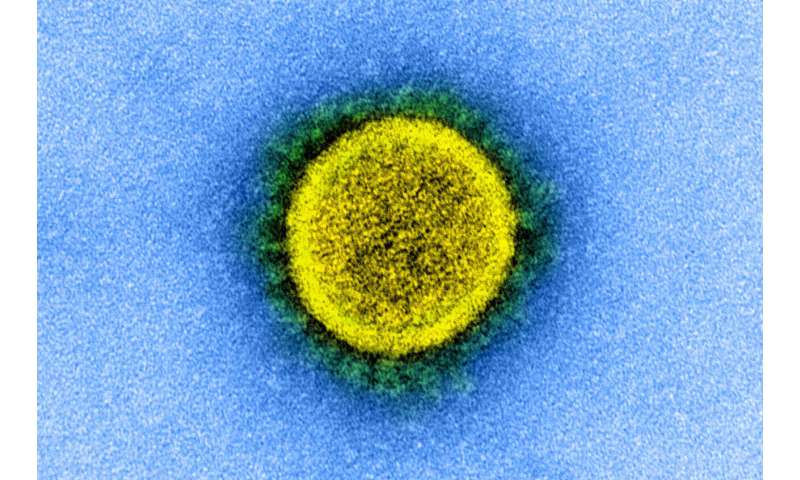
SARS-CoV-2 (shown here in an electron microscopy image). Credit: National Institute of Allergy and Infectious Diseases, NIH

The coronavirus remains active on human skin for nine hours, Japanese researchers have found, in a discovery they said showed the need for frequent hand washing to combat the COVID-19 pandemic.

20 The pathogen that causes the flu survives on human skin for about 1.8 hours by comparison, said the study published this month in the Clinical Infectious Diseases journal.

"The nine-hour survival of SARS-CoV-2 (the virus strain that causes COVID-19) october 2020--on human skin may increase the risk of contact transmission in comparison with IAV (influenza A virus), thus accelerating the pandemic," it said.

The research team tested skin collected from autopsy specimens, about one day after death.

Both the coronavirus and the flu virus are inactivated within 15 seconds by applying ethanol, which is used in hand sanitisers.

"The longer survival of SARS-CoV-2 on the skin increases contact-transmission risk; however, hand hygiene can reduce this risk," the study said.

The study backs World Health Organization guidance for regular and thorough hand washing to limit transmission of the virus, which has infected nearly 40 million people around the world since it first emerged in China late last year.

Journal information: Clinical Infectious Diseases 


Friday, October 16, 2020


Coronavirus reinfections are real. Here's what that means for controlling the pandemic

pandemic
Credit: Pixabay/CC0 Public Domain

The first confirmed case of an American who got COVID-19 twice adds to scant but mounting evidence that people can be reinfected with the coronavirus—and get sicker than during the initial bout.

15 october 2020--The 25-year-old Nevada man, who had no known immune problems, got a mild case of COVID-19 in April. About a month later, he was diagnosed again and needed hospitalization and oxygen, according to the report published Monday in Lancet Infectious Diseases.

The authors say at least three other confirmed cases have been published worldwide, including the first in Hong Kong barely two months ago. But the COVID-19 Reinfection Tracker of BNO News, an international news agency headquartered in the Netherlands, lists the Nevada case and 22 others, including one death.

To confirm reinfection, DNA sequencing of respiratory samples must reveal two slightly different variants of the virus, indicating the second infection was not just a remnant or reactivation of the first. That kind of analysis rarely occurs, partly because of the cost, but mostly because respiratory samples used for diagnosis are rarely preserved for later genetic analysis.

Although it is hard to say how rare reinfection may be, it complicates questions about the strength and length of natural protective immunity; the role of vaccines in strengthening immunity; and hopes for "herd immunity." Community-wide, or herd, protection happens when enough people become immune, either through infection or vaccination, to make disease spread unlikely.

"Reinfection cases tell us that we cannot rely on immunity acquired by natural infection to confer herd immunity," Akiko Iwasaki, an immunologist at Yale University School of Medicine, wrote in a commentary accompanying the new study. "Herd immunity requires safe and effective vaccines and robust vaccination implementation."

But the study authors, led by University of Nevada biostatistician Richard L. Tillett, point out that we may not be able to rely on vaccines for complete protection, either, "with influenza regularly showing the challenges of effective vaccine design." Recent studies show that the seasonal flu shot reduces the risk of illness by 40% to 60%.

Infection with certain viruses, such as the measles, causes lifelong immunity. In contrast, seasonal coronaviruses that cause common colds confer only short-lived protection, perhaps three or four months. Then, the disease-fighting antibodies made by the immune system to fight the invader fade away.

If the new coronavirus, which emerged 10 months ago in China, confers only limited immunity, then a vaccine might strengthen this protection by revving up other parts of the immune system. Some vaccines now in development have been shown to activate T cells, a more complex line of defense than antibodies.

Since the new coronavirus has mutated to have slightly different variations that can cause reinfection, does that mean we need a vaccine for each variant?

Iwasaki believes the answer is no because, at least so far, reinfected people have had an immune response to the second infection, suggesting the virus has not developed a way around immune defenses.

"There is currently no evidence that a variant has emerged as a result of immune evasion," she wrote. "For now, one vaccine will be sufficient to confer protection against all circulating variants."

The authors conclude with a sobering observation: Without "comprehensive genomic sequencing" of positive cases around the world, detection of cases of reinfection will be very limited. That, in turn, will "exacerbate the poor surveillance efforts ... not only to diagnose COVID-19, but also to" track genetic changes in the virus.

Journal information: Lancet Infectious Diseases 

Tuesday, July 28, 2020

Can you get the coronavirus twice?


Can you get the coronavirus twice?
AP Illustration/Peter Hamlin
Can you get the coronavirus twice?
28 july 2020--Scientists don't know for sure yet, but they believe it's unlikely.
Health experts think people who had COVID-19 will have some immunity against a repeat infection. But they don't know how much protection or how long it would last.
There have been reports of people testing positive for the virus weeks after they were believed to have recovered, leading some to think they may have been reinfected. More likely, experts say people were suffering from the same illness or the tests detected remnants of the original infection. There's also the chance tests could have been false positives.
Scientists say there has been no documented instance of a patient spreading the virus to others after retesting positive.
With similar viruses, studies have shown that people could fall sick again three months to a year after their first infections. It's still too early to know whether that's also possible with the coronavirus.
"It's very much emerging science," said Dr. Philip Landrigan, director of the global public health program at Boston College.
A small U.S. study published last week also found the antibodies that fight the coronavirus may only last a few months in people with mild illness, suggesting people could become susceptible again. But antibodies aren't the only defense against a virus, and the other parts of the immune system could also help provide protection.
Settling the question of whether reinfection is possible is important. If it can occur, that could undermine the idea of "immunity passports" for returning back to workplaces. And it would not bode well for hopes of getting a long-lasting vaccine.
The Associated Press. 

Tuesday, July 21, 2020

Coronavirus: B cells and T cells explained


To develop effective drugs, we need a good understanding of how the immune system responds to the novel coronavirus. Credit: Video_Creative/Shutterstock
To get the upper hand on the coronavirus, we first need to understand how our immune system reacts to it. Understanding this will lead to better treatments, effective vaccines and knowing how near we are to herd immunity—and if it's even achievable.
21 july 2020--Every day, new research adds to this knowledge and is widely reported in the media. To follow the discussion, you need to know about two very important cells: B cells and T cells. Here is a quick primer to get you up to speed.
The immune system is a network of intricately connected cells to protect the body from internal and external threats. It is broadly classified into two sub-types: innate (or natural) and adaptive (or acquired). The key differences between the two are the specificity and agility of the responses generated towards a perceived threat.
The innate system is the first line of defense, capable of detecting many common infectious agents, such as viruses and bacteria, as soon as they find their way into the body. Although it may respond quickly, the innate system cannot always eliminate infectious organisms and it doesn't recognize all the pathogens.
Because of the intricate nature of the immune system, the innate system also provides cues in the forms of chemical signals (cytokines) or degraded products of infectious organisms (antigens) to activate the adaptive immune system, using a process known as "antigen presentation." Without these cues, the adaptive immune system cannot be activated.
The adaptive immune system has evolved to provide a more versatile and highly target-specific defense with an ability to distinguish very subtle differences in the make-up of infectious agents. But the adaptive immune system is slow and can take several days before two key cell types—B cells and T cells—are brought into play.
T cells are further grouped into two sub-types, CD4+ and CD8+ cells. CD4+ are helper T cells that help the activity of other immune cells by releasing cytokines. The cytokines prime the maturation of B cells, which become plasma cells and produce antibodies to neutralize the pathogen. CD8+ cytotoxic T cells, on the other hand, directly kill infected cells.
Once the adaptive immune system has vanquished the invader, a pool of long-lived memory T and B cells are made. These memory lymphocytes remain dormant until the next time they encounter the same pathogen. This time, though, they produce a much faster and stronger immune reaction. Memory is the key feature of the adaptive immune system, enabling long-term protection.
T cells and B cells in COVID-19
Since most people have not been exposed to the novel coronavirus, it can safely be assumed that uninfected people have no memory T and B cells and therefore no protection from a COVID-19 infection. Technically speaking, as with any other infection, COVID-19 should generate an immune response, priming the proliferation of anti-COVID T and B cells.
Around 8.3 million people have recovered from COVID, yet evidence of exactly how the adaptive immune system responds to the novel coronavirus has, so far, been scarce. But new information is emerging all the time.
A recent study from the US showed that infected people are able to generate COVID-specific T cells and B cells. This study also showed that even some uninfected people had T cells to COVID-19, suggesting an overlap with the response to previous coronavirus infections—so-called cross-reactivity. (Coronaviruses also cause SARS, Mers and some cases of the common cold.)
Also, recent research from the Karolinska Institute in Sweden showed that several COVID patients with mild to no symptoms had generated T cells against the virus. This was even the case in patients who had no detectable levels of antibodies against the virus. More importantly, the researchers also found evidence of memory T cells in convalescent patients. This suggests that COVID elicits a robust memory T cell response, which could prevent recurrent episodes of severe COVID.
Disappearing antibodies
How long antibodies stick around for varies from one pathogen to another. For example, we know that antibodies to other coronaviruses diminish over time (12 to 52 weeks from the time of infection). Some studies suggest that COVID-19 antibodies can be detected for seven weeks in recovered patients. But given the huge variability of symptoms and immune responses among patients, the precise timeline is unclear.
Another recent study comparing groups of symptomatic with asymptomatic people showed that asymptomatic people had much lower antibody levels. And follow-up monitoring showed that about 40% of asymptomatic people had no detectable antibodies after eight weeks.
This suggests that antibodies to COVID may not last very long. But this does not exclude the existence of memory T and B cells, capable of re-emerging from their dormant states to protect against re-infection. In other words, the antibodies that B cells make during initial exposure disappear in a few weeks, but the memory cells generated as a consequence of this persist for much longer.
But there is still a lot we don't know. And without a deep understanding of the immune system role in COVID, designing effective therapies is going to be difficult.
Provided by The Conversation 

Saturday, July 04, 2020

How a mutation on the novel coronavirus has come to dominate the globe


How a mutation on the novel coronavirus has come to dominate the globe
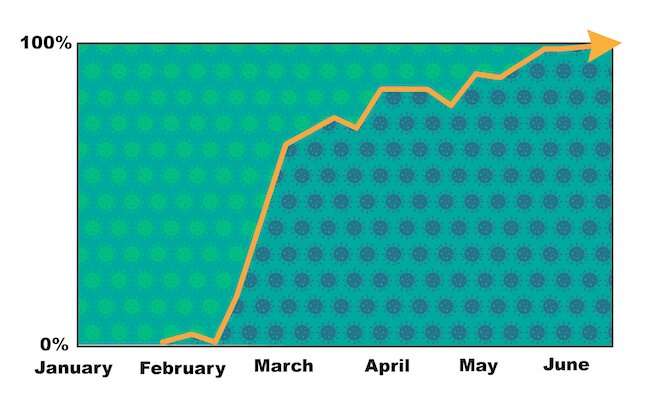
By mid-March, the G variant dominated around the world. Credit: La Jolla Institute for Immunology
Flashback to mid-March: the novel coronavirus had reached San Diego, California. Few people could get tested, and even less was known about how the virus mutated as it spread from person to person.
04 July 2020--Scientists now know that two variants of the novel coronavirus (SARS-CoV-2) were circulating at that time. The variants, called G614 and D614, had just a small difference in their "spike" protein—the viral machinery that coronaviruses use to enter host cells.
In a new study, an international team of scientists show that the G version of the virus has come to dominate cases around the world. They report that this mutation does not make the virus more deadly, but it does help the virus copy itself, resulting in a higher viral load, or 'titer,' in patients.
The new study, led by scientists at Duke University, Los Alamos National Laboratory and La Jolla Institute (LJI) was published July 2, 2020 in Cell.
"We are focused on the human immune response because LJI is the headquarters for the Coronavirus Immunotherapy Consortium (CoVIC), a global collaboration to understand and advance antibody treatments against the virus," says LJI Professor Erica Ollmann Saphire, Ph.D., who leads the Gates Foundation-supported CoVIC.
Saphire explains that viruses regularly acquire mutations to help them "escape" antibodies made by the human immune system. When a virus acquires many of these individual changes, it "drifts" away from the original virus. Researchers call this phenomenon "antigenic drift." Antigenic drift is part of the reason you need a new flu shot each year.
It is extremely important for researchers to track antigenic drift as they design vaccines and therapeutics for COVID-19.
For the study, Saphire collaborated with Bette Korber, Ph.D., a fellow at Los Alamos National Laboratory (LANL), who serves as senior author of the study. Korber and her colleagues at LANL have developed tools to track mutations around the world. In the new study, their tracking showed that while the G and D viruses both spread widely around the world, the G virus was "fixed" as the dominant variant by mid-March.
Meanwhile, Saphire and co-author David Montefiore, Ph.D., of Duke University Medical Center, led research into the immune response to these variants. They determined that viruses carrying spike with the G mutation grew two to three times more efficiently, leading to a higher titer.
Saphire and her colleagues then used samples from six San Diego residents to test how human antibodies neutralized the D and G viruses. Would the fast-growing G virus be harder to fight?
Their experiments showed that the human immune response could neutralize the new G virus as well or better than the original D virus. This meant the immune system didn't need to produce more antibodies or better antibodies against the G virus, even though this variant was more successful at spreading. This finding was in line with what doctors saw in COVID-19 patients.
"The clinical data in this paper from the University of Sheffield showed that even though patients with the new G virus carried more copies of the virus than patients infected with D, there wasn't a corresponding increase in the severity of illness," says Saphire.
Korber adds, "These findings suggest that the newer form of the virus may be even more readily transmitted than the original form—whether or not that conclusion is ultimately confirmed, it highlights the value of what were already good ideas: to wear masks and to maintain social distancing."
Saphire says the novel coronavirus could be successful precisely because many patients do only get a mild version, or no symptoms at all.
"The virus doesn't 'want' to be more lethal. It 'wants' to be more transmissible," Saphire explains. "A virus 'wants' you to help it spread copies of itself. It 'wants' you to go to work and school and social gatherings and transmit it to new hosts. Of course, a virus is inanimate—it doesn't 'want' anything. But a surviving virus is one that disseminates further and more efficiently. A virus that kills its host rapidly doesn't go as far—think of cases of Ebola. A virus that lets its host go about their business will disseminate better—like with the common cold."
So while the G mutation doesn't make cases more severe, a different mutation might. "We'll be keeping an eye on it," says Saphire.

More information: "Tracking changes in SARS-CoV-2 Spike: evidence that D614G increases infectivity of the COVID-19 virus" Cell (2020). DOI: 10.1016/j.cell.2020.06.043
Journal information: Cell 

Wednesday, July 01, 2020

4 unusual things we've learned about the coronavirus since the start of the pandemic


4 unusual things we've learned about the coronavirus since the start of the pandemic
Credit: Shutterstock
It is now almost six months since the world became aware of COVID-19, and almost four months since the World Health Organisation declared a pandemic.
01 July 2020-As the number of people infected with the SARS-CoV-2 coronavirus grows, so does our knowledge of how it spreads, how it affects the body, and the range of symptoms it causes.
Here are some of the unusual things we've learned about the coronavirus along the way.
1. It affects how your blood clots
Many inflammatory diseases, including infections, are associated with an increased risk of developing blood clots. However, COVID-19 is more strongly associated with blood clots than many other infections.
If blood clots are large enough, they can block the flow of blood through a blood vessel. This in turn leads to the part of the body the blood vessel supplies being starved of oxygen.
If this happens in a coronary artery, which supplies blood to your heart, it can cause a heart attack. In the lungs, it can cause a pulmonary embolism. In the brain, it can cause a stroke, which we have seen even in young people with COVID-19 but no other risk factors.
Critically ill COVID-19 patients in intensive care units (ICU) are particularly at risk of blood clots.
One study found 49% of patients were affected, mainly with clots to the lungs. Other studies found 20-30% of critically ill COVID-19 patients had blood clots.
These rates are much higher than we'd expect to see in patients admitted to ICU for other reasons.
Worryingly, clots occur in COVID-19 patients despite using standard preventative measures such as blood-thinning drugs.
2. You can lose your sense of smell
We now know COVID-19, like other viral infections, can lead to anosmia, or losing your sense of smell.
In one study, it affected about about 5% of patients in hospital with COVID-19. But some people with only very mild disease say they they've suddenly lost their smell, before regaining it.
Anosmia has now been added to the list of possible COVID-19 symptoms.
Anyone who's had a regular cold knows nasal congestion can affect your sense of smell. But COVID-19 is different. People can lose their smell without a runny or blocked nose.
Perhaps the virus latches onto receptors in the lining of the nose before entering the cells. We know these ACE2 receptors are how the virus enters other parts of the body, including the lungs.
Some people with COVID-19 who lose their sense of smell also report a reduction or loss of their sense of taste.
3. It can trigger serious inflammatory disease in kids
Another unusual feature is how little COVID-19 appears to have affected children, compared with many other respiratory infections.
However, doctors in Europe and the UK, who have seen larger numbers of COVID-19 in children, have noticed an unusual but serious inflammatory condition in children with the virus. This is known as "multisystem inflammatory syndrome in children", or MIS-C.
In studies from the UKItaly and France, most of the children with this serious condition likely had COVID-19 in the past.
Symptoms vary. But the main ones include fever, rash and gut symptoms (vomiting, abdominal pain and diarrhoea). Some children develop heart complications.
These symptoms generally resemble other conditions such as Kawasaki disease and toxic shock syndrome.
Researchers think it's not the virus itself that is responsible for MIS-C. Instead, they think it's the body's immune response to the virus, perhaps long after being infected.
4. It can travel from humans to animals and back again
At the start of the pandemic, we believed SARS-CoV-2 originated from animals before spreading into humans. However, we were unsure if the virus could travel back into animals, perhaps infecting our pets.
We now know humans can transmit COVID-19 to domestic or captive animals, such as dogs, cats and even tigers.
In the Netherlands, there have been outbreaks in animals at several mink farms. Researchers believe an infected worker introduced the virus to the farms. The mink developed viral pneumonia, which spread among the animals.
Sick mink then reportedly infected two people – the first documented case of animal-to-human transmission after the virus originated in China.

Provided by The Conversation 

Sunday, May 31, 2020

Is it safe to go to my doctor's office? Your questions answered

waiting room
Credit: CC0 Public Domain
Hospitals are resuming non-urgent procedures, and doctor's offices are reopening as the peak of the coronavirus pandemic appears to be passing in the Philadelphia-area.
31 may 2020--Pennsylvania Gov. Tom Wolf has authorized providers to reopen so long as they have sufficient protective equipment, staff, and capacity to treat both patients who are positive for COVID-19 and those who are not.
Here's what you need to know about going back to the doctor.
Without a vaccine for COVID-19, there is a risk of exposure anywhere you go—including the doctor's office. But hospitals and doctor's offices are taking extra steps to reduce that possibility (more on those steps below).
It is important to weigh the risk of contracting the virus with the risk of other health conditions worsening by not seeking medical treatment. Talk to your doctor about your medical concerns, and together you can decide whether an in-person visit is a good idea or whether you may be a good candidate for a video or telephone visit.
"Don't be reluctant to return if you haven't been there in a while," said Lawrence John, president of the Pennsylvania Medical Society and a family physician in Pittsburgh. "Continuity of care is important, especially for a chronic condition like diabetes, hypertension, and heart disease."
You can limit your risk of contracting the virus by practicing social distancing, wearing a face mask, and using hand sanitizer liberally, especially after handling high-touch surfaces like doors, elevator buttons, and shared office objects, such as a clipboard and pen.
Hospitals treating COVID-19 patients have designated care units for those patients, often with dedicated entrances, to ensure they do not come into contact with patients at the hospital for other reasons. Doctors, nurses, and other medical staff in direct contact with COVID-19 patients do not cross back and forth between coronavirus units and non-coronavirus units.
Doctor's offices are limiting the number of people in the office at one time by spreading out appointments, asking patients to wait outside or in their car after checking in, spreading out waiting room chairs, and removing their troves of communal waiting room magazines.Both hospitals and medical offices have stepped up cleaning and disinfecting routines, are requiring patients to come alone, and are screening everyone who walks in the door for COVID-19 symptoms.
Telemedicine has dramatically expanded during the pandemic as a way for doctors to keep in touch with patients without seeing them in person. Doctors have been pleased with how much they can accomplish through a video visit, and many hope to continue using telemedicine when possible to reduce the number of patients coming to their offices.
If you are interested in a virtual visit, ask your doctor if it's an option. Doctors can evaluate, for example, back pain, a rash or a swollen joint; go over results from an X-ray or MRI; and complete routine check-ups for chronic conditions through video visits. Other types of services, such as a colonoscopy or mammogram, will require an in-person appointment.
Most major health insurers and Medicare have agreed to cover telemedicine visits during the pandemic, but it's a good idea to double check with your insurer or benefit manager.
People who will be having surgery will likely need to be tested for COVID-19 a day or two before the procedure. On the day of your procedure, be prepared to go alone, as visitors are still not permitted at most medical centers. It may be a good idea to plan in advance how you will connect with family afterward—can you bring a cell phone and charger? Or can the surgeon or a nurse contact your family immediately after the procedure with a status update?
When you arrive, someone will take your temperature and ask screening questions about your potential exposure to the virus, such as whether you or anyone you've been in contact with has tested positive, whether you've had a cough or fever in recent days, and about any recent travel. If you're not wearing a mask, you will probably be given one.
Interacting with your doctor may seem different, too: he or she will limit physical contact, including forgoing a welcome handshake, and may want to keep conversation brief, to limit the amount of time you're in the office. Doctors and office staff will be wearing masks, which can make reading facial cues difficult. It's always a good idea to write down your questions in advance to make sure even the most efficient appointment gets you the answers you need.
The Philadelphia Inquirer