Showing posts with label covid long. Show all posts

Monday, January 29, 2024


Researchers discover that tiredness experienced by long COVID patients has a physical cause
Researchers discover that tiredness experienced by long COVID patients has a physical cause
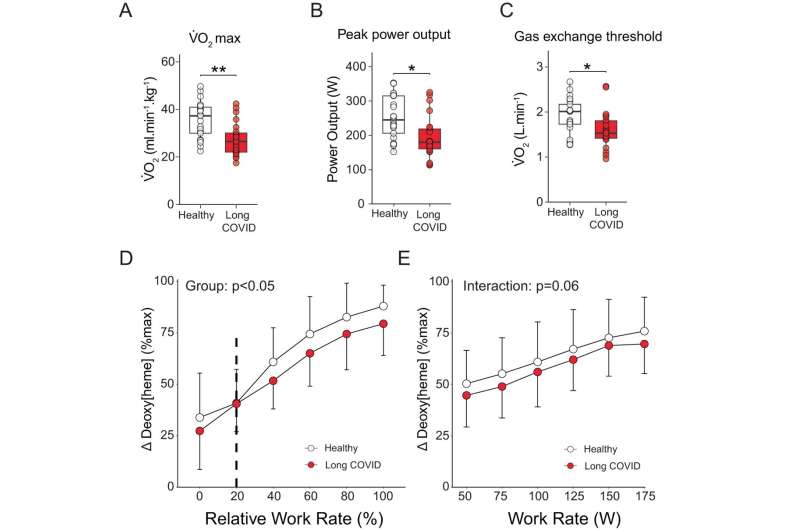
Credit: Nature Communications (2024). DOI: 10.1038/s41467-023-44432-3

Researchers from Amsterdam UMC and Vrije Universiteit Amsterdam (VU) have discovered that the persistent fatigue in patients with long COVID has a biological cause, namely mitochondria in muscle cells that produce less energy than in healthy patients. The results of the study were published in Nature Communications.

29 jan 2024--"We're seeing clear changes in the muscles in these patients," says Michèle van Vugt, Professor of Internal Medicine at Amsterdam UMC.

A total of 25 long COVID patients and 21 healthy control participants participated in the study. They were asked to cycle for 15 minutes. This cycling test caused a long-term worsening of symptoms in people with long COVID, called post-exertional malaise (PEM). Extreme fatigue occurs after physical, cognitive, or emotional exertion beyond an unknown, individual threshold. The researchers looked at the blood and muscle tissue one week before the cycling test and one day after the test.

"We saw various abnormalities in the muscle tissue of the patients. At the cellular level, we saw that the mitochondria of the muscle, also known as the energy factories of the cell, function less well and that they produce less energy," says Rob Wüst, Assistant Professor at Department of Human Movement Sciences at the VU University.

"So, the cause of the fatigue is really biological. The brain needs energy to think. Muscles need energy to move. This discovery means we can now start to research an appropriate treatment for those with long COVID," adds van Vugt.

One of the theories about long COVID is that coronavirus particles may remain in the body of people who have had the coronavirus. "We don't see any indications of this in the muscles at the moment," says Van Vugt. The researchers also saw that the heart and lungs functioned well in the patients. This means that the long-lasting effect on patient's fitness is not caused by abnormalities in the heart or lungs.

Exercising within your own limits

Exercising is not always good for patients with long COVID. "In concrete terms, we advise these patients to guard their physical limits and not to exceed them. Think of light exertion that does not lead to worsening of the complaints. Walking is good, or riding an electric bike, to maintain some physical condition. Keep in mind that every patient has a different limit," says Brent Appelman, researcher at Amsterdam UMC.

"Because symptoms can worsen after physical exertion, some classic forms of rehabilitation and physiotherapy are counterproductive for the recovery of these patients," van Vugt adds.

Long COVID symptoms

Although the majority of people infected with the SARS-CoV-2 virus recover within weeks, a subgroup, estimated to be around one in eight, will get long COVID. Symptoms in patients with long COVID, post-acute sequelae or COVID or post-COVID syndrome (PCS) include severe cognitive problems (brain fog), fatigue, exercise intolerance, autonomic dysregulation, postural orthostatic tachycardia syndrome (POTS), orthostatic intolerance, and worsening of symptoms after PEM.

More information: Muscle Abnormalities Worsen After Post-Exertional Malaise in Long COVID, Nature Communications (2024). DOI: 10.1038/s41467-023-44432-3 www.nature.com/articles/s41467-023-44432-3

Sunday, February 20, 2022


Small study finds Alzheimer's-like changes in some COVID patients' brains

brain
Credit: Unsplash/CC0 Public Domain

A study from researchers at Columbia University Vagelos College of Physicians and Surgeons reports that the brains of a small sample of patients who died of COVID display some of the same molecular changes found in the brains of people with Alzheimer's disease.

20 feb 2022--The findings could help explain the memory problems reported by sufferers of "long COVID," though the researchers caution that the study is small—with data from only 10 patients—and needs to be replicated by others.

The study was published Feb. 3 in Alzheimer's & Dementia: The Journal of the Alzheimer's Association.

Early reports of "brain fog" and persistent cardiac symptoms in COVID survivors prompted the Columbia researchers to investigate how certain molecules called ryanodine receptors were affected in this new disease.

Defective ryanodine receptors have been implicated in diverse pathogenic processes, ranging from heart and lung disease to the brain's response to stress and Alzheimer's disease, as reported in research led by Andrew Marks, MD, chair of the Department of Physiology & Cellular Biophysics at the Vagelos College of Physicians and Surgeons, who led the new study.

"When the COVID pandemic hit, like everybody else I was interested in being helpful and doing what we could do," says Marks. "What we found is really I think quite unexpected: Not only did we find defective ryanodine receptors in the hearts and lungs of deceased COVID patients, we also found them in their brains."

Molecular changes

Inside neurons, defective ryanodine receptors have previously been linked to an increase in phosphorylated tau, a well-known hallmark of Alzheimer's.

In the new study, the Columbia researchers found high levels of phosphorylated tau in the brains of the COVID patients in addition to defective ryanodine receptors.

Phosphorylated tau was found in areas where tau is typically located in Alzheimer's patients, as well as in areas where tau is not typically located in Alzheimer's patients. That suggests that phosphorylated tau in the COVID patients could be a sign of early-stage Alzheimer's and also contribute to other neurological symptoms observed in COVID-19 patients.

Increased levels of phosphorylated tau in the brain are believed to be linked to memory problems in Alzheimer's and could be causing similar issues in people with long COVID, Marks says.

Based on the findings, together with additional changes found in the brain, the investigators theorize that the immune response characteristic of severe COVID causes inflammation in the brain, which in turn leads to dysfunctional ryanodine receptors and then increases in phosphorylated tau. No changes in the pathways that lead to the formation of amyloid beta—another hallmark of Alzheimer's—were found.

Future directions

"One interpretation of these findings is that long COVID could be an atypical form of Alzheimer's and/or that patients who had severe COVID could be predisposed to developing Alzheimer's later in life," says Marks, "but much more research needs to be done before we can make more definitive conclusions."

If the memory and neurological problems of long COVID can be traced to defective ryanodine receptors, a drug under development by Marks may help. The drug is now in early clinical trials to treat a muscle disease caused by an inherited defect in the ryanodine receptor. The drug was able to fix the ryanodine defect when applied to the COVID patients' brain tissue.

"My greatest hope is that other laboratories will look into our findings, and if they are validated, generate interest in a clinical trial for long COVID," says Marks.

More information: Steve Reiken et al, Alzheimer's‐like signaling in brains of COVID‐19 patients, Alzheimer's & Dementia (2022). DOI: 10.1002/alz.12558
Provided by Columbia University Irving Medical Center 

Saturday, January 29, 2022


Attention and memory deficits persist for months after recovery from mild COVID

Attention and memory deficits persist for months after recovery from mild COVID
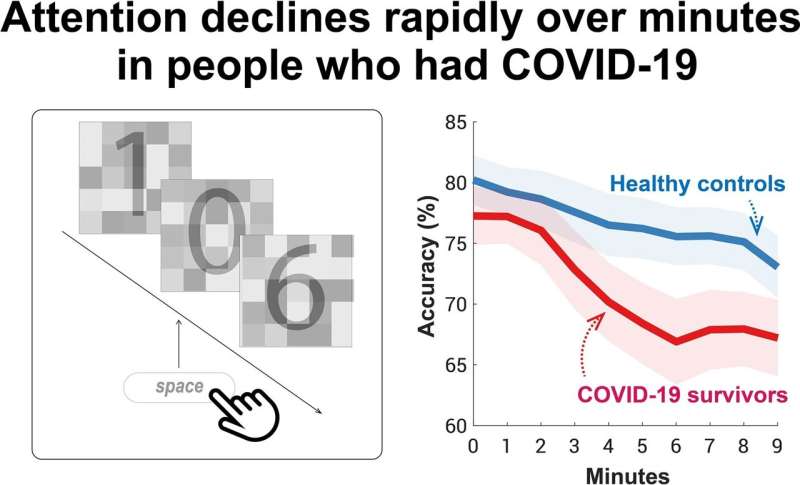
Graphical abstract. Credit: DOI: 10.1093/braincomms/fcab295

Researchers from Oxford's Department of Experimental Psychology and Nuffield Department of Clinical Neurosciences have shown that people who have had COVID but don't complain of long COVID symptoms in daily life nevertheless can show degraded attention and memory for up to 6–9 months.

29 jan 2022--Previous studies have shown that after acute COVID-19 infection some people can continue to suffer from cognitive symptoms such as difficulties in concentrating, colloquially referred to as brain fog, as well as forgetfulness and fatigue—features of the 'long COVID' syndrome.

But it was not known whether cognitive performance can also be affected in individuals who had mild symptoms and report no concerns after recovery from acute COVID infection.

In this study, participants were asked to complete a number of exercises to test their memory and cognitive ability, with a focus on cognitive functions critical for daily life, such as sustaining attention, memory, planning and semantic reasoning.

All the participants had previously suffered from COVID-19 but were not significantly different from a control group at the time of testing on factors such as fatigue, forgetfulness, sleep patterns or anxiety.

The researchers found that the participants performed well in most abilities tested, including working memory and planning, but they displayed significantly worse episodic memory (up to six months post-COVID infection) and a greater decline in the ability to sustain attention over time (for up to nine months) than uninfected individuals.

Dr. Sijia Zhao of the Department of Experimental Psychology, University of Oxford, said: "What is surprising is that although our COVID-19 survivors did not feel any more symptomatic at the time of testing, they showed degraded attention and memory. Our findings reveal that people can experience some chronic cognitive consequences for months."

Professor Masud Husain said: "We still do not understand the mechanisms that cause these cognitive deficits, but it is very encouraging to see that these attention and memory return largely to normal in most people we tested by 6-9 months after infection, who demonstrated good recovery over time."

The paper, "Rapid vigilance and episodic memory decrements in COVID-19 survivors," is published in Brain Communications.


More information: Sijia Zhao et al, Rapid vigilance and episodic memory decrements in COVID-19 survivors, Brain Communications (2021). DOI: 10.1093/braincomms/fcab295academic.oup.com/braincomms/ar … /4/1/fcab295/6511053

Friday, August 27, 2021


For many, long COVID looks a lot like chronic fatigue

For many, long COVID looks a lot like chronic fatigue
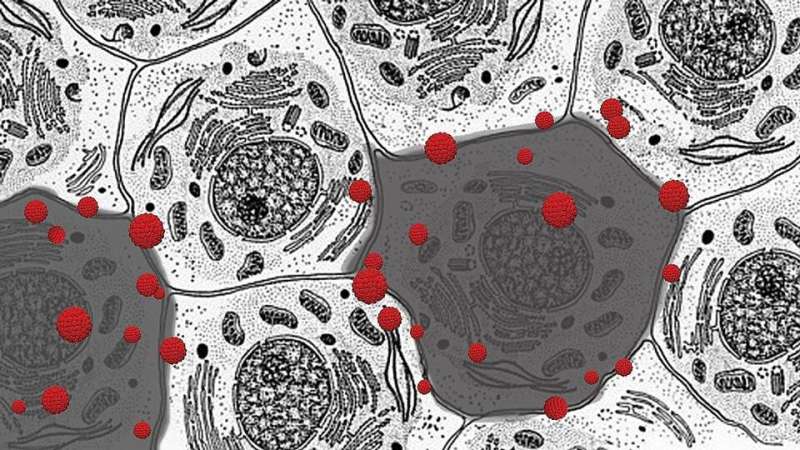
Two cells (darker color) in a cluster being attacked by free radicals (red molecules) and undergoing oxidative stress. Johns Hopkins Medicine researchers suggest that oxidative stress may cause the similar-type symptoms seen in both long COVID and ME/CFS (formerly known as chronic fatigue syndrome). Credit: M.E. Newman, Johns Hopkins Medicine, National Cancer Institute, National Institutes of Health

A team of researchers, including two from Johns Hopkins Medicine, have published a review article highlighting similarities between certain lingering symptoms following COVID-19 illness—a condition called "long COVID"—and myalgic encephalomyelitis/chronic fatigue syndrome (ME/CFS), a debilitating, complex disorder previously known as chronic fatigue syndrome.

26 aug 2021--The researchers say the symptoms shared by the two conditions may involve a biological response that goes haywire when the body encounters certain infections or other environmental hazards.

"The body's response to infection and injury is complex and covers all body systems," says lead author Bindu Paul, Ph.D., assistant professor of pharmacology and molecular sciences at the Johns Hopkins University School of Medicine. "When that response is in disarray—even just one aspect of it—it can cause feelings of being tired, brain fog, pain and other symptoms."

In their review, published Aug. 16, 2021, in the Proceedings of the National Academy of Sciences, Paul and her co-authors highlight the evidence seen in both acute COVID and ME/CFS of various underlying biological disorders. In particular, the researchers suggest a central role for the way cells behave when too many oxygen molecules pile up in a cell—a process called oxidative stress or redox imbalance. The team describes how redox imbalance may be connected to the inflammation and disorders of metabolism that are found in the two diseases.

Paul has previously studied the role of oxidative stress in conditions such as Huntington's disease, Alzheimer's disease and Parkinson's disease.

As of August 2021, approximately 36 million Americans have been diagnosed with COVID-19. "We do not yet know how many of these patients will experience long COVID, but it's estimated that at least 7% experience extended symptoms," says co-author Anthony Komaroff, M.D., the Steven P. Simcox, Patrick A. Clifford and James H. Higby Distinguished Professor of Medicine at Harvard Medical School.

The expert team urges that some of the recent National Institutes of Health funding assigned to study the long-term health effects of COVID-19 be used to investigate both long COVID and ME/CFS. Those studies, they believe, could shed light on other diseases characterized by oxidative stress, inflammation and metabolic disorders.

ME/CFS is a complex condition affecting 1 million to 2.5 million people in the United States. It is characterized by a cluster of symptoms, including severe and debilitating fatigue, disrupted and unrefreshing sleep, difficulty thinking (commonly called "brain fog"), abnormalities of the autonomic nervous system and post-exertional malaise—a flare-up of multiple symptoms following physical or cognitive exertion.

The team hopes that this scientific review will spur and help focus research on the molecular basis of both long COVID and ME/CFS.


More information: Bindu D. Paul et al, Redox imbalance links COVID-19 and myalgic encephalomyelitis/chronic fatigue syndrome, Proceedings of the National Academy of Sciences (2021). DOI: 10.1073/pnas.2024358118
Provided by Johns Hopkins University