Showing posts with label driving ability. Show all posts

Saturday, October 14, 2023


Seniors, here are the meds that can harm your driving skills
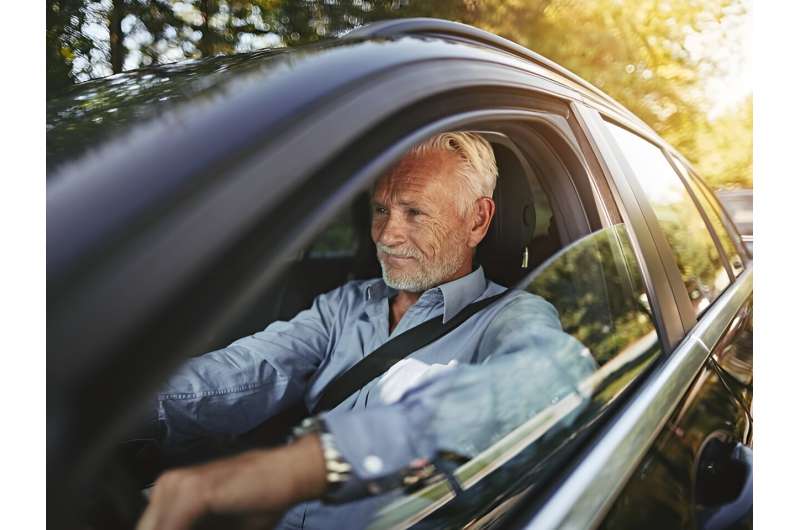
Seniors, here are the meds that can harm your driving skills

Some common medications—including antidepressants, sleep aids and painkillers—may dull the driving skills of seniors, a new study finds.

14 oct 2023--Many different medication classes have been linked to the risk of driving impairment, as anyone who has ever read the label warning "do not operate heavy machinery" might have guessed.

But the new study took a particularly rigorous approach to investigating the issue—following older adults for up to 10 years and testing their driving skills with annual road tests.

And it turned out that those using certain classes of medications were at greater risk of failing the road test at some point.

When older folks were taking either antidepressants, sedative/hypnotics (sleep medications) or non-steroidal anti-inflammatory drugs (NSAIDs), they were nearly three times more likely to get a failing or "marginal" grade than non-users.

The findings do not prove the medications are to blame, said lead researcher Dr. David Carr, a specialist in geriatric medicine at Washington University's School of Medicine in St. Louis.

It can be hard, he said, to draw a direct line between a particular medication and diminished driving skills: Is it that drug, or the medical condition it's treating or another medication an older adult is taking?

In this study, though, Carr and his colleagues were able to account for many factors, including participants' medical conditions, memory and thinking skills, vision problems and whether they lived in more affluent or disadvantaged neighborhoods.

And certain medication groups were still linked to poorer driving performance.

Beyond that, Carr said, many of the medications in question are known to act on the central nervous system—with potential side effects, like drowsiness and dizziness, that could affect driving.

"The bottom line is, we need to pay attention to this and advise our patients," Carr said, adding that he doubts this is happening routinely.

Unfortunately, he added, during busy, time-limited doctor visits, discussions of medication side effects may fall by the wayside.

So that's where patients need to be proactive, Carr said, Ask questions about potential side effects when you get a new prescription. And if you're wondering whether your sluggishness or other symptoms could be due to a medication, talk to your health care provider.

"We wouldn't want anyone to just stop taking their medication on their own," Carr stressed. "Talk to your health care provider about any changes."

That point was echoed by Jake Nelson, director of traffic safety advocacy and research at the nonprofit AAA.

The good news, Nelson said, is that your doctor might be able to make some changes—like switching to a different medication or adjusting the dose or time of day you take a particular drug.

"Don't feel like you're being a burden by asking these questions," said Nelson, who was not involved in the study. "This is about putting your health and safety first."

He also, however, stressed the role of the pharmaceutical industry in tackling the issue. There are better ways, Nelson said, to alert medication users to the risk of driving impairment—which is typically buried in the "fine print."

The study—published Sept. 29 in JAMA Network Open — involved 198 adults who were 73, on average, at the outset. None had signs of cognitive impairment (problems with memory, judgment or other thinking skills).

Study participants had annual check-ups, which included a road test with a professional driving instructor, for up to 10 years (about five years, on average). During that period, 35% received a failing and marginal road test grade at some point.

Seniors on antidepressants, sleep aids or NSAIDs were at heightened risk. The odds were greatest for those on an antidepressant or sleep medication—with 16% to 17% putting in a poor road performance per year overall. That compared with rates of 6% to 7% of their peers not using those medications.

There were a couple of surprises, Carr said. Researchers found no link between antihistamines or anticholinergic medications and seniors' driving performance.

Antihistamines are notorious for making users drowsy. Anticholinergic medications are used to treat a range of conditions, from overactive bladder to chronic obstructive pulmonary disease (COPD) to Parkinson's symptoms. They can cause side effects like sedation and blurred vision.

But, Carr said, it's possible that older drivers in this study were using newer, non-drowsy antihistamines or there were too few people taking anticholinergics to detect a significant effect.

No matter which medications they may be using, Carr said older adults should talk to their doctor about any red flags—like feeling drowsy or slower to react, or having a "close call" on the road.

More information: David B. Carr et al, Medication and Road Test Performance Among Cognitively Healthy Older Adults, JAMA Network Open (2023). DOI: 10.1001/jamanetworkopen.2023.35651

Friday, September 14, 2012


Antidepressants, sleeping pills and anxiety drugs may increase driving risk

Drugs prescribed to treat anxiety, depression and insomnia may increase patients' risk of being involved in motor vehicle accidents, according to a recent study, published in the British Journal of Clinical Pharmacology. Based on the findings, the researchers suggested doctors should consider advising patients not to drive while taking these drugs.
14 sept 2012--Psychotropic drugs affect the way the brain functions and can impair a driver's ability to control their vehicle. Research on the links between psychotropic medication and driving accidents has focused on benzodiazepines, which have been used to treat anxiety and insomnia. Perhaps the best known of these drugs is diazepam. Newer Z-drugs, used to treat insomnia, have received less attention, as have antidepressants and antipsychotics.
To understand the effects of a wider spectrum of psychotropic drugs on driving accidents, the authors compared drug use in two groups of people identified using medical records from the Taiwanese national health insurance programme. The first group included 5,183 people involved in motor vehicle accidents. The second group included 31,093 people, matched for age, gender and the year of vehicle accidents, who had no record of being involved in motor vehicle accidents. In general, those involved in accidents were more likely to have been taking psychotropic drugs, whether they had been taking them for one month, one week or one day.
The results suggest that the increased risk associated with benzodiazepines is mirrored in both Z-drugs and antidepressants. However, antipsychotics were not associated with an increased risk of motor vehicle accidents, even among those taking higher doses.
"Our findings underscore that people taking these psychotropic drugs should pay increased attention to their driving performance in order to prevent motor vehicle accidents," said lead researcher, Hui-Ju Tsai, who is based at the National Health Research Institutes in Zhunan, Taiwan. "Doctors and pharmacists should choose safer treatments, provide their patients with accurate information and consider advising them not to drive while taking certain psychotropic medications."
The research strengthens the findings of previous reports that have assessed the risk associated with individual psychotropic drugs. It also provides more evidence on the link between dose and driving performance, showing that higher doses are associated with a higher risk of an accident. "Our data demonstrated significant dose effects for antidepressants, benzodiazepine and Z-drugs," said Tsai. "This suggests that taking a higher dosage poses a greater danger to those intending to drive."
The authors recommend that patients do not stop taking their medication, but if concerned should consult their doctor.
More information: Chia-Ming Chang, Erin Chia-Hsuan Wu, Chuan-Yu Chen, Kuan-Yi Wu, Hsin-Yi Liang, Yeuk-Lun Chau, Chi-Shin Wu, Keh-Ming Lin, Hui-Ju Tsai; Psychotropic Drugs and Risk of Motor Vehicle Accidents: a Population-based Case-Control Study; British Journal of Clinical Pharmacology; DOI: 10.1111/j.1365-2125.2012.04410.x
Provided by Wiley

Friday, May 20, 2011

Driving errors increase with age among older drivers

Even healthy adults with a safe driving record tend to make more driving errors as they age, including potentially dangerous mistakes, such as failing to check blind spots, according to a study published by the American Psychological Association.

20 may 2011--Most studies of older drivers have focused on people with dementia or other conditions that might impair their performance behind the wheel. This study, conducted in Australia, comprised 266 volunteers age 70 to 88 who showed no signs of dementia, lived independently and drove at least once a week. The results could have implications for skill-based driving tests and training for older drivers, along with the design of roads, signs and vehicles, the researchers said. The study was published online in the APA journal Neuropsychology.

"We wanted to develop evidence-based measures for detecting unsafe older drivers and show how specific cognitive abilities relate to different types of driving errors," said lead researcher Kaarin J. Anstey, PhD, a psychologist who directs the Aging Research Unit at Australian National University. "We hope that policy decisions in this field will be informed by the best possible science."

Normal aging causes various declines in brain functioning and those distinct changes could affect driving skills, including the ability to focus despite distractions on the road, make quick decisions and avoid other vehicles or pedestrians, the study found.

Study participants completed a battery of cognitive tests and questionnaires about their driving history before they drove on a 12-mile route through city and suburban streets in Brisbane. A professional driving instructor rode in the car, which was equipped with an extra brake on the front passenger side for safety. An occupational therapist sat in the back seat and scored the drivers on various errors, including failure to check blind spots, speeding, sudden braking without cause, veering and tailgating.

"All types of driving errors increased with age, and the errors weren't restricted to a small group of unsafe drivers or those with a history of crashes," Anstey said. "It is important to note that there is a large variation in cognitive ability, so some people still have a high level of functioning in later life even if they have suffered some cognitive declines related to normal aging."

While men tend to think they are better drivers, they didn't fare any better on the tests than women, Anstey found. Blind spot errors were the most common mistake, followed by veering across lanes and failure to use turn signals. During the tests, 17 percent of the drivers made critical and potentially hazardous mistakes that required the driving instructor to hit the brake or grab the steering wheel.

The rate of critical errors during the driving test quadrupled from the youngest group, age 70 to 74, which had an average of less than one critical error, to the oldest group, age 85 to 89 with an average of almost four critical errors. There were no crashes during the tests, but participants who had reported an accident during the five years before the study also had a higher rate of critical errors.

Older drivers could remain safe on the roads longer with training on checking blind spots and other driving skills that might decline with aging, Anstey said. The participants had their vision checked before the driving test, but Anstey said more research is needed to determine if visual ability contributed to the high rate of blind spot errors. The study was co-authored by Joanne Wood, PhD, a professor of optometry at Queensland University of Technology.

Despite the study results, Anstey doesn't believe that driver's licenses should be restricted based on age. "In other research, we have shown that age-based restrictions reduce overall driving rates among older adults, but they don't reduce the rate of driving by those with cognitive impairments," she says. "We need evidence-based driver screening tests along with training for older drivers and alternative transportation for those who can no longer drive safely."

Provided by American Psychological Association

Tuesday, April 13, 2010

Docs Issue Guidelines for Drivers With Dementia

13 april 2010-- Scores on a dementia test and input from family members are the most useful tools in determining who is no longer capable of driving when Alzheimer's or other dementia sets in, according to new guidelines from the American Academy of Neurology.

In fact, family members' assessments are usually more accurate than the patient's own opinion of his or her driving abilities in making these decisions, the research shows.

To develop the guidelines, researchers analyzed the results of 422 studies of Alzheimer's disease or other forms of dementia and driving, and rated each based on the quality of the study and the strength of the findings.

Among the strongest predictors of gauging who would fail a behind-the-wheel driving test: scoring a "1" or higher on the Clinical Dementia Rating, a test used by doctors to assess memory, judgment and the ability to function independently at work, home and in social life. A score of "0" is no impairment; 0.5 indicates very mild dementia; 1 is mild dementia, while scores of 2 and 3 are moderate to severe dementia.

The opinions of family members and caregivers are also helpful, said lead guideline author Dr. Donald Iverson, a neurologist with the Humboldt Neurological Medical Group in Eureka, Calif. In contrast, the patient's own assessment of his or her skills isn't really reliable.

One study found that caregivers who rated a patient's driving as "marginal" or "unsafe" were often right, while another found that 94 percent of people with Alzheimer's rated themselves as safe drivers, though only 41 percent passed a driving test.

Determining who is still safe to drive can be difficult, Iverson said. Recent research has found that as many as 76 percent of people with mild dementia can still pass behind-the-wheel driving tests, while other research shows drivers with dementia are at a much higher risk of accidents.

Taken together, the research suggests that some people with dementia can still drive reasonably safely, at least at the outset of the disease, Iverson said.

"Patients with mild dementia are at higher risk as a group for unsafe driving. But a lot of them, if not most of them, are safe drivers when put on the road," Iverson said. "The alarmist group would say that nobody with dementia should be driving. The apologist groups says, wait a minute, as many as 76 percent [of people] with dementia who take the test still pass. It's probably too categorical a statement to say nobody with dementia should be driving."

The guidelines were published in the April 12 online issue of Neurology and were to be presented Monday at the American Academy of Neurology's annual meeting, in Toronto.

Among the other warning signs: a history of crashes; traffic citations; reductions in miles driven; avoiding driving at night, in the rain or other situations; showing aggressive or impulsive personality traits; and scoring low on the Mini-Mental State Examination, another test of thinking skills used to detect impairment.

With driving so important for independence and quality of life, the decision to stop driving is never easy, said Dr. David Knopman, a professor of neurology at the Mayo Clinic in Rochester, Minn.

In addition to memory loss, Alzheimer's causes problems with geographic orientation, slowed reaction times and slowed mental processing, all of which are necessary for safe driving.

"People with dementia are more likely to be uncertain where they are going and more likely to hesitate in intersections or abruptly change directions -- behaviors that would put them at greater risk of having accidents," Knopman said.

Because of changes in the brain caused by Alzheimer's, the patient may be unaware there's a problem, Knopman said. Lapses in judgment are a common symptom of the disease.

"As a doctor, I absolutely have to rely on the family's observations," he said. "The brain supports the capacity for insight into your own actions or capabilities. That is critically eroded in patients with Alzheimer's."

Some states require doctors to report medical conditions that may impair driving ability.

"All of us who have treated patients with Alzheimer's have had the experience of discussing cessation of driving and having the patient become very upset. They think their driving skills are excellent," Knopman said.

Monday, August 18, 2008


Antidepressants may impair driving ability, new research finds
Depressed drivers on meds performed worst in driving simulation


BOSTON, 18 aug 2008 – People taking prescription antidepressants appear to drive worse than people who aren't taking such drugs, and depressed people on antidepressants have even more trouble concentrating and reacting behind the wheel.
These were the conclusions of a study released Sunday at the Annual Convention of the American Psychological Association.
University of North Dakota psychologists Holly Dannewitz. PhD, and Tom Petros, PhD, recruited 60 people to participate in a driving simulation in which participants had to make a series of common driving decisions, such as reacting to brake lights, stop signs or traffic signals while being distracted by speed limit signs, pylons, animals, other cars, helicopters or bicyclists. The simulation tested steering, concentration and scanning. Thirty-one of the participants were taking at least one type of antidepressant while 29 control group members were taking no medications with the exception of oral contraceptives in some cases.
The group taking antidepressants was further divided into those who scored higher and lower on a test of depression. The group taking antidepressants who reported a high number of symptoms of depression performed significantly worse than the control group on several of the driving performance tasks. But participants who were taking antidepressants and scored in the normal range on a test to measure depression performed no differently than the non-medicated individuals.
"Individuals taking antidepressants should be aware of the possible cognitive effects as [they] may affect performance in social, academic and work settings, as well as driving abilities," the researchers wrote. "However, it appears that mood is correlated with cognitive performance, more so than medication use."
This research is important in light of the rapid increase in the number of Americans taking antidepressants. Americans' use of antidepressant drugs such as Prozac, Paxil or Zoloft, nearly tripled in a decade, according to the 2004 Health United States report, issued by the National Center for Health Statistics. Among women, one in 10 takes an antidepressant drug, according to the government.
###
Presentation: "The Effects of Antidepressants on Cognitive and Driving Performance," Holly J. Dannewitz, PhD, and Thomas Petros, PhD, University of North Dakota; Poster Session 4110, 10:00 – 11:50 AM, Sunday, Aug. 17, Boston Convention and Exhibition Center, Exhibit Halls A and B1.
For more information/interview contact Dr. Dannewitz at (218) 779-6677 or cell (218) 779-6677 or by e-mail at holly_dannewitz@und.nodak.edu.