Showing posts with label drugs. Show all posts

Sunday, December 26, 2021


Medicines for anxiety and antidepressants trigger post-surgery delirium

Medicines for anxiety and antidepressants trigger post-surgery delirium
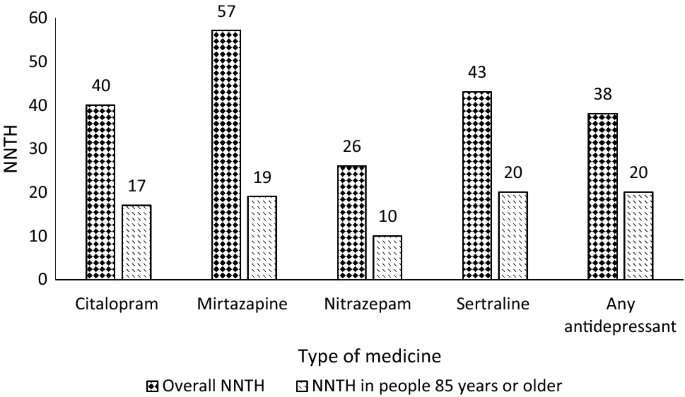
Credit: DOI: 10.1007/s40264-021-01136-1

Older people taking a medicine used to treat anxiety and insomnia—nitrazepam—as well as those on antidepressants, are twice as likely to suffer postoperative delirium after hip and knee surgery, a new Australian study has found.

26 dec 2021--The finding has prompted calls by University of South Australia (UniSA) researchers for older patients to temporarily cease these medications or change to safer alternatives prior to surgery.

In a study published in the international journal Drug Safety, UniSA scientists scanned data from 10,456 patients aged 65 years and older who had undergone knee or hip surgery in the past 20 years. A quarter of them (2614 people) had experienced delirium after surgery.

Apart from nitrazepam, five medications—commonly prescribed for depression and various anxiety disorders including obsessive-compulsive disorder and post-traumatic stress disorder—were associated with delirium, although not to the same extent. They included mirtazapine, sertraline, venlafaxine, citalopram and fluvoxamine.

Lead researcher Dr. Gizat Kassie says no link was found between pain-relieving opioids and delirium.

"Our findings show that some medicine types within the same classes of medicines are riskier than others when it comes to causing delirium after surgery, and the older the patients are, the greater the risk," he says.

Smoking, alcohol use, multiple health conditions, polypharmacy (taking five or more medications), male gender, older age and impaired cognition also put people at risk.

Many of these factors can't be altered but we can do something about medications.

"Delirium affects up to 55 percent of older patients undergoing hip surgery and is associated with an increased risk of death, prolonged hospital stays and cognitive decline. Delirium is costly to manage and puts enormous stress on the healthcare system, health professionals and families," Dr. Kassie says.

An earlier study found that older people who developed delirium following hip surgery had a 10 percent higher death rate within one year compared to patients who were not affected.

The UniSA study is the first to investigate the link between specific medications and delirium after surgery. Previous studies have been broader in scope, considering a range of factors predisposing older patients to delirium.

The researchers hope that evidence-based recommendations can be implemented into clinical practice so that delirium risk by medicines can be reduced.

"In people undergoing elective procedures it should be practical to taper specific medications well in advance. It's important that people are weaned off these riskier drugs well before surgery because abrupt withdrawal can have even worse consequences," Dr. Kassie says.

"The Risk of Preoperative Central Nervous System-Acting Medications on Delirium Following Hip or Knee Surgery: A Matched Case-Control Study" is published in Drug Safety.


More information: Gizat M. Kassie et al, The Risk of Preoperative Central Nervous System-Acting Medications on Delirium Following Hip or Knee Surgery: A Matched Case-Control Study, Drug Safety (2021). DOI: 10.1007/s40264-021-01136-1
Provided by University of South Australia 

Saturday, December 09, 2017

Is prescribing drugs 'off label' bad medicine?

Is prescribing drugs 'off label' bad medicine?

A woman, let's call her Sarah, is a young actor looking to make her debut at a major theatre. She is fit and healthy, but gets nervous on opening nights and can't sleep. She's tried zopiclone, but it didn't work, so her GP prescribes a course of quetiapine. Quetiapine is usually used to treat bipolar disorder, but the doctor explains to Sarah that he is prescribing it "off label". In other words, for a condition the drug wasn't licensed to treat.

09 dec 2017--There are legitimate reason for prescribing off label – although, there are also legitimate criticisms of the practice.
In the UK, doctors, dentists, optometrists and other prescribers are discouraged from prescribing drugs off-label when a licensed alternative is available. But off-label prescribing is done, with caution, for several reasons.
First, each prescription drug has a product licence, that is, the company that makes it had to submit a mountain of evidence to the regulator proving not only that the drug is effective, but it is safe.
Second, the prescriber and the dispensing pharmacist are legally liable when things go wrong, so the patient can sue.
Finally, sometimes there are no alternative drugs for a given health problem. For example, in Sarah's case, quetiapine is not licensed to treat insomnia. However, she has tried all available drugs licensed to treat insomnia, and none of them have worked.

The right to say 'no thanks'

Drugs are prescribed off label based on limited evidence. Sometimes, doctors have to build the evidence as they use each medicine off label and learn from their experience – what works for a given condition and what doesn't. Published case studies can also provide clues about what other uses a drug might be useful for. Case studies, though, are at the bottom of the hierarchy of medical evidence.
GPs and other prescribers have to make decisions based on the available evidence, which may not be very much. Sometimes it's based on little more than an educated guess.
In Sarah's case, the doctor feels that quetiapine might help. If the drug doesn't work for her, she'll have to come back to see him, and perhaps try a different drug – also off label.
This highlights another problem, though. Some patients – especially the elderly – take their doctor's advice as gospel and follow it regardless of how a drug makes them feel. As a result, they can end up taking pills that aren't effective and may even have unpleasant side effects.
In this example, Sarah should go back to her GP if she is concerned and she has the right not to take medicine that she doesn't want to.

This article was originally published on The Conversation. Read the original article.The Conversation

Provided by The Conversation

Saturday, August 01, 2015

Seniors get mental health drugs at twice the rate of other adults, see psychiatrists less

Seniors get mental health drugs at twice the rate of other adults, see psychiatrists less
Seniors (white bars) had a much higher rate of doctor's visits where mental health drugs were prescribed, and a lower rate of visits with psychiatrists, according to a new analysis of outpatient data from 2007-2010. Rates are visits per 100 people per year. Credit: University of Michigan
01 aug 2015--Older Americans receive prescriptions for mental health medications at more than twice the rate that younger adults do, a new study finds.
But they're much less likely to be getting their mental health care from a psychiatrist, the results also show.
That raises questions about whether they could be at risk of problems caused by a collision of multiple medications - and about whether primary care doctors may need more support to care for older people with depression, anxiety and other conditions.
The new findings, published in the Journal of the American Geriatrics Society by a team from the University of Michigan Medical School and VA Ann Arbor Healthcare System, come from the first study to compare overall outpatient mental health treatment in adults over age 65 with that of patients between ages of 18 and 64.
The authors probed nationally representative outpatient visit data, combined with U.S. Census data, to come up with rates of different types of care.
The worry of previous decades - that America's seniors weren't receiving attention for  - may now need to shift, says Donovan Maust, M.D., M.S., the geriatric psychiatrist who led the analysis.
Seniors get mental health drugs at twice the rate of other adults, see psychiatrists less
A photo illustration of the key findings from a nationally representative study of mental health-related care for adults over 65 and younger adults. Credit: University of Michigan
"Our findings suggest that psychotropic medication use is widespread among older adults in outpatient care, at a far higher rate than among younger patients," he says. "In many cases, especially for milder depression and anxiety, the safer treatment for older adults who are already taking multiple medications for other conditions might be more therapy-oriented, but very few older adults receive this sort of care."
The issue of medication use is particularly concerning for older adults, because the risk/benefit balance can shift as they become more likely to experience side effects or other adverse events.
For instance, anti-anxiety benzodiazepine drugs such as Valium, Xanax, Klonopin and Ativan (and their generic counterparts) may be relatively safe for younger adults, but carry a higher risk of car accidents, falls, fractures and worsening of thinking ability or memory for older patients.
Antidepressants can interact with blood thinners and painkillers and can raise blood pressure, all of which are more likely to be problems for older adults, who are generally on more medications than their younger counterparts.
"We need to pay special attention to polypharmacy, or multiple drugs taken at once, when prescribing psychotropic drugs in this population, because so many older adults are already on multiple medications," says Maust, an assistant professor in the U-M Department of Psychiatry.
He and his colleagues started with information from over 100,000 outpatient visits to outpatient physicians between 2007 and 2010 collected by the National Ambulatory Medical Care Survey, a national survey administered by the National Center for Health Statistics of the Centers for Disease Control and Prevention.
They examined four types of visits: ones where patients received a mental health diagnosis; saw a psychiatrist; received psychotherapy; and/or received a prescription or renewal of a psychotropic medication (including antidepressants, anxiety-calming drugs called anxiolytics, mood stabilizers, antipsychotics, or stimulant drugs).
They converted their results to a population-based visit rate, which helps consider the number of visits out of the eligible pool of potential outpatients in the community.
In this light, for example, visits related to antidepressant and anti-anxiety drug use among older adults (63 and 62 visits per 100 people per year, respectively) occurred at nearly double the rates of such visits by younger adults (36 and 29 visits per year per 100 people, respectively). In contrast, older adults see psychiatrists at about half the rate of younger adults (6.3 versus 12 visits per year per 100 people).
"While it's still true that we have patients who are not getting treated for  concerns, these data suggest that we also need to be mindful of the possibility of overtreatment, especially given the changing balance of risk and benefit as patients age," says Maust. "Collaborative care efforts in primary care that seek to create structure and support for these patients, along with appropriate reimbursement for this type of service, could be key."
More information: Journal of the American Geriatrics Society, Vol. 63, Issue 7, pp. 1364-1372, July 2015 
Provided by University of Michigan Health System

Sunday, August 19, 2007

Death by medicine

At his 91st birthday two weeks ago Don Ireland was as sharp as a man half his age. He regaled his family with stories from the distant past - his honeymoon at the Coogee Bay Hotel in 1940, and the long train ride across the Nullabor with his bride to start married life in rural Western Australia.
But it was his short-term memory that put us middle-aged folk to shame. His unfaltering recall of people's names, places and dates from recent times showed he was one of the lucky old-old - alert and cheerful.
Nevertheless there is a black hole in his reminiscences. Of the time between his 87th and 89th birthdays, Ireland's memory is blank. It is we, son and daughter-in-law, who remind him of the shell of a man he was then. He could barely talk or walk or feed himself. He nodded off to sleep all the time. And when he roused, it was to complain. He was wrapped in a miasma of gloom, not even mustering enough interest in life to watch his beloved St George rugby league team on television. Perhaps this was what being 87, 88 was like, we thought, a grim vigil in the anteroom of death.
He was in and out of hospital in those years - for falls, minor strokes and suspected heart attacks. The aged-care hostel where he had enjoyed some independence was finding it hard to manage him. He was on the brink of being admitted to a nursing home when he met yet another doctor, Tom Gibian, a geriatrician at Bankstown Hospital. Dr Gibian soon realised the problem: Don Ireland had been poisoned.
Tens of thousands of elderly Australians are at risk of the same fate. They are being poisoned by prescription medicines that are supposed to help them. Between 85,000 and 110,000 people over 65 are admitted to hospital each year because of the adverse effects of their medication - and that is just the tip of the iceberg. Too many doctors working in isolation from one another are prescribing too many drugs to old people, or the wrong medication, say experts contacted by the Herald. And no one is held accountable.
At the heart of the problem is a collision of two forces, says David Le Couteur, professor of geriatric medicine at the University of Sydney, and the director of the Centre for Education and Research on Ageing at Concord Hospital. "We have pharmaceutical companies, and doctors with conflicts of interest, who make a huge amount of money from drugs; and people who expect to live for ever and be well for ever - and they feed off each other."
Because of their medication, many elderly patients suffer unnecessarily. They feel sick, nauseous, confused; their memory deteriorates; they suffer incontinence; they may suffer hemorrhages in the stomach or brain; they fall; they are referred to nursing homes.

How many are killed by their medications is unknown. While Australians are living longer, many in their last years are rendered miserable through poor prescribing and an unco-ordinated health system that fails to pick it up.
Australian studies have shown that up to 30 per cent of hospital admissions of people aged 75 or over are related to their medication, and that almost half are preventable. Dr Tuly Rosenfeld, a senior geriatrician at Prince of Wales Hospital, says: "If we could solve the adverse effects of bad prescribing in older people, most geriatricians would be out of business."
Doctors stress that patients must not come off their drugs without first discussing the matter with their GPs because hasty withdrawal can result in serious consequences. Well-prescribed medicines saved lives.
But as the population ages, and more powerful drugs come on the market, concern is mounting among health specialists that efforts to reduce the problem of polypharmacy - too many medications - and bad or inappropriate prescribing to the elderly, are being overwhelmed.
"I see a lot of elderly people in the wards on crazy combinations of medications," says Dr Peter Hunter, the president of the Australian and New Zealand Society for Geriatric Medicine. "People started on drugs to counteract the effects of another drug; illogical combinations of medications. I tell my medical students the three main causes of acute confusion in older people are drugs, drugs and drugs."
The problem is not new. In recent years the Federal Government has responded with new structures and education programs. The National Prescribing Service tries to counter the billion-dollar marketing budgets of the pharmaceutical companies with GP education programs. Pharmacists and GPs can get federal money to carry out home medication reviews and nursing-home medication reviews, and these have jumped significantly. In recent years medical schools have begun to teach students geriatric medicine.
But the forces are formidable.
"A couple of lectures I give to GPs cannot counterbalance the very effective marketing campaigns of the drug companies," says Professor Le Couter, who warned doctors a year ago about the dangers he saw with the osteo- arthritis drug Prexige, which the Therapeutic Drugs Administration ordered off the market last week after two deaths and two liver transplants.
There are other signs all is not well. A study of almost 4000 elderly Australians published t in the Australian and New Zealand Journal of Public Health this month found that 20 per cent of women aged 65 and over were popping benzodiazepines - depressants used for insomnia and/or anxiety. Nationally an estimated 390,000 elderly men and women have been prescribed enough of the tablets to take one every night for six months, says Alice Windle, a public health researcher, which could put them at greater risk of falls and hip fractures while doing nothing for their insomnia.

A further indication of potentially poor prescribing emerges from a smaller study at Royal North Shore Hospital of 220 people aged over 75. They were admitted between May and July for atrial fibrillation, a condition that predisposes people to stroke. A medication review resulted in one-third of those deemed frail being taken off the blood-thinning medication Warfarin (and 10 per cent of those who were not frail being started on the drug). While Warfarin helps prevent strokes, it also increases the risks of gastrointestinal bleeds, and bleeding in the brain among the frail.
"Have we made significant improvement? I don't think we have," said Dr Elizabeth Roughead, of the Sansom Institute at the University of South Australia, whose recent study of prescribing indicates almost 400,000 Australians aged 70 or over are taking at least one drug considered potentially harmful to the elderly, and for which there is a safer alternative.
"We have these structures in place," she said, "but we are not getting enough doctors using them."
The problem seemed to be getting worse when D'Arcy Holman, professor of public health at the University of Western Australia, and his team conducted a survey of hospital admissions because of adverse drug reactions. After examining records of more than 43,000 patients admitted to the state's hospitals, he found the rate of adverse drug-related admissions for people over 60 had more than doubled between 1991 and 2002, and tripled for those aged 80 and over.
But drugs can cause other, more subtle, problems. A study based on more than 3000 well-functioning elderly indicates the total number of drugs taken may be less important than the kind. Dr Sarah Hilmer, head of the department of clinical pharmacology at the Royal North Shore Hospital, who led an international research team, found two particular classes of drugs were associated with poorer cognitive and physical functioning in the elderly. These were drugs with sedative or anticholinergic effects such as benzodiazepines (sleeping tablets), neuroleptics (anti-psychotics), oxybutynin (for incontinence), and antihistamines. The higher the total dosage the worse the elderly performed in tests of mental and physical agility.
When Dr Gibian first met Don Ireland in August 2005 as an inpatient even he thought he was a candidate for the nursing home. When he reviewed Ireland's medications he found he was on 17 different drugs and a further seven to be taken "as needed".

Even if some specialists in geriatric medicine contend that the critical thing is what drugs are taken rather than how many, big numbers can increase the risk of bad reactions and interactions.
Gibian took Ireland off eight of his regular drugs and put another seven under review. And then he waited.
"If elderly patients come into hospital with an acute event I start again with their medication," Gibian says. "I have to decide with each medication whether it is more likely to benefit than to harm them. Potentially every chemical put into an elderly person is a poison unless proven otherwise. If I cannot decide I take it away and see how they go in hospital. It doesn't always work; sometimes I'm wrong."
Gibian has written a pamphlet he gives to young doctors, titled How Not To Poison Elderly Patients. It says: "Every chemical product demands a high index of suspicion in the elderly." But it also cautions against "therapeutic nihilism" - depriving the elderly of medicines for potentially treatable conditions.
By the time Ireland was discharged after a fortnight, Gibian had reduced his medicines dramatically. The revival was little short of miraculous. Within two months Gibian had cut the drugs to three - from 17 - and he could write to another doctor: "He has had no falls, no chest pain and no evidence of depression … This is an outstanding outcome."
It was hard to reconcile the chirpy old man at the Christmas lunch that year with the silent husk of his former self. And two years on, although there are physical problems, he is in many respects better than he has been for years - touch wood. A man who hardly left his chair for two years, he now takes a daily walk round the block with his walking frame, he jokes with the staff, and helps hostel residents less fortunate than him. His case is taught to medical students with a caution to "avoid allocating blame" and a reminder that not all poisoned elderly bounce back quite so spectacularly.
Yet it is one of the joys of geriatric medicine that doctors can often reverse the damage caused by adverse drug reactions by withdrawing some medication.
"It's like turning a switch," one said.
Geriatricians' stories about resurrected patients have remained in the realm of anecdote. Now Dr Shoba Iyer, at the Centre for Education and Research on Ageing at Concord Hospital, and co-researchers have reviewed 31 international studies to ascertain the benefits and risks of withdrawing medication in the elderly.

Preliminary results show adverse effects from stopping medications are "infrequently encountered", and if they are, occur early. "Withdrawal of psychotropic medications was associated with a reduction in falls, improved cognition and a trend towards less aggression. Withdrawal of diuretics was generally well tolerated unless heart failure was present," the review says. But the team says there is a "pressing need" for more evidence.
The problem of bad prescribing has many causes. Older people cannot excrete drugs as effectively as a younger person, and more accumulates in their bloodstream.
Also, drugs are trialled on younger people but are mostly prescribed to those over 70.
"Take beta blockers for heart failure," Professor Le Couteur says. "Most of the trials were done in males aged in their 60s. But 90 per cent of admissions for heart failure are for people aged over 75, the majority women. To me this is as sensible as breast cancer chemotherapy trials being carried out in men."
Australia's specialists too often treat the disease not the person, and while GPs often feel powerless, they are also regarded as "independent professionals" with no official requirement to monitor their patients.
At the same time more preventative drugs are being marketed as essential, and to deny elderly people the possible benefits can seem ageist. Finally, many patients are disappointed if they leave a doctor's rooms empty-handed.
Dr Gibian says it takes a great deal of expertise "not to poison the elderly patient". And for his expertise, Don Ireland is thankful.

Saturday, June 30, 2007

Old Drugs In, New Ones Out

By ANDREW POLLACK
CAMBRIDGE, Mass. — Can an antipsychotic drug from the 1950s be paired with a 1980s antibiotic to shrink 21st-century tumors? Might an anticlotting drug help a steroid relieve arthritis? How about a cholesterol treatment and a pain reliever teaming up to tame diabetes?
Alexis Borisy, the pharmaceutical industry’s master matchmaker, is betting they can. And if he is right, he may have found a cheap and quick way to develop a new cornucopia of medicines.
Mr. Borisy is the 35-year-old co-founder and chief executive of CombinatoRx, a biotechnology company dedicated to the proposition that two old generic drugs can together make a powerful new medicine, often for an entirely different disease.
It is too early to tell if Mr. Borisy will succeed and, indeed, one of his company’s drugs failed in a clinical trial this week.
But with drug makers big and small struggling to fill their product pipelines, other biotechnology companies are also betting that pairing old drugs can be a better business than inventing new ones from scratch — which can take years and cost hundreds of millions of dollars, with no guarantee of success.
For example, Pozen, based in Chapel Hill, N.C., is developing combination drugs in partnerships with the pharmaceutical giants GlaxoSmithKline and AstraZeneca.
Orexigen Therapeutics of San Diego, recently went public based on the prospects for two combination drugs it is developing to treat obesity. And privately held Celator Pharmaceuticals of Princeton, N.J., has raised more than $40 million from venture capitalists to combine old cancer drugs in a new way.
“We think if we prove this concept clinically we have an almost unlimited pipeline,” said Andrew S. Janoff, the chief executive of Celator.
Helping propel the trend is the growing supply of drugs that have lost patent protection, providing a lode of material to test for newfound potential.
Information technology also plays a key role for CombinatoRx (which is pronounced com-bin-a-TOR-ics, as in the mathematics field that deals with combinations). The company relies on the latest robotic drug-screening technology and software to test several thousand pairs of medicines a day.
At its laboratory here, researchers and robots systematically pair about 2,000 generic drugs with one another, with 2 million different combinations possible. Each is tested on human cells. If a drug pair inhibits the cells’ production of inflammatory proteins, for example, that might be reason to explore whether the combination might work against arthritis.
Mr. Borisy describes it as a “dumb, brute-force, empirical approach” that assumes current knowledge of disease is too limited to predict in advance what combinations might work. The company does, though, give priority to testing pairs it believes have the best chance of working.
Eight of the company’s randomly arranged marriages, including drugs for cancer, arthritis and diabetes, have moved into clinical trials — an unusually high number for a company that is only seven years old. Other companies are taking more calculated approaches. Orexigen, in creating its obesity drug Contrave, took a treatment used for drug and alcohol addiction and combined it with an antidepressant sometimes used to help people quit smoking.
Meanwhile, Celator is focusing on drugs that are already used together to treat cancer. But while doctors now generally use the maximum tolerable dose of each drug, Celator says the ratio of the drugs is what matters more. So the company is developing combination products meant to deliver optimal ratios of the drugs to tumors.
Besides being quicker or cheaper to develop than single new drugs, combinations might also be more effective. Scientists have long known that the biochemical pathways involved in disease are complex, with numerous alternate routes. Trying to interfere with disease by blocking a single point can be like trying to keep traffic from reaching downtown Manhattan by closing a single intersection.
That is why doctors routinely use two or more drugs to treat people with cancer, heart disease, H.I.V. infection and other diseases.
But only more recently have pharmaceutical companies decided to do the combination themselves as a way to increase their profit.
Successful combination drugs already on the market include Advair from GlaxoSmithKline, which pairs two asthma drugs, and Vytorin, which combines cholesterol-lowering drugs from Merck and Schering-Plough that work in different ways.
When they work, combination drugs mean fewer pills to swallow, making it easier for patients to complete a course of treatment — and, as a result, for companies to hit sales targets.
Combination drugs can also let a weaker-selling medication ride the coattails of a stronger drug, or partly shield a product that has lost patent protection from generic competition. One of the ingredients in Vytorin, for instance, is Merck’s Zocor, which has gone off patent.
But for companies like CombinatoRx, which do not have any drugs of their own, finding value in off-patent products is the whole point.
Mr. Borisy, who dropped out of a Harvard chemistry doctoral program to become a drug industry consultant, started CombinatoRx in 2000 with three researchers from his former Harvard laboratory.
The company’s approach to drug research has attracted considerable attention, including Mr. Borisy being named 2003 “innovator of the year” among people under 35 by the Massachusetts Institute of Technology’s magazine Technology Review. The company has raised nearly $200 million from investors, including $44 million from its initial public offering in November 2005.
Several disease foundations have paid CombinatoRx to try to find combinations for treating their specialties. And Angiotech Pharmaceuticals, the company that supplies the drug used in Boston Scientific’s drug-coated stent for coronary arteries, has found combinations it hopes to use in future stents.
“They were far ahead of anyone else, and the way they were doing it we thought was just elegant,” said Dr. Rui Avelar, the chief medical officer for Angiotech.
For all the company’s promise and attention, though, it is far from clear that any of CombinatoRx’s drugs will reach the market. Three of the eight drugs that made it to clinical trials have since been dropped — including one on Thursday — because they did not work well enough in people, despite their effectiveness in the cell-based laboratory tests.
Those cold clinical realities have helped pull the company’s shares to the $6 range, below the initial public offering price of $7 and well under a high of almost $14 in early 2006.
Currently, the company’s lead drug is a treatment for rheumatoid arthritis and osteoarthritis that combines prednisolone, a steroid, and dipyridamole, a blood anticoagulant.
Steroids are used to treat arthritis, but they have undesirable side effects. Adding an anticoagulant seems somehow to amplify the steroid’s desirable effects, allowing use of a very low dose with greatly reduced side effects, Mr. Borisy said. The drug has shown promise in early clinical trials.
Combinations of existing drugs can enter clinical trials more quickly than totally new medicines because much is already known about their toxicity and how they behave in the body.
But some industry executives say the combinations risk encountering regulatory problems downstream. They say the Food and Drug Administration must be persuaded that a combination offers a real benefit to patients and is not just a commercial gimmick, because each additional drug a patient uses can raise the risk of safety problems, in part from interactions between the drugs.
Another risk for companies as they mine drugs no longer protected by patents is that other companies might try to sell similar combinations. While the combinations themselves can be patented, legal challenges could arise if the combination is deemed too obvious. Mr. Borisy says he is not worried because “our patents are so obviously non-obvious.”
Another business risk is that even if a combination pill is protected by patents, doctors might prescribe the two ingredients separately, especially if that would save the patient money.
Pozen, for instance, is developing a combination of the generic pain reliever naproxen with AstraZeneca’s popular heartburn remedy Nexium. The idea is that Nexium will protect the stomach from naproxen’s potentially ulcer-causing side effects. But many physicians are already prescribing an antacid pill along with a pain killer — and using generic stomach drugs rather than Nexium.
William L. Hodges, chief financial officer of Pozen, contends that his company’s combination pill will be more effective than two drugs taken separately. In the Pozen pill, he says, the naproxen is not released until Nexium has already lowered the stomach’s acidity.
Assuming companies like Pozen and CombinatoRx can surmount the challenges of two-drug combinations, the next question is whether three drugs might be even better. The answer appears to be yes, but developing trio drugs would be even more difficult.
For a triple combination, the F.D.A. might want evidence that the trio is better than not only the individual parts but also better than any of the possible pairs. Showing that would require huge and costly clinical trials.
But Mr. Borisy says his researchers and robots will be up to the task. “We’re going to get to that,” he said, “each step in time.”