Showing posts with label hangover. Show all posts

Tuesday, December 31, 2019

What causes hangovers, blackouts and 'hangxiety'? Everything you need to know about alcohol these holidays
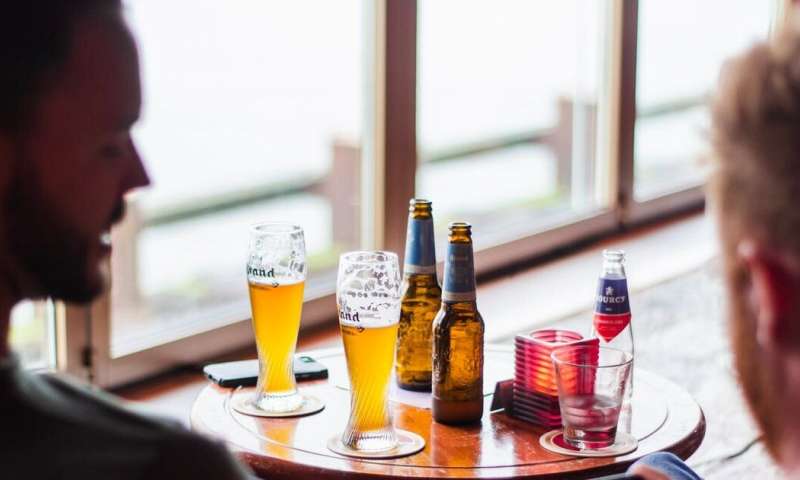
What causes hangovers, blackouts and 'hangxiety'? Everything you need to know about alcohol these holidays
There’s no way to cure a hangover, even with ‘hair of the dog’. Credit: Louis Hansel
With the holiday season well underway and New Year's Eve approaching, you might find yourself drinking more alcohol than usual.
31 dec 2019--So what actually happens to our body as we drink alcohol and wake up with a hangover?
What about memory blackouts and "hangxiety", when you can't remember what happened the night before or wake up with an awful feeling of anxiety?
Let's look at what the science says—and bust some long-standing myths.
What happens when you drink alcohol?
It doesn't matter what type of alcohol you drink—or even whether you mix drinks—the effects are basically the same with the same amount of alcohol.
When you drink alcohol it goes into the stomach and passes into the small intestine where it's quickly absorbed into the bloodstream.
If you have eaten something, it slows the absorption of alcohol so you don't get drunk so quickly. That's why it's a good idea to eat before and during drinking.
It takes your body about an hour to metabolise 10g, or one standard drink, of alcohol.
(There are calculators that help you estimate your blood alcohol level but everybody breaks down alcohol at a different rate. So these calculators should only be used as a guide.)
What causes memory blackouts?
We all have that friend who has woken up after a big night out and not been able to remember half the night. That's a "blackout".
It's different to "passing out"—you're still conscious and able to carry out conversation, you just can't remember it later.
The more alcohol you drink and the faster you drink it, the more likely you are to experience blackouts.
Once alcohol in your blood reaches a certain level, your brain simply stops forming new memories. If you think of your brain like a filing cabinet, files are going straight to the bin, so when you later try to look for them they are lost.
How do I sober up?
If you've had too much, there's no way to sober up quickly. The only thing that can sober you up is time, so that the alcohol can be eliminated from your body.
The caffeine in coffee may make you feel more awake, but it doesn't help break down alcohol. You will be just as intoxicated and impaired, even if you feel a little less drunk.
The same goes for cold showers, exercise, sweating it out, drinking water, and getting fresh air. These things might help you feel more alert, but they have no impact on your blood alcohol concentration or on the effects of alcohol.
What causes hangovers?
Researchers haven't identified one single cause of hangovers, but there are a few possible culprits.
Alcohol is a diuretic, so it makes you urinate more often, which can lead to dehydration. This is especially the case if you're in a hot, sweaty venue or dancing a lot. Dehydration can make you feel dizzy, sleepy and lethargic.
Alcohol can irritate your stomach lining, causing vomiting and diarrhoea, and electrolyte imbalance.
An imbalance of electrolytes (the minerals our body need to function properly) can make you feel tired, nauseated, and cause muscle weakness and cramps.
Too much alcohol can cause your blood vessels to dilate (expand), causing a headache. Electrolyte imbalance and dehydration can also contribute to that thumping head the next morning.
Alcohol also interferes with glucose production, resulting in low blood sugar. Not producing enough glucose can leave you feeling sluggish and weak.
Alcohol also disrupts sleep. It can make you feel sleepy at first but it interrupts the circadian cycle, sleep rhythms and REM (rapid eye movement) sleep, so later in the night you might wake up.
It can stop you from getting the quality of sleep you need to wake feeling refreshed.
Why 'hair of the dog' doesn't work
There's no way to cure a hangover, even with "hair of the dog" (having a drink the morning after). But drinking the next morning might delay the onset of symptoms, and therefore make you feel better temporarily.
Your body needs time to rest, metabolise the alcohol you have already had, and repair any damage from a heavy night of drinking. So it's not a good idea.
If you drink regularly and you find yourself needing a drink the next morning, this may be a sign of alcohol dependence and you should talk with your GP.
Suffering from hangxiety?
Alcohol has many effects on the brain, including that warm, relaxed feeling after a couple of drinks. But if you've ever felt unusually anxious after a big night out you might have experienced "hangxiety".
Over a night of drinking, alcohol stimulates the production of a chemical in the brain called GABA, which calms the brain, and blocks the production of glutamate, a chemical associated with anxiety. This combination is why you feel cheerful and relaxed on a night out.
Your brain likes to be in balance, so in response to drinking it produces more glutamate and blocks GABA. Cue that shaky feeling of anxious dread the next morning.
What can you do if you wake up with hangxiety?
To ease some of the symptoms, try some breathing exercises, some mindfulness practices and be gentle with yourself.
There are also effective treatments for anxiety available that can help. Talk to your GP or check out some resources online.
If you're already an anxious person, drinking alcohol may help you feel more relaxed in a social situation, but there is an even greater risk that you will feel anxiety the next day.
Prevention is better than a cure
If you choose to drink this holiday season, the best way to avoid hangovers, hangxiety, and blackouts is to stick within recommended limits.
The new draft Australian alcohol guidelines recommend no more than ten standard drinks a week and no more than four standard drinks on any one day.
(If you want to check what a standard drink looks like, use this handy reference.)
As well as eating to slow the absorption of alcohol, and drinking water in between alcoholic drinks to reduce the negative effects, you can also:
  • set your limits early. Decide before you start the night how much you want to drink, then stick to it
  • count your drinks and avoid shouts
  • slow down, take sips rather than gulps and avoid having shots.

Provided by The Conversation 

Friday, December 20, 2019

Hangovers: This is what happens to your body when you've had one too many

Hangovers: this is what happens to your body when you've had one too many
Credit: Elur/Shutterstock
Having a few drinks at Christmas is, for some people, as much a part of the festive tradition as presents, decorations or carols. So if you find yourself nursing a hangover on Boxing Day, you might be interested to know what's actually going on inside your body and why you feel so bad.
20 dec 2019--We tend to drink because in low doses alcohol is initially a euphoriant, it makes you feel happier. It does this by causing the body to release dopamine and endorphins, chemicals that stimulate the brain's reward system. But, after a while and as you drink more, it ultimately suppresses some  and slows down your heart and breathing.
The effects of the initial intake of any alcohol is the first of many stages of narcosis, the last of which is death. There just happens to be a large window between an effective dose (which has you thinking you are far more witty and handsome than you actually are and, later, running down the street with a traffic cone on your head) and a lethal dose (which has you on a mortuary slab).
Note that even before you arrive at the typical drink drive limit, you might experience excitement, uncoordination, impairment, speech slurring, swaying and loss of inhibition. And yet you'll still legally be able to drive a car. Small amounts of alcohol affect the limbic system in the brain, which result in aggression and the Friday and Saturday night melees common in many town centers.
Alcohol is also a vasodilator, which means it widens blood vessels, diverting blood from the body's core to its extremities. This results in the characteristic flushed cheeks you can get from consuming alcohol and also the red nose often sported by dyed-in-the-wool drinkers.
Initially, drinking alcohol is self-reinforcing. What might seem a good idea initially seems an even better idea after you've had a few. Alcohol is absorbed quicker than most things since some is absorbed in the stomach (rather than the small intestine). It then spreads throughout the body and is distributed to all organs including the brain and the liver, where the body makes a valiant attempt to break down and dispose of the alcohol.
To do this, the liver produces enzymes, small molecules that help either make or break down important molecules. In this case, the enzyme alcohol dehydrogenase breaks down the alcohol (ethanol) into acetaldehyde (ethanal), which is then further broken down into acetic (ethanoic) acid and then to carbon dioxide.
Energy is also released at all stages of the breakdown, which explains why heavy drinkers can sometimes be overweight. In fact, long-term alcoholics often get most of their calories from alcohol and eat very little. This can make them overweight but curiously undernourished because they are consuming empty calories and no vitamins or protein, which can produce a general appearance and feeling of illness.
Why you vomit
The first stage breakdown product, ethanal, is an emetic, which means it makes you want to vomit. As you drink and become more euphoric, your blood ethanol level is being monitored by the area postrema, the part of your brain which checks your blood for things that shouldn't be there. If you eat some food which causes vomiting and diarrhea, it's your postrema that has instructed your body to get rid of the offending comestibles.
Ethanal has the same effect. The postrema works to very fine tolerances, and as soon as your body contains enough ethanal, and the threshold that nature has set is reached, the postrema instructs your stomach to contract and makes you sick. Trying to stop this is like trying to hold back the tide. You may have noticed the very short time between drinking enthusiastically and realizing that it's a question of when, and not if, you are going to vomit.
Disulfiram (Antabuse) is a drug used to treat chronic alcoholism that stops the subsequent breakdown of ethanal after you drink, causing an immediate hangover and explosive vomiting. It's effectively a form of aversion therapy.
Hangover causes
Unfortunately, there's no drug to treat drunkenness itself—or a hangover. Once you are intoxicated you just have to wait it out. The liver can metabolize between 8g and 12g of alcohol in an hour and the only way to become less drunk is to stop drinking so the alcohol can diffuse out of your brain and your liver can complete the breakdown.
Aside from the vomiting, we don't know exactly why we feel so terrible when we're hungover, but it is thought to be another effect of ethanal and congeners, the non-alcoholic chemical clutter that is a by-product of fermentation. These include oils, minerals and other forms of alcohol such as methanol (wood alcohol), which can cause you to go blind in high doses.
Darker drinks have higher amounts of congeners. Red wine also causes a particularly vicious hangover since it contains a vasoconstrictor, which constricts your blood vessels and causes that throbbing headache. Meanwhile, vodka might be more forgiving since "pure" vodka is just alcohol and water.
The only other thing that might help reduce your hangover after a heavy drinking session is a glass of water before bed. Alcohol stops your pituitary gland producing the anti-diuretic hormone vasopressin, which normally restricts urine production. This means you end up losing more water than you take in, causing dehydration that irritates the blood vessels, leading to headaches.
Otherwise, you'll just have to console your post-Christmas blues with roast dinner leftovers and your favorite holiday film.
Provided by The Conversation 

Tuesday, December 31, 2013

Avoiding that new year's hangover

Avoiding that new year's hangover
Drink in moderation and eat beforehand, doctor says.
31 dec 2013—Hangover headaches are a common problem over the holidays, but there are ways to prevent them, an expert says.
The best way to avoid a hangover headache is to stick to non-alcoholic drinks such as sodas, spritzers and punches, said Dr. Noah Rosen, director of the Headache Center at North Shore-LIJ's Cushing Neuroscience Institute in Manhasset, N.Y.
If you do drink alcohol, do so in moderation, he advised.
"It is also best to eat beforehand as having food in the stomach slows the absorption of alcohol in the body," Rosen noted. "High-fat foods are particularly good in absorbing alcohol. Also, it is a good idea to snack throughout the party to keep blood sugar levels up."
Drink alcohol slowly and make every other drink a non-alcoholic one. Water is the best choice, because caffeinated sodas can boost heart rate and contribute to dehydration, he explained.
"Avoid darker alcohols as they contain more congeners, which are toxic chemicals," Rosen said. "Red wine has high congeners that can contribute to a hangover headache."
If you've been drinking, taking an anti-inflammatory drug—such as aspirin or ibuprofen or naproxen—before going to sleep will help reduce the pain of a hangover headache, Rosen said.
More information: The U.S. National Library of Medicine offers hangover treatment tips.