Showing posts with label intermittent fasting. Show all posts

Monday, November 13, 2023


Intermittent fasting is safe, effective for those with type 2 diabetes, suggests new study

meal
Credit: CC0 Public Domain

Time-restricted eating, also known as intermittent fasting, can help people with type 2 diabetes lose weight and control their blood sugar levels, according to a new study published in JAMA Network Open from researchers at the University of Illinois Chicago.

13 nov 2023--Participants who ate only during an eight-hour window between noon and 8 p.m. each day actually lost more weight over six months than participants who were instructed to reduce their calorie intake by 25%. Both groups had similar reductions in long-term blood sugar levels, as measured by a test of hemoglobin A1C, which shows blood sugar levels over the past three months.

The study was conducted at UIC and enrolled 75 participants into three groups: those who followed the time-restricted eating rules, those who reduced calories and a control group. Participants' weight, waist circumference, blood sugar levels and other health indicators were measured over the course of six months.

Senior author Krista Varady said that participants in the time-restricted eating group had an easier time following the regime than those in the calorie-reducing group. The researchers believe this is partly because patients with diabetes are generally told to cut back on calories by their doctors as a first line of defense, so many of these participants likely had already tried—and struggled with—that form of dieting. And while the participants in the time-restricted eating group were not instructed to reduce their calorie intake, they ended up doing so by eating within a fixed window.

"Our study shows that time-restricted eating might be an effective alternative to traditional dieting for people who can't do the traditional diet or are burned out on it," said Varady, a professor of kinesiology and nutrition. "For many people trying to lose weight, counting time is easier than counting calories."

There were no serious adverse events reported during the six-month study. Occurrences of hypoglycemia (low blood sugar) and hyperglycemia (high blood sugar) did not differ between the diet groups and control groups.

Today, one in 10 U.S. residents has diabetes, and that number is expected to rise to one in three by 2050 if current trends continue, the researchers explain. Finding more options for controlling weight and blood sugar levels for these patients, therefore, is crucial.

Just over half the participants in the study were Black and another 40% were Hispanic. This is notable as diabetes is particularly prevalent among those groups, so having studies that document the success of time-restricted eating for them is particularly useful, the researchers said.

The study was small and should be followed up by larger ones, said Varady, who is also a member of the University of Illinois Cancer Center. While it acts as a proof of concept to show that time-restricted eating is safe for those with type 2 diabetes, Varady said people with diabetes should consult their doctors before starting this sort of diet.

More information: Krista Varady et al, Effect of Time-Restricted Eating onWeight Loss in Adults With Type 2 Diabetes A Randomized Clinical Trial, JAMA Network Open (2023). DOI: 10.1001/jamanetworkopen.2023.39337

Saturday, July 09, 2022


Study finds people who practice intermittent fasting experience less severe complications from COVID-19

Study finds people who practice intermittent fasting experience less severe complications from COVID-19
Intermittent fasting has previously shown to have a of host of health benefits, including lowering the risk of diabetes and heart disease. Now, researchers from Intermountain Healthcare have found that people who regularly fast are less like to experience severe complications from COVID-19. Credit: Intermountain Healthcare

Intermittent fasting has previously shown to have a of host of health benefits, including lowering the risk of diabetes and heart disease. Now, researchers from Intermountain Healthcare have found that people who regularly fast are less like to experience severe complications from COVID-19.

09jul 2022--In a new study published this week in BMJ Nutrition, Prevention & Health, Intermountain researchers found that COVID-19 patients who practiced regular water-only intermittent fasting had lower risk of hospitalization or dying due to the virus than patients who did not.

"Intermittent fasting has already shown to lower inflammation and improve cardiovascular health. In this study, we're finding additional benefits when it comes to battling an infection of COVID-19 in patients who have been fasting for decades," said Benjamin Horne, Ph.D., director of cardiovascular and genetic epidemiology at Intermountain Healthcare.

In the Intermountain study, researchers identified patients enrolled in the INSPIRE registry, a voluntary health registry at Intermountain Healthcare, who had also tested positive for SARS-CoV-2 between March 2020 and February 2021—before vaccines were widely available.

They identified 205 patients who had tested positive for the virus. Of those, 73 said they regularly fasted at least once a month. Researchers found that those who practiced regular fasting had a lower rate of hospitalization or death due to coronavirus.

"Intermittent fasting was not associated with whether or not someone tested positive COVID-19, but it was associated with lower severity once patients had tested positive for it," Dr. Horne said.

In the Intermountain study, participants who said they regularly fasted did so for an average of more than 40 years. Intermountain researchers had the opportunity to closely study this specific cohort of long-time intermittent fasters because a large portion of its patients fast regularly for religious reasons.

Nearly 62 percent of Utah's population belongs the Church of Jesus Christ of Latter-day Saints, whose members typically fast the first Sunday of the month by going without food or drink for two consecutive meals.

While Dr. Horne said that more research is needed to understand why intermittent fasting is associated with better COVID-19 outcomes, he said it's most likely due to a host of ways that it affects the body.

For example, fasting reduces inflammation, especially since hyperinflammation is associated with poor COVID-19 outcomes. In addition, after 12 to 14 hours of fasting, the body switches from using glucose in the blood to ketones, including linoleic acid.

"There's a pocket on the surface of SARS-CoV-2 that linoleic acid fits into—and can make the virus less able to attach to other cells," he said.

Another potential benefit is that intermittent fasting promotes autophagy, which is "the body's recycling system that helps your body destroy and recycle damaged and infected cells," Dr. Horne added.

Dr. Horne stressed that these results are from people who have been practicing intermittent fasting for decades—not weeks—and that anyone who wants to consider the practice should consult their doctors first, especially if they are elderly, pregnant, or have conditions like diabetes, heart, or kidney disease.

Researchers also stressed intermittent fasting shouldn't be seen as a substitute for COVID vaccination.

"It should be further evaluated for potential short and long-term preventative or therapeutic use as a complementary approach to vaccines and anti-viral therapies for reducing COVID-19 severity," Dr. Horne said.


More information: Benjamin D Horne et al, Association of periodic fasting with lower severity of COVID-19 outcomes in the SARS-CoV-2 prevaccine era: an observational cohort from the INSPIRE registry, BMJ Nutrition, Prevention & Health (2022). DOI: 10.1136/bmjnph-2022-000462

Sunday, September 26, 2021


Intermittent fasting can help manage metabolic disease

metabolism
Credit: CC0 Public Domain

Eating your daily calories within a consistent window of 8-10 hours is a powerful strategy to prevent and manage chronic diseases such as diabetes and heart disease, according to a new manuscript published in the Endocrine Society's journal, Endocrine Reviews.

26 sep 2021--Time-restricted eating is a type of intermittent fasting that limits your food intake to a certain number of hours each day. Intermittent fasting is one of the most popular diet trends, and people are using it to lose weight, improve their health and simplify their lifestyles.

"People who are trying to lose weight and live a healthier lifestyle should pay more attention to when they eat as well as what they eat. Time-restricted eating is an easy-to-follow and effective dietary strategy that requires less mental math than counting calories," said Satchidananda Panda, Ph.D., of the Salk Institute for Biological Studies in La Jolla, Calif. "Intermittent fasting can improve sleep and a person's quality of life as well as reduce the risk of obesity, diabetes and heart disease."

In the manuscript, the researchers explore the science behind time-restricted eating, recent clinical studies and the scope for future research to better understand its health benefits. Recent research has revealed that genes, hormones and metabolism rise and fall at different times of the 24-hour day. Aligning our daily habit of when we eat with the body's internal clock can optimize health and reduce the risk or disease burden of chronic conditions like diabetes, heart disease and liver disease.

"Eating at random times breaks the synchrony of our internal program and make us prone to diseases," said Panda. "Intermittent fasting is a lifestyle that anyone can adopt. It can help eliminate health disparities and lets everyone live a healthy and fulfilling life."


More information: Emily Manoogian et al, Time-restricted eating for the prevention and management of metabolic diseases, Endocrine Reviews (2021). doi.org/10.1210/endrev/bnab027
Provided by The Endocrine Society

Sunday, December 29, 2019

Intermittent fasting: live 'fast,' live longer?

Intermittent fasting: live 'fast,' live longer?
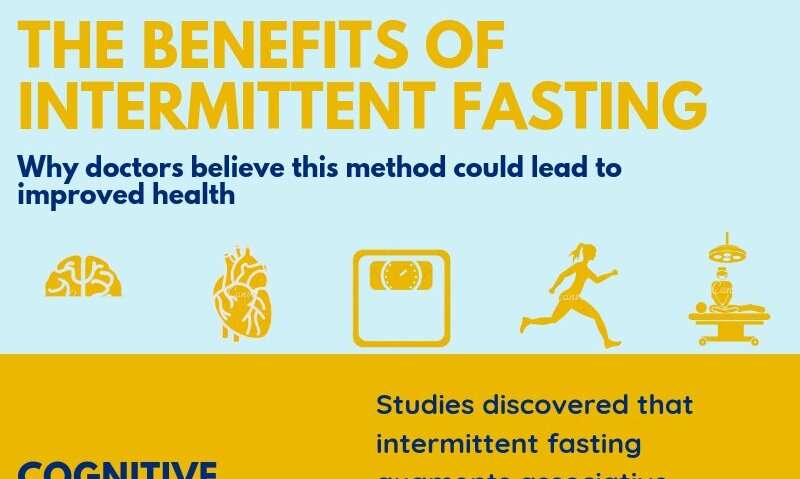
The Benefits of Intermittent Fasting. Credit: Johns Hopkins Medicine
For many people, the New Year is a time to adopt new habits as a renewed commitment to personal health. Newly enthusiastic fitness buffs pack into gyms and grocery stores are filled with shoppers eager to try out new diets.
29 dec 2019--But, does scientific evidence support the claims made for these diets? In a review article published in the Dec. 26 issue of The New England Journal of Medicine, Johns Hopkins Medicine neuroscientist Mark Mattson, Ph.D., concludes that intermittent fasting does.
Mattson, who has studied the health impact of intermittent fasting for 25 years, and adopted it himself about 20 years ago, writes that "intermittent fasting could be part of a healthy lifestyle." A professor of neuroscience at the Johns Hopkins University School of Medicine, Mattson says his new article is intended to help clarify the science and clinical applications of intermittent fasting in ways that may help physicians guide patients who want to try it.
Intermittent fasting diets, he says, fall generally into two categories: daily time-restricted feeding, which narrows eating times to 6-8 hours per day, and so-called 5:2 intermittent fasting, in which people limit themselves to one moderate-sized meal two days each week.
An array of animal and some human studies have shown that alternating between times of fasting and eating supports cellular health, probably by triggering an age-old adaptation to periods of food scarcity called metabolic switching. Such a switch occurs when cells use up their stores of rapidly accessible, sugar-based fuel, and begin converting fat into energy in a slower metabolic process.
Mattson says studies have shown that this switch improves blood sugar regulation, increases resistance to stress and suppresses inflammation. Because most Americans eat three meals plus snacks each day, they do not experience the switch, or the suggested benefits.
In the article, Mattson notes that four studies in both animals and people found intermittent fasting also decreased blood pressure, blood lipid levels and resting heart rates.
Evidence is also mounting that intermittent fasting can modify risk factors associated with obesity and diabetes, says Mattson. Two studies at the University Hospital of South Manchester NHS Foundation Trust of 100 overweight women showed that those on the 5:2 intermittent fasting diet lost the same amount of weight as women who restricted calories, but did better on measures of insulin sensitivity and reduced belly fat than those in the calorie-reduction group.
More recently, Mattson says, preliminary studies suggest that intermittent fasting could benefit brain health too. A multicenter clinical trial at the University of Toronto in April found that 220 healthy, nonobese adults who maintained a calorie restricted diet for two years showed signs of improved memory in a battery of cognitive tests. While far more research needs to be done to prove any effects of intermittent fasting on learning and memory, Mattson says if that proof is found, the fasting—or a pharmaceutical equivalent that mimics it—may offer interventions that can stave off neurodegeneration and dementia.
"We are at a transition point where we could soon consider adding information about intermittent fasting to medical school curricula alongside standard advice about healthy diets and exercise," he says.
Mattson acknowledges that researchers do "not fully understand the specific mechanisms of metabolic switching and that "some people are unable or unwilling to adhere" to the fasting regimens. But he argues that with guidance and some patience, most people can incorporate them into their lives. It takes some time for the body to adjust to intermittent fasting, and to get beyond initial hunger pangs and irritability that accompany it. "Patients should be advised that feeling hungry and irritable is common initially and usually passes after two weeks to a month as the body and brain become accustomed to the new habit," Mattson says.
To manage this hurdle, Mattson suggests that physicians advise patients to gradually increase the duration and frequency of the fasting periods over the course of several months, instead of "going cold turkey." As with all lifestyle changes, says Mattson, it's important for physicians to know the science so they can communicate potential benefits, harms and challenges, and offer support.

Sunday, December 15, 2019

Time-restricted dieting can lead to weight loss, lower blood pressure

fasting
Credit: CC0 Public Domain
Intermittent fasting has shown success in helping people lose weight, but some people can find it difficult to eat normally most days and then severely restrict their food intake other days.
15 dec 2019--A new study published in the journal Cell Metabolism offers an alternative—time-restricted eating.
Time-restricted eating allows you to eat the same every day, but you limit the time during which you can have food to a 10-hour window. So, if your first meal is at 8 a.m., your last calories for the day will need to be consumed by 6 p.m. For the next 14 hours, you fast.
The new study is small, following 19 people for three months. At the time of enrollment, all participants met three or more criteria for metabolic syndrome:
  • Waist circumference of 102 cm (men) or 88 cm (women)
  • Triglycerides of 150 mg/dL or higher (or on drug treatment for elevated triglycerides)
  • Reduced HDL-C below 40 mg/dL (men), 50 mg/dL (women) (or on drug treatment for reduced HDL-C)
  • Elevated blood pressure, systolic blood pressure of 130 or higher and/or diastolic blood pressure of 85 mmHg or higher (or treatment with an antihypertensive drug with a history of hypertension)
  • Elevated fasting glucose of 100 mg/dL or higher (or drug treatment of elevated blood glucose)
Participants logged the timing of their meals and their sleep in the myCircadianClock app. They were encouraged to stay hydrated during their fasting periods.
"We didn't ask them to change what they eat," NPR reported Pam Taub as saying. Taub is a cardiologist at the University of California, San Diego's School of Medicine, and an author of the study. Nonetheless, study participants consumed nearly 9% fewer calories.
In addition to weight loss—a 3% reduction in weight and 4% reduction in abdominal visceral fat—Taub said study participants' cholesterol levels and blood pressure improved.
"We are surprised that this small change in eating time would give them such a huge benefit," Satchidananda Panda, a professor at the Salk Institute for Biological Studies and a co-author of the study, told NPR.
"When you go into a fasting state, you start to deplete the glucose stores in your body and you start to use fat as your energy source," Taub said.

More information: You can read the full study here, www.cell.com/cell-metabolism/p … 1550-4131(19)30611-4
Journal information: Cell Metabolism 

Sunday, November 17, 2019

Intermittent fasting increases longevity in cardiac catheterization patients

Intermittent fasting increases longevity in cardiac catheterization patients
While Intermittent fasting may sound like another dieting craze, the practice of routinely not eating and drinking for short periods of time has shown again to lead to potentially better health outcomes. Credit: Intermountain Healthcare
While Intermittent fasting may sound like another dieting craze, the practice of routinely not eating and drinking for short periods of time has shown again to lead to potentially better health outcomes.
17 nov 2019--In a new study by researchers at the Intermountain Healthcare Heart Institute in Salt Lake City, researchers have found that cardiac catheterization patients who practiced regular intermittent  lived longer than patients who don't. In addition, the study found that patients who practice intermittent fasting are less likely to be diagnosed with heart failure.
"It's another example of how we're finding that regularly fasting can lead to better health outcomes and longer lives," said Benjamin Horne, Ph.D., principal investigator of the study and director of cardiovascular and genetic epidemiology at the Intermountain Healthcare Heart Institute.
Findings from the study will be presented at the 2019 American Heart Association Scientific Sessions in Philadelphia on Saturday, November 16, 2019.
In the study, researchers asked 2,001 Intermountain patients undergoing cardiac catheterization from 2013 to 2015 a series of lifestyle questions, including whether or not they practiced routine intermittent fasting. Researchers then followed up with those patients 4.5 years later and found that routine fasters had greater survival rate than those who did not.
Because people who fast routinely also are known to engage in other healthy behaviors, the study also evaluated other parameters including demographics, socioeconomic factors, cardiac risk factors, comorbid diagnoses, medications and treatments, and other lifestyle behaviors like smoking and alcohol consumption.
Correcting statistically for these factors, long-term routine fasting remained a strong predictor of better survival and lower risk of heart failure, according to researchers.
The Intermountain Healthcare Heart Institute has the opportunity to closely study intermittent fasting because a large portion of its patients do it regularly: a significant portion of Utah's population belongs the Church of Jesus Christ of Latter-day Saints, whose members typically fast the first Sunday of the month by going without food or drink for two consecutive meals, and thus not eating for the period of about a day.
While the study does not show that fasting is the causal effect for better survival, these real-world outcomes in a large population do suggest that fasting may be having an effect and urge continued study of the behavior.
"While many rapid weight loss fasting diets exist today, the different purposes of fasting in those diets and in this study should not be confused with the act of fasting," said Dr. Horne. "All proposed biological mechanisms of health benefits from fasting arise from effects that occur during the fasting period or are consequences of fasting."
Dr. Horne has previously conducted studies about risk of diabetes and coronary artery disease in patients and found that rates are lower in patients who practice routine intermittent fasting. Those studies were published in 2008 and 2012 and suggested that the decades-long development of those chronic diseases may be ameliorated by long-term routine fasting.
Why long-term intermittent fasting leads to better health outcomes is still largely unknown, though Dr. Horne said it could be a host of factors. Fasting affects a person's levels of hemoglobin, red blood cell count, human growth hormone, and lowers sodium and bicarbonate levels, while also activating ketosis and autophagy—all factors that lead to better heart health and specifically reduce risk of heart failure and coronary heart disease.
"With the lower heart failure risk that we found, which is consistent with prior mechanistic studies, this study suggests that routine fasting at a low frequency over two thirds of the lifespan is activating the same biological mechanisms that fasting diets are proposed to rapidly activate," Dr. Horne noted.
Researchers speculate that fasting routinely over a period of years and even decades conditions the body to activate the beneficial mechanisms of fasting after a shorter length of time than usual.
Typically, it takes about 12 hours of fasting for the effects to be activated, but long-term routine fasting may cause that time to be shortened so that each routine faster's daily evening/overnight fasting period between dinner and breakfast produces a small amount of daily benefit, they noted.
Further studies are on-going that will answer this question and other questions related to possible mechanisms of effects on development of chronic disease and survival. Additional research will also examine potential psychological effects of fasting and potential effects on appetite and perception of hunger.
Fasting is not for everyone. Researchers caution that pregnant and lactating women should not fast, as well as young children and frail older adults. People who have received an organ transplant, who have a suppressed immune system, who are experiencing acute or severe chronic infections, and those with eating disorders should also not fast.
People diagnosed with chronic diseases—especially those who take medications for diabetes, blood pressure, or  disease—should not fast unless under the close care and supervision of a physician because of the severe adverse effects that medications in combination with fasting can cause, including as hypoglycemia.

Provided by Intermountain Medical Center

Monday, July 08, 2019

Promising approach: Prevent diabetes with intermittent fasting

pancreas
Credit: CC0 Public Domain
Intermittent fasting is known to improve sensitivity to the blood glucose-lowering hormone insulin and to protect against fatty liver. DZD scientists from DIfE have now discovered that mice on an intermittent fasting regimen also exhibited lower pancreatic fat. In their current study published in the journal Metabolism, the researchers showed the mechanism by which pancreatic fat could contribute to the development of type 2 diabetes.
08 july 2019--Fatty liver has been thoroughly investigated as a known and frequently occurring disease. However, little is known about excess weight-induced fat accumulation in the pancreas and its effects on the onset of type 2 diabetes. The research team led by Professor Annette Schürmann and Professor Tim J. Schulz of the German Institute of Human Nutrition (DIfE) has now found that overweight mice prone to diabetes have a high accumulation of fat cells in the pancreas. Mice resistant to diabetes due to their genetic make-up despite excess weight had hardly any fat in the pancreas, but instead had fat deposits in the liver. "Fat accumulations outside the fat tissue, e.g. in the liver, muscles or even bones, have a negative effect on these organs and the entire body. What impact fat cells have within the pancreas has not been clear until now," said Schürmann, head of the Department of Experimental Diabetology at DIfE and speaker of the German Center for Diabetes Research (DZD).
Intermittent fasting reduces pancreatic fat
The team of scientists divided the overweight animals, which were prone to diabetes, into two groups: The first group was allowed to eat ad libitum—as much as they wanted whenever they wanted. The second group underwent an intermittent fasting regimen: one day the rodents received unlimited chow and the next day they were not fed at all. After five weeks, the researchers observed differences in the pancreas of the mice: Fat cells accumulated in group one. The animals in group two, on the other hand, had hardly any fat deposits in the pancreas.
Pancreatic adipocytes mediate hypersecretion of insulin
In order to find out how fat cells might impair the function of the pancreas, researchers led by Schürmann and Schulz isolated adipocyte precursor cells from the pancreas of mice for the first time and allowed them to differentiate into mature fat cells. If the mature fat cells were subsequently cultivated together with the Langerhans islets of the pancreas, the beta cells of the "islets" increasingly secreted insulin. "We suspect that the increased secretion of insulin causes the Langerhans islets of diabetes-prone animals to deplete more quickly and, after some time, to cease functioning completely. In this way, fat accumulation in the pancreas could contribute to the development of type 2 diabetes," said Schürmann.
Significance of pancreatic fat for diabetes prevention
Current data suggest that not only liver fat should be reduced to prevent type 2 diabetes. "Under certain genetic conditions, the accumulation of fat in the pancreas may play a decisive role in the development of type 2 diabetes," said Schulz, head of the Department of Adipocyte Development and Nutrition. Intermittent fasting could be a promising therapeutic approach in the future. The advantages: it is non-invasive, easy to integrate into everyday life and does not require drugs.
Intermittent Fasting
Intermittent fasting means not eating during certain time slots. However, water, unsweetened tea and black coffee are allowed around the clock. Depending on the method, the fasting lasts between 16 and 24 hours or, alternatively, a maximum of 500 to 600 calories are consumed on two days within a week. The best known form of intermittent fasting is the 16:8 method which involves eating only during an eight-hour window during the day and fasting for the remaining 16 hours. One meal—usually breakfast—is omitted.
Islets of Langerhans
The islets of Langerhans—also referred to as islet cells or Langerhans islets—are islet-like accumulations of hormone-producing cells in the pancreas. A healthy adult has about one million Langerhans islets. Each "islet" has a diameter of 0.2-0.5 millimeters. The beta cells produce the blood glucose-lowering hormone insulin and make up about 65 to 80 percent of the  cells. When blood glucose levels are elevated, these secrete insulin into the bloodstream so that the levels are normalized again.
More information: Charline Quiclet et al, Pancreatic adipocytes mediate hypersecretion of insulin in diabetes-susceptible mice, Metabolism (2019). DOI: 10.1016/j.metabol.2019.05.005
Provided by Deutsches Zentrum fuer Diabetesforschung DZD

Friday, June 07, 2019

Intermittent fasting: What's the best method?


Intermittent fasting: What's the best method?
Credit: Alexander Prokopenko/Shutterstock
Intermittent fasting is a method of dieting that restricts the amount of time you are allowed to eat. The appeal of these diets is that you don't need to count calories or eat certain foods. But there are so many versions, it's hard to know which one is best. Here's what the research says.
The 5:2 diet
07 jun 2019--This is a popular version of intermittent fasting where you eat a very low calorie diet (about 500kcal) for two days each week (any two days). On the other five days, you eat as normal.
Research has shown that it's possible to lose weight with this diet; it also improves several markers of health, such as reducing levels of glucose and cholesterol in the blood. But the 5:2 diet is unlikely to be more effective for weight loss than traditional methods of dieting. This is because 5:2 reduces calorie intake to a similar extent as traditional dieting.
There is some evidence that conducting the two days of very low calorie intake on consecutive days can improve insulin sensitivity—a risk marker for type 2 diabetes—to a greater extent than traditional dieting. This approach also leads to decreases in blood lipids (fatty substances found in the blood) compared with traditional dieting.
An important extra benefit of 5:2 is that you can consume some food during the "fasting" period, providing an opportunity to take in vital nutrients. Dieting often leads to losses in muscle and bone mass, alongside fat mass because consuming a balanced diet while reducing calorie intake is difficult. This can compromise long-term weight loss efforts as muscle is more metabolically active (burns more calories) than fat. Eating enough protein can help to reduce the loss of muscle masswhile dieting, with a bonus of reducing appetite.
Alternate-day fasting
While 5:2 could be considered a "lifestyle intervention", alternate-day fasting (ADF) is more likely to be used to lose weight quickly. ADF is often referred to as the "every other day diet" and requires you to alternate daily between unrestricted eating and consuming a very low calorie diet.
Most research on ADF uses a similar approach to 5:2, allowing a small meal (usually about 500kcal) to be consumed on "fasting" days. Research has shown that ADF can lead to considerable weight loss in 8-12 weeks, but a big problem with ADF is that adherence tends to wane. Longer-term studies have shown that calorie intake on "fasting" days creeps up over time, which reduces the calorie deficit achieved and slows the rate of weight loss.


Intermittent fasting: What's the best method?
A small meal is usually consumed on fasting days. Credit: Kyrylo Glivin/Shutterstock
Randomised controlled trials (the gold standard of clinical research) show that ADF doesn't lead to more weight loss or improvements in health compared with traditional dieting when calorie intake is the same in both groups. Despite this, it is likely that ADF will result in a greater reduction in calorie intake compared with traditional methods of dieting, which should lead to greater weight loss, initially. But it's doubtful that many people will adhere to ADF in the long term.
Time-restricted eating
Time-restricted eating (TRE) involves complete fasting for long periods (16-20 hours) and consuming all calories within restricted hours, often referred to as "feeding windows".
The most common version of TRE uses a ratio between fasting and eating of 16:8 (16 hours of fasting and eight hours during which it is permissible to eat). Many people achieve this ratio by skipping breakfast thereby delaying their first meal until midday and consuming all food between midday and 8pm.
Research has shown that calorie intake over a 24-hour period is reduced when people skip breakfast. But the number of calories expended through physical activity is also reduced, which will partially or completely negate the calorie deficit achieved by skipping breakfast. So skipping breakfast is unlikely to lead to meaningful weight loss. Skipping breakfast also reduces the effectiveness of insulin to regulate blood glucose levels after lunch, indicating a negative effect on insulin sensitivity.
But an alternative approach to TRE has shown promise. A recent study found that fasting from 2pm improved insulin sensitivity in a group of pre-diabetic males. This could be due to an enhanced natural ability to regulate effectively in the morning, due to daily variations in metabolism. So, restricting food intake to a morning feeding window and fasting in the evening may be a healthier version of TRE.
And the winner is…
As with any diet, success will be dictated mostly by adherence. When it comes to weight loss, ADF is likely to lead to the most rapid success, but sustaining weight loss in the long term may be aided by the less intense 5:2 approach.
There is some evidence that adherence could be greater in TRE, as completely restricting food intake may be easier for some people than severely restricting it. In this sense, research suggests that skipping dinner may be better for health than skipping breakfast.
It's important to note that most research suggests that intermittent fasting is no better than traditional methods of dieting. But intermittent fasting regimens that have prolonged periods of fasting, such as TRE with shorter feeding windows and 5:2 with two consecutive very low calorie days, may provide additional health benefits.

Provided by The Conversation 

Wednesday, November 28, 2018

Intermittent fasting: No advantage over conventional weight loss diets

keto diet
Credit: CC0 Public Domain
Intermittent fasting leads to weight loss and promotes health. However, it is not superior to conventional calorie restriction diets, scientists from the German Cancer Research Center (DKFZ) and Heidelberg University Hospital report in a study called HELENA—the largest investigation on intermittent fasting to date. The scientists conclude that there are many paths leading to a healthier weight. They recommend that individuals find a diet plan that fits them best.

28 nov 2018--Feasting eight hours and then fasting the following 16 hours? Or is it even better to fast two whole days a week and then enjoy eating without regrets for the rest of the week? Intermittent fasting, also known as 16:8 diet or 5:2 diet, is trendy. Numerous popular self-help books on this topic promise weight loss without yo-yo effect, as well as sustained changes in metabolism and resulting health benefits. The German Nutrition Society (DGE), on the other hand, warns that intermittent fasting is not suitable for long-term weight regulation. In addition, according to DGE, there is not enough scientific evidence on the long-term effects of this dieting method.
"There are only a few smaller studies on intermittent fasting so far, but they have come up with strikingly positive effects for metabolic health," says DKFZ's Ruth Schübel. "This made us curious and we intended to find out whether these effects can also be proven in a larger patient group and over a prolonged period."
In collaboration with a team of DKFZ researchers and scientists from Heidelberg University Hospital, Schübel examined 150 overweight and obese study participants over one year as part of the HELENA study. At the start of the study, they were randomly classified in three groups: One-third followed a conventional calorie restriction diet that reduced daily calorie intake by 20 percent. The second group kept to a 5:2 dietary plan that also saved 20 percent of calorie intake over the whole week. The control group followed no specific diet plan but was advised, like all other participants, to eat a well-balanced diet as recommended by DGE. Following the actual dieting phase, the investigators documented the participants' weight and health status for another 38 weeks.
The result may be as surprising as it is sobering for all followers of intermittent fasting. The HELENA researchers found that improvements in health status were the same with both dietary methods. "In participants of both group, body weight and, along with it, visceral fat, or unhealthy belly fat, were lost and extra fat in the liver reduced," Schübel said.
The changes in body weight distribution in the study participants were exactly determined using special MRT imaging executed by Johanna Nattenmüller at Heidelberg University Hospital. The good news is: a small dieting success is already a big gain for health. Those who reduce their body weight by only five percent, lose about 20 percent of dangerous visceral fat and more than a third of fat in the liver—no matter which dietary method they have used.
The investigators also did not find any difference between the two dieting methods in any other metabolic values that were analyzed or biomarkers and gene activities under investigation.
Although the HELENA study does not confirm the euphoric expectations placed in intermittent fasting, it also shows that this method is not less beneficial than conventional weight loss diets. "In addition, for some people it seems to be easier to be very disciplined on two days instead of counting calories and limiting food every day," explained Tilman Kühn, leading scientist of the trial. "But in order to keep the new body weight, people must also permanently switch to a balanced diet following DGE recommendations," he added.
According to Kühn, the study results show that it is not primarily the dietary method that matters but that it is more important to decide on a method and then follow through with it. "The same evidence is also suggested in a current study comparing low-carb and low-fat diets, that is, reducing carbohydrates versus reducing fat intake while otherwise having a balanced diet," said Kühn. In this study, participants also achieved comparable results with both methods.
The scientists conclude that body and health will benefit from weight loss in any case, as long as it is achieved by a reliable dieting method and on the basis of a well-balanced diet.

More information: Ruth Schübel et al, Effects of intermittent and continuous calorie restriction on body weight and metabolism over 50 wk: a randomized controlled trial, The American Journal of Clinical Nutrition (2018). DOI: 10.1093/ajcn/nqy196


Provided by German Cancer Research Center