Showing posts with label ketamine. Show all posts

Sunday, December 26, 2021


Ketamine therapy swiftly reduces depression and suicidal thoughts
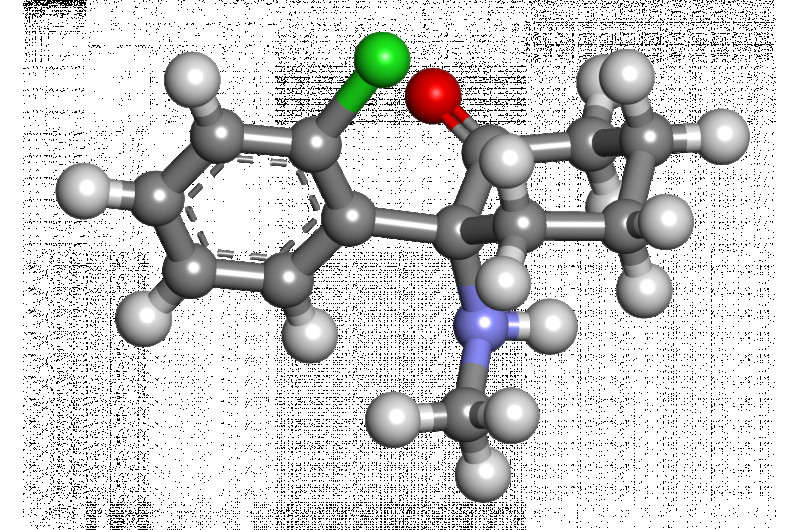
Ketamine
3-D model of Ketamine. Credit: Wikipedia

Ketamine therapy has a swift short-term effect on reducing symptoms of depression and suicidal thoughts, according to a review of all the available evidence.

26 dec 2021--A systematic review led by the University of Exeter and funded by the Medical Research Council analyzed evidence from 83 published research papers. The strongest evidence emerged around the use of ketamine to treat both major depression and bipolar depression. Symptoms were reduced as swiftly as one to four hours after a single treatment, and lasted up to two weeks. Some evidence suggested that repeated treatment may prolong the effects, however more high-quality research is needed to determine by how long

Similarly, single or multiple doses of ketamine resulted in moderate to large reductions in suicidal thoughts. This improvement was seen as early as four hours following ketamine treatment and lasted on average three days, and up to a week.

Lead author Merve Mollaahmetoglu, of the University of Exeter, said: "Our research is the most comprehensive review of the growing body of evidence on the therapeutic effects of ketamine to date. Our findings suggest that ketamine may be useful in providing rapid relief from depression and suicidal thoughts, creating a window of opportunity for further therapeutic interventions to be effective. It's important to note that this review examined ketamine administration in carefully controlled clinical settings where any risks of ketamine can be safely managed.

For other psychiatric disorders, including anxiety disorders, post-traumatic stress disorders and obsessive-compulsive disorders, there is early evidence to suggest the potential benefit of ketamine treatment. Moreover, for individuals with substance use disorders, ketamine treatment led to short-term reductions in craving, consumption and withdrawal symptoms.

Published in the British Journal of Psychiatry Open, the review synthesizes the evidence from a growing field of research into the potential benefits of ketamine for conditions for which there are limited effective treatments. The review included 33 systematic reviews, 29 randomized control trials, and 21 observational studies.

Ketamine's effects on depressive symptoms and suicidal thoughts are supported by numerous systematic reviews and meta-analyses, which provide an exhaustive overview of research in a given topic. These are considered to have the highest strength of evidence compared to other types of studies, increasing confidence in the evidence for ketamine's antidepressant and anti-suicidal effects.

However, ketamine's therapeutic effects for psychiatric conditions other than depression and suicidal thoughts are based on small number of studies that did not randomize people into different treatment arms. These effects require replication in larger randomized placebo-controlled trials, which are considered as gold standard.

The authors noted a number of difficulties in the research field, which they recommend that future studies should seek to address. One factor is the bias created because participants realize they have been given ketamine, rather than a saline solution. Senior author Professor Celia Morgan, of the University of Exeter, said: "We're finding that ketamine may have promising benefits for conditions that are notoriously hard to treat in clinic. We now need bigger and better-designed trials to test these benefits. For example, due to ketamine's unique subjective effects participants may be able to tell whether they have been given ketamine or a saline solution as the placebo, potentially creating an expectation about the effects of the drug. This effect may be better controlled by having active placebo-controlled trials, where the control group receives another drug with psychoactive properties."

A number of questions remain unanswered in the research field, including the optimal dose, route of administration and number of doses of ketamine treatment. There is also a need for further research on the added and interactive benefit of psychotherapy alongside ketamine treatment.

Additionally, the importance of ketamine's acute subjective effects in its therapeutic benefits has not been fully explored. More research is also needed on how to optimize participants' preparation for ketamine treatment and the setting in which ketamine treatment is delivered.

The research involved collaboration with the University of British Columbia, and received support from the Society for the Study of Addiction. The paper is entitled "Ketamine for the treatment of mental health and substance use disorders: a comprehensive systematic review," and is published in the British Journal of Psychiatry Open.

More information: Ketamine for the treatment of mental health and substance use disorders: a comprehensive systematic review, British Journal of Psychiatry Open, 2021. ore.exeter.ac.uk/repository/handle/10871/127825
Provided by University of Exeter 

Wednesday, October 17, 2018

Ketamine is a safe, effective alternative to opioids in treating acute pain in the ED


Ketamine is a safe, effective alternative to opioids in treating acute pain in the ED
Systematic review and meta-analysis: Randomized controlled trials 1946-2017; adult emergency department patients.
Intravenous, low-dose ketamine (LDK) is as effective as intravenous morphine in the control of acute pain in adults in the emergency department (ED). That is the finding of a study to be published in the October 2018 issue of Academic Emergency Medicine (AEM), a journal of the Society for Academic Emergency Medicine (SAEM). The results indicate that ketamine can be considered as an alternative to opioids for ED short-term pain control.

17 oct 2018--The lead author of the study is Nicholas Karlow, MPHS, a medical student at the Washington University School of Medicine in St. Louis, Missouri. The findings of the study are discussed in the featured episode of SGEM Hop (Skeptics Guide to EM Hot Off the Press).
The systematic review and meta-analysis by Karlow, et al. maintains that there is a role for opioids in the treatment of pain in the ED, but suggest that as physicians continue to face pressure to reduce opioid use, it is important to establish that alternatives such as ketamine are comparable in providing patients with appropriate analgesia in a similar time frame.
The study further suggests that for patients with opioid use disorders or substance use disorders that require a potent analgesic in the emergency department, ketamine may be a favorable option compared to an opioid.
Moving forward, the authors suggest that observational studies assessing adverse events should use similar outcome measures and time frames, and that researchers should explore patient and physician satisfaction with ketamine analgesia and side effects compared to other opioid alternatives for acute pain.
"Karlow and colleagues provide persuasive evidence that emergency physicians can reasonably expect sub-dissociative ketamine to be as effective as morphine for patients with acute abdominal or musculoskeletal pain. Minor ketamine adverse effects will likely prevent this therapy from becoming routinely first line, but low dose ketamine represents a good alternative choice for selected patients," commented Steven M. Green, MD, professor of emergency medicine and residency director at Loma Linda University, California.
Dr. Green's principal research interest has been on procedural sedation and analgesia, with numerous studies of ketamine dating back to 1990 and more recent works relating to sedation's optimal practice, politics, and future. He is a deputy editor at Annals of Emergency Medicine journal.

More information: Nicholas Karlow et al, A Systematic Review and Meta‐analysis of Ketamine as an Alternative to Opioids for Acute Pain in the Emergency Department, Academic Emergency Medicine (2018). DOI: 10.1111/acem.13502


Provided by Society for Academic Emergency Medicine

Saturday, June 23, 2018

Ketamine acts fast to treat depression and its effects last—but how?

antidepressant
Credit: CC0 Public Domain
In contrast to most antidepressant medications, which can take several weeks to reduce depressive symptoms, ketamine—a commonly used veterinary anesthetic—can lift a person out of a deep depression within minutes of its administration, and its effects can last several weeks. Researchers have long-wondered how ketamine can both act quickly and be so long-lasting.

23 jun 2018--Now, researchers led by Mark Rasenick, distinguished professor of physiology and psychiatry in the University of Illinois at Chicago College of Medicine, describe the molecular mechanisms behind ketamine's ability to squash depression and keep it at bay. They report their findings in the journal Molecular Psychiatry.
Two-thirds of participants in clinical studies who did not respond to traditional antidepressants experienced fast and lasting resolution of their depressive symptoms after being given ketamine intravenously, Rasenick explained. The effects of ketamine typically lasted about a week—much longer than would be expected with ketamine's six-hour half-life in the body.
Rasenick and his colleagues used a cellular model system to investigate how ketamine acted.
In previous research, Rasenick and his colleagues showed that SSRIs—the most commonly prescribed class of antidepressants, which includes Prozac and Zoloft—work in the brain by moving molecules called G proteins off of "lipid rafts" on the cell membrane, where the G proteins are held inactive. G proteins produce cyclic AMP, which nerve cells need to signal properly. People with depression, Rasenick found, tend to have a greater proportion of their G proteins packed into these membrane patches, along with dampened brain cell signaling, which may contribute to symptoms of depression, including a feeling of overall numbness.
In the earlier research, when Rasenick exposed rat brain cells to SSRIs, the drug accumulated in the lipid rafts, and G proteins moved out of the rafts. The movement was gradual, over the span of several days, which Rasenick thinks is the reason why SSRIs and most other antidepressants can take a long time to begin working.
In his current research, Rasenick and his colleagues performed a similar experiment with ketamine and noticed that the G proteins left the rafts much faster. G proteins began migrating out of the lipid rafts within 15 minutes. And the long-lasting effects of ketamine may be due to the fact that the G proteins were very slow to move back into the lipid rafts, Rasenick explained.
The finding contradicts the long-held idea that ketamine works solely by blocking a cellular receptor called the NMDA receptor, which sits on the surface of nerve cells and helps transmit signals.
In fact, when the researchers knocked out the NMDA receptor, ketamine still had the same effect on the cells—quickly moving G proteins out of lipid rafts on the cell membrane.
"When G proteins move out of the lipid rafts, it allows for better communication among brain cells, which is known to help alleviate some of the symptoms of depression," Rasenick said. "Whether they are moved out by traditional antidepressants or ketamine, it doesn't matter, although with ketamine, the G proteins are very slow to move back into the lipid rafts, which would explain the drugs long-term effects on depressive symptoms."
"This further illustrates that the movement of G proteins out of lipid rafts is a true biomarker of the efficacy of antidepressants, regardless of how they work," Rasenick explained. "It confirms that our cell model is a useful tool for showing the effect of potential new antidepressant drug candidates on the movement of G proteins and the possible efficacy of these drugs in treating depression."

More information: Nathan H. Wray et al, NMDAR-independent, cAMP-dependent antidepressant actions of ketamine, Molecular Psychiatry (2018). DOI: 10.1038/s41380-018-0083-8


Provided by University of Illinois at Chicago

Saturday, February 24, 2018

Antidepressant response within hours? Experts weigh evidence on ketamine as fast-acting treatment for depression

Recent studies suggest that ketamine, a widely used anesthetic agent, could offer a wholly new approach to treating severe depression—producing an antidepressant response in hours rather than weeks. Two reviews of recent evidence on ketamine and related drugs for treating depression appear in the Harvard Review of Psychiatry.

24 feb 2018--Ketamine and related drugs may represent a "paradigm shift" in the treatment of major depressive disorder (MDD) and bipolar depression—especially in patients who do not respond to other treatments, according to a review by Carlos A. Zarate, Jr, MD and colleagues at the National Institute of Mental Health. A second article explores evidence on the mechanisms behind ketamine's rapid antidepressant effects.

Growing Evidence, Clinical Caution about Ketamine for Severe Depression

Current treatments for MDD and bipolar depression have major limitations. Many patients with severe depressive symptoms don't respond to available antidepressant drugs. Even for those who do respond, it may take several weeks before symptoms improve.
Ketamine, an anesthetic, is one of several glutamatergic drugs affecting neurotransmitters in the central nervous system. Over the past decade, several studies have reported "rapid, robust, and relatively sustained antidepressant response" to ketamine, injected intravenously at low, subanesthetic doses.
Dr. Zarate and colleagues review the research on ketamine and other glutamatergic drugs for depression. Ketamine, by far the best-studied of these medications, is notable for its very rapid antidepressant effects. In patients with treatment-resistant MDD, ketamine has produced initial reductions in depressive symptoms within two hours, with peak effects at 24 hours.
Ketamine may also rapidly reduce suicidal thoughts. Combined with other medications, ketamine has also produced rapid antidepressant effects in patients with treatment-resistant bipolar depression.
Prompted by these studies, some doctors are already using ketamine in patients with severe or treatment-resistant depression. However, since it is FDA-approved only as an anesthetic, use of ketamine in depressive disorders is "off-label," unregulated, and not standardized. Many questions remain about its short- and long-term side effects and potential for abuse.
"Efforts are underway to bring ketamine to market, standardize its use, and determine its real-world effectiveness," Dr. Zarate and coauthors write. They also present evidence on several other glutamatergic drugs. One drug, esketamine, has been given "breakthrough therapy" status by the FDA for patients at imminent risk of suicide.
Cristina Cusin, MD of Massachusetts General Hospital and colleagues review neuroimaging studies evaluating ketamine's effects in the brain. The studies show ketamine-induced changes in several brain areas involved in the development of depression. Ketamine may exert its antidepressant effects by "acutely disabl[ing] the emotional resources required to perpetuate the symptoms of depression," as well as by increasing emotional blunting and increasing activity in reward processing.
Independent of how ketamine works or its ultimate role in clinical treatment, antidepressant response to glutamatergic drugs points to an exciting conclusion: "that rapid antidepressant effects are indeed achievable in humans," Dr. Zarate and coauthors write. "This paradigm shift lends additional urgency to the development of novel treatments for MDD and bipolar depression, particularly for patient subgroups that do not respond to currently available therapies."

More information: Dawn F. Ionescu et al. Ketamine-Associated Brain Changes, Harvard Review of Psychiatry (2018). DOI: 10.1097/HRP.0000000000000179
Ioline D. Henter et al. Glutamatergic Modulators in Depression, Harvard Review of Psychiatry (2018). DOI: 10.1097/HRP.0000000000000183


Provided by Wolters Kluwer Health

Saturday, July 29, 2017


Ketamine for depression encouraging, but questions remain around long-term use

Ketamine
3-D model of Ketamine. 
A world-first systematic review into the safety of ketamine as a treatment for depression, published in the prestigious Lancet Psychiatry, shows the risks of long-term ketamine treatment remain unclear.
Led by researchers from UNSW Sydney and Black Dog Institute, the review examined all prior published studies of ketamine treatment for depression, and finds few existing studies effectively report the safety of repeated doses or sustained use.


29 july 2017--Ketamine research leader UNSW Professor Colleen Loo, who is based at the Black Dog Institute, said these major gaps in the literature must be addressed before ketamine is widely adopted as a clinical treatment for depression.
"Despite growing interest in ketamine as an antidepressant, and some preliminary findings suggesting its rapid-acting efficacy, to date this has not been effectively explored over the long term and after repeated dosing," said Professor Loo, a co-author of the study.
"As ketamine treatment will likely involve multiple and repeated doses over an extended time period, it is crucial to determine whether the potential side effects outweigh the benefits to ensure it is safe for this purpose."
The review follows research revealed earlier this week, which provided preliminary evidence of promising results for ketamine delivered to elderly patients in repeated intravenous doses.
Globally, ketamine is increasingly being used off-label to treat severe and treatment-resistant depression. Also known by its party drug name 'Special K', ketamine is not approved for use in Australia, but has Therapeutic Goods Administration (TGA) approval as an anaesthetic.
Researchers in the current study trawled the literature on ketamine for depression to identify its main side effects and whether these differed between single or repeated dosing. They analysed 288 articles, of which 60 studies met the inclusion criteria, which encompassed a total of 899 patients who had received at least one dose of ketamine.
The results show that despite acute side effects commonly occurring after a single treatment of ketamine, not all studies actively monitored for or reported on them. Side effects were more likely to occur when ketamine was given intravenously, and were usually reported on immediately following a single dose.
The most common side effects reported in the literature were headache, dizziness, dissociation, elevated blood pressure and blurred vision. This is consistent with side effects reported in existing user groups - recreational drug users or those prescribed ketamine for chronic pain. However, most studies only reported on side effects in an ad-hoc way, with a lack of conclusive data available into ketamine's longer-term or cumulative effects.
"Despite low ketamine doses currently being used in depression studies, urological toxicity, liver function abnormalities, negative cognitive affects and risk of dependency may limit the safe use of ketamine as a long-term antidepressant treatment," the authors state.
Previous studies have linked longer-term ketamine use to bladder inflammation, liver damage, cognitive changes like memory loss, and craving or addiction. Very few studies have examined human ketamine dependence, with less than 15 cases described in the scientific literature over the past 20 years.
"Our study also raises questions over the risk of administering ketamine in patients with pre-existing or co-morbid medical conditions, such as those with a history of high blood pressure or heart disease," said Professor Loo.
"For instance, we know that when used to treat chronic pain, ketamine is associated with acute blood pressure changes, and experts recommend lower doses administered through slower-acting, non-intravenous means accordingly."
Future ketamine-related depression studies should focus on assessing the safety of repeated dosing regimes, consider co-morbid physical health factors, and actively assess and report on potential side effects in a systematic way, the authors recommend.
The research team are now developing a new tool to standardise future reporting on these side effects, called the Ketamine Side Effect Tool (K-SET) and Ketamine Safety Screening Tool (KSST), to address inconsistencies in the literature.
Professor Colleen Loo is also currently leading the world's largest independent trial of ketamine to treat depression, testing its effects after twice-weekly treatments over a period of four weeks amongst 200 participants.

More information: Lancet Psychiatry (2017). www.thelancet.com/journals/lan … ulltext?elsca1=tlxpr


Provided by University of New South Wale

Friday, July 28, 2017

World-first ketamine trial shows promise for geriatric depression

World-first ketamine trial shows promise for geriatric depression
Australian researchers have completed the world's first randomised control trial (RCT) assessing the efficacy and safety of ketamine as a treatment for depression in elderly patients.
The results, published in the latest American Journal of Geriatric Psychiatry, provide preliminary evidence suggesting ketamine's effectiveness as an antidepressant when delivered in repeated intravenous doses.

28 july 2017--Led by a team of researchers from UNSW Sydney and Black Dog Institute, the trial tested different doses of ketamine among 16 older age participants (aged over 60 years) who had treatment-resistant depression, administered at Wesley Hospital.
"These findings take us a big step forward as we begin to fully understand the potential and limitations of ketamine's antidepressant qualities," said lead author UNSW Professor Colleen Loo, who is based at Black Dog Institute.
"Not only was ketamine well-tolerated by participants, with none experiencing severe or problematic side effects, but giving the treatment by a simple subcutaneous injection (a small injection under the skin) was also shown to be an acceptable method for administering the drug in a safe and effective way."
Participants received increasing doses of ketamine over a period of five weeks, with doses optimised for each individual participant using a new dose-titration approach developed by Professor Loo's Sydney research team and collaborators.
As part of the double-blind, placebo-controlled trial, an active control treatment which causes sedation similar to ketamine, was used to substitute for one of the treatment sessions. Researchers monitored for mood and other side-effects after each treatment session.
Following the RCT, participants also received 12 ketamine treatments in an open-label phase to investigate the effectiveness of multiple doses of ketamine.
By the six-month follow-up, 43% of participants (7 of 14) who completed the RCT had entered remission, with five remitting at amounts below the commonly-used dose of 0.5 mg/kg. Repeated treatments also resulted in a higher likelihood of remission or a longer time to relapse, with an overall response and remission rate of 68.8% for the patients receiving ketamine treatment.
"Elderly patients with severe depression face additional barriers when seeking treatment for the condition. Many medications may cause more side effects or have lower efficacy as the brain ages," said co-author Dr Duncan George from UNSW.
"Older people are also more likely to have co-morbidities like neurodegenerative disorders and chronic pain, which can cause further complications due to ketamine's reported side effects.
"Our results indicate a dose-titration method may be particularly useful for older patients, as the best dose was selected for each individual person to maximise ketamine's benefits while minimising its adverse side effects."
Previous studies into ketamine treatments for older people with depression – which are limited to just five case reports – show mixed success, with findings limited by small sample sizes.
More broadly, little is known about ketamine's potential side effects at different doses, which include cognitive and dissociative effects, elevated blood pressure and heart rate, liver inflammation and urinary problems.
"These results are a promising early piece of the puzzle, but the risks of ketamine use are still not wholly understood. Future studies with greater sample sizes are needed to formally assess ketamine's side effects, such as its impact on liver function," Professor Loo added.

More information: Duncan George et al. Pilot Randomized Controlled Trial of Titrated Subcutaneous Ketamine in Older Patients with Treatment-Resistant Depression, The American Journal of Geriatric Psychiatry (2017). DOI: 10.1016/j.jagp.2017.06.007


Provided by University of New South Wales