Showing posts with label long covid. Show all posts

Thursday, April 11, 2024


Long COVID leaves telltale traces in the blood, finds new study
Long COVID leaves telltale traces in the blood
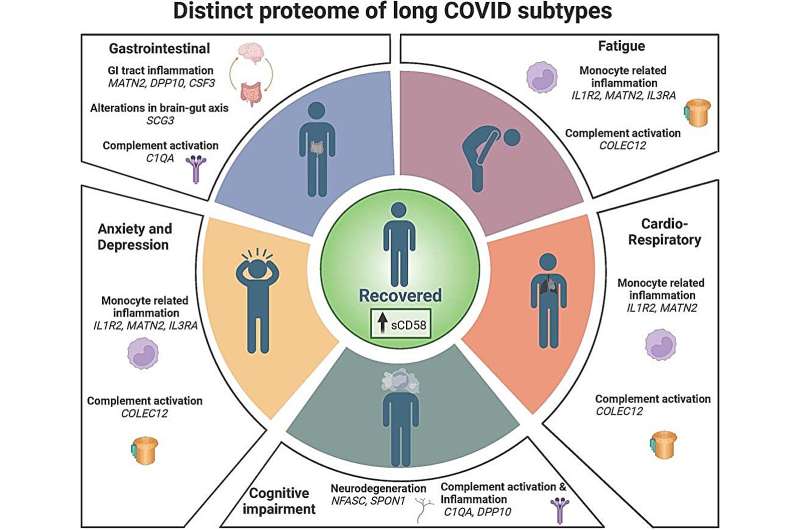
Graphical abstract. Credit: Nature Immunology (2024). DOI: 10.1038/s41590-024-01778-0

Findings from the largest UK study of patients hospitalized with SARS-CoV-2 infection show that long COVID leads to ongoing inflammation which can be detected in the blood.

11 april 2024--In an analysis of more than 650 people who had been hospitalized with severe COVID-19, patients with prolonged symptoms showed evidence of immune system activation.

The exact pattern of this activation varied depending on the sort of symptoms that they predominantly had—for example, mainly fatigue or cognitive impairment.

The research, led by Imperial College London, suggests that existing drugs which modulate the body's immune system could be helpful in treating long COVID and should be investigated in future clinical trials.

The study, published in the journal Nature Immunology, is the latest research from two collaborative UK-wide consortia, PHOSP-COVID and ISARIC-4C.

These involve scientists and clinicians from Imperial alongside collaborators from the Universities of Leicester, Edinburgh, and Liverpool, among others.

Professor Peter Openshaw, from Imperial's National Heart & Lung Institute and an ISARIC-4C lead investigator, said, "With one in ten SARS-CoV-2 infections leading to long COVID and an estimated 65 million people around the world suffering from ongoing symptoms, we urgently need more research to understand this condition. At the moment, it's very hard to diagnose and treat."

"This study, which includes detailed clinical data on symptoms and a raft of inflammatory blood plasma markers, is an important step forward and provides crucial insights into what causes long COVID."

Runaway inflammation

In the latest study, researchers included a total of 426 people who were experiencing symptoms consistent with long-term COVID-19 and had been admitted to hospital with COVID-19 infection at least six months prior to the study.

They were compared with 233 people who were also hospitalized for COVID-19 but who had fully recovered. The researchers took samples of blood plasma and measured a total of 368 proteins known to be involved in inflammation and immune system modulation.

They found that relative to patients who had fully recovered, those with long COVID showed a pattern of immune system activation, indicating inflammation of myeloid cells and activation of a family of immune system proteins called the complement system.

Myeloid cells are formed in the bone marrow and produce various types of white blood cells that circulate in the blood and migrate into organs and tissues, where they respond to damage and infection.

The complement system consists of a cascade of linked proteins that are activated in response to infection or tissue damage. Notably, overactivation of the complement system is known to be associated with many autoimmune and inflammatory conditions.

Dr. Felicity Liew, from Imperial's National Heart & Lung Institute, said, "Our findings indicate that complement activation and myeloid inflammation could be a common feature of long COVID after hospitalization, regardless of symptom type."

"It is unusual to find evidence of ongoing complement activation several months after acute infection has resolved, suggesting that long COVID symptoms are a result of active inflammation."

"However, we can't be sure that this is applicable to all types of long COVID, especially if symptoms occur after non-hospitalized infection."

Sub-types of long COVID

The researchers were also able to obtain comprehensive information about the range of symptoms that patients were experiencing and which ones were most common.

They found that certain groups of symptoms appeared to be associated with specific proteins. For example, people with gastrointestinal symptoms had increased levels of a marker called SCG3, which has previously been linked to impaired communication between the gut and the brain.

Overall, there were five overlapping subtypes of long-term COVID with different immune signatures, despite some commonalities, namely fatigue, cognitive impairment, anxiety and depression, cardiorespiratory, and gastrointestinal.

The researchers stress, however, that these groups are not mutually exclusive, and people can fall between groups depending on their symptoms.

Nevertheless, these long COVID subtypes seem to represent clear biological mechanisms of disease and highlight that different symptoms may have different underlying causes. The researchers suggest this could be useful in designing clinical trials, especially for treatments that target immune responses and inflammation.

One such treatment could include drugs called IL-1 antagonists, such as anakinra, which is commonly used to treat rheumatoid arthritis, as well as another drug class called JAK inhibitors, used to treat some types of cancers and severe forms of rheumatoid arthritis. Both drug types work by targeting components of the immune system that might be activated in long COVID.

The researchers highlight that one limitation of their study was that it only included people who had severe SARS-CoV-2 infections and who were hospitalized as a result. Yet a sizeable proportion of people who develop long COVID in the wider population only report mild initial SARS-CoV-2 infection, and it's unclear if the same immune mechanisms are at work.

Professor Openshaw concludes, "This work provides strong evidence that long COVID is caused by post-viral inflammation but shows layers of complexity."

"We hope that our work opens the way to the development of specific tests and treatments for the various types of long COVID and believe that a 'one size fits all' approach to treatment may not work."

"COVID-19 will continue to have far-reaching effects long after the initial infection has passed, impacting many lives. Understanding what's happening in the body, and how the immune system responds, is key to helping those affected."

More information: Peter Openshaw, Large-scale phenotyping of patients with long COVID post-hospitalization reveals mechanistic subtypes of disease, Nature Immunology (2024). DOI: 10.1038/s41590-024-01778-0www.nature.com/articles/s41590-024-01778-0

Monday, January 29, 2024


Strong links found between long COVID and myalgic encephalomyelitis/chronic fatigue syndrome

Strong links found between long COVID and myalgic encephalomyelitis/chronic fatigue syndrome
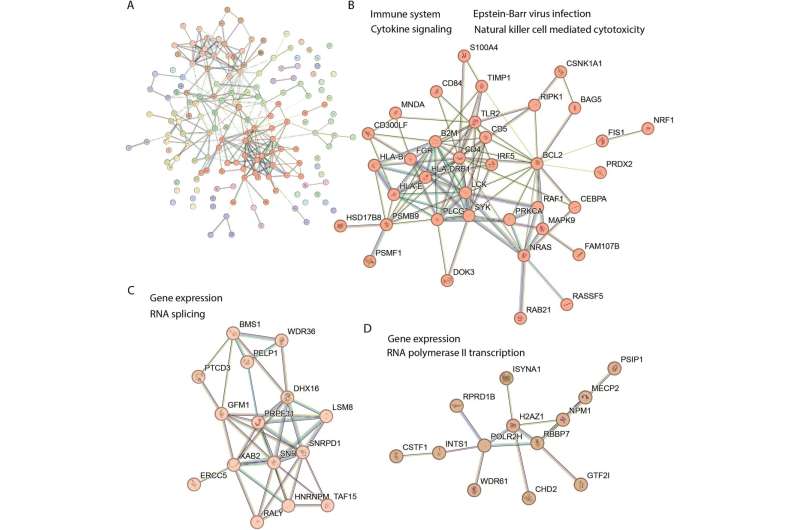
Differentially regulated proteins in long COVID patients clustered into three groups. Credit: Scientific Reports (2023). DOI: 10.1038/s41598-023-49402-9

People suffering from long COVID or myalgic encephalomyelitis/chronic fatigue syndrome (ME/CFS) could benefit from a coordinated treatment strategy, a new University of Otago study has found.

29 jan 2029--The pilot study, published in Scientific Reports, has confirmed what researchers have suspected for some time: the two conditions are closely related.

Senior author Emeritus Professor Warren Tate says the research—the first comparative molecular study of the immune cell proteins of both conditions—"strongly affirms" the link between the two.

"This means information from study of the pathophysiology of ME/CFS and therapeutic opportunities that have slowly accumulated over the last 30 years can be transferred to understanding and treating the now estimated 100 million cases of long COVID world-wide.

"But equally important, the immense resources put into long COVID research currently in the rich nations, while yet to produce major breakthroughs, can also benefit the many millions of 'hidden' ME/CFS patients whose numbers have increased steadily over time in the absence of their recovery from the illness."

Study results showed the immune system activity of six long COVID patients one year after a COVID-19 infection was dramatically different from five healthy controlled-group study participants, reflecting a chronic dysfunctional state.

Data gathered from those patients was found to be similar to data gathered from a group of nine diagnosed ME/CFS patients, who had suffered the condition for 16 years on average.

The study reinforces the researchers' previously published model in Frontiers of Neurology to explain the complex dysfunctional physiology for both ME/CFS and long COVID: In susceptible people (determined by their health history and genetic background), the normal transitory immune/inflammatory response of the peripheral nervous system to infection or stress does not resolve quickly as in most people.

Instead, it becomes chronic and leads to a cascade effect involving the brain, immune system and central nervous system, which in turn results in multiple neurological symptoms and poor brain regulation of body physiology.

Emeritus Professor Tate says long COVID from the pandemic SARS-CoV-2 virus is a specific example of ME/CFS, that has occurred in susceptible people from endemic viruses like glandular fever, and from small historical viral outbreaks geographically contained like the SARS-CoV-1 virus outbreak in 2003.

"It highlights within our community there are significant numbers of people debilitated now with disrupted immune systems, dysfunctional energy production, and disturbed brain regulation of their overall physiology that severely disrupts their family lives, ability to work and participate in their communities long-term, and that these people need support from all levels of society."

Therapeutic targeting of the immune response/inflammatory pathways could be effective, Emeritus Professor Tate says.

"Currently, patients with ME/CFS and long COVID will understandably clutch at any potential treatment suggested to find a better quality of life in the absence of defined treatments.

"That means often multiple drugs, nutraceuticals, cognitive therapies and relaxation strategies with possible crossover adverse effects are being tried at the same time, without resulting benefit to the patient in most cases."

While potential compounds are available that target different points of the cellular energy production pathway, no systematic studies have been carried out to determine whether they show real benefit.

Investment in combined clinical trials to treat both conditions is desperately needed, he says.

"Immunotherapy for treating specific features of a disturbed immune system for many diseases is in a revolutionary phase of development and should have potential for application to ME/CFS and long COVID patients now the specific changes in their dysfunctional immune systems are being carefully documented."

Emeritus Professor Tate is calling for national guidelines with best practice disease management plans for clinicians so both patient groups have a good chance of a more fulfilling life no matter the stage of their illness, although he points out this must be accompanied by specialist clinics with a range of practitioners to support the patient's needs.

More information: Katie Peppercorn et al, A pilot study on the immune cell proteome of long COVID patients shows changes to physiological pathways similar to those in myalgic encephalomyelitis/chronic fatigue syndrome, Scientific Reports (2023). DOI: 10.1038/s41598-023-49402-9

Saturday, October 30, 2021


How many people get 'long COVID?' More than half, researchers find

covid
Credit: Pixabay/CC0 Public Domain

More than half of the 236 million people who have been diagnosed with COVID-19 worldwide since December 2019 will experience post-COVID symptoms—more commonly known as "long COVID"—up to six months after recovering, according to Penn State College of Medicine researchers. The research team said that governments, health care organizations and public health professionals should prepare for the large number of COVID-19 survivors who will need care for a variety of psychological and physical symptoms.

30 oct 2021--During their illnesses, many patients with COVID-19 experience symptoms, such as tiredness, difficulty breathing, chest pain, sore joints and loss of taste or smell.

Until recently, few studies have evaluated patients' health after recovering from the coronavirus. To better understand the short- and long-term health effects of the virus, the researchers examined worldwide studies involving unvaccinated patients who recovered from COVID-19. According to the findings, adults, as well as children, can experience several adverse health issues for six months or longer after recovering from COVID-19.

The researchers conducted a systematic review of 57 reports that included data from 250,351 unvaccinated adults and children who were diagnosed with COVID-19 from December 2019 through March 2021. Among those studied, 79% were hospitalized, and most patients (79%) lived in high-income countries. Patients' median age was 54, and the majority of individuals (56%) were male.

The researchers analyzed patients' health post-COVID during three intervals at one month (short-term), two to five months (intermediate-term) and six or more months (long-term).

According to the findings, survivors experienced an array of residual health issues associated with COVID-19. Generally, these complications affected a patient's general well-being, their mobility or organ systems. Overall, one in two survivors experienced long-term COVID manifestations. The rates remained largely constant from one month through six or more months after their initial illness. 

The investigators noted several trends among survivors, such as:

  • General well-being: More than half of all patients reported weight loss, fatigue, fever or pain.
  • Mobility: Roughly one in five survivors experienced a decrease in mobility.
  • Neurologic concerns: Nearly one in four survivors experienced difficulty concentrating.
  • Mental health disorders: Nearly one in three patients were diagnosed with generalized anxiety disorders.
  • Lung abnormalities: Six in ten survivors had chest imaging abnormality and more than a quarter of patients had difficulty breathing.
  • Cardiovascular issues: Chest pain and palpitations were among the commonly reported conditions.
  • Skin conditions: Nearly one in five patients experienced hair loss or rashes.
  • Digestive issues: Stomach pain, lack of appetite, diarrhea and vomiting were among the commonly reported conditions.

"These findings confirm what many health care workers and COVID-19 survivors have been claiming, namely, that adverse health effects from COVID-19 can linger," said co-lead investigator Vernon Chinchilli, chair of the Department of Public Health Sciences. "Although previous studies have examined the prevalence of long COVID symptoms among patients, this study examined a larger population, including people in high-, middle- and low-income countries, and examined many more symptoms. Therefore, we believe our findings are quite robust given the available data."

"The burden of poor health in COVID-19 survivors is overwhelming," said co-lead investigator Dr. Paddy Ssentongo, assistant professor at the Penn State Center for Neural Engineering. "Among these are the mental health disorders. One's battle with COVID doesn't end with recovery from the acute infection. Vaccination is our best ally to prevent getting sick from COVID-19 and to reduce the chance of long-COVID even in the presence of a breakthrough infection."

The mechanisms by which COVID-19 causes lingering symptoms in survivors are not fully understood. These symptoms could result from immune-system overdrive triggered by the virus, lingering infection, reinfection or an increased production of autoantibodies (antibodies directed at their own tissues). The SARS-CoV-2 virus, the agent that causes COVID-19, can access, enter and live in the nervous system. As a result, nervous system symptoms such as taste or smell disorders, memory impairment and decreased attention and concentration commonly occur in survivors. 

"Our study was not designed to confirm COVID-19 as the sole cause of these symptoms. It is plausible that symptoms reported by patients in some of the studies examined were due to some other causes," said Ssentongo.

According to the researchers, early intervention will be critical for improving the quality of life for many COVID-19 survivors. They said that in the years ahead, health care providers will likely see an influx of patients with psychiatric and cognitive problems, such as depression, anxiety or post-traumatic stress disorder, who were otherwise healthy before their COVID-19 infection. Based on these findings, health care providers should plan and allocate resources accordingly in order to effectively monitor and treat these conditions.

The research team noted that these long-term health conditions may cause increased demand for medical care and could overwhelm health care systems, particularly in low- and middle-income countries. They said the findings from this study could help shape treatment plans to improve care for COVID-19 patients and establish integrated evidence-based clinical management for those affected.

"Since survivors may not have the energy or resources to go back and forth to their health care providers, one-stop clinics will be critical to effectively and efficiently manage patients with long COVID," Ssentongo said. "Such clinics could reduce medical costs and optimize access to care, especially in populations with historically larger health care disparities."

Th research was published in JAMA Network Open.

More information: Destin Groff et al, Short-term and Long-term Rates of Postacute Sequelae of SARS-CoV-2 Infection: A Systematic Review,
JAMA Netw Open (2021). DOI: 10.1001/jamanetworkopen.2021.28568
Provided by Pennsylvania State University