Neck circumference of the elderly is associated with their nutritional status
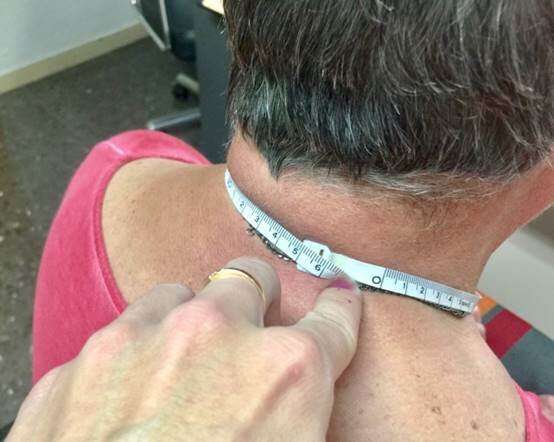

Researchers found that among 579 adults ages 75 to 80 years, nearly 15 percent were at risk of malnutrition, based on their diet, weight and recent weight loss, and physical and mental well-being.
Women were more likely to be undernourished than men; nearly 19 percent were at risk of malnutrition, compared with almost 11 percent of men.
In addition, men and women who were depressed or described themselves as unhealthy were more likely than others to become at risk of malnutrition over the next two to four years.
Dr. Yvonne Johansson and her colleagues at Linkoping University report the findings in the Journal of Clinical Nursing.
Malnutrition and dehydration are common in nursing homes, but older adults living at home can also be at risk, for various reasons -- such as poor appetite and mobility problems that limit their ability to shop and cook.
The current findings suggest that doctors should regularly assess older adults' nutritional status, symptoms of depression and their perceptions of their own health, according to Johansson.
"This makes it possible to individualize the care of older home-living people in cooperation with different professionals in health and medical care and home-care services," she told Reuters Health.
Older adults can also take steps to ensure they are adequately nourished, according to Johansson. She suggested eating several smaller meals and snacks throughout the day; people's appetites often wane as they age, and many older adults may not be able to manage large meals.
But even though older adults' calorie needs may not be what they used to be, Johansson said, their nutrient needs stay the same -- or may increase. So it's important, she noted, to keep this in mind in meal planning, and choose foods rich in nutrients like protein, fiber, "good" fats, vitamins and minerals.
SOURCE: Journal of Clinical Nursing, May 2009.
Researchers found that among 579 adults ages 75 to 80 years, nearly 15 percent were at risk of malnutrition, based on their diet, weight and recent weight loss, and physical and mental well-being.
Women were more likely to be undernourished than men; nearly 19 percent were at risk of malnutrition, compared with almost 11 percent of men.
In addition, men and women who were depressed or described themselves as unhealthy were more likely than others to become at risk of malnutrition over the next two to four years.
Dr. Yvonne Johansson and her colleagues at Linkoping University report the findings in the Journal of Clinical Nursing.
Malnutrition and dehydration are common in nursing homes, but older adults living at home can also be at risk, for various reasons -- such as poor appetite and mobility problems that limit their ability to shop and cook.
The current findings suggest that doctors should regularly assess older adults' nutritional status, symptoms of depression and their perceptions of their own health, according to Johansson.
"This makes it possible to individualize the care of older home-living people in cooperation with different professionals in health and medical care and home-care services," she told Reuters Health.
Older adults can also take steps to ensure they are adequately nourished, according to Johansson. She suggested eating several smaller meals and snacks throughout the day; people's appetites often wane as they age, and many older adults may not be able to manage large meals.
But even though older adults' calorie needs may not be what they used to be, Johansson said, their nutrient needs stay the same -- or may increase. So it's important, she noted, to keep this in mind in meal planning, and choose foods rich in nutrients like protein, fiber, "good" fats, vitamins and minerals.
SOURCE: Journal of Clinical Nursing, May 2009.
07 may 2009--Sharing a meal in good company can stimulate the appetite – particularly among hospitalized seniors – according to a new Université de Montréalstudy published in The Gerontologist.
"The more social interaction occurs at mealtimes in hospital geriatric re-adaptation units the better food intake will be," says Danielle St-Arnaud McKenzie.
A graduate of the Université de Montréal Department of Nutrition, St-Arnaud McKenzie conducted the study with Professor Marie-Jeanne Kergoat of the Faculty of Medicine, Professor Guylaine Ferland of the Department of Nutrition, as well as Laurette Dubé of McGill University.
Research has shown that a majority of patients suffer from nutritional deterioration during hospitalization. "Approximately 35 percent of elderly people suffer from malnutrition," says Marie-Jeanne Kergoat. "That's a scary estimate when we consider that nutrition tends to deteriorate during hospitalization."
St-Arnaud McKenzie observed some 30 patients during mealtimes at the re-adaptation unit of the Institut universitaire de gériatrie de Montréal (IUGM), which is affiliated to the Université de Montréal. Using an evaluation grid, she measured their verbal and non-verbal behaviors. By observing these patients at mealtimes she calculated the level of conviviality. She then measured food intake by looking at the quantity of food leftover after the meal.
Results were clear – there was a correlation between food intake and social interaction. What's more, patients ate more when social interactions were friendly and lively. The research team also found that nutritional deficiencies mostly occur when patients eat alone in their rooms.
As the population ages, the number of seniors will rise and researchers must find solutions to elderly malnutrition. "By eating poorly, elderly patients risk developing other age-related health problems," says St-Arnaud McKenzie.
On the Web:
About the Université de Montréal: www.umontreal.ca/english/index.htm