Showing posts with label remdesivir. Show all posts

Friday, November 20, 2020

 WHO Guideline Development Group advises against use of remdesivir for COVID-19
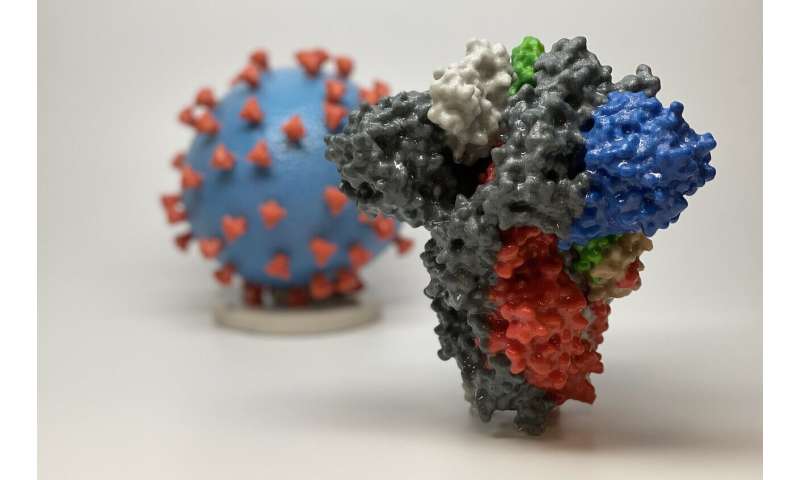
COVID-19, coronavirus
3D print of a spike protein of SARS-CoV-2, the virus that causes COVID-19--in front of a 3D print of a SARS-CoV-2 virus particle. The spike protein (foreground) enables the virus to enter and infect human cells. On the virus model, the virus surface (blue) is covered with spike proteins (red) that enable the virus to enter and infect human cells. Credit: NIH

The antiviral drug remdesivir is not suggested for patients admitted to hospital with COVID-19, regardless of how severely ill they are, because there is currently no evidence that it improves survival or the need for ventilation, say a WHO Guideline Development Group (GDG) panel of international experts in The BMJ today.

20 november 2020--The recommendation is part of a living guideline, developed by the World Health Organization with the methodological support of MAGIC Evidence Ecosystem Foundation, to provide trustworthy guidance on the management of COVID-19 and help doctors make better decisions with their patients.

Living guidelines are useful in fast moving research areas like COVID-19 because they allow researchers to update previously vetted and peer reviewed evidence summaries as new information becomes available.

Remdesivir has received worldwide attention as a potentially effective treatment for severe COVID-19 and is increasingly used to treat patients in hospital. But its role in clinical practice has remained uncertain.

Today's recommendation is based on a new evidence review comparing the effects of several drug treatments for COVID-19. It includes data from four international randomised trials involving over 7,000 patients hospitalised for COVID-19.

After thoroughly reviewing this evidence, the WHO GDG expert panel, which includes experts from around the world including four patients who have had COVID-19, concluded that remdesivir has no meaningful effect on mortality or on other important outcomes for patients, such as the need for mechanical ventilation or time to clinical improvement.

The panel acknowledged that the certainty of evidence is low and said the evidence did not prove that remdesivir has no benefit; rather, there is no evidence based on currently available data that it does improve important patient outcomes.

But given the remaining possibility of important harm, as well as the relatively high cost and resource implications associated with remdesivir (it must be given intravenously), they judged this to be an appropriate recommendation.

They also support continued enrolment into trials evaluating remdesivir, especially to provide higher certainty of evidence for specific groups of patients.

In a linked feature article, US journalist Jeremy Hsu asks what now for remdesivir, given that it is unlikely to be the lifesaving drug for the masses that many have hoped for?

The full story of remdesivir will not be known until manufacturer Gilead releases the full clinical study reports, writes Hsu, but much will depend on whether future studies are designed to test remdesivir's potential effectiveness.

In the meantime, he says alternative treatments, such as the well known, cheap, and widely available corticosteroid dexamethasone, that has been proved to reduce mortality among severely ill COVID-19 patients, are now impacting discussions about remdesivir's cost-effectiveness.


More information: François Lamontagne et al, A living WHO guideline on drugs for covid-19, BMJ (2020). DOI: 10.1136/bmj.m3379
Journal information: British Medical Journal (BMJ) 


Monday, October 12, 2020


Remdesivir study finally published, and an expert in critical care medicine gives us his verdict

Remdesivir study finally published – an expert in critical care medicine gives us his verdict
A patient receiving supplemental oxygen is likely to benefit the most. Credit: 99Art/Shutterstock

The results of the ACTT-1 trial, which looked at the effectiveness of remdesivir as a treatment for COVID-19, have finally been published. So far the only drug that has been shown to reduce deaths from the disease has been dexamethasone, a steroid that suppresses the immune system through its anti-inflammatory effects. Steroids have a secondary effect on the disease—they don't target the virus itself. Remdesivir, on the other hand, goes straight to the cause of the disease by inhibiting the virus.

12 october 2020--The drug, which was developed by Gilead Sciences, was approved for use by the US Food and Drug Administration under an "emergency use authorisation" on May 1. It was recently used to treat President Donald Trump.

Gilead Sciences has claimed that the drug has significant benefits for patients—but robust data has been lacking until now. This makes the long-awaited results of the ACTT-1 trial important. Having read the study, most physicians treating patients with COVID-19 will be asking themselves the same question: "Should I be using remdesivir for my patients?"

Should all COVID-19 patients get remdesivir?

The trial follows a gold-standard design of being double blind, randomized and controlled, and like most trials published in top medical journals, at first glance the outcomes are fairly impressive. They found that patients receiving the drug improved and recovered more quickly, were less likely to progress to severe disease, were discharged from hospital sooner, and had a lower death rate of 11.4% compared with 15.2% in patients receiving "usual" treatment.

Based on these positive findings, it would be tempting to conclude that all patients who have the disease should receive the drug, but since it costs around US$2,340 (£1,795) to treat one patient, and is likely to be in short supply in the UK for the foreseeable future, the question warrants a more considered analysis.

The use of any drug also has potentially negative consequences. Remdesivir has not been around long enough to have a track record for safety, and the reports of side-effects in COVID patients continue to grow.

When we unpick the data and look at analyzes of smaller groups (subgroup analyzes), the only patients for whom benefit was conclusively demonstrated were those who were less severely ill and receiving only supplemental oxygen rather than being on a ventilator. It is worth remembering that ACTT-1 is a relatively small trial and sicker patients may well benefit, but it has yet to be proven. Another interesting subgroup analysis showed that patients receiving dexamethasone showed added benefit with the addition of remdesivir, which is good news.

No magic bullet

So when I go into my hospital this week and am confronted on the wards with patients who are ill with COVID-19, ACTT-1 tells me that, provided I can find remdesivir on the pharmacy shelf, I should be confident to use it in any patients who are receiving oxygen alone, in the hope that they will recover sooner and, more importantly, avoid progression to needing ventilation on intensive care. I should also continue to use dexamethasone as normal, expecting added benefit.

The study also tells me that I should not shut the doors to the intensive care unit just yet. By prescribing remdesivir on top of applying the best treatment available, one in ten patients will continue to deteriorate and die. Remdesivir is not the magic bullet. If one exists, it has yet to be designed.


Provided by The Conversation