Showing posts with label resilience. Show all posts

Wednesday, May 10, 2023


Study suggests strong sense of purpose in life promotes cognitive resilience among middle-aged adults
Study suggests strong sense of purpose in life promotes cognitive resilience among middle-aged adults
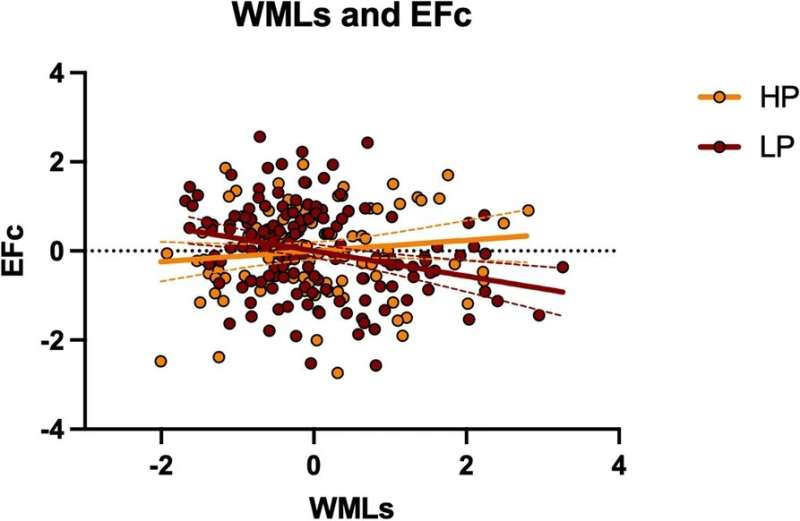
Associations between brain burden and cognition. Scatter plot showing the association between WMLs and executive performance as a function of the PiL group. Data is presented with Z scores. Abbreviations: EFc, executive functioning composite; HP, higher purpose in life; LP, lower power in life; WMLs, white matter lesions. Credit: Alzheimer's Research & Therapy (2023). DOI: 10.1186/s13195-023-01198-6

New research suggests that having a stronger purpose in life (PiL) may promote cognitive resilience among middle-aged adults. Cognitive resilience refers to the capacity of the brain to cope with stressors, injuries and pathology, and resist the development of symptoms or disabilities. Furthermore, having a purposeful life implies changes in the organization of the brain with one specific brain network, the dorsal Default Mode Network, showing greater functional connections within its components and with other brain areas. This may represent a neuroprotection mechanism that ultimately ensures better cognitive function into old age.

10 may 2023--These are among the findings in the article, "Purpose In Life Promotes Resilience To Age-Related Brain Burden And Neuroprotection Through Functional Connectivity In Middle-Aged Adults," published in the journal Alzheimer's Research & Therapy.

"The present data extend previous findings found in advanced age and pathological aging, such as Alzheimer's Disease, revealing that having a strong sense of purpose might confer resilience already in middle age," said author Dr. Kilian Abellaneda-Pérez, Departament de Medicina, Facultat de Medicina i Ciències de la Salut, Institut de Neurociències, Universitat de Barcelona, Barcelona, Spain.

"The fact that individuals in the higher purpose in life group had greater connectivity between specific Dorsal default-mode network nodes, which correlated with cognitive performance, suggest such changes in the functional organization of the brain may represent the mechanism by which a greater purpose in life promotes brain health and protects the brain from dysfunction even in the face of stress, adversity and illness," said Dr. Alvaro Pascual-Leone, Medical Director, Deanna and Sidney Wolk Center for Memory Health at Hebrew SeniorLife; and Department of Neurology, Harvard Medical School.

He concludes, "What is also exciting is that each of us, with appropriate guidance and support, can develop and sustain a robust sense of purpose and thus contribute to our brain health and well-being."

Disease-modifying agents to counteract cognitive impairment in older age remain elusive. Hence, identifying modifiable factors promoting brain reserve and resilience is paramount. In Alzheimer's disease, education and occupation are typical reserve proxies. However, the importance of psychological factors is being increasingly recognized, as their operating biological mechanisms are elucidated.

Purpose in life, one of the pillars of psychological well-being, has previously been found to reduce the deleterious effects of Alzheimer's Disease-related pathological changes on cognition. However, whether purpose in life operates as a cognitive resilience factor in middle-aged individuals, and what are the underlying neural mechanisms remains unknown.

Data was obtained from 624 middle-aged adults (mean age 53.71±6.9; 303 women) from the Barcelona Brain Health Initiative cohort. Individuals with lower (N=146) and higher (N=100) purpose in life (PiL) rates, according to the division of this variable into quintiles, were compared in terms of cognitive status, a measure reflecting brain burden (white matter lesions; WMLs), and resting-state functional connectivity (rs-FC), examining system segregation (SyS) parameters using 14 common brain circuits.

Neuropsychological status and WMLs burden did not differ between PiL groups. However, in the lower PiL group greater WMLs entailed a negative impact on executive functions. Subjects in the higher PiL group showed lower SyS of the dorsal DMN (dDMN), indicating lesser segregation of this network from other brain circuits.

Specifically, higher PiL individuals had greater inter-network connectivity between specific dDMN nodes, including the frontal cortex, the hippocampal formation, the midcingulate region, and the rest of the brain. Greater functional connectivity in some of these nodes positively correlated with cognitive performance.

More information: Kilian Abellaneda-Pérez et al, Purpose in life promotes resilience to age-related brain burden in middle-aged adults, Alzheimer's Research & Therapy (2023). DOI: 10.1186/s13195-023-01198-6

Journal information: Alzheimer\'s Research & Therapy 

Friday, August 27, 2021


New report reveals hopes and resilience of older adults through COVID

elderly
Credit: Pixabay/CC0 Public Domain

Researchers at the Irish Longitudinal Study on Aging (TILDA) at Trinity have released a new report which offers fresh insight into how older adults grappled with the COVID crisis during the first wave of the public health emergency (July—October 2020). The report, In Their Own Words: The Voices of Older Irish People in the COVID-19 Pandemic, surveys 4,000 participants from TILDA's nationally representative group of people aged 60 and over in Ireland, recording first-hand accounts of their experiences. The contributions in the report reveal the impact of COVID-19 and diversity of experiences, showing the challenges faced by older people in Ireland but also recording their hopes, determination and resilience during the first wave of the pandemic.

26 aug 2021--Since the COVID-19 pandemic was declared a global health crisis by the World Health Organisation in 2019, older adults have carried the greatest risk and burden of serious infection and ill-health from the virus. Globally, over 95% of COVID-19 related deaths occurred among those over 70, in Ireland, 93% of COVID-19 deaths were comprised of adults over 70. As a consequence of public health restrictions including national lockdowns, many people struggled with the abrupt disruption to everyday routines, social outlets and activities. In a previous TILDA COVID-19 report of adults over 60, 29% reported high stress levels, while 21% reported depressive symptoms.

What does the report reveal?

In this new report, TILDA participants tell of the impact of COVID-19 "in their own words," so we hear the voices of those most affected by policy restrictions. One of the dominant themes of the report is social isolation. Many participants were deeply impacted by restrictions, reporting heightened feelings of loneliness, isolation, a lost sense of dignity and challenges ensuing from the enforced restrictions in social contact. However, many also shared coping strategies, demonstrating remarkable resilience throughout; they speak of maintaining a positive outlook, optimism and a sense of gratitude while adapting to public health measures. The research shows how these positive dispositions served as coping strategies to help maintain respondents' wellbeing in challenging circumstances. The study also reveals the adaptability of older adults, with many developing new skills and hobbies, using the events of lockdown to engage with new activities.

Key findings

  • 20% indicated a capacity to cope or demonstrated resilience to the challenges of the pandemic.
  • 20% referred to increased feelings of social isolation or loneliness. Participants regularly voiced that their greatest challenge was coping with the loneliness which was brought with the pandemic.
  • Some participants commented on their frustration at feeling neglected and disregarded by the media or public health commentators; dislike of the word "cocooning" was frequently expressed.
  • 55% referred to hope and optimism for the future when asked what they most looked forward to once the pandemic had ended.
  • Most participants had strong desires and aspirations to meet up with children and grandchildren, as well as other family and friends.
  • Many participants who were working at the time of the pandemic discussed the challenges of losing their jobs or experiencing an increase in working hours due to their role as essential workers.
  • Many voiced a desire to re-engage with activities suspended due to COVID-19.
  • A number of participants commented on their hope to see a more just society emerge once the pandemic had finally ended.

Dr. Mark Ward, senior research fellow at TILDA and lead author, said: "Sixteen months on from the emergence of COVID-19 in Ireland, the negative consequences of the crisis and subsequent impact on the health and wellbeing of older adults is clear. However, thanks to the successful rollout and uptake of the COVID-19 vaccination program, hope and optimism are now returning to the lives of older adults. TILDA's report not only reveals lessons to be learned for the future but offers important insights from the unique experiences and diverse perspectives of older adults impacted by the COVID-19 emergency."

Professor Rose Anne Kenny, principal investigator of TILDA, said: "Not only have older adults been disproportionately impacted by the fallout of the COVID-19 crisis, but the sacrifices they have had to make throughout have been enormous. Disruptions to daily routines, an increasing sense of loneliness, isolation and fear, as well as increased risk of severe illness from the virus are just some of the ways older adults have been deeply impacted. What is most striking in this report is their strong, resilient nature in response to the pandemic. Many have lost friends and loved ones due to COVID-19 and faced a loss of independence, separation from family, and even ageism in the media and in many of the policy initiatives, all of which takes its toll on overall health and wellbeing.

"Indeed, the case is strong for our society to review our attitudes to aging and be alert to covert ageism in how we address or represent older people. What, for example, are the implications of a 'cocooning' policy for those it affects? The covert message may be that the over 70s have less worth than others in society and therefore can be excluded from active participation, despite strong evidence to the contrary from TILDA and many other studies."

More information: Mark Ward et al, Altered lives in a time of crisis: The impact of the COVID-19 pandemic on the lives of older adults in Ireland. Findings from The Irish Longitudinal Study on Ageing, (2021). DOI: 10.38018/TildaRe.2021-01
Provided by Trinity College Dublin 

Monday, May 03, 2021


Study: Older adults found resilience during pandemic through community, human connection

older adults
Credit: CC0 Public Domain

Older adults were significantly affected by isolation and stress during Oregon's initial COVID-19 lockdown last spring, but they were also able to find connection and meaning in community, new hobbies and time for themselves, a recent Oregon State University study found.

03 may 2021--If resilience is understood as the ability to see positives in the midst of a negative situation, then many of the study's participants demonstrated resilience during that time, the researchers said.

"A lot of times we think about resilience as a personality trait, and it's true that there are some qualities that may help people experience that. But in the end, resilience is something that is shared," said Heidi Igarashi, first author on the study and a recent doctoral graduate of OSU's College of Public Health and Human Sciences. "One of the things that came out in our study was the degree to which the people-connection was really significant."

The study, published in the Journals of Gerontology: Psychological Sciences, surveyed 235 adults ages 51 to 95 about their experiences from April 28-May 4, 2020, when Oregon's statewide stay-at-home order had been in place for about a month.

The online survey asked participants about recent and ongoing difficulties in their lives caused by COVID-19, as well as recent positive experiences.

People shared experiences at the personal, interpersonal and societal levels. Personal difficulties included the stress of constant vigilance around ensuring safety in everyday activities, as well as fear of death and uncertainty about the future. Interpersonal challenges included social isolation, lack of physical contact and fear for loved ones' health. Societal stressors were centered on lack of scientific leadership and concerns for the community at large.

While 94% of participants listed difficulties, roughly 63% shared positive experiences. At the personal level, these included things like trying new projects—gardening, cooking—and increased gratitude for the simpler, slower pace of life. Interpersonal joys were found in new friendships or reconnecting with old friends, and in people caring for one another. At the societal level, some noted the benefit to the environment from people driving less and the sense of increased community solidarity.

Older adults took comfort in seeing neighbors and friends taking care of each other, while simultaneously adding to community resilience by looking after friends and neighbors themselves and joining group efforts like mask-sewing drives, said co-author Carolyn Aldwin, the Jo Anne Leonard Endowed Director of the Center for Healthy Aging Research at OSU.

"It's a mistake to think of older adults as just being sort of victims during COVID," Aldwin said. "They're a lot more resilient than we think they are, and they're important for the community."

Many of the survey respondents engaged in Zoom calls with family and friends, enjoyed time spent in nature and finally finished projects that had been sitting in the closet or garage.

Retired folks had a harder time than those who are employed because the lockdown was more disruptive to their routine, including closing off regular volunteer opportunities because of older adults' high-risk status. But some respondents reported feeling relief at being able to focus on themselves for a change, with pursuits like meditation and journaling, rather than spending all their time caring for other people.

The study was conducted via internet survey, which affected response rates; the majority of participants were white, female, retired and highly educated, as opposed to the racial, ethnic and socioeconomic groups that have been hardest hit by COVID-19 infections and death, the researchers said.

But Aldwin cautions against assumptions about resilience among less-advantaged groups. While they may have experienced more loss and financial distress, a key factor in resilience is being able to find purpose in life, which can occur through helping others.

"There's this meaning that's found in caregiving, a reason for living, where our study group often didn't have these demands on them, and they were feeling a lack of sense of meaning," she said. "If you're the person who's holding the family together during this crisis, that's a source of meaning. Clearly we would have seen more loss and more difficulty, but we also might have seen sources of resilience that we didn't see in the study group."

More information: Heidi Igarashi et al, Resilience in Older Adults During the COVID-19 Pandemic: A Socioecological Approach, The Journals of Gerontology: Series B (2021). DOI: 10.1093/geronb/gbab058
Provided by Oregon State University 

Saturday, August 18, 2018

It's okay when you're not okay: Study re-evaluates resilience in adults

It's okay when you're not okay: A re-evaluation of resilience in adults
The graph shows some possible response patterns in adults following adversity. The top line (hashed) shows the response that has been reported as the most common. This flat line indicates that living through an adverse event causes minimal or no disruption to psychological functioning. When the data are analyzed with growth mixture models that are set up using appropriate assumptions, the most common response pattern after adversity is shown by the bottom line. The most common response to adversity is a decrease in psychological functioning followed by a return to normal or near-normal after a period of time. Credit: Rob Ewing, Arizona State University Department of Psychology
Adversity is part of life: Loved ones die. Soldiers deploy to war. Patients receive terminal diagnoses.
Research on how adults deal with adversity has been dominated by studies claiming the most common response is uninterrupted and stable psychological functioning. In other words, this research suggests that most adults are essentially unfazed by major life events such as spousal loss or divorce. These provocative findings have also received widespread attention in the popular press and media.

18 aug 2018--The idea that most adults are minimally affected by adversity worries Frank Infurna and Suniya Luthar, of the Arizona State University Department of Psychology, because it disagrees with other research on how adults respond to adversity and could negatively affect people living through adversity. Infurna and Luthar closely examined the research studies and found problems with how studies were designed and how the data were analyzed. The researchers summarize the problems and re-evaluate adult resilience research in a Clinical Psychology Review, which is in press and now available online.

A dip and recovery

Infurna and Luthar are an ideal team to tackle the discrepancy between studies on adult responses to adversity that contradict 80 years of research in child development. Infurna, an associate professor of psychology, is an expert on using complex statistical models to study health and well-being in adulthood and old age. Luthar, a Foundation Professor of Psychology, is an international expert on resilience in children, with 30 years of experience and highly influential publications on the concept of resilience and how best to study it.
"As experts, the onus is on us to be careful about how research is conducted and communicated," Luthar said. "There has been a message percolating in the popular press that most people are unaffected by major life events like bereavement or a deployment, but that is not the whole picture."
The project started over two years ago, when Infurna downloaded publicly-available data for re-analysis. The data had been analyzed using "growth mixture modeling—a statistical model that can classify how different people in a population respond to adversity. After classifying the study participants into groups based on their response to adversity, the model outputs the response patterns for each group.
Infurna and Luthar noticed the results depended on how the model was set up in the software used for statistical analysis. Setting up a model for data analysis requires a researcher to define some assumptions, or educated guesses about aspects of the model like how the data are organized or how much error was included in the experimental measurements. The assumptions identified as problematic by Infurna and Luthar were that the variations in the data were the same for the entire participant group and that the psychological functioning of all participants changed at the same rate. These assumptions also corresponded to the default settings in several software programs commonly used for statistical analysis. When the default software settings were used to run the growth mixture model, the most common response pattern was a flat line, which indicated stable and largely uninterrupted psychological functioning after adversity.
When the growth mixture models were set up with more appropriate assumptions, the researchers found the most common response pattern was a temporary decrease followed by an increase. Such a response pattern indicates a decline in psychological functioning followed by a return to normal, which agrees with 80 years of resilience research in children. This response pattern also agrees with the conventional wisdom that in general, most people struggle to some degree after a major life event and recover after a period of time.
"The idea that 'it is okay to not be okay' following adversity is important," Infurna said. "Sometimes it can take months or years to recover after a traumatic or upsetting event because resilience depends on the person and the resources they have available to them, their past experiences and the type of adverse event."

Life is multidimensional and so is resilience

How adults respond to adversity has typically been measured with longitudinal assessments, or surveys that are repeated over a time interval like once a year. Many research studies have tracked just one psychological outcome, such as life satisfaction, positive or negative emotions or general physical health.
"How do you define doing well?" Luthar asked. "An individual's response to adversity is multidimensional, so that success in one area can coexist with considerable trouble in others. Just because a person is effectively meeting deadlines at work does not mean she is not struggling at home, perhaps crying herself to sleep or estranged from her partner."
Infurna and Luthar recently examined how resilience depended on measures such as life satisfaction, negative or positive emotions, general health or physical health. When just one measure was considered, the percentage of people classified as resilient was high, ranging from 19-66%, but when all measures were considered, only 8% of the adult participants were resilient.
Child development researchers have solved the problem of defining resilience by qualifying different types. For example, children who have lived through adversity and are functioning well in school are described as having "academic resilience." Researchers are also careful not to generalize a child's performance in school to how they might be functioning in other aspects of their lives.

The way forward for adult resilience research and its applications

In the Clinical Psychology Review paper, the main goal of Infurna and Luthar was to prevent the misinterpretation of what a common response to adversity looks like: it is typically some decline followed by an increase back towards normal.
Infurna and Luthar made several recommendations to improve adult resilience research in the future, in addition to changing the assumptions used with growth mixture modeling. They also encourage researchers to assess more than one measure of psychological functioning and to administer longitudinal surveys at more frequent time intervals.
"It is very important for the public and for policy-makers to know what a normal or common response to adversity is," Luthar said. "This knowledge can help people avoid self-blame when they are hurting or have a set-back in the aftermath of a major loss or other traumatic event. And it can help clinicians and policy-makers continue to provide support resources that are often critical in helping adults overcome major life adversities."

More information: Frank J. Infurna et al, Re-evaluating the notion that resilience is commonplace: A review and distillation of directions for future research, practice, and policy, Clinical Psychology Review (2018). DOI: 10.1016/j.cpr.2018.07.003


Provided by Arizona State University

Saturday, October 07, 2017

Seven body organs you can live without

Seven body organs you can live without

The human body is incredibly resilient. When you donate a pint of blood, you lose about 3.5 trillion red blood cells, but your body quickly replaces them. You can even lose large chunks of vital organs and live. For example, people can live relatively normal lives with just half a brain). Other organs can be removed in their entirety without having too much impact on your life. Here are some of the "non-vital organs".

Spleen

07 oct 2017--This organ sits on the left side of the abdomen, towards the back under the ribs. It is most commonly removed as a result of injury. Because it sits close the ribs, it is vulnerable to abdominal trauma. It is enclosed by a tissue paper-like capsule, which easily tears, allowing blood to leak from the damaged spleen. If not diagnosed and treated, it will result in death.
When you look inside the spleen, it has two notable colours. A dark red colour and small pockets of white. These link to the functions. The red is involved in storing and recycling red blood cells, while the white is linked to storage of white cells and platelets.
You can comfortably live without a spleen. This is because the liver plays a role in recycling red blood cells and their components. Similarly, other lymphoidtissues in the body help with the immune function of the spleen.

Stomach

The stomach performs four main functions: mechanical digestion by contracting to smash up food, chemical digestion by releasing acid to help chemically break up food, and then absorption and secretion. The stomach is sometimes surgically removed as a result of cancer or trauma. In 2012, a British woman had to have her stomach removed after ingesting a cocktail that contained liquid nitrogen.
When the stomach is removed, surgeons attach the oesophagus (gullet) directly to the small intestines. With a good recovery, people can eat a normal diet alongside vitamin supplements.

Reproductive organs

The primary reproductive organs in the male and female are the testes and ovaries, respectively. These structures are paired and people can still have children with only one functioning.
The removal of one or both are usually the result of cancer, or in males, trauma, often as a result of violence, sports or road traffic accidents. In females, the uterus (womb) may also be removed. This procedure (hysterectomy) stops women from having children and also halts the menstrual cycle in pre-menopausal women. Research suggests that women who have their ovaries removed do not have a reduced life expectancy. Interestingly, in some male populations, removal of both testicles may lead to an increase in life expectancy
.
Colon

The colon (or large intestine) is a tube that is about six-feet in length and has four named parts: ascending, transverse, descending and sigmoid. The primary functions are to resorb water and prepare faeces by compacting it together. The presence of cancer or other diseases can result in the need to remove some or all of the colon. Most people recover well after this surgery, although they notice a change in bowel habits. A diet of soft foods is initially recommended to aid the healing process

Gallbladder

The gallbladder sits under the liver on the upper-right side of the abdomen, just under the ribs. It stores something called bile. Bile is constantly produced by the liver to help break down fats, but when not needed in digestion, it is stored in the gallbladder.
When the intestines detect fats, a hormone is released causing the gallbladder to contract, forcing bile into the intestines to help digest fat. However, excess cholesterol in bile can form gallstones, which can block the tiny pipes that move bile around. When this happens, people may need their gallbladder removed. The surgery is known as (cholecystectomy. Every year, about 70,000 people have this procedure in the UK.
Many people have gallstones that don't cause any symptoms, others are not so fortunate. In 2015, an Indian woman had 12,000 gallstones removed – a world record.

Appendix

The appendix is a small blind-ended worm-like structure at the junction of the large and the small bowel. Initially thought to be vestigial, it is now believed to be involved in being a "safe-house" for the good bacteria of the bowel, enabling them to repopulate when needed.
Due to the blind-ended nature of the appendix, when intestinal contents enter it, it can be difficult for them to escape and so it becomes inflamed. This is called appendicitis. In severe cases, the appendix needs to be surgically removed.
A word of warning though: just because you've had your appendix out, doesn't mean it can't come back and cause you pain again. There are some cases where the stump of the appendix might not be fully removed, and this can become inflamed again, causing "stumpitis". People who have had their appendix removed notice no difference to their life.

Kidneys

Most people have two kidneys, but you can survive with just one – or even none (with the aid of dialysis). The role of the kidneys is to filter the blood to maintain water and electrolyte balance, as well as the acid-base balance. It does this by acting like a sieve, using a variety of processes to hold onto the useful things, such as proteins, cells and nutrients that the body needs. More importantly, it gets rid of many things we don't need, letting them pass through the sieve to leave the kidneys as urine.
There are many reasons people have to have a kidney – or both kidneys – removed: inherited conditions, damage from drugs and alcohol, or even infection. If a person has both kidneys fail, they are placed onto dialysis. This comes in two forms: haemodialysis and peritoneal dialysis. The first uses a machine containing dextrose solution to clean the blood, the other uses a special catheter inserted into the abdomen to allow dextrose solution to be passed in and out manually. Both methods draw waste out of the body.
If a person is placed on dialysis, their life expectancy depends on many things, including the type of dialysis, sex, other diseases the person may have and their age. Recent research has shown someone placed on dialysis at age 20 can expect to live for 16-18 years, whereas someone in their 60s may only live for five years.

Sunday, May 21, 2017

Resilience study examines how people with disabilities live successfully in rural areas

Resilience study examines how people with disabilities live successfully in rural areas
Living in a small town can be challenging for anyone. For people with disabilities, rural areas can create even more serious barriers to accomplishing the things they want to do.
However, with the help of a trait known as resilience, many people with disabilities who live in rural areas have achieved a good quality of life and are able to participate in their communities.

21 may 2017--"Some people do well in life because they face few obstacles to meeting their goals: they are healthy, they have parents who are well-educated and have the resources to provide their children with a good education, and they have the support they need," said Jean Ann Summers, research director at the University of Kansas Research and Training Center on Independent Living, or RTC/IL.
The resilience study – which is still ongoing – didn't focus on this group of people, though.
"Other people do well in life despite the obstacles that they face," Summers said. "They may have grown up poor, they may have a disability, they may live in a community where few jobs or other opportunities are available. And yet they thrive. They are able to achieve their goals and have a satisfying life in the community in spite of the odds that are against them. We say those people are 'resilient.'"
Summers and her collaborators Dot Nary, assistant research professor at the RTC/IL, and Heather Lassmann, graduate research assistant, set out to identify what Summers calls "the secrets of success" that resilient people with disabilities employ to successfully live in rural communities. Their work is part of larger project based at the University of Montana Research and Training Center on the Ecology of Rural Disability.
"The study is important because if we can find out what people who are naturally resilient do, we can design a program to teach others how to be resilient," Nary said.
According to Summers, the thought process behind the study is much different than the approach medical or health care practitioners consider when trying to support people with disabilities or chronic illnesses.
"For example, in the medical model we would approach 'fixing' a broken leg by putting a cast on the leg," Summers said. "But a resilience model would focus on what it takes to make that leg grow strong, with the right nutrition and exercise, to prevent further breakage of those bones in the future."
The study applied this model in two phases. First, researchers conducted two focus groups of people living in rural communities who were nominated by staff at centers for independent living as people who display resilience.
"In the focus groups, we asked the participants to talk about the supports that were helpful to them in enabling them to participate fully in the community," Nary said. "We also asked them to talk about any attitudes or philosophy that helped them succeed in reaching their goals."
The researchers used what they learned in the focus groups to identify a series of supports, both formal and informal, along with coping skills like advocacy and strategies like humor or focusing on others that contribute to a person being resilient. They illustrated these findings in a tree-shaped graphic, which identifies the roots and branches that contribute to resilience.
In the second phase of the study, now ongoing, the researchers partnered with their colleagues at the University of Montana, who had conducted a large-scale national survey of people in rural communities. Using that survey data, they identified a new group of people with disabilities who they defined as resilient for two reasons: they had more than two risk factors, that is obstacles to success, and their survey responses indicated they were successfully participating in their communities.
Summers and Nary are now interviewing these individuals by phone to get a deeper understanding of what contributes to resilience.
"We are hearing things that are similar to what we heard in the focus groups," Summers said, "but we're also looking at other personal or environmental factors that contribute positively. For example, a particular city may offer unique environmental or social features that make participation easy for people with disabilities."
She expects the final report to be completed this fall.


Provided by University of Kansas

Tuesday, November 24, 2015

Study connects mitochondria to psychological stress response and species resilience

Mitochondria
Mitochondria. Credit: Wikipedia commons
24 nov 2015—Mitochondria are symbiotic organelles that reside in most of the body's cells and power cellular functions. They contain their own DNA, called mtDNA, and they produce adenosine triphosphate (ATP), which transports energy within cells. Mitochondria have a number of additional biological functions, and there is evidence that the mitochondrion influences an organism's integrated response to psychological stress.
Though no rigorous studies have previously examined whether mitochondria modulate an organism's psychological stress response, there are three reasons for the hypothesis that they do: First, requirements for ATP must be increased to face stress-induced cellular perturbations. Second, mitochondria generate reactive metabolic intermediates and reactive oxygen species (ROSs) during electron flow, which leads to oxidative stress in the absence of sufficient antioxidants. The generation of these constituents is a signal of adaptation, altering gene expression, which means that the stress-induced epigenetic changes observed in the hippocampus could be a result of mitochondrial activity. And third, stress-induced physiological responses like insulin resistance, inflammation and others can be triggered by mitochondrial dysfunction alone. So mitochondria are a likely hub of stress response and modulation.
Based on this evidence, a group of researchers from the University of Pennsylvania and Rockefeller University hypothesized that abnormal mitochondrial functions would have different modulation effects on an organism's multi-systemic response to psychological stress. They designed a study of this response in mice, and have published their results in the Proceedings of the National Academy of Sciences.
The researchers generated mice with ubiquitously expressed mutations in mtDNA genes that decrease the activity of respiratory chain complexes; they also studied mice with genetic deletions in nDNA that impair the transport of ATP from the mitochondrion to the cytoplasm, and that regulate the intramitochondrial redox balance. They studied the impact of these genetic manipulations on physical parameters linked to the restraint of stress.
The authors write, "All investigated neuroendocrine, metabolic, inflammatory, and transcriptional responses were perturbed by at least one of the mitochondrial defects. Notably, each mitochondrial defect produced a unique stress-response signature. Collectively, our results therefore establish that mitochondria impact the nature and magnitude of physiological and molecular responses to a controlled psychological stressor."
In order to be successfully adaptive, organisms mount integrated stress responses across multiple organ systems. The ability to mount appropriate responses to psychological stress is critical for survival, and is thus considered a driver of species evolution. Maladaptive stress response in humans results in chronic stress characterized by specific symptoms, and which ultimately contributes to disease.
"Stressful experiences, on their own, do not cause damage or disease," the authors write. "Rather, it is the organism's responses to stress that have the potential to result in physiological dysregulation and dysfunction, culminating in allostatic load and disease. Our study demonstrates how mitochondria can shape the major stress-response pathways, thereby recalibrating the multisystemic response to psychological stress."
The authors note further that based on this model, it seems that mitochondria lie at the interface of genetic and environmental factors that shape an organism's evolution. They suggest that future research targeting mitochondria can contribute to biological resilience, psychological health, and response to environmental stressors.

More information: Mitochondrial functions modulate neuroendocrine, metabolic, inflammatory, and transcriptional responses to acute psychological stress. PNAS 2015 ; published ahead of print November 16, 2015, DOI: 10.1073/pnas.1515733112

Abstract
The experience of psychological stress triggers neuroendocrine, inflammatory, metabolic, and transcriptional perturbations that ultimately predispose to disease. However, the subcellular determinants of this integrated, multisystemic stress response have not been defined. Central to stress adaptation is cellular energetics, involving mitochondrial energy production and oxidative stress. We therefore hypothesized that abnormal mitochondrial functions would differentially modulate the organism's multisystemic response to psychological stress. By mutating or deleting mitochondrial genes encoded in the mtDNA [NADH dehydrogenase 6 (ND6) and cytochrome c oxidase subunit I (COI)] or nuclear DNA [adenine nucleotide translocator 1 (ANT1) and nicotinamide nucleotide transhydrogenase (NNT)], we selectively impaired mitochondrial respiratory chain function, energy exchange, and mitochondrial redox balance in mice. The resulting impact on physiological reactivity and recovery from restraint stress were then characterized. We show that mitochondrial dysfunctions altered the hypothalamic–pituitary–adrenal axis, sympathetic adrenal–medullary activation and catecholamine levels, the inflammatory cytokine IL-6, circulating metabolites, and hippocampal gene expression responses to stress. Each mitochondrial defect generated a distinct whole-body stress-response signature. These results demonstrate the role of mitochondrial energetics and redox balance as modulators of key pathophysiological perturbations previously linked to disease. This work establishes mitochondria as stress-response modulators, with implications for understanding the mechanisms of stress pathophysiology and mitochondrial diseases.

Wednesday, June 10, 2015

Resilience to stress may be key for long-term health

stress
Reacting positively to stressful situations may play a key role in long-term health, according to researchers.
10 jun 2015--In a study measuring adults' reactions to  and how it affects their bodies, researchers found that adults who fail to maintain positive moods such as cheerfulness or calm when faced with the minor stressors of everyday life appear to have elevated levels of inflammation. Furthermore, women can be at heightened risk.
Inflammatory responses are part of the body's ability to protect itself via the immune system. However, chronic—long-term—inflammation can undermine health, and appears to play a role in obesity, heart disease and cancer.
These findings add to growing body of evidence regarding the health implications of affective reactivity——to daily stressors. The researchers report their results in a recent edition of Health Psychology.
Nancy Sin, postdoctoral fellow in the Center for Healthy Aging and Department of Biobehavioral Health, Penn State and her colleagues showed that the frequency of daily stressors, in and of itself, was less consequential for inflammation than how an individual reacted to those stressors.
"A person's frequency of stress may be less related to inflammation than responses to stress," said Sin. "It is how a person reacts to stress that is important."
Sin's findings also highlight the important—but often discounted—contributions of positive affect in naturalistic stress processes.
"Positive emotions, and how they can help people in the event of stress, have really been overlooked," Sin said.
In the short-term, with illness or exercise, the body experiences a high immune response to help repair itself. However, in the long term, heightened inflammatory immune responses may not be healthy. Individuals who have trouble regulating their responses may be at risk for certain age-related conditions, such as cardiovascular disease, frailty and cognitive decline, Sin said.
"To our knowledge, this paper is the first to link biomarkers of inflammation with positive mood responses to stressors in ," said Jennifer E. Graham-Engeland, associate professor of , Penn State.
A cross-sectional sample of 872 adults from the National Study of Daily Experiences reported daily stressors and emotional reactions for eight consecutive days. Blood samples of participants were obtained during a separate clinic visit and assayed for inflammatory markers.
Subjects were interviewed by phone every day for eight consecutive days. They were asked to rate their positive and negative emotions, as well as whether or not they encountered stressors. This enabled researchers to evaluate a person's emotional response on days when they experience stressors, and compare it to days when they do not.
"We calculated reactivity scores to see how participants generally reacted to stressors," Sin said. "Then we used it to predict two markers of inflammation."
The researchers used several different types of stressors, among them were arguments and avoiding arguments at work, school or home; being discriminated against; a network stressor, i.e., a stressful event that happens to someone close to the subject; and other stressors.
"We examined both positive and negative affective reactions to stress and compared the effects of stress exposure with responses to stressors," Graham-Engeland said. "Little is known about the potential role of daily stress processes on inflammation. Much of the relevant past research with humans has focused on either chronic stress or acute laboratory-based stress—methods that do not fully capture how people respond to naturalistic stressors in the context of daily life."
Data came from the second wave of the Midlife in the United States Study, a national survey designed to investigate health and well-being in midlife and older adulthood. Its goal is to expand understanding of how daily mood and stressful events may relate to inflammation and .
Provided by Pennsylvania State University