Showing posts with label smart homes. Show all posts

Friday, June 09, 2023


Older Australians need to consider home modifications sooner
Older Australians need to consider home modifications sooner
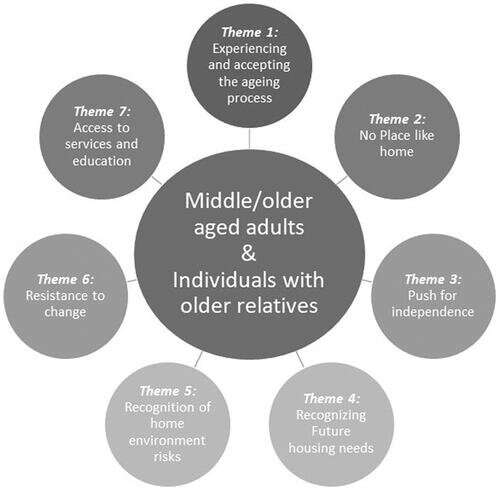
Themes representing participants' perceptions of home safety and aging in the home. Credit: Scandinavian Journal of Occupational Therapy (2023). DOI: 10.1080/11038128.2023.2192027

Most older Australians would prefer to remain in their home for as long as possible, but few consider age-friendly modifications that reduce safety risks and ensure they avoid injuries during their golden years, according to new research.

08 Jun 2023--Flinders University researchers interviewed 16 Adelaide residents aged between 52 and 76 about their own or their relatives future housing plans and current living arrangements.

The journal article, "Considering the home environment and planning for the future: A qualitative exploration of the views of older adults and individuals with older relatives," published in the Scandinavian Journal of Occupational Therapy, determined that older people planning to age gracefully at home lack the information they need to properly assess safety risks so they can undertake renovations to address them.

Although older people and their family members reported some knowledge about home modifications that could be made, most participants agreed that more information and tools to help with future planning would be beneficial.

The new research by Roslyn Dalistan, Associate Professor Kate Laver and Professor Stacey George highlights key challenges for older people seeking to age in place after the federal government established a new taskforce to review the new in-home care program in the federal budget, which will commence in 2025. The study reveals that many older Australians are living in homes with clear dangers, hazards, and limited accessibility as they age, but few are addressing these challenges properly.

Most common potential hazards and solutions:

High maintenance garden (without irrigation system)

  • Consider reducing garden maintenance needs (plants that don't need much water or pruning, low maintenance landscaping, irrigation systems)

All entrances to the house have one or more steps

  • Consider how one entry could be modified for easy access if a wheelchair or wheeled walking frame was required in future (e.g., ramp)

Step or ledge present between shower cubicle and bathroom floor

  • Consider bathroom alterations to ensure smooth transition between cubicle and floor

Slippery bathroom tiles

  • Consider application of non-slip treatment
  • If renovating, choose tiles which are not slippery when wet

Toilet door swings inward

  • Have the swing of the door changed so that it swings outwards.

Chairs in living room are low and/or soft

  • When purchasing new chairs, purchase chairs that are firm, supportive and not too low (height depends on height of individual). Armrests can be helpful.

The researchers have designed and tested a digital tool with 60 older people to assist with identifying and eliminating risks and are planning to make it freely available to the public in the near future.

Registered occupational therapist at Flinders University, Associate Professor Kate Laver, says older people prefer to stay at home for several reasons, including a sense of attachment to the home, the high costs of moving in today's real estate market, and a desire to maintain existing social and community networks.

"Home is considered by older adults to be a place of comfort and safety where independence can be preserved. Strong community networks enable older adults to cope with age-related changes and prevent isolation. Being surrounded by important possessions or memories is also linked to their quality of life," says Professor Laver.

"However, our ability to function independently within the home environment can become increasingly difficult. Most participants in our study accepted the aging process and could recognize hazards and potential risks. However, others were determined to remain independent at home and resistant to making future changes until necessary."

"They were all interested in obtaining more information about how to improve home safety or services to support aging in place. This shows we need tools that enable older people and their families to properly self-assess their own homes. This tool will be available both in hard copy and as a digital tool and will be used to promote and support future planning."

Study co-author and Flinders University Professor Stacey George says the research shows that decision-making around home safety among the aging population can be compromised by a lack of awareness, inadequate access to information, and the sudden onset of age-related changes.

"It's why an education guide or tool to support forwards planning and housing decisions may improve early awareness among Australia's aging population."

More information: Roslyn Dalistan et al, Considering the home environment and planning for the future: A qualitative exploration of the views of older adults and individuals with older relatives, Scandinavian Journal of Occupational Therapy (2023). DOI: 10.1080/11038128.2023.2192027

Provided by Flinders University 

Wednesday, February 05, 2020

Safely aging: Growing old in a smart home requires technology to monitor health and behavior

old person
Credit: CC0 Public Domain
With an aging population, there is an increasing need for a smart home to be able to monitor health and behavior with a view to allowing people to continue to live in their homes independently. Research published in the International Journal of Ad Hoc and Ubiquitous Computing shows how motion sensors, actuators, and surveillance systems can be used in different rooms in a home to monitor people are they carry out household chores, such as cooking and cleaning, and other activities, such as using the bathroom, watching television, partaking of hobbies, and sleeping.
05 feb 2020--Yo-Ping Huang of the Department of Electrical Engineering at the National Taipei University of Technology, in Taiwan, and colleagues suggest that the outputs from sensors and monitors can be fed to an algorithm trained to recognize normal behavior and to flag issues when a person is unexpectedly immobilized or carrying out an unusual activity in a part of their home where such activities are not commonly undertaken. The system can then alert healthcare workers or family members that there may be a crisis underway and the elderly person can be contacted or emerging services sent to assist.
The team has simulated behavior and tested the system and its results show that the proposed system outperforms support vector machines in terms of score and accuracy in identifying daily activities.
The researchers add that they will next integrate the system with voice recognition to allow the remote control of appliances used in daily life as well as making wireless and mobile devices connectable so that carers can be availed of potentially hazardous or life-threatening situations as they arise in the person's home without the carer needing to be in the home continuously to look after the person.

More information: Yo Ping Huang et al. Sensor-based detection of abnormal events for elderly people using deep belief networks, International Journal of Ad Hoc and Ubiquitous Computing (2020). DOI: 10.1504/IJAHUC.2020.104714
Provided by Inderscience

Sunday, November 03, 2019

High-tech 'Smart Care' apartment aims to improve health care for seniors

High-tech 'Smart Care' apartment aims to improve health care for seniors
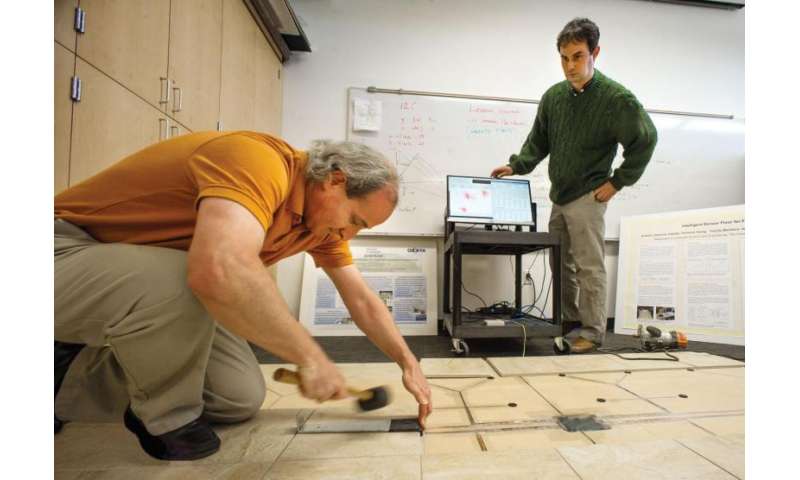
UT Arlington Computer Science and Engineering Professors Manfred Huber and Gergely Zaruba test flooring with special sensors that will enable researchers to measure and evaluate changes in walking gaits and weight that might suggest illness or injury in residents. Credit: UT Arlington
University of Texas at Arlington nursing and engineering researchers will unveil a model "Smart Care" apartment next month that is infused with intelligent care technology designed to reduce risks encountered by older adults and those with disabilities who want to live independently in their own homes.
03 nov 2019--The federal Health Resources and Services Administration provided more than $600,000 in funding for the five-year project, which has been a collaborative effort involving premier faculty from the UT Arlington College of Nursing and Health Innovation and the College of Engineering. U.S. Rep Joe Barton, R-Arlington, advocated for the funding and said he is eager to see how the project - described as the first of its kind in Texas - will improve lives.
A grand opening event is scheduled at the Smart Care apartment at 10 a.m. May 7, 2015, at the Lakewood Village Senior Living Community, 5100 Randol Mill Road?in Fort Worth.
"UT Arlington is at the forefront of life-changing and innovative research in the area of Health and the Human Condition," Barton said. "Ultimately, Smart Care will positively impact senior citizens, people with disabilities, and injured veterans. It will also save money for people across the Dallas-Fort Worth area and nationwide by reducing the number of repeated trips to hospitals for some residents."
Christian Care Senior Living Communities generously contributed use of a 900-square foot, two-bedroom apartment at its Lakewood Village Senior Living Community in Fort Worth for the project.
"The entire Smart Care concept attracted us from the beginning because it just truly aligned with our mission to compassionately care for adults well into their golden years," said Phil Elmore, president and chief executive officer of Christian Care Senior Living Communities. "This has been a wonderful symbiotic partnership and we are proud to be a part of the work that UT Arlington is doing to expand horizons for senior citizens and people with physical challenges."
Carolyn Cason, co-principal investigator and professor of nursing, created the concept for establishing a Smart Care center at UT Arlington and a Smart Care apartment. She said the growing senior population and increasing number of Americans living with disabilities urgently demand research such as this.
"The technologies developed in the context of Smart Care will enable a significant improvement in preventive in-home health care for the aging, improve the efficiency and cost effectiveness of care by health care professionals, and improve the ability to directly involve family and friends into the care process."
Among other technologies, the Smart Care apartment includes:
  • Sensors underneath tiles on the floor that will allow researchers to measure and evaluate changes in walking gaits and weight that might suggest illness or injury;
  • A special camera embedded in a bathroom mirror that will tell researchers about day-to-day heart rate, facial expression, and skin color. Changes in expression and skin color can reveal aspects of the overall health status as well as about oxygen content of the blood;
  • Lift chair to help residents stand;
  • Smart appliances such as an LG microwave, range and refrigerator;
  • Connected exercise equipment, including a recumbent bike and interactive Kinect-based Tai Chi trainer;
  • Other systems that will detect whether medication is being properly managed or if the resident is not sleeping well or staying in bed too long.
Kathryn Daniel, an associate professor and director of the Adult-Gerontology Primary Care Nurse Practitioner Program in the College of Nursing and Health Innovation, serves as program manager for Smart Care. During a tour of the apartment in early April, she provided a behind-the-scenes look at the technology and explained how it will benefit clinicians, patients, families, and facility administrators. Watch a short video here.
The congressionally earmarked funding that Barton championed was used to purchase the high-tech kitchen appliances, a special toilet, automated beds, living room furniture, and other equipment in use at the Smart Care apartment, as well as at the center located in the UT Arlington Engineering Research Building.
The lab serves as mission control where researchers can unobtrusively monitor patients, interpret behavioral information and other data, and evaluate remote capabilities, health technologies and other protocols.
"Ultimately, the goal is to have these technologies in homes so that people could have warning signs if something is changing; you could also detect if something has already happened and there is a need to call for help," said Manfred Huber, co-principal investigator and professor in the UT Arlington Department of Computer Science and Engineering. "Again, the hope is that people can stay home much longer than they can currently." Watch a short video here.
Provided by University of Texas at Arlington 

Wednesday, October 30, 2019

Smart homes enhance seniors' safety


In Singapore, as well as many other countries, ensuring a high quality of life for an expanding elderly population demands that community eldercare providers strike a delicate balance between frequently competing factors. For instance, safety is sometimes at odds with privacy; providing comprehensive care may erode an elderly person's cherished sense of independence; and a sense of security may give rise to a sense of being controlled.
30 oct 2019--Project SHINESeniors, which is focused on resolving these contradictions, does so by creating a "smart home" for older people living alone. Driven by a research team at Singapore Management University (SMU)'s iCity Lab (co-founded by SMU and Tata Consultancy Services), the project is funded by the Singapore Ministry of National Development and National Research Foundation under the Land and Liveability National Innovation Challenge (L2NIC) grant.
As part of the three-year project, the team has equipped 50 one-bedroom apartments with motion sensors that can detect unusual periods of inactivity – a possible indication that the tenant has either fallen or suffered a health crisis. This information is then fed to a Voluntary Welfare Organisation (VWO) for its staff and volunteers to react to the potential emergency.
Although other projects in Singapore are testing similar technologies, what makes Project SHINESeniors unique is its focus on how the technological tools can enhance the efforts of community caregivers who provide the crucial, person-to-person contact with elderly tenants.
"What we are providing that's of value is tying the technology to care provisioning," says Associate Professor Tan Hwee Pink, Academic Director of iCity Lab. "We see it as a more complete, holistic, and end-to-end evidence-based approach to ageing. The technology enables community organisations to improve their operations and increase their effectiveness with the limited number of staff and volunteers they have, while still catering to the elderly person's individual needs."
Staying in place is preferable
The research proposes that the best approach to deal with a growth in an ageing population is to allow as many people to stay in their homes as possible.
With senior citizens set to account for 20 percent of Singapore's population by 2030, the concept of "ageing in place" becomes key to dealing with "the fact that healthcare resources and assisted living facilities are becoming more limited," says Professor Tan. "We don't want our population to be over-stressing the hospitals, and we want them to have a good quality-of-life in the community they are living in. That's why care is being moved away from the hospitals and nursing homes and into the community, with the help of community-based VWOs."
Interviews with participants of the iCity pilot project indicate that "most of the elderly prefer to be living by themselves rather than living in an assisted living facility," he says.
Yet, living alone is not without risk. In fact, the government initiated the current research in response to the tragic realisation that, over a five year period, "about 50 elderly residents in Singapore passed away in their homes, and it had taken days, or sometimes up to a few weeks, to find out that they were dead," according to Professor Tan.
To reduce such incidents, a sensor-enhanced "smart home" is designed. The first line of defense is a 'panic button' that a resident can push to alert the community caregivers that he or she has fallen or is facing some kind of problem. And if the elderly person is not carrying the panic button, there is still the sensor system to detect the conditions that point to an emergency, analyse the data, and sound the alarm.
Door contacts at the main door detect the opening and closing of doors, indicating whether the tenant is inside or outside the apartment. If the resident remains inside, motion sensors on the walls of each room will determine whether the person is moving according to normal patterns, or if there is an unexpected absence of movement.
SMU research fellow Dr. Alvin Valera says a common scenario that it is crucial to have the sensor system is when the resident has encountered trouble after entering the toilet.
"The reason we monitor inactivity," he explains, "is that there are situations where the person might not have access to the button. If the person is in the toilet and has fallen, he or she has probably left the panic button outside. In this case, the system will detect that the last activity was in the toilet and that there was no motion afterwards. After a certain period of inactivity, an alert will be sent to the caregivers."
Dr. Valera stresses that the "unobtrusive" nature of this motion-detecting system reassures residents that their privacy is not being violated.
"We don't use vision-based or camera-based sensors, or even those that record audio precisely because of this concern with privacy," he says. "The unobtrusiveness of the system means that elderly are much more likely to accept the technology. And because the sensors are passive—installed on the walls—they don't have to do anything to change their lifestyles."
Refining the system for scale-up
A key objective of the current iCity Lab pilot project is to refine the technology to distinguish better between normal and abnormal periods or inactivity, so as to reduce the number of false alarms.
"We want to make sure that alerts are sent in a timely way, so that they don't swamp the caregivers with false alerts," Dr. Valera explains. So we looked at the historical data of each resident's movement patterns to determine a personalized threshold that would give us a better indication of how long it should be before an alert is sent."
A second technological enhancement is a personalised, sensor-equipped medication box that is being tested in ten apartments. Unlike those off-the-shelf pillboxes, the 'sensorised' medication box has been customised to the needs and preferences (e.g. size and colour) of the individual user. Such customisation has been shown to be effective in encouraging elderly to use these technologically enhanced box.
"Whenever the person opens up the medication box, we can infer that medication has been taken," says SMU research scientist Dr. Tan Hwee Xian. "We are able to look at the frequency and timing of the medication intake, to determine if the elderly person is adhering to their medication schedule."
This is an important issue since controlling chronic diseases such as diabetes and high blood pressure requires medication to be taken and at the right times.
The monitoring of pillbox use has also uncovered helpful information that was not anticipated. Dr. Tan recalls the case of a woman who had been using the pillbox frequently in the middle of the night. "We thought something must be wrong," Dr. Tan recounts.
The researchers informed caregivers, who then spoke to the tenant. They discovered that the lady was suffering from insomnia and leg pain, and hence was taking painkillers from the pillbox in the middle of the night to relieve the pain. She would also repack her medication in the pillbox when she couldn't sleep, creating a false response that the pillbox was used frequently." With the truth uncovered, caregivers could better help the lady with her conditions.
After its three-year trial, there are hopes that the implementation of the smart home systems will be scaled up throughout Singapore. In the interim, improvements have been made to increase the effectiveness of the technology. For instance, the system's interface has been redesigned to provide information to caregivers in a more usable form, while VWOs now receive alerts directly, without researchers acting as intermediaries.
Responses from elderly participants have also been encouraging. No one has dropped out of Project SHINESeniors, and many seniors have also urged their friends to sign up for the pilot test.
"What touches me most," says Dr. Tan, "is to hear from the elderly that the system makes them feel safe."

Provided by ResearchSEA