Showing posts with label stress. Show all posts

Sunday, February 26, 2023


Study shows that listening to music during stressful times can boost your mood and reduce stress
Study shows that listening to music during stressful times can boost your mood and reduce stress
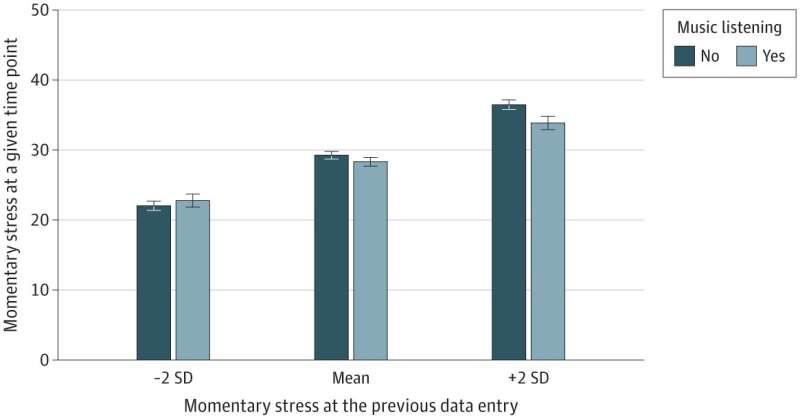
Differential Associations Between Music Listening and Momentary Stress Depending on Prior Stress Levels Momentary stress varied as a function of music listening and prior stress levels. The y-axis displays momentary stress assessed at a given time point. The x-axis displays categories of momentary stress levels at the previous data entry. Error bars represent SEs. Credit: JAMA Network Open (2023). DOI: 10.1001/jamanetworkopen.2022.50382

A team of researchers at the University of Vienna has found evidence showing that listening to music when stressed can boost a person's mood and help them relax. In their paper published on the JAMA Network Open site, the group describes an experiment they conducted with volunteers under stress caused by living under the rules of the lockdown during the early days of the global pandemic.

26 fev 2023--Prior research has suggested that listening to music can temporarily reduce feelings of stress, but as the researchers note, most such studies have been cross-sectional or retrospective, which they note can lead to unintentional biases. Anecdotal evidence has also suggested that music effectively reduces stress. In this new effort, the researchers sought to find more concrete evidence of the mental health benefits of listening to music.

To that end, they designed and executed a study that involved creating a smartphone app for use by volunteers. The app allowed 711 adult participants to record their mood and music listening habits five times a day for one week. During each query, each volunteer was chose a current level of stress from a menu; likewise, they rated their momentary mood from a menu. All the volunteers lived either in Austria or Italy. The researchers carried out the study during the early days of the pandemic when people were told to stay in their homes and businesses closed, creating a global environment of enormous fear, tension and stress.

The researchers found what they describe as a correlation between lowered stress levels and instances of listening to music—most particularly when listening to uplifting or happy music. The researchers note that prior research has shown that happy music can activate parts of the brain associated with mood regulation.

The researchers also found that the impact of listening to music over a period of time can impact a person's memories. Those volunteers who listened to more happy music during the lockdown reported feeling less anxious after it was all over than other volunteers. They conclude that clinicians working with stressed clients might find it useful to suggest they put on some happy music.

More information: Anja C. Feneberg et al, Perceptions of Stress and Mood Associated With Listening to Music in Daily Life During the COVID-19 Lockdown, JAMA Network Open (2023). DOI: 10.1001/jamanetworkopen.2022.50382

Tuesday, January 17, 2023


Study shows cyclic breathing technique more effective in reducing stress than mindfulness meditation


At team of researchers at Stanford University reports evidence that people who engage in cyclic sighing breathing exercises see a greater reduction in stress than those engaging in mindfulness meditation. In their paper published in the journal Cell Reports Medicine, the researchers describe their study of several different types of stress reduction techniques.

17 jan 2023--Prior research has shown that while stress can be a positive influence at times, such as when it prompts people to do things they know they need to do, more often, it is considered adverse because it can lead to health problems such as hypertension. Thus, stress techniques have been developed to help people reduce stress without resorting to drugs. One such technique is mindfulness meditation, during which a person attempts to relax by putting themselves in the moment in a nonjudgmental way for a period of time. Other techniques involve engaging in breathing exercises. In this new effort, the researchers compared three types of breathing exercises and mindfulness meditation to assess their effectiveness.

The three types of breathing exercises tested included cyclic sighing, in which more time and thought is spent on exhaling than on inhaling or holding the breath; box breathing, in which breathing and holding are done for the same amount of time; and cyclic hyperventilation, in which inhalations last longer than exhalations.

Research for the study was conducted online during the pandemic when stress was unusually high for most people; 114 volunteers engaged in one of the stress reducers for five minutes each day for a month at the time of their choosing. Each volunteer kept a stress journal to assess the effectiveness of their stress reduction activities.

The researchers found that for the most part, the volunteers reported that they found the exercise a positive experience—90% reported positive feelings. They also found that those volunteers using breathing exercises showed more stress reduction than those doing mindfulness meditation. And they also found that those who did cyclic sighing reported the greatest reductions in  compared to the other breathing techniques.

More information: Melis Yilmaz Balban et al, Brief structured respiration practices enhance mood and reduce physiological arousal, Cell Reports Medicine (2023). DOI: 10.1016/j.xcrm.2022.100895

Saturday, November 05, 2022


Fermented foods and fiber may lower stress levels, says new study

Fermented foods and fibre may lower stress levels—new study
Foods such as kimchi are great to include in a psychobiotic diet. Credit: Nungning20/ Shutterstock

When it comes to dealing with stress, we're often told the best things we can do are exercise, make time for our favorite activities or try meditation or mindfulness.

05 nov 2022--But the kinds of foods we eat may also be an effective way of dealing with stress, according to research published by me and other members of APC Microbiome Ireland. Our latest study, now published in Molecular Psychiatry, has shown that eating more fermented foods and fiber daily for just four weeks had a significant effect on lowering perceived stress levels.

Over the last decade, a growing body of research has shown that diet can have a huge impact on our mental health. In fact, a healthy diet may even reduce the risk of many common mental illnesses.

The mechanisms underpinning the effect of diet on mental health are still not fully understood. But one explanation for this link could be via the relationship between our brain and our microbiome (the trillions of bacteria that live in our gut). Known as the gut-brain axis, this allows the brain and gut to be in constant communication with each other, allowing essential body functions such as digestion and appetite to happen. It also means that the emotional and cognitive centers in our brain are closely connected to our gut.

While previous research has shown stress and behavior are also linked to our microbiome, it has been unclear until now whether changing diet (and therefore our microbiome) could have a distinct effect on stress levels.

This is what our study set out to do. To test this, we recruited 45 healthy people with relatively low-fiber diets, aged 18–59 years. More than half were women. The participants were split into two groups and randomly assigned a diet to follow for the four-week duration of the study.

Around half were assigned a diet designed by nutritionist Dr. Kirsten Berding, which would increase the amount of prebiotic and fermented foods they ate. This is known as a "psychobiotic" diet, as it included foods that have been linked to better mental health.

This group was given a one-on-one education session with a dietitian at both the start and halfway through the study. They were told they should aim to include 6–8 servings daily of fruits and vegetables high in prebiotic fibers (such as onions, leeks, cabbage, apples, bananas and oats), 5–8 servings of grains per day, and 3–4 servings of legumes per week. They were also told to include 2–3 servings of fermented foods daily (such as sauerkraut, kefir and kombucha). Participants on the control diet only received general dietary advice, based on the healthy eating food pyramid.

Fermented foods and fibre may lower stress levels—new study
Participants were told to eat foods high in prebiotic fibres, such as apples. Credit: gowithstock/ Shutterstock
Less stress

Intriguingly, those who followed the psychobiotic diet reported they felt less stressed compared with those who followed the control diet. There was also a direct correlation between how strictly participants followed the diet and their perceived stress levels, with those who ate more psychobiotic foods during the four-week period reporting the greatest reduction in perceived stress levels.

Interestingly, the quality of sleep improved in both groups—though those on the psychobiotic diet reported greater improvements in sleep. Other studies have also shown that gut microbes are implicated in sleep processes, which may explain this link.

The psychobiotic diet only caused subtle changes in the composition and function of microbes in the gut. However, we observed significant changes in the level of certain key chemicals produced by these gut microbes. Some of these chemicals have been linked to mental health, which could potentially explain why participants on the diet reported feeling less stressed.

Our results suggest specific diets can be used to reduce perceived stress levels. This kind of diet may also help to protect mental health in the long run as it targets the microbes in the gut.

While these results are encouraging, our study is not without its limitations. First, the sample size is small due to the pandemic restricting recruitment. Second, the short duration of the study could have limited the changes we observed—and it's unclear how long they would last. As such, long-term studies will be needed.

Third, while participants recorded their daily diet, this form of measurement can be susceptible to error and bias, especially when estimating food intake. And while we did our best to ensure participants didn't know what group they'd been assigned to, they may have been able to guess based on the nutrition advice they were given. This may have affected the responses they gave at the end of the study. Finally, our study only looked at people who were already healthy. This means we don't understand what effect this diet could have on someone who may not be as healthy.

Still, our study offers exciting evidence that an effective way to reduce stress may be through diet. It will be interesting to know if these results can also be replicated in people suffering from stress-related disorders, such as anxiety and depression. It also adds further evidence to this field of research, showing evidence of an association between diet, our microbiome and our mental health.

So the next time you're feeling particularly stressed, perhaps you'll want to think more carefully about what you plan on eating for lunch or dinner. Including more fiber and fermented foods for a few weeks may just help you feel a little less stressed out.

More information: Kirsten Berding et al, Feed your microbes to deal with stress: a psychobiotic diet impacts microbial stability and perceived stress in a healthy adult population, Molecular Psychiatry (2022). DOI: 10.1038/s41380-022-01817-y
Journal information: Molecular Psychiatry 

Thursday, December 25, 2014

Stress may increase desire for reward but not pleasure, research finds

happy
Credit: Bill Kuffrey/public domain
25 dec 2014--Feeling stressed may prompt you to go to great lengths to satisfy an urge for a drink or sweets, but you're not likely to enjoy the indulgence any more than someone who is not stressed and has the same treat just for pleasure, according to new research published by the American Psychological Association.
"Most of us have experienced stress that increases our craving for rewarding experiences, such as eating a tasty bar of chocolate, and it can make us invest considerable effort in obtaining the object of our desire, such as running to aconvenience store in the middle of the night," said lead author Eva Pool, MS, a doctoral student at the University of Geneva. "But while stress increases our desire to indulge in rewards, it does not necessarily increase the enjoyment we experience."
Stress prompted chocolate lovers in an experiment to exert three times as much effort to smell chocolate than unstressed chocolate lovers, but both groups reported about the same level of enjoyment when they got a whiff of the pleasing aroma, according to the study, published in APA's Journal of Experimental Psychology: Animal Learning and Cognition.
For the experiment, researchers recruited 36 university students, of whom 19 were men, who said they love chocolate. To induce stress, the researchers asked students to keep one hand in ice-cold water while being observed and videotaped. Another group immersed a hand in lukewarm water. Ten minutes before and 30 minutes after the task, researchers collected samples of the participants' saliva and tested them for levels of cortisol, a hormone involved in stress response. Following the stress conditioning, all participants had to press a handgrip for the chance to smell chocolate when they saw a certain symbol. The researchers measured the amount of effort participants invested for a chance to smell the chocolate, and asked participants how pleasant they found the odor.
"Stress plays a critical role in many psychological disorders and is one of the most important factors determining relapses in addiction, gambling and binge eating," said another author, Tobias Brosch, PhD, also of the University of Geneva. "Stress seems to flip a switch in our functioning: If a stressed person encounters an image or a sound associated with a pleasant object, this may drive them to invest an inordinate amount of effort to obtain it."
Previous research with laboratory rats supports the idea that wanting and liking rely on two distinct networks of neurons in the brain that can be activated independently, according to the study. "Although the findings with rodents provide a novel explanation for the stress-induced increase of reward pursuits, to the best of our knowledge, they have never been demonstrated in humans," the study said.
More studies with people are necessary to replicate the findings, according to the authors, who recommended further research to explore the effect of more intense everyday life stressors on human wanting and liking.
More information: "Stress Increases Cue-Triggered 'Wanting' for Sweet Reward in Humans," Eva Pool, MS, Tobias Brosch, PhD, Sylvain Delplanque, PhD, and David Sander, PhD, University of Geneva; Journal of Experimental Psychology: Animal Learning and Cognition; online, Dec. 22, 2014. www.apa.org/pubs/journals/releases/xan-0000052.pdf.
Provided by American Psychological Association

Friday, July 25, 2014

Researcher shows how stress hormones promote brain's building of negative memories

ASU researcher shows how stress hormones promote brain's building of negative memories
The ASU study's findings about stress hormones, such as cortisol (3-D rendering seen above), are important as they pertain to women, since women are twice as likely to develop disorders from stress and trauma that affect memory, such as Post Traumatic Stress Disorder. Credit: Wikimedia Commons
When a person experiences a devastating loss or tragic event, why does every detail seem burned into memory whereas a host of positive experiences simply fade away?
25 july 2014--It's a bit more complicated than scientists originally thought, according to a study recently published in the journal Neuroscience by ASU researcher Sabrina Segal.
When people experience a traumatic event, the body releases two major stress hormones: norepinephrine and cortisol. Norepinephrine boosts heart rate and controls the fight-or-flight response, commonly rising when individuals feel threatened or experience highly emotional reactions. It is chemically similar to the hormone epinephrine – better known as adrenaline.
In the brain, norepinephrine in turn functions as a powerful neurotransmitter or chemical messenger that can enhance memory.
Research on cortisol has demonstrated that this hormone can also have a powerful effect on strengthening memories. However, studies in humans up until now have been inconclusive – with cortisol sometimes enhancing memory, while at other times having no effect.
A key factor in whether cortisol has an effect on strengthening certain memories may rely on activation of norepinephrine during learning, a finding previously reported in studies with rats.
In her study, Segal, an assistant research professor at the Institute for Interdisciplinary Salivary Bioscience Research at ASU, and her colleagues at the University of California-Irvine showed that human memory enhancement functions in a similar way.
Conducted in the laboratory of Larry Cahill at U.C. Irvine, Segal's study included 39 women who viewed 144 images from the International Affective Picture Set. This set is a standardized picture set used by researchers to elicit a range of responses, from neutral to strong emotional reactions, upon view.
Segal and her colleagues gave each of the study's subjects either a dose of hydrocortisone – to simulate stress – or a placebo just prior to viewing the picture set. Each woman then rated her feelings at the time she was viewing the image, in addition to giving saliva samples before and after. One week later, a surprise recall test was administered.
What Segal's team found was that "negative experiences are more readily remembered when an event is traumatic enough to release cortisol after the event, and only if norepinephrine is released during or shortly after the event."
"This study provides a key component to better understanding how traumatic memories may be strengthened in women," Segal added, "because it suggests that if we can lower norepinephrine levels immediately following a traumatic event, we may be able to prevent this memory enhancing mechanism from occurring, regardless of how much cortisol is released following a traumatic event."
Further studies are needed to explore to what extent the relationship between these two stress hormones differ depending on whether you are male or female, particularly because women are twice as likely to develop disorders from stress and trauma that affect memory, such as in Posttraumatic Stress Disorder (PTSD). In the meantime, the team's findings are a first step toward a better understanding of neurobiological mechanisms that underlie traumatic disorders, such as PTSD.
Provided by Arizona State University

Wednesday, December 05, 2012


Under similar stress, rich live longer than poor, study reports 

Under similar stress, rich live longer than poor: study

People with money have more methods for coping, one expert says.
05 dec 2012—Money may not buy you happiness, but it can help you avoid the ill effects of unhappiness and stress. That's the upshot of a new British study that finds stressed-out rich people live longer than the stressed-out poor.
The findings show that the combination of poverty and stress "is a bomb," said study lead author Dr. Antonio Ivan Lazzarino, clinical research associate at University College London. "Those people have really higher mortality, more than you would expect by just adding the two separate effects."
Researchers already know that stress and poverty take a toll on longevity. The new research aims to "study both stress and income to see how their combinations—low-low, low-high, high-low, high-high—affect mortality," Lazzarino said.
The research design doesn't specify how much longer someone may live if he's rich and stressed versus poor and stressed. And why wealthier people may tolerate stress better biologically is not well understood. Also, the study only found an association with wealth, stress and mortality, it didn't prove cause-and-effect.
For the study, published online Dec. 3 in the Archives of Internal Medicine, the researchers examined a database of more than 66,500 people in England who were 35 years or older between 1994 and 2004. The participants were questioned about their jobs—whether they were unskilled workers or held managerial jobs, for instance—and whether they had symptoms of anxiety, depression, low confidence or social dysfunction. None had cancer or heart disease at the start of the study, which followed participants for eight years on average.
After adjusting their statistics so they wouldn't be thrown off by factors such as age or gender, the researchers found that poor and stressed-out people died earlier.
Having more money seemed to serve as a buffer, even when wealthier people had high . In the other direction, it seems that "low income amplifies the adverse effects of stress," Lazzarino said.
One expert wasn't surprised by the findings. Poorer people have fewer ways to combat stress, said Glyn Lewis, professor of psychiatric epidemiology at the University of Bristol in England.
"For example, if your car breaks down, then a wealthier person could afford to rent a new car or get their old one mended quickly or will have insurance for this," Lewis said. "It is much less stressful if you have the money to seek out alternatives."
The study authors suggest that wealthier people may have better ways to manage or contain their distress and more people around them who can help. Also, previous research has shown that the cardiovascular systems of richer people recover faster from acute stress, which might contribute less to long-term cardiovascular damage, the authors noted.
However, the study didn't document how stress levels changed over time, and the authors acknowledge that that is a limitation of their study.
Still, Lazzarino said the findings might help researchers refine tools for stress measurement. "Since we know that stress is very bad for your health, one could argue that every person on the planet should do tests to measure his/her own stress and that family doctors should screen all patients they have for stress," he said.
"However, this strategy may not be cost-effective," he added. "We say that if you specifically target low-income people, stress screening may be very useful and cost-effective."
More information: For more about health and stress, visit the U.S. National Library of Medicine.

Monday, August 22, 2011

At last, a reason why stress causes DNA damage

For years, researchers have published papers that associate chronic stress with chromosomal damage.

22 aug 2011--Now researchers at Duke University Medical Center have discovered a mechanism that helps to explain the stress response in terms of DNA damage.

"We believe this paper is the first to propose a specific mechanism through which a hallmark of chronic stress, elevated adrenaline, could eventually cause DNA damage that is detectable," said senior author Robert J. Lefkowitz, M.D., James B. Duke Professor of Medicine and Biochemistry and a Howard Hughes Medical Institute (HHMI) investigator at Duke University Medical Center.

The paper was published in the Aug. 21 online issue of Nature.

In the study, mice were infused with an adrenaline-like compound that works through a receptor called the beta adrenergic receptor that Lefkowitz has studied for many years. The scientists found that this model of chronic stress triggered certain biological pathways that ultimately resulted in accumulation of DNA damage.

"This could give us a plausible explanation of how chronic stress may lead to a variety of human conditions and disorders, which range from merely cosmetic, like graying hair, to life-threatening disorders like malignancies," Lefkowitz said.

P53 is a tumor suppressor protein and is considered a "guardian of the genome" – one that prevents genomic abnormalities.

"The study showed that chronic stress leads to prolonged lowering of p53 levels," said Makoto Hara, Ph.D., a postdoctoral fellow in the Lefkowitz laboratory. "We hypothesize that this is the reason for the chromosomal irregularities we found in these chronically stressed mice."

Lefkowitz earlier had proved the existence of isolated, and characterized the G-protein-coupled receptors (GPCRs) such as the beta adrenergic receptor. These receptors, which are located on the surface of the membranes that surround cells, are the targets of almost half of the drugs on the market today, including beta blockers for heart disease, antihistamines and ulcer medications.

Now he is continuing studies along another pathway,stemming from the GPCRs, that was discovered in his lab, which is known as the beta-arrestin pathway. At first, the theory was that beta-arrestin proteins turned off or desensitized the G-protein pathways, but evidence is accumulating that these proteins are also responsible for causing certain biochemical activities in their own right.

In the current study, the scientists found a molecular mechanism through which adrenaline-like compounds acted through both G-protein and the beta-arrestin pathways to trigger DNA damage.

The Nature publication showed that the infusion of an adrenaline-like compound for four weeks in the mice caused degradation of p53, which was present in lower levels over time.

The study also showed that the DNA damage was prevented in mice lacking beta-arrestin 1. Loss of beta-arrestin 1 stabilized cellular levels of p53 both in the thymus, an organ that strongly responds to acute or chronic stress, and in the testes, where paternal stress might affect an offspring's genome.

Future studies planned by the Lefkowitz laboratory include studying mice that are placed under stress (restrained), thus creating their own adrenaline or stress reaction to learn whether the physical reactions of stress, rather than an influx of adrenaline in the lab as was done in the current study, also leads to accumulation of DNA damage.

Provided by Duke University Medical Center

Saturday, December 25, 2010

10 tips for heading off stress during the holidays

Wondering if you'll be able to survive the stress of the holidays — the meals, the presents, reliving old times, and all that togetherness?

25 dec 2010--Hal Barkley, Director of Counseling in SMU's Annette Caldwell Simmons School of Education and Human Development, says not to panic. You can survive this. Here are some of his tips:

1) Create boundaries. Say you had an embarrassing nickname when you were a kid and your pesky brother keeps bringing it up. What to do? Tell him you're looking forward to seeing him, but you'd appreciate it if he wouldn't call you that, at least not in front of anyone else.

2) Lower your exercise expectations. If you usually work out for an hour a day, be comfortable less.

3) Being alone is OK. Getting away for a while is fine. Do not feel guilty about needing some space and time alone.

"You need to get away, to rediscover yourself, to recharge your batteries," Barkley says. Use his trick: When his mother runs out of buttermilk, he says, "Oh! I'll go get that for you!"

4) You can still love them even if they don't stay with you. You might even find yourselves a bit more enamored of each other.

"Some people bring their own RV or mobile home," he says. "That's where they stay. I always think maybe there's a reason for that. It gives them space. So does staying in a hotel rather than someone's home."

5) Focus on merely maintaining your weight. If you don't gain pounds, consider yourself successful. If you crave some candy, go ahead and have a piece.

6) It's your house; you set the rules. If relatives tend to drink too much, talk to them beforehand, Barkley says: "Confrontation doesn't have to be negative; it can be positive. It can be a setting of expectations."

7) You don't have to eat any more than you want to eat. It's a matter of breaking a pattern. Before the meal, for instance, tell your mother or sister or that favorite relative: "One thing I look forward to is coming here and eating your cooking. But I want you to know that this year, I'm going to try everything but will only have one helping. Don't be surprised if you have to say 'No thank you' several times."

8) Create active traditions. If sliding doesn't fit your climate, consider bowling or going out to look at Christmas lights.

9) Make your meals last a long time. No, not by having those seconds you swore off in No. 7. But by eating dessert after a rousing game or charades or Twister.

10) Channel your frustrations altruistically. If you can't stand another minute – or even long before you reach that point – volunteer. Do it alone, or bring the family along.

Provided by Southern Methodist University

Monday, June 15, 2009

Stress Makes Your Hair Go Gray


Those pesky graying hairs that tend to crop up with age really are signs of stress, reveals a new report in the June 12 issue of Cell, a Cell Press publication

15 june 2009--Researchers have discovered that the kind of "genotoxic stress" that does damage to DNA depletes the melanocyte stem cells (MSCs) within hair follicles that are responsible for making those pigment-producing cells. Rather than dying off, when the going gets tough, those precious stem cells differentiate, forming fully mature melanocytes themselves. Anything that can limit the stress might stop the graying from happening, the researchers said.

"The DNA in cells is under constant attack by exogenously- and endogenously-arising DNA-damaging agents such as mutagenic chemicals, ultraviolet light and ionizing radiation," said Emi Nishimura of Tokyo Medical and Dental University. "It is estimated that a single cell in mammals can encounter approximately 100,000 DNA damaging events per day."

Consequently, she explained, cells have elaborate ways to repair damaged DNA and prevent the lesions from being passed on to their daughter cells.

"Once stem cells are damaged irreversibly, the damaged stem cells need to be eliminated to maintain the quality of the stem cell pools," Nishimura continued. "We found that excessive genotoxic stress triggers differentiation of melanocyte stem cells." She says that differentiation might be a more sophisticated way to get rid of those cells than stimulating their death.

Nishimura's group earlier traced the loss of hair color to the gradual dying off of the stem cells that maintain a continuous supply of new melanocytes, giving hair its youthful color. Those specialized stem cells are not only lost, they also turn into fully committed pigment cells and in the wrong place.

Now, they show in mice that irreparable DNA damage, as caused by ionizing radiation, is responsible. They further found that the "caretaker gene" known as ATM (for ataxia telangiectasia mutated) serves as a so-called stemness checkpoint, protecting against MSCs differentiation. That's why people with Ataxia-telangiectasia, an aging syndrome caused by a mutation in the ATM gene, go gray prematurely.

The findings lend support to the notion that genome instability is a significant factor underlying aging in general, the researchers said. They also support the "stem cell aging hypothesis," which proposes that DNA damage to long-lived stem cells can be a major cause for the symptoms that come with age. In addition to the aging-associated stem cell depletion typically seen in melanocyte stem cells, qualitative and quantitative changes to other body stem cells have been reported in blood stem cells, cardiac muscle, and skeletal muscle, the researchers said. Stresses on stem cell pools and genome maintenance failures have also been implicated in the decline of tissue renewal capacity and the accelerated appearance of aging-related characteristics.

"In this study, we discovered that hair graying, the most obvious aging phenotype, can be caused by the genomic damage response through stem cell differentiation, which suggests that physiological hair graying can be triggered by the accumulation of unavoidable DNA damage and DNA-damage response associated with aging through MSC differentiation," they wrote.

Monday, March 16, 2009

Stress may cause the brain to become disconnected

Philadelphia, PA, March 16, 2009 – Does stress damage the brain? In the March 1st issue of Biological Psychiatry, published by Elsevier, a paper by Tibor Hajszan and colleagues provides an important new chapter to this question.

This issue emerged in the 1990's as an important clinical question with the observation by J. Douglas Bremner and colleagues, then at the VA National Center for Posttraumatic Stress Disorder (PTSD), that hippocampal volume was reduced in combat veterans with PTSD. This finding was replicated by several, but not all, groups. In particular, it did not appear that this change was associated with acute PTSD. The importance of this finding was further called into question as a group associated with the Harvard Medical School found that reduced hippocampal volume predicted risk for PTSD among twins, rather than emerging as a consequence of PTSD. Yet limitations of this twin study reduced the strength of this inference, as there were relatively high rates of early life trauma in the twins without combat-related PTSD, i.e., a potential environmental source for the reductions in hippocampal volume associated with later risk for PTSD. This group also showed that cortical volume reductions in other brain regions, such as the pregenual anterior cingulate cortex, were more clearly linked to trauma than were the hippocampal changes in these twins. "This collection of clinical findings highlights an important limitation of clinical neuroimaging studies. These studies have the ability to raise important questions about brain structure in a general sense, but we still rely on studies of postmortem human tissue and animal research to determine the specific nature of neural changes," explains Dr. John Krystal, Editor of Biological Psychiatry and affiliated with both Yale University School of Medicine and the VA Connecticut Healthcare System.

This is where research conducted in animals has provided critical information. Initial data by investigators, such as Robert Sapolsky at Stanford University, suggested that stress might promote the death of neurons, suggesting that the volume reductions in patients with PTSD might reflect the loss of nerve cells. More recent research by Bruce McEwen and colleagues at Rockefeller University indicates that stress can cause neurons to shrink or retract their connections. This could be critically important to the ability of these neurons to work together in highly inter-connected networks. But what is the link between this type of "neural remodeling" and the behavioral changes that follow extreme stress exposure?

The new paper by Hajszan and colleagues at Yale University suggests that in learned helplessness, an animal model for depression and PTSD, stress-related reductions in synapses in the hippocampus are directly related to the emergence of depression-like behavior. These data help to make the case that stress-related changes in the structure of nerve cells may have important behavioral consequences, explains Dr. Hajszan. "The importance of our findings is derived from the well-known fact that synapses have a great potential for rapid changes, which may underlie sudden mood swings. More importantly, it is feasible to restore hippocampal synapses in a very short period of time (hours or even minutes), which opens up exciting new avenues for developing rapid-acting antidepressants that may provide immediate relief from depressive symptoms."

It cannot yet be said that reductions in cortical volumes in patients with PTSD reflect reductions in the number of synapses. However, these findings underscore the potential importance of studying post-mortem human tissue to determine whether humans also show this pattern of neural changes. Dr. Krystal notes that "settling this issue could help us to better understand recent epidemiologic data suggesting that most of the adjustment problems of soldiers returning from Iraq and Afghanistan with mild traumatic brain injury (TBI) or post-concussive syndrome are attributable to PTSD." He adds, "We have tended to think of PTSD and mild TBI as unrelated at the neural level. However, with growing evidence from animal studies that PTSD may be associated with loss of neural connections, it may turn out that PTSD and mild TBI are two distinct, but interacting, ways that soldiers might be affected by their combat experience. " Research is ongoing in the authors' lab and in others as they continue to make progress in understanding how the brain is affected by depression and stress, and in developing targeted medications.

Tuesday, August 21, 2007

APA: Dealing Well With Stress Linked to Higher HDLs

SAN FRANCISCO, Aug. 20 -- The ability to cope with stress may be linked to HDLs, researchers said here.
Among older men, negative coping strategies, such as hostility and social isolation, were significantly associated with lower HDL levels compared with men who had more positive ways of dealing with stress (P<0.05), found Loriena A. Yancura, Ph.D., of the University of Hawaii at Manoa, and colleagues.
The findings suggest that better coping mechanisms can serve a protective role in cardiovascular health, Dr. Yancura reported at the American Psychological Association meeting.
Stress has been linked to coronary heart disease risk factors in other studies while coping processes have been linked to other health factors, they noted. Hostility has been linked independently to lipids and stress and coping.
But there has been little study of them all together. In the current research, the investigators aimed to examine the complex relationships among hostility, stress, coping strategies, and lipids.
They analyzed data from 716 men who had completed a mail-in survey, an in-person interview, and a biomedical examination during the Normative Aging Study from 1988 to 1991. The participants were predominantly white with a mean age of 65.
Coping mechanisms were rated by how often the men used 26 strategies on the Brief Ways of Coping questionnaire. Hostility was measured using the Cook-Medley Hostility Scale.
Participants' stress scores were determined by their description of the most stressful problem they encountered in the prior week. They also rated how effectively they felt they dealt with the problem.
A fasting blood sample was taken at the same time as the subjective testing.
Among the modest, but significant, correlations, the findings for men who scored higher for hostility were:
Greater stress scores (P<0.01).
More use of self-blame as a coping mechanism (P<0.001).
More likely to use self-isolation to cope with stress (P<0.05).
Likewise, poor coping mechanisms were linked to HDL levels among the men.
Those who scored higher for use of hostility in coping with stress had significantly lower HDL levels and higher triglycerides (both P<0.05).
HDL was also negatively correlated with higher scores for self-blame (P<0.05), minimizing the problem (P<0.05), and self-isolation (P<0.01) as coping mechanisms.
There were no significant correlations between any of the coping subscales and LDL.
When the researchers put the three strongest predictors of HDL level -- hostility, self-isolation, and self-blame -- into a model, the significant findings included:
Hostility rose with stress.
Hostility rose with self-blame.
Higher hostility scores were linked to lower HDL.
Stress was linked to higher self-isolation.
Stress was linked to higher self-blame.
Stress was linked a feeling of less efficacy in dealing with problems.
These findings matched clinical observations, Dr. Yancura and colleagues said.
Furthermore, "the coping variables also showed the expected relationships with HDL," the researchers noted. Hostility was both directly linked to HDL and indirectly through coping strategies.
The investigators noted that their study might be of limited generalizability because the relationship between hostility, stress and other factors with lipids likely vary by age, gender, or ethnicity. Also, the study did not look at longitudinal relationships between the factors.
The researchers provided no information on conflicts of interest.Primary source: American Psychological Association meetingSource reference: Yancura LA, et al "Does Coping Mediate between Hostility and Lipid Levels? Findings from the Normative Aging Study" APA meeting 2007.

Tuesday, April 10, 2007

Stress may help cancer cells resist treatment, research shows

WINSTON-SALEM, N.C. -- Scientists from Wake Forest University School of Medicine are the first to report that the stress hormone epinephrine causes changes in prostate and breast cancer cells that may make them resistant to cell death.
"These data imply that emotional stress may contribute to the development of cancer and may also reduce the effectiveness of cancer treatments," said George Kulik, D.V.M., Ph.D., an assistant professor of cancer biology and senior researcher on the project.
The study results are reported on-line in the Journal of Biological Chemistry and will appear in a future print issue.
Levels of epinephrine, which is produced by the adrenal glands, are sharply increased in response to stressful situations and can remain continuously elevated during persistent stress and depression, according to previous research. The goal of the current study was to determine whether there is a direct link between stress hormones and changes in cancer cells.
While a link between stress and cancer has been suggested, studies in large groups of people have been mixed.
http://www.eurekalert.org/pub_releases/2007-04/wfub-smh041007.php