Showing posts with label vaccine covid. Show all posts

Saturday, April 24, 2021


3 doses, then 1 each year: Why Pfizer, not AstraZeneca, is best for the long haul
vaccine
Credit: Pixabay/CC0 Public Domain

Last week, the chief executive of Pfizer said anyone who receives its COVID-19 vaccine will probably need to have a third dose within 6-12 months after being fully immunized, and then likely one dose every year going forward.

24 April 2021--We'll need these because it's likely that, for many of us, immunity will begin to wane within that time frame. The vaccine will also need to be tweaked to cover new coronavirus variants as they emerge.

The advantage of mRNA vaccines like Pfizer's is they're much easier to update than the "viral vector" vaccines like AstraZeneca's. We should still use AstraZeneca now for over-50s, but our best long-term strategy is to use mRNA COVID-19 vaccines, and therefore to develop the capacity to manufacture them here in Australia.

Immunity to coronaviruses doesn't last

We know our immunity to different coronaviruses wanes over time. This is true for the four common cold (endemic) coronaviruses that circulate all the time—there are always sufficient numbers of people who have lost their immunity to ensure these viruses can persist and continue to cause respiratory illnesses.

Our immunity to SARS-CoV-2, the virus that causes COVID-19, also seems to wane quickly, although the rate at which this happens can be quite variable. Data suggest immunity acquired from the Pfizer shot is pretty robust for six months, but it isn't clear how quickly our immunity is lost after that. However, it's reasonable to predict that within 12 months of a population being vaccinated, a substantial number of people will have likely lost protection against SARS-CoV-2. This will particularly be the case if the prevalent SARS-CoV-2 strain circulating at that time is substantially different from the virus against which people were originally vaccinated.


This relates to the fact that some coronavirus variants have mutations that reduce the effectiveness of vaccine-induced immunity. They've been described as "variants of concern" and include a virus that originated in South Africa, which has reduced the efficacy of both the AstraZeneca and Pfizer vaccines. As the pandemic surges around the world, more variants will certainly crop up.

Both waning immunity and viral variants will conspire to reduce our protection over time. So we'll need booster shots, ideally updated to deal with the viral variant that poses the greatest threat.

Using AstraZeneca is not our best long-term solution

I understand why Australia's government originally prioritized getting the AstraZeneca vaccine. It's easier to manufacture, store and distribute. It made sense in the early stages of the pandemic. And it's still an effective vaccine that people, here and abroad, should be receiving as soon as possible—any immunity is better than none and you will certainly be protected from severe COVID-19.

But as time goes on, using the AstraZeneca shot isn't the best long-term strategy.

One reason for this is what immunologists call "vector immunity". The AstraZeneca and Johnson & Johnson vaccines use a viral vector, which is an inactivated (cannot replicate) form of a common type of virus called an "adenovirus". They use this adenovirus as a delivery vehicle to get DNA into our cells to give them the instructions to develop immunity against the coronavirus. However, you can't be repeatedly immunized with this type of vaccine because you'll likely develop immunity to the adenovirus vector (the delivery vehicle) itself. When that happens your  interferes with the delivery vehicle getting into your cells and the effectiveness of these vaccines would erode over time.

What's more, in a very, very small number of people, this viral vector seems to be linked with an extremely rare but serious blood clotting syndrome. In these people, it's thought that a consequence of the immune response to the viral vector is their immune systems make "auto-antibodies". These are antibodies that, in addition to fighting a foreign invader (or targeting the adenovirus-based vector used in the AstraZeneca vaccine), also attack our own cells. In this case, these auto-antibodies are attacking blood cells called platelets, leading to the  and low platelet counts seen in around 1 in 250,000 people vaccinated with the AstraZeneca shot.

There are also clotting concerns with the Johnson & Johnson vaccine, which is also an adenovirus-vector-based vaccine, after six women developed the condition in the United States out of 6.8 million given the shot. However, this link is yet to be proven for this vaccine.

By contrast, mRNA vaccines like Pfizer's (and Moderna's) can be updated much more quickly. Pfizer just needs to rework its RNA sequence to cover variants, which is a minor modification. Nothing changes about the delivery system of the vaccine, so reapproval will likely be much easier. Regulatory bodies have indicated there will be a quick path for approval for vaccines updated for variants.

The mRNA vaccines consist of a lipid-based delivery system that protects the mRNA and gets it into cells. Then, the cells can start manufacturing the spike protein to present to your immune system. There's no protein in the vaccine itself, so there's no chance of developing immunity to the vaccine components.

mRNA vaccines are our best bet going forward

There's a fear among researchers, including myself, that we'll be chasing our tails with these new variants. We'll identify a new variant and set out to update our vaccines against it, but by the time the formulation is updated, approved, manufactured and distributed, we may already be dealing with another variant, or many variants across different locations.

It's absolutely vital Australia develops the ability to make mRNA vaccines onshore, particularly if new variants pop up here or in our region. This will be far more effective than waiting months to get new shots from overseas.

Federal health minister Greg Hunt has indicated Australia is interested in developing this capacity.

Right now, the AstraZeneca vaccine still has a role in Australia's current vaccine strategy. We have it and we can make more of it, so let's get it out there for over-50s as well as give those under 50 the opportunity to make an informed choice to have this vaccine.

So few Australians currently have immunity to the virus, we remain vulnerable to outbreaks. If there are new outbreaks, we would have to rely on lockdowns, masks and other strategies again, and could find ourselves back to where we were last year. And let's not forget people will become ill and some will die. The vaccine rollout is lagging, and we really need to catch up as soon as possible.

But as time goes on, the AstraZeneca vaccine will become less attractive, and mRNA vaccines such as Pfizer's should eventually take its place.



Provided by The Conversation 

Monday, February 08, 2021


WHO warns against dismissing AstraZeneca vaccine after setbacks

covid
Credit: Unsplash/CC0 Public Domain

The World Health Organization and its Covax partners cautioned Monday against dismissing AstraZeneca's COVID vaccine after several setbacks, insisting it remained an important, life-saving tool.

08 feb 2021--The AstraZeneca vaccine is currently a vital part of Covax, which was set up to procure COVID-19 vaccines and ensure their equitable distribution around the world.

It accounts for almost all of the 337.2 million vaccine doses Covax is preparing to begin shipping to some 145 countries during the first half of the year, once it receives WHO authorisation, which is expected next week.

But the vaccine has run into several setbacks.

"It is vastly too early to be dismissing this vaccine," said Richard Hatchett, who heads the Coalition for Epidemic Preparedness Innovations (CEPI), which co-leads the Covax vaccine facility with the WHO and Gavi.

"It is absolutely crucial to use the tools that we have as effectively as we possibly can," he said, speaking at the WHO's regular bi-weekly press briefing on the coronavirus pandemic.

Regulatory authorities in several European nations have refused to authorise the vaccine for use among the over-65s—by far the most vulnerable age group for serious COVID-19 disease—due to a lack of data proving its efficacy among older people.

And South Africa said Sunday it would suspend the start of its COVID-19 vaccinations with the AstraZeneca jab after a study showed the jab failed to prevent mild and moderate cases of the virus variant that has appeared in the country.

'Concerning news'

WHO chief Tedros Adhanom Ghebreyesus told reporters that the study's findings were "clearly concerning news."

But he stressed that there were "some important caveats", pointing in particular to the small size of the study with only 2,000 participants, urging more research.

Other WHO experts also pointed out that the interval used between the two doses of the vaccine in the study was just a month—far shorter than what has been deemed to be optimal to enhance its efficacy.

WHO's vaccines chief Kate O'Brien pointed to other studies showing the vaccine could have a "meaningful impact against severe disease", including with the B.1.351 variant of the SARS-CoV-2 virus, first detected in South Africa.

She said the organisation's vaccine expert group, which met earlier Monday to discuss its recommendations on the use of the jab, had appeared optimistic about its prospects against the variant.

The 15-member Strategic Advisory Group of Experts on Immunization (SAGE) is due to render its verdict later this week.

However O'Brien said the experts had expressed "a very positive view on proceeding with the use of the vaccine including in settings where variants are circulating".

Gavi chief Seth Berkley agreed that current evidence indicated the jab "is an efficacious vaccine."

At the same time, he underscored the need to continue monitoring all the COVID vaccines, and possibly adapting them to better battle new variants "if found to be scientifically necessary."

The WHO's emergencies director Michael Ryan meanwhile said it was vital to use the tools available now to save lives.

"The primary job of vaccines right now is to reduce hospitalisations and deaths, and right now... they are working to do that," he said.

"We may need better vaccines to do more than just stop deaths and hospitalisations."

But "in emergency management you have got to do what you can do now," he added.

Thursday, January 28, 2021

AstraZeneca, UK PM defend Covid jab's effectiveness

COVID-19
Credit: Pixabay/CC0 Public Domain

AstraZeneca and British Prime Minister Boris Johnson on Thursday defended the effectiveness of the company's COVID-19 vaccine after regulators in Germany said it should not be given to over-65s.\

28 jan 2021--A spokesperson for the UK-based company said the latest clinical trial data for its vaccine, developed with Oxford University, "support efficacy in the over 65 years age group".

The company is awaiting a decision from the EU's medicines regulator, the spokesperson added.

Johnson meanwhile told reporters that the UK's own regulator had established "that they think the Oxford/AstraZeneca vaccine is very good and efficacious, gives a high degree of protection".

A panel of scientific experts in Germany said the vaccine should only be used for "persons aged 18 to 65 years old based on available data", citing "insufficient data" to assess its efficacy for older people.

Britain has been using the Oxford/AstraZeneca jab along with another developed by Pfizer/BioNTech across all older age groups as it bids to immunise the most vulnerable 15 million people by mid-February.

Mary Ramsay, head of immunisations at the government agency Public Health England, also backed the AstraZeneca vaccine for older recipients.

"Both the AstraZeneca and Pfizer/BioNTech vaccines are safe and provide high levels of protection against COVID-19, particularly against severe disease," she said.

"There were too few cases in older people in the AstraZeneca trials to observe precise levels of protection in this group, but data on immune responses were very reassuring," Ramsay added.

"The risk of severe disease and death increase exponentially with age—the priority is to vaccinate as many vulnerable people as possible with either vaccine, to protect more people and save more lives.

German draft doesn't recommend AstraZeneca jab for over-65s

German draft doesn't recommend AstraZeneca jab for over-65s
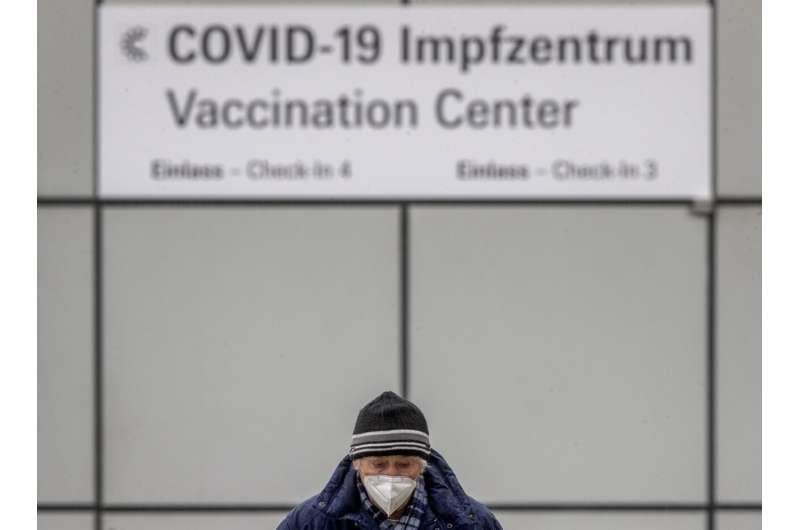
A man wears a face mask as he comes back from the vaccination center in Frankfurt, Germany, Thursday, Jan. 28, 2021. (AP Photo/Michael Probst)

A draft recommendation from Germany's vaccination advisory committee calls for offering the AstraZeneca vaccine only to people aged 18-64 for now, citing what it says is insufficient data to judge its effectiveness for older people.

28 jan 2021--The European Medicines Agency is expected to approve the AstraZeneca  for use in the 27-nation European Union on Friday. It would be the third cleared for use in the EU after the BioNTech-Pfizer and Moderna vaccines.

In a draft recommendation released on Thursday ahead of that decision, Germany's permanent vaccination commission called for using AstraZeneca's vaccine for the 18-64 age group on the basis of currently available information. It said that "there currently is not sufficient data to assess the vaccination effectiveness from 65 years."

AstraZeneca noted earlier this week that British regulators supported its use in the older age group despite lack of late-stage effectiveness data. The company pointed to earlier-stage data published in the journal Lancet in November "demonstrating that older adults showed strong immune responses to the vaccine, with 100% of older adults generating spike-specific antibodies after the second dose."

But questions remain about how well the vaccine protects older people. Only 12% of participants in the AstraZeneca research were over 55 and they were enrolled later, so there hasn't been enough time to see whether they get sick at a lower rate than those who didn't get the vaccine.

German Health Minister Jens Spahn stressed that the committee's recommendation isn't its final decision, and that will be made only after the vaccine is cleared for use.

But he said there had been a discussion since autumn about there being "few data—this isn't about bad data, but few data" in studies on the AstraZeneca vaccine's effectiveness in older groups.

"It was to be expected that this would have an influence on the decision of the regulatory authorities and then the permanent vaccine commission," Spahn said. "We just don't know yet how concretely—so let's wait for the decision tomorrow on clearance and then the final recommendation from the permanent vaccine commission."

When Britain approved the AstraZeneca vaccine for emergency use last month, it acknowledged that data regarding its effectiveness in older people was "limited."

The vaccination committee, known by its German acronym STIKO, is an independent expert panel that provides advice to the government and the medical profession on which immunizations should be given to whom. It doesn't play a direct role in the vaccine approval process, but its advice determines what vaccines are considered standard for which groups, and therefore covered by health insurance.