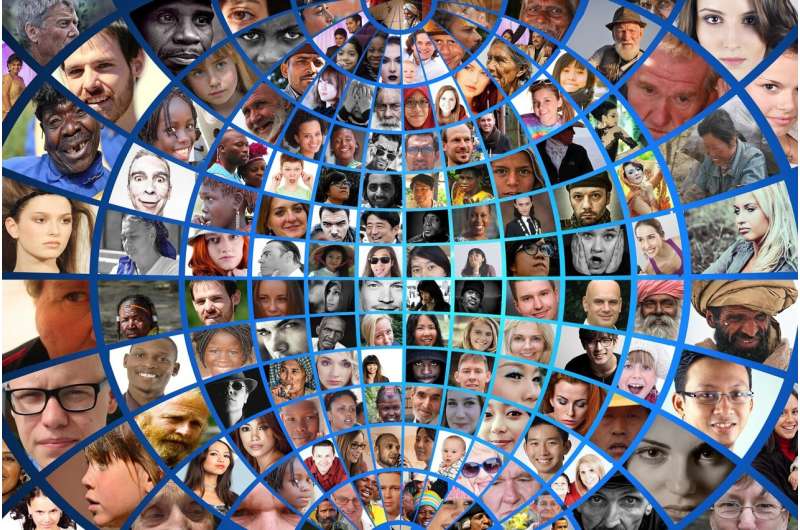
Rapid advances in artificial intelligence (AI) have opened the way for the creation of a huge range of new health care tools, but to ensure that these tools do not exacerbate preexisting health inequities, researchers urge the use of more representative data in their development.
11 april 2024--Researchers from Oxford University's Nuffield Department of Orthopaedics, Rheumatology and Musculoskeletal Sciences (NDORMS), University College London and the Center for Ethnic Health Research, supported by Health Data Research UK, have for the first time studied the full detail of ethnicity data in the NHS. They outline the importance of using representative data in health care provision and have compiled this information into a research-ready database.
The new study, published in Scientific Data, is the first part of a three-phase project that aims to reduce bias in AI health prediction models which are trained on real-world patient data. The project, which addresses ethnicity disparities that were highlighted during the pandemic, is part of the UK Government's COVID-19 Data and Connectivity National Core Study led by Health Data Research UK.
The researchers used de-identified data on ethnicity and other characteristics from general practice and hospital health records, accessed safely within NHS England's Secure Data Environment (SDE) service, via the British Heart Foundation Data Science Center's CVD-COVID-UK/COVID-IMPACT Consortium.
This is the first time that patient ethnicity data has been studied at this depth and breadth for the whole population of England. The researchers were able to combine records to analyze patient self-identified ethnicity recorded through over 489 potential codes.
Researchers analyzed how more than 61 million people in England identified their ethnicity in over 250 different groups. They also looked at the characteristics of those with no record of their ethnicity, and how conflicts in patient ethnicity data can arise. The data, now available for other researchers to use, shows that 1/10 patients lack ethnicity records, and around 12% of patients had conflicting ethnicity codes in their patient records.
Sara Khalid, Associate Professor of Health Informatics and Biomedical Data Science at NDORMS, explained, "Health inequity was highlighted during the COVID19 pandemic, where individuals from ethnically diverse backgrounds were disproportionately affected, but the issue is long-standing and multi-faceted.
"Because AI-based health care technology depends on the data that is fed into it, a lack of representative data can lead to biased models that ultimately produce incorrect health assessments. Better data from real-world settings, such as the data we have collected, can lead to better technology and ultimately better health for all."
Professor Cathie Sudlow, Chief Scientist at Health Data Research UK and Director of its BHF Data Science Center said, "We are delighted to be supporting hundreds of researchers to harness the power of the UK's rich health data. This study on ethnicity recording highlights how different sources of health data from the whole English population can be accessed and analyzed in a safe and secure way, providing insights that are relevant to everyone.
"The findings will empower health professionals, patients, carers and policymakers to make better decisions that will benefit people of all ages, ethnic groups, and social backgrounds across the country."
The study assessed the available detail of ethnicity data in NHS England, including across different types of ethnicity codes. For example, NHS hospitals record patient data via 19 ethnicity codes, while GPs use the globally recognized SNOMED-CT Codes, of which there are 489. However, health researchers lose the finer detail from these recording systems as they typically collapse these groups into just five or six, potentially leading to less accurate research.
The researchers plan to demonstrate the value of these findings in the subsequent phases of the project, which will first focus on using these detailed results on ethnicity data to better describe how different ethnicities were impacted by the COVID-19 pandemic, and then feed into more equitable artificial intelligence and machine learning tools suitable for use by diverse patient groups.
More information: Marta Pineda-Moncusí et al, Ethnicity data resource in population-wide health records: completeness, coverage and granularity of diversity, Scientific Data (2024). DOI: 10.1038/s41597-024-02958-1
Tuesday, September 19, 2023
How artificial intelligence gave a paralyzed woman her voice back
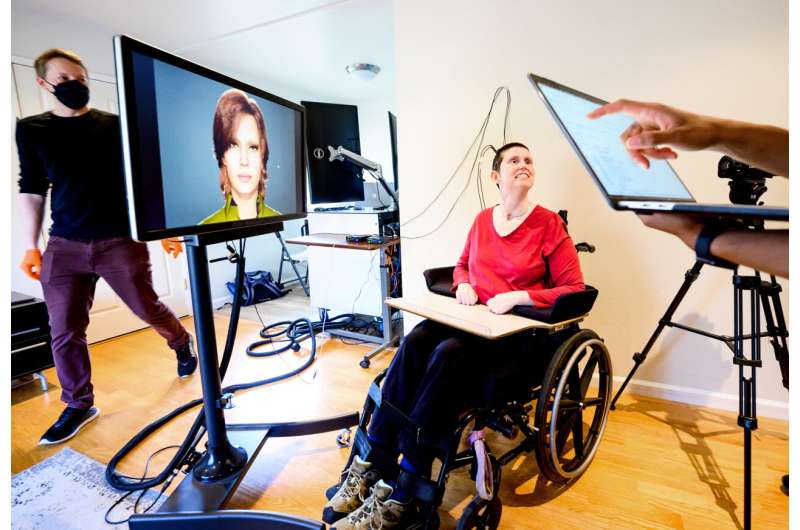
A research participant in the Dr. Edward Chang’s study of speech neuroprostheses, is connected to computers that translate her brain signals as she attempts to speak into the speech and facial movements of an avatar on Monday, May 22, 2023, in El Cerrito, Calif. At left is UCSF clinical research coordinator Max Dougherty. Credit: Noah Berger
Pat Bennett's prescription is a bit more complicated than "Take a couple of aspirins and call me in the morning." But a quartet of baby-aspirin-sized sensors implanted in her brain are aimed at addressing a condition that's frustrated her and others: the loss of the ability to speak intelligibly. The devices transmit signals from a couple of speech-related regions in Bennett's brain to state-of-the-art software that decodes her brain activity and converts it to text displayed on a computer screen.
19 sept 2023--Bennett, now 68, is a former human resources director and onetime equestrian who jogged daily. In 2012, she was diagnosed with amyotrophic lateral sclerosis, a progressive neurodegenerative disease that attacks neurons controlling movement, causing physical weakness and eventual paralysis.
"When you think of ALS, you think of arm and leg impact," Bennett wrote in an interview conducted by email. "But in a group of ALS patients, it begins with speech difficulties. I am unable to speak."
Usually, ALS first manifests at the body's periphery—arms and legs, hands and fingers. For Bennett, the deterioration began not in her spinal cord, as is typical, but in her brain stem. She can still move around, dress herself and use her fingers to type, albeit with increasing difficulty. But she can no longer use the muscles of her lips, tongue, larynx and jaws to enunciate clearly the phonemes—or units of sound, such as "sh"—that are the building blocks of speech.
Although Bennett's brain can still formulate directions for generating those phonemes, her muscles can't carry out the commands.
Rather than train the AI to recognize whole words, the researchers created a system that decodes words from phonemes. These are the sub-units of speech that form spoken words in the same way that letters form written words. "Hello," for example, contains four phonemes: "HH," "AH," "L" and "OW."
Using this approach, the computer only needed to learn 39 phonemes to decipher any word in English. This both enhanced the system's accuracy and made it three times faster.
On March 29, 2022, a Stanford Medicine neurosurgeon placed two tiny sensors apiece in two separate regions—both implicated in speech production—along the surface of Bennett's brain. The sensors are components of an intracortical brain-computer interface, or iBCI. Combined with state-of-the-art decoding software, they're designed to translate the brain activity accompanying attempts at speech into words on a screen.
About a month after the surgery, a team of Stanford scientists began twice-weekly research sessions to train the software that was interpreting her speech. After four months, Bennett's attempted utterances were being converted into words on a computer screen at 62 words per minute—more than three times as fast as the previous record for BCI-assisted communication.
"These initial results have proven the concept, and eventually technology will catch up to make it easily accessible to people who cannot speak," Bennett wrote. "For those who are nonverbal, this means they can stay connected to the bigger world, perhaps continue to work, maintain friends and family relationships."
Approaching the speed of speech
Bennett's pace begins to approach the roughly 160-word-per-minute rate of natural conversation among English speakers, said Jaimie Henderson, MD, the surgeon who performed the surgery.
"We've shown you can decode intended speech by recording activity from a very small area on the brain's surface," Henderson said.
Henderson, the John and Jean Blume-Robert and Ruth Halperin Professor in the department of neurosurgery, is the co-senior author of a paper describing the results, published Aug. 23 in Nature.
His co-senior author, Krishna Shenoy, Ph.D., professor of electrical engineering and of bioengineering, died before the study was published.
Frank Willett, Ph.D., a Howard Hughes Medical Institute staff scientist affiliated with the Neural Prosthetics Translational Lab, which Henderson and Shenoy co-founded in 2009, shares lead authorship of the study with graduate students Erin Kunz and Chaofei Fan.
In 2021, Henderson, Shenoy and Willett were co-authors of a study published in Nature describing their success in converting a paralyzed person's imagined handwriting into text on a screen using an iBCI, attaining a speed of 90 characters, or 18 words, per minute—a world record until now for an iBCI-related methodology.
In 2021, Bennett learned about Henderson and Shenoy's work. She got in touch with Henderson and volunteered to participate in the clinical trial.
How it works
The sensors Henderson implanted in Bennett's cerebral cortex, the brain's outermost layer, are square arrays of tiny silicon electrodes. Each array contains 64 electrodes, arranged in eight by eight grids and spaced apart from one another by a distance of about half the thickness of a credit card. The electrodes penetrate the cerebral cortex to a depth roughly equaling that of two stacked quarters.
The implanted arrays are attached to fine gold wires that exit through pedestals screwed to the skull, which are then hooked up by cable to a computer.
An artificial-intelligence algorithm receives and decodes electronic information emanating from Bennett's brain, eventually teaching itself to distinguish the distinct brain activity associated with her attempts to formulate each of the 39 phonemes that compose spoken English.
It feeds its best guess concerning the sequence of Bennett's attempted phonemes into a so-called language model, essentially a sophisticated autocorrect system, which converts the streams of phonemes into the sequence of words they represent.
"This system is trained to know what words should come before other ones, and which phonemes make what words," Willett explained. "If some phonemes were wrongly interpreted, it can still take a good guess."
Practice makes perfect
To teach the algorithm to recognize which brain-activity patterns were associated with which phonemes, Bennett engaged in about 25 training sessions, each lasting about four hours, during which she attempted to repeat sentences chosen randomly from a large data set consisting of samples of conversations among people talking on the phone.
An example: "It's only been that way in the last five years." Another: "I left right in the middle of it."
As she tried to recite each sentence, Bennett's brain activity, translated by the decoder into a phoneme stream and then assembled into words by the autocorrect system, would be displayed on the screen below the original. Then a new sentence would appear on the screen.
Bennett repeated 260 to 480 sentences per training session. The entire system kept improving as it became familiar with Bennett's brain activity during her speech attempts.
The iCBI's intended-speech translation ability was tested on different sentences from those used in the training sessions. When the sentences and the word-assembling language model were restricted to a 50-word vocabulary (in which case the sentences used were drawn from a special list), the translation system's error rate was 9.1%.
When the vocabulary was expanded to 125,000 words (large enough to compose almost anything you'd want to say) the error rate rose to 23.8%—far from perfect, but a giant step from the prior state of the art.
"This is a scientific proof of concept, not an actual device people can use in everyday life," Willett said. "But it's a big advance toward restoring rapid communication to people with paralysis who can't speak."
"Imagine," Bennett wrote, "how different conducting everyday activities like shopping, attending appointments, ordering food, going into a bank, talking on a phone, expressing love or appreciation—even arguing—will be when nonverbal people can communicate their thoughts in real time."
The device described in this study is licensed for investigative use only and is not commercially available. The study, a registered clinical trial, took place under the aegis of BrainGate, a multi-institution consortium dedicated to advancing the use of BCIs in prosthetic applications, led by study co-author Leigh Hochberg, MD, Ph.D., a neurologist and researcher affiliated with Massachusetts General Hospital, Brown University and the VA Providence (Rhode Island) Health care System.
Nick F. Ramsey et al, Brain implants that enable speech pass performance milestones, Nature (2023). DOI: 10.1038/d41586-023-02546-0 , www.nature.com/articles/d41586-023-02546-0
Tuesday, May 31, 2022
Researchers use AI to prompt older adults' participation in research
In a new study, Florida State University researchers explore the challenges of recruiting and retaining older adults to participate in research.
31 may 2022--The study also marks the first step of a broad, interdisciplinary FSU effort to increasingly useartificial intelligencein research.
In the study, published in The Gerontologist, Associate Professor of Sociology Dawn Carr identified core "motivation clusters" among older adults for research participation. Along with her 12 FSU-based co-authors, Carr suggests that identifying those clusters—"fun seekers" and "research helpers," for example—can guide recruitment and retention strategies.
"There is a lack of representation of older adults in research that leads to findings that are skewed," Carr said. "Previous guidance on how best to encourage older adults to participate in research has been one-size-fits-all. Our research finds that older adults' motivations are varied and complex."
Carr, the new director of FSU's Claude Pepper Center, and study co-author Wally Boot, a professor in the Department of Psychology, said the lack of older adults in studies prevails throughout research and has widespread consequences. They said tailored appeals can increase the number and diversity of older adults participating in research.
"The characteristics of the people participating matter since we want to be able to generalize our findings," Boot said. "And being able to recruit large samples of older adults is crucial; without large sample sizes we can't have confidence in our results."
This is the first study stemming from a larger project funded by the National Institutes of Health (NIH). The Adherence Promotion with Person-centered Technology (APPT) project aims to understand participants' motivations and daily schedules and provide just-in-time support to help them engage in behaviors that keeps them in studies.
The goal is to develop artificial intelligence-based reminder systems that encourage older adults to participate in aging-related research.
"So much momentum and time is lost when people drop out of studies, and clinical trials can fail because people don't engage in the behaviors researchers ask them to perform," Carr said. "How can we test whether a behavioral intervention reduces the risk of cognitive impairment unless participants consistently engage in that behavior over the long term?"
Carr added, "To that end, we've already learned that there are older adults who have different clusters of motivations to participate: brain health advocates, research helpers, fun seekers and multiple-motivation enthusiasts. We found that cognitive difficulties, age, employment status and previous research participation predicted membership in these categories."
Boot said artificial-intelligence approaches help predict the types of motivational messages that might resonate and keep participants on track but also the right time to deliver those messages.
"People have habits, and we can learn routine without being obtrusive," he said. "When their adherence to the intervention begins to falter, we can detect that and provide a tailored motivational message at a time when we predict they are likely available to reengage with the study."
The study is laying the groundwork for the further use of artificial intelligence, Boot said.
"Two large clinical trials will provide a very rich dataset to further develop algorithms to help predict who may be at most risk for poor adherence and the best tailored approaches to reengage them," he said. "Ultimately, we may be able to predict and prevent lapses and dropout before they happen. This is just a first step to some very exciting possibilities."
More information: Dawn C Carr et al, Motivation to Engage in Aging Research: Are There Typologies and Predictors?, The Gerontologist (2022). DOI: 10.1093/geront/gnac035
Provided by Florida State University
Saturday, August 14, 2021
AI could detect dementia years before symptoms appear
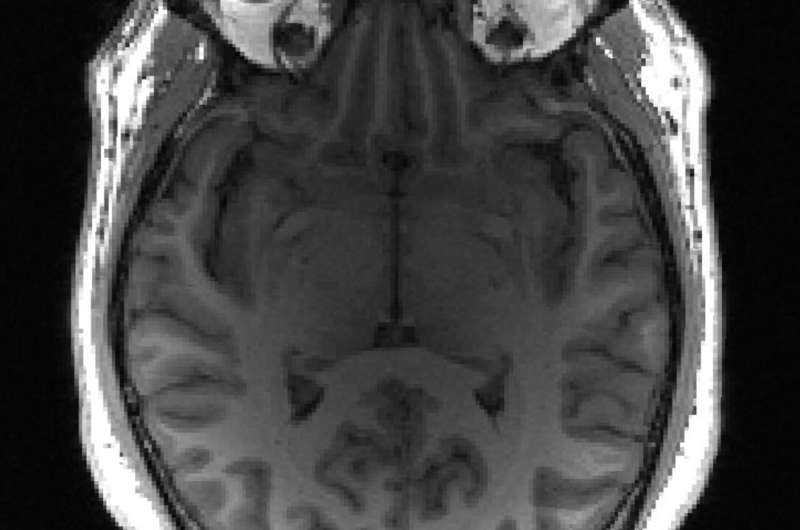
MRI brain scan of healthy volunteer. Credit: Timothy Rittman
Dementias are characterized by the build-up of different types of protein in the brain, which damages brain tissue and leads to cognitive decline. In the case of Alzheimer's disease, these proteins include beta-amyloid, which forms 'plaques," clumping together between neurons and affecting their function, and tau, which accumulates inside neurons.
14 aug 2021--Molecular and cellular changes to the brain usually begin many years before any symptoms occur. Diagnosingdementiacan take many months or even years. It typically requires two or threehospital visitsand can involve a range of CT, PET and MRI scans as well as invasive lumber punctures.
A team led by Professor Zoe Kourtzi at the University of Cambridge and The Alan Turing Institute has developed machine learning tools that can detect dementia in patients at a very early stage. Using brain scans from patients who went on to develop Alzheimer's, their machine learning algorithm learnt to spot structural changes in the brain. When combined with the results from standard memory tests, the algorithm was able to provide a prognostic score—that is, the likelihood of the individual having Alzheimer's disease.
For those patients presenting with mild cognitive impairment—signs of memory loss or problems with language or visual/spatial perception—the algorithm was higher than 80% accurate in predicting those individuals who went on to develop Alzheimer's disease. It was also able to predict how fast their cognition will decline over time.
Professor Kourtzi, from Cambridge's Department of Psychology, said: "We have trained machine learning algorithms to spot very early signs of dementia just by looking for patterns of gray matter loss—essentially, wearing away—in the brain. When we combine this with standard memory tests, we can predict whether an individual will show slower or faster decline in their cognition.
"We've even been able to identify some patients who were not yet showing any symptoms, but went on to develop Alzheimer's."
Although the algorithm has been optimized to look for signs of Alzheimer's disease, Professor Kourtzi and colleagues are now training it to recognize different forms of dementia, each of which has its own characteristic pattern of volume loss.
Dr. Timothy Rittman from the Department of Clinical Neurosciences and a consultant at Addenbrooke's Hospital, part of Cambridge University Hospitals (CUH) NHS Foundation Trust, is now leading a trial to look at whether this approach is useful in a clinical setting.
"We've shown that this approach works in a research setting—we now need to test it in a 'real world' setting," explained Dr. Rittman.
To date around 80 patients have taken part in the trial, which was run by CUH, Cambridgeshire and Peterborough NHS Foundation Trust and two NHS trusts in Brighton.
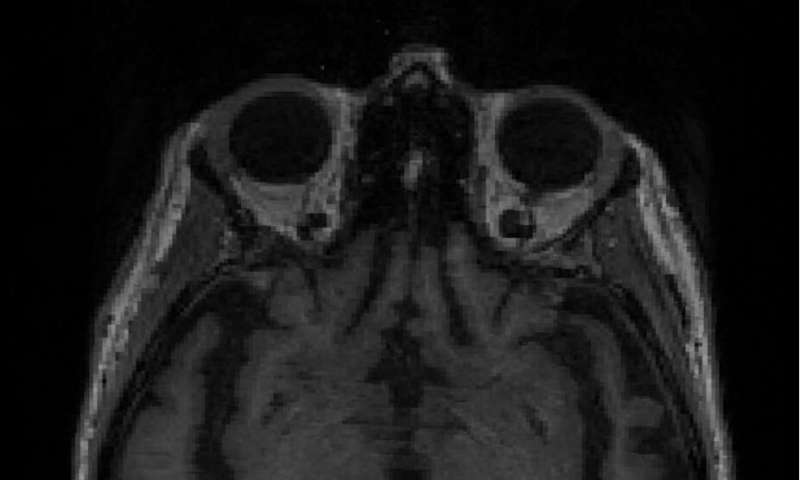
MRI brain scan of Alzheimer's patient. Credit: Timothy Rittman
Catching dementia early is important for several reasons, explained Dr. Rittman. "When patients begin to experience memory and cognitive problems, this can understandably be a very difficult time. Being able to provide an accurate diagnosis gives them clarity and, depending on the diagnosis, can either ease their minds or help them and their loved ones put preparations in place for the longer term."
There are currently very few drugs available to help treat dementia. One of the reasons that clinical trials often fail is thought to be because once a patient has developed symptoms, it may be too late to make a major difference. Having the ability to identify individuals at a very early stage could therefore help researchers develop new medicines.
If the trial is successful, the algorithm could be rolled out to thousands more patients across the country.
Living with Alzheimer's disease
Addenbrooke's patient Dennis Clark was one of the first people in the country to take part in the new trial. Before lockdown, the 75-year-old retired sales director had been enjoying his retirement with wife Penny, going on holiday and walking his two dogs. But Penny soon noticed he was starting to forget things.
"If I asked him to do something, he would do the opposite. Then when we went out for a meal—which we didn't do for a long time because of lockdown—he couldn't remember how to pay for anything."
Penny decided to call the GP for help when Dennis, who had always taken pride in his appearance, started to wear the same clothes over and over again.
"The GP did a quick test over the phone and said Dennis needed to be referred. I had heard Addenbrooke's had a very comprehensive memory unit, so I was really pleased that we were able to be referred there.
"We had an initial consultation and we were asked if we wanted to go down the research route, which I was really keen for Dennis to do because it doesn't just help him, it helps others as well."
Dennis underwent an MRI scan and later that same day he and Penny received the news that his results were consistent with early onset of Alzheimer's disease. Dennis will begin taking medication to help treat the symptoms of Alzheimer's disease.
"We are very grateful to Addenbrooke's and would recommend other people take up trials as well. Quicker diagnosis means Dennis will be able to start medication that will hopefully delay his disease. It also means we can plan for the future and start to accept what is happening."
More information: Joseph Giorgio et al, Modelling prognostic trajectories of cognitive decline due to Alzheimer's disease, NeuroImage: Clinical (2020). DOI: 10.1016/j.nicl.2020.102199
Joseph Giorgio et al, Predicting future regional tau accumulation in asymptomatic and early Alzheimer's disease, (2020). DOI: 10.1101/2020.08.15.252601
Provided by University of Cambridge
Wednesday, November 04, 2020
What the public hopes and fears about the use of AI in health care
The growing use of artificial intelligence in health care should be driven by careful consideration of what is important to members of the public. Credit: Shutterstock
There has been increasing interest in using health "big data" for artificial intelligence (AI) research. As such, it is important to understand which uses of health data are supported by the public and which are not.
Our research team conducted six focus groups in Ontario in October 2019 to learn more about how members of the general public perceive the use of health data for AI research. We found that members of the public supported using health data in three realistic health AI research scenarios, but their approval had conditions and limits.
Robot fears
Each of our focus groups began with a discussion of participants' views about AI in general. Consistent with the findings from other studies, people had mixed—but mostly negative—views about AI. There were multiple references to malicious robots, like the Terminator in the 1984 James Cameron film.
"You can create a Terminator, literally, something that's artificially intelligent, or the matrix … it goes awry, it tries to take over the world and humans got to fight this. Or it can go in the absolute opposite where it helps … androids … implants.… Like I said, it's unlimited to go either way." (Mississauga focus group participant)
Some participants commented on how AI could have positive impacts, as in the case of autonomous vehicles. However, most of the people who said positive things about AI also expressed concern about how AI will affect society.
"It's portrayed as friendly and helpful, but it's always watching and listening.… So I'm excited about the possibilities, but concerned about the implications and reaching into personal privacy." (Sudbury focus group participant)
Supporting scenarios
In contrast, focus group participants reacted positively to three realistic health AI research scenarios. In one of the scenarios, some perceived that health data and AI research could actually save lives, and most people were also supportive of two other scenarios which didn't include potential lifesaving benefits.
A CBC report on the future of AI in health care.
They commented favorably about the potential for health data and AI research to generate knowledge that would otherwise be impossible to obtain. For example, they reacted very positively to the potential for an AI-based test to save lives by identifying origin of cancers so that treatment can be tailored. Participants also noted practical advantages of AI including the ability to sift through large amounts of data, perform real-time analyzes and provide recommendations to health care providers and patients.
"When you can reach out and have a sample size of a group of ten million people and to be able to extract data from that, you can't do that with the human brain. A group, a team of researchers can't do that. You need AI." (Mississauga focus group participant)
Protecting privacy
The focus group participants were not positively disposed towards all possible uses of health data in AI research.
They were concerned that the health data provided for one health AI purpose might be sold or used for other purposes that they do not agree with. Participants also worried about the negative impacts if AI research creates products that lead to lack of human touch, job losses and a decrease in human skills over time because people become overly reliant on computers.
The focus group participants also suggested ways to address their concerns. Foremost, they spoke about how important it is to have assurance that privacy will be protected and transparency about how data are used in health AI research. Several people stated the condition that health AI research should create tools that function in support of humans, rather than autonomous decision-making systems.
"As long as it's a tool, like the doctor uses the tool and the doctor makes the call…it's not a computer telling the doctor what to do." (Sudbury focus group participant)
Involving members of the public in decisions about health AI
Engaging with members of the public took time and effort. In particular, considerable work was required to develop, test and refine realistic, plain language health AI scenarios that deliberately included potentially contentious points. But there was a large return on investment.
The focus group participants—none of whom were AI experts—had some important insights and concrete suggestions about how to make health AI research more responsible and acceptable to members of the public.
Studies like ours can be important inputs into policies and practice guides for health data and AI research. Consistent with the Montréal Declaration for Responsible Development of AI, we believe that researchers, scientists and policy makers need to work with members of the public to take the science of health AI in directions that members of the public support.
By understanding and addressing public concerns, we can establish trustworthy and socially beneficial ways of using health data in AI research.
Provided by The Conversation
Wednesday, March 18, 2020
Artificial intelligence recruited to find clues about COVID-19
by Gopal Ratnam
Credit: CC0 Public Domain
U.S. health and technology specialists on Monday said they had launched a new collaborative venture to assemble a dataset of tens of thousands of scientific papers and literature on the coronavirus, which would then be analyzed by artificial intelligence programs to find patterns and answer questions raised by the World Health Organization about the pandemic.
18 mar 2020--The dataset includes 29,000 articles, including 13,000 full-text pieces of medical literature, which will be made available on a special website allowingdata scientistsand artificial intelligence programmers to propose tools and software code that can unearth insights from the articles, White House officials and experts told reporters in a conference call.
The venture came together after the White House Office of Science and Technology Policy issued a call to tech companies and research groups to figure out how artificial intelligence tools could be used to sift through thousands of research articles being published worldwide on the pandemic, said Lynn Parker, deputy chief technology officer at the White House office.
With data scientists and machine language experts mining the literature compilation known as COVID-19 Open Research Dataset, experts and White House officials expect to get help developing vaccines, forming new guidelines on how long social distancing should be maintained and other insights, Michael Kratsios, the U.S. chief technology officer said.
The venture includes the National Library of Medicine, which is part of the National Institutes of Health, Microsoft, Allen Institute of AI, Georgetown University's Center for Security and Emerging Technology, the Chan Zuckerberg Initiative (named for Mark Zuckerberg, Facebook's founder, and his wife Priscilla Chan), and Kaggle, which is a unit of Google.
The Allen Institute's Semantics Scholar website will host the database of scientific articles and add to the collection over time, while Kaggle's platform, which provides access to about 4 million artificial intelligence researchers, will receive suggestions from the experts on tools and codes to use to mine the database, experts from both organizations said.
Scientists have been working and publishing their findings on various strains of coronavirus over the years, including other variants such as SARS, MERS, and the latest, COVID-19. The application of artificial intelligence tools to look for commonalities and differences among the thousands of such published articles will help the scientists spot things they may have missed, Eric Horvitz, Microsoft's chief scientific officer said.
"It's difficult for people to manually go through more than 20,000 articles and synthesize their findings," Anthony Goldbloom, co-founder and CEO of Kaggle said. "Recent advances in technology can be helpful here. We're putting machine readable versions of these articles in front of our community of more than 4 million data scientists. Our hope is that AI can be used to help find answers to a key set of questions about COVID-19."
Sharing vital information across scientific and medical communities is key to accelerating our ability to respond to the coronavirus pandemic," said Cori Bargmann, head of science at the Chan Zuckerberg Initiative. "The new COVID-19 Open Research Dataset will help researchers worldwide to access important information faster."
Publishers of scientific journals and literature have agreed to make their full articles available to researchers so that machine learning algorithms can look for key insights from them, the experts said. As scientists around the world continue to publish new research, journal publishers have agreed to provide those articles in electronic form ahead of their printed versions, they said.
Distributed by Tribune Content Agency, LLC.
Saturday, March 07, 2020
Using artificial intelligence to assess ulcerative colitis
by Tokyo Medical and Dental University
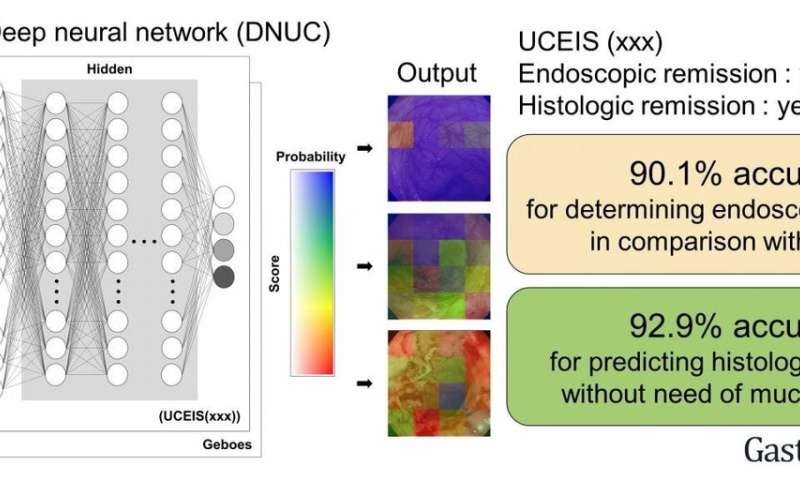
The captured endoscopic images were transferred to the DNUC. Superimposed images were created from the original endoscopic image by filling in the tiles with a specific translucent color. The fill color and transmittance were determined corresponding to the result and to the probability of the score. In addition, we designed the DNUC to output the following results: (1) endoscopic remission (yes/no), (2) histological remission (yes/no), and (3) the UCEIS score. In the determination of endoscopic remission, the DNUC showed high degrees of diagnostic accuracy (90.1%). Regarding the prediction of histological remission, the DNUC showed high diagnostic accuracy (92.9%). Credit: Department of Gastroenterology and Hepatology,TMDU
Researchers from Tokyo Medical and Dental University (TMDU) have developed an artificial intelligence system that effectively evaluates endoscopic mucosal findings from patients with ulcerative colitis without the need for biopsy collection.
07 mar 2020--Assessments of patients withulcerative colitis(UC), which is a type of inflammatory bowel disease, are usually conducted via endoscopy and histology. But now, researchers from Japan have developed a system that may be more accurate than existing methods and may reduce the need for these patients to undergo invasive medical procedures.
In a study published this February in Gastroenterology, researchers from Tokyo Medical and Dental University (TMDU) have revealed a newly developed artificial intelligence (AI) system that can evaluate endoscopic findings of UC with an accuracy equivalent to that of expert endoscopists.
Accurate evaluations are critical in providing optimal care for patients with UC. Previous studies have indicated that both endoscopic remission, evaluated via assessment of endoscopic procedure, and histological remission, as indicated by the degree of microscopic inflammation, can predict patient outcomes, and are thus frequently used as treatment goals. However, intra- and inter-observer variations occur in both endoscopic and histological analyses, and histological analysis frequently requires the collection of tissue via biopsies, which are invasive and costly.
"The interpretation of endoscopic images is subjective and based on the experience of individual endoscopists, thereby making the standardization of evaluation and real-time characterization challenging," says lead author of the study Kento Takenaka. "To address this, we sought to develop a deep neural network (DNN) system for consistent, objective, and real-time analysis of endoscopic images from patients with UC (DNUC)."
To do this, the researchers developed a system with DNNs to evaluate endoscopic images from patients with UC. DNNs are a type of AI machine-learning method that are based on the construction of artificial neural networks.
"We constructed the DNUC algorithm, using 40,758 images of colonoscopies and 6885 biopsy results from 2012 patients with UC," says senior author Mamoru Watanabe. "This comprised the training set for machine-learning, which enabled the algorithm to learn to accurately evaluate and classify the data."
The researchers then validated the accuracy of the DNUC algorithm using 4187 endoscopic images and 4104 biopsy specimens from 875 patients with UC.
"We found that the DNUC achieved a level of accuracy that was equivalent to that of expert endoscopists," says Takenaka. "Thus, our system was able to predict histologic remission from UC using endoscopic images only, as opposed to both histological and endoscopic data. This represents an important development given the costs and risks associated with biopsies."
The DNUC may be able to identify UC patients who are in remission without requiring them to undergo biopsy collection and analysis. This could save time and money for medical institutions, and limit exposure to invasive medical procedures for individuals with UC.
More information: Kento Takenaka et al, Development and Validation of a Deep Neural Network for Accurate Evaluation of Endoscopic Images From Patients with Ulcerative Colitis, Gastroenterology (2020). DOI: 10.1053/j.gastro.2020.02.012
Artificial intelligence to improve the precision of mammograms
by Universitat Politècnica de València
Credit: Universitat Politècnica de València
Artificial intelligence (AI) techniques, used in combination with the evaluation of expert radiologists, improve the accuracy in detecting cancer using mammograms. This is one of the main conclusions of an international study conducted, among others, by researchers from the Polytechnic University of Valencia (UPV), the Higher Council for Scientific Research (CSIC) and the University of Valencia (UV), and which has been published in one of the world's largest medical journals in the field, the Journal of the American Medical Association. The study is based on the results obtained in the Digital Mammography (DM) DREAM Challenge, an international competition led by IBM where researchers from the Instituto de Física Corpuscular (IFIC, CSIC-UV) have participated along with scientists from the UPV's Institute of Telecommunications and Multimedia Applications (iTEAM).
07 mar 2020--The team of researchers from IFIC and the iTEAM UPV was the only Spanish group that reached the end of the challenge. To do so, they developed a prediction algorithm based on convolutional neural networks, an Artificial Intelligence technique that simulates the neurons of the visual cortex and allows classifying images, as well as self-learning of the system. Principles related to interpreting x-rays were also applied, where the group has several patents. The Valencian team's results, along with the rest of the finalists, are now published in theJournal of the American Medical Association (JAMA Network Open).
"Participating in this challenge has allowed our group to collaborate on Artificial Intelligence projects with clinical groups of the Comunidad Valenciana," stated Alberto Albiol, tenured professor at UPV and member of the iTEAM group. "This has opened opportunities for us to apply machine learning techniques, as they are proposed in the article," he added.
For example, the work carried out by Valencian researchers is being carried out in Artemisa, the new computing platform for Artificial Intelligence at the Instituto de Física Corpuscular funded by the European Union and the Generalitat Valenciana within the FEDER operating program of the Comunitat Valenciana for 2014-2020 for the acquisition of R+D+i infrastructures and equipment.
"Designing strategies to reduce operating costs of health care is one of the objectives of sustainably applying Artificial Intelligence," pointed out Francisco Albiol, researcher of the IFIC and participant in the study. "The challenges cover from the algorithm part to jointly designing evidence-based strategies along with the medical sector. Artificial Intelligence applied at a large scale is one of the most promising technologies to make health care sustainable," he noted.
The goal of the Digital Mammography (DM) DREAM Challenge is to involve a broad international scientific community (over 1,200 researchers from around the world) to evaluate whether or not Artificial Intelligence algorithms can be equal to or improve the interpretations of the mammograms carried out by radiologists.
"This DREAM Challenge allowed carrying out a rigorous and adequate evaluation of dozens of advanced deep learning algorithms in two independent databases," explained Justin Guinney, vice president of Computational Oncology at Sage Bionetworks and president of DREAM Challenges.
A half million fewer mammograms per year in the US
Led by IBM Research, Sage Bionetworks and Kaiser Permanente Washington Research Institute, the Digital Mammography DREAM Challenge concluded that, no algorithm by itself surpassed the radiologists, a combination of methods added to the evaluations of experts improved the accuracy of the exams. Kaiser Permanente Washington (KPW) and the Karolinska Institute (KI) of Sweden provided hundreds of thousands of unidentified mammograms and clinical data.
"Our study suggests that a combination of algorithms of artificial intelligence and the interpretations of the radiologists could result in a half million women per year not having to undergo unnecessary diagnostic tests in the United States alone," stated Gustavo Stolovitzky, the director of the IBM program dedicated to Translational Systems Biology and Nanotechnology in the Thomas J. Watson Research Center and founder of DREAM Challenges.
To guarantee the privacy of data and prevent the participants from downloading mammograms with sensitive data, the organizers of the study applied a working system from the model to the data. In the system, participants sent their algorithms to the organizers, who developed a system that applied them directly to the data.
"This focus on sharing data is particularly innovative and essential for preserving the privacy of the data," ensured Diana Buist, of the Kaiser Permanente Washington Health Research Institute. "In addition, the inclusion of data from different countries, with different practices for carrying out mammograms, indicates important translational differences in the way in which Artificial Intelligence can be used on different populations."
Mammograms are the most used diagnostic technique for the early detection of breast cancer. Though this detection tool is commonly effective, mammograms must be evaluated and interpreted by a radiologist, who uses their human visual perception to identify signs of cancer. Thus, it is estimated that there are 10% false positives in the 40 million women who undergo scheduled mammograms each year in the United States.
"An effective AI algorithm that can increase the radiologist's ability to reduce the repetition of unnecessary tests while detecting clinically significant cancers would help increase the value of mammography detection, effectively improving the damage-benefit ratio," concludes Dr. Christoph Lee of the Washington School of Medicine.
More information: Thomas Schaffter et al, Evaluation of Combined Artificial Intelligence and Radiologist Assessment to Interpret Screening Mammograms, JAMA Network Open (2020). DOI: 10.1001/jamanetworkopen.2020.0265
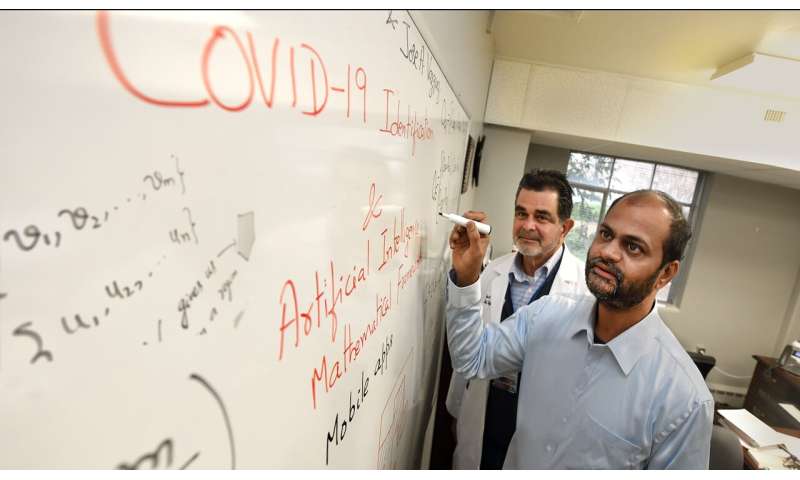
A coronavirus app coupled with machine intelligence will soon enable an individual to get an at-home risk assessment based on how they feel and where they've been in about a minute, and direct those deemed at risk to the nearest definitive testing facility, investigators say. Credit: Phil Jones, Senior Photographer, Augusta University
A coronavirus app coupled with machine intelligence will soon enable an individual to get an at-home risk assessment based on how they feel and where they've been in about a minute, and direct those deemed at risk to the nearest definitive testing facility, investigators say.
07 mar 2020--It will also help provide local andpublic health officialswith real time information on emerging demographics of those most at risk forcoronavirusso they can better target prevention and treatment initiatives, the Medical College of Georgia investigators report in the journalInfection Control & Hospital Epidemiology.
"We wanted to help identify people who are at high risk for coronavirus, help expedite their access to screening and to medical care and reduce spread of this infectious disease," says Dr. Arni S.R. Srinivasa Rao, director of the Laboratory for Theory and Mathematical Modeling in the MCG Division of Infectious Diseases at Augusta University and the study's corresponding author.
Rao and co-author Dr. Jose Vazquez, chief of the MCG Division of Infectious Diseases, are working with developers to finalize the app which should be available within a few weeks and will be free because it addresses a public health concern.
The app will ask individuals where they live; other demographics like gender, age and race; and about recent contact with an individual known to have coronavirus or who has traveled to areas, like Italy and China, with a relatively high incidence of the viral infection in the last 14 days.
It will also ask about common symptoms of infection and their duration including fever, cough, shortness of breath, fatigue, sputum production, headache, diarrhea and pneumonia. It will also enable collection of similar information for those who live with the individual but who cannot fill out their own survey.
Artificial intelligence will then use an algorithm Rao developed to rapidly assess the individual's information, send them a risk assessment—no risk, minimal risk, moderate or high risk—and alert the nearest facility with testing ability that a health check is likely needed. If the patient is unable to travel, the nearest facility will be notified of the need for a mobile health check and possible remote testing.
The collective information of many individuals will aid rapid and accurate identification of geographic regions, including cities, counties, towns and villages, where the virus is circulating, and the relative risk in that region so health care facilities and providers can better prepare resources that may be needed, Rao says. It also will help investigators learn more about how the virus is spreading, the investigators say.
Once the app is ready, it will live on the augusta.edu domain and likely in app stores on the iOS and Android platforms.
It is imperative that we evaluate novel models in an attempt to control the rapidly spreading virus, Rao and Vazquez write.
Technology can assist faster identification of possible cases and aid timely intervention, they say, noting the coronavirus app could be easily adapted for other infectious diseases. The accessibility and rapidity of the app coupled with machine intelligence means it also could be utilized for screening wherever large crowds gather, such as major sporting events.
While symptoms like fever and cough are a wide net, they are needed in order to not miss patients, Vazquez notes.
"We are trying to decrease the exposure of people who are sick to people who are not sick," says Vazquez. We also want to ensure that people who are infected get a definitive diagnosis and get the supportive care they may need, he says.
While stressing that the infection with coronavirus is not a pandemic— defined by the World Health Organization, as the worldwide spread of a new disease, including numerous flu pandemics like HINI, or swine flu, in which people find themselves exposed to a virus for which they have no immunity—"This is what you have to do with pandemics," says Vazquez. "You don't want to expose an infected person to an uninfected person." If problems with infections persist and grow, drive-thru testing sites may be another need, he says.
The investigators hope this readily available method to assess an individual's risk will actually help quell any developing panic or undue concern over coronavirus, or COVID-19.
"People will not have to wait for hospitals to screen them directly," says Rao. "We want to simplify people's lives and calm their concerns by getting information directly to them."
If concern about coronavirus prompted a lot of people to show up at hospitals, many of which already are at capacity with flu cases, it would further overwhelm those facilities and increase potential exposure for those who come, says Vazquez.
Tests for the coronavirus, which include a nostril and mouth swab and sputum analysis, are now being more widely distributed by the CDC, and the Food and Drug Administration also has given permission to some of the more sophisticated labs, particularly those at academic medical centers like Augusta University Medical Center, to use their own methods to look for signs of the viral infection, which the hospital will be pursuing.
As of this week, about 90,000 cases of coronavirus have been reported in 62 countries, with China having the most cases.
The CDC and WHO say that health care providers should obtain a detailed travel history of individuals being evaluated with fever and acute respiratory illness. They also have recommendations in place for how to prevent spread of the disease while treating patients.
Currently when people do present, for example, at the Emergency Department at AU Medical Center, with concerns about the virus, they are brought in by a separate entrance and escorted to a negative pressure room by employees dressed in hazmat suits per CDC protocols, Vazquez says. As of today, all those who have presented at AU Medical Center have tested negative, he says.
More information: Arni S.R. Srinivasa Rao et al. Identification of COVID-19 Can be Quicker through Artificial Intelligence framework using a Mobile Phone-Based Survey in the Populations when Cities/Towns Are Under Quarantine, Infection Control & Hospital Epidemiology (2020). DOI: 10.1017/ice.2020.61