Showing posts with label GlyNAC. Show all posts

Wednesday, May 10, 2023


GlyNAC supplementation found to improve cognitive decline and brain health in aging
GlyNAC supplementation improves cognitive decline and brain health in aging
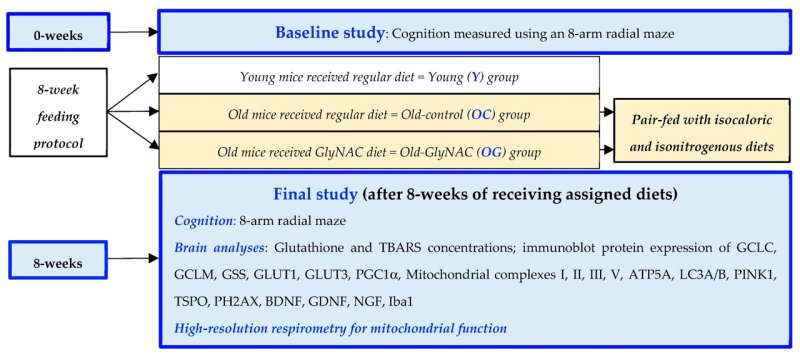
Study experimental details. GCLC and GCLM = catalytic and modifier subunits of glutamate cysteine ligase enzyme; GSS = glutathione synthetase enzyme; GLUT1 and GLUT3 = glucose transporters 1 and 3; PGC1α = peroxisome proliferator-activated receptor-gamma coactivator 1-alpha; ATP5A = mitochondrial adenosine triphosphate synthase F1 subunit alpha; LC3A/B = Light chain 3 microtubule-associated proteins 1A and 1B; PINK1 = PTEN-induced kinase; TSPO = translocator protein; PH2AX = phosphor H2A histone family member X; BDNF = brain-derived neurotrophic factor; GDNF = glial-derived neurotrophic factor; NGF = nerve growth factor. Credit: Antioxidants (2023). DOI: 10.3390/antiox12051042

As people get older, they aspire to live healthy lives as free as possible from the natural decline of cognitive abilities that occurs with aging. At Baylor College of Medicine, researchers have been studying the biological underpinnings of age-associated cognitive decline and developing nutritional strategies to promote healthy brain aging.

10 may 2023--They report today in the journal Antioxidants that supplementing GlyNAC—a combination of glycine and N-acetylcysteine as precursors of the natural antioxidant glutathione—improved or reversed age-associated cognitive decline in old mice and improved multiple associated defects in the aging brain.

The findings are consistent with improvements observed after supplementing older adults with GlyNAC, as reported in their 2021 pilot human trial; therefore, the findings reported here are likely applicable to humans.

"For over two decades, my lab has been studying natural aging in older humans and aged mice," said corresponding and senior author Dr. Rajagopal Sekhar, professor of medicine—endocrinology, diabetes and metabolism at Baylor.

"Our work provides an understanding of how age-associated cognitive decline in older humans is linked to glutathione deficiency, increased oxidative stress, mitochondrial dysfunction, abnormal glucose metabolism and insulin resistance, inflammation and low levels of neurotrophic or neuron-supporting factors, and that supplementing GlyNAC reverses these defects and improves cognition."

Human studies only permit measurements at the whole-body level, so in this study the researchers studied mice to investigate defects directly in the aging brain.

This study is important for many reasons: it assesses the reversibility of naturally occurring cognitive decline in aging instead of cognitive decline resulting from introducing gene defects; increased age is identified as the most important risk factor for Alzheimer's disease; and these naturally occurring defects were studied directly in the brain.

Sekhar and his team worked with three groups of mice. Two groups were aged naturally side-by-side until they were 90 weeks old, which is similar to a 70-year-old person. At 90 weeks of age, both groups of old mice were evaluated for their cognitive abilities, such as remembering the correct route in a maze that leads to a food reward.

These results were compared to those of young mice, the third group. Then, one group of old mice began a GlyNAC-supplemented diet, while the other group, called the old-controls, continued their regular diet without GlyNAC supplementation.

After completing eight weeks on their respective diets, the animals' cognitive abilities were evaluated again and their brains analyzed to measure specific brain defects that had previously been associated with cognitive impairment in studies by others. The results of these analyses in old mice supplemented with GlyNAC were compared with those of the old-control group and with the corresponding data obtained from young mice.

"We were very excited with the findings of this study," Sekhar said. "Compared to young mice, old mice had cognitive impairment and many brain abnormalities such as glutathione deficiency, increased oxidative stress, impaired mitochondrial function, elevated inflammation, genomic damage and lower levels of brain-supporting factors. Importantly, we found evidence that there was a shortage of transporters responsible for moving glucose, the main fuel for the brain, into this organ."

"This problem gets worse because the mitochondria, the engines that burn glucose to provide energy, were also not working well in the brain. The brain requires a very large amount of energy for its function, and these defects suggest that the aging brain is starved of energy, which could result in cognition decline."

GlyNAC supplementation in old mice corrected brain glutathione deficiency, improved brain glucose transporters, reversed mitochondrial dysfunction and improved cognition. In addition, GlyNAC supplementation reduced oxidative stress, inflammation and genomic damage and improved neurotrophic factors.

"It is really exciting to see so many improvements in the brain with GlyNAC supplementation, as it provides evidence that it may now be possible to improve brain health in aging," Sekhar said. "Going forward, we plan to conduct a larger randomized clinical trial in older people to study the effect of GlyNAC supplementation on improving cognitive and brain health in aging."

Previous rodent studies from the Sekhar lab reported that GlyNAC supplementation improved similar biological defects in the heart, liver and kidneys, and also increased length of life. A recently published randomized clinical trial in older humans provided evidence of similar improvements in skeletal muscle and blood and reversal of aging hallmarks.

The results of this study are consistent with these prior studies and make an advancement by supporting the beneficial role of GlyNAC supplementation to specifically promote brain health and support cognitive function in aging.

"In addition, our findings may also have implications for Alzheimer's disease and mild cognitive impairment, because similar defects are also reported in these conditions," Sekhar said. "We are currently evaluating whether older people with mild cognitive impairment have glutathione deficiency, compared to older people without a diagnosis of cognitive impairment."

More information: Premranjan Kumar et al, GlyNAC (Glycine and N-Acetylcysteine) Supplementation in Old Mice Improves Brain Glutathione Deficiency, Oxidative Stress, Glucose Uptake, Mitochondrial Dysfunction, Genomic Damage, Inflammation and Neurotrophic Factors to Reverse Age-Associated Cognitive Decline: Implications for Improving Brain Health in Aging, Antioxidants (2023). DOI: 10.3390/antiox12051042www.mdpi.com/2076-3921/12/5/1042

Journal information: Antioxidants 

Saturday, September 03, 2022


GlyNAC supplementation reverses aging hallmarks in aging humans

Aging
Credit: Pixabay/CC0 Public Domain

A randomized, double blind human clinical trial conducted by researchers at Baylor College of Medicine reveals that supplementation with GlyNAC—a combination of glycine and N-acetylcysteine—improves many age-associated defects in older humans and powerfully promotes healthy aging. This is relevant because until now, there have been no solutions toward improving many of these age-related declines in people.

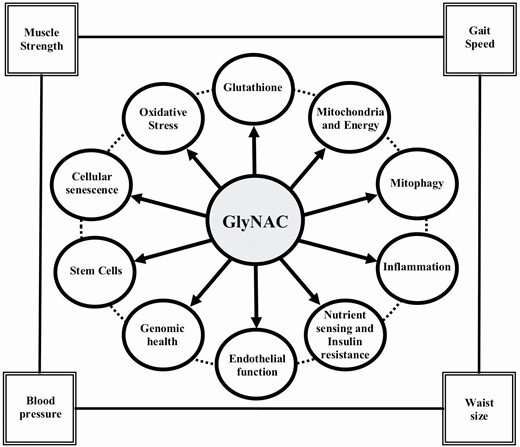
03 sept 2022--Published in The Journals of Gerontology: Series A, the study shows that older humans taking GlyNAC for 16-weeks improved many characteristic defects of aging. This includes oxidative stress, glutathione deficiency and multiple aging hallmarks affecting mitochondrial dysfunction, mitophagy, inflammation, insulin resistance, endothelial dysfunction, genomic damage, stem cell fatigue and cellular senescence. These were associated with improvements in muscle strength, gait speed, exercise capacity, waist circumference and blood pressure.

"This is the first randomized clinical trial of GlyNAC supplementation in older humans, and it found that a wide variety of age-associated abnormalities improved in older adults supplemented with GlyNAC, while no improvements were seen in those receiving placebo," said corresponding author Dr. Rajagopal Sekhar, professor of medicine—endocrinology, diabetes and metabolism at Baylor.

The improvements in oxidative stress, glutathione levels and mitochondrial function in the muscle tissue of older humans taking GlyNAC were similar to the improvements in organs such as the heart, liver and kidneys of aged mice supplemented with GlyNAC as reported in the researchers' recent publication. Taken together, the results of these studies show that GlyNAC supplementation can improve these defects in many different organs of the body. "GlyNAC supplementation in aging mice increased their length of life mice by 24%," said Sekhar. "Gait speed is reported to be associated with survival in older humans. Our randomized clinical trial found a significant improvement in gait speed in older humans supplemented with GlyNAC. This raises the interesting question of whether GlyNAC supplementation could have implications for survival in people."

For the last 20 years, Sekhar has been studying natural aging in humans and animal models to understand why age-related declines occur and how to correct them. His work brings mitochondria, known as the batteries of the cell, as well as free radicals and glutathione to discussions about how they are connected. Sekhar's work and discoveries could also help explain why we age and how to improve health while aging.

Mitochondria dysfunction, oxidative stress and aging

Mitochondria generate energy needed for supporting cellular functions. Therefore, normal mitochondrial function is critically important for a healthy life. Sekhar believes that improving the health of malfunctioning mitochondria in aging is the key to healthy aging. "Energy supports life and mitochondria provide energy. I believe that mitochondrial health is vitally important to our well-being, and maintaining mitochondrial health as we age should be a high priority in our efforts to improve overall health," said Sekhar.

However, the ability of mitochondria to work well declines as we age. How to improve the ability of these failing mitochondria to work is not well understood, and therefore no solutions have been available. Sekhar's group discovered earlier that supplementing GlyNAC in aged mice corrected malfunctioning mitochondria. However, to definitively determine whether GlyNAC supplementation benefited people, a placebo-controlled randomized clinical trial was required.

Sekhar and his team conducted and completed such a randomized clinical trial which found that older people have widespread mitochondrial damage and other age-associated defects compared to young people. After 16-weeks of GlyNAC supplementation, mitochondrial function of older people improve toward levels found in young people. This was accompanied by improvements in multiple additional outcomes as reported in the publication. Analysis of the molecular data from the trial suggests that the GlyNAC supplementation is able to fill cells with younger and more efficient mitochondria. "Collectively these exciting new discoveries hold great promise for improving our mitochondrial and general health as we age," Sekhar said.

A second vital benefit offered by supplementing GlyNAC is that it also helps protect the body from an important problem called oxidative stress. Oxidative stress is caused by high levels of toxic waste products known as reactive oxygen species or free-radicals. Oxidative stress can damage our cells, membranes, lipids, proteins and DNA, and is very common in aging. Glutathione is a natural antioxidant. Glutathione is made every day inside our cells and it works by protecting cells from harmful oxidative stress. However, in older people, glutathione levels are very low and the harmful oxidative stress is very high. GlyNAC supplementation corrects glutathione deficiency and lowers oxidative stress in older humans back to youthful levels, thereby solving both problems.

Sekhar believes that the restoration of mitochondrial health and correction of oxidative stress with GlyNAC supplementation are two powerful reasons which help explain why so many other age-related defects improve. It also accounts for the wide spectrum of health benefits.

GlyNAC supplementation reverses aging hallmarks in aging humans
Graphical abstract. Credit: The Journals of Gerontology: Series A (2022). DOI: 10.1093/gerona/glac135

Taking GlyNAC is not the same as taking glutathione: Introducing the 'Power of 3'

"It is really important to understand that this trial supplemented GlyNAC, and did not supplement glutathione," says Sekhar. "This is because our body does not get its glutathione from food, but the body has to make its own glutathione every day. All our organs maintain different levels of glutathione in a delicate balance that favors health. Too little glutathione cannot fight the harmful oxidative stress, and too much glutathione could lead to harmful reductive stress," said Sekhar. "This is why GlyNAC is a natural solution for correcting glutathione deficiency, because it provides the raw materials to help cells to make their own glutathione in just the right amount. We have seen that this repeatedly in all our prior studies supplementing GlyNAC, including this trial."

"One of the intriguing questions from this trial is why so many improvements occur toward promoting health. We believe that this is due to the combined effort of three separate components—glycine, cysteine (from NAC) and glutathione, and not just due to glutathione itself. Glycine and cysteine are both very important for cellular health on their own, and GlyNAC provides both. Glycine and cysteine are building blocks to form glutathione, which also has health benefits. We believe that the improvements in this trial and in our previous studies are the result of the combined effects of glycine and NAC and glutathione, and we refer to this combination as the 'Power of 3,'" said Sekhar.

GlyNAC improves several aging hallmarks in aging

The population of older adults is expected to exceed 2.1 billion by 2050, according to the World Health Organization. This predicted increase in the older human population will result in a rise of the need for healthcare and will intensify the stress on healthcare systems around the world. To understand what causes unhealthy aging, scientific research has identified nine aging hallmarks that represent specific defects that are believed to contribute to health decline while aging.

"It is believed that correcting aging hallmarks could help people age in a healthier way," Sekhar said. "However, we do not fully understand why these aging hallmarks occur in the first place, and therefore there have been no proven solutions via human randomized clinical trials to improve or correct aging hallmarks in aging humans."

The aging hallmarks that improved are mitochondrial dysfunction, altered intercellular communication, nutrient sensing, loss of proteostasis, genomic instability, cellular senescence and stem cell fatigue. The study participants were instructed not to change their usual diet or physical activity; therefore, nothing changed except for the GlyNAC supplementation. "This tells us that benefits were due to GlyNAC supplementation. But we were really surprised to see so many aging hallmarks improve. This level of improvement offers clues as to how and why these aging hallmarks may be connected to one another," says Sekhar.

GlyNAC improves muscle strength in aging

GlyNAC supplementation improved muscle strength in the upper and lower extremity and a trend toward increased exercise capacity. "These findings could have additional implications for improving the health of older humans, especially in terms of being able to be more physically active," said Sekhar.

"This study was effort intensive and took many years to complete. I take this opportunity to thank all my co-investigators, nursing staff, and everyone who helped with this trial. I especially thank all the trial participants who volunteered to participate in this research," Sekhar said.

As he moves forward, Sekhar plans to expand on his work to understand more about the health benefits of GlyNAC supplementation on cells, tissues and organs of the body. He plans on seeking funding to conduct larger clinical trials in more typical older humans to increase our understanding of how GlyNAC could improve health in aging. Additionally, as reported in their previously published exploratory study, Sekhar's group found that GlyNAC supplementation in older humans could improve memory and cognition. He has studied this further in aged mice and found that GlyNAC supplementation appears to correct multiple age-related declines directly in the brain, and was associated with improvements in memory and brain health—a report on these emerging new and exciting findings is in development.


More information: Premranjan Kumar et al, Supplementing Glycine and N-Acetylcysteine (GlyNAC) in Older Adults Improves Glutathione Deficiency, Oxidative Stress, Mitochondrial Dysfunction, Inflammation, Physical Function, and Aging Hallmarks: A Randomized Clinical Trial, The Journals of Gerontology: Series A (2022). DOI: 10.1093/gerona/glac135
Provided by Baylor College of Medicine 

Wednesday, March 09, 2022


GlyNAC supplementation extends life span in mice

mice
Credit: Pixabay/CC0 Public Domain

"Just like a car is subject to wear and tear over many years of use, limiting how long it works well, the natural aging process can progressively deteriorate the body and limit lifespan," said Rajagopal Sekhar.

09 mar 2022--For over two decades, Sekhar has studied natural aging in older humans and aged mice. His work contributes to providing a better understanding of how glutathione deficiency, increased oxidative stress, mitochondrial dysfunction and multiple additional hallmark defects of aging contribute to the aging process and how they can be reversed with GlyNAC supplementation.

"Energy is the currency of life and is generated by mitochondria. However, aging is associated with mitochondrial malfunction, and this could affect energy availability. When we discovered that GlyNAC supplementation can correct mitochondrial defects in aging, we asked an important question: Could GlyNAC supplementation from a younger age extend length of life?" said Sekhar. "To answer this question, we worked with healthy, normal laboratory mice."

The researchers housed the mice under stable environmental conditions. When mice reach an age of 65-weeks, they typically begin to show a drop in glutathione levels and develop mitochondrial dysfunction and oxidative stress. At this age, Sekhar's team switched the diets of half of the mice to receive GlyNAC, and the other half continued their diet without the supplement. Except for the GlyNAC supplementation, the diets of both groups were the same regarding the content of protein, fat and carbohydrates. Then, the researchers let the mice continue aging undisturbed and recorded how long they lived.

"We were excited to find that the mice that received GlyNAC lived 24% longer than those that did not receive GlyNAC," Sekhar said. "We next wanted to understand how GlyNAC works."

For this, the team conducted a second study in aged mice to investigate mitochondrial dysfunction, glutathione levels, oxidative stress and other hallmarks of aging specifically in the animals' heart, liver and kidneys, and determined the effect of supplementing GlyNAC on these cellular defects. The researchers chose these organs because they conduct vital functions in the body.

In aged mice, the team found that all three organs had glutathione deficiency, oxidative stress, mitochondrial dysfunction, abnormal mitophagy (difficulty in disposing damaged mitochondria), impaired nutrient sensing and genomic damage. GlyNAC supplementation improved and corrected all these defects in the old mice. The researchers propose that it is the improvement of these fundamental biological defects that contributes to the animals' longer life.

"But mice are not humans. Could this happen in people? There is published evidence from our human studies showing that GlyNAC supplementation improves similar defects in people," Sekhar said.

For instance, in a pilot human clinical trial in older adults, Sekhar's group showed that taking GlyNAC for 24-weeks improved many characteristic defects of aging, including glutathione deficiency, oxidative stress, mitochondrial dysfunction, inflammation, insulin resistance, endothelial dysfunction, body fat and genomic damage. Importantly, the researchers also observed improvement in muscle strength, gait speed, exercise capacity and cognitive function.

Another exploratory human trial by his team investigated premature aging in people with HIV and showed that taking GlyNAC improved and corrected multiple similar defects to reverse premature aging and also increased strength, energy levels, cognitive function and quality of life.

Sekhar thinks that the glycine and NAC (from GlyNAC), combined with glutathione (that GlyNAC helps generate), provide the benefits described above and he calls this combination the 'power of 3.'

"There is growing interest in being able to improve both healthy aging and longer life, but this is not an easy task. We have investigated aging in  and in human studies for two decades, and our studies show that GlyNAC supplementation successfully and consistently improves many age-related defects," Sekhar said. "It is exciting that something as simple as GlyNAC can improve several important defects in aging and also extend life."

The research was published in Nutrients.


More information: Premranjan Kumar et al, GlyNAC (Glycine and N-Acetylcysteine) Supplementation in Mice Increases Length of Life by Correcting Glutathione Deficiency, Oxidative Stress, Mitochondrial Dysfunction, Abnormalities in Mitophagy and Nutrient Sensing, and Genomic Damage, Nutrients (2022). doi.org/10.3390/nu14051114

Baylor College of Medicine holds an issued patent on the unique combination of Glycine and NAC (GlyNAC) and has licensed it to Nestlé Health Science for use in Celltrient™ Protect and other products. Nestlé Health Science did not provide any funding or support for this research and was not involved with any aspect of this research. Internal funding from Baylor College of Medicine supported this study. Premranjan Kumar and Ob W. Osahon are members of Sekhar's lab called the Translational Metabolism Unit at Baylor College of Medicine and contributed to this work.

Wednesday, April 07, 2021


GlyNAC improves multiple defects in aging to boost strength and cognition in older humans

old people
Credit: CC0 Public Domain

A pilot human clinical trial conducted by researchers at Baylor College of Medicine reveals that supplementation with GlyNAC—a combination of glycine and N-acetylcysteine as precursors of the natural antioxidant glutathione—could improve many age-associated defects in older humans to improve muscle strength and cognition, and promote healthy aging.

07 april 2021--Published in the journal Clinical and Translational Medicine, the results of this study show that older humans taking GlyNAC for 24 weeks saw improvements in many characteristic defects of aging, including glutathione deficiency, oxidative stress, mitochondrial dysfunction, inflammation, insulin resistance, endothelial dysfunction, body fat, genomic toxicity, muscle strength, gait speed, exercise capacity and cognitive function. The benefits declined after stopping supplementation for 12 weeks. GlyNAC supplementation was well tolerated during the study period.

"There is limited understanding as to why these defects occur in older humans, and effective interventions to reverse these defects are currently limited or lacking," said corresponding author endocrinologist Dr. Rajagopal Sekhar, associate professor of medicine in the Section of Endocrinology, Diabetes and Metabolism at Baylor.

For the last 20 years, Sekhar and his team have been studying natural aging in older humans and aged mice. Their work brings mitochondria, known as the batteries of the cell, as well as free radicals and glutathione to the table in discussions about why we age.

Mitochondrial dysfunction and aging

Mitochondria generate energy needed for supporting cellular functions by burning fat and sugar from foods, therefore mitochondrial health is critically important for life. Sekhar believes that improving the health of malfunctioning mitochondria in aging is the key.

As mitochondria generate energy, they produce waste products such as free radicals. These highly reactive molecules can damage cells, membranes, lipids, proteins and DNA. Cells depend on antioxidants, such as glutathione, the most abundant antioxidant in our cells, to neutralize these toxic free radicals. Failing to neutralize free radicals leads to harmful and damaging oxidative stress that can affect mitochondrial function.

Interestingly, glutathione levels in older people are much lower than those in younger people, and the levels of oxidative stress are much higher.

Animal studies conducted in the Sekhar lab have shown that restoring glutathione levels by providing GlyNAC reverses glutathione deficiency, reduces oxidative stress and fully restores mitochondrial function in aged mice.

"In previous work we showed that supplementing HIV patients with GlyNAC improved multiple deficits associated with premature aging observed in those patients," Sekhar said. "In this study, we wanted to understand the effects of GlyNAC supplementation on many age-associated defects in older adults."

GlyNAC improves several hallmark defects in aging

The world population of older humans is rapidly increasing and with it comes an increase in many age-related illnesses. To understand what causes unhealthy aging, scientific research has identified nine hallmark defects which are believed to contribute to the aging process.

"It is believed that correcting these aging hallmarks could improve or reverse many age-related disorders and help people age in a healthier way," Sekhar said. "However, we do not fully understand why these hallmark defects happen, and there are currently no solutions to fix even a single hallmark defect in aging."

This is where Sekhar's trial results become encouraging, because GlyNAC supplementation for 24 weeks appears to improve four of the nine aging hallmark defects.

To further understand whether GlyNAC holds the keys to mitochondrial recovery and more, Sekhar and his team conducted this pilot clinical trial.

"We worked with eight older adults 70 to 80 years of age, comparing them with gender-matched younger adults between 21 and 30 years old," Sekhar said. "We measured glutathione in red-blood cells, mitochondrial fuel-oxidation, plasma biomarkers of oxidative stress and oxidant damage, inflammation, endothelial function, glucose and insulin, gait-speed, muscle strength, exercise capacity, cognitive tests, gene-damage, glucose-production and muscle-protein breakdown rates and body composition. Before taking GlyNAC, all these measurements were abnormal in older adults when compared with those in younger people."

The older participants took GlyNAC for 24 weeks, and then stopped it for 12 weeks. Sekhar and his colleagues repeated the above measurements at the halfway point at 12 weeks, after 24 weeks of taking GlyNAC, and again after stopping GlyNAC for 12 weeks.

"We are very excited by the results," Sekhar said. "After taking GlyNAC for 24 weeks, all these defects in older adults improved and some reversed to the levels found in young adults." The researchers also determined that older adults tolerated GlyNAC well for 24 weeks. The benefits, however, declined after stopping GlyNAC supplementation for 12 weeks.

"I am particularly encouraged by the improvements in cognition and muscle strength," Sekhar said. "Alzheimer's disease and mild cognitive impairment (MCI) are serious medical conditions affecting memory in older people and leading to dementia, and there are no effective solutions for these disorders. We are exploring the possibility that GlyNAC could help with these conditions by conducting two pilot randomized clinical trials to test whether GlyNAC supplementation could improve defects linked to cognitive decline in Alzheimer's disease and in MCI, and possibly improve cognitive function."

"The overall findings of the current study are highly encouraging," Sekhar said. "They suggest that GlyNAC supplementation could be a simple and viable method to promote and improve healthy aging in older adults. We call this the 'Power of 3' because we believe that it takes the combined benefits of glycine, NAC and glutathione to reach this far reaching and widespread improvement. We also have completed a randomized clinical trial on supplementing GlyNAC vs. placebo in older adults and those results will be forthcoming soon."


More information: Premranjan Kumar et al, Glycine and N‐acetylcysteine (GlyNAC) supplementation in older adults improves glutathione deficiency, oxidative stress, mitochondrial dysfunction, inflammation, insulin resistance, endothelial dysfunction, genotoxicity, muscle strength, and cognition: Results of a pilot clinical trial, Clinical and Translational Medicine (2021). DOI: 10.1002/ctm2.372
Provided by Baylor College of Medicine