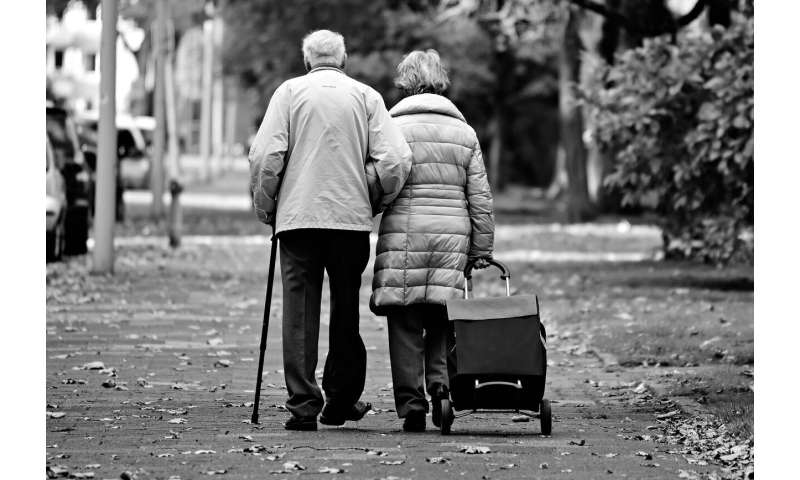
A new study published in Psychology and Aging co-authored by Patrick Hill, associate professor of psychological and brain sciences, offers an important message for our times: A sense of purpose in life—whether it's a high-minded quest to make a difference or a simple hobby with personal meaning—can offer potent protection against loneliness.
09 Jul 2023--"Loneliness is known to be one of the biggest psychological predictors forhealth problems,cognitive decline, and early mortality," Hill said. "Studies show that it can be as harmful for health as smoking or having a poor diet."
The new study, based on surveys of more than 2,300 adults in Switzerland, found that feelings of loneliness were less common in people who reported a purposeful life, regardless of their age. It was co-authored by Mathias Allemand of the University of Zurich in Switzerland and Gabriel Olaru of Tilburg University in the Netherlands.
Respondents were asked to score their feelings on a lack of companionship, isolation from other people, and a sense of being "left out or passed over" during a four-week period. Participants also filled out the six-item Life Engagement Test, which asked them to rate statements such as "there is not enough purpose in my life" and "I value my activities a lot."
"A sense of purpose is this general perception that you have something leading and directing you from one day to the next," Hill said. "It can be something like gardening, supporting your family, or achieving success at work."
Many of the activities that can provide a sense of purpose—joining a club, volunteering at a school, playing in a sports league—involve interaction with others, which is one reason why a purpose-filled life tends to be less lonely. In the study, people who said they received or provided social support were especially likely to report feelings of purpose.
But Hill noted that there's more to fighting loneliness than simply being around others. "We've all had time in our lives when we've felt lonely even though we weren't actually alone." There's something about having a sense of purpose that seems to fight loneliness regardless of how many other people are involved, he said.
The study found a slight uptick in reports of loneliness for people in their 70s and beyond, an age when a sense of purpose can be especially important. "We're trying to dispel the myth from previous generations that this is simply a time for retiring and resting," Hill said. "There are no downsides to finding something meaningful later in life."
Still, it's important to keep in mind that a quest for purpose can be somewhat self-defeating if taken too seriously. "Feeling like you need to save the world can lead to existential dread and distress," Hill said. When it comes to purpose and meaning, even small things can matter. "It's OK if someone else thinks that your purpose is trivial, as long as it's meaningful to you."
More information: Patrick L. Hill et al, Do associations between sense of purpose, social support, and loneliness differ across the adult lifespan?, Psychology and Aging (2023). DOI: 10.1037/pag0000733
Tuesday, December 06, 2022
Volunteering and caring for grandchildren protects from loneliness for over 50s, study shows
Caregiving for a spouse or partner is seemingly associated with higher loneliness for those over 50 years of age, a new systemic review of published research on the issue shows.
05 dec 2022--Taking in data from 28 studies, comprising 191,652 participants from 21 countries, the findings, however, also show that volunteering or looking after grandchildren may help reduceloneliness.
Publishing their findings in Aging and Mental Health, a team of international experts led by scientists at King's College London, state the results highlight a need to develop targeted interventions to combat loneliness for older adults who are caring for their partner or spouse.
"Loneliness can leave people feeling isolated and disconnected from others—and can have a wide range of negative effects on their physical and mental health," says lead author, Samia Akhter-Khan, who is a Ph.D. candidate at the Institute of Psychiatry, Psychology & Neuroscience within King's College London.
"There is a pressing need to identify people who may be more vulnerable to feeling lonely—and to develop targeted solutions to prevent and reduce loneliness in these population groups."
"Our findings suggest that providing care to a partner with complex health conditions, particularly dementia or Alzheimer's disease, is related to higher levels of loneliness—whereas caring for children or volunteering can help reduce loneliness in older adults."
Loneliness has many different causes, which will vary from person to person. Knowing which people are most at risk will lead to targeted approaches toward helping people who are feeling lonely.
Older adults contribute vast amounts of care and other unpaid activities, yet it remains unclear how these meaningful contributions to society relate to loneliness. Caregiving and volunteering may also fulfill a key expectation in older age, the expectation to contribute meaningfully, that has yet not been fully considered in loneliness research and interventions, according to the author's Social Relationship Expectations Framework recently published in Perspectives on Psychological Science.
This new systematic review, out today, included 28 studies from countries including the United States, Germany, the United Kingdom, New Zealand, China and many others. The authors examined the relationship between specific types of unpaid activities—including caring for a spouse, looking after grandchildren or volunteering—and loneliness in people over 50 years of age. They found that:
Caring for grandchildren (or other unrelated children) was linked with lower loneliness in six out of seven studies.
Providing care to a partner or spouse was consistently associated with higher loneliness.
Five out of six studies reported a relationship between volunteering and lower levels of loneliness.
"This is the first review of its kind to investigate systematically the relationship between older people's caregiving and volunteering activities and loneliness," adds co-author Dr. Matthew Prina, Head of the Social Epidemiology Research Group at King's College London.
"Further research will now be necessary to investigate the needs of older caregivers—as well as to examine the barriers, opportunities, and fulfillment of engaging in meaningful activities. This could help shed light on the optimal 'dose' of volunteering and caring for grandchildren and identify ways to maximize their potential beneficial effects on combating loneliness in the over 50s. Respecting older adults for their contributions and valuing their unpaid activities will likely play an important role in mitigating loneliness."
The paper highlights that all of the studies included in this review were conducted in higher income countries and before the COVID-19 pandemic, which led to an increase in the number of people experiencing loneliness.
Future research should take steps to promote evidence from lower- and middle-income countries, such as the authors' recent Archives of Gerontology and Geriatrics study on Indonesia, and account for specific external factors—such as global pandemics, lockdowns, conflict settings and climate change—when investigating the association between people's unpaid activities and loneliness.
More information: Samia C. Akhter-Khan et al, Caregiving, volunteering, and loneliness in middle-aged and older adults: A systematic review, Aging and Mental Health (2022). DOI: 10.1080/13607863.2022.2144130
Samia C. Akhter-Khan et al, Understanding and Addressing Older Adults' Loneliness: The Social Relationship Expectations Framework, Perspectives on Psychological Science (2022). DOI: 10.1177/17456916221127218
Samia C. Akhter-Khan et al, Unpaid productive activities and loneliness in later life: Results from the Indonesian Family Life Survey (2000–2014), Archives of Gerontology and Geriatrics (2022). DOI: 10.1016/j.archger.2022.104851
Provided by Taylor & Francis
Saturday, September 03, 2022
Social isolation and loneliness increase the risk of death from heart attack, stroke
Social isolation and loneliness are associated with about a 30% increased risk of heart attack or stroke, or death from either, according to a new scientific statement from the American Heart Association, published today in the Journal of the American Heart Association. The statement also identifies the lack of data on interventions that may improve cardiovascular health for people who are socially isolated or lonely.
03 sept 2022--"Over four decades of research has clearly demonstrated thatsocial isolationandlonelinessare both associated withadverse health outcomes," said Crystal Wiley Cené, M.D., M.P.H., FAHA, chair of the writing group for the scientific statement, and professor of clinical medicine and chief administrative officer for health equity, diversity and inclusion at the University of California San Diego Health. "Given the prevalence of social disconnectedness across the U.S., the public health impact is quite significant."
Risk of social isolation increases with age due to life factors, such as widowhood and retirement. Nearly one quarter of U.S. adults ages 65 and older are socially isolated, and prevalence of loneliness is even higher, with estimates of 22% to 47%. However, younger adults also experience social isolation and loneliness. A survey from Harvard University's Making Caring Common project describes "Gen Z" (adults currently ages 18-22) as the loneliest generation. Increased isolation and loneliness among younger adults may be attributed to higher social media use and less engagement in meaningful in-person activities.
Data also suggests that social isolation and loneliness may have increased during the COVID-19 pandemic, particularly among young adults ages 18-25, older adults, women and low-income individuals.
Social isolation is defined as having infrequent in-person contact with people for social relationships, such as with family, friends or members of the same community or religious group. Loneliness is when you feel like you are alone or have less connection with others than you desire. "Although social isolation and feeling lonely are related, they are not the same thing," explains Cené. "Individuals can lead a relatively isolated life and not feel lonely, and conversely, people with many social contacts may still experience loneliness."
The writing group reviewed research on social isolation published through July 2021 to examine the relationship among social isolation and cardiovascular and brain health. They found:
Social isolation and loneliness are common, yet under-recognized determinants of cardiovascular and brain health.
Lack of social connection is associated with increased risk of premature death from all causes, especially among men.
Isolation and loneliness are associated with elevated inflammatory markers, and individuals who were less socially connected were more likely to experience physiological symptoms of chronic stress.
In assessing risk factors for social isolation, the relationship between social isolation and its risk factors goes both ways: depression may lead to social isolation, and social isolation may increase the likelihood of experiencing depression.
Social isolation during childhood is associated with increased cardiovascular risk factors in adulthood, such as obesity, high blood pressure and increased blood glucose levels.
Socio-environmental factors, including transportation, living arrangements, dissatisfaction with family relationships, the pandemic and natural disasters, are also factors that affect social connections.
"There is strong evidence linking social isolation and loneliness with increased risk of worse heart and brain health in general; however, the data on the association with certain outcomes, such as heart failure, dementia and cognitive impairment is sparse," Cené said.
Evidence is most consistent for a link among social isolation, loneliness and death from heart disease and stroke, with a 29% increase in the risk of heart attack and/or heart disease death, and a 32% increased risk of stroke and stroke death. "Social isolation and loneliness are also associated with worse prognosis in individuals who already have coronary heart disease or stroke," Cené added.
People with heart disease who were socially isolated had a two- to three-fold increase in death during a six-year follow-up study. Socially isolated adults with three or fewer social contacts per month may have a 40% increased risk of recurrent stroke or heart attack. In addition, 5-year heart failure survival rates were lower (60%) for people who were socially isolated, and for those who are both socially isolated and clinical depressed (62%), compared to those who have more social contacts and are not depressed (79%).
Social isolation and loneliness are also associated with behaviors that negatively impact cardiovascular and brain health, such as lower levels of self-reported physical activity, less fruit and vegetable intake, and more sedentary time. Multiple large studies found significant associations between loneliness and a higher likelihood of smoking.
"There is an urgent need to develop, implement and evaluate programs and strategies to reduce the negative effects of social isolation and loneliness on cardiovascular and brain health, particularly for at-risk populations," said Cené. "Clinicians should ask patients about the frequency of their social activity and whether they are satisfied with their level of interactions with friends and family. They should then be prepared to refer people who are socially isolated or lonely—especially those with a history of heart disease or stroke—to community resources to help them connect with others."
Some populations are more vulnerable to social isolation and loneliness, and more research is needed to understand how social isolation impact cardiovascular and brain health in these groups, including children and young adults, people from under-represented racial and ethnic groups, lesbian, gay, bisexual, transgender and queer (LGBTQ) individuals, people with physical disabilities, people with hearing or vision impairments, people living in rural areas and under-resourced communities, individuals with limited access to technology and internet service, recent immigrants and incarcerated individuals.
The review highlights research among older adults aimed at reducing social isolation and loneliness. These studies found that fitness programs and recreational activities at senior centers, as well as interventions addressing negative thoughts of self-worth and other negative thinking have shown promise in reducing isolation and loneliness.
The review did not identify any research aimed at reducing social isolation with the specific goal of improving cardiovascular health.
"It is unclear whether actually being isolated (social isolation) or feeling isolated (loneliness) matters most for cardiovascular and brain health because only a few studies have examined both in the same sample," Cené said. "More research is needed to examine the associations among social isolation, loneliness, coronary heart disease, stroke, dementia and cognitive impairment, and to better understand the mechanisms by which social isolation and loneliness influence cardiovascular and brain health outcomes."
This scientific statement was prepared by the volunteer writing group on behalf of the American Heart Association's Social Determinants of Health Committee of the Council on Epidemiology and Prevention and the Council on Quality of Care and Outcomes Research; the Prevention Science Committee of the Council on Epidemiology and Prevention and the Council on Quality of Care and Outcomes Research; the Prevention Science Committee of the Council on Epidemiology and Prevention and the Council on Cardiovascular and Stroke Nursing; the Council on Arteriosclerosis, Thrombosis and Vascular Biology; and the Stroke Council.
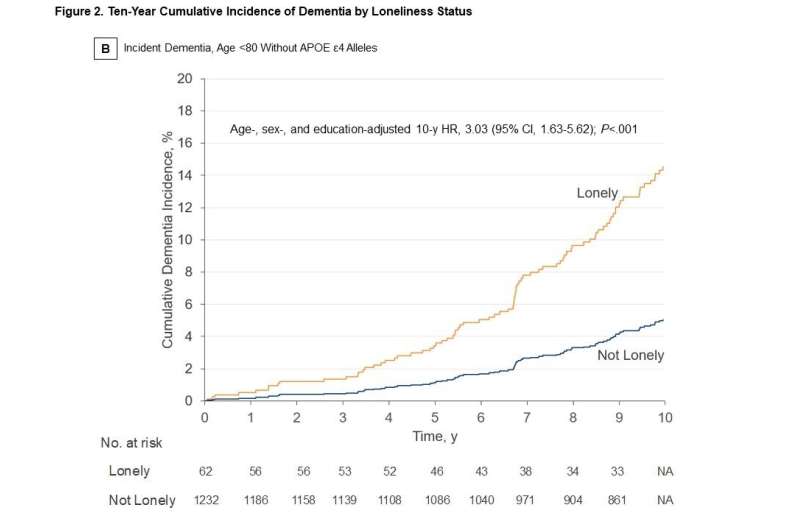
Chart showing incident of dementia for adults under age 80 without APOE ε4 allele, a genetic risk factor for Alzheimer's disease. Credit: NYU Langone Health
As social isolation in the United States has been increasing among older adults, a new study shows a notable link between loneliness and dementia risk, and one that is most striking for Americans who represent a large part of the population.
20 feb 2022--In the study publishing February 7 inNeurology, the medical journal of the American Academy of Neurology,researchers found a three-fold increase in risk of subsequent dementia among lonely Americans younger than 80 years old who would otherwise be expected to have a relatively low risk based on age and genetic risk factors. The study also found thatlonelinesswas associated with poorer executive function (i.e., a group of cognitive processes including decision-making, planning, cognitive flexibility, and control of attention) and changes in the brain that indicate vulnerability to Alzheimer's disease and related dementias (ADRD).
"This study emphasizes the importance of loneliness and issues of social connection in addressing our risk of developing dementia as we age," says lead investigator Joel Salinas, MD, MBA, MSc, the Lulu P. and David J. Levidow Assistant Professor of Neurology at NYU Grossman School of Medicine and member of the Department of Neurology's Center for Cognitive Neurology. "Acknowledging signs of loneliness in yourself and others, building and maintaining supportive relationships, providing much-needed support for the people in our lives who are feeling lonely—these are important for everyone. But they're especially important as we age to increase the chances that we'll delay or perhaps even prevent cognitive decline."
Dementia affects more than 6.2 million adults in the United States, according to a 2021 special report by the Alzheimer's Association. Since the beginning of the coronavirus pandemic, feelings of loneliness have affected an estimated 46 million Americans, and more frequent feelings of loneliness were found in adults aged 60 and older.
"This study is a reminder that, if we want to prioritize brain health, we can't ignore the role of psychosocial factors like loneliness and the social environments we live in day-to-day," says Dr. Salinas. "Sometimes, the best way to take care of ourselves and the people we love is simply to regularly reach out and check in—to acknowledge and be acknowledged."
Dr. Salinas adds, "We can share with each other when we're feeling lonely, appreciate with each other how loneliness is common, and accept that giving and asking for support can be hard. Fortunately, loneliness can be cured. And although we might need to be vulnerable and creative in figuring out new ways to connect, chances are that even the smallest gesture will have been worth it."
How the Study Was Conducted
Using retrospective data of the population-based Framingham Study (FS), researchers reviewed 2,308 participants who were dementia-free at baseline, with an average age of 73. Neuropsychological measures and MRI brain scans were obtained at examination and participants were asked how often they felt lonely along with other depressive symptoms, such as restless sleep or poor appetite. Participants were also assessed for the presence of a genetic risk factor for Alzheimer's disease called the APOE ε4 allele. Overall, 144 of the 2,308 participants reported feeling lonely three or more days in the past week.
The study population was assessed over a decade for dementia using rigorous clinical methods, and 329 of the 2,308 participants were subsequently diagnosed with the disease. Among the 144 lonely participants, 31 developed dementia. While there was no significant association between loneliness and dementia in participants aged 80 years or older, younger participants aged 60 to 79 who were lonely were more than twice as likely to develop dementia. Loneliness was associated with three-fold increased risk among younger participants who did not carry the APOE ε4 allele.
Researchers concluded that the tripling in risk was possibly related to associations between loneliness and early cognitive and neuroanatomical markers of ADRD vulnerability, raising potential population health implications for observed trends in loneliness. Additional findings showed that loneliness was related with poorer executive function, lower total cerebral volume, and greater white-matter injury, which are indicators of vulnerability for cognitive decline.
In addition to Dr. Salinas, researchers from the Boston University School of Public Health, Boston University School of Medicine, University of California Davis, and the Biggs Institute for Alzheimer's and Neurodegenerative Diseases at the University of Texas Health Sciences Center San Antonio were also involved in the study.
More information: Association of Loneliness With 10-Year Dementia Risk and Early Markers of Vulnerability for Neurocognitive Decline, Neurology (2022). DOI: 10.1212/WNL.0000000000200039
Provided by NYU Langone Health
Sunday, July 18, 2021
'All the lonely people': The impact of loneliness in old age on life and health expectancy
In 1966, The Beatles cemented the plight of lonely older people in the popular imagination with "Eleanor Rigby," a song that turned pop music on its head when it stayed at No. 1 on the British charts for four weeks. Today, the impact of loneliness in old age on life and health expectancy has been categorically quantified for the first time in a study by scientists at Duke-NUS Medical School (Singapore), Nihon University (Tokyo, Japan) and their collaborators, published in the Journal of the American Geriatrics Society.
18 july 2021--"We found that lonely older adults can expect to live a shorter life than their peers who don't perceive themselves as lonely," said the study's lead author, Assistant Professor Rahul Malhotra, head of research at Duke-NUS' Centre for Aging Research and Education (CARE). "Furthermore, they pay a penalty for their shorter life by forfeiting potential years of good health."
Associate Professor Angelique Chan, executive director of CARE and a senior author of the study, noted, "Besides being the year associated with the coronavirus disease, 2019 was also when the number of adults aged over 30 made up half the total global population for the first time in recorded history, marking the start of an increasingly aging world. In consequence, loneliness among seniors has become an issue of social and public health concern."
Research Project Professor Yasuhiko Saito, from the College of Economics, Nihon University, a senior co-author of the study, added, "This study is timely because stay-at-home and physical distancing measures instituted since the start of the COVID-19 pandemic have only intensified concern for the mental and physical well-being of older persons."
Key findings: Loneliness has real, physical consequences
The study findings show that people aged 60 who perceive themselves to be sometimes lonely or mostly lonely can expect to live three to five years less, on average, compared to peers who perceive themselves as never lonely. Similarly, at ages 70 and 80, lonely older persons can, on average, expect to live three to four and two to three years less, respectively, compared to non-lonely peers.
Using the same dataset, the researchers found that the perception of loneliness has a similar impact on two types of health expectancy—remaining years of life lived in a self-rated state of good health as well as remaining years of life lived without being limited when going about 'activities of daily living'. Such activities include routines like bathing and dressing, rising from or settling into a bed or chair, and preparing meals.
At age 60, sometimes lonely or mostly lonely seniors can expect to spend three to five fewer years of their remaining life, on average, without limitations in daily living activities, compared to never-lonely peers. At age 70, their active life expectancy goes down to two to four fewer years, on average. At age 80, it is at one to three fewer years, on average.
How common is loneliness among older adults in Singapore?
Singapore is a particularly relevant setting for studying how loneliness impacts older adults because the country has a rapidly aging population, and a 'collectivistic' culture, in which relationships and the interconnectedness between people are central—in contrast to an 'individualistic' culture, where each individual's needs and desires are considered to be more important. Previous studies found levels of loneliness to be higher in collectivistic societies, suggesting loneliness may have a more detrimental impact in Singaporean society.
In 2016 and 2017, CARE researchers conducted a study—known as the Transitions in Health, Employment, Social Engagement, and Intergenerational Transfers in Singapore (THE SIGNS) study—to look into factors influencing health, well-being, and activity and productivity levels in older Singaporeans. Nationally representative data, collected from more than 2,000 older Singapore citizens and permanent residents, showed that a third (34 percent) perceived themselves to be lonely. This proportion increased with age, from 32 percent among those aged 60–69 years, to 40 percent among those aged 80 and above.
More males (37 percent) were lonely, relative to females (31 percent). Across education levels, the proportion of lonely older Singaporeans was lowest (33 percent) among those with no formal education, and highest (38 percent) among those with higher-than-tertiary education. This proportion was nearly 10 percent higher among seniors who lived alone (43 percent) compared to those who did not live alone (33 percent).
"Building on THE SIGNS study, our recent findings highlight the population health impact of loneliness, and the importance of identifying and managing it among older adults," said Asst Prof Malhotra. "This is part of a series of studies to assess the impact of important health and social constructs, like loneliness, sensory impairments, obesity, gender and education, on life and health expectancy among older adults."
"With older persons at potentially greater risk of loneliness as a result of pandemic control measures, there has been increasing policy interest in loneliness around the world," said Assoc Prof Chan. "In 2018, the UK launched a national strategy for tackling loneliness and, in 2021, Japan appointed a 'Minister of Loneliness'. We hope this study helps galvanize more policies to tackle loneliness among older persons."
More information: Malhotra R, Tareque MI, Saito Y, Ma S, Chiu C-T, Chan A. Loneliness and health expectancy among older adults: A longitudinal population-based study. J Am Geriatr Soc. 2021;1–11. doi.org/10.1111/jgs.17343
Provided by Duke-NUS Medical School
Sunday, December 15, 2019
Loneliness may be due to increasing aging population
Despite some claims that Americans are in the midst of a "loneliness epidemic," older people today may not be any lonelier than their counterparts from previous generations—there just might be more of them, according to a pair of studies published by the American Psychological Association.
15 dec 2019--"We found no evidence thatolder adultshave become any lonelier than those of a similar age were a decade before," said Louise C. Hawkley, Ph.D., of NORC at the University of Chicago, lead author of one of the studies. "However, average reportedlonelinessbegins to increase beyond age 75, and therefore, the total number of older adults who are lonely may increase once the baby boomers reach their late 70s and 80s."
The studies were published in the journal Psychology and Aging.
Hawkley and her colleagues used data from the National Social Life, Health and Aging Project and the Health and Retirement Study, two national surveys of older adults that compared three groups of U.S. adults born in different periods throughout the 20th century. They first analyzed data in 2005 to 2006 from 3,005 adults born between 1920 and 1947 and a second time in 2010 to 2011 from 3,377 people, which included those from the previous survey who were still alive, and their spouses or partners. The third survey, in 2015 to 2016, comprised 4,777 adults, which included an additional sample of adults born between 1948 and 1965 to the surviving respondents from the previous two surveys.
The authors examined participants' level of loneliness, educational attainment, overall health on a scale from poor to excellent, marital status and number of family members, relatives and friends they felt close to. They found that loneliness decreased between the ages of 50 and 74, but increased after age 75, yet there was no difference in loneliness between baby boomers and similar-aged adults of earlier generations.
"Loneliness levels may have decreased for adults between 50 and 74 because they had better educational opportunities, health care and social relationships than previous generations," said Hawkley.
Adults over 75 were more susceptible to becoming lonely, possibly due to life factors such as declining health or the loss of a spouse or significant other, according to Hawkley.
"Our research suggests that older adults who remain in good health and maintain social relationships with a spouse, family or friends tend to be less lonely," said Hawkley.
In a similar study, researchers in the Netherlands found that older adults were less lonely than their counterparts from previous generations.
These researchers used data from the Longitudinal Aging Study Amsterdam, a long-term study of the social, physical, cognitive and emotional functioning of older adults. A total of 4,880 people, born between 1908 and 1957, participated.
The study measured peoples' loneliness, control over situations and life in general and goal achievement. For example, participants rated loneliness on a scale from 0 (no loneliness) to 11 (severe loneliness) based on feelings such as, "I miss having people around."
Older adults born in later generations were actually less lonely, because they felt more in control and thus most likely managed their lives better, according to Bianca Suanet, Ph.D., of Vrije Universiteit Amsterdam and lead author of the study.
"In contrast to assuming a loneliness epidemic exists, we found that older adults who felt more in control and therefore managed certain aspects of their lives well, such as maintaining a positive attitude, and set goals, such as going to the gym, were less lonely," said Suanet. "Additionally, as is well-known in loneliness research, participants who had a significant other and/or larger and more diverse networks were also less lonely."
Suanet recommended that older adults take personal initiative to better nurture their social ties, such as making friends to help them overcome increasing loneliness as they age. Also, interventions to reduce loneliness should focus more on bolstering older adults' feelings of control, instead of only offering social activities.
"People must manage their social lives better today than ever before because traditional communities, which provided social outlets, such as neighborhoods, churches and extended families, have lost strength in recent decades," said Suanet. "Therefore, older adults today need to develop problem-solving and goal-setting skills to sustain satisfying relationships and to reduce loneliness."
Seniors may also want to make use of modern technology to maintain meaningful social connections, according to Hawkley.
"Video chatting platforms and the Internet may help preserve their social relationships," said Hawkley. "These tools can help older adults stay mobile and engaged in their communities."
More information: "Are U.S. Older Adults Getting Lonelier? Age, Period and Cohort Differences," by Louise C. Hawkley, PhD, NORC at the University of Chicago; Kristen Wroblewski, MS, L. Philip Schumm, MA, University of Chicago; Till Kaiser, PhD; and Maike Luhmann, PhD, Ruhr University Bochum. Psychology and Aging. Published Dec. 10, 2019.
"Loneliness Declines Across Birth Cohorts: The Impact of Mastery and Self-Efficacy," by Bianca Suanet, PhD, and Theo G. van Tilburg, PhD, Vrije Universiteit Amsterdam. Psychology and Aging. Published Dec. 10, 2019.
Living in a friendly, secure neighborhood is one of the key ways to keep loneliness and isolation at bay in older age, according to a study of over-65s living on the Kāpiti Coast.
11 nov 2019--And aspects of neighborhood design, like the provision of footpaths and lighting, and facilities such as transport, libraries, shops and services can also have an effect on the wellbeing of theelderly.
The Health in Ageing Research Team (HART) at Massey University's School of Psychology has just released the findings of a study called Social Connections carried out on behalf of Age Concern Kapiti and the Kāpiti Coast District Council.
Lead researcher Professor Christine Stephens says three quarters of the 919 respondents reported no loneliness, while a fifth reported moderate or high levels of loneliness. However, a more nuanced measure of loneliness revealed that nearly half of those who took part in the study (including Ōtaki, Waikanae, Paraparaumu, Paekakariki and Raumati) experience feelings of loneliness.
"Although the Kāpiti Coast has long been a favorite retirement venue, the levels of loneliness reported by older residents are similar to those found in other surveys across New Zealand," Professor Stephens says.
Marital status, health, restricted social networks, housing satisfaction, neighborhood accessibility, neighborhood security and neighborhood social cohesion contributed most strongly to differences in loneliness in this sample.
But the strongest associations with loneliness were related to housing and neighborhood perceptions. "Reports of higher satisfaction with housing, and sense of neighborhood security, accessibility, and social cohesion (trust in neighbors) were all related to less loneliness," the report authors say. In terms of the aspects of social life that can be changed to prevent or alleviate loneliness, being part of a positive, cohesive neighborhood mattered more than a person's group memberships and social activities, the study found.
Professor Stephens says that programs to prevent loneliness among older people generally focus on individual interventions, such as visitor programs or friendship groups. "These findings point to the importance of the neighborhood environment and have important implications for local and central government policy around housing and housing developments," she says. This includes aspects of neighborhood design like the provision of footpaths and lighting, and facilities such as transport, libraries, shops and services.
The report also emphasizes that people in low socio-economic settings are more likely to live in less well-serviced neighborhoods and these inequalities should be taken into account.
Different kinds of loneliness
Researchers used two established measures of loneliness. The first—the UCLA Loneliness Scale –showed 76.9 percent of respondents reported no loneliness, while 21.4 percent reported moderate or high levels of loneliness. However, using the more nuanced De Jong Gierveld Loneliness Scale, which distinguishes between social loneliness (the lack of people and friends around you) and emotional loneliness (the lack of intimate relationships or confidantes), nearly half of respondents reported moderate to high levels of loneliness.
"When we examined emotional and social loneliness separately, we found a difference in the incidence of these aspects of loneliness. Almost 35 percent reported some social loneliness while only 14 percent reported some emotional loneliness. These different categories provide some indication of the different types of support that could be provided for those with different loneliness needs: either more socializing, or more intimate support," the report's authors say.
Ages ranged from 65 to 98 across the sample, but age was not related to loneliness and nor was gender. Participants were selected randomly from the electoral roll, and the survey did not distinguish between people living independently and those in retirement villages. The study was funded by the Massey University Research Fund.
Dermot Whelan, manager of Age Concern Kapiti, says the survey findings will help his organization to address issues related to loneliness. "We now have an indication of the extent of loneliness among older people in Kāpiti and the impact social isolation can have. It was very interesting for us that the strongest associations with loneliness were found among housing and neighborhood perceptions such as neighborhood security, accessibility and trust."
The HART team is planning further research in 2020 to learn more about the ways in which neighborhoods are associated with loneliness and social connections.
Monday, April 29, 2019
Study shows older men feel 'excluded, overlooked and cut-off'
With increasing numbers of older men experiencing loneliness, a new report published April 29 calls for a better understanding of how to tackle the growing public health challenge.
29 april 2019--A two-year study, led by the University of Bristol in collaboration with Age UK, highlights the issues faced by older men, many of whom describe feeling socially excluded, overlooked, cut-off and feeling 'left out of things'—all of which have a range of negative impacts on day-to-day life.
These feelings were triggered by a variety of life events, including loss of a partner, retirement or relocation.
To combat the problem, researchers at the University are calling for changes to the focus of adult social care services – urging for greater priority to be given to the running of groups rather than focusing primarily on care and support for individuals. There should also be more inclusive, tailored groups for older men in marginalised groups.
It follows a report from Age UK which shows the number of over 50s suffering from loneliness is set to reach two million by 2025/6 due to a rising number of older people. This compares to around 1.4 million in 2016/7 – a 49 per cent increase in 10 years.
Unfortunately, older men who live alone are more likely to be socially isolated than their female counterparts, having less regular contact with family and friends, and this can exacerbate feelings of loneliness.
The circumstances and experiences that increase the risk of loneliness and isolation appears to rise with age, and among those with long-term health problems and/or disability.
To date, little research has been undertaken into older men's experiences of loneliness and isolation. Researchers at the University of Bristol interviewed 111 men, aged between 65 and 95 and living in the West and South West of England, to identify new ways in which social care and voluntary services could help alleviate the problem.
There was generally a reluctance to speak to others and seek help, often due to a perception that people wouldn't be interested, or the potential stigma attached to loneliness. Men with adult children avoided speaking to their children as they didn't want to worry them, or it was not in keeping with their role as the father-type figurehead.
The report highlights the 'critical role' voluntary and independent services play in promoting social wellbeing and loneliness. However, those involved in leading and running these groups say funding cuts are placing a strain on resources and insufficient staff numbers.
A key finding, which researchers hope will influence policy makers, was that men valued mixed-age groups which mirror social interactions in everyday life, as opposed to groups specifically targeting older people. Equally, men valued groups that facilitated emotional and social ties with other men.
Dr. Paul Willis, from the University of Bristol's School for Policy Studies, led the research. He said: "For a growing number of people, particularly those in later life, loneliness can define their lives and have a significant impact on their wellbeing.
"Because loneliness occurs when people's ability to engage with others is inhibited, helping people cope with and overcome these feelings is vital.
"Our research has shown the importance of groups and networks in older men's lives, especially those run by voluntary and third sector organisations. Support for such groups needs to be given greater priority by local authorities, both in terms of support from social workers and long-term funding."
The project focused on older men from seldom-heard groups, including men who were single or living alone in rural and urban areas, men who were carers for loved ones, men living with hearing loss, and gay men who were single or living alone.
While loneliness and isolation impacted negatively on men's lives across the groups, there were important differences identified. For example, men with hearing loss were often isolated from family and friends in social gatherings and events because of their hearing loss and challenges in keeping up with conversations around them in noisy environments, such as pubs.
For older gay men, experiences of loneliness and isolation were entangled with earlier life-experiences of being reluctant to come out to others in fear of social censure or hostility from family or work colleagues.
For male carers, the companionship of the person they cared for routinely inhibited feelings of loneliness however the caring experience isolated them from others, such as diminished time spent with friends.
There are clear reasons behind the high numbers of lonely older people, according to Age UK. The risk of being lonely is dramatically higher among older people who have financial difficulties, are in poor health or have a disability, are carers or have recently been bereaved.
Loneliness occurs when people do not have someone to open up to and their ability to have meaningful conversations and interactions is inhibited.
Caroline Abrahams, Charity Director at Age UK, said: "This study helps further our understanding about how older men experience loneliness and how best to help.
"Loneliness is a problem among many older people, especially for those who are in poor health or have a disability, who are carers for loved ones, who have been bereaved, have financial difficulties or who don't have family and friends nearby.
"This study highlights specific issues and challenges for men, who can find it difficult to talk about feeling lonely.
"As more older men live longer we need to appreciate that the numbers who are chronically lonely are likely to increase too—unless we act which we can and we must do. The study also gives service providers, like Age UK, useful tips on how to help older men overcome loneliness, and things to consider when engaging with those from seldom-heard groups."
Based on this new research, Age UK has produced good practice guidance for service providers, tips for older men themselves and information for families or friends who are worried that an older man close to them might be lonely.
The main findings from the National Poll on Healthy Aging's poll on social isolation among adults age 50-80. Credit: University of Michigan
One in four older adults say they feel isolated from other people at least some of the time, and one in three say they lack regular companionship, according to a new national poll.
04 mar 2019--Those feelings of loneliness showed up most in people aged 50 to 80 who also reported they had health issues and unhealthy habits, the poll shows. The new findings amplify research that has shown links between chronic loneliness and health issues ranging from memory loss to shorter lives.
In the new poll, people who said they had fair or poor physical health, mental health, or hearing loss were more likely to report that they felt isolated or lacked companions.
Meanwhile, people who said they ate healthy diets, exercised, got enough sleep or didn't use tobacco were less likely to report feelings of loneliness.
The new findings come from the National Poll on Healthy Aging, conducted by the University of Michigan Institute for Healthcare Policy and Innovation, and sponsored by AARP and Michigan Medicine, U-M's academic medical center.
"More than a quarter of poll respondents said they only had social contact once a week, or less, with family members they don't live with, or with friends and neighbors," says Erica Solway, Ph.D., the co-director of the poll and a social science researcher. "These results indicate the importance of proactively reaching out to those in your community who may be at risk of feeling isolated and disconnected, especially those with or at risk of health issues."
Poll director Preeti Malani, M.D., who has training in caring for older adults, notes that a growing body of research points to strong connections between health and loneliness—and to positive effects on health from increased social contact through volunteering, taking part in religious or community groups, and other activities.
"As we grow older, and mobility or hearing becomes more of a barrier, these poll data show the importance of maintaining and strengthening our ties to other people," says Malani. "It also suggests that caregivers, spouses and partners, adult children and others involved in older adults' lives have a role to play in encouraging and facilitating these connections."
"We know that social isolation and loneliness are as bad for our health as obesity and smoking," says Alison Bryant, Ph.D., senior vice president of research for AARP. "AARP's own research shows that older adults who are unpaid caregivers, are low-income, or that identify as LGBT are at an increased risk for chronic loneliness. This is such an important public health issue that AARP Foundation launched Connect2Affect to help combat isolation and loneliness among older adults."
Other key findings
The poll explored many aspects of social connection and health and asked about feelings of companionship, feelings of social isolation, and social contact among people age 50 to 80. It found:
Those who were unemployed, lived in lower-income households, lived alone and/or had one or more children living with them were more likely to say they lacked companionship
Living alone was highly associated with feeling lonely; 60 percent of those who lived alone reported feeling a lack of companionship, and 41 percent felt isolated
36 percent of women said they lacked companionship often or some of the time, compared with 31 percent of men
26 percent of adults who said they lacked companionship also said they were in fair or poor physical health, while 13 percent of people who said they hardly ever lacked companionship reported fair or poor physical health
Of those who reported feeling isolated, 17 percent had fair/poor mental health, compared to only 2 percent of those who hardly ever felt isolated.
One in five respondents who reported feeling socially isolated said they had fair or poor hearing compared to about one in 10 of those who said they hardly ever feel isolated.
More information: A full report of the findings and methodology is available at www.healthyagingpoll.org, along with past National Poll on Healthy Aging reports.
AARP Foundation Connect2Affect website, including a Social Isolation Assessment tool and local resource finder: connect2affect.org/
More about fighting loneliness from the National Institute on Aging: michmed.org/QWa55
Saturday, August 12, 2017
Social isolation, loneliness could be greater threat to public health than obesity, researchers say
Loneliness and social isolation may represent a greater public health hazard than obesity, and their impact has been growing and will continue to grow, according to research presented at the 125th Annual Convention of the American Psychological Association.
12 aug 2017--"Being connected to others socially is widely considered a fundamental human need—crucial to both well-being and survival. Extreme examples show infants in custodial care who lack human contact fail to thrive and often die, and indeed, social isolation or solitary confinement has been used as a form of punishment," said Julianne Holt-Lunstad, PhD, professor of psychology at Brigham Young University. "Yet an increasing portion of the U.S. population now experiences isolation regularly."
Approximately 42.6 million adults over age 45 in the United States are estimated to be suffering from chronic loneliness, according to AARP's Loneliness Study. In addition, the most recent U.S. census data shows more than a quarter of the population lives alone, more than half of the population is unmarried and, since the previous census, marriage rates and the number of children per household have declined.
"These trends suggest that Americans are becoming less socially connected and experiencing more loneliness," said Holt-Lunstad.
To illustrate the influence of social isolation and loneliness on the risk for premature mortality, Holt-Lunstad presented data from two meta-analyses. The first involved 148 studies, representing more than 300,000 participants, and found that greater social connection is associated with a 50 percent reduced risk of early death. The second study, involving 70 studies representing more than 3.4 million individuals primarily from North America but also from Europe, Asia and Australia, examined the role that social isolation, loneliness or living alone might have on mortality. Researchers found that all three had a significant and equal effect on the risk of premature death, one that was equal to or exceeded the effect of other well-accepted risk factors such as obesity.
"There is robust evidence that social isolation and loneliness significantly increase risk for premature mortality, and the magnitude of the risk exceeds that of many leading health indicators," said Holt-Lunstad. "With an increasing aging population, the effect on public health is only anticipated to increase. Indeed, many nations around the world now suggest we are facing a 'loneliness epidemic.' The challenge we face now is what can be done about it."
Holt-Lunstad recommended a greater priority be placed on research and resources to tackle this public health threat from the societal to the individual level. For instance, greater emphasis could be placed on social skills training for children in schools and doctors should be encouraged to include social connectedness in medical screening, she said. Additionally, people should be preparing for retirement socially as well as financially, as many social ties are related to the workplace, she noted, adding that community planners should make sure to include shared social spaces that encourage gathering and interaction, such as recreation centers and community gardens.
More information: Session 3328: "Loneliness: A Growing Public Health Threat," Plenary, Saturday, Aug. 5, 3-3:50 p.m. EDT, Room 151A, Street Level, Walter E. Washington Convention Center, 801 Mount Vernon Pl., N.W., Washington, D.C.
Provided by American Psychological Association
Wednesday, November 25, 2015
Loneliness triggers cellular changes that can cause illness, study shows
Loneliness is more than a feeling: For older adults, perceived social isolation is a major health risk that can increase the risk of premature death by 14 percent.Researchers have long known the dangers of loneliness, but the cellular mechanisms by which loneliness causes adverse health outcomes have not been well understood. Now a team of researchers, including UChicago psychologist and leading loneliness expert John Cacioppo, has released a study shedding new light on how loneliness triggers physiological responses that can ultimately make us sick.
25 nov 2015--The paper, which appears Nov. 23 in the Proceedings of the National Academy of Sciences, shows that loneliness leads to fight-or-flight stress signaling, which can ultimately affect the production of white blood cells.
Along with Cacioppo, the research team includes Steven W. Cole of UCLA and John P. Capitanio of the California National Primate Research Center at the University of California, Davis. The study examined loneliness in both humans and rhesus macaques, a highly social primate species.
Previous research from this group had identified a link between loneliness and a phenomenon they called "conserved transcriptional response to adversity" or CTRA. This response is characterized by an increased expression of genes involved in inflammation and a decreased expression of genes involved in antiviral responses. Essentially, lonely people had a less effective immune response and more inflammation than non-lonely people.
For the current study, the team examined gene expression in leukocytes, cells of the immune system that are involved in protecting the body against bacteria and viruses.
As expected, the leukocytes of lonely humans and macaques showed the effects of CTRA—an increased expression of genes involved in inflammation and a decreased expression of genes involved in antiviral responses. But the study also revealed several important new pieces of information about loneliness' effect on the body.
First, the researchers found that loneliness predicted future CTRA gene expression measured a year or more later. Interestingly, CTRA gene expression also predicted loneliness measured a year or more later. Leukocyte gene expression and loneliness appear to have a reciprocal relationship, suggesting that each can help propagate the other over time. These results were specific to loneliness and could not be explained by depression, stress or social support.
Next, the team investigated the cellular processes linking social experience to CTRA gene expression in rhesus macaque monkeys at the California National Primate Research Center, which had been behaviorally classified as high in perceived social isolation. Like the lonely humans, the "lonely like" monkeys showed higher CTRA activity. They also showed higher levels of the fight-or-flight neurotransmitter, norepinephrine.
Previous research has found that norepinephrine can stimulate blood stem cells in bone marrow to make more of a particular kind of immune cell—an immature monocyte that shows high levels of inflammatory gene expression and low levels of antiviral gene expression. Both lonely humans and "lonely like" monkeys showed higher levels of monocytes in their blood.
More detailed studies of the monkey white blood cells found that this difference stemmed from expansion of the pool of immature monocytes. In an additional study, monkeys repeatedly exposed to mildly stressful social conditions (unfamiliar cage-mates) also showed increases in immature monocyte levels. These analyses have finally identified one reason why CTRA gene expression is amplified in the white blood cell pool: increased output of immature monocytes.
Finally, the researchers determined that this monocyte-related CTRA shift had real consequences for health. In a monkey model of viral infection, the impaired antiviral gene expression in "lonely like" monkeys allowed simian immunodeficiency virus (the monkey version of HIV) to grow faster in both blood and brain.
Taken together, these findings support a mechanistic model in which loneliness results in fight-or-flight stress signaling, which increases the production of immature monocytes, leading to up-regulation of inflammatory genes and impaired anti-viral responses. The "danger signals" activated in the brain by loneliness ultimately affect the production of white blood cells. The resulting shift in monocyte output may both propagate loneliness and contribute to its associated health risks.
The team plans to continue research on how loneliness leads to poor health outcomes and how these effects can be prevented in older adults.