Showing posts with label purpose in life. Show all posts

Sunday, July 09, 2023


Fighting loneliness by finding purpose
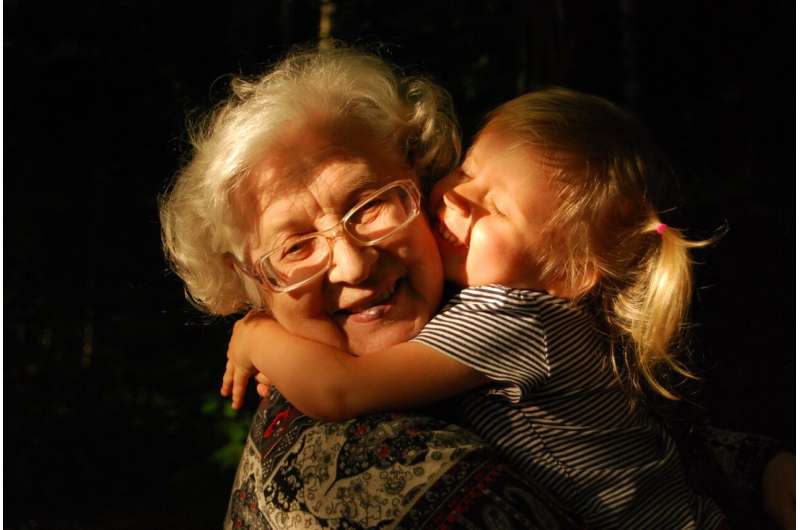
grandmother
Credit: Unsplash/CC0 Public Domain

A new study published in Psychology and Aging co-authored by Patrick Hill, associate professor of psychological and brain sciences, offers an important message for our times: A sense of purpose in life—whether it's a high-minded quest to make a difference or a simple hobby with personal meaning—can offer potent protection against loneliness.

09 Jul 2023--"Loneliness is known to be one of the biggest psychological predictors for health problems, cognitive decline, and early mortality," Hill said. "Studies show that it can be as harmful for health as smoking or having a poor diet."

The new study, based on surveys of more than 2,300 adults in Switzerland, found that feelings of loneliness were less common in people who reported a purposeful life, regardless of their age. It was co-authored by Mathias Allemand of the University of Zurich in Switzerland and Gabriel Olaru of Tilburg University in the Netherlands.

Respondents were asked to score their feelings on a lack of companionship, isolation from other people, and a sense of being "left out or passed over" during a four-week period. Participants also filled out the six-item Life Engagement Test, which asked them to rate statements such as "there is not enough purpose in my life" and "I value my activities a lot."

"A sense of purpose is this general perception that you have something leading and directing you from one day to the next," Hill said. "It can be something like gardening, supporting your family, or achieving success at work."

Many of the activities that can provide a sense of purpose—joining a club, volunteering at a school, playing in a sports league—involve interaction with others, which is one reason why a purpose-filled life tends to be less lonely. In the study, people who said they received or provided social support were especially likely to report feelings of purpose.

But Hill noted that there's more to fighting loneliness than simply being around others. "We've all had time in our lives when we've felt lonely even though we weren't actually alone." There's something about having a sense of purpose that seems to fight loneliness regardless of how many other people are involved, he said.

The study found a slight uptick in reports of loneliness for people in their 70s and beyond, an age when a sense of purpose can be especially important. "We're trying to dispel the myth from previous generations that this is simply a time for retiring and resting," Hill said. "There are no downsides to finding something meaningful later in life."

Still, it's important to keep in mind that a quest for purpose can be somewhat self-defeating if taken too seriously. "Feeling like you need to save the world can lead to existential dread and distress," Hill said. When it comes to purpose and meaning, even small things can matter. "It's OK if someone else thinks that your purpose is trivial, as long as it's meaningful to you."

More information: Patrick L. Hill et al, Do associations between sense of purpose, social support, and loneliness differ across the adult lifespan?, Psychology and Aging (2023). DOI: 10.1037/pag0000733

Friday, February 22, 2019

Having a sense of meaning in life is good for you. So how do you get one?

Having a sense of meaning in life is good for you. So how do you get one?
There’s a high degree of overlap between experiencing happiness and meaning. Credit: Shutterstock/KieferPix
The pursuit of happiness and health is a popular endeavour, as the preponderance of self-help books would attest.
22 feb 2019--Yet it is also fraught. Despite ample advice from experts, individuals regularly engage in activities that may only have short-term benefit for well-being, or even backfire.
The search for the heart of well-being – that is, a nucleus from which other aspects of well-being and health might flow – has been the focus of decades of research. New findings recently reported in Proceedings of the National Academy of Sciences point towards an answer commonly overlooked: meaning in .
Meaning in life: part of the well-being puzzle?
University College London's psychology professor Andrew Steptoe and senior research associate Daisy Fancourt analysed a sample of 7,304 UK residents aged 50+ drawn from the English Longitudinal Study of Ageing.
Survey respondents answered a range of questions assessing social, economic, health, and physical activity characteristics, including: "To what extent do you feel the things you do in your life are worthwhile?"
Follow-up surveys two and four years later assessed those same characteristics again.
One key question addressed in this research is: what advantage might having a strong sense of meaning in life afford a few years down the road?
The data revealed that individuals reporting a higher meaning in life had:
  • lower risk of divorce
  • lower risk of living alone
  • increased connections with friends and engagement in social and cultural activities
  • lower incidence of new chronic disease and onset of depression
  • lower obesity and increased physical activity
  • increased adoption of positive health behaviours (exercising, eating fruit and veg).
On the whole, individuals with a higher sense of meaning in life a few years earlier were later living lives characterised by health and well-being.


You might wonder if these findings are attributable to other factors, or to factors already in play by the time participants joined the study. The authors undertook stringent analyses to account for this, which revealed largely similar patterns of findings.
The findings join a body of prior research documenting longitudinal relationships between meaning in life and social functioningnet wealth and reduced mortality, especially among older adults.
What is meaning in life?
The historical arc of consideration of the meaning in life (not to be confused with the meaning of life) starts as far back as Ancient Greece. It tracks through the popular works of people such as Austrian neurologist and psychiatrist Victor Frankl, and continues today in the field of psychology.
One definition, offered by well-being researcher Laura King and colleagues, says, "…lives may be experienced as meaningful when they are felt to have a significance beyond the trivial or momentary, to have purpose, or to have a coherence that transcends chaos."
This definition is useful because it highlights three central components of meaning:
  1. purpose: having goals and direction in life
  2. significance: the degree to which a person believes his or her life has value, worth, and importance
  3. coherence: the sense that one's life is characterised by predictability and routine.
Curious about your own sense of meaning in life? You can take an interactive version of the Meaning in Life Questionnaire, developed by Steger and colleagues, yourself here.
This measure captures not just the presence of meaning in life (whether a person feels that their life has purpose, significance, and coherence), but also the desire to search for meaning in life.
Routes for cultivating meaning in life
Given the documented benefits, you may wonder: how might one go about cultivating a sense of meaning in life?
We know a few things about participants in Steptoe and Fancourt's study who reported relatively higher meaning in life during the first survey. For instance, they contacted their friends frequently, belonged to , engaged in volunteering, and maintained a suite of healthy habits relating to sleep, diet and exercise.
Backing up the idea that seeking out these qualities might be a good place to start in the quest for meaning, several studies have causally linked these indicators to meaning in life.
For instance, spending money on others and volunteeringeating fruit and vegetables, and being in a well-connected social network have all been prospectively linked to acquiring a sense of meaning in life.
For a temporary boost, some activities have documented benefits for meaning in the short term: envisioning a happier future, writing a note of gratitude to another person, engaging in nostalgic reverie, and bringing to mind one's close relationships.
Happiness and meaning: is it one or the other?
There's a high degree of overlap between experiencing happiness and meaning—most people who report one also report the other. Days when people report feeling happy are often also days that people report meaning.
Yet there's a tricky relationship between the two. Moment-to-moment, happiness and meaning are often decoupled.
Research by social psychologist Roy Baumeister and colleagues suggests that satisfying basic needs promotes happiness, but not meaning. In contrast, linking a sense of self across one's past, present, and future promotes meaning, but not happiness.
Connecting socially with others is important for both happiness and meaning, but doing so in a way that promotes meaning (such as via parenting) can happen at the cost of personal happiness, at least temporarily.
Given the now-documented long-term social, mental, and physical benefits of having a sense of meaning in life, the recommendation here is clear. Rather than pursuing happiness as an end-state, ensuring one's activities provide a sense of meaning might be a better route to living well and flourishing throughout life.
Provided by University of New South Wales

Thursday, June 18, 2009

Having a higher purpose in life reduces risk of death among older adults

CHICAGO, 18 june 2009—Possessing a greater purpose in life is associated with lower mortality rates among older adults according to a new study by researchers at Rush University Medical Center. The study, published in the June 15 issue of the journal, Psychosomatic Medicine, is available online at www.psychosomaticmedicine.org.

Patricia A. Boyle, PhD, and her colleagues from the Rush Alzheimer's Disease Center, studied 1,238 community-dwelling elderly participants from two ongoing research studies, the Rush Memory and Aging Project and the Minority Aging Research Study. None had dementia. Data from baseline evaluations of purpose in life and up to five years of follow-up were used to test the hypothesis that greater purpose in life is associated with a reduced risk of mortality among community-dwelling older persons.

Purpose in life reflects the tendency to derive meaning from life's experiences and be focused and intentional, according to Boyle.

After adjusting for age, sex, education and race, a higher purpose of life was associated with a substantially reduced risk of mortality. Thus, a person with high purpose in life was about half as likely to die over the follow-up period compared to a person with low purpose. The association of purpose in life with mortality did not differ among men and women or whites and blacks, and the finding persisted even after controlling for depressive symptoms, disability, neuroticism, the number of medical conditions and income. During the study period, 151 participants died.

"The finding that purpose in life is related to longevity in older persons suggests that aspects of human flourishing—particularly the tendency to derive meaning from life's experiences and possess a sense of intentionality and goal-directedness—contribute to successful aging," said Boyle.

Significant associations with mortality were found with three specific items on the purpose of life questionnaire to determine the study participants' agreement with the following statements: "I sometimes feel as if I've done all there is to do in life;" "I used to set goals for myself, but that now seems like a waste of time;" and "My daily activities often seem trivial and unimportant to me."

"We are excited about these findings because they suggest that positive factors such as having a sense of purpose in life are important contributors to health," said Boyle.

The researchers note that knowledge of the relationship of purpose of life with other demographic characteristics is limited and future studies are needed to examine whether the association of purpose of life with mortality might be modified by other variables not measured in this study, such as how religious a participant may be. In addition, researchers suggest that future studies should examine whether purpose in life can be enhanced in older persons with interventions.

"Although we think that having a sense of purpose in life is important across the lifespan, measurement of purpose in life in older persons in particular may reveal an enduring sense of meaningfulness and intentionality in life that somehow provides a buffer against negative health outcomes," said Boyle.

The Rush Memory and Aging Project, which began in 1997, is a longitudinal clinical-pathological study of common chronic conditions of aging. Participants are older persons recruited from about 40 continuous care retirement communities and senior subsidized housing facilities in and around the Chicago Metropolitan area. More than 1,200 older persons are enrolled in the study.

The Minority Aging Research Study began in 2004 and is a study of risk factors for cognitive decline in older Blacks. Participants are recruited from community-based organizations, churches, and senior subsidized housing facilities in and around the Chicago Metropolitan Area. More than 350 older persons are enrolled in the study.

###

This study was funded by the National Institutes on Aging. The authors thank the NIA for supporting this work and are indebted to the participants of the Rush Memory and Aging Project and the Minority Aging Research Study for their invaluable contributions to aging research.

Boyle is a neuropsychologist in the Rush Alzheimer's Disease Center.

The Rush Alzheimer's Disease Center is one of 29 Alzheimer's disease research centers across the country designated and funded by the National Institute on Aging. In addition to community-based research, the center offers patient care services through its outpatient clinic; it conducts numerous clinical trials, and provides educational programs, resources and early onset programs for patients, family caregivers, and healthcare professionals.