Sarcopenic obesity linked to dementia in elderly patients
by Juntendo University Research Promotion Center
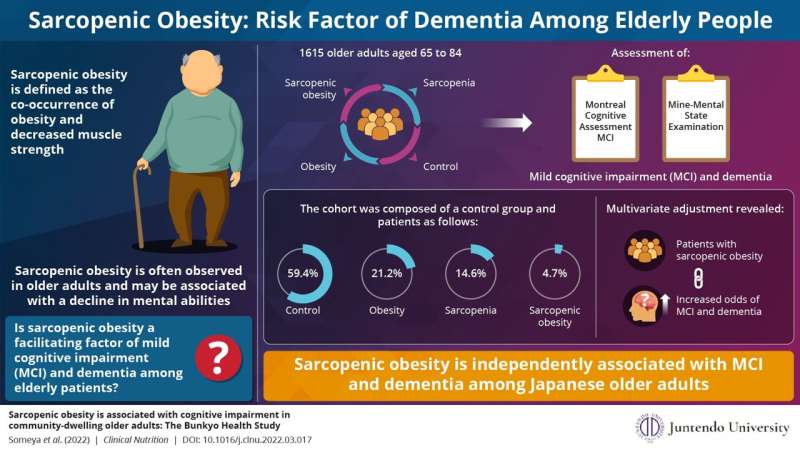
Sarcopenic obesity is independently associated with MCIand dementia among Japanese older adults. Credit: Juntendo University
Obesity, an increasingly prevalent lifestyle disease, often occurs along with poor muscle mass. This condition, called sarcopenic obesity, is evaluated based on the patients' body mass index (BMI) and handgrip strength. Interestingly, sarcopenic obesity is known to increase the risk of cognitive impairment. Dementia, a cognitive condition where memory, thinking and social abilities progressively decline, is known to significantly affect the quality of life in elderly people. Is this condition associated with sarcopenic obesity?
31 may 2022--In a new study published inClinical Nutrition, a group of researchers led by Dr. Yoshifumi Tamura of Juntendo University, Japan, explored this very question. "If the association between sarcopenic obesity and dementia is established, appropriate preventive measures can be taken to reduce the occurrence of this condition and therisk of dementiainelderly patients," says Dr. Tamura, stressing on the importance of their study.
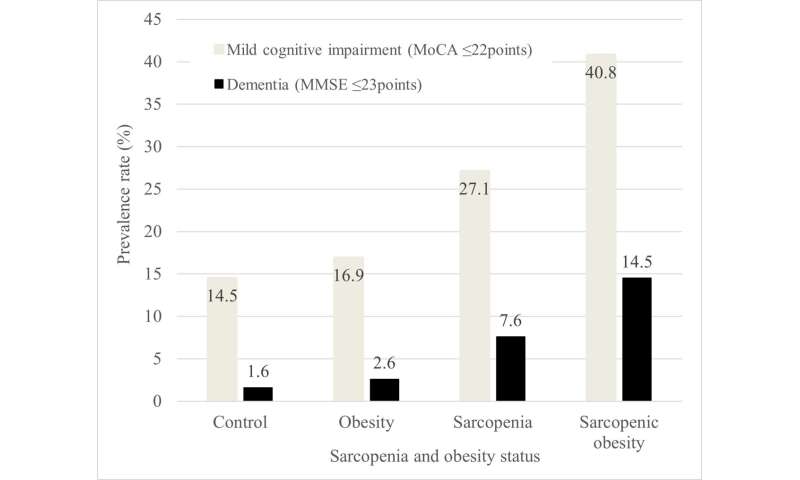
In the study, the researchers recruited 1,615 older Japanese adults aged 65 to 84 years participating in the Bunkyo Health Study. The researchers divided the subjects into four groups based on their sarcopenia and obesity status: those with obesity, those with sarcopenia, those with sarcopenic obesity, and those without obesity or sarcopenia (control). They studied the link between various mental processes, sarcopenia, and obesity status. Sarcopenia or poor muscle strength was determined based on a handgrip strength of less than 28 kg in men and 18 kg in women, while obesity status was given to patients with a BMI greater than 25 kg/m2. Two assessment methods were performed to establish the presence of mild cognitive impairment (MCI) and dementia. A score of less than 22 points on the Montreal cognitive assessment and less than 23 points on the Mine-Mental State Examination were used to confirm MCI and dementia respectively.
In a brand-new study, researchers from Japan have shown how co-morbidity with sarcopenia and obesity is linked with cognitive impairment in elderly Japanese people. Credit: Juntendo University
They found that 59.4% of the population had neither obesity nor sarcopenia, 21.2% had obesity, 14.6% had sarcopenia, and 4.7% of the population had sarcopenic obesity. The participants with sarcopenic obesity had the greatest rate of MCI and dementia, followed by those with sarcopenia, obesity, and finally the control group. When the team ran multivariate analyses to check for statistically relevant associations, they found that sarcopenic obesity was independently associated with an increased prevalence of MCI and dementia compared with the absence of sarcopenia and obesity. The study also showed that sarcopenia is significantly associated with dementia in women, but not in men.
"This study clearly demonstrates that sarcopenic obesity, defined by the combination of BMI and hand grip strength is associated with MCI and dementia among Japan's elderly people," says Dr. Tamura.
But what are the long-term implications of this study? Dr. Tamura says that "since we now know that there is a strong correlation between sarcopenic obesity and dementia, we may develop new treatment methods to manage the condition, thereby even reducing the prevalence of dementia."
More information: Yuki Someya et al, Sarcopenic obesity is associated with cognitive impairment in community-dwelling older adults: The Bunkyo Health Study, Clinical Nutrition (2022). DOI: 10.1016/j.clnu.2022.03.017
Provided by Juntendo University Research Promotion Center
Saturday, May 15, 2021
Study finds that obesity drug semaglutide supresses appetite, food cravings and energy intake
by European Association for the Study of Obesity
Credit: Unsplash/CC0 Public Domain
New research presented at this year's European Congress on Obesity (held online, 10-13 May) shows that the obesity drug semaglutide reduces appetite, food cravings and energy intake in people given a meal where they could eat as much as they liked. The study is by Dr. Dorthe Skovgaard, Novo Nordisk A/S (the manufacturer of the drug), Søborg, Denmark, and colleagues.
15 may 2021--Semaglutide, in the glucagon-like peptide-1 (GLP-1) analogue drug class, is currently available at the dose of 1.0 mg injected once weekly for the treatment of type 2 diabetes and is under development for chronic weight management at the dose 2.4 mg injected once weekly. It is currently not approved for obesity anywhere in the world, however new drug applications are under review by the US Food and Drug Administration (FDA), the European Medicines Agency (EMA), and other health agencies across the world.
The STEP trials, that have been published in various journals over the past year, have established the efficacy and safety of semaglutide 2.4 mg to treat people living with obesity. Semaglutide lowers body weight by reducing appetite and hunger, increasing satiety, reducing food cravings, altering food preferences and reducing energy intake. GLP-1 receptor agonists can lead to delays in gastric emptying, which may be important for the uptake of other drugs.This trial investigated the effect of semaglutide 2.4 mg on gastric emptying, energy intake, appetite and control of eating in subjects with obesity.
Adults aged 18-65 years, with a body mass index (BMI) 30-45 kg/m² (with various stages of obesity) and without type 2 diabetes, were randomised in a double-blind, parallel-group trial to treatment with semaglutide 2.4 mg (dose gradually escalated: 0.25, 0.5, 1.0 and 1.7 mg for 4 weeks each; 2.4 mg for 5 weeks) or placebo. The dose of semaglutide was gradually scaled up, as is standard to improve gastrointestinal tolerability.
Gastric emptying (using a standard test called the paracetamol absorption test, 1.5 g paracetamol given with a standardised breakfast) was assessed during in-house visits at baseline and week 20.
Postprandial (after-meal) appetite was evaluated using standard tests called visual analogue scales pre-meal and following a standardised breakfast, followed by assessment of energy intake during a lunch in which participants could freely choose how much they ate (an 'ad libitum' lunch). Control of eating and food cravings were evaluated by the Control of Eating Questionnaire (CoEQ) - a questionnaire to assess the severity and type of food cravings an individual experiences over the previous 7 days. Safety was also evaluated.
In total, 72 subjects were randomised (44 males, mean age 42.8 years, BMI 34.4 kg/m²); 70 completed the study. There was no evidence of delayed gastric emptying at week 20, as assessed indirectly via paracetamol absorption. Mean energy intake during the ad libitum lunch test meal at week 20 was 35% lower with semaglutide 2.4 mg vs placebo (1736 vs 2676 kJ); estimated treatment difference 940 kJ, both statistically significant findings.
The overall appetite score showed significant reduction in appetite with semaglutide 2.4 mg vs placebo; individual appetite components showed significant reductions in 'hunger' and 'prospective food consumption' and increases for 'fullness' and 'satiety'. In general, CoEQ indicated fewer and weaker food cravings, notably reduced cravings for savoury foods and better control of eating with semaglutide 2.4 mg vs placebo. All results detailed here were statistically significant. No new safety signals were seen.
The authors conclude: "In subjects with obesity, semaglutide 2.4 mg suppressed appetite and reduced the frequency and strength of food cravings. Energy intake during a lunch at week 20 in which participants were free to eat as much as they wanted was 35% lower with semaglutide 2.4 mg vs placebo. There was also no clinically relevant effect on gastric emptying with semaglutide 2.4 mg at steady state, measured by paracetamol uptake."
They add: "Control of appetite and reduced frequency and strength of food cravings are important for weight management in people living in obesity, especially in a society which promotes unhealthy lifestyles and overeating."
More information: Martin Friedrichsen et al. The effect of semaglutide 2.4 mg once weekly on energy intake, appetite, control of eating, and gastric emptying in adults with obesity, Diabetes, Obesity and Metabolism (2020). DOI: 10.1111/dom.14280
Provided by European Association for the Study of Obesity
Sunday, October 14, 2018
There are many types of obesity – which one matters to your health?
Some forms of obesity severely disrupt the metabolic pathways that keep us healthy. Credit: Farik gallery, MarShot / Shutterstock.com / Evans LoveOur society seems to have accepted that gaining weight is an inevitable consequence of growing up in a place with easy access to calories and where physical activity plays a declining role in our professional and private lives. Aging just makes weight loss even more difficult.
14 oct 2018--In the short term, the consequences of excess weight seem remote or unimportant; a problem of aesthetics, a minor limitation in mobility. But it may eventually lead to higher rates of diabetes and heart disease, and present a significant challenge for enjoying an active lifestyle. My own work and that of my collaboratorshereandintheU.K. shows that obesity is more than just some more fat under the skin – it is a true modification of our metabolism. It alters the way we process nutrients and modifies the chemical reactions that sustain our existence. Our most recent work, published in Cell Metabolism, examined the consequences of obesity on our metabolism. My colleagues and I undertook this project because we recognized that there are many types of obesity – each one has different consequences for each person's health. This is what we call disease "heterogeneity." If we understand heterogeneity, we can personalize obesity treatments, hopefully with more success.
My obesity, my metabolome
We are a team of researchers with different backgrounds including medicine, technology and the analysis of complex data. We studied close to 2,500 obese people with two powerful new technologies: We sequenced the entire genome of each study participant, and we analyzed more than 1,000 blood chemicals, or metabolites. This collection of metabolites is what we now call the "metabolome" and includes well-known compounds such as glucose and uric acid, as well as tongue twisters such as 1-stearoyl-2-dihomo-linolenoyl-GPC.
We included the genome analysis to understand how an individual's genes predisposes him or her to obesity. We chose the metabolome to capture in real time the impact of having excess weight. Many of the study participants were followed for more than 10 years; this enabled the assessment of long-term consequences of our observations.
This graphical abstract shows that the metabolome captures clinically relevant types of obesity and is a better health predictor than genetic risk. Credit: Cirulli et al. / Cell Metabolism, CC BY-SAThe surprising and disturbing news is that the levels of many hundreds of unique metabolites are affected by changes in weight. Some of these changes were expected: Fats or lipids – including cholesterol – rise rapidly with increasing weight. However, we also observed changes for other types of metabolites and body processes: protein and carbohydrate metabolism, energy production and hormone concentrations.
The overall picture was that weight dramatically perturbs the body's metabolism. The good news is that the alterations can be reversed with weigh loss.
The healthy obese and the unhealthy skinny
A second and fundamental observation was that the metabolic alterations carried more health consequences than the mere physical aspect: Some of the participants had what we labeled as an "obese" metabolome despite having a normal weight. On the other hand, some obese individuals had a pretty normal metabolome that was similar to those individuals with a healthy body mass index.
It is not clear to us how an obese person could have a normal metabolome. We do not know whether it is their genes or environment that are responsible for keeping this group of individuals more healthy. That will take more research to figure out.
Because we had medical information at the time that the metabolic analyses were performed and we had long-term follow up data, we could see the consequences of abnormal metabolism.
Body mass index vector illustration from underweight to extremely obese. BMI may not be an accurate reflection of whether an individual is in good or poor health. Credit: MarShot / Shutterstock.comThose obese individuals who suffered the greatest deregulation of the metabolism developed diabetes, heart disease and hypertension. These same participants were also the ones that accumulated fat tissue inside the abdomen and in the liver – the "bad" locations – as opposed to just adding it under the skin of the waist or buttocks. Thus, physical obesity was important – but how the excess weight uniquely affected the inner workings of each individual was a more accurate measure of overall health.
Metabolome report may say more than your BMI
It may be tempting to think of obesity as the consequence of genes – inherited from our parents. It is true, but the impact of our genes pales in comparison to the overwhelming impact of high caloric intake and sedentary lives.
There was one exception. We identified a few very obese individuals who had changes in a gene that controls appetite – the so-called melanocortin-4 receptor (MC4R). These patients had a genetic mutation that made them permanently hungry and led them to eat more than they needed. There is great hope that this particular type of obesity will be soon treated with specific drugs. As expected, this form of obesity severely disrupted the metabolism of the affected person.
We see all the time that science provides new understanding on important health problems that seems to fade once the news cycle is over. But after the hype comes the incubation of new strategies that may eventually find their place in medical practice.
Specific to research in obesity, I believe that bringing attention to the important changes in the metabolism provides a sense of urgency to the field. This work also provides a new way to measure the harmful impacts of obesity and to screen populations to identify those who could benefit from participation in clinical trials of new drugs. This includes individuals who are skinny and have an unhealthy metabolome, but are unaware of their state of health and would benefit from early intervention.
Study finds sucralose produces previously unidentified metabolites
Credit: CC0 Public DomainSucralose, a widely used artificial sweetener sold under the trade name Splenda, is metabolized in the gut, producing at least two fat-soluble compounds, according to a recent study using rats. The finding differs from the studies used to garner regulatory approval for sucralose, which reported that the substance was not broken down in the body. The new study also found that sucralose itself was found in fatty tissues of the body.
10 sept 2018--The researchers used the same experimental model used by the Food & Drug Administration (FDA) to assess the safety of foods based on accepted daily intake. In this case, that involved administering an average dose of 80.4 milligrams/kilogram/day to 10 rats for 40 days. Urine and feces from the rats were collected and assessed for those 40 days, and for the following two weeks. At the end of the two-week follow-up period, fatty tissue from a subset of the rats was also tested.
The researchers, from North Carolina State University and Avazyme Inc. - an analytical testing company—used techniques designed to detect both fat- and water-soluble metabolites. That's significant because industry did not use state-of-the-art techniques that targeted the full suite of fat-soluble metabolites in the studies it submitted to the FDA when seeking FDA approval for sucralose.
"Our techniques were more suited to extracting and preserving fat-soluble metabolites," says Susan Schiffman, an adjunct professor at NC State and co-author of the recent study. "We were also able to use state-of-the-art analytical techniques to identify those metabolites.
"We found two metabolites in urine and feces throughout the sucralose dosing period," Schiffman says. "Those metabolites could still be detected in the urine 11 days after we stopped giving the rats sucralose, and six days after the sucralose itself could no longer be detected. That's particularly interesting, given that the metabolism studies that the FDA's approval were based on reported that ingested sucralose was not metabolized."
Specifically, the metabolites were acetylated compounds, which are highly lipophilic—meaning they are easily dissolved in fat. That means they are more likely to stick around in the body.
In addition, the researchers found that sucralose itself was detected in the adipose, or fatty, tissues of rats two weeks after the rats had stopped receiving sucralose.
"Based on previous studies, we know that sucralose can be passed on by nursing mothers in their breastmilk," Schiffman says. "And, among other findings, we know that sucralose can reduce the abundance of beneficial bacteria in the gut. Our new study shows that sucralose is also creating metabolites whose potential health effects we know little or nothing about.
"As a result, we feel that it may be time to revisit the safety and regulatory status of sucralose," Schiffman says.
The paper, "Intestinal Metabolism and Bioaccumulation of Sucralose In Adipose Tissue In The Rat," is published in the Journal of Toxicology and Environmental Health, Part A. More information: Volker Bornemann et al, Intestinal Metabolism and Bioaccumulation of Sucralose In Adipose Tissue In The Rat, Journal of Toxicology and Environmental Health, Part A(2018). DOI: 10.1080/15287394.2018.1502560
Provided by North Carolina State University
Friday, May 18, 2018
Diet soda may be hurting your diet
Coca-Cola is the world’s most popular carbonated soft drink. The original is made with sugar, but the others contain artificial sweeteners that are now linked to a rise in obesity and diabetes. Credit: Chones/shutterstock.comArtificial sweeteners are everywhere, but the jury is still out on whether these chemicals are harmless. Also called non-nutritive sweeteners, these can be synthetic – such as saccharin and aspartame – or naturally derived, such as steviol, which comes from the Stevia plant. To date, the U.S. Food and Drug Administration has approved six types of artificial and two types of natural non-nutritive sweeteners for use in food.
18 may 2018--That's been great news for those working hard to curb their sugar consumption. Aspartame, for example, is found in more than 6,000 foods worldwide, and about 5,000-5,500 tons are consumed every year in the United States alone.
The American Diabetes Association – the most well-respected professional group focusing on diabetes – officially recommends diet soda as an alternative to sugar-sweetened beverages. To date, seven U.S. municipalities have imposed a sugary beverage tax to discourage consumption.
However, recent medical studies suggest that policymakers eager to implement a soda tax may also want to include diet drinks because these sweeteners may be contributing to chronic diabetes and cardiovascular diseases as well. Why are these sweeteners calorie-free?
The key to these virtually calorie-free sweeteners is that they are not broken down during digestion into natural sugars like glucose, fructose and galactose, which are then either used for energy or converted into fat.
Non-nutritive sweeteners have different byproducts that are not converted into calories. Aspartame, for example, undergoes a different metabolic process that doesn't yield simple sugars. Others such as saccharin and sucralose are not broken down at all, but instead are absorbed directly into the bloodstream and excreted in the urine.
Theoretically, these sweeteners should be a "better" choice than sugar for diabetics. Glucose stimulates release of insulin, a hormone that regulates blood sugar levels. Type 2 diabetes occurs when the body no longer responds as well to insulin as it should, leading to higher levels of glucose in the blood that damages the nerves, kidneys, blood vessels and heart. Since non-nutritive sweeteners aren't actually sugar, they should sidestep this problem. Artificial sweeteners, your brain and your microbiome
However, there is growing evidence over the last decade that these sweeteners can alter healthy metabolic processes in other ways, specifically in the gut.
Long-term use of these sweeteners has been associated with a higher risk of Type 2 diabetes. Sweeteners, such as saccharin, have been shown to change the type and function of the gut microbiome, the community of microorganisms that live in the intestine. Aspartame decreases the activity of a gut enzyme that is normally protective against Type 2 diabetes. Furthermore, this response may be exacerbated by the "mismatch" between the body perceiving something as tasting sweet and the expected associated calories. The greater the discrepancy between the sweetness and actual caloric content, the greater the metabolic dysregulation.
Sweeteners have also been shown to change brain activity associated with eating sweet foods. A functional MRI exam, which studies brain activity by measuring blood flow, has shown that sucralose, compared to regular sugar, decreases activity in the amygdala, a part of the brain involved with taste perception and the experience of eating.
Another study revealed that longer-term and higher diet soda consumption are linked to lower activity in the brain's "caudate head," a region that mediates the reward pathway and is necessary for generating a feeling of satisfaction. Researchers have hypothesized that this decreased activity could lead a diet soda drinker to compensate for the lack of pleasure they now derive from the food by increasing their consumption of all foods, not just soda.
Together these cellular and brain studies may explain why people who consume sweeteners still have a higher risk of obesity than individuals who don't consume these products. As this debate on the pros and cons of these sugar substitutes rages on, we must view these behavioral studies with a grain of salt (or sugar) because many diet soda drinkers – or any health-conscious individual who consumes zero-calorie sweeteners – already has the risk factors for obesity, diabetes, hypertension or heart disease. Those who are already overweight or obese may turn toward low-calorie drinks, making it look as though the diet sodas are causing their weight gain.
This same group may also be less likely to moderate their consumption. For example, those people may think that having a diet soda multiple times a week is much healthier than drinking one case of soda with sugar.
These findings signal that consumers and health practitioners all need to check our assumptions about the health benefits of these products. Sweeteners are everywhere, from beverages to salad dressing, from cookies to yogurt, and we must recognize that there is no guarantee that these chemicals won't increase the burden of metabolic diseases in the future.
As a physician of internal medicine specializing in general prevention and public health, I would like to be able to tell my patients what the true risks and benefits are if they drink diet soda instead of water.
Legislators considering soda taxes to encourage better dietary habits perhaps should think about including foods with non-nutritive sweeteners. Of course, there is an argument to be made for being realistic and pursuing the lesser of two evils. But even if the negative consequences of sugar substitutes doesn't sway our tax policy – for now – at least the medical community should be honest with the public about what they stand to lose or gain, consuming these foods.
Endocrine Society issues Scientific Statement on obesity's causes
A new Scientific Statement issued by the Endocrine Society calls for more research aimed specifically at understanding the underlying mechanisms that make it difficult to maintain long-term weight loss.
04 july 2017--Despite decades of research and billions of dollars spent each year on treatment, understanding of the underlying causes of obesity remains limited. One in three American adults is affected by obesity, and it costs an estimated $147 billion a year to treat obesity and its consequences in the United States, according to the Centers for Disease Control and Prevention.
Growing evidence suggests obesity is a disorder of the body's intricate energy balance systems. Once an individual loses weight, the body typically reduces the amount of energy expended at rest, during exercise and daily activities while increasing hunger. This combination of lower energy expenditure and hunger creates a "perfect metabolic storm" of conditions for weight gain.
"Because of the body's energy balance adjustments, most individuals who successfully lose weight struggle to maintain weight loss over time," said Michael W. Schwartz, M.D., of the University of Washington in Seattle, Wash., and the chair of the task force that authored the Society's Scientific Statement. "To effectively treat obesity, we need to better understand the mechanisms that cause this phenomenon, and to devise interventions that specifically address them. Our therapeutic focus has traditionally been on achieving weight reduction. Most patients can do this; what they have the most trouble with is keeping the weight off."
"Healthcare providers and patients need to view this tendency as the body's expected response to weight loss, rather than as a sign of a failed treatment regimen or noncompliance with treatment," Schwartz said.
The Society's statement also calls for additional research into factors influencing obesity;
Interactions between genetics, developmental influences and the environment. Though a substantial portion of obesity risk is conveyed by genes, researchers have not yet been able to identify all of the relevant genes and to understand the nature of their interactions with developmental processes and the environment.
The effect of endocrine-disrupting chemicals such as bisphenol A on obesity.
The microbiome, or bacteria in the gut, and its interactions with the endocrine and digestive systems as well as the brain.
The reasons behind the therapeutic success of bariatric surgery.
The role that diet composition plays in the development of obesity.
Biological markers and predictors for diabetes, heart disease and other conditions that often develop in conjunction with obesity.
The effects of socioeconomic status on obesity risk.
Brain imaging to better understand appetite and feeding behavior.
More information: Michael W. Schwartz et al, Obesity Pathogenesis: An Endocrine Society Scientific Statement, Endocrine Reviews (2017). DOI: 10.1210/er.2017-00111
Provided by The Endocrine Society
Saturday, April 22, 2017
Study finds obesity as top cause of preventable life-years lost
A team of researchers from Cleveland Clinic and New York University School of Medicine have found that obesity resulted in as much as 47 percent more life-years lost than tobacco, and tobacco caused similar life-years lost as high blood pressure.
22 april 2017--Preliminary work presented by Cleveland Clinic today at the 2017 Society of General Internal Medicine Annual Meeting analyzed the contribution of modifiable behavioral risk factors to causes-of-death in the U.S. population, using 2014 data.
Based on this preliminary work, the team found the greatest number of preventable life-years lost were due to (in order from greatest to least) obesity, diabetes, tobacco use, high blood pressure and high cholesterol. However, researchers also noted that some individuals may have needs that are very different than those of the broader U.S. population. For an obese and alcoholic patient, for example, alcohol use may be more important to address than obesity, even though obesity has a greater impact on the population.
Results highlight the clinical and public health achievement of smoking cessation efforts because 15 years ago, tobacco would have topped the list.
"Modifiable behavioral risk factors pose a substantial mortality burden in the U.S.," said Glen Taksler, Ph.D., internal medicine researcher from Cleveland Clinic and lead author of the study. "These preliminary results continue to highlight the importance of weight loss, diabetes management and healthy eating in the U.S. population."
A key takeaway is that three (diabetes, hypertension and high cholesterol) of the top five causes of death can be treated, so helping patients understand treatment options and approaches can have a powerful impact on life-years. The results also highlight the importance of preventive care in clinical practice and why it should be a priority for physicians.
To estimate the number of life-years lost to each modifiable risk factor, researchers examined the change in mortality for a series of hypothetical U.S. populations that each eliminated a single risk factor. They compared the results with the change in life-years lost for an "optimal" population that eliminated all modifiable risk factors. Recognizing that some less common factors might place substantial burden on small population subgroups, they also estimated life expectancy gained in individuals with each modifiable risk factor.
"The reality is, while we may know the proximate cause of a patient's death, for example, breast cancer or heart attack, we don't always know the contributing factor(s), such as tobacco use, obesity, alcohol and family history. For each major cause of death, we identified a root cause to understand whether there was a way a person could have lived longer."
Dr. Taksler and colleagues are continuing to conduct research in this area, and analyze and refine results.
More information: Research was presented at The Society of General Internal Medicine 2017 Annual Meeting, "Resilience and Grit: Pursuing Organizational Change & Preventing Burnout in GIM" April 19-22, 2017 in Washington, DC at the Washington Hilton Hotel (1919 Connecticut Avenue, NW Washington, DC 20009).
Provided by Cleveland Clinic
Friday, August 12, 2016
Car drivers are four kilograms heavier than cyclists, new study reveals
Credit: Imperial College LondonPeople who drive cars as their main form of transport are on average heavier than those who cycle, according to an ongoing Europe-wide study. Researchers have so far monitored 11,000 volunteers in seven European cities, asking them how they move around the city, which mode of transport they use and how much time they spend travelling. The project also asks volunteers to record their height and weight, and to provide information about their attitudes towards walking and bicycling.
12 aug 2016--An analysis of the data so far shows that those people who drive cars as their main form of transport are on average four kilograms (8.8 lbs) heavier than those who cycle.
The EU-funded Physical Activity through Sustainable Transport Approaches (PASTA) project - led by an international group of experts, including Imperial College London and the World Health Organization - is studying how different forms of transport relate to levels of physical activity, and consequently people's health.
While the researchers cannot yet draw a causal link between the type of transport people choose and their weight, they said the initial results are intriguing, and hope that by following more people they can draw some firmer conclusions.
PASTA researchers are still looking for volunteers, and plan to follow 14,000 volunteers in seven cities around Europe: Antwerp, Barcelona, London, Orebro in Sweden, Rome, Vienna and Zurich.
Imperial's project lead Dr Audrey de Nazelle from the Centre for Environmental policy, said: "We don't have cause and effect yet, but we hope this first finding will encourage more people to take part in the survey so that we can get more data over time and make a link between transport decisions and health."
Dr Adrian Davis, a UK transport and health expert and member of PASTA's advisory board, said: "People who are physically inactive are at higher risk of developing chronic diseases, such as cancer, stroke and heart attacks, as well as becoming overweight.
"Our research shows that factors like urban design, how we move in cities, and the use of cars, bikes or walking could all play an important role in determining the level of people's daily physical activity."
Dr de Nazelle added: "If people can integrate this into their daily lives, such as going to work or going shopping, then it means you don't have to make special time commitments and it's more affordable for everybody.
"Getting people to walk and bike as part of their daily transport modes is really an ideal solution to try to tackle this epidemic of physical inactivity."
The survey also aims to determine how people make transport decisions, and what measures cities can take to encourage walking and cycling.
Dr de Nazelle said: "Cycling is at low levels in the UK – when you compare that to places like northern Europe you can see there's really huge potential to increase the levels."
More information: To take part in the research, sign up at the PASTA project website: survey.pastaproject.eu/
Provided by Imperial College London
Saturday, January 09, 2016
Reducing sugar content in drinks could prevent one million cases of obesity
Reducing sugar content in sugar sweetened drinks (including fruit juices) in the UK by 40 per cent over five years could prevent one million cases of obesity, according to research by Queen Mary University of London (QMUL). This would in turn prevent around 300,000 cases of type 2 diabetes, over two decades.
09 jan 2016--Based on the UK's salt reduction experience, which has seen salt content in many food products successfully reduced by 40 per cent over five years, the researchers studied the potential effects of a similar reduction in added sugars.
The study, published in The Lancet Diabetes & Endocrinology, used data from the National Diet and Nutrition Survey rolling programme and British Soft Drinks Association annual reports. The researchers calculated sugar sweetened beverage (SSB) consumption level and its contribution to free sugar and energy intakes in the UK population.
The calculations showed that a 40% reduction in free sugars added to SSBs over five years would lead to an average reduction in energy intake of 38.4 kcal (calories) per day by the end of the fifth year and this would lead to an average reduction in body weight of 1.20kg in adults. This would result in a reduction of 500,000 overweight adults and one million obese adults, and in turn prevent around 300,000 cases of obesity-related type 2 diabetes over the next two decades.
The predicted impact was greater in adolescents, young adults, and individuals from low income families who consume more SSBs.
The authors add that previous research has shown that the calories lost from SSBs are unlikely to be replaced by other sources. The reduction in added sugar also has little influence on the cost and price of the product and is therefore unlikely to affect sales and profit of the soft drink industry. They say it is therefore potentially attractive to industry, although some—for instance, the sugar industry—may be resistant.
Professor Graham MacGregor and his co-authors from QMUL's Wolfson Institute of Preventive Medicine said: "The proposed strategy could lead to a profound reduction in energy intake from sugar-sweetened beverages and could therefore lower the prevalence of overweight, obesity, and type 2 diabetes in the long term. These findings provide strong support for the implementation of the proposed strategy."
The authors say that reducing consumption of sugar-sweetened beverages in the long term can be difficult for individuals because of the advertising power of industry. They add: "Our proposed strategy provides an innovative and practical way to gradually reduce energy intake from sugar-sweetened beverages and its combination with other strategies, including a tax on sugar-sweetened beverages, would produce a more powerful effect."
More information: Yuan Ma et al. Gradual reduction of sugar in soft drinks without substitution as a strategy to reduce overweight, obesity, and type 2 diabetes: a modelling study, The Lancet Diabetes & Endocrinology (2016). DOI: 10.1016/S2213-8587(15)00477-5
Provided by Queen Mary, University of London
Tuesday, December 29, 2015
Eating healthy or feeling empty?
Eating too much is typically considered one of the prime culprits of obesity. A new study published in the Journal of the Association for Consumer Research, looked specifically at overconsumption of "healthy" foods which consumers often perceive as less filling. The researchers successfully found evidence to support their hypothesis that when people eat what they consider to be healthy food, they eat more than the recommended serving size because they associate "healthy" with less filling.
29 dec 2015--The research utilizes a multi-method approach to investigate the "healthy = less filling" intuition. The first study was conducted with 50 undergraduate students at a large public university and employed the well-established Implicit Association Test to provide evidence for an inverse relationship between the concepts of healthy and filling. The second study was a field study conducted with 40 graduate students at a large public university and measured participants' hunger levels after consuming a cookie that is either portrayed as healthy or unhealthy to test the effect of health portrayals on experienced hunger levels. The third study was conducted with 72 undergraduate students in a realistic scenario to measure the impact of health portrayals on the amount of food ordered before watching a short film and the actual amount of food consumed during the film. The set of three studies converges on the idea that consumers hold an implicit belief that healthy foods are less filling than unhealthy foods.
Specifically, the researchers demonstrate that portraying a food as healthy as opposed to unhealthy using a front-of-package nutritional scale impacts consumer judgment and behavior. When a food is portrayed as healthy, as opposed to unhealthy, consumers report lower hunger levels after consumption, order greater portion sizes of the food, and consume greater amounts of the food. Surprisingly, even consumers who say they disagree with the idea that healthy foods are less filling than unhealthy foods are subject to the same biases. In addition, the researchers introduce a novel tactic for reversing consumers' habit of overeating foods portrayed as healthy: highlighting the nourishing aspects of healthy food mitigates the belief that it is less filling.
These findings add to the burgeoning body of work on the psychological causes of weight-gain and obesity and point to a way of overturning the pernicious effects of the "healthy = less filling" assumption. Specifically, the findings suggest that the recent proliferation of healthy food labels may be ironically contributing to the obesity epidemic rather than reducing it. Consumers can use this knowledge to avoid overeating foods presented as healthy and to seek foods portrayed as nourishing when they want to feel full without overeating.
This article is published in the inaugural issue of the Journal of the Association for Consumer Research entitled "The Behavioral Science of Eating."
More information: Suher, Jacob, Raj Raghunathan and Wayne Hoyer (2016). Eating Healthy or Feeling Empty? How the" Healthy = Less Filling" Intuition Influences Satiety. The Journal of the Association for Consumer Research, 1.
Provided by Cornell Food & Brand Lab
Thursday, March 19, 2015
Diet soda linked to increases in belly fat in older adults
19 mar 2015--A new study published in the Journal of the American Geriatrics Society shows that increasing diet soda intake is directly linked to greater abdominal obesity in adults 65 years of age and older. Findings raise concerns about the safety of chronic diet soda consumption, which may increase belly fat and contribute to greater risk of metabolic syndrome and cardiovascular diseases.
Metabolic syndrome—a combination of risk factors that may lead to high blood pressure, diabetes, heart disease, and stroke—is one of the results of the obesity epidemic. In fact, the World Health Organization (WHO) estimates that 1.9 billion adults were overweight (body mass index [BMI] of 25 or more) in 2014. Of this group, 600 million people fell into the obese range (BMI of 30 or more)—a figure that has more than doubled since 1980.
In an effort to combat obesity, many adults try to reduce sugar intake by turning to nonnutritive or artificial sweeteners, such as aspartame, saccharin, or sucralose. Previous research shows that in the past 30 years, artificial sweeteners and diet soda intake have increased, yet the prevalence of obesity has also seen a dramatic increase in the same time period. Many of the studies exploring diet soda consumption and cardiometabolic diseases have focused on middle-aged and younger adults.
"Our study seeks to fill the age gap by exploring the adverse health effects of diet soda intake in individuals 65 years of age and older," explains lead author Sharon Fowler, MPH, from the University of Texas Health Science Center at San Antonio. "The burden of metabolic syndrome and cardiovascular disease, along with healthcare costs, is great in the ever-increasing senior population."
The San Antonio Longitudinal Study of Aging (SALSA) enrolled 749 Mexican- and European-Americans who were aged 65 and older at the start of the study (1992-96). Diet soda intake, waist circumference, height, and weight were measured at study onset, and at three follow-ups in 2000-01, 2001-03, and 2003-04, for a total of 9.4 follow-up years. At the first follow-up there were 474 (79.1%) surviving participants; there were 413 (73.4%) at the second follow-up and 375 (71.0%) at the third follow-up.
Findings indicate that the increase in waist circumference among diet soda drinkers, per follow-up interval, was almost triple that among non-users: 2.11 cm versus 0.77 cm, respectively. After adjustment for multiple potential confounders, interval waist circumference increases were 0.77 cm for non-users, 1.76 cm for occasional users, and 3.04 cm for daily users. This translates to waist circumference increases of 0.80 inches for non-users, 1.83 inches for occasional users, and 3.16 inches for daily users over the total 9.4-year SALSA follow-up period.
"The SALSA study shows that increasing diet soda intake was associated with escalating abdominal obesity, which may increase cardiometabolic risk in older adults," Fowler concludes. The authors recommend that older individuals who drink diet soda daily, particularly those at high cardiometabolic risk, should try to curb their consumption of artificially sweetened drinks.
More information: "Diet Soda Intake Is Associated with Long-Term Increases in Waist Circumference in a Biethnic Cohort of Older Adults: The San Antonio Longitudinal Study of Aging." Sharon P.G. Fowler, Ken Williams and Helen P. Hazuda.Journal of the American Geriatrics Society; Published Online: March 17, 2015 .DOI: 10.1111/jgs.13376)
Provided by Wiley
Friday, November 21, 2014
Nearly 30% of world population is overweight: study
Credit: Peter Häger/Public Domain
21 nov 2014--More than 2.1 billion people globally—or nearly 30 percent of the world's population—are now overweight or obese, with the figure set to rise further by 2030, according to a study published Thursday.
Obesity is now blamed for around 5 percent of all deaths worldwide and has a similar negative effect on the global economy to smoking and armed conflict, according to the report by consultants McKinsey Global Institute.
The study predicted that almost half of the world's adult population will be overweight or obese by 2030.
It called for a "coordinated response" from governments, retailers and food and drink manufacturers, arguing that targeted action could bring 20 percent of obese people back to normal weight within a decade.
"Obesity is a major global economic problem caused by a multitude of factors," it said.
"Today obesity is jostling with armed conflict and smoking in terms of having the greatest human-generated global economic impact."
The report identified 74 interventions that it argued will help tighten waistlines around the world.
Recommendations include limiting the size of portions in packaged fast food, parental education and introducing healthy meals in schools and workplaces.
According to the report, obesity now costs the global economy $2 trillion in healthcare and lost productivity—or 2.8 percent of global GDP—$100 billion less than both smoking and armed conflict.
Britain provided the report's main case study, and was found to have three percent of its GDP wiped off each year due to obesity, the biggest drag on the country's economy after smoking.
The combined annual cost of obesity-linked healthcare and lost output reaches £47 billion ($73.8 billion, 58.7 billion euros).
A person is considered obese if they have a body mass index (BMI), which divides your weight in kilograms by your height in metres squared, above 25.
Alison Tedstone, chief nutritionist at Public Health England, called obesity a complex problem that required "action across individual and societal levels involving industry, national and local government and the voluntary sector.
"Today 25 percent of the nation is obese and 37 percent is overweight," she added.
"If we reduce obesity to 1993 levels, where 15 percent of the population were obese, we will avoid five million disease cases and save the NHS alone an additional £1.2 billion by 2034."
McKinsey plans to carry out emerging world case studies in China and Mexico, but believes its recommendations will be applicable worldwide.
The report concluded that drastic action was needed "as obesity is now reaching crisis proportions".
Friday, October 03, 2014
The larger your friends the larger your appetite
'Look up the menu beforehand and select a meal that suits your dietary goals. Or, if you're going to a buffet, pre-commit to selecting modest portions of healthy foods and with that goal in mind, those around you will have less of a negative influence over what you eat.' Credit: Daniel Miller
Have you ever ordered more food at a restaurant than you intended? There are elements of dining rooms that actually prime you to eat more food. One such element is the weight of those dining with or near you. This new Cornell University study found that the body type of your dining partner, or that of those dining nearby, may actually influence how much you serve yourself and how much you eat!
03 oct 2014--The study investigated the impact the presence of an overweight diner on healthy and unhealthy food choices and found you are more likely to serve and eat more unhealthy foods and less healthy foods when eating with or near someone who is overweight. These findings support a theory that when eating with or near an overweight person, you may be less likely to adhere to your own health goals. "This finding emphasizes the importance of pre-committing to meal choices before entering the restaurant," says lead author Mitsuru Shimizu, Assistant Professor of Psychology at Southern Illinois University, Edwardsville. "If you go into the restaurant knowing what you will order you're less likely to be negatively influenced by all of the things that nudge you to eat more."
The study published in Appetite was co-authored by Katie Johnson of Mayo Medical School and Brian Wansink, PhD director of Cornell University's Food and Brand Lab and author of the new book: Slim by Design: Mindless Eating Solutions for Everyday Life. The researchers recruited 82 undergraduate college students to eat a spaghetti and salad lunch. They also enlisted an actress to wear a prosthesis that added 50 pounds to her normally average weight. Each of the 82 participants was randomly assigned to one of four scenarios: the actress served herself healthfully (more salad and less pasta) while wearing the prosthesis, she served herself the same healthy meal without the prosthesis, she served herself less healthfully (more pasta and less salad) while wearing the prosthesis, or she served herself the same less healthy meal without the prosthesis. Participants in each scenario viewed the actress serving herself and then served themselves pasta and salad. Researchers found that when the actress wore the prosthesis, and appeared overweight, the other participants served and ate 31.6% more pasta regardless of whether she served herself mostly pasta or mostly salad. When she wore the prosthesis and served herself more salad, the other participants actually served and ate 43.5% less salad.
These findings demonstrate that people may serve and eat larger portions of unhealthy foods and smaller portions of healthy foods when eating with an overweight person because they are less in tune with their own health goals. Luckily, this phenomenon is easy to avoid by simply assessing your level of hunger before going to the restaurant and planning your meal accordingly. Wansink recommends, "Look up the menu beforehand and select a meal that suits your dietary goals. Or, if you're going to a buffet, pre-commit to selecting modest portions of healthy foods and with that goal in mind, those around you will have less of a negative influence over what you eat."
More information: Shimizu, Mitsuru, Katie Johnson, and Brian Wansink. (2014). In good company. The effect of an eating companion's appearance on food intake. Appetite, 8, 263-268. DOI: 10.1016/j.appet.2014.09.004
Tuesday, September 16, 2014
The public's perception of the obesity epidemic
16 sept 2014--Obesity has been called a major health crisis and a national epidemic. Health authorities, including prominent spokespeople like Michelle Obama and the Surgeon General, have sounded the alarm, and the media have responded with a bombardment of stories about the state of the nation's waistline.
But does the American public understand the significance of the country's weight issue? Or have people become so accustomed to the "new normal" of excess weight that they don't recognize the problem? Data from the Roper Center for Public Opinion Archives tell the story.
Americans know there's an obesity problem
Since the earliest available CDC data in 1960, the obesity rate among American adults has increased nearly threefold. The number of overweight and obese children has more than tripled since the seventies. These dramatic changes have not gone unnoticed by the public. In 2000, 74 percent of adults in a Time/CNN poll said they believed there were more overweight kids today than when they were young.
Americans also increasingly see this high incidence of obesity as a serious problem for the country. In 1990, near the height of the U.S. AIDS epidemic, Americans were asked by the Los Angeles Times to name the most urgent health problems facing the nation. Less than 1 percent of the public mentioned obesity, far below the number saying AIDS (49 percent), cancer (31 percent), and non-disease issues like health care costs. The percentage of respondents mentioning obesity stayed in the single digits until 2004.
But the massive public health campaigns that have been undertaken over the past decade have clearly made an impression. In 2013, the proportion of the public citing obesity as one of the most urgent health problems had risen to 39 percent, outranking even cancer.
Americans increasingly understand the health risks of being overweight
In September 1955, President Dwight D. Eisenhower had a heart attack, and the nation watched anxiously as he spent weeks recovering in the hospital. In the wake of this incident, Americans were asked by Gallup what they believed the chief causes of heart attack to be. Nearly half blamed strain, tension, and anxiety, while another quarter said overwork or exhaustion. Though the American Heart Association (AHA) already recognized the links between cardiac disease and excess weight, only 5 percent of the public mentioned being overweight as a cause.
When a similar question about heart "trouble" was asked by the National Heart, Lung, and Blood Institute and Louis Harris and Associates in 1979, being overweight was mentioned by 34 percent of respondents, nearly as many as cited emotional pressure or anxiety. In 1998, the American Heart Association reclassified obesity as a "major and modifiable" risk factor in coronary heart disease. By 2009, recognition of the link between weight and heart disease was widespread: a Parade/Research!America poll found that an overwhelming 92 percent of the public recognized being overweight as a major risk factor for heart disease.
Public recognition of other health risks associated with being overweight has come more slowly. A 1965 Harris survey asked respondents what they thought the dangers were for them personally if they didn't "diet when they should." About 40 percent said heart attack, 10 percent high blood pressure. Only 4 percent said diabetes. When Harris asked the same question again in 1980, the number saying heart disease stayed about the same. Those mentioning high blood pressure and diabetes both increased, to 22 percent and 10 percent respectively.
In 2002, researchers on the major Diabetes Prevention Program study reported that pre-diabetic participants could slow or stop the onset of the disease with weight loss and management. A decade after this announcement, the message about diabetes had gotten across to most of the public. When asked by AP/NORC in 2012 to tell in their own words what the most serious health impacts were for being overweight or obese, 78 percent mentioned heart disease and 70 percent diabetes. However, only one in five (20 percent) mentioned high blood pressure, despite many decades of evidence of this relationship.
Americans see obesity as a problem for the country – but not themselves
While the CDC may classify more than one-third of Americans as obese and another third as overweight, the public don't see themselves that way. In a 2014 Gallup poll, just 5 percent say they are very overweight, while 35 percent say they are somewhat overweight, and 56 percent believe they are about right. These numbers are comparable to the results of a 1965 Harris poll, long before the rates of obesity began to climb rapidly, which found 38 percent of respondents considered themselves overweight, and 55 percent about right. In a 2013 Gallup poll, 51 percent said they would like to lose weight, a number essentially unchanged from the 52 percent who said so when the question was asked in 1990, despite an 11 percentage point increase in the obesity rate in that time frame.
My neighbors may be obese – but not my family and friends!
When asked about obesity in the area where they live, the public can see a reflection of the national epidemic. A 2008 Harvard/Robert Wood Johnson Foundation poll found over half (52 percent) of people thought obesity was a major problem in their community, while over a third (35 percent) said it was a minor problem. But when it came to their own families, just 17 percent of people reported being overweight as a major problem, in a 2009 Ipsos-McClatchy poll. A third said weight was a minor problem for their families, while nearly half (49 percent) said it was not a problem at all. A 2013 Gallup poll found just 8 percent of the public thought many of their family and close friends were overweight, 29 percent said some were, and 45 percent said only a few.
And certainly not my kids!
Only 12 percent of parents of children under 18 said in a 2012 AP/NORC poll that any of their children were overweight. Only one in five parents in a 2012 Harvard/RWJF/NPR poll said they were even somewhat concerned that their children might become overweight as adults. In comparison, one-third of children in the country are currently classified by health officials as overweight or obese, and a 2012 Duke University study projected that 42 percent of U.S. adults will be not just overweight, but obese, by 2040.
Polling data reveals how Americans' perceptions of their own weight are removed from their recognition of the overall public health problem. Perhaps because people judge themselves compared to what they see in others, the proportion of people seeing themselves as weighing more than they should stays stable, even as the number of overweight and obese people increases. Impressive progress has been made in making Americans aware of the increase in the obesity rate and the health risks of being overweight. However, until the gap is closed between Americans' perceptions of their weight and the hard facts about excess weight gain, obesity will continue to be a major problem for the country.
Provided by University of Connecticut
Tuesday, July 22, 2014
Researchers discover new link between obesity, inflammation, and insulin resistance
Obesity-linked inflammation can lead to type 2 diabetes. Credit: Andy Dean Photography
22 july 2014--A new study by researchers at Sanford-Burnham Medical Research Institute (Sanford-Burnham) has identified a new signal that triggers the events leading to insulin resistance in obesity. The signal causes inflammation in adipose tissue and leads to metabolic disease. The study, published July 17 in Cell Metabolism, suggests that blocking this signal may protect against the development of metabolic disease, type 2 diabetes, and other disorders caused by obesity-linked inflammation.
"We have uncovered a precise mechanism that explains how inflammation occurs in obesity," said Jorge Moscat, Ph.D., professor and director of the Cell Death and Survival Networks Program at Sanford-Burnham. "The results are important because we know that inflammation of the fat tissue causes insulin resistance, a risk factor for metabolic syndrome and a primary feature of type 2 diabetes. If we can inhibit obesity-linked inflammation, we may be able to prevent the metabolic abnormalities, including type 2 diabetes, associated with obesity," said Maria Diaz-Meco, Ph.D., from the same Program at Sanford-Burnham and co-director of this study.
NBR1 protein triggers inflammation
The researchers initiated their study by comparing levels of the NBR1 protein in healthy men and women with a wide range of body mass index (BMI) and fatness, to levels in men with metabolic syndrome. NBR1 is an inflammatory signaling molecule originally discovered in the labs of Moscat and Maria Diaz-Meco. Metabolic syndrome is a clinical classification of a combination of health problems—including insulin resistance—that are linked to an increased risk of diabetes and early heart disease.
The analysis found that men with metabolic syndrome had higher levels of NBR1 that correlated with metabolic alterations and markers of inflammation, providing the initial clue that NBR1 plays a role in obesity-linked inflammation and metabolic syndrome.
How NBR1 works
To understand how NRB1 works, the research team fed mice in which NBR1 was genetically inactivated a high-fat diet. Compared to normal mice, the mice without NBR1 had less inflammation and better glucose tolerance, suggesting that the protein was promoting inflammation and glucose intolerance.
The researchers went on to show that NBR1 mediates its effects by binding to a protein called MEKK3, and when NBR1 and MEKK3 interact, they cause adipose tissue inflammation.
"MEKK3 is a very attractive protein because it can be therapeutically targeted with small molecules that can lead to the generation of new drugs for insulin resistance, and potentially type 2 diabetes," said Diaz-Meco.
"It's estimated that over 35 percent of American adults are insulin resistant, and without an intervention, many of these cases will progress into type 2 diabetes. An important next step is to look for MEKK3-NBR1 inhibitors to reverse insulin resistance with the promise of new therapies for the treatment of type 2 diabetes," added Steven R. Smith, M.D., professor in the Metabolic Disease Program at Sanford-Burnham, scientific director of the Translational Research Institute for Metabolism and Diabetes, chief scientific officer of Florida Hospital, and co-author of the study.
Provided by Sanford-Burnham Medical Research Institute
Saturday, January 04, 2014
Obesity ballooning in developing world: report
The number of obese and overweight people in the developing world nearly quadrupled to almost a billion between 1980 and 2008, a think-tank report said Friday.
04 jan 2014--There are now far more obese or overweight adults in the developing world than in richer countries, the Overseas Development Institute (ODI) said.
The London-based institute said more than a third of all adults around the world—1.46 billion people—were obese or overweight.
Between 1980 and 2008, the numbers of people affected in the developing world rose from 250 million to 904 million. In the developed world, the figure rose from 321 million to 557 million.
This represented a rise from 23 percent to 34 percent of the world population.
"The growing rates of overweight and obesity in developing countries are alarming," said ODI research fellow Steve Wiggins, who co-authored the Future Diets report.
"On current trends, globally, we will see a huge increase in the number of people suffering certain types of cancer, diabetes, strokes and heart attacks, putting an enormous burden on public healthcare systems."
The report said overweight and obesity rates have almost doubled in China and Mexico since 1980, and risen by a third in South Africa.
The study said the rise in obesity was down to diets changing in developing countries where incomes were rising, with people shifting away from cereals and tubers to eating more meat, fats and sugar.
The over-consumption of food, coupled with increasingly sedentary lives, was also to blame.
The report found that North Africa, the Middle East and South America saw overweight and obesity rates increase to a level similar to Europe, around 58 percent.
At 70 percent, North America still has the highest percentage of overweight adults.
The report said there seemed to be little will among the public and leaders to take action on influencing diet in the future.
"Governments have focused on public awareness campaigns, but evidence shows this is not enough," said Wiggins.
"The lack of action stands in stark contrast to the concerted public actions taken to limit smoking in developed countries.
"Politicians need to be less shy about trying to influence what food ends up on our plates. The challenge is to make healthy diets viable whilst reducing the appeal of foods which carry a less certain nutritional value."
The report gave the example of South Korea as having made efforts to preserve healthy elements of the country's traditional diet, via public campaigns and education, providing large-scale training for women in preparing healthy, traditional food.
Thursday, November 14, 2013
Clinical Practice Guideline offers roadmap to treat adults affected by obesity, overweight
Healthcare providers are on the front line of the obesity epidemic – poised to identify who needs to lose weight for health reasons and in a prime position to direct successful weight loss efforts. The American Heart Association, American College of Cardiology and Obesity Society have developed comprehensive treatment recommendations to help healthcare providers tailor weight loss treatments to adult patients affected by overweight or obesity. The joint guideline is published simultaneously Circulation: a journal of the American Heart Association, Journal of the American College of Cardiology and Obesity: Journal of The Obesity Society.
14 nov 2013--"Weight loss isn't about will power. It's about behaviors around food and physical activity, and getting the help you need to change those behaviors," said Donna Ryan, M.D., co-chair of the writing committee and professor emeritus at Louisiana State University's Pennington Biomedical Research Center in Baton Rouge, La.
The new guideline report is based on a systematic evidence review that summarizes the current literature on the risks of obesity and the benefits of weight loss. It summarizes knowledge on diets for weight loss, the efficacy and effectiveness of comprehensive lifestyle interventions on weight loss and weight loss maintenance and the benefits and risks of bariatric surgery.
In the United States nearly 155 million adults are affected by overweight (defined as a body mass index or BMI of 25 to 29.9) or obesity (BMI of 30 higher). BMI is used to estimate excess body fat and is a measure of body weightrelative to an individual's height.
The report recommends that healthcare providers calculate BMI at annual visits or more frequently, and use the BMI cut points to identify adults who may be at a higher risk of heart disease and stroke because of their weight. The report also presents evidence showing that the greater the BMI, the higher the risk of coronary heart disease, stroke, type 2 diabetes and all-cause mortality (death from any cause).
The new guideline recommends healthcare providers develop individualized weight loss plans that include three key components – a moderately reduced calorie diet, a program of increased physical activity and the use of behavioral strategies to help patients achieve and maintain a healthy body weight.
The best way to achieve these goals is to work with a trained healthcare professional, such as a registered dietitian, behavioral psychologist or other trained weight loss counselor, in a primary care setting, according to the recommendations.
Weight loss counseling should focus on people who need to lose weight because of obesity or overweight with conditions that put them at higher risk for cardiovascular diseases, such as diabetes, high blood pressure, high blood cholesterol, a waist circumference of more than 35 inches for women and more than 40 inches for men.
The most effective behavior change programs include two to three in-person meetings a month for at least six months. Web or phone-based weight loss programs are also an option for the weight loss phase, although research shows they are not as effective as face-to-face programs, according to the statement authors.
Currently, comprehensive lifestyle programs that assist participants in adhering to a lower calorie diet and in increasing physical activity through the use of behavioral strategies are not widely available, Ryan said.
"We hope that by laying out the scientific evidence that medically supervised weight loss works and significantly reduces the risk factors for cardiovascular disease, it will be more fully embraced by patients and doctors and effective programs will eventually be reimbursed by all third-party payers," Ryan said.
Medicare began covering behavioral counseling for patients affected by obesity in 2012, based on available evidence at that time. Under the Affordable Care Act, most private insurance companies are expected to cover behavioral counseling and other treatments for obesity by 2014.
Other key recommendations include:
Tailoring dietary patterns to a patient's food preferences and health risks. For example, a patient with high blood cholesterol would benefit most from a low-calorie, lower-saturated fat diet including foods that they find appealing.
Focusing on achieving sustained weight loss of 5 percent to 10 percent within the first six months. This can reduce high blood pressure, improve cholesterol and lessen the need for medications to control blood pressure and diabetes. Even as little as 3 percent sustained weight loss can reduce the risk for the development of type 2 diabetes as well as result in clinically meaningful reductions in triglycerides, blood glucose and other risk factors for cardiovascular disease.
Advising adults with a BMI of 40 or higher and patients with a BMI of 35 or higher who have two other cardiovascular risk factors such as diabetes or high blood pressure, that bariatric surgery may provide significant health benefits. The guideline does not recommend weight loss surgery for people with a BMI under 35 and does not recommend one surgical procedure over another.
"Healthcare providers should do more than advise patients affected by obesity or overweight to lose weight – they should be actively involved and help their patients reach a health body weight," said Ryan.
The obesity guideline is one of four cardiovascular disease prevention guidelines being released today by the American Heart Association and American College of Cardiology. Other guidelines address lifestyle management, cholesterol and cardiovascular risk assessment.
The obesity treatment recommendations are based on the latest scientific evidence from 133 research studies.
The expert panel that wrote the report was convened by the National Heart, Lung, and Blood Institute of the National Institutes of Health. At the invitation of the NHLBI, the American Heart Association, the American College of Cardiology and The Obesity Society officially assumed the joint governance, management and publication of the obesity guideline in June. Committee members volunteered their time and were required to disclose all healthcare-related relationships, including those existing one year before the initiation of the writing project.
More information: The full report, "2013 ACC/AHA Guideline for the Management of Overweight and Obesity in Adults" will be published online today on the websites of the ACC and the AHA, as well as in future print issues of the Journal of the American College of Cardiology and the American Heart Association journal, Circulation.