Showing posts with label sarcopenia. Show all posts

Tuesday, May 31, 2022


Sarcopenic obesity linked to dementia in elderly patients
Sarcopenic obesity linked to dementia in elderly patients, say scientists
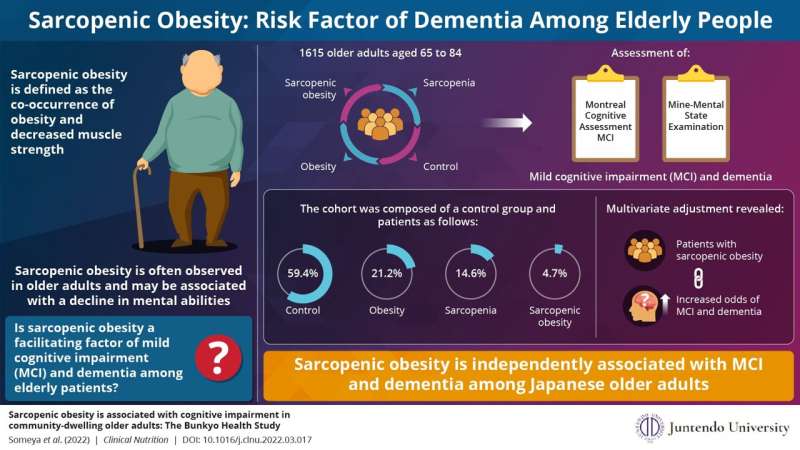
Sarcopenic obesity is independently associated with MCIand dementia among Japanese older adults. Credit: Juntendo University

Obesity, an increasingly prevalent lifestyle disease, often occurs along with poor muscle mass. This condition, called sarcopenic obesity, is evaluated based on the patients' body mass index (BMI) and handgrip strength. Interestingly, sarcopenic obesity is known to increase the risk of cognitive impairment. Dementia, a cognitive condition where memory, thinking and social abilities progressively decline, is known to significantly affect the quality of life in elderly people. Is this condition associated with sarcopenic obesity?

31 may 2022--In a new study published in Clinical Nutrition, a group of researchers led by Dr. Yoshifumi Tamura of Juntendo University, Japan, explored this very question. "If the association between sarcopenic obesity and dementia is established, appropriate preventive measures can be taken to reduce the occurrence of this condition and the risk of dementia in elderly patients," says Dr. Tamura, stressing on the importance of their study.

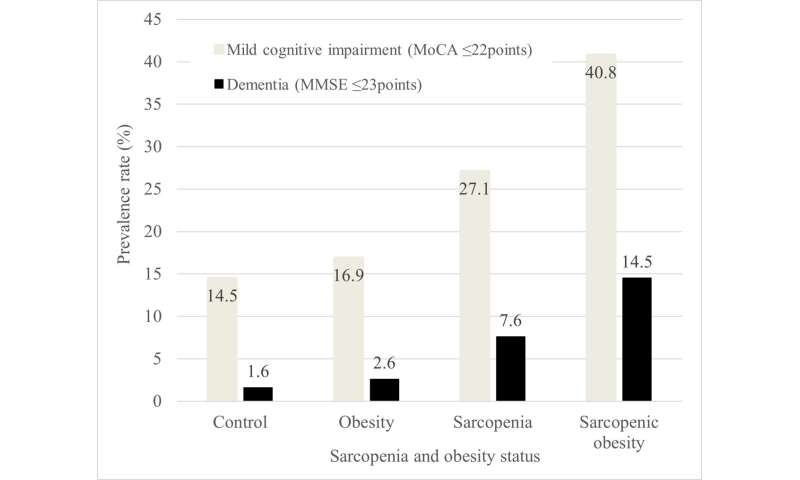
In the study, the researchers recruited 1,615 older Japanese adults aged 65 to 84 years participating in the Bunkyo Health Study. The researchers divided the subjects into four groups based on their sarcopenia and obesity status: those with obesity, those with sarcopenia, those with sarcopenic obesity, and those without obesity or sarcopenia (control). They studied the link between various mental processes, sarcopenia, and obesity status. Sarcopenia or poor muscle strength was determined based on a handgrip strength of less than 28 kg in men and 18 kg in women, while obesity status was given to patients with a BMI greater than 25 kg/m2. Two assessment methods were performed to establish the presence of mild cognitive impairment (MCI) and dementia. A score of less than 22 points on the Montreal cognitive assessment and less than 23 points on the Mine-Mental State Examination were used to confirm MCI and dementia respectively.
Sarcopenic obesity linked to dementia in elderly patients, say scientists
In a brand-new study, researchers from Japan have shown how co-morbidity with sarcopenia and obesity is linked with cognitive impairment in elderly Japanese people. Credit: Juntendo University

They found that 59.4% of the population had neither obesity nor sarcopenia, 21.2% had obesity, 14.6% had sarcopenia, and 4.7% of the population had sarcopenic obesity. The participants with sarcopenic obesity had the greatest rate of MCI and dementia, followed by those with sarcopenia, obesity, and finally the control group. When the team ran multivariate analyses to check for statistically relevant associations, they found that sarcopenic obesity was independently associated with an increased prevalence of MCI and dementia compared with the absence of sarcopenia and obesity. The study also showed that sarcopenia is significantly associated with dementia in women, but not in men.

"This study clearly demonstrates that sarcopenic obesity, defined by the combination of BMI and hand grip strength is associated with MCI and dementia among Japan's elderly people," says Dr. Tamura.

But what are the long-term implications of this study? Dr. Tamura says that "since we now know that there is a strong correlation between sarcopenic obesity and dementia, we may develop new treatment methods to manage the condition, thereby even reducing the prevalence of dementia."


More information: Yuki Someya et al, Sarcopenic obesity is associated with cognitive impairment in community-dwelling older adults: The Bunkyo Health Study, Clinical Nutrition (2022). DOI: 10.1016/j.clnu.2022.03.017
Provided by Juntendo University Research Promotion Center

Sunday, July 14, 2019

Muscle-wasting sarcopenia is now a recognised disease—but we can all protect ourselves

The muscle-wasting condition 'sarcopenia' is now a recognised disease. But we can all protect ourselves
Sarcopenia is defined by a loss of muscle mass and strength, usually associated with ageing. But it can be treated. Credit: shutterstock.com
As we grow older, the size and strength of our muscles progressively deteriorates. This can affect our capacity to perform everyday activities like standing up from a chair, climbing stairs or carrying groceries.
14 july 2019--For some people, muscle wasting becomes more severe, leading to falls, frailty, immobility and a loss of autonomy.
People who experience a marked loss in their muscle mass, strength and function may be suffering from a major but poorly recognized muscle-wasting condition called sarcopenia. Sarcopenia is to our muscles what osteoporosis is to our bones.
Sarcopenia is now recognized as a disease after being added to Australia's formal list of diseases, called the (ICD-10-AM).
Given the condition may affect almost one-third of older adults in the community, it's high time its impact is recognized and talked about.
The good news is that people with sarcopenia can rebuild their muscle mass and strength via strength or resistance training and some diet modifications. In fact, these are things we can all do to protect ourselves.
What causes sarcopenia?
Ageing disrupts the body's ability to produce the proteins needed to grow or maintain muscles. As we age, fewer signals are also sent from the brain to the muscles, leading to a loss in the mass and size of our muscles.
Other causes of sarcopenia can include:
  • Physical inactivity
  • Malnutrition
  • Changes in hormones like testosterone and growth hormones
  • Increased inflammation
  • The presence of other age-related diseases
Who gets sarcopenia?
It's been estimated that sarcopenia affects 10-30 percent of older adults living in the community, varying by age and ethnicity. This increases to around 40-50 percent in those aged over 80 or living in nursing homes, and up to 75 percent in older hospital inpatients.
Sarcopenia is most common in older people, but can also occur earlier in life. In our 40s, muscle mass and strength begin to decline, and without intervention such as regular exercise, this loss accelerates with age. By the age of 70, up to half of muscle mass is lost and this is often replaced with fat and fibrous tissue, particularly in people who are inactive.
Sarcopenia is common in people with other diseases such as cancer, type 2 diabetes, chronic kidney disease and chronic obstructive pulmonary disease. Many of the drugs used to treat these conditions can contribute to sarcopenia, as they can cause an imbalance in muscle metabolism and disrupt the pathways that control muscle mass.
Yet because many health professionals have little knowledge of sarcopenia and its consequences, they don't necessarily consider or treat age-, diet- or drug-related .
The muscle-wasting condition 'sarcopenia' is now a recognised disease. But we can all protect ourselves
On the left, a young, healthy thigh muscle. On the right, a thigh muscle affected by sarcopenia. Author provided, Author provided
Consequences of sarcopenia
Skeletal muscle is the largest organ in the body, making up around 40 percent of body weight. It's essential for both movement and metabolic functions such as regulating blood glucose levels. So it's not surprising that sarcopenia is linked to many adverse health outcomes.
Sarcopenia has been associated with impaired mobility, osteoporosis, falls, fractures, frailty, poor outcomes after surgery, institutionalization, hospital admissions, impaired quality of life and premature death.
Treating sarcopenia
There are currently no approved medications to treat sarcopenia, and research to identify new drugs has been inconclusive. The most effective approach we have is resistance or strength training, which should be done at least twice a week in combination with a nutritional (protein-enriched) intervention.
Skeletal muscle has a remarkable ability to adapt and regenerate in response to loading. Gains in muscle mass of 5-10 percent and improvements in muscle strength or power of 30-150 percent have been observed after 12 weeks of resistance training, even in older nursing home and hospitalized patients and the very old. This is equivalent to regaining the muscle mass lost over a decade.
Everyone will respond to resistance-type exercise if it's appropriately prescribed, but fewer than 15 percent of older Australians participate in twice-weekly resistance training.
Accredited exercise physiologists are best positioned to prescribe and deliver evidence-based exercise programs for older people and those with chronic diseases including sarcopenia.
Nutritional factors, such as protein, are also important for maintaining muscle, particularly in older patients who may be malnourished. To ensure an adequate intake of protein each day, most people should aim for one to three serves of lean meat, poultry, fish/seafood, eggs, nuts/seeds, or legumes.
Low vitamin D has also been linked to muscle weakness and falls. Sunlight exposureis the main way to get vitamin D, but where appropriate, a doctor may recommend a vitamin D supplement.
Moving forward
Recognition of sarcopenia as a distinct disease in Australia is critical to raise awareness of the condition among health professionals and the wider community.
Improved awareness will lead to better routine treatment for people with sarcopenia. For example, a GP who identifies a patient with sarcopenia can refer them to an exercise physiologist under a chronic disease management plan, which includes up to five Medicare-rebated sessions with an allied health professional over a calendar year.
More broadly, recognition is an essential step if we're going to see any changes to public health policy. It will enable the collection of more rigorous data on the prevalence of sarcopenia, and pave the way for additional resources to be targeted towards prevention.
Right now, the biggest challenge in the field is accurately and consistently diagnosing the condition. The type of assessments for muscle mass, strength and function used to diagnose sarcopenia continue to be debated. We need to progress towards a single international definition that includes region- and ethnic- specific criteria.
Provided by The Conversation 

Friday, November 16, 2018

New guidelines for early detection and treatment of sarcopenia

Newcastle University experts are chairing a national session on new guidelines for the early detection and treatment of sarcopenia—a loss of muscle strength that affects many older people in the UK.
It is estimated that hundreds of thousands of older people live with the condition in the UK, and identification and treatment is a major challenge for modern medicine.
Now new guidelines for early detection and treatment of sarcopenia will be launched in the UK on Friday (November 16) at the British Geriatrics Society Autumn Meeting in London.

Newcastle experts' role

16 nov 2018--Professors Avan Sayer and Miles Witham, from the NIHR Newcastle Biomedical Research Centre, at Newcastle University and Newcastle Hospitals, UK, will chair a session that outlines the process of creating the guidelines with the European Working Group on Sarcopenia in Older People (EWGSOP).
Professor Alfonso Cruz-Jentoft, Director of the Geriatric Department of the Hospital Universitario Ramón y Cajal in Madrid, and lead author of the new guidelines, will discuss the recommendations as part of the session.
Professor Avan Sayer, Director of the NIHR Newcastle Biomedical Research Centre, was a member of the Working Group.
She said: "These guidelines are an update of the previous ones published in 2010 and will provide a step change in how we both recognise and manage sarcopenia.
"They will underpin the growing research activity in this area as well as support the development of new clinical services for older people.
"We are keen to get this message out as widely as possible to patients and the public where sarcopenia is not so well known."
The new consensus is endorsed by a number of international Societies, including the European Geriatric Medicine Society, the European Society for Clinical Nutrition, the European Society for Clinical and Economic Aspects of Osteoporosis Osteoarthritis and Musculoskeletal Diseases, the International Osteoporosis Foundation and International Association of Gerontology and Geriatrics for the European Region.

Sarcopenia research

Studies have shown that sarcopenia increases risk of falls and fractures, impairs ability to perform activities of daily living, lowers quality of life, leads to loss of independence, and is associated with increased mortality rates.
In financial terms, sarcopenia is costly to healthcare systems as among older adults who are hospitalised, those with sarcopenia on admission are five times more likely to have higher hospital costs.
There are a number of important changes to the guidance from 2010, including an easier way to screen for sarcopenia risk using a simple questionnaire, a systematic way to make the sarcopenia diagnosis, and suggestions for practical tools and tests at each step. The new consensus also underscores the importance of poor physical function as a "red flag" for severe sarcopenia.
The new consensus also highlights areas requiring further research, such as the underlying mechanisms of the disease remain poorly understood.
There may be multiple types of sarcopenia, driven by different underlying risk factors or diseases. The new guidance attempts an important next step in classifying sarcopenia into primary and secondary forms, which should accelerate research in this area.
Professors Sayer and Witham's work at Newcastle University and the NIHR Newcastle Biomedical Research Centre harnesses scientific expertise, input from patients, the public and industry, in order to improve the diagnosis, treatment and prevention of ageing syndromes, including sarcopenia. Their work seeks to understand why muscle becomes weaker with age, identify ways to prevent or reverse sarcopenia, and then test these potential treatments in clinical trials.
Professor Alfonso Cruz-Jentoft said: "There is no doubt that sarcopenia is now well established as an important area of research activity, both within geriatric medicine and increasingly in organ specialities, such as cardiology, respiratory medicine, and oncology.
"Will this research activity translate into clinical activity focused on sarcopenia, as we would like to see? For this to happen, sarcopenia has to be routinely detected and addressed in clinical practice.
"Diagnosing sarcopenia will have to lead to treatment strategies that would otherwise not be triggered as part of current care. The treatments proven to work so far—resistance training and nutrition intervention—are not unique to sarcopenia and are already indicated for the related syndrome of frailty.
"It may be that for sarcopenia to find a place in daily geriatric medicine practice—and in general medical care—we must wait for specific, effective treatments that merit spending time and effort on making the diagnosis of sarcopenia. As research progresses towards that goal, these new guidelines are an important next step on the road."
Read the Age and Ageing paper Sarcopenia: revised European consensus on definition and diagnosis
These new guidelines are an update to the previously published Sarcopenia: European consensus on definition and diagnosis: Report of the European Working Group on Sarcopenia in Older People published in Age and Ageing in 2010.


Provided by Newcastle University

Tuesday, September 05, 2017

Eating protein three times a day could make our seniors stronger

Eating protein three times a day could make our seniors stronger
Dr. Stéphanie Chevalier, scientist with the Metabolic Disorders and Complications Program at the Research Institute of the McGill University Health Centre and an assistant professor at the School of Human Nutrition at McGill University.
05 sept 2017--Loss of muscle is an inevitable consequence of aging that can lead to frailty, falls or mobility problems. Eating enough protein is one way to remedy it, but it would seem that spreading protein equally among the three daily meals could be linked to greater mass and muscle strength in the elderly. These are the findings of a study conducted at the Research Institute of the McGill University Health Centre (RI-MUHC) in collaboration with the Université de Sherbrooke and the Université de Montréal. The research team examined both the amount of protein consumed and its distribution among people aged 67 and over, using one of the most comprehensive cohort studies in Quebec.
The results of the study, which were published recently in the American Journal of Clinical Nutrition, shed new light on the diet of people in an aging population.
"Many seniors, especially in North America, consume the majority of their daily protein intake at lunch and dinner. We wanted to see if people who added protein sources to breakfast, and therefore had balanced protein intake through the three meals, had greater muscle strength," says the lead author of the study, Dr. Stéphanie Chevalier, who is a scientist with the Metabolic Disorders and Complications Program at the RI-MUHC and an assistant professor at the School of Human Nutrition at McGill University.

A rich database of nutrition data

To achieve these results, Dr. Chevalier and her team collaborated with the Université de Sherbrooke and used the database from the Quebec longitudinal study on nutrition and aging called NuAge (Nutrition as a Determinant of Successful Aging).
RI-MUHC researchers analyzed data from the NuAge cohort, which included nearly 1,800 people who were followed for three years. They reviewed the protein consumption patterns of 827 healthy men and 914 healthy women aged 67 to 84 years, all residents of Quebec, trying to establish links with variables such as strength, muscle mass or mobility.
"The NuAge study is one of the few studies gathering such detailed data on food consumption among a large cohort of elderly people. We are proud that the NuAge study can contribute to relevant research of this magnitude in Quebec," says study co-author Dr. Hélène Payette of the Centre for Research on Aging and a professor at the Faculty of Medicine at the Université de Sherbrooke.
"We observed that participants of both sexes who consumed protein in a balanced way during the day had more muscle strength than those who consumed more during the evening meal and less at breakfast. However, the distribution of protein throughout the day was not associated with their mobility," explains the first author of the study, Dr. Samaneh Farsijani, a former PhD student at the RI-MUHC supervised by Dr. Chevalier.

A "boost" of amino acids

All body tissues, including the muscles, are composed of proteins, which consist of amino acids. If the protein intake decreases, the synthesis is not done correctly and this leads to a loss of muscle mass.
"Our research is based on scientific evidence demonstrating that older people need to consume more protein per meal because they need a greater boost of amino acids for protein synthesis," says Dr. Chevalier, adding that one of the essential amino acidsknown for protein renewal is leucine. "It would be interesting to look into protein sources and their amino acid composition in future studies to further our observations."

More information: American Journal of Clinical Nutrition (2017). DOI: 10.3945/ajcn


Provided by McGill University Health Centre

Thursday, June 29, 2017

Understanding the epidemiology of sarcopenia throughout the lifecourse

Sarcopenia is an age-related syndrome which is characterised by progressive and generalised loss of muscle mass and strength. How prevalent is sarcopenia? As there is a lack of consensus in the operational definition used to characterized the disorder, estimates vary widely in different clinical settings, and depending on the definition used.

29 jun 2017--Recent definitions have integrated information on muscle mass, strength, and physical function. A new systematic review by researchers at the MRC Lifecourse Epidemiology Unit, University of Southampton, has now evaluated the epidemiology of these three distinct physiological components.
Specifically, the review highlights the similarities and differences between the patterns of variation in muscle mass, strength and physical function in regard to age, gender, geography, time, as well as the relation to individual risk factors. The review also describes how different approaches used to measure muscle mass, strength and function contribute to varying prevalence rates.
Observations include:
  • There are differences in relation to the peak level and subsequent loss rate of muscle mass, strength and function between men and women, between ethnic groups, and over time.
  • The rate of decline is most rapid in regard to physical function, followed by muscle strength. The decline of muscle mass is least rapid.
  • Although men have significantly higher levels of muscle mass, strength and function than women at any given age, the rate of decline for all three parameters is similar in both genders.
  • The higher levels of muscle mass in some ethnicities do not translate into higher levels of muscle strength and function.
  • Asian populations tend to have similar declines in muscle mass to non-Asians, but experience much more rapid deterioration in strength and function.
  • Sedentary lifestyle, adiposity and multi-morbidity are environmental risk factors affecting all three components. The role of smoking and alcohol intake is less apparent than has been observed in regard to osteoporosis or cardiovascular disease.
  • Nutrition has an important influence on the development of sarcopenia. Protein intake has the potential to slow the loss of muscle mass, but is not as influential in maintaining strength and function.
  • Physical activity (and in particular resistance training) when performed at higher intensities, is beneficial for muscle strength and functioning.
  • Trials combining protein supplementation and physical activity show promising results in reducing the decline in muscles strength and function with advancing age.
Lead author Professor Cyrus Cooper stated: "Sarcopenia contributes to the risk of physical frailty, functional impairment, poor health-related quality of life, and premature death in older people. Understanding the epidemiological characteristics of muscle mass, strength and function is an important first step in achieving consensus in the definition of sarcopenia. This will allow us to better understand its prevalence, to determine clinically relevant thresholds for diagnosis, and ultimately, to enable the development of novel preventive and therapeutic strategies."

More information: S. C. Shaw et al, Epidemiology of Sarcopenia: Determinants Throughout the Lifecourse, Calcified Tissue International (2017). DOI: 10.1007/s00223-017-0277-0


Provided by International Osteoporosis Foundation

Friday, November 11, 2016

Sarcopenia, which affects up to 20 percent of European seniors, may increase 63 percent by 2045

Researchers from the University of Liège, Belgium presented a study that reveals the enormous and growing burden of sarcopenia in Europe.

11 nov 2016--Sarcopenia is a disease associated with the ageing process. Hallmark signs of the disorder are loss of muscle mass and strength, which in turn affects balance, gait and overall ability to perform tasks of daily living.
Due to its complexity, there is as yet no global consensus on the definition of the disease for diagnostic purposes. The European Working Group on Sarcopenia in Older People (EWGSOP) has defined sarcopenia as low muscle mass with low muscle strength OR with low gait speed. With two cutoff points available for each of the three components of this definition, eight different methods of diagnosis of sarcopenia can be used.
Using the Eurostat online database, the researchers retrieved age and gender-specific population projections from 2016-2045 for 28 European countries. The age and gender-specific prevalence of sarcopenia was assessed from a study that precisely compared prevalence estimates according to the different diagnostic cutoffs of the EWGSOP proposed definition.
The prevalence estimates were interpolated for adults above 65 years of age. The estimates of sarcopenia prevalence were then applied to population projections until 2045. The results showed that:
  • Using the definition providing the lowest prevalence estimates, the number of individuals with sarcopenia in Europe in 2016 is 10,869,527. This will rise to 18,735,173 in 2045 (a 72.4% increase). The overall prevalence of sarcopenia in the elderly will rise from 11.1% in 2016 to 12.9% in 2045. Women currently account for 44.2% of prevalent cases.
  • Using the definition providing the highest prevalence estimates, the number of individuals with sarcopenia in Europe is 19,740,527 in 2016, rising to 32,338,990 in 2045 (a 63.8% increase). The overall prevalence of sarcopenia in the elderly will rise from 20.2% in 2016 to 22.3% in 2045. Women currently account for 66.4% of prevalent cases.
Presenting author Dr. Olivier Ethgen stated, "Regardless of which diagnostic cutoff is used to define sarcopenia, the prevalence of this condition is expected to rise substantially in Europe. It is therefore essential that we implement effective prevention and disease management strategies. Health authorities must take action in order to limit the impact on increasingly strained healthcare systems and to help Europeans enjoy healthy, active ageing."

More information: OC24 The Future Prevalence of Sarcopenia in Europe, O. Ethgen, C. Tchokonte, C. Beaudart1, F. Buckinx, J.-Y. Reginster, O. Bruyère
Abstract book: WCO-IOF-ESCEO World Congress on Osteoporosis, Osteoarthritis and Musculoskeletal Diseases, 14 -17 April 2016, Malaga, Spain Osteoporosis International, Volume 27/ Suppl 1/ 2016


Provided by International Osteoporosis Foundation

Sunday, May 01, 2016

Sarcopenia, which affects up to 20 percent of European seniors, may increase 63 percent by 2045

Today, at the World Congress on Osteoporosis, Osteoarthritis and Musculoskeletal Diseases. researchers from the University of Liège, Belgium presented a study that reveals the enormous and growing burden of sarcopenia in Europe.

01 may 2016--Sarcopenia is a disease associated with the ageing process. Hallmark signs of the disorder are loss of muscle mass and strength, which in turn affects balance, gait and overall ability to perform tasks of daily living.
Due to its complexity, there is as yet no global consensus on the definition of the disease for diagnostic purposes. The European Working Group on Sarcopenia in Older People (EWGSOP) has defined sarcopenia as low muscle mass with low muscle strength OR with low gait speed. With two cutoff points available for each of the three components of this definition, eight different methods of diagnosis of sarcopenia can be used.
Using the Eurostat online database, the researchers retrieved age and gender-specific population projections from 2016-2045 for 28 European countries. The age and gender-specific prevalence of sarcopenia was assessed from a study that precisely compared prevalence estimates according to the different diagnostic cutoffs of the EWGSOP proposed definition.
The prevalence estimates were interpolated for adults above 65 years of age. The estimates of sarcopenia prevalence were then applied to population projections until 2045. The results showed that:
  • Using the definition providing the lowest prevalence estimates, the number of individuals with sarcopenia in Europe in 2016 is 10,869,527. This will rise to 18,735,173 in 2045 (a 72.4% increase). The overall prevalence of sarcopenia in the elderly will rise from 11.1% in 2016 to 12.9% in 2045. Women currently account for 44.2% of prevalent cases.
  • Using the definition providing the highest prevalence estimates, the number of individuals with sarcopenia in Europe is 19,740,527 in 2016, rising to 32,338,990 in 2045 (a 63.8% increase). The overall prevalence of sarcopenia in the elderly will rise from 20.2% in 2016 to 22.3% in 2045. Women currently account for 66.4% of prevalent cases.
Presenting author Dr. Olivier Ethgen stated, "Regardless of which diagnostic cutoff is used to define sarcopenia, the prevalence of this condition is expected to rise substantially in Europe. It is therefore essential that we implement effective prevention and disease management strategies. Health authorities must take action in order to limit the impact on increasingly strained healthcare systems and to help Europeans enjoy healthy, active ageing."

More information: OC24 The Future Prevalence of Sarcopenia in Europe, O. Ethgen, C. Tchokonte, C. Beaudart1, F. Buckinx, J.-Y. Reginster, O. Bruyère
Abstract book: WCO-IOF-ESCEO World Congress on Osteoporosis, Osteoarthritis and Musculoskeletal Diseases, 14 -17 April 2016, Malaga, Spain Osteoporosis International, Volume 27/ Suppl 1/ 2016


Provided by International Osteoporosis Foundation

Monday, December 28, 2015

Researchers see promising results in treating age-related decline in muscle mass and power

A proof-of-concept, phase 2 trial by an international research team has found promising results for a myostatin antibody in treating the decline in muscle mass and power associated with aging.

28 dec 2015--"Myostatin is a natural protein produced within the body that inhibits muscle growth," said Stuart Warden, a member of the research team who is also associate dean for research and associate professor in the School of Health and Rehabilitation Sciences at Indiana University-Purdue University Indianapolis. "It has been hypothesized for some time that inhibition of myostatin may allow muscle to grow, resulting in improved muscle mass and physical performance. The current study confirms these beliefs."
In the study, injections of a myostatin antibody, over a 24-week period resulted in an increase in lean (muscle) mass and improved performance on tasks requiring muscle power in patients older than 75 with low muscle strength, low muscle performance and a history of falling.
"This is the first study to show that myostatin antibody treatment improves performance on activities requiring muscle power," Warden said. "'Muscle power' refers to the ability to generate muscle forcequickly. During aging, it is lost more rapidly than muscle strength, contributing to disability, falls, reduced quality of life and, in some instances, death."
"Myostatin antibody treatment improved muscle power in the elderly, as indicated by improvements in the ability to climb stairs, walk briskly and rise repetitively from a chair," Warden said. "Treatment particularly benefited those who were most frail at baseline, a population who may not be receptive to conventional intervention such as resistance exercise."
Warden said the current study "provides proof-of-concept evidence to proceed to the larger studies that are required to demonstrate whether myostatin antibody treatment improves quality of life and reduces falls and their consequences during aging." He added: "This is an important and exciting first step."


Provided by Indiana University

Thursday, September 03, 2015

Supplements, exercise could improve muscle mass and strength for older adults


Supplements, exercise could improve muscle mass and strength for older adults
Rick Sharp is working with older adults to see if a combination of supplements and resistance training can slow the progression of sarcopenia. Credit: Christopher Gannon
The loss of muscle strength and function, what's known as sarcopenia, is a natural part of aging. It's also a growing public health concern because of the risk for falls, injury and decline in quality of life. That's why an Iowa State University researcher is working to slow or reverse the progression of sarcopenia.

03 sept 2015--Rick Sharp, a professor of kinesiology, is testing the effectiveness of a combination of supplements and resistance training in older adults with low vitamin D levels. The trial is designed to build on previous studies, which show that the supplement HMB reduces muscle loss. HMB, or b-hydroxy-b-methylbutyrate, is a natural body building compound discovered by Iowa State researchers.
However, not everyone in those studies benefited equally from HMB and weight training, Sharp said. Researchers determined older adults who didn't respond as well to the supplement had something in common – lower levels of vitamin D.
Sharp says lower vitamin D is common in climates in which people do not get year-round exposure to the sun. Both HMB and vitamin D are in foods we normally eat and available as supplements. The goal of the study is to see if vitamin D will improve response to HMB and resistance training, increasing muscle mass and strength.
"We know that sarcopenia is so predictable in older adults that anything we can do that slows down the progression and/or reverses it, is going to be effective," Sharp said. "If all we were to do is prevent their muscle mass and function from dropping, we've already had a real positive impact. Even if it doesn't improve by 10, 15, 20 percent, they're not losing it and that's just as good."
No magic pill
Sharp stresses the importance of exercise and resistance training as we age. It's not just aging that contributes to sarcopenia, he said, it's aging and reduced activity. His research on vitamin D and HMB is intended to boost exercise results by providing appropriate nutritional support, not create a magic pill.
"There's no substitute for physical activity. We have to stay physically active through the lifespan," Sharp said. "We think nutrition is a key component in helping to ensure that older adults get a better response from exercise."
To monitor response, some study participants will continue with their normal exercise and daily routine. Others will attend on-campus exercise sessions, designed and conducted by ISU researchers. Sharp says the workouts incorporate resistance bands and weight machines, and target all major muscle groups to improve balance and strength.
"As we get older our activities of daily living really depend on proper functioning of all those muscle groups working together," Sharp said. "We're really cognizant of the risk of falls with the older individuals. One way to reduce falls and injury from falls is to improve balance and coordination and the ability to catch yourself when you stumble. That requires good reaction time and the ability to generate the amount of force to catch yourself before you tumble."
These changes won't happen overnight, which is why researchers will track each individual's muscle mass and strength for a year. Sharp says it will take several years to complete the testing before he can analyze the results. A total of 160 participants – 80 men and 80 women – are needed for the study.
To qualify, you must be at least 60 years old and have a vitamin D deficiency. If you're interested, call 515-294-4852 or 877-578-8848.

Provided by Iowa State University

Wednesday, May 13, 2015

Can diet and exercise prevent muscle loss in old age?

Scientists at the University of Southampton have shown that although some studies find diet can enhance the effects of exercise to prevent muscle loss in later life, current evidence about what works is inconsistent.
13 may 2015--Between the ages of 40 and 80, an estimated 30 to 50 per cent of muscle mass is lost, resulting in lower strength and less ability to carry out everyday tasks. This process - known as sarcopenia - is common and clearly linked to frailty and poorer health in older people. The associated health care costs are substantial.
Exercise training and diet supplementation have been shown to be effective in preventing sarcopenia in some studies, but little is known about the combined effects of training with supplements, particularly in older people.
In the study, published in Clinical Interventions in Aging, scientists from the Medical Research Council (MRC) Lifecourse Epidemiology Unit at the University of Southampton carried out a  of combined diet and exercise training trials in men and women aged over 65 years old. Almost 5,000 scientific articles were screened, with more than 100 reviewed in detail and 17 of these were included in the review. The review shows that findings differ across studies and suggests more research is needed.
Professor Sian Robinson, who led the review, says, "Poor diets and being physically inactive are common in older age. Understanding the benefits of maintaining sufficient levels of physical activity and diet quality to prevent sarcopenia is therefore a priority.
"Although some studies have found enhanced effects of exercise training when combined with diet supplementation, our review shows that current evidence is incomplete and inconsistent. Further research to determine the benefits of supplementation and exercise training for older people is therefore needed."
Professor Cyrus Cooper, Professor of Rheumatology and Director of the MRC Lifecourse Epidemiology Unit, adds: "This study is part of an important programme of research at the MRC Lifecourse Epidemiology Unit that aims to improve our understanding of the effects of environment and lifestyle on musculoskeletal health and the process of ageing."
Professor Avan Aihie Sayer, Professor of Geriatric Medicine at the MRC Lifecourse Epidemiology Unit who oversaw the work, comments: "Sarcopenia is now recognised as a major clinical problem for older people. Gaining insights into the effects of lifestyle on losses of  and strength will be essential for the development of future public health strategies to promote better health in later life."
The study Prevention and optimal management of sarcopenia: A review of combined exercise and nutrition interventions to improve muscle outcomes in older people was funded by the Medical Research Council.
More information: Prevention and optimal management of sarcopenia: A review of combined exercise and nutrition interventions to improve muscle outcomes in older people, Clinical Interventions in Aging, 2015.
Provided by University of Southampton

Wednesday, April 08, 2015

Efforts needed to standardize criteria for age-related muscle loss


The term "sarcopenia" is most often used to describe age-related loss in muscle mass and strength, and it is commonly considered analogous to osteoporosis. Yet unlike osteoporosis, which can be diagnosed based on widely accepted clinical criteria, sarcopenia is not recognized as a clinical condition even though it can impair physical function and contribute to disability, falls, and hospitalizations.
08 april 2015--A new review addresses this concern and points to efforts aimed at developing and refining sarcopenia criteria.
"For over 20 years, the lack of a consensus definition for  has been a significant barrier for the development of interventions aimed at preserving or improving  and strength in older adults," said Dr. Robert McLean, lead author of the Journal of Bone and Mineral Research review. "The recent and ongoing efforts of the Foundation for the National Institutes of Health Sarcopenia Project are a major advancement toward closing this important gap."
This study is published in the Journal of Bone and Mineral Research.
Provided by Wiley

Thursday, November 21, 2013

Aging impacts epigenome in human skeletal muscle

Our epigenome is a set of chemical switches that turn parts of our genome off and on at strategic times and locations. These switches help alter the way our cells act and are impacted by environmental factors including diet, exercise and stress. Research at the Buck Institute reveals that aging also effects the epigenome in human skeletal muscle. The study, appearing on line in Aging Cell, provides a method to study sarcopenia, the degenerative loss of muscle mass that begins in middle age.
21 nov 2013--The results came from the first genome-wide DNA methylation study in disease-free individuals. DNA methylation involves the addition of a methyl group to the DNA and is involved in a particular layer of epigenetic regulation and genome maintenance. In this study researchers compared DNA methylation in samples of skeletal muscle taken from healthy young (18 - 27 years of age) and older (68 – 89 years of age) males. Buck faculty and lead scientist Simon Melov, PhD, said researchers looked at more than 480,000 sites throughout the genome. "We identified a suite of epigenetic markers that completely separated the younger from the older individuals – there was a change in the epigenetic fingerprint," said Melov. "Our findings were statistically significant; the chances of that happening are infinitesimal."
Melov said scientists identified about six-thousand sites throughout the genome that were differentially methylated with age and that some of those sites are associated with genes that regulate activity at the neuromuscular junction which connects the nervous system to our muscles. "It's long been suspected that atrophy at this junction is a weak link in sarcopenia, the loss of muscle mass we get with age," said Melov. "Maybe this differential methylation causes it. We don't know."
Studying the root causes and development of sarcopenia in humans is problematic; the research would require repeated muscle biopsies taken over time, something that would be hard to collect. Melov says now that the epigenetic markers have been identified in humans, the goal would be to manipulate those sites in laboratory animals. "We would be able to observe function over time and potentially use drugs to alter the rate of DNA methylation at those sites," he said. Melov says changes in DNA methylation are very common in cancer and that the process is more tightly controlled in younger people.
More information: "Genome-wide DNA methylation changes with age in disease-free human skeletal muscle," Aging Cell, 2013.
Provided by Buck Institute for Age Research

Sunday, June 23, 2013

Dietary supplement linked to increased muscle mass in the elderly

A supplemental beverage used to treat muscle-wasting may help boost muscle mass among the elderly, according to a new study. The results were presented today at The Endocrine Society's 95th Annual Meeting in San Francisco.
23 jun 2013--The supplemental beverage, called Juven, contains three amino acids, including arginine. Amino acids are the building blocks of proteins, and are required for cell growth and repair. The amino acid arginine is especially important because it increases growth-hormone production, which causes the body to produce a critical protein called insulin-like growth factor 1, or IGF-1. This protein promotes growth and development and, as its name suggests, is similar in structure to the hormone insulin.
Previously, studies showed that Juven helped increase muscle mass in patients with AIDS or cancer. These earlier findings led this study's investigators to hypothesize that the increased muscle mass could result from greater blood concentrations of IGF-1. They theorized that these increased protein levels could have the same benefits among the elderly, who also experience decreased muscle mass and strength related to drops in hormone production that occur with aging. In turn, increased muscle strength could potentially improve quality of life among the elderly.
They found that participants who received Juven had significant increases in lean body mass, while those who received placebo did not have any change. In addition, blood concentrations of IGF-1 increased among Juven recipients, but not among the placebo group. The correlation between the improved IGF-1 concentrations and increased lean tissue, however, was not statistically significant.
"The amino acid cocktail of the dietary supplement Juven appears to hold promise for increasing lean body in healthy older adults," said study lead author Amy C. Ellis, PhD, assistant professor at the University of Alabama at Tuscaloosa. "However, more research is needed to determine the cause-and-effect relationship and the mechanisms by which the amino acids in Juven may favorably affect body composition of healthy, older adults."
Study participants were 29 healthy adults between the ages of 65 and 87 years. Each received either Juven® or a placebo drink twice a day, along with their regular daily diet, for six months. At the beginning of the study and again six months later, investigators used a special test to measure lean body mass. At both times, they also assessed participants' blood levels of IGF-1 after fasting.
The National Institutes of Health and the Center for Aging at the University of Alabama-Birmingham funded the study. Abbott Laboratories, the manufacturer of Juven®, provided the dietary supplement and the placebo.
Provided by The Endocrine Society

Saturday, January 19, 2013


Which nutritional factors help preserve muscle mass, strength and performance in seniors?

Sarcopenia, or the gradual loss of muscle mass, is a common consequence of ageing, and poses a significant risk factor for disability in older adults. As muscle strength plays an important role in the tendency to fall, sarcopenia leads to an increased risk of fractures and other injuries.
19 Jan 2013--The International Osteoporosis Foundation (IOF) Nutrition Working Group has published a new review which identifies nutritional factors that contribute to loss of muscle mass, or conversely, are beneficial to the maintenance of muscle mass. The Group reviewed evidence from worldwide studies on the role of nutrition in sarcopenia, specifically looking at protein, acid–base balance, vitamin D/calcium, and other minor nutrients like B vitamins.
"The most obvious intervention against sarcopenia is exercise in the form of resistance training," said Professor Jean-Philippe Bonjour, co-author and Professor of Medicine at the Service of Bone Diseases, University of Geneva. "However, adequate nutritional intake and an optimal dietary acid-base balance are also very important elements of any strategy to preserve muscle mass and strength during ageing."
The review discusses and identifies the following important nutritional factors that have been shown to be beneficial to the maintenance of muscle mass and the treatment and prevention of sarcopenia:
Protein:
Protein intake plays an integral part in muscle health. The authors propose an intake of 1.0–1.2 g/kg of body weight per day as optimal for skeletal muscle and bone health in elderly people without severely impaired renal function.
Vitamin D:
As many studies indicate a role for vitamin D in the development and preservation of muscle mass and function, adequate vitamin D should be ensured through exposure to sunlight and/or supplementation if required. Vitamin D supplementation in seniors, and especially in institutionalized elderly, is recommended for optimal musculoskeletal health.
Avoiding dietary acid loads:
Excess intake of acid-producing nutrients (meat and cereal grains) in combination with low intake of alkalizing fruits and vegetables may have negative effects on musculoskeletal health. Modifying the diet to include more fruits and vegetables is likely to benefit both bones and muscles.
Emerging evidence also suggests that vitamin B12 and/or folic acid play a role in improving muscle function and strength. As well, the Review discusses non-nutritional interventions such as hormones, and calls for more studies to identify the potential of antioxidants and anti-inflammatory compounds in the prevention of sarcopenia.
Dr. Ambrish Mithal, co-author and Chair and Head of Endocrinology and Diabetes division at Medanta, New Delhi underlined the need for further research in the field. "Strategies to reduce the numbers of falls and fractures within our ageing populations must include measures to prevent sarcopenia. At present, the available evidence suggests that combining resistance training with optimal nutritional status has a synergistic affect in preventing and treating sarcopenia," said Mithal.
"We hope that further studies will shed light on other effective ways of preventing and treating this condition."
More information: Impact of nutrition on muscle mass, strength, and performance in older adults. A. Mithal & J.-P. Bonjour & S. Boonen & P. Burckhardt & H. Degens & G. El Hajj Fuleihan & R. Josse & P. Lips & J. Morales Torres & R. Rizzoli & N. Yoshimura & D. A. Wahl & C. Cooper & B. Dawson-Hughes & for the IOF CSA Nutrition Working Group. Osteoporos Int. DOI:10.1007/s00198-012-2236-y
Provided by International Osteoporosis Foundation