Showing posts with label Osteoporosis. Show all posts

Tuesday, January 17, 2023


ACP recommends bisphosphonates for initial treatment for osteoporosis in males and postmenopausal females


The American College of Physicians (ACP) has issued an update of its guideline with clinical recommendations for treatments of primary osteoporosis and low bone mass in adults. In the new guideline, ACP recommends bisphosphonates as initial pharmacologic treatment to reduce the risk of fractures in males and postmenopausal females diagnosed with primary osteoporosis. The full guideline is published in Annals of Internal Medicine.

17 jan 2023--Osteoporosis is a systemic skeletal disease characterized by decreasing bone mass and deterioration of bone tissue that leads to an increased risk for bone fragility and fracture, especially in the hip, spine, and wrist. Overall, an estimated 10.2 million people aged 50 and older in the United States have osteoporosis and about 43.3 million people (> 40% of older US adults) have low bone mass associated with a high risk of progression to osteoporosis.

The guideline examines new evidence that has emerged on the efficacy of human parathyroid hormone-related peptides, sclerostin inhibitors, the comparative effectiveness of treatments, and treatments in males. In postmenopausal females and males with primary osteoporosis, bisphosphonates had the most favorable balance between benefits, harms, patient values and preferences, and cost among the drug classes that were evaluated. In addition to net clinical benefits, bisphosphonates are much cheaper than other pharmacologic treatments and are available in generic oral and injectable formulations.

Current evidence suggests that increasing the duration of bisphosphonate therapy longer than 3-5 years reduced the risk of new vertebral fractures but not the risk of other fractures. However, there is an increased risk of long-term harms. Therefore, clinicians should consider stopping bisphosphonates after five years of treatment unless there is a strong indication to continue treatment.

The guideline also suggests that clinicians use the RANK ligand inhibitor (denosumab) as a second-line pharmacologic treatment to reduce the risk of fractures in postmenopausal females and males diagnosed with primary osteoporosis who have contraindications to or experience adverse effects of bisphosphonates.

ACP suggests that clinicians use the sclerostin inhibitor (romosozumab) or recombinant PTH (teriparatide), followed by a bisphosphonate, to reduce the risk of fractures only in females with primary osteoporosis with very high risk of fracture.

The guideline is based on a systemic review and network meta-analysis conducted by the ACP Center for Evidence Reviews at the Portland Veteran Affairs Research Foundation. ACP's Clinical Guidelines Committee is planning to maintain this topic as a living guideline with literature surveillance and periodic updating of the systematic review and the clinical recommendations.

More information: Pharmacologic Treatment of Primary Osteoporosis or Low Bone Mass to Prevent Fractures in Adults: A Living Clinical Guideline From the American College of Physicians, Annals of Internal Medicine (2023). DOI: 10.7326/M22-1034

Chelsea Ayers et al, Effectiveness and Safety of Treatments to Prevent Fractures in People With Low Bone Mass or Primary Osteoporosis, Annals of Internal Medicine (2023). DOI: 10.7326/M22-0684

Susan M. Ott, Osteoporosis Treatment: Not Easy, Annals of Internal Medicine (2023). DOI: 10.7326/M22-3580

Thursday, December 05, 2019

New position paper offers practical guidance for osteoporosis management

New IOF-ESCEO position paper offers practical guidance for osteoporosis management
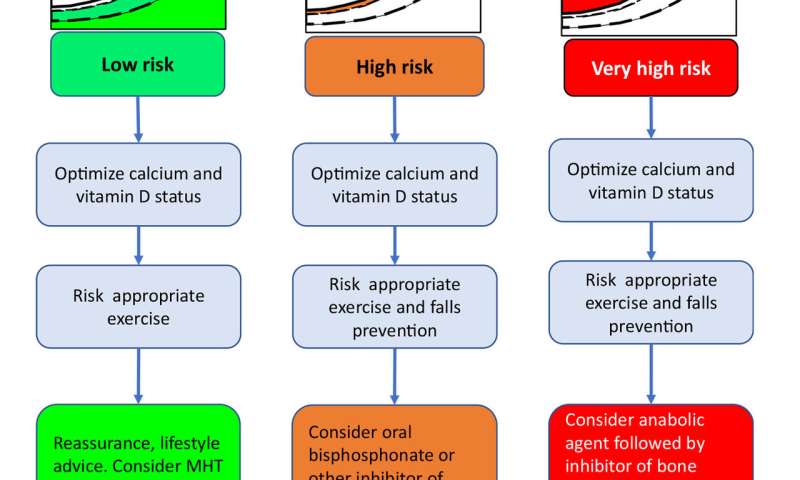
This algorithm illustrates possible decision pathways for the management of postmenopausal osteoporosis, based on the absolute risk of fracture (FRAX®) and an assessment strategy permitting the classification of low, high and very high risk of osteoporotic fractures. Credit: © International Osteoporosis Foundation (IOF) & European Society for Clinical and Economic Aspects of Osteoporosis and Osteoarthritis (ESCEO)
In 2018 the International Osteoporosis Foundation (IOF) and European Society for Clinical and Economic Aspects of Osteoporosis and Osteoarthritis (ESCEO) published the updated European guidance for the diagnosis and management of osteoporosis in postmenopausal women. Now, the newly published position paper, "Algorithm for the management of patients at low, high and very high risk of osteoporotic fractures" summarizes the guidance in an international setting, with a focus on the categorisation of risk as a strategy to target therapeutic interventions.
05 dec 2019--The publication reflects the outcomes of a consensus meeting organized by ESCEO and IOF, involving experts from 17 countries. It includes easy-to-use algorithms which illustrate possible decision pathways for the management of postmenopausal osteoporosis, based on the absolute risk of fracture (FRAX) and an assessment strategy permitting the classification of low, high and very high risk of osteoporotic .
Professor John A. Kanis, lead author and IOF honorary president, stated:
"Fractures related to osteoporosis are a major cause of morbidity and early mortality. We now know that the risk of a subsequent fracture is acute immediately after a first fracture. This clearly points to the need for early intervention for secondary fracture prevention, and to the use of agents that have the most rapid effect on fracture reduction in patients at very high risk."
The rationale for the more refined characterisation of risk is to offer the most appropriate interventions to the patient. For example, initial treatment recommendations for women at high risk might most suitably be with an inhibitor of bone resorption. In contrast, women at very high risk (or 'imminent risk' of fracture) might be more suitably treated with an anabolic treatment followed thereafter by an inhibitor of bone resorption.
Professor Jean-Yves Reginster, ESCEO president and co-author, added: "The publication addresses the need for succinct guidance that will help clinicians identify and treat women at the very highest risk as early as possible. As well, it is intended as a platform on which specific national guidelines can be developed to characterise fracture risk and direct interventions."

More information: J. A. Kanis et al, Algorithm for the management of patients at low, high and very high risk of osteoporotic fractures, Osteoporosis International (2019). DOI: 10.1007/s00198-019-05176-3
European guidance for the diagnosis and management of osteoporosis in postmenopausal women, Osteoporosis International (2018). DOI: 10.1007/s00198-018-4704-5
Executive summary of the European guidance for the diagnosis and management of osteoporosis in postmenopausal women, Calcified Tissue International (2019). DOI: 10.1007/s00223-018-00512-x
Journal information: Osteoporosis International 
Provided by International Osteoporosis Foundation 

Saturday, February 23, 2019

People with osteoporosis should avoid spinal poses in yoga, study says


yoga
Credit: CC0 Public Domain
Yoga postures that flex the spine beyond its limits may raise the risk of compression fractures in people with thinning bones, according to research from Mayo Clinic. The results appear in Mayo Clinic Proceedings.
23 feb 2019--Researchers at Mayo Clinic and elsewhere have described injuries from yoga. This study examines injuries in people with osteoporosis and osteopenia—conditions characterized by low bone density.
Osteoporosis is a disease in which bones become thinner and more porous from loss of mineral content. Bone loss that has not reached the stage of an osteoporosis diagnosis is called osteopenia.
Researchers reviewed the health records of 89 people—mostly women—referred to Mayo Clinic from 2006 to 2018 for pain they attributed to their yoga practice. Some were new to yoga. Others had practiced for years. They had pain in the back, neck, shoulder, hip, knee or a combination.
Patients identified 12 poses they said caused or aggravated their symptoms. The most common postures involved extreme flexing or extending of the spine. Researchers used patients' health records, medical exams and imaging to confirm and categorize the injuries as soft tissue, joint or bone injuries.
Researchers identified 29 bony injuries, including degeneration of disks, slippage of vertebrae and compression fractures. The latter appeared to be related to postures that put extra pressure on the vertebra and disks.
"Yoga has many benefits. It improves balance, flexibility, strength and is a good social activity," says Mehrsheed Sinaki, M.D., a Mayo Clinic physical medicine and rehabilitation specialist and the study's senior author. "But if you have osteoporosis or osteopenia, you should modify the postures to accommodate your condition. As people age, they can benefit by getting a review of their old exercise regimens to prevent unwanted consequences."
Patients who incorporated recommendations to modify their movements reduced their pain and improved their symptoms.
In a separate commentary, Edward Laskowski, M.D., co-chair of Mayo Clinic Sports Medicine, called on providers, patients and yoga teachers to work together to produce an individualized exercise prescription that considers the yoga student's medical history to protect against injury and provide optimal benefit.
The authors noted study limitations. The patients were seen in a musculoskeletal clinic at a tertiary care center, which makes generalizations difficult. Researchers received follow-up reports on 22 patients, as most lived out of state.
More information: Melody Lee et al, Soft Tissue and Bony Injuries Attributed to the Practice of Yoga: A Biomechanical Analysis and Implications for Management, Mayo Clinic Proceedings (2019). DOI: 10.1016/j.mayocp.2018.09.024
Provided by Mayo Clinic

Saturday, December 08, 2018

New recommendations for the conduct of economic evaluations in osteoporosis


Economic evaluations that compare interventions in terms of costs and outcomes are increasingly used by decision makers, with economic evaluations now playing an increasing role in pricing and reimbursement decisions.
In the field of osteoporosis, the number of economic evaluations has increased markedly, however the variable quality and considerable heterogeneity of the evaluations often limit their comparability and use by decision makers.

08 dec 2918--To address this handicap, an expert working group convened by the European Society for Clinical and Economic Aspects of Osteoporosis, Osteoarthritis and Musculoskeletal Diseases (ESCEO) and the US Branch of the International Osteoporosis Foundation (IOF), met at a consensus meeting to establish recommendations for the design and conduct of economic evaluations in osteoporosis, as well as guidance for reporting these evaluations. Additionally, a set of minimum criteria for evaluations and an osteoporosis-specific checklist of items to incorporate in economic reports were established.
Download Recommendations for the conduct of economic evaluations in osteoporosis: outcomes of an Experts' consensus meeting
Lead author Dr. Mickael Hiligsmann, Associate Professor in Health Economics and Health Technology Assessment at CAPHRI Care and Public Health Research Institute of Maastricht University, stated: "Although disease-specific recommendations for economic evaluations have been developed in other disease areas previously, this study is to our knowledge the first that provides a list of recommendations and minimum requirements for the design, conduct and reporting of an osteoporosis-specific economic evaluation. The recommendations are intended for researchers in the field of osteoporosis, as well as to help decision makers, reviewers and editors assess the quality of economic studies."
He added: "These osteoporosis-specific recommendations should be viewed as supplemental to general and national guidelines for economic evaluations. We encourage health economists and researchers in the field to make use of the recommendations and thereby to improve the transparency and comparability of their work. By promoting high-quality methodology standards, we hope to increase the use of economic evaluations by decision makers—which ultimately should lead to a more effective allocation of resources to our patients with osteoporosis."

More information: M. Hiligsmann et al, Recommendations for the conduct of economic evaluations in osteoporosis: outcomes of an experts' consensus meeting organized by the European Society for Clinical and Economic Aspects of Osteoporosis, Osteoarthritis and Musculoskeletal Diseases (ESCEO) and the US branch of the International Osteoporosis Foundation, Osteoporosis International (2018). DOI: 10.1007/s00198-018-4744-x


Provided by International Osteoporosis Foundation

Saturday, October 20, 2018

Nutrition has a greater impact on bone strength than exercise


bone
Credit: CC0 Public Domain
One question that scientists and fitness experts alike would love to answer is whether exercise or nutrition has a bigger positive impact on bone strength.

20 oct 2018--University of Michigan researchers looked at mineral supplementation and exercise in mice, and found surprising results—nutrition has a greater impact on bone mass and strength than exercise. Further, even after the exercise training stopped, the mice retained bone strength gains as long as they ate a mineral-supplemented diet.
"The longer-term mineral-supplemented diet leads to not only increases in bone mass and strength, but the ability to maintain those increases even after detraining," said David Kohn, a U-M professor in the schools of dentistry and engineering. "This was done in mice, but if you think about the progression to humans, diet is easier for someone to carry on as they get older and stop exercising, rather than the continuation of exercise itself."
The second important finding is that the diet alone has beneficial effects on bone, even without exercising. This surprised Kohn, who expected exercise with a normal diet to fuel greater gains in bone strength, but that wasn't the case.
"The data suggests the long-term consumption of the mineral-supplemented diet could be beneficial in preventing the loss of bone and strength with age, even if you don't do exercise training," he said.
Combining the two amplifies the effect.
Most other studies look at effects of increasing dietary calcium, Kohn said. The U-M study increased calcium and phosphorous, and found benefits to increasing both.
This isn't to suggest that people run out and buy calcium and phosphorus supplements, Kohn said. The findings don't translate directly from mice to humans, but they do give researchers a conceptual place to start.
It's known that humans achieve peak bone mass in their early 20s, and after that it declines. The question becomes how to maximize the amount of bone when young, so that when declines do begin, people start from a better position, Kohn said.
In addition to testing bone mass and strength, Kohn and colleagues performed a full battery of mechanical assessments on the bone, which is important because the amount of bone doesn't always scale with or predict the mechanical quality of the tissue.
They tested the mice after eight weeks of training and supplemented diet or normal diet, and then after eight weeks of detraining.
The study was published online in PLOS ONE.


Provided by University of Michigan

Sunday, September 30, 2018

Patients 65 years of age or older with hip or spine fracture should be treated for osteoporosis

A coalition of the world's top bone health experts, physicians, specialists, and patient advocacy groups today released their clinical recommendations to tackle the public health crisis in the treatment of osteoporosis and the debilitating and often deadly hip and spine fractures caused by the disease.

30 sept 2018--The recommendations from the American Society for Bone and Mineral Research Secondary Fracture Prevention Initiative Coalition—more than 40 top U.S. and international bone health experts, health care professional organizations and patient advocacy organizations dedicated to reducing avoidable secondary fractures—were presented at the ASBMR 2018 Annual Meeting in Montréal, the premier global scientific meeting on bone, mineral and musculoskeletal science. The full recommendations and more data about the crisis in osteoporosis treatment are available on the Coalition's new website: http://www.secondaryfractures.org.

The Coalition's recommendations are the first to outline the best course of clinical care for women and men, age 65 years or older, with a hip or vertebral (spine) fracture. They were developed in response to growing evidence of an alarming trend of an increase in the expected number of hip fractures and high-risk osteoporosis patients who need treatment but are either not being prescribed appropriate medications, or if prescribed, are simply not taking them despite research showing their effectiveness in preventing fractures. Recent patient surveys also show that critical information about the connection between osteoporosis and fracture risk is not getting through to patients.
"I think many people are shocked to learn that these conversations are not happening and simple steps not being taken," said Michael Econs, M.D., ASBMR President and Division Chief of the Division of Endocrinology and Metabolism and Professor of Medicine at the Indiana University School of Medicine. "As doctors, it's our duty to help our patients and their loved ones understand what they can do to prevent another fracture. We must do a better job communicating with them and one another to help rein in this crisis."
According to a recent survey by the National Osteoporosis Foundation, 96 percent of postmenopausal women who say they have not been diagnosed with osteoporosis and have experienced a fracture or break were not told by their doctor it could be linked to osteoporosis. The survey also found that one-third of women in the survey with a fracture were not referred for follow-up visits by health care providers.
"Heart attack patients don't leave the hospital without beta blockers to prevent another one. But every day, patients hospitalized for hip or spine fractures are not receiving treatments that research shows help prevent a second fracture that could lead to disability or death," said Coalition Co-Chair Douglas P. Kiel, M.D., MPH, and past President of ASBMR, who serves as the Director of the Musculoskeletal Research Center at the Institute for Aging Research, Hebrew SeniorLife and a Professor of Medicine at Harvard Medical School. "We've joined forces to provide a roadmap to ensure all care givers from orthopedists to primary care doctors, and many other health professionals, understand what they need to be doing to prevent fractures and how they can partner with patients to make informed choices about osteoporosis treatment options."

The Problem
  • Only 23 percent of elderly patients who suffer a hip fracture receive osteoporosis medication to reduce future fracture risk compared to 96 percent of heart attack patients who receive beta blockers to prevent a future heart attack.
  • The risk of further fractures after a first major osteoporotic fracture is greatest immediately following the first event.
  • Recently, a 30-year downward trend in the number of hip fractures in the United States has plateaued, raising concerns that this may be due to doctors and patients not following diagnostic and treatment guidelines.
The Costs: Human and Economic

While osteoporosis is a highly treatable disease, it is on the rise globally and responsible for more than two million fractures in the United States alone. It is also one of the 10 most costly chronic conditions to Medicare.
  • Of the 300,000 hip fractures each year in the U.S., one of every two patients never reaches their previous functional capacity.
  • One of every four hip fracture patients ends up in a nursing home.
  • One of every four hip fracture patients dies within one year.
Barriers to Care

Although there are many reasons for the "gap" in the treatment of osteoporosis, a major factor is physician and patient concerns over the risk of very rare side effects, especially atypical femur fractures (AFFs) related to the use of osteoporosis drugs called bisphosphonates.
"Patients who have suffered hip or vertebral fractures are at very high risk for suffering from serious and life-threatening fractures in the first one to two years after those fractures. These recommendations focus on actions they can take to reduce their risk of future fractures, that include medication, exercise, nutrition, and reducing their risk of falling," said Sundeep Khosla, M.D., co-chair of the Coalition and past President of ASBMR, who serves as Director of the Center for Clinical and Translational Science at the Mayo Clinic in Rochester, Minnesota. "The research shows that risks for atypical femur fractures are very rare and the benefits of taking bisphosphonates far outweigh the risks."
The following top recommendations for clinical care for women and men, age 65 years or older, with a hip or vertebral fracture, were developed by Coalition members through a consensus process.

The ASBMR Secondary Fracture Prevention Initiative Clinical Care Recommendations

An overarching principle for these recommendations is that women and men, age 65 years or older, with a hip or vertebral fracture, optimally should be managed in the context of a multi-disciplinary clinical system that includes case management, such as a fracture liaison service, to assure that they are appropriately evaluated and treated for osteoporosis and risk of future fractures.
1. Communicate three simple messages to patients and their family/caregivers throughout the fracture care and healing process:
  • their broken bone likely means they have osteoporosis and are at high risk for breaking more bones, especially over the next 1-2 years;
  • breaking bones means they may, for example, have to use a walker, cane, or wheelchair, or move from their home to a residential facility) and will be at higher risk for dying prematurely;
  • most importantly, there are actions they can take to reduce their risk.
2. Ensure that the patient's primary healthcare provider is made aware of the occurrence of the fracture. If unable to determine whether the patient's primary healthcare provider has been notified, take action to be sure the communication is made.
3. Regularly assess the risk of falling of women and men, age 65 or older, who have ever had a hip or vertebral fracture.
  • At a minimum, take a history of their falls within the last year.
  • Minimize use of medications associated with an increased risk for falls.
  • Evaluate patients for conditions associated with an increased risk for falls.
  • Strongly consider referring patients to physical and/or occupational therapy or a physiatrist for evaluation and interventions to improve impairments in mobility, gait, and balance, and to reduce the risk for falls.
4. Offer pharmacologic therapy for osteoporosis to women and men, age 65 years or older, with a hip or vertebral fracture, to reduce their risk of additional fractures.
  • Pharmacologic therapy (oral or intravenous) can begin in the hospital and be included in their discharge orders, although some practitioners prefer to delay intravenous zoledronic acid for a few weeks.
  • Do not delay initiation of therapy for bone mineral density ("BMD") testing. Although BMD testing may be performed to monitor responses to treatment, therapy should be offered regardless of BMD levels.
  • Consider patients' oral health before starting therapy with bisphosphonates or denosumab.
5. Because osteoporosis is a life-long chronic condition, routinely follow and re-evaluate women and men, age 65 years or older, with a hip or vertebral fracture, who are being treated for osteoporosis. Purposes include:
  • reinforcing key messages about osteoporosis and associated fractures
  • identifying any barriers to treatment adherence;
  • assessing the risk of falling;
  • evaluating the effectiveness of the treatment plan;
  • monitoring for adverse effects;
  • determining whether any changes in treatment should be made, including whether any osteoporosis pharmacotherapy should be changed or discontinued.
"All patients with hip or vertebral fractures need to be told that their broken bone most likely means they have osteoporosis and they are at very high risk for breaking more bones. Our goal is for patients, families, and their health care professionals to understand this and take actions to prevent future fractures, said Dr. Econs."
To read the full recommendations and learn more about the ASBMR Secondary Fracture Prevention Initiative, go to: http://www.secondaryfratures.org


Provided by American Society for Bone and Mineral Research

Friday, October 20, 2017

New IOF Compendium documents osteoporosis, its management and global burden

New IOF Compendium documents osteoporosis, its management and global burden
A new referenced report on osteoporosis, its management and global burden published by the International Osteoporosis Foundation (IOF) 
Today, on the occasion of World Osteoporosis Day, the International Osteoporosis Foundation (IOF) has issued the first edition of a comprehensive and scientifically referenced report on osteoporosis.
The 'IOF Compendium of Osteoporosis' will be available in five languages, is to be periodically updated, and is intended as an authoritative reference document for all key stakeholders in the field of musculoskeletal health.

20 oct 2017--In addition to providing a concise overview of the pathophysiology, risk factors, prevention and management of the disease, the Compendium documents the prevalence of osteoporosis and related fractures both globally and regionally. It outlines current research on the epidemiology, mortality, health expenditure, and access to/reimbursement for diagnosis and treatment for each respective region of the world. The cycle of impairment and fracture in osteoporosis is also shown, illustrating the correlation between the number of fractures an individual suffers and the decline in physical function and health-related quality of life.
The projected increase in osteoporosis and fragility fractures documented in the Compendium is dramatic and is expected to pose a huge and growing challenge on healthcare systems. In 2010 the number of individuals aged 50 years and over at high risk of osteoporotic fracture worldwide was estimated at 158 million and this is set to double by 2040. The numbers of hip fractures - the fractures which result in the most morbidity, mortality, and healthcare costs - is set to more than double in populous countries such as Brazil and China by 2040 and 2050 respectively. In the USA, by 2025, the annual incidence of fragility fractures is projected to exceed 3 million cases, at a cost of USD 25 billion.
IOF President Professor Cyrus Cooper stated, "Fragility fractures, the clinically significant consequence of osteoporosis, impose a tremendous human and socioeconomic burden in all regions of the world. However, as documented in the 'IOF Compendium of Osteoporosis', there is persistent under-diagnosis and -treatment of individuals at high risk of fracture, including those who have already sustained a first fracture. Given the projected increase in fragility fractures in the coming decades, this is of great concern, both from a human and socio-economic perspective."
The 'IOF Compendium of Osteoporosis' proposes eight key priority actions which should be initiated by healthcare authorities, healthcare professionals, and concerned stakeholders in order to stem the burden of osteoporosis and fragility fractures. These include, first and foremost, the provision of Orthogeriatric and Fracture Liaison Services for all older patients who sustain fragility fractures to prevent a cycle of potentially debilitating and life-threatening secondary fractures.
The IOF Compendium of Osteoporosis is available in English as well as in other languages on the World Osteoporosis Day website.


Provided by International Osteoporosis Foundation

Monday, October 16, 2017

Confusion about long-term treatment of osteoporosis clarified

Osteoporosis is a common disorder among postmenopausal women which results in an increased risk of fractures. While several therapies improve bone strength and reduce the risk of spine and hip fracture, there is no cure for osteoporosis, and long-term treatment is needed. An upcoming presentation at The North American Menopause Society (NAMS) Annual Meeting in Philadelphia October  is scheduled to present new evidence about the long-term effectiveness and safety of treatment with bisphosphonates and denosumab.

06 oct 2017--Bisphosphonates and denosumab are the most commonly prescribed treatments for osteoporosis. Protection from fractures occurs within the first few months of treatment and persists as long as treatment is continued. Upon stopping bisphosphonate therapy, protection from fractures is gradually lost over three to five years. Treatment for more than three years has been associated with an increasing risk of unusual or "atypical" fractures of the femur (thigh bone). After five years of treatment, the risk of these atypical fractures is about 20 per 100,000 patients and increases to about 1/1,000 patients after eight to ten years of treatment.
The combination of increased risk of atypical fracture along with a relatively slow offset of the protection from fractures due to osteoporosis led to the confusing concept of a "bisphosphonate holiday." The American Society for Bone and Mineral Research has recently provided clear recommendations about "bisphosphonate holidays." After three to five years of bisphosphonate treatment, a patient's risk of fracture should be reevaluated. For patients remaining at high risk of fracture (those with previous hip, spine, or multiple other fractures or with bone density values remaining in the osteoporosis range), continuing treatment or changing to a different drug like denosumab is important. For patients whose risk of fracture is lower, stopping treatment for two to three years (the "holiday") can be considered but is not mandatory.
It's important to note that the concept of a "holiday" from therapy applies only to the bisphosphonates and not to any of the other drugs used to treat osteoporosis. The beneficial effects of these other medicines, including raloxifene, teriparatide, and denosumab, are lost quickly when treatment is stopped.
"Because protection from fractures disappears quickly if denosumab treatment is stopped, and since there are no currently known safety issues that limit the duration of denosumab therapy, there is no justification for a drug holiday with this treatment," says Dr. Michael McClung of the Oregon Osteoporosis Center in Portland, Oregon, who will be presenting his recommendations on long-term osteoporosis therapy at the NAMS Annual Meeting. "Just as we do not recommend stopping treatment for high blood pressure or diabetes, it is necessary to have a long-term treatment plan for postmenopausal women with osteoporosis if the benefits of our therapies are to be realized."
"Prevention of osteoporosis should be a goal for those treating menopausal women, as up to 20% of bone loss occurs within the first five years of menopause. Once diagnosed with osteoporosis, the goal becomes lowering the risk of fractures as fractures can be life changing or life limiting. This presentation will offer valuable insights about the need for long-term treatment and will change the way health care providers approach long-term osteoporosis management," says Dr. JoAnn Pinkerton, NAMS executive director.
Drs. McClung and Pinkerton are available for interviews before the presentation at the Annual Meeting.


Provided by The North American Menopause Society

Friday, May 08, 2015

FRAX fracture risk assessment tool output can now be modified by TBS


FRAX, launched by the WHO Collaborating Centre for Metabolic Bone Diseases in 2008, calculates 10-year probability of osteoporotic fracture based on scientifically validated clinical risk factors including bone mineral density (BMD) as an optional input. With calculator models for more than 50 countries, FRAX is considered the gold standard of fracture risk assessment and is endorsed by leading national osteoporosis management guidelines worldwide.
08 may 2015--A new feature of the online FRAX risk assessment tool was launched in April 2014. The output of FRAX can now be adjusted for Trabecular Bone Score (TBS). Calculated by TBS iNsight software which installs on existing DXA scanners, TBS is a simple method that estimates fracture risk based on a determination of bone texture (an index correlated to  microarchitecture). The predictive ability of TBS is independent of FRAX clinical risk factors and femoral neck  (BMD) values.
Similarly to the original FRAX model, the TBS-adjusted model of FRAX has been cross-validated in a population-based meta-analysis, based on data from more than 17 800 women and men, from 14 countries. Educational information and scientific publications about TBS are available at http://www.medimapsgroup.com/ .
By adding the patient's TBS value after the FRAX calculation, users will get a 10-year % of risk of hip fracture and major osteoporotic fracture adjusted for TBS.
Clinical advantages of using TBS-adjusted FRAX scores include:
  • Increased accuracy of fracture prediction in the individual
  • Reclassifies patients' risk for future fracture above or below an intervention threshold
Following the calculation of FRAX probabilities the TBS value can be manually input by clicking on the TBS button below the calculation results box. Entry of the TBS value, automatically calculated by TBS iNsight V.3.0 if installed on your densitometer, produces a 'FRAX Adjusted for TBS' score.
Dr. Eugene McCloskey, Professor in Adult Bone Disease and Honorary Consultant at the Metabolic Bone Centre, University of Sheffield UK, stated, "Several potential clinical consequences have been observed with the use of TBS-adjusted FRAX scores. There is a greater impact in the assessment of major osteoporotic fractures, particularly in the assessment of younger patients, which could impact on management decisions in those whose standard FRAX probabilities are around an intervention threshold."
He added, "By fine tuning the information provided by FRAX, TBS-adjusted FRAX gives clinicians more precise information that can aide them in making informed treatment decisions within the course of a clinical assessment."
Provided by International Osteoporosis Foundation

Monday, March 09, 2015

Male smokers at higher risk than females for osteoporosis, fractures


In a large study of middle-aged to elderly smokers, men were more likely than women to have osteoporosis and fractures of their vertebrae. Smoking history and chronic obstructive pulmonary disease (COPD) were independent risk factors for low bone density among both men and women in the study, which has been published online in the Annals of the American Thoracic Society.
09 mar 2015--Current guidelines do not recommend osteoporosis screening for men. While current smoking is a recognized risk factor for osteoporosis, neither smoking history nor COPD are among criteria for bone-density screening.
"Our findings suggest that current and past smokers of both genders should be screened for osteoporosis," said Elizabeth Regan, MD, assistant professor of medicine at National Jewish Health. "Expanding screening to include men with a smoking history and starting treatment in those with bone disease may prevent fractures, improve quality of life and reduce health care costs."
The researchers, from National Jewish Health and other institutions, evaluated 3,321 current and ex-smokers ages 45 to 80, with a minimum of 10 pack-years of smoking history using quantitative CT to assess bone density. Overall, 11 percent of the study participants had normal bone density, 31 percent had intermediate bone density, and 58 percent had low bone density. Thirty-seven percent of the participants had one or more fractures of their vertebrae.
Men accounted for 55 percent of the smokers with low bone density and 60 percent of those with vertebral fractures.
Low-bone density increased in prevalence with worsening COPD, rising to 84 percent among severe COPD patients of both genders. COPD is the third leading cause of death in the United States and up to 49 percent of the population over 45 is a current or ex-smoker.
Each additional pack-year of smoking raised the odds of having low bone density by 0.4 percent. The participants with normal bone density had an average of 36.6 pack-year of smoking, while those with low bone density had an average of 46.9 pack-years of smoking history.
"The growing use of CT scans to screen heavy smokers for lung cancer may provide an opportunity to use the same scans for bone density screening in this high-risk population," said Dr. Regan.
Provided by National Jewish Health

Saturday, October 18, 2014

Why men are the weaker sex when it comes to bone health

Alarming new data published today by the International Osteoporosis Foundation (IOF), shows that one-third of all hip fractures worldwide occur in men, with mortality rates as high as 37% in the first year following fracture. This makes men twice as likely as women to die after a hip fracture. Osteoporosis experts warn that as men often remain undiagnosed and untreated, millions are left vulnerable to early death and disability, irrespective of fracture type.
18 oct  2014--The report entitled 'Osteoporosis in men: why change needs to happen' is released ahead of World Osteoporosis Day on October 20, and highlights that the ability of men to live independent pain-free lives into old age is being seriously compromised. Continued inaction will lead to millions of men being dependent on long-term care with health and social care systems tested to the limit.
Often mistakenly considered a woman's disease, osteoporotic fractures affect one in five men aged over 50 years. However, this number is predicted to rise dramatically as the world's men are ageing fast. From 1950–2050 there will have been a 10-fold increase in the number of men aged 60 years or more – rising from 90 million to 900 million – the age group most at risk of osteoporosis.
Men are the 'weaker sex' in terms of death and disability caused by osteoporosis as their bone health is simply being ignored by health-care systems. A study from the USA has shown that men were 50% less likely to receive treatment than women. As governments and health-care systems focus on diseases such as cancer and heart disease, this 'silent killer' is not being recognized as a threat and affecting an increasing number of victims.
Professor John A. Kanis, President, IOF said "It is estimated that the lifetime risk of experiencing an osteoporotic fracture in men over the age of 50 years is up to 27%, higher than that of developing prostate cancer. Yet, an inadequate amount of health-care resources are being invested in bone, muscle and joint diseases. We have proven cost-effective solutions available, such as Fracture Liaison Services that can help identify those at risk and avoid a continuous cascade of broken bones. People should not have to live with the pain and suffering caused by osteoporosis as we can help prevent and control the disease".
Osteoporosis is a disease that affects the bones, causing them to become weak and fragile and more likely to break/fracture. All types of fractures, e.g. spine and hip, lead to higher death rates in men when compared to women. If health-care professionals identified osteoporotic men after their first bone break this would dramatically reduce their risk of future fractures and early death. Yet fewer than 20% of these men are being assessed and treated.
Lead author of the report, Professor Peter Ebeling (IOF board member and Head, Department of Medicine, Monash University, Victoria, Australia) said, "In the EU, projections suggest that by 2025 the total number of fractures in men will increase by 34%, to almost 1.6 million cases per year. In the USA the number of hip fractures among men is expected to increase by 51.8% from the year 2010 to 2030, and in contrast the number among women is expected to decrease 3.5%. A battle is set to rage between the quantity and quality of life. We must act now to ensure men not only live longer but also have a future free of the pain and suffering caused by osteoporotic fractures".
More information: Download 'Osteoporosis in men: why change needs to happen' (available in seven languages) at www.worldosteoporosisday.org/resources
Provided by International Osteoporosis Foundation

Monday, October 14, 2013

Meta-analysis indicates widespread use of vitamin D supplements to prevent osteoporosis in healthy adults unjustified

Taking vitamin D supplements does not improve bone mineral density at the total hip, spine, forearm, or in the body as a whole, a large meta-analysis involving more than 4,000 healthy adults published in The Lancet has found. With close to half of adults aged 50 and older using vitamin D supplements, the authors conclude that continuing widespread use of these supplements to prevent osteoporosis in healthy adults is needless.
14 oct 2013--"Most healthy adults do not need vitamin D supplements", explains study leader Professor Ian Reid from the University of Auckland in New Zealand. "Our data suggest that the targeting of low-dose vitamin D supplements only to individuals who are likely to be deficient could free up substantial resources that could be better used elsewhere in healthcare."
Reid and colleagues from the University of Auckland conducted a systematic review and meta-analysis of all randomised trials examining the effects of vitamin D supplementation on bone mineral density in healthy adults up to July 2012.
Analysis of data from 23 studies involving 4082 healthy adults (average age 59 years) did not identify any effects for people who took vitamin D for an average period of 2 years, apart from a small but statistically significant increase in bone density (0.8%) at the femoral neck. According to the authors, such a localised effect is unlikely to be clinically significant.
The authors conclude, "This systematic review provides very little evidence of an overall benefit of vitamin D supplementation on bone density…Continuing widespread use of vitamin D for osteoporosis prevention in community-dwelling adults without specific risk factors for vitamin D deficiency seems to be inappropriate."
Writing in a linked Comment, Clifford J Rosen from the Maine Medical Research Institute in the USA discusses how our recent understanding of vitamin D lends support to these findings, confirming that, "Supplementation to prevent osteoporosis in healthy adults is not warranted. However, maintenance of vitamin D stores in the elderly combined with sufficient dietary calcium intake (800–1200 mg per day) remains an effective approach for prevention of hip fractures."
Provided by Lancet

Saturday, March 23, 2013


European Guidance for the diagnosis and management of osteoporosis in postmenopausal women

A new Guidance recently published by the European Society for Clinical and Economic Aspects of Osteoporosis (ESCEO) and the International Osteoporosis Foundation (IOF) reflects the most current advances in the diagnosis and management of osteoporosis, the 'silent disease' which affects up to one in two postmenopausal women.
23 mar 2013--"The serious impact of fragility fractures due to osteoporosis is vastly underestimated by many health care professionals," stated ESCEO President Professor Jean-Yves Reginster.
"Statistics clearly show that fragility fractures in older adults can result in early death or lead to long-term disability, diminished quality of life and loss of physical independence. Nevertheless, diagnosis and treatment rates are appallingly low, even among those patients who have already suffered a fracture. Barely 20% of these clearly 'high risk' patients receive treatment to prevent future fractures," he said.
The 2013 European Guidance for the Diagnosis & Management of Osteoporosis in Postmenopausal Women, published in Osteoporosis International, is an update of the ESCEO Guidance published in 2008. The new report reflects the significant advances in the field over the past five years, including the development of new techniques for measuring bone mineral density, improved methods of assessing fracture risk and new treatments that significantly reduce the risk of fractures.
The Guidance highlights the following: 
  • Statistics related to cost and prevalence, morbidity and mortality in Europe
  • Diagnostic guidelines and risk factors
  • Management algorithm for the assessment of fracture risk with FRAX
  • Intervention thresholds
  • Assessment of fracture risk with limited or unlimited access to BMD using DXA
  • General management regarding mobility and falls
  • Nutrition recommendations
  • Diagnostic work-up of patients with osteoporosis
  • Anti-fracture efficacy of major interventions for postmenopausal osteoporosis
IOF President John Kanis commented, "Although this new Guidance is written from a European regional perspective, we hope that it will help inform the development or revision of guidelines at the national level, both in Europe and around the world. Given the serious impact of fractures on women's health worldwide, it is essential that clinicians are sensitized to the need for early diagnosis and treatment and are able to implement the latest strategies for the benefit of their patients."
More information: JA Kanis, EV McCloskey, H Johansson, C Cooper, R Rizzoli, J-Y Reginster (2013). European Guidance for the Diagnosis & Management of Osteoporosis in Postmenopausal Women. Osteoporosis Int 24: 23-57. Open Access at link.springer.com/… 8-012-2074-y
A special session on April 19, 2013 at the European Congress on Osteoporosis and Osteoarthritis (ESCEO13-IOF) in Rome, Italy will highlight specific topics presented in the European Guidance, allowing for discussion with key experts. Further information is available atwww.ecceo13-iof.org
The European Guidance is freely available online on the Springer Publisher website at link.springer.com/… 8-012-2074-y
A teaching slide-kit can be downloaded from the IOF website at www.iofbonehealth.… pausal-women or the ESCEO website at www.esceo.org/publ… Kit-2013.ppt
Provided by International Osteoporosis Foundation

Sunday, October 14, 2012


New report calls for global efforts to prevent fragility fractures due to osteoporosis

Today, the International Osteoporosis Foundation (IOF) released a new report, revealing approximately 80 percent of patients treated in clinics or hospitals following a fracture are not screened for osteoporosis or risk of future falls. Left untreated, these patients are at high risk of suffering secondary fractures and facing a future of pain, disfigurement, long-term disability and even early death.
14 oct 2012--The report 'Capture the Fracture – A global campaign to break the fragility fracture cycle' calls for concerted worldwide efforts to stop secondary fractures due to osteoporosis by implementing proven models of care.
Prof. Bess Dawson-Hughes, Professor of Medicine at Tufts University School of Medicine and General Secretary of IOF, warned, "Half of all individuals who go on to suffer a hip fracture have already come to clinical attention because of a prior fragility fracture. It is obvious that health professionals are missing a clear warning signal. All too often the broken bone is simply 'repaired' and the patient is sent home without proper diagnosis and management of the underlying cause of the fracture."
She added, "This care gap results in countless avoidable fragility fractures at a cost of many billions of dollars worldwide. With the launch of the IOF Capture the Fracture campaign and this report, we are urging health care professionals and health authorities to implement proven cost-effective measures that will ensure that these high-risk individuals receive the necessary assessment and care to prevent further fractures.
IOF's report was issued today at a joint media event with the National Osteoporosis Foundation (NOF) and Osteoporosis Canada in anticipation of World Osteoporosis Day, observed annually on October 20. World Osteoporosis Day, led by IOF with participation in more than 90 countries, launches a year-long campaign dedicated to raising global awareness of the prevention, diagnosis and treatment of osteoporosis and related musculoskeletal diseases.
Representatives from IOF, NOF, National Bone Health Alliance (NBHA), Osteoporosis Canada and a patient will be present to speak about IOF's report findings and the importance of raising global awareness of osteoporosis as part of World Osteoporosis Day and subsequent year-long campaign.
"Today's press conference has three major bone groups coming together around the urgency of fracture prevention. We have the evidence, we know what systems work and we know it is cost-effective to implement coordinated models of care for secondary fracture prevention – now is the time to do it," said Judy Stenmark, CEO, IOF.
Osteoporosis sufferer and speaker at the event, Jeannie Joas, was diagnosed two years ago and has had one wrist fracture as a result. An avid exerciser and healthy eater, Jeannie is one of the many men and women surprised by their diagnosis.
"Two years ago when my bone density test showed significant bone loss since the last test, the doctor thought it was a mistake and ordered it be repeated, only to learn it was true," Joas said. "I'm active, fit, exercise regularly and have always taken care of my health, including being a 'milkoholic' throughout my life. How could I be told I have osteoporosis?"
Fractures: a socio-economic burden:
Around the world up to 1 in 2 women and 1 in 5 men over 50 years of age will suffer a fragility fracture. Fractures are a tremendous burden on older people and healthcare budgets, with costs exceeding that of many other age-related diseases, including stroke, MS and Parkinson's disease.
Vertebral and hip fractures in particular can result in substantial pain and suffering, disability and loss of quality of life. Around 20 percent of hip fracture sufferers die in the year following the fracture while 33 percent of seniors who suffer a hip fracture become physically impaired and lose their ability to live independently.
One study showed that during year 2000, there were an estimated 9 million new fragility fractures worldwide, of which 1.6 million were at the hip, 1.7 million at the wrist, 0.7 million at the humerus and 1.4 million symptomatic vertebral fractures. In 2002, all osteoporotic fractures in the United States alone cost $20 billion per year.
International efforts to 'capture' and treat high risk patients:
As outlined in the 'Capture the Fracture' report, a systematic literature review found the majority of successful systems for secondary fracture prevention throughout the world have employed a dedicated coordinator. The coordinator acts as the link between the orthopaedic team, the osteoporosis and falls services, the patient and the primary care physician. Giving examples of successful and cost-effective service models from many countries, the report outlines the solid evidence in favor of these systems of care.
All over the world health authorities and patient organizations are increasingly recognizing the importance of secondary fracture prevention. In the U.S., NBHA launched 2Million2Many, a national campaign that aims to break the fracture cycle by calling on the public and healthcare professionals to request an osteoporosis test when someone 50 years or older breaks a bone. As part of this initiative, NBHA created a visual representation of the 5,500 bone breaks that occur every day called Cast Mountain.
"In the U.S., we know there are two million bone breaks that occur each year due to osteoporosis. The sad reality is only two in 10 patients with initial bone breaks get a follow-up test or treatment for osteoporosis," said Professor Robert Lindsay, chief of Internal Medicine, Helen Hayes Hospital, Columbia University and chair, NBHA 2Million2Many Project Team. "The number of annual fractures is expected to swell to around three million and cost the healthcare system $25 billion per year by 2025, hence NBHA's '20/20' vision to reduce the incidence of bone breaks by 20 percent by 2020."
More information: The IOF report 'Capture the Fracture - A global campaign to break the fragility fracture cycle' is available on www.worldosteoporosisday.org in multiple languages.
Provided by International Osteoporosis Foundation

Thursday, October 21, 2010

Devastating impact of spinal osteoporotic fractures revealed on World Osteoporosis Day

A new report issued by the International Osteoporosis Foundation (IOF) for World Osteoporosis Day puts the spotlight on the severe impact of spinal fractures and calls on health professionals to recognize the signs of these fractures in their patients.
21 oct 2010--"The widespread under–diagnosis and lack of treatment of spinal fractures, leaves millions of people around the world with chronic pain, deformity, disability and at high risk of future fractures," says Professor John Kanis, President of the IOF.

As many as two-thirds of spinal osteoporotic fractures are not recognized by doctors. Untreated, as many as one in five women with a spinal fracture will sustain another within twelve months.

'The Breaking Spine', authored by Professor Harry K. Genant of the University of California and Dr. Mary Bouxsein of Harvard Medical School, reveals the serious impact of these fractures and calls on health professionals to take action to diagnose patients and refer them for treatment. "Doctors must look out for evidence of spinal fractures, especially in their patients over 50 – stooped back, loss of height, and sudden, severe back pain are the three tell-tale signs, says Professor Genant. "It is essential that doctors refer these patients for further testing and that radiology reports clearly identify spinal fractures as 'FRACTURED' to avoid ambiguity." Currently, only about 40% of older women with spinal fractures visible on X-ray are tested for osteoporosis. The figure is even lower in men (less than 20%).

The IOF urges health professionals and the public to recognize the signs of spinal fractures. The repercussions of these common fractures can be severe, resulting in stooped back, acute and chronic back pain, loss of height, immobility, depression, increased number of bed days, reduced pulmonary function and even premature death.

Globally, spinal fractures represent a huge socio-economic burden. It is estimated that one spinal fracture occurs every 22 seconds worldwide. Studies have shown that as many as 20-25% of Caucasian women and men over 50 years of age have a current spinal fracture. Costs associated with all osteoporotic fractures are predicted to rise markedly over the next few decades as the population ages.

###

The new IOF report, The Breaking Spine, can be downloaded on http://www.iofbonehealth.org/publications/the-breaking-spine.html

Saturday, September 12, 2009

Parathyroid Hormone May Be Beneficial in Osteoporosis

Animal study demonstrates effects on lumbar vertebrae quality and quantity

12 sept 2009-- In a rat model of osteopenia, parathyroid hormone has beneficial short-term effects on bone stability and microstructure when compared with estradiol, according to a study published in the Sept. 1 issue of Spine.

Stephan Sehmisch, M.D., of the University of Goettingen in Germany, and colleagues studied 33 ovariectomized rats that received either parathyroid hormone, estradiol, or neither (control) for five weeks.

Compared to the estradiol-treated and control rats, the researchers found that the parathyroid hormone-treated rats had significantly improved trabecular bone in both the lumbar spine and cortical framework. They also demonstrated the effectiveness of a new biomechanical compression test of intact rat lumbar vertebrae for analyzing biomechanical properties of the cortical and trabecular bone. Compression strength was significantly improved in rats treated with parathyroid hormone and rats treated with estradiol when compared with controls.

"After a short-term application, parathyroid hormone is superior to estradiol in recreating bone biomechanical properties and lumbar vertebral microstructure in advanced osteoporosis. The cortical shell and trabecular thickness are primarily responsible for the biomechanical strength of vertebrae," the authors conclude.

Abstract
Full Text (subscription or payment may be required)

Thursday, August 13, 2009

Denosumab Linked to Lower Fracture Risk in Two Groups

Non-metastatic prostate cancer and osteoporosis patients have fewer vertebral, other fracture


13 aug 2009-- Denosumab is linked to a reduction in fractures in women with osteoporosis and in men undergoing androgen-deprivation therapy for non-metastatic prostate cancer, according to two studies published online Aug. 11 in the New England Journal of Medicine.

In one study, Steven R. Cummings, M.D., of the University of California in San Francisco, and colleagues assigned 60- to 90-year-old women, who had a bone mineral density T score less than −2.5 but not less than −4 to receive 60 mg of denosumab or placebo subcutaneously every six months for 36 months. They found that denosumab, when compared with placebo, reduced the risk of radiographic vertebral fracture (cumulative incidence, 2.3 versus 7.2 percent), hip fracture (0.7 versus 1.2 percent) and non-vertebral fracture (6.5 versus 8 percent).

In the other study, Matthew R. Smith, M.D., of Massachusetts General Hospital in Boston, and colleagues randomly assigned 734 non-metastatic prostate cancer patients on androgen-deprivation therapy to receive 60 mg of denosumab subcutaneously every six months and another 734 to receive placebo. Those in the denosumab group had a decreased incidence of new vertebral fractures at 36 months (1.5 versus 3.9 percent with placebo). At 24 months, lumbar spine bone mineral density had increased by 5.6 percent in the denosumab group but decreased by 1 percent in the placebo group.

"A significant increase in bone mineral density was seen with denosumab at all measured skeletal sites, including the lumbar spine, hip, and radius. Denosumab was associated with significant decreases, as compared with placebo, in the cumulative incidence of new vertebral fractures at 12, 24, and 36 months," the authors of the second study write.

Both studies were supported by Amgen; several authors reported financial relationships with Amgen and other pharmaceutical companies.

Abstract - Cummings
Full Text
Abstract - Smith
Full Text
Editorial

Sunday, June 07, 2009

Medications Reduce Postmenopausal Fracture Risk

Teriparatide, raloxifene linked to reduced risk of new adjacent and nonadjacent vertebral fracture

07 june 2009-- In postmenopausal women with osteoporosis, teriparatide and raloxifene may significantly reduce the risk of vertebral fractures, according to a study published in the June 1 issue of the Journal of Bone & Joint Surgery.

Mary L. Bouxsein, Ph.D., of the Beth Israel Deaconess Medical Center in Boston, and colleagues analyzed data from the Fracture Prevention Trial and the Multiple Outcomes of Raloxifene Evaluation trial to determine the incidences of new adjacent and new nonadjacent vertebral fractures. Their analysis included 1,226 untreated postmenopausal women with one or more prevalent vertebral fractures at baseline.

Compared to placebo, the researchers found that teriparatide was associated with a 72 percent reduced risk of a new vertebral fracture and a significantly reduced risk of a new adjacent and new nonadjacent vertebral fracture (75 and 70 percent, respectively). They also found that raloxifene was associated with a 54 percent reduced risk of a new vertebral fracture and a significantly reduced risk of a new adjacent and new nonadjacent vertebral fracture (54 and 53 percent, respectively). In addition, the investigators note, the risk of a new adjacent vertebral fracture was 2.5-fold higher than the risk of a new nonadjacent vertebral fracture.

"To our knowledge, teriparatide and raloxifene are the first treatments to demonstrate effects in terms of reducing the incidence of adjacent-level vertebral fractures," the authors conclude.

This study was supported by Eli Lilly and Company; several authors reported financial relationships with Eli Lilly.

Abstract
Full Text (subscription or payment may be required)

Thursday, March 05, 2009

Stem cells could halt osteoporosis, promote bone growth

MUHC team describes a new pathway that controls bone remodelling

Montreal, 05 mar 2009– While interferon gamma sounds like an outer space weapon, it's actually a hormone produced by our own bodies, and it holds great promise to repair bones affected by osteoporosis. In a new study published in the journal Stem Cells, researchers from the Research Institute of the McGill University Health Centre explain that tweaking a certain group of multipotent stem cells (called mesenchymal stem cells) with interferon (IFN) gamma may promote bone growth.

"We have identified a new pathway, centered on IFN gamma, that controls the bone remodelling process both in-vivo and in-vitro," explains Dr. Kremer, the study's lead author and co-director of the Musculoskeletal Axis of the McGill University Health Centre. "More studies are required to describe it more precisely, but we are hopeful that it could lead to a better understanding of the underlying causes of osteoporosis, as well as to innovative treatments."

From cell culture to animal model

"First, we stimulated cultured mesenchymal stem cells to turn into bone cells (osteoblasts) in-vitro," says Dr Richard Kremer, a Professor with the McGill's Faculty of medicine. "We realised that this differentiation process involved IFN gamma-related genes, but also that these bone cells precursors could both be stimulated by IFN gamma and produced IFN gamma."

The next step was to move to an animal model where IFN gamma effect is blocked by inactivating its receptor, a model called IFN gamma receptor knock-out. Bone density tests, comparable to those used to diagnose people with osteoporosis, were conducted. The results revealed that these animals have significantly lower bone mass than their healthy counterparts In addition, their mesenchymal stem cells have a decreased ability to make bone. "These findings confirm that IFN gamma is an integral factor for mesenchymal stem cells' differentiation into osteoblasts also in-vivo," says Dr. Kremer.

New biological pathway, now hope for treatments

Both in-vitro and in-vivo results proved that IFN gamma is key to the differentiation of mesenchymal cells into bone cells, and to growth process of the bone. The exact pathway by which IFN acts on bone cells' formation will require more research to be described, but the strict correlation highlighted in this study leaves no doubt on its importance.

Until now, IFN gamma has been mostly used as an agent to prevent infections and to reinforce the immune system from illnesses such as cancer. These findings provide hope that IFN gamma itself, or another molecule involved in its pathway, could soon also become an efficient drug-target for an antidote for osteoporosis.

Wednesday, December 24, 2008

Study Shows Exercise Shields Against Osteoporosis

Published online Dec. 22 in the British Journal of Sports Medicine, the Japanese study drew its conclusions by looking at the teenage exercise habits of 46 postmenopausal women, now aged 52 or older.

Those who had participated in low-impact, weight-bearing exercise, such as swimming, while younger had significantly greater bone mineral content in both the spine and the thigh bone. The other women in the study had either played more high-impact sports in their youth that involved running or jumping, such as volleyball or tennis, or no sports at all.

Those in the weight-bearing group also had larger outer femoral bone area, which would help protect them more from fracture during pressure from movements, such as bending.

As none of the women with the strongest bones were taking part in any weight-bearing exercise programs at the time of the bone density study, the Suzuka University of Medical Science authors suggest their exercising in their youth helped them more than 40 years later.

More information

The U.S. Department of Health & Human Services has more about preventing osteoporosis.