Showing posts with label Yoga. Show all posts

Sunday, December 15, 2019

Experts review evidence yoga is good for the brain
Experts review evidence yoga is good for the brain
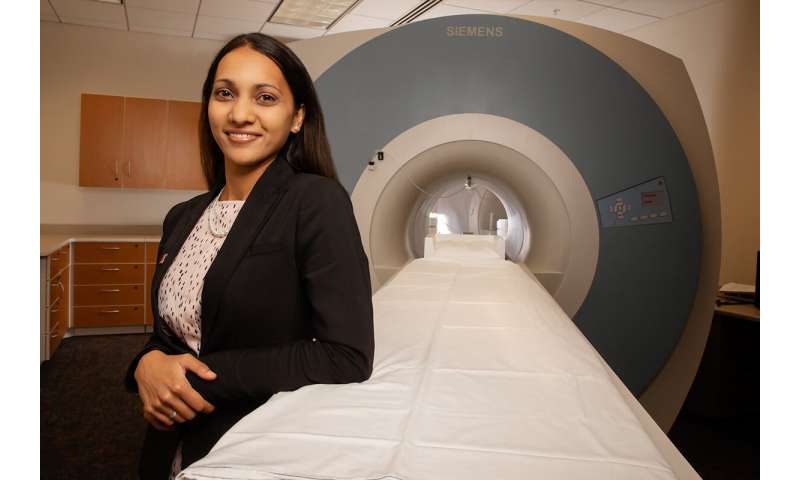
U. of I. kinesiology and community health professor Neha Gothe explores the relationship between physical activity and cognitive aging. Credit: L. Brian Stauffer
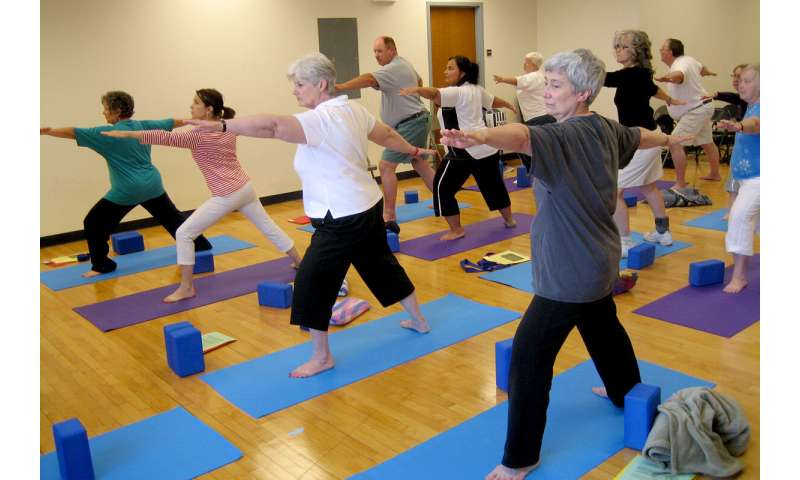
Scientists have known for decades that aerobic exercise strengthens the brain and contributes to the growth of new neurons, but few studies have examined how yoga affects the brain. A review of the science finds evidence that yoga enhances many of the same brain structures and functions that benefit from aerobic exercise.
15 dec 2019--The review, published in the journal Brain Plasticity, focused on 11 studies of the relationship between yoga practice and brain health. Five of the studies engaged individuals with no background in yoga practice in one or more yoga sessions per week over a period of 10-24 weeks, comparing brain health at the beginning and end of the intervention. The other studies measured brain differences between individuals who regularly practice yoga and those who don't.
Each of the studies used brain-imaging techniques such as MRI, functional MRI or single-photon emission computerized tomography. All involved Hatha yoga, which includes body movements, meditation and breathing exercises.
"From these 11 studies, we identified some brain regions that consistently come up, and they are surprisingly not very different from what we see with exercise research," said University of Illinois kinesiology and community health professor Neha Gothe, who led the research with Wayne State University psychology professor Jessica Damoiseaux.
"For example, we see increases in the volume of the hippocampus with yoga practice," Gothe said. Many studies looking at the brain effects of  have shown a similar increase in hippocampus size over time, she said.
The hippocampus is involved in memory processing and is known to shrink with age, Gothe said. "It is also the structure that is first affected in dementia and Alzheimer's disease."
Experts review evidence yoga is good for the brain
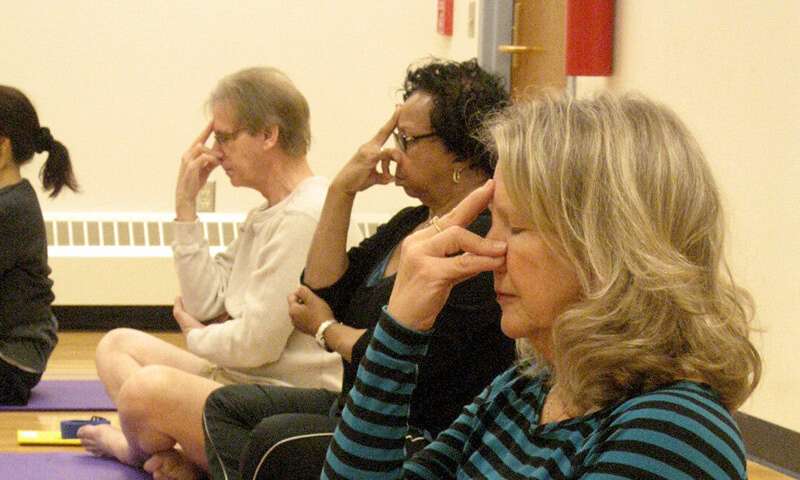
Brain changes seen in individuals who practice yoga are associated with better performance on cognitive tests and measures of emotional regulation. Credit: Neha Gothe
Though many of the studies are exploratory and not conclusive, the research points to other important brain changes associated with regular yoga practice, Damoiseaux said. The amygdala, a brain structure that contributes to emotional regulation, tends to be larger in yoga practitioners than in their peers who do not practice yoga. The prefrontal cortex, cingulate cortex and brain networks such as the default mode network also tend to be larger or more efficient in those who regularly practice yoga.
"The prefrontal cortex, a brain region just behind the forehead, is essential to planning, decision-making, multitasking, thinking about your options and picking the right option," Damoiseaux said. "The default mode network is a set of brain regions involved in thinking about the self, planning and memory."
Like the amygdala, the cingulate cortex is part of the limbic system, a circuit of structures that plays a key role in emotional regulation, learning and memory, she said.
The studies also find that the brain changes seen in individuals practicing yoga are associated with better performance on cognitive tests or measures of emotional regulation.
The discovery that yoga may have similar effects on the brain to aerobic exercise is intriguing and warrants more study, Gothe said.
"Yoga is not aerobic in nature, so there must be other mechanisms leading to these brain changes," she said. "So far, we don't have the evidence to identify what those mechanisms are."
Experts review evidence yoga is good for the brain
A review of the science finds evidence that yoga enhances many of the same brain structures and functions that benefit from aerobic exercise. Credit: Neha Gothe
She suspects that enhancing emotional regulation is a key to yoga's positive effects on the brain. Studies link stress in humans and animals to shrinkage of the hippocampus and poorer performance on tests of memory, for example, she said.
"In one of my previous studies, we were looking at how yoga changes the cortisol stress response," Gothe said. "We found that those who had done yoga for eight weeks had an attenuated cortisol response to stress that was associated with better performance on tests of decision-making, task-switching and attention."
Yoga helps people with or without anxiety disorders manage their stress, Gothe said.
"The practice of yoga helps improve emotional regulation to reduce stress, anxiety and depression," she said. "And that seems to improve brain functioning."
The researchers say there is a need for more—and more rigorous—research into yoga's effects on the brain. They recommend large intervention studies that engage participants in yoga for months, match yoga groups with active control groups, and measure changes in the brain and performance on cognitive tests using standard approaches that allow for easy comparisons with other types of exercise.
"The science is pointing to yoga being beneficial for healthy brain function, but we need more rigorous and well-controlled intervention studies to confirm these initial findings," Damoiseaux said.

More information: Neha P. Gothe et al, Yoga Effects on Brain Health: A Systematic Review of the Current Literature, Brain Plasticity (2019). DOI: 10.3233/BPL-190084
Provided by University of Illinois at Urbana-Champaign 

Tuesday, June 11, 2019

Yoga improves health in later life, study says


yoga
Credit: CC0 Public Domain
Older adults who practice yoga are more likely to be in better mental and physical shape, research suggests.
11 jun 2019--Yoga improves physical function as well as mental wellbeing in healthy adults over the age of 60, the study found.
The physical benefits of yoga—an ancient practice that includes the use of postures and regulated breathing—were found to include better muscle strength, balance and flexibility.
Boosts to health
Boosts to mental health included improvement in the symptoms of depression, sleep quality and vitality in older adults.
Researchers at the University reviewed 22 studies that had investigated the effects of yoga on physical and mental wellbeing in older adults. The yoga programmes varied in length from one month to seven months, and duration of sessions ranged from 30 to 90 minutes.
Statistical analysis combined the results of the studies to see the effects of yoga compared with no activity, and compared to other activities such as walking and chair aerobics.
Physical improvements
The researchers found that people who practiced yoga had improved balance, flexibility, leg strength, depression, sleep quality, vitality and perceived mental and physical health—compared with no activity.
Compared with other activities yoga improved lower body strength, lower body flexibility and depression.
Researchers say the review improves understanding of the benefits yoga can offer an aging population. They say it provides evidence for promoting yoga in physical activity guidelines for older adults.
"A large proportion of older adults are inactive, and do not meet the balance and muscle strengthening recommendations set by government and international health organizations. Based on this study, we can conclude that yoga has great potential to improve important physical and psychological outcomes in older adults. Yoga is a gentle activity that can be modified to suit those with age-related conditions and diseases," says Divya Sivaramakrishnan of the Physical Activity for Health Research Centre.
More information: Divya Sivaramakrishnan et al. The effects of yoga compared to active and inactive controls on physical function and health related quality of life in older adults- systematic review and meta-analysis of randomised controlled trials, International Journal of Behavioral Nutrition and Physical Activity (2019). DOI: 10.1186/s12966-019-0789-2
Provided by University of Edinburgh 

Saturday, February 23, 2019

People with osteoporosis should avoid spinal poses in yoga, study says


yoga
Credit: CC0 Public Domain
Yoga postures that flex the spine beyond its limits may raise the risk of compression fractures in people with thinning bones, according to research from Mayo Clinic. The results appear in Mayo Clinic Proceedings.
23 feb 2019--Researchers at Mayo Clinic and elsewhere have described injuries from yoga. This study examines injuries in people with osteoporosis and osteopenia—conditions characterized by low bone density.
Osteoporosis is a disease in which bones become thinner and more porous from loss of mineral content. Bone loss that has not reached the stage of an osteoporosis diagnosis is called osteopenia.
Researchers reviewed the health records of 89 people—mostly women—referred to Mayo Clinic from 2006 to 2018 for pain they attributed to their yoga practice. Some were new to yoga. Others had practiced for years. They had pain in the back, neck, shoulder, hip, knee or a combination.
Patients identified 12 poses they said caused or aggravated their symptoms. The most common postures involved extreme flexing or extending of the spine. Researchers used patients' health records, medical exams and imaging to confirm and categorize the injuries as soft tissue, joint or bone injuries.
Researchers identified 29 bony injuries, including degeneration of disks, slippage of vertebrae and compression fractures. The latter appeared to be related to postures that put extra pressure on the vertebra and disks.
"Yoga has many benefits. It improves balance, flexibility, strength and is a good social activity," says Mehrsheed Sinaki, M.D., a Mayo Clinic physical medicine and rehabilitation specialist and the study's senior author. "But if you have osteoporosis or osteopenia, you should modify the postures to accommodate your condition. As people age, they can benefit by getting a review of their old exercise regimens to prevent unwanted consequences."
Patients who incorporated recommendations to modify their movements reduced their pain and improved their symptoms.
In a separate commentary, Edward Laskowski, M.D., co-chair of Mayo Clinic Sports Medicine, called on providers, patients and yoga teachers to work together to produce an individualized exercise prescription that considers the yoga student's medical history to protect against injury and provide optimal benefit.
The authors noted study limitations. The patients were seen in a musculoskeletal clinic at a tertiary care center, which makes generalizations difficult. Researchers received follow-up reports on 22 patients, as most lived out of state.
More information: Melody Lee et al, Soft Tissue and Bony Injuries Attributed to the Practice of Yoga: A Biomechanical Analysis and Implications for Management, Mayo Clinic Proceedings (2019). DOI: 10.1016/j.mayocp.2018.09.024
Provided by Mayo Clinic

Thursday, May 17, 2018

The Yogi masters were right—meditation and breathing exercises can sharpen your mind

mind
Credit: CC0 Public Domain
It has long been claimed by Yogis and Buddhists that meditation and ancient breath-focused practices, such as pranayama, strengthen our ability to focus on tasks. A new study by researchers at Trinity College Dublin explains for the first time the neurophysiological link between breathing and attention.

17 may 2018--Breath-focused meditation and yogic breathing practices have numerous known cognitive benefits, including increased ability to focus, decreased mind wandering, improved arousal levels, more positive emotions, decreased emotional reactivity, along with many others. To date, however, no direct neurophysiological link between respiration and cognition has been suggested.
The research shows for the first time that breathing—a key element of meditation and mindfulness practices—directly affects the levels of a natural chemical messenger in the brain called noradrenaline. This chemical messenger is released when we are challenged, curious, exercised, focused or emotionally aroused, and, if produced at the right levels, helps the brain grow new connections, like a brain fertiliser. The way we breathe, in other words, directly affects the chemistry of our brains in a way that can enhance our attention and improve our brain health.
The study, carried out by researchers at Trinity College Institute of Neuroscience and the Global Brain Health Institute at Trinity, found that participants who focused well while undertaking a task that demanded a lot of attention had greater synchronisation between their breathing patterns and their attention, than those who had poor focus. The authors believe that it may be possible to use breath-control practices to stabilise attention and boost brain health.
Michael Melnychuk, Ph.D. candidate at the Trinity College Institute of Neuroscience, Trinity, and lead author of the study, explained: "Practitioners of yoga have claimed for some 2,500 years, that respiration influences the mind. In our study we looked for a neurophysiological link that could help explain these claims by measuring breathing, reaction time, and brain activity in a small area in the brainstem called the locus coeruleus, where noradrenaline is made. Noradrenaline is an all-purpose action system in the brain. When we are stressed we produce too much noradrenaline and we can't focus. When we feel sluggish, we produce too little and again, we can't focus. There is a sweet spot of noradrenaline in which our emotions, thinking and memory are much clearer."
"This study has shown that as you breathe in locus coeruleus activity is increasing slightly, and as you breathe out it decreases. Put simply this means that our attention is influenced by our breath and that it rises and falls with the cycle of respiration. It is possible that by focusing on and regulating your breathing you can optimise your attention level and likewise, by focusing on your attention level, your breathing becomes more synchronised."
The research provides deeper scientific understanding of the neurophysiological mechanisms which underlie ancient meditation practices. The findings were recently published in a paper entitled 'Coupling of respiration and attention via the locus coeruleus: Effects of meditation and pranayama' in the journal Psychophysiology. Further research could help with the development of non-pharmacological therapies for people with attention compromised conditions such as ADHD and traumatic brain injury and in supporting cognition in older people.
There are traditionally two types of breath-focused practices—those that emphasise focus on breathing (mindfulness), and those that require breathing to be controlled (deep breathing practices such as pranayama). In cases when a person's attention is compromised, practices which emphasise concentration and focus, such as mindfulness, where the individual focuses on feeling the sensations of respiration but make no effort to control them, could possibly be most beneficial. In cases where a person's level of arousal is the cause of poor attention, for example drowsiness while driving, a pounding heart during an exam, or during a panic attack, it should be possible to alter the level of arousal in the body by controlling breathing. Both of these techniques have been shown to be effective in both the short and the long term.
Ian Robertson, Co-Director of the Global Brain Health Institute at Trinity and Principal Investigator of the study added: "Yogis and Buddhist practitioners have long considered the breath an especially suitable object for meditation. It is believed that by observing the breath, and regulating it in precise ways—a practice known as pranayama—changes in arousal, attention, and emotional control that can be of great benefit to the meditator are realised. Our research finds that there is evidence to support the view that there is a strong connection between breath-centred practices and a steadiness of mind."
"Our findings could have particular implications for research into brain ageing. Brains typically lose mass as they age, but less so in the brains of long term meditators. More 'youthful' brains have a reduced risk of dementia and mindfulness meditation techniques actually strengthen brain networks. Our research offers one possible reason for this—using our breath to control one of the brain's natural chemical messengers, noradrenaline, which in the right 'dose' helps the brain grow new connections between cells. This study provides one more reason for everyone to boost the health of their brain using a whole range of activities ranging from aerobic exercise to mindfulness meditation."

More information: Michael Christopher Melnychuk et al. Coupling of respiration and attention via the locus coeruleus: Effects of meditation and pranayama, Psychophysiology (2018). DOI: 10.1111/psyp.13091


Provided by Trinity College Dublin

Monday, July 17, 2017

Elderly yoginis have greater cortical thickness

Elderly yoginis have greater cortical thickness
Yoga practitioners showed greater cortical thickness in a cluster in the left prefrontal cortex.
17 july 2017--Scientists in Brazil have imaged elderly female yoga practitioners' brains and found they have greater cortical thickness in the left prefrontal cortex, in brain areas associated with cognitive functions like attention and memory. The results suggest that yoga could be a way to protect against cognitive decline in old age.

As we age, the structure and functionality of our brains change and this often leads to cognitive decline, including impaired attention or memory. One such change in the brain involves the cerebral cortex becoming thinner, which scientists have shown is correlated with cognitive decline. So, how can we slow or reverse these changes?
You might think medication would be required, but surprisingly, the answer could lie in contemplative practices like yoga. Yoga practitioners consciously maintain postures, and perform breathing exercises and meditation.
"In the same way as muscles, the brain develops through training," explains Elisa Kozasa of Hospital Israelita Albert Einstein in São Paulo, Brazil, a researcher involved in the study, which was recently published in Frontiers in Aging Neuroscience. "Like any contemplative practice, yoga has a cognitive component in which attention and concentration are important."
Previous studies have suggested that yoga can have greater health benefits than similar aerobic exercises, and yoga practitioners have shown improved awareness, attention and memory. Older adults with mild cognitive impairment have also shown improvements after a short yoga training program.
yoga
Credit: CC0 Public Domain
But can practicing yoga over several years significantly shape your brain and if so, could it offset some of the changes that happen in the aging brain? The research team wanted to see if elderly long-term yoga practitioners had any differences in terms of brain structure compared with healthy elderly people who had never practiced yoga.
They recruited 21 female yoga practitioners (also known as yoginis) who had practiced yoga at least twice a week for a minimum of 8 years, although the group had an average of nearly 15 years of yoga practice. The researchers compared the yoginis with another group of 21 healthy women, who had never practiced yoga, meditation or any other contemplative practices, but who were well-matched to the yoginis in terms of their age (all the participants were 60 or over) and levels of physical activity. For more consistent results, the researchers only recruited women, and the participants completed surveys to see if there were any other factors at work that could affect brain structure, such as depression or level of formal education.
The researchers scanned the participants' brains using magnetic resonance imaging to see if there were any differences in brain structure. "We found greater thickness in the left prefrontal cortex in the yoginis, in brain regions associated with cognitive functions such as attention and memory," says Rui Afonso, another researcher involved in the study. As the groups were well-matched in terms of other factors that can change brain structure, such as education and levels of depression, yoga practice appears to underlie the yoginis' different brain structure.
The results suggest that practicing yoga in the long-term can change the structure of your brain and could protect against cognitive decline in old age. However, the team plan to carry out more studies to see if these brain changes result in enhanced cognitive performance in elderly yoginis.
Another possibility is that people with these brain features are more likely to be attracted to yoga. "We have compared experienced yoginis with non-practitioners, so we do not know if the yoginis already had these differences before they started yoga," explains Afonso. "This can only be confirmed by studying people for a few years from the time they start yoga."

More information: Rui F. Afonso et al, Greater Cortical Thickness in Elderly Female Yoga Practitioners—A Cross-Sectional Study, Frontiers in Aging Neuroscience (2017). DOI: 10.3389/fnagi.2017.00201


Provided by Frontiers

Sunday, May 22, 2016

Study finds that yoga and meditation can help minimize cognitive impairment

yoga

Inner peace and a flexible body may not be the most valuable benefits that yoga and meditation have to offer, suggests new research by a UCLA-led team of neuroscientists.

22 may 2016--The team found that a three-month course of yoga and meditation practice helped minimize the cognitive and emotional problems that often precede Alzheimer's disease and other forms of dementia—and that it was even more effective than the memory enhancement exercises that have been considered the gold standard for managing mild cognitive impairment.
"Memory training was comparable to yoga with meditation in terms of improving memory, but yoga provided a broader benefit than memory training because it also helped with mood, anxiety and coping skills," said Helen Lavretsky, the study's senior author and a professor in residence in UCLA's department of psychiatry.
People with mild cognitive impairment are two-and-a-half times more likely to develop Alzheimer's disease and other forms of dementia.
The study, which appears May 10 in the Journal of Alzheimer's Disease, is the first to compare outcomes from yoga and meditation with those from memory training, which incorporates activities ranging from crossword puzzles to commercially available computer programs. The study of 25 participants, all over the age of 55, measured changes not just in behavior but also in brain activity.
"Historically and anecdotally, yoga has been thought to be beneficial in aging well, but this is the scientific demonstration of that benefit," said Harris Eyre, the study's lead author, a doctoral candidate at Australia's University of Adelaide and a former Fulbright scholar at UCLA's Semel Institute for Neuroscience and Human Behavior. "We're converting historical wisdom into the high level of evidence required for doctors to recommend therapy to their patients."
Lavretsky and Eyre studied participants who had reported issues with their memory, such as tendencies to forget names, faces or appointments or to misplace things. Subjects underwent memory tests and brain scans at the beginning and end of the study.
Eleven participants received one hour a week of memory enhancement training and spent 20 minutes a day performing memory exercises—verbal and visual association and other practical strategies for improving memory, based on research-backed techniques.
The other 14 participants took a one-hour class once a week in Kundalini yoga and practiced 20 Kirtan Kriya meditation at home for 20 minutes each day. Kirtan Kriya, which involves chanting, hand movements and visualization of light, has been practiced for hundreds of years in India as a way to prevent cognitive decline in older adults, Lavretsky said.
After 12 weeks, the researchers saw similar improvements among participants in both groups in verbal memory skills—which come into play for remembering names and lists of words. But those who had practiced yoga and meditation had better improvements than the other subjects in visual-spatial memory skills, which come into play for recalling locations and navigating while walking or driving.
The yoga-meditation group also had better results in terms of reducing depression and anxiety and improving coping skills and resilience to stress. That's important because coming to terms with cognitive impairment can be emotionally difficult.
"When you have memory loss, you can get quite anxious about that and it can lead to depression," said Lavretsky, who is also a researcher at the Semel Institute.
The researchers report that the participants' outward improvements in memory corresponded with perceptible changes in their brain activity. Using functional magnetic resonance imaging, they showed that subjects in both groups had changes in their brain connectivity, but the changes among the yoga group were statistically significant, whereas the changes in the memory group were not.
The researchers attribute the positive "brain fitness" effects of mindful exercise to several factors, including its abilities to reduce stress and inflammation, improve mood and resilience, and enhance production of brain-derived neurotrophic growth factor, a protein the stimulates connections between neurons and kick-start telomerase activity, a process that replaces lost or damaged genetic material.
"If you or your relatives are trying to improve your memory or offset the risk for developing memory loss or dementia, a regular practice of yoga and meditation could be a simple, safe and low-cost solution to improving your brain fitness," Lavretsky said.


Provided by University of California, Los Angeles

Wednesday, December 24, 2014

Yoga has the potential to reduce risk factors of cardiovascular disease


There is "promising evidence" that the popular mind-body practice of yoga is beneficial in managing and improving the risk factors associated with cardiovascular disease and is a "potentially effective therapy" for cardiovascular health.
24 dec 2014--Indeed, following a systematic review of 37 randomised controlled trials (which included 2768 subjects), investigators from the Netherlands and USA have found that yoga may provide the same benefits in risk factor reduction as such traditional physical activities as biking or brisk walking. "This finding is significant," they note, "as individuals who cannot or prefer not to perform traditional aerobic exercise might still achieve similar benefits in [cardiovascular] risk reduction." Their study is published today in the European Journal of Preventive Cardiology.
Yoga, an ancient mind-body practice which originated in India and incorporates physical, mental, and spiritual elements, has been shown in several studies to be effective in improving cardiovascular risk factors, with reduction in the risk of heart attacks and strokes. This meta-analysis was performed, say the investigators, to appraise the evidence and provide a realistic pooled estimate of yoga's effectiveness when measured against exercise and no exercise.
Results showed first that risk factors for cardiovascular disease improved more in those doing yoga than in those doing no exercise, and second, that yoga had an effect on these risks comparable to exercise.
When compared to no exercise, yoga was associated with significant improvement in each of the primary outcome risk factors measured: body mass index was reduced by 0.77 kg/m2 (measured as a "mean difference"), systolic blood pressure reduced by.21 mm Hg, low-density (bad) lipoprotein cholesterol reduced by 12.14 mg/dl, and high-density (good) lipoprotein cholesterol increased by 3.20 mg/dl. There were also significant changes seen in secondary endpoints - body weight fell by 2.32 kg, diastolic blood pressure by 4.9 mm Hg, total cholesterol by 18.48 mg/dl, and heart rate by.27 beats/min. However, no improvements were found in parameters of diabetes (fasting blood glucose and glycosylated hemoglobin).
Risk factor improvements (in BMI, blood pressure, lipid levels) were significant when yoga was used in addition to medication. Among patients with existing coronary heart disease, yoga provided a statistically significant benefit in lowering LDL cholesterol when added to medication (statins and lipid-lowering drugs).
In comparisons with exercise itself, yoga was found to have comparable effects on risk factors as aerobic exercise. The investigators note that this might be because of yoga's impact on stress reduction, "leading to positive impacts on neuroendocrine status, metabolic and cardio-vagal function".
The similarity of yoga and exercise's effect on cardiovascular risk factors, say the investigators, "suggest that there could be comparable working mechanisms, with some possible physiological aerobic benefits occurring with yoga practice, and some stress-reducing, relaxation effect occurring with aerobic exercise".
Commenting on the results, senior author Professor Myriam Hunink from Erasmus University Medical Center, Rotterdam, and Harvard School of Public Health, Boston, said that, although the evidence of yoga's beneficial effect incardiovascular health is growing, a physiological explanation for this effect remains unclear. "Also unclear," she added, "are the dose-response relationship and the relative costs and benefits of yoga when compared to exercise or medication. However, these results indicate that yoga is potentially very useful and in my view worth pursuing as a risk improvement practice."
Moreover, in view of yoga's ease of uptake, the investigators also note that evidence supports yoga's acceptability to "patients with lower physical tolerance like those with pre-existing cardiac conditions, the elderly, or those with musculoskeletal or joint pain".
Thus, they conclude that "yoga has the potential to be a cost-effective treatment and prevention strategy given its low cost, lack of expensive equipment or technology, potential greater adherence and health-related quality of life improvements, and possible accessibility to larger segments of the population".
More information: Chu P, Gotink RA, Yeh GY, Goldie SJ, Hunink MGM. The effectiveness of yoga in modifying risk factors for cardiovascular disease and metabolic syndrome: A systematic review and meta-analysis of randomized controlled trials. Eur J Prevent Cardiol 2014: DOI: 10.1177/2047487314562741
Provided by European Society of Cardiology

Friday, April 11, 2008

Yoga helps older women balance and stand taller

Apr 10, 2008--Elderly women showed measurable improvements in their walking speed and balance after a nine-week yoga program -- and they gained a centimeter in height, on average, Philadelphia researchers report.
"The only explanation may be that they are standing more upright, not so much crouching," study chief Dr. Jinsup Song of Temple University told Reuters Health. Song presented the findings April 4 at the Gait and Clinical Movement Analysis Society's Annual Meeting.
While past studies have investigated yoga for helping improve balance in elderly women, Song noted, they have typically used a relatively demanding form of the practice. In the current study, he and his colleague Marian Garfinkel, a certified yoga instructor, worked with B.K.S. Iyengar, the originator of Iyengar Yoga, to develop a program specifically designed for older people. "The poses were very basic -- how to stand upward, how to bend forward, sideways," said Song, who admitted he found some of the poses challenging himself.
Song and colleagues enrolled 24 women aged 65 and older into their study. The women performed an hour-and-a-half yoga session twice a week, gradually building up the intensity of the exercise.
After the program, the women walked faster, used longer strides, and could stand for a longer time on one leg. They also felt more confident in their ability to balance while standing and walking.
While the women had been balancing their weight on the ball of the foot as they walked before they had yoga training, afterwards their weight was more evenly distributed across the bottom of their feet as they walked, Song noted, which could contribute to greater stability.
Song, who is a podiatrist, noted that both strength and flexibility are important for helping people avoid falls, a leading cause of disability among older people, especially women. He and his colleagues are planning further studies to determine if the Iyengar program is an effective fall prevention strategy.