Showing posts with label Tai Chi Chuan. Show all posts

Monday, November 13, 2023


Tai chi may curb Parkinson's disease symptoms and complications for several years
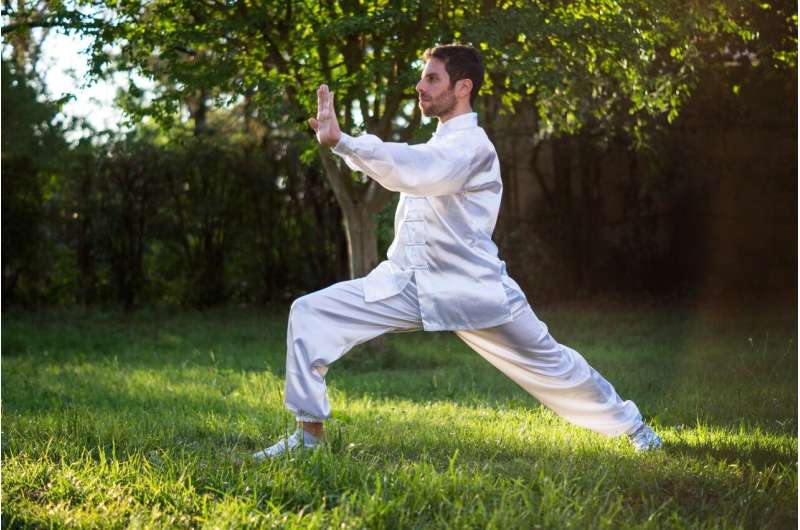
tai chi
Credit: Pixabay/CC0 Public Domain

Tai chi, the Chinese martial art that involves sequences of very slow controlled movements, may curb the symptoms and complications of Parkinson's disease for several years, reveals research published online in the Journal of Neurology Neurosurgery & Psychiatry.

13 nov 2023--Its practice was associated with slower disease progression and lower doses of required drugs over time, the findings show.

Parkinson's disease is a debilitating and progressive neurodegenerative disorder, characterized by slowness of movement, resting tremor, and stiff and inflexible muscles. It is the fastest growing neurological condition in the world, with the numbers of those affected projected to reach nearly 5 million by 2030 in China alone. In the UK, two people are diagnosed with the disease every hour according to the charity Parkinson's UK.

As yet, there is no cure for Parkinson's, and while drugs can improve clinical symptoms, they don't treat all the manifestations of the disease. There's no evidence that they slow progression either, explain the researchers. Previously published research suggests that tai chi eases Parkinson's symptoms in the short term, but whether this improvement can be sustained over the long term isn't known.

In a bid to find out, the researchers monitored two groups of patients with Parkinson's disease for more than five years from January 2016 to June 2021.

One group of 147 patients practiced tai chi twice a week for an hour, aided by the provision of classes to improve their technique. The other group of 187 patients continued with their standard care, but didn't practice tai chi.

Disease severity was formally assessed in all the participants at the start of the monitoring period, and disease progression, including increases in the need for medication, were subsequently monitored in November 2019, October 2020, and June 2021.

The extent of movement and other symptoms, such as autonomic nervous system function (to include bowel movements, urinary and cardiovascular issues); mood, sleep quality, and cognition; and the prevalence of complications, such as dyskinesia (involuntary movement); dystonia (abnormal muscle tone); decline in responsiveness to drug treatment over time; mild cognitive impairment; hallucinations; restless leg syndrome were also tracked, using validated scales.

Disease severity, medication use, sex, age, and education level, were similar in both groups.

Disease progression was slower at all monitoring points in the tai chi group, as assessed by three validated scales to assess overall symptoms, movement, and balance.

The number of patients who needed to increase their medication in the comparison group was also significantly higher than it was in the tai chi group: 83.5% in 2019 and just over 96% in 2020 compared with 71% and 87.5%, respectively.

Cognitive function deteriorated more slowly in the tai chi group as did other non-movement symptoms, while sleep and quality of life continuously improved.

And the prevalence of complications was significantly lower in the tai chi group than in the comparison group: dyskinesia 1.4% vs. 7.5%; dystonia 0% vs. 1.6%; hallucinations 0% vs. just over 2%; mild cognitive impairment 3% vs. 10%; restless leg syndrome 7% vs. 15.5%.

Falls, dizziness, and back pain were the three side effects reported by study participants, but these were all significantly lower in the tai chi group. While 23 people sustained a fracture, these all occurred during routine daily life and were fewer in the tai chi group: 6 vs. 17.

This is an observational study, and as such, can't establish cause and effect. The researchers also acknowledge that the number of study participants was relatively small and they weren't randomly assigned to their group.

But they conclude, "Our study has shown that tai chi retains the long-term beneficial effect on [Parkinson's disease], indicating the potential disease-modifying effects on both motor and non-motor symptoms, especially gait, balance, autonomic symptoms and cognition."

They add, "[Parkinson's disease] can worsen motor function and non-motor symptoms progressively with time, resulting in disability and influencing the quality of life. The long-term beneficial effect on [the disease] could prolong the time without disability, leading to a higher quality of life, a lower burden for caregivers, and less drug usage."

More information: Effect of long-term Tai Chi training on Parkinson's disease: a 3.5-year follow-up cohort study, Journal of Neurology Neurosurgery & Psychiatry (2023). DOI: 10.1136/jnnp-2022-330967


Sunday, June 24, 2012


Tai Chi increases brain size, benefits cognition in randomized controlled trial of Chinese elderly

Scientists from the University of South Florida and Fudan University in Shanghai found increases in brain volume and improvements on tests of memory and thinking in Chinese seniors who practiced Tai Chi three times a week, reports an article published today in theJournal of Alzheimer's Disease.
24 jun 2012--Findings were based on an 8-month randomized controlled trial comparing those who practiced Tai Chi to a group who received no intervention. The same trial showed increases in brain volume and more limited cognitive improvements in a group that participated in lively discussions three times per week over the same time period.
Previous trials have shown increases in brain volume in people who participated in aerobic exercise, and in one of these trials, an improvement in memory was seen. However, this was the first trial to show that a less aerobic form of exercise, Tai Chi, as well as stimulating discussion led to similar increases in brain volume and improvements on psychological tests of memory and thinking.
The group that did not participate in the interventions showed brain shrinkage over the same time period, consistent with what generally has been observed for persons in their 60s and 70s.
Numerous studies have shown that dementia and the syndrome of gradual cognitive deterioration that precedes it is associated with increasing shrinkage of the brain as nerve cells and their connections are gradually lost.
"The ability to reverse this trend with physical exercise and increased mental activity implies that it may be possible to delay the onset of dementia in older persons through interventions that have many physical and mental health benefits," said lead author Dr. James Mortimer, professor of epidemiology at the University of South Florida College of Public Health.
Research suggests that aerobic exercise is associated with increased production of brain growth factors. It remains to be determined whether forms of exercise like Tai Chi that include an important mental exercise component could lead to similar changes in the production of these factors. "If this is shown, then it would provide strong support to the concept of "use it or lose it" and encourage seniors to stay actively involved both intellectually and physically," Dr. Mortimer said.
One question raised by the research is whether sustained physical and mental exercise can contribute to the prevention of Alzheimer's disease, the most common dementing illness.
"Epidemiologic studies have shown repeatedly that individuals who engage in more physical exercise or are more socially active have a lower risk of Alzheimer's disease," Dr. Mortimer said. "The current findings suggest that this may be a result of growth and preservation of critical regions of the brain affected by this illness."
More information: James A. Mortimer, Ding Ding, Amy R. Borenstein, Charles DeCarli, Qihao Guo, Yougui Wu, Qianhua Zhao, Shugang Chu. Changes in Brain Volume and Cognition in a Randomized Trial of Exercise and Social Interaction in a Community-Based Sample of Non-Demented Chinese Elders, Journal of Alzheimer’s Disease 2012; 30 (4), published by IOS Press.
Provided by IOS Press

Monday, April 09, 2012

Older subjects who regularly practice Tai Chi found to have better arterial compliance


Exercise which can achieve both cardiovascular function and muscle strength "would be a preferred mode of training for older persons", say investigators

09 april 2012--Experienced practitioners of Tai Chi, the traditional Chinese mind-body exercise now enjoyed worldwide, have been shown in a study of older subjects to have improved expansion and contraction of arteries according to cardiac pulsation (arterial compliance) and improved knee muscle strength.

The findings, say the investigators, of better muscle strength without jeopardising arterial compliance suggest that Tai Chi may well be a suitable exercise for older people to improve both cardiovascular function and body strength. A number of studies, they explain, have shown that strength training to improve muscle function and offset the effects of ageing have also been accompanied by a decline in arterial compliance. "Evidence that strength training could change arterial compliance in middle-aged and older subjects is still elusive," they note.

As background to their report, the investigators explain that arterial stiffness - when an artery fails to distend or rebound in response to pressure changes - is closely associated with cardiovascular diseases, possibly through elevated blood and pulse pressure and atherosclerosis. Arterial compliance, therefore, has been identified as an important predictor of cardiovascular health in the elderly and a therapeutic target for physical exercise in the prevention of cardiovascular disease.

The study, published online today in the European Journal of Preventive Cardiology, involved 65 elderly subjects from Hong Kong, 29 recruited from local Tai Chi clubs who had each practised Tai Chi for at least 1.5 hours a week for three years, and 36 controls with no Tai Chi experience. All subjects' physical activity levels were defined according to metabolic index units as light, moderate and heavy - but there were no differences between the two groups.

Initial results showed that the Tai Chi subjects were better in almost all haemodynamic observations - including blood pressure, vascular resistance, and pulse pressure. Measurements also showed that both large and small artery compliance was significantly higher in the Tai Chi group (by 40-44%). Additional analysis showed that the Tai Chi subjects had greater average muscle strength in both their knee extensors and flexors.

Tai Chi is well known for its aerobic affects. Significant improvement in cardiopulmonary function has been found in Tai Chi practitioners when compared with sedentary controls, and Tai Chi training has been shown to improve cardiopulmonary function in patients with chronic heart failure and myocardial infarction. The effect of Tai Chi training in lowering blood pressure has also been extensively reviewed.

"However," said principal investigator Dr William Tsang from the The Hong Kong Polytechnic University in Hong Kong, "this is the first study to investigate the possible effects of Tai Chi on arterial compliance by comparing older Tai Chi practitioners with non-practitioners similar in age and activity level. The improvement in arterial compliance could have resulted from a combination of aerobic training, stretching, mental concentration and calm meditation during Tai Chi movement."

The study findings showed that older Tai Chi practitioners have better arterial compliance and knee muscle strength than their healthy counterparts. And, because Tai Chi can be practised at any time, anywhere, and without the constraints of equipment or a gymnasium, Dr Tsang added that this traditional Chinese exercise could be a good exercise strategy for older adults, both for vascular health and for muscle strengthening.

More information: Lu X, Hui-Chan CWY, Tsang WWN. Tai Chi, arterial compliance, and muscle strength in older adults. Eur J Prevent Cardiol 2012; DOI: 10.1177/2047487312443483

Provided by European Society of Cardiology

Thursday, February 09, 2012

Tai Chi program helps Parkinson's disease patients

An Oregon Research Institute (ORI) exercise study conducted in four Oregon cities has shown significant benefits for patients with mild-to-moderate Parkinson's disease. In an original article published in the February 9, 2012 issue of the New England Journal of Medicine (NEJM), ORI scientist Fuzhong Li, Ph.D. and colleagues report that a tailored program of twice-weekly Tai Chi training resulted in improved postural stability and walking ability, and reduced falls in the participants.

09 feb 2012--"These results are clinically significant because they suggest that Tai Chi, a low-to-moderate impact exercise, may be used, as an add-on to current physical therapies, to address some of the key clinical problems in Parkinson's disease, such as postural and gait instability. Since many training features in the program are functionally oriented, the improvements in the balance and gait measures that we demonstrated highlight the potential of Tai Chi-based movements in rehabilitating patients with these types of problems and, consequently, easing cardinal symptoms of Parkinson's disease and improving mobility, flexibility, balance, and range of motion," noted Dr. Li.

In the 4-year project funded by the National Institute of Neurological Disorders and Stroke, the investigators randomly assigned 195 patients to one of three exercise groups: Tai Chi, resistance training, or stretching. The patients participated in 60-minute exercise sessions twice weekly for 24 weeks.

The results of the study showed that the Tai Chi group performed consistently better than the stretching group in how far they could lean in any direction without losing balance as well as demonstrating better levels of directional control of the body and walking ability (i.e., longer stride length). Tai Chi participants also outperformed those in the resistance training group on the balance and stride length measures. Finally, Tai Chi training was shown to significantly lower the incidence of falls compared to stretching and to be as equally effective as resistance training in reducing falls.

Impaired movement, especially the loss of ability to maintain standing balance, adversely affects function and quality of life in patients with Parkinson's disease. With progression of the disease, patients lose stability and have trouble walking, difficulty managing activities of daily living, and experience frequent falls. Exercise is an important part of the management of Parkinson's disease because physical activity has been shown to retard the deterioration of motor function and to prolong functional independence. However, research on alternative forms of exercise, such as Tai Chi, that could improve balance, gait, and function in patients with Parkinson's disease is scarce.

The Tai Chi program developed by Dr. Li consisted of six Tai Chi movements integrated into an eight-form routine that focused on weight-shifting, controlled-displacement of the center of gravity over the base of support, ankle sway, and front-to-back and sideways stepping. Natural breathing was integrated into the training routine.

"There are a number of practical advantages to using Tai Chi to improve motor dysfunction of Parkinson's disease - it is a low cost activity that does not require equipment, it can be done anywhere, at any time, and the movements can be easily learned. It can also be incorporated into a rehabilitation setting as part of existing treatment. Similarly, because of its simplicity, certain aspects of this Tai Chi program can also be prescribed to patients as a self-care/home activity," Dr. Li added.

Provided by Oregon Research Institute

Friday, April 06, 2007

Tai Chi boosts immunity to shingles virus in older adults, NIH-sponsored study reports

Tai Chi, a traditional Chinese form of exercise, may help older adults avoid getting shingles by increasing immunity to varicella-zoster virus (VZV) and boosting the immune response to varicella vaccine in older adults, according to a new study publishsed in print this week in the Journal of the American Geriatrics Society. This National Institutes of Health (NIH)-funded study is the first rigorous clinical trial to suggest that a behavioral intervention, alone or in combination with a vaccine, can help protect older adults from VZV, which causes both chickenpox and shingles.
The research was supported by the National Institute on Aging (NIA) and the National Center for Complementary and Alternative Medicine (NCCAM), both components of NIH. The study's print publication follows its online release in March. The research was conducted by Michael R. Irwin, M.D., and Richard Olmstead, Ph.D., of the University of California at Los Angeles, and Michael N. Oxman, M.D., of the University of California at San Diego and San Diego Veterans Affairs Healthcare System.
"One in five people who have had chickenpox will get shingles later in life, usually after age 50, and the risk increases as people get older," says NIA Director Richard J. Hodes, M.D. "More research is needed, but this study suggests that the Tai Chi intervention tested, in combination with immunization, may enhance protection of older adults from this painful condition."
"Dr. Irwin's research team has demonstrated that a centuries-old behavioral intervention, Tai Chi, resulted in a level of immune response similar to that of a modern biological intervention, the varicella vaccine, and that Tai Chi boosted the positive effects of the vaccine," says Andrew Monjan, Ph.D., chief of the NIA's Neurobiology of Aging Branch.
The randomized, controlled clinical trial included 112 healthy adults ages 59 to 86 (average age of 70). Each person took part in a 16-week program of either Tai Chi or a health education program that provided 120 minutes of instruction weekly. Tai Chi combines aerobic activity, relaxation and meditation, which the researchers note have been reported to boost immune responses. The health education intervention involved classes about a variety of health-related topics.
After the 16-week Tai Chi and health education programs, with periodic blood tests to determine levels of VZV immunity, people in both groups received a single injection of VARIVAX, the chickenpox vaccine that was approved for use in the United States in 1995. Nine weeks later, the investigators did blood tests to assess each participant's level of VZV immunity, comparing it to immunity at the start of the study. All of the participants had had chickenpox earlier in life and so were already immune to that disease.

Friday, March 09, 2007

Tai Chi Chuan may benefit type 2 diabetes patients

A new study suggests that participation in the Chinese martial art Tai Chi Chuan may help boost immune function and improve blood sugar control in people with type 2 diabetes.
After completing a 12-week Tai Chi exercise program, men and women with the disease had statistically significant reductions in their levels of A1C, a measurement of long-term blood glucose control. The participants also showed increases in regulatory T cells, which help to keep the immune response in check, while their levels of killer T cells, which destroy abnormal cells in the body, decreased.
People with type 2 diabetes experience chronic inflammation, and while exercise has been shown to be beneficial, strenuous exercise may boost inflammation and cause other problems, Dr. Kuender D. Yang of Chang Gung Memorial Hospital in Taiwan and colleagues note.
Tai Chi, in which a person performs a series of poses in a flowing motion, improves balance and heart and lung function, and recently was shown to benefit immune system function in healthy individuals, they add.

http://news.yahoo.com/s/nm/20070308/hl_nm/diabetes_patients_dc;_ylt=AuQl82bXWDf1M1aujtUOw.MQ.3QA