Showing posts with label geriatric medicine. Show all posts

Wednesday, April 01, 2020

Caring for seniors during COVID-19 pandemic
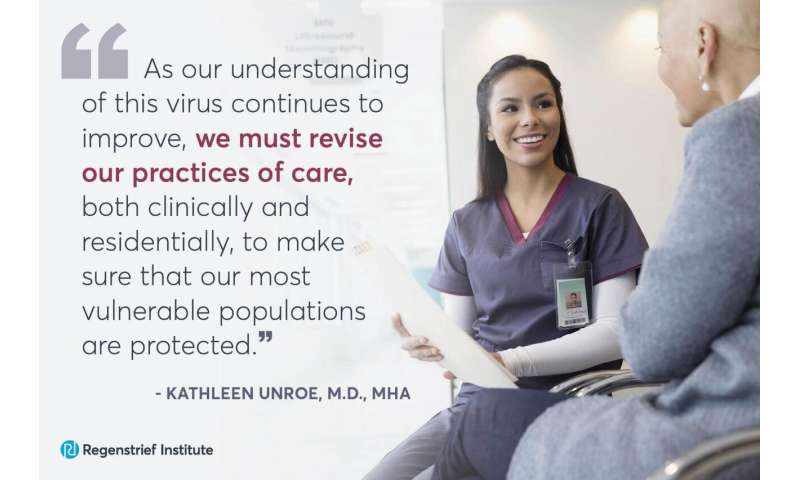

Caring for seniors during COVID-19 pandemic
Regenstrief Institute and Indiana University School of Medicine scientist Kathleen Unroe, M.D., MHA, and colleagues lay out guidelines and best practices for healthcare providers and family caregivers who are providing care for older adults during the COVID-19 pandemic. Their recommendations are published in the Journal of Geriatric Emergency Medicine. Credit: Regenstrief Institute
Older adults are at elevated risk for complications from COVID-19 and are dying at a higher rate than younger patients. In light of these concerns, Regenstrief Institute and Indiana University School of Medicine scientist Kathleen Unroe, M.D., MHA, and colleagues lay out guidelines and best practices for healthcare providers and family caregivers who are providing care for seniors during the COVID-19 pandemic. Their recommendations are published in the Journal of Geriatric Emergency Medicine.
01 april 2020--"Our senior patients need additional measures of care and protection, and COVID-19 only exacerbates those needs," said Dr. Unroe, one of the authors on the paper. "Family care providers need to be aware of the hazards COVID-19 presents to their loved ones and understand how to mitigate them. I hope this information will provide helpful guidance to protect older adults during this crisis."
In the article, Dr. Unroe and her colleagues provide insight into several aspects of how the novel coronavirus is affecting the care of older adults.
Testing Seniors For COVID-19
Dr. Unroe and her colleagues highlight the need to prioritize testing for older adults even after increased screening capacity is available, due to their increased risk of complications from the disease. They advise health systems to make testing available in settings other than the emergency department whenever possible and to use options such as telecare in the screening process.
Caring for Older Adults
Older adults may be experiencing significant isolation already, and social distancing may worsen complications from seclusion, Dr. Unroe and her team note in the paper. Reduced time with caregivers may also place older adults at risk, due to missed opportunities to catch cognitive or general health decline and unrecognized falls.
If protective equipment is necessary for caregivers to wear around patients with cognitive decline, this change in appearance may be very disorienting for patients, and patients with dementia who are required to wear protective equipment may not understand why they are doing so. Dr. Unroe and her team recommend that clinicians provide additional resources to caregivers and steer them toward communities of support.
Symptoms
While fever and respiratory symptoms have been widely recognized as key symptoms associated with COVID-19, these symptoms often present differently in older adults. Fever, for example, may be blunted or absent entirely during infection for older adults. Respiratory symptoms may either be masked or exacerbated by co-occurring diseases, such as COPD, that can further worsen outcomes. Dr. Unroe and team point to the Infectious Disease Society of America's modified definition of fever for older adults as a helpful alternative:
  • A single oral temperature over 100°F, or
  • 2 oral repeated temperatures over 99°F or
  • An increase in temperature of 2°F over the baseline temperature
The article also features key points, evidence and case studies surrounding other issues of elder care, including transitions in care between sites such as nursing homes and hospitals, guidance for triage, and suggestions for inpatient care systems changes.
"As our understanding of this virus continues to improve," said Dr. Unroe, "we must revise our practices of care, both clinically and residentially, to make sure that our most vulnerable populations are protected."

Provided by Regenstrief Institute 

Tuesday, April 17, 2018

In new anthology, experts look to future for managing dementia, mental health

In a newly published collection of research reports and essays , more than 20 experts in aging are looking to the future of science, professional education, clinical practice, and public policy to address two of America's fastest growing health concerns: Dementia and mental health in late life.

17 april 2018--Across 10 articles compiled as a supplement to the Journal of the American Geriatrics Society (JAGS) , field leaders in geriatrics, dementia, and mental health have traced the trajectory of everything from our knowledge of neurological systems contributing to dementia to the development of new interprofessional approaches to teaching and managing late life problems in mental health. In so doing, they hope to chart a course forward for bridging the gap between science and clinical practice, which could transform the prevention and treatment of dementia and mental illness for us all as we age.
"As longer lives become a reality for more and more Americans, so too do concerns about conditions like Alzheimer's disease and other dementias," said Christine Bradway, PhD, CRNP, FAAN, AGSF, Associate Professor of Gerontological Nursing at the School of Nursing, University of Pennsylvania, and Guest Editor for the JAGS supplement. "For those who worry about the impact of increased longevity on memory and mental health, it's important to see forward-facing progress that can give us the science and social supports we need to continue contributing to our communities for as long as possible," added Caroline E. Stephens, PhD, RN, GNP, Associate Professor at the UCSF School of Nursing who led the concept, design, and implementation for the supplement.
Compiled following a two-day summit convened by the National Hartford Center of Gerontological Nursing Excellence and supported by the National Institute on Aging, the new JAGS supplement takes stock of dementia and mental health research and care in its current state, identifies public and professional needs to accelerate change, and reveals promising avenues for moving forward in science, practice, health professions training, and public policy.
The series begins with a paper exploring dementia-associated apathy research (studies that explore how apathy, or a general lack of enthusiasm/concern, is tied to dementia), accompanied by commentary that points to the critical need for enhanced research using novel clinical trial designs and data-sharing platforms.
A second research report and corresponding commentary describe the role of the neural system (the complex connections linking your brain to the rest of your body) in late-life depression and how knowledge of its effects can better shape treatment options and health outcomes.
A third set of papers examines why health systems may be slow to adopt new and promising models of dementia and late-life mental health care and proposes solutions. A final research report and commentary included in the series reimagine collaboration in training multiple healthcare professionals to meet the needs of older Americans, more and more of whom are likely to live with dementia and/or mental health problems as our population continues to age.
The supplement concludes with an outline of critical policy priorities for research, reimbursement, models of care, and clinician/researcher training. Highlighting examples from the Health and Aging Policy Fellows Program—an initiative supported by The Atlantic Philanthropies and the John A. Hartford Foundation to help connect professionals in aging to the legislative processes that make their work possible—this final paper illustrates the essential roles health professionals and academic researchers must play in translating science into social and healthcare systems equipped to support our care, especially as more Americans manage dementia and mental health conditions.
Already impacting millions of Americans 65-years-old and older, forms of "dementia" (including Alzheimer's disease) are characterized by declining mental abilities and deteriorating memory skills severe enough to interfere with daily life. Dementia is also one of several mental health concerns we may face as we age. One in five older adults currently experience mental illnesses like depression, anxiety, or addictive disorders, for example, and the numbers of people affected with these conditions will likely continue to grow. Sadly, many individuals live with undiagnosed or untreated dementia or mental health disorders, which can take an added toll on physical well-being while also increasing the risk for emergency department visits, placement in a nursing home, and other health concerns. As the experts writing in JAGS observe, "Science has made much progress in increasing knowledge about dementia and mental health in later life," and this new anthology of research reports will do much to create "a solid theoretical base, clarity about meanings of mixed findings, and solutions to the challenges of conducting clinical trials, especially for nonpharmacological interventions [treatment/prevention options that do not involve the use of prescription medications]."

More information: Caroline E. Stephens et al, Challenges in Aging, Dementia, and Mental Health: New Knowledge and Energy to Inform Solutions, Journal of the American Geriatrics Society (2018). DOI: 10.1111/jgs.15271


Provided by American Geriatrics Society

Sunday, March 05, 2017

Geriatricians can help aging patients navigate multiple ailments


For months, Teresa Christensen's 87-year-old mother, Genevieve, complained of pain from a nasty sore on her right foot. She stopped going to church. She couldn't sleep at night. Eventually, she stopped walking except when absolutely necessary.
Her primary care doctor prescribed three antibiotics, one after another. None worked.
"Doctor, can't we do some further tests?" Teresa Christensen remembered asking. "I felt that he was looking through my mother instead of looking at her."

05 mar 2017--Referred to a wound clinic, Genevieve was diagnosed with a venous ulcer, resulting from poor circulation in her legs. A few weeks ago, she had a successful procedure to correct the problem and returned home to the house where she's lived for more than 50 years in Cottage Grove, Minn., a suburb of St. Paul.
Would her mother benefit from seeing a geriatrician going forward, wondered Christensen, her mother's primary caregiver, in an email to me? And, if so, how would she go about finding one?
I reached out to several medical experts, and they agreed that a specialist in geriatrics could help a patient like Genevieve, with a history of breast cancer and heart failure, who'd had open heart surgery at age 84 and whose mobility was now compromised.
Geriatricians are "experts in complexity," said Dr. Eric Widera, director of the geriatrics medicine fellowship at the University of California, San Francisco.
No one better understands how multiple medical problems interact in older people and affect their quality of life than these specialists on aging. But their role in the health care system remains poorly understood and their expertise underused.
Interviews with geriatricians offer insights useful to older adults and their families:
Basic knowledge. Geriatricians are typically internists or family physicians who have spent an extra year becoming trained in the unique health care needs of older adults.
They're among the rarest of medical specialties. In 2016, there were 7,293 geriatricians in the U.S. - fewer than two years before, according to the American Geriatrics Society.
Geriatricians can serve as primary care doctors, mostly to people in their 70s, 80s and older who have multiple medical conditions. They also provide consultations and work in interdisciplinary medical teams caring for older patients.
Recognizing that training programs can't meet expected demand as the population ages, the specialty has launched programs to educate other physicians in the principles of geriatric medicine.
"We've been trying to get all clinicians trained in what we call the '101 level' of geriatrics," said Dr. Rosanne Leipzig, a professor of geriatrics at the Icahn School of Medicine at Mount Sinai in New York City.
Essential competencies. Researchers have spent considerable time over the past several years examining what, exactly, geriatricians do.
A 2014 article by Leipzig and multiple co-authors defined 12 essential competencies, including optimizing older adults' functioning and well-being; helping seniors and their families clarify their goals for care and shaping care plans accordingly; comprehensive medication management; extensive care coordination; and providing palliative and end-of-life care, among others skills.
Underlying these skills is an expert understanding how older adults' bodies, minds and lives differ from middle-age adults.
"We take a much broader history that looks at what our patients can and can't do, how they're getting along in their environment, how they see their future, their support systems, and their integration in the community," said Dr. Kathryn Eubank, medical director of the Acute Care for Elders unit at the San Francisco Veterans Affairs Medical Center. "And when a problem arises with a patient, we tend to ask 'How do we put this in the context of other concerns that might be contributing?'"
Geriatric syndromes. Another essential competency is a focus on issues that other primary care doctors often neglect - notably falls, incontinence, muscle weakness, frailty, fatigue, cognitive impairment and delirium. In medicine, these are known as "geriatric syndromes."
"If you're losing weight, you're falling, you can't climb a flight of stairs, you're tired all the time, you're unhappy and you're on 10 or more medications, go see a geriatrician," said Dr. John Morley, professor of geriatrics at Saint Louis University.
"Much of what we do is get rid of treatments prescribed by other physicians that aren't working," Morley continued.
Recently, he wrote of an 88-year-old patient with metastasized prostate cancer who was on 26 medications. The older man was troubled by profound fatigue, which dissipated after Morley took him off all but one medication. (Most of the drugs had minimal expected benefit for someone at the end of life.) The patient died peacefully eight months later.
Eubank tells of an 80-year-old combative and confused patient whom her team saw in the hospital after one of his legs had been amputated. Although physicians recognized the patient was delirious, they had prescribed medications that worsened that condition, given him insufficient pain relief and overlooked his constipation.
"Medications contributing to the patient's delirium were stopped. We made his room quieter so he was disturbed less and stopped staff from interrupting his sleep between 10 p.m. and 6 a.m.," Eubank said. "We worked to get him up out of bed, normalized his life as much as possible and made sure he got a pocket talker [hearing device] so he could hear what was going on."
Over the next four days, the patient improved every day and was successfully discharged to rehabilitation.
Finding help. A geriatric consultation typically involves two appointments: one to conduct a comprehensive assessment of your physical, psychological, cognitive and social functioning, and another to go over a proposed plan of care.
The American Geriatrics Society has a geriatrician-finder on its website - a useful resource. Also, you can check whether a nearby medical school or academic medical center has a department of geriatrics.
Many doctors claim competency in caring for older adults. Be concerned if they fail to go over your medications carefully, if they don't ask about geriatric syndromes or if they don't inquire about the goals you have for your care, advised Dr. Mindy Fain, chief of geriatrics and co-director of the Arizona Center on Aging at the University of Arizona.
Also, don't hesitate to ask pointed questions: Has this doctor had any additional training in geriatric care? Does she approach the care of older adults differently - if so, how? Are there certain medications she doesn't use?
"You'll be able to see in the physician's mannerisms and response if she takes you seriously," Leipzig said.
If not, keep looking for one who does.

©2017 Kaiser Health News
Distributed by Tribune Content Agency, LLC.

Monday, December 14, 2015

Who's too old for major treatment? Age not always a barrier

Who's too old for major treatment? Age not always a barrier
Aortic valve surgery patient Irwin Weiner poses for a photo, Friday, Dec. 11, 2015, at his home in Boca Raton, Fla. Very old age is no longer an automatic barrier for aggressive therapies, from cancer care, to major heart procedures, joint replacements and even organ transplants. 
14 dec 2015--Irwin Weiner felt so good after heart surgery a few weeks before turning 90 that he stopped for a pastrami sandwich on the way home from the hospital. Dorothy Lipkin danced after getting a new hip at age 91. And at 94, William Gandin drives himself to the hospital for cancer treatments.

Jimmy Carter isn't the only nonagenarian to withstand rigorous medical treatment. Very old age is no longer an automatic barrier for aggressive therapies, from cancer care like the former president has received, to major heart procedures, joint replacements and even some organ transplants.
In many cases, the nation's most senior citizens are getting the same treatments given to people their grandchildren's age—but with different goals.
"Many elderly patients don't necessarily want a lot of years, what they want is quality of life," said Dr. Clifford Kavinsky, a heart specialist at Rush University Medical Center in Chicago. "They want whatever time is left for them to be high quality. They don't want to be dependent on their family. They don't want to end up in a nursing home."
Treatment for Carter, 91, has included surgery, radiation and a new cancer drug with fewer side effects than traditional chemotherapy. It seems to be working—Carter announced Dec. 6 that brain scans show no signs of the melanoma that was found in August.
The nation's 90-and-up population, about 2 million people, nearly tripled in recent decades, and the pace is expected to continue. Many are struggling with more than one age-related illness that make them poor candidates for aggressive and often costly care. But plenty remain robust enough to give it a try.
Lipkin, now 93, had hip replacement surgery two years ago in the Philadelphia area. Arthritis made walking difficult and painful. She'd been a good dancer in her younger days, and had tried to remain active, so her doctor recommended the operation.
"Otherwise I was going to be in a wheelchair the rest of my life," Lipkin said. Soon after, she made a video doing a line dance to show how well she was healing.
In the winter, she lives in Florida, walks at least half an hour daily and leads "a normal life."
Lipkin says having such major surgery at her age should be an individual decision.
Who's too old for major treatment? Age not always a barrier
Aortic valve surgery patient Irwin Weiner poses for a photo with his partner, Lauree Gable, Friday, Dec. 11, 2015, at their home in Boca Raton, Fla. Very old age is no longer an automatic barrier for aggressive therapies, from cancer care, to major heart procedures, joint replacements and even organ transplants. (AP Photo/Alan Diaz)
Doctors agree. Some 90-year-olds are fitter than some 60-year-olds but they say other considerations need to be in the mix.
At MD Anderson Cancer Center in Houston, the oldest patients are evaluated by geriatricians—specialists in medical care of the elderly—to make sure they're able to tolerate harsh treatments. Physical and mental health are assessed; so is social support—whether there are family members or friends available to help during treatment and recovery.
"We do believe that cancer care should not be limited by age," said Dr. Beatrice Edwards.
While many elderly patients are healthy enough to tolerate conventional treatments, advances including more targeted, less toxic drugs and minimally invasive surgery techniques are opening the door to others.
Gandin, the 94-year-old, was diagnosed more than 10 years ago with prostate cancer. Treatment with radiation and chemotherapy failed to stop cancer from spreading to his lungs and bones. He's now on hormone treatment that he said is controlling the disease.
A retired Exxon Mobil auditor, Gandin helps take care of his wife of 74 years in their assisted living home in Houston and is not ready to give up on treatment. "I'm an eternal optimist—that's what has carried me through," he said.
Weiner, a retired furniture manufacturer representative, had a hardened, leaky aortic valve—a common condition in the elderly that can lead to disability and death. Open-heart surgery is a common option for heart-valve surgery, but some doctors hesitate to perform it in the elderly, said Kavinsky, the Chicago heart specialist.
Dr. Joseph Lamelas, Weiner's surgeon at Mount Sinai Medical Center in Miami Beach, Florida, used a newer approach, implanting a new valve through a small incision on the right side of the chest.
After four days in the hospital last January, Weiner was back home in Boca Raton, Florida, and was well enough to have two big 90th birthday celebrations less than a month later.
Organ transplants are less common but not unheard of in the very old. Since 2013, there have been more than 100 kidney transplants in patients aged at least 80, including one in an 88-year-old, according to the United Network for Organ Sharing. Its records show that since 1987, the nation's oldest kidney transplant recipient was a 96-year-old.
There are generally no strict age limits on transplants. Dr. Dorry Segev, a Johns Hopkins Medicine transplant specialist, said frailty is a more important factor and his center measures it rigorously, including assessing patients' grip strength, walking speed and muscle mass.
Ethical issues complicate decisions on providing treatments costing tens of thousands of dollars to the very old and life expectancy has to be considered, Kavinsky said.
"When you start doing procedures on a 90-year old, you have someone who has already exceeded the average lifespan in America," he said. "How far should we go to keep them going?"
Dr. Joseph Dearani, chairman of cardiac surgery at the Mayo Clinic in Rochester, Minnesota, said a good gauge is whether treatment would likely help patients live well for at least another two years.
He said costs to the patient, their family and society also should be weighed, so that treatment is given to right patients, and "for the most part, that happens."

More information: National Institute on Aging: www.nia.nih.gov/

Wednesday, November 26, 2014

More aging boomers, but fewer doctors to care for them

More aging boomers, but fewer doctors to care for them
We need to rethink care for the elderly. Credit: Lighthunter/Shutterstock

26 nov 2014--By 2030, the last of the Baby Boomer generation will have turned 65 years old, putting the population of "senior boomers" in the United States at approximately 71 million. Currently, only about 7,000 certified geriatricians – physicians specializing in the care of older adults – are practicing in the US. That's about one geriatrician for every 10,000 of these expected seniors, assuming that the number of geriatricians remains stable. However, the number of new trainees in the field of geriatrics is going down.
In 2010 there were 1,000 fewer geriatricians in practice than a decade earlier. To compound this problem, only about 220 physicians complete geriatrics fellowship training programs.
Geriatricians often act as primary care doctors, and at times as specialist consultants, for patients who are advancing in age and may require targeted, specialized care to maintain function and quality of life. Geriatricians are attuned to the specific needs of the patient at all stages of aging, regardless of what or how many chronic conditions that patient may have. As America's population ages, these doctors will play a critical role in caring for senior citizens.
Many factors contribute to the declining number of geriatric specialists. Geriatrics fellowships require extra years of training. Despite their additional training, geriatricians are among the lowest paid physicians across all medical specialties. This is largely due to the fact that reimbursements for geriatrics services are lower, which translates to lower pay for the geriatrician. Further, the specialty also suffers from a general lack of prestige. These are all reasons why medical students aren't as interested in pursuing geriatrics as a specialty.
Without a fundamental change in public policy, financial reimbursement, and training this is unlikely to change anytime soon. So, how can we care for an aging population while our pool of geriatricians is shrinking?
New models of care
The shortage of geriatricians does not necessarily condemn the elderly to poor medical care. New models of care are emerging that focus on better coordination of care for older adults that will help improve their likelihood of remaining healthy.
If we want care for older adults that is more than just "good enough," we need more boots on the ground to provide that care. We don't just need more geriatricians. We need more pharmacists, nurses, nurse practitioners and physician assistants trained in the special needs of the older patient. There are many examples of new care models that demonstrate the effectiveness of comprehensive, coordinated care for older adults.
In hospital settings for example, Acute Care for the Elderly (ACE) units use teams made up of nurses and nurse practitioners, physicians, social workers and other health-care professionals. These interdisciplinary teams use coordinated care principles to ensure better patient outcomes at a lower cost than traditional care, with a relatively small investment of geriatrician time.
Another program, Nurses Improving Care for Healthsystem Elders (NICHE) empowers nursing leaders to help health-care organizations improve the care of older adults by implementing principles designed to stimulate culture change within health-care systems that help make hospitals more senior-friendly. At present, over 575 hospitals have NICHE designation.
In outpatient settings, Program of All Inclusive Care for the Elderly (PACE) improves patient satisfaction while reducing use of institutional care and overall costs for poor, functionally impaired older adults by improving coordination between community and clinical services.
In each case, the geriatrician's expertise is amplified throughout health-care organizations through care systems, better use of resources, technology, financial incentives and teamwork.
Responding to reality
The recruitment and training of geriatricians is an important part of the vision for excellent health care for elderly adults in the future. However, that is only part of the issue. Our health-care system needs to respond the realities of caring for older patients.
It takes more time to care for medically complex, often functionally or cognitively impaired older patients. This is an under-appreciated fact about geriatric care. Clinicians must be able to operate in a system that is conducive to coordinated, patient centered care. Ideal systems allow practitioners to take the additional time needed to provide the best possible care.
The extra time it takes to provide proper care for seniors also has to be accounted for in reimbursement mechanisms. If not, there is a risk that the services older patients need will only be available to those who can afford to pay extra for them.
What older adults need in order to optimize function and quality of life transcends simply the medical issues and extends to policies and infrastructure of our health-care systems and communities. Whether our society prioritizes these needs sufficiently to meet them remains an open question.
Source: The Conversation

Tuesday, October 22, 2013

Specialist geriatric medical assessment for patients discharged from hospital acute assessment units: Randomised controlled trial (UK)

22 oct 2013--This individual patient randomised-controlled trial evaluated the effect of specialist geriatric medical management on the outcomes of at risk older people discharged from acute medical assessment units, compared with usual care.
The study was set in 2 hospitals in Nottingham and Leicester, UK, and participants were 433 patients aged 70 or over who were discharged within 72 hours of attending an acute medical assessment unit and at risk of decline as indicated by a score of at least 2 on the Identification of Seniors At Risk tool.
The intervention was an assessment made on the acute medical assessment unit and further outpatient management by specialist physicians in geriatric medicine, including advice and support to primary care services.
Based on the results of the trial, the authors conclude that this specialist geriatric medical intervention applied to an at risk population of older people attending and being discharged from acute medical units had no effect on patients’ outcomes or subsequent use of secondary care or long term care.
This is an open access article and is available to read in free full text at:  http://www.bmj.com/content/347/bmj.f5874
Edmans J ,Bradshaw L ,Franklin M ,Gladman J & Conroy S. (2013). Specialist geriatric medical assessment for patients discharged from hospital acute assessment units: Randomised controlled trial. BMJ:f5874.

Saturday, May 17, 2008


Geriatricians Cite Looming Silver Tsunami

By Peggy Peck
WASHINGTON, 17 may 2008 -- The healthcare system and society at large are about to be inundated by what the American Geriatrics Society calls the silver tsunami -- a wave of Americans living into their eighth and ninth decades with few willing or able to care for them.
In the latest of a series of reports over decades on the growing crisis in geriatric medicine, the Institute of Medicine (IOM) cited projected critical shortfalls for the aging frail population in qualified physicians, nurses, nurse's aides, social workers, and even family members prepared to share the load.
The concerns are not new, not at all a surprise, and few disagree with the reality of the situation. But little or nothing has been done for a generation to shore up what appears to be a steadily eroding healthcare edifice from a flood of aged patients.
That alarm was first sounded by IOM in 1978, and the bell has been reverberating ever since. The latest IOM report, issued late last month, was titled "Retooling for an Aging America: Building the Health Care Workforce."
In the intervening 30 years there have been some changes, most notably in 1982 when the creation of the first independent department of geriatrics was created at the Mount Sinai School of Medicine in New York, the establishment of geriatrics as a recognized specialty in 1988, and the initiation of geriatric fellowship programs so that by 2002 more than 10,000 physicians were certified in geriatrics.
Yet, the best estimates of the workforce of certified geriatricians today range from a high of 7,100 down to 5,800, with much of the decline reflecting geriatricians who have neglected to complete the mandatory re-certification process required every six years.
David Reuben, M.D., of UCLA, a former president of the American Geriatrics Society, a member of the committee that wrote the latest IOM report, and a member of the American Board of Internal Medicine, which administers the geriatric certification program, said it was difficult to explain the reluctance to re-certify. But he thought the most likely explanation was the lack of necessity.
Once properly trained and originally certified, a geriatrician would not gain an advantage by re-certifying, although re-certification was key to maintaining the overall quality of geriatric care.
Moreover, re-certification requires time and money. Dr. Reuben said it costs about $1,000 to recertify, but several physicians in the audience at an AGS forum on the workforce report said the cost was closer to $1,900.
And money could be a factor because as a subspecialty, geriatricians suffer from the same problem plaguing all providers of care to the elderly -- low income.
The latest IOM report stated that geriatricians make an average of $163,000 a year, which "sounds like a lot of money to most Americans," said John B. Murphy, M.D., of Rhode Island Hospital in Providence, president of the American Geriatrics Society. But it is about half of what a dermatologist is likely to earn. "So if you are graduating from medical school with $150,000 of debt, would you rather pay it back in five years or 10 years?" asked Dr. Murphy.
Nonetheless, Dr. Murphy thinks it is a mistake to reduce the issue to one of dollars and cents, but during a packed forum at the AGS meeting in Washington, money was a hot topic as one geriatrician after another took to the microphones to offer proposals ranging from paying bonuses to geriatricians who recertify, to plans for medical education loan forgiveness to attract new grads into geriatrics.
The IOM report made the case that poor pay and worse benefits are endemic to the field of geriatric care, and geriatricians don't suffer nearly as much as nurses and nurses aides.
The annual turnover rate among nurses' aides who staff the nation's nursing homes is 71%, and the pay is roughly equivalent to that of a worker in a fast food chain, $9.56 an hour.
"And remember that these aides have a very high risk for injury, usually back injuries," said Dr. Reuben. "If you want a really short conversation, next time you visit a nursing home ask an aide about his or her 401K plan. There are none."
What was absent from the forum was anger. The AGS regularly cites physician satisfaction surveys that find geriatricians among the most satisfied of all physicians, which was evident by the comments from those who spoke at the forum. Among the dozens, all but two or three prefaced their comments with a statement about commitment to patient care and "the need for compassion."
Earlier that day 150 AGS members trekked to Capitol Hill where they visited 54 members of Congress to deliver this message: wake up to the "silver tsunami," the AGS term to describe the age wave that they say is poised to topple the U.S. healthcare system.
Of course, as Dr. Murphy and Dr. Reuben admitted, that's the same message that the AGS has been delivering for decades, which begs the question: why should Congress listen now?
John Rowe, M.D., of the Columbia Mailman School of Public Health, who chaired the IOM committee, said it's all about timing. "This, really, is an idea whose time has finally come," Dr. Rowe said at the AGS forum. As evidence of this, he said that last month when he testified before the Senate Special Committee on Aging on the day the IOM report was released, "the entire committee was present for all of my testimony. They all stayed, that just doesn't happen during Congressional hearings."
The other reason, he said, was that this time its not just geriatricians who are making the case. Rather, it's the John A. Hartford Foundation, Atlantic Philanthropies, Josiah Macy Jr. Foundation, Robert Wood Johnson Foundation, Retirement Research Foundation, California Endowment, Archstone Foundation, AARP, Fan Fox and Leslie R. Samuels Foundation, and Commonwealth Fund, all of which supported and funded the IOM report.
The report, meanwhile, contains this "should-do" list:
Medicare, Medicaid, and private insurers should offer higher compensation to healthcare providers caring for older adults and cover key services, such as care coordination, that are not now covered.
Public and private payers should offer a "specific enhancement of reimbursement " for healthcare services to older adults provided by practitioners with a "certification of special expertise in geriatrics."
Congress should authorize and fund additional training programs for all healthcare professionals to better prepare them to care for older adults.
State and federal governments should offer loan forgiveness, scholarships and other financing incentives to professionals who specialize in geriatrics.
Congress and foundations should "significantly increase" support for research and demonstration programs that lead to development of new models of care in prevention, long-term and palliative care, and models of care that promote the effective uses of the workforce.
Public and private payers should promote and reward new models of care for older adults that are shown to be effective and efficient.
States and the federal government should increase minimum training standards for all direct care workers.
Public private and community organizations should provide funding and ensure adequate training for family and other informal caregivers.
Healthcare professionals and regulators should consider expanding the roles and responsibilities of healthcare providers to better meet the needs of an aging population.
Absent from the report was a plan to pay for the "shoulds," other than the observation that money spent now will save money later.
Figuring out how to pay for the needed changes was not, Dr. Rowe said, part of the charge given to his committee. Instead, the committee was charged to analyze the problem and provide very clinical, evidence-based recommendations delivered not from the point-of-view of a single group of providers (physicians) but rather a big-picture approach that gave equal weight to issues of all groups of providers -- even family members who the IOM report said also need some training in the care of elderly relatives.
The next step, said Dr. Murphy, is a meeting planned for June in Washington. "At that meeting we anticipate that all stake holders will come together to map out a campaign," he said.
Dr. Murphy said out of the June meeting he expected a leadership group would emerge, leadership that will have the task of making the "silver tsunami" a headline issue in this year's presidential election.
But, Dr. Murphy said he did not envision AGS as leading that campaign. "We don't want this to be about physicians, we want it to be about all geriatric caregivers."
If physicians lead the charge, he said, they might find themselves charging alone.

Monday, March 17, 2008

Washington Post Examines Efforts To Address Shortage Of Geriatricians

The Washington Post on Tuesday examined how the number of geriatricians who practice in the U.S. is "falling seriously behind needed levels," despite "countless attempts to convince the medical profession and the public of their worth." Currently, only about 7,000 geriatricians practice in the U.S., and teaching hospitals produce one or two geriatricians for every nine cardiologists or orthopedic surgeons, according to one estimate.Experts attribute the lack of geriatricians in large part to low reimbursements, the attraction to other specialties that pay more and a lack of interest in treatment of elderly and severely ill patients.In response to the problem, geriatricians have sought to encourage primary care physicians to receive extra training and certification in the treatment of elderly patients from the American Board of Family Medicine or the American Board of Internal Medicine, and the American Geriatrics Society has lobbied for government support and more medical training. In addition, medical schools have added courses on the treatment of elderly patients to their curricula, and several foundations have provided grants to fund such courses (Kim, Washington Post, 3/11).

Sunday, August 26, 2007

Geriatrician Shortage Bodes Ill for Care of Elderly

BY JOYCE FRIEDEN

WASHINGTON — The number of
physicians choosing to specialize in geriatrics
will not be anywhere near enough
to meet the needs of the elderly patients
of the future, Dr. Christine Cassel said at
a meeting jointly sponsored by the American
Thyroid Association and Johns Hopkins
University.
In 1987, the American Board of Internal
Medicine (ABIM) and the American Board
of Family Medicine created a certificate of
added qualification (CAQ) in geriatric
medicine. To date, 7,422 such CAQs have
been issued, including 263 in 2006, said Dr.
Cassel, ABIM president. “That rate is not
nearly enough to keep up with the predictions”
of the number of geriatric specialists
needed, she said.
Geriatrics is challenging because “it’s
not about mastering one area in great
depth, but being comfortable enough dealing
with a wide range of specialties—not
just subspecialties of internal medicine,
but other specialties [such as] ... orthopedics,
urology, and psychiatry—that you
will be referring to,” she noted.
The physician must also understand
the difference between disease and aging,
and know how to evaluate physiologic
age.
In addition, “no geriatrician thinks you
can be a solo practitioner in an office by
yourself.” Instead, geriatric medicine specialists
need to know how to integrate advanced
practice professionals, social workers,
pharmacists, and others into the practice
team, Dr. Cassel said. In effect, what
elderly patients will need are generalist
physicians.
“That generalist discipline, which is
rapidly disappearing from American medicine,
is necessary to solve this problem of
coordination of care and reduced costs
and better quality,” she said.
Dr. Cassel quoted ABIM data that
showed that in 1997, only 43% of internal
medicine residents went into subspecialties;
by 2005, that figure was 60%. The
data that the board is seeing today suggest
that only 15% of internists are becoming
general internists, “and of that 15%, more
than half are [becoming] hospitalists,” she
said. “It really is the very rare person who
wants to do [generalist] practice in the
community.”
Dr. Cassel pointed out that “our health
care payment system has made it virtually
impossible to do that [kind of medicine].
It has put huge barriers in the way
of people who want to [go into general
practice], and created great incentives for
people who want to do more procedural,
more highly specialized work.”
Internists who specialize in procedures
will often argue that specialists “are pushing
innovation. [They say], ‘That’s why
America has the best health care in the
world, because we have all these specialists,’”
she continued. “But the evidence is
quite to the contrary. ...The United States
is somewhere between 15th and 20th in
the world in terms of numbers of older
people and higher life expectancy.”
Dr. Cassel noted that Japan, Germany,
and Sweden—countries where life expectancy
for both males and females is
higher than in the United States—not
only provide universal health insurance
for the entire population, but also, within
the last 10 years, have enacted universal,
government-funded long-term care
insurance.
“Somehow they managed to do this
and still spend less money than we do,”
she said. “This idea that the United States
provides the best quality of care is getting
less and less defensible.”
The lesson to be learned from these
other countries “is not that we should, in
a wholesale way, adopt one or another of
these systems; the message is that there
has to be a way to figure out how to provide
comprehensive, affordable, good
care with an aging population,” Dr. Cassel
said. “Germany, Sweden, and Japan
are probably where we’re going to be 15-
20 years from now, so as we look ahead,
we can probably learn some lessons from
them.” ■
‘It really is the
very rare person
who wants to do
[generalist]
practice in the
community.’
DR. CASSEL

Wednesday, April 04, 2007

UC research shows rapid decline in geriatric medicine studies

CINCINNATI -- The older population may soon be facing a medical care crisis as numbers of students studying geriatric medicine continue to decrease rapidly, say researchers at the University of Cincinnati (UC).
It is estimated that by the year 2030, there will be more than 70 million people over the age of 65 in the United States.
According to the data collected over the last decade, the number of certified geriatricians in the United States has declined from 8,800 to 7,100.
"The population of doctors who are trained to deal with problems of aging people is dropping dramatically," said Elizabeth Bragg, PhD, of UC’s Institute for the Study of Health and co-investigator for the study, adding that trends in the data revealed that numbers will continue to decrease.
Results showed that from 1999 to 2006, the percentage of people entering family medicine or one of its subspecialties, including geriatrics, has dropped 6.3 percent.
Only 67 percent of positions in fellowship programs, needed for geriatric students to graduate, were filled during 2005–06.
The National Institute of Medicine is now using this data as it begins studying the health care workforce for older Americans and targeting the needs of the older population. The study is set to be completed in March 2008.