Saturday, September 03, 2022


Axolotls can regenerate their brains, revealing secrets of brain evolution and regeneration

Axolotls can regenerate their brains – these adorable salamanders are helping unlock the mysteries of brain evolution and regene
Cracking the mystery of axolotl regeneration could lead to improvements in medical treatments for severe injuries. Credit: Amandasofiarana/Wikimedia Commons, CC BY-SA

The axolotl (Ambystoma mexicanum) is an aquatic salamander renowned for its ability to regenerate its spinal cord, heart and limbs. These amphibians also readily make new neurons throughout their lives. In 1964, researchers observed that adult axolotls could regenerate parts of their brains, even if a large section was completely removed. But one study found that axolotl brain regeneration has a limited ability to rebuild original tissue structure.

03 sept 2022--So how perfectly can axolotl's regenerate their brains after injury?

As a researcher studying regeneration at the cellular level, I and my colleagues in the Treutlein Lab at ETH Zurich and the Tanaka Lab at the Institute of Molecular Pathology in Vienna wondered whether axolotls are able to regenerate all the different cell types in their brain, including the connections linking one brain region to another. In our recently published study, we created an atlas of the cells that make up a part of the axolotl brain, shedding light on both the way it regenerates and brain evolution across species.

Why look at cells?

Different cell types have different functions. They are able to specialize in certain roles because they each express different genes. Understanding what types of cells are in the brain and what they do helps clarify the overall picture of how the brain works. It also allows researchers to make comparisons across evolution and try to find biological trends across species.

One way to understand which cells are expressing which genes is by using a technique called single-cell RNA sequencing (scRNA-seq). This tool allows researchers to count the number of active genes within each cell of a particular sample. This provides a "snapshot" of the activities each cell was doing when it was collected.

This tool has been instrumental in understanding the types of cells that exist in the brains of animals. Scientists have used scRNA-seq in fish, reptiles, mice and even humans. But one major piece of the brain evolution puzzle has been missing: amphibians.

Single-cell RNA sequencing can provide information on the specific function of each cell in a sample.

Mapping the axolotl brain

Our team decided to focus on the telencephalon of the axolotl. In humans, the telencephalon is the largest division of the brain and contains a region called the neocortex, which plays a key role in animal behavior and cognition. Throughout recent evolution, the neocortex has massively grown in size compared with other brain regions. Similarly, the types of cells that make up the telencephalon overall have highly diversified and grown in complexity over time, making this region an intriguing area to study.

We used scRNA-seq to identify the different types of cells that make up the axolotl telencephalon, including different types of neurons and progenitor cells, or cells that can divide into more of themselves or turn into other cell types. We identified what genes are active when progenitor cells become neurons, and found that many pass through an intermediate cell type called neuroblasts—previously unknown to exist in axolotls—before becoming mature neurons.

We then put axolotl regeneration to the test by removing one section of their telencephalon. Using a specialized method of scRNA-seq, we were able to capture and sequence all the new cells at different stages of regeneration, from one to 12 weeks after injury. Ultimately, we found that all cell types that were removed had been completely restored.

We observed that brain regeneration happens in three main phases. The first phase starts with a rapid increase in the number of progenitor cells, and a small fraction of these cells activate a wound-healing process. In phase two, progenitor cells begin to differentiate into neuroblasts. Finally, in phase three, the neuroblasts differentiate into the same types of neurons that were originally lost.

Astonishingly, we also observed that the severed neuronal connections between the removed area and other areas of the brain had been reconnected. This rewiring indicates that the regenerated area had also regained its original function.

Axolotls’ regenerative abilities have been a source of fascination for scientists.

Amphibians and human brains

Adding amphibians to the evolutionary puzzle allows researchers to infer how the brain and its cell types has changed over time, as well as the mechanisms behind regeneration.

When we compared our axolotl data with other species, we found that cells in their telencephalon show strong similarity to the mammalian hippocampus, the region of the brain involved in memory formation, and the olfactory cortex, the region of the brain involved in the sense of smell. We even found some similarities in one axolotl cell type to the neocortex, the area of the brain known for perception, thought and spatial reasoning in humans. These similarities indicate that these areas of the brain may be evolutionarily conserved, or stayed comparable over the course of evolution, and that the neocortex of mammals may have an ancestor cell type in the telencephalon of amphibians.

While our study sheds light on the process of brain regeneration, including which genes are involved and how cells ultimately become neurons, we still don't know what external signals initiate this process. Moreover, we don't know if the processes we identified are still accessible to animals that evolved later in time, such as mice or humans.

But we're not solving the brain evolution puzzle alone. The Tosches Lab at Columbia University explored the diversity of cell types in another species of salamander, Pleurodeles waltl, while the Fei lab at the Guangdong Academy of Medical Sciences in China and collaborators at life sciences company BGI explored how cell types are spatially arranged in the axolotl forebrain.

Identifying all the cell types in the axolotl brain also helps pave the way for innovative research in regenerative medicine. The brains of mice and humans have largely lost their capacity to repair or regenerate themselves. Medical interventions for severe brain injury currently focus on drug and stem cell therapies to boost or promote repair. Examining the genes and cell types that allow axolotls to accomplish nearly perfect regeneration may be the key to improve treatments for severe injuries and unlock regeneration potential in humans.


More information: Xiaoyu Wei et al, Single-cell Stereo-seq reveals induced progenitor cells involved in axolotl brain regeneration, Science (2022). DOI: 10.1126/science.abp9444
Provided by The Conversation 

Sunday, July 31, 2022


Growing evidence supports the link between air pollution and dementia

pollution
Credit: Unsplash/CC0 Public Domain

Imperial researchers contribute to a report highlighting how air pollution contributes to dementia and a decline in mental ability.

31 jul 2022--The independent review, published this week by the UK Health Security Agency (UKHSA) and involving input from experts across the College, analyzed the latest available evidence into negative impacts on the brain linked to air pollution.

Reported widely by UK media, it highlights how evidence of the link has grown in recent decades, with the authors concluding "it is likely air pollution does contribute to dementia and cognitive impairments."

Professor Frank Kelly, head of Imperial's Environmental Research Group and lead author, says that "dementia is one of the greatest, if not the greatest, global challenge for health and social care in the 21st century. The Committee on the Medical Effects of Air Pollutants (COMEAP) has reviewed a large number of studies and concluded that it is likely that air pollution contributes to a decline in mental ability and dementia in older people."

Reviewing the evidence

The report, published by the Committee on the Medical Effects of Air Pollutants (COMEAP), reviewed the findings of more than 70 studies covering possible links between air pollution and a decline in mental ability and dementia in older people, as well as how air pollution might affect the brain.

It finds the evidence base has grown substantially over the last 15 to 20 years, as the number of people living with dementia has grown to more than 900,000. The authors write that "clearly, an understanding of the magnitude of the effect of air pollution on neurodegenerative conditions is critical…."

It highlights a "strong case" for air pollution having a secondary effect on the brain, increasing the risk of cardiovascular and neurodegenerative disease.

It also details a potential direct mechanism, with small particles in the air (including PM2.5 from vehicle exhausts and other sources) entering into the bloodstream and crossing into the brain.

Dr. Ian Mudway, Senior Lecturer in the School of Public Health, says that "the report calls for a much stronger focus on understanding the mechanisms by which air pollution contributes to increased dementia risk. Within Imperial were already fortunate to be working actively with members of the UK Dementia Research Institute to address this question."

The authors highlight that while it's not currently possible to directly measure the impact or air pollution on cognitive decline or dementia, it may be possible to develop an indirect method to quantify the effects on the brain.

The findings will inform international air quality guidelines and policy on particulate matter targets.

Future work will see the researchers collaborate with the UK Dementia Research Institute to uncover the mechanisms by which air pollution increases dementia risk.

More information: Full report: www.gov.uk/government/publicat … decline-and-dementia
Provided by Imperial College London 


Could a common diabetes drug ease bipolar disorder?

Could a common diabetes drug ease bipolar disorder?

A half-century-old diabetes drug appears to help treat bipolar disorder by reversing patients' insulin resistance, according to a small-scale clinical trial.

31 jul 2022--Bipolar patients who responded to the drug metformin experienced improvement in their mood disorder as their insulin resistance decreased, said lead researcher Dr. Cynthia Calkin, an associate professor of psychiatry at Dalhousie University in Halifax, Nova Scotia, Canada.

"We saw this improvement as early as week six in the study," she said. "Week 14 was the study endpoint, and patients remained significantly improved or in remission. And then we went on to follow them up to 26 weeks and these patients remained well."

Calkin noted that some patients who started off in the trial are still in remission, six or seven years later.

Metformin helps treat type 2 diabetes by reducing production of glucose by the liver and increasing the body's sensitivity to insulin.

Studies have shown that more than 50% of people with bipolar disorder also have insulin resistance, said Dr. Claudia Baldassano, director of the Bipolar Outpatient Resident Teaching Clinic and the Mood Disorder Comprehensive Consultation Service at the University of Pennsylvania Perelman School of Medicine.

"As a clinician who treats thousands of bipolar patients, I found this really intriguing and not that surprising," said Baldassano, who wasn't part of the study. "Our bipolar patients, so many of them are overweight. They have problems with obesity. They have problems with type 2 diabetes and insulin resistance."

The potential link between insulin resistance and bipolar disorder is causing a "paradigm shift in psychiatry," Calkin said.

"We need to start thinking more about underlying mechanisms and not be treating patients simply from the neck up," she said. "We have to look at the whole patient and what's going on besides their psychiatric illness, because all of these things appear to be connected."

The key is not that metformin is an antidepressant, "because I don't believe it is," Calkin said. "The key is reversing this underlying aberrant mechanism, reversing the insulin resistance."

For the clinical trial, Calkin and her colleagues randomly assigned 20 patients to take metformin for half a year, and 25 to take a placebo. Both groups of patients had both bipolar disorder and insulin resistance.

"These patients on average had been sick for 25 years without a remission," Calkin said. "Over 55% had failed all four drug classes that we use in terms of mood stabilizers—lithium, anti-epileptic drugs, antipsychotics and antidepressants. And over 90% had failed three out of four of those drug classes. So this was really, really a very, very sick population."

Half of the metformin patients responded to the drug, and no longer were insulin resistant by 14 weeks, the study found.

Those patients also experienced significant improvements on standard tests used to assess symptoms of bipolar disorder.

The drug also proved relatively safe, Calkin added.

"When we looked at the side effect profile with metformin, there is no difference from patients who are on placebo," Calkin said. "We've had this drug for 50 years. It's a very, very benign, cheap, safe drug."

Researchers think insulin resistance might do something to the blood-brain barrier—which separates the bloodstream in the brain from the bloodstream in the rest of the body—that either causes or influences bipolar disorder, Calkin and Baldassano said.

"My hypothesis was that this barrier that normally protects the brain, it became leaky when people were insulin resistant," Calkin said. "Then inflammatory molecules could get into the brain where they otherwise wouldn't have been able to, and that this would affect a brain disorder like bipolar disorder."

Disruption of the blood-brain barrier caused by insulin resistance also might hamper the effectiveness of medications that directly treat bipolar disorder, Baldassano said.

The good news is that psychiatrists are becoming increasingly comfortable prescribing metformin to treat weight gain associated with mood-stabilizing drugs, she said.

"If you can prescribe a medication that can help a bipolar patient with two things—something that could prevent them from developing type 2 diabetes and help reduce their depressive symptoms—I think that is something psychiatrists will definitely use," Baldassano said.

Insulin resistance will be the key to determining who might be helped by metformin, Calkin said, and that's not just people who are carrying excess weight.

"Obesity tends to lead to insulin resistance, but I have as well slim triathletes in my practice who are also insulin-resistant," Calkin said. "So I think there's a genetic component there as well."

For metformin to be widely adopted, however, there needs to be a large-scale trial definitively proving its benefit, Baldassano said.

"The results were impressive, but it does need to be replicated in a larger-scale study," she said.

The findings were recently published in the Journal of Clinical Psychiatry.


Cynthia V. Calkin et al, Treating Insulin Resistance With Metformin as a Strategy to Improve Clinical Outcomes in Treatment-Resistant Bipolar Depression (the TRIO-BD Study), The Journal of Clinical Psychiatry (2022). DOI: 10.4088/JCP.21m14022

Journal information: Journal of Clinical Psychiatry 


Study casts more doubt on use of high-dose vitamin D pills

bone fracture
Credit: CC0 Public Domain

More research suggests it's time to abandon the craze over vitamin D.

31 jul 2022--Taking high doses of "the sunshine vitamin" doesn't reduce the risk of broken bones in generally healthy older Americans, researchers reported Wednesday.

It's the latest in a string of disappointments about a nutrient once hoped to have wide-ranging protective effects. That same study of nearly 26,000 people already had found that popping lots of vitamin D pills didn't prevent heart disease, cancer or memory loss either.

And while getting enough vitamin D is important for strong bones, "more is not better," said Dr. Meryl LeBoff of Boston's Brigham and Women's Hospital, the study's lead author.

An estimated third of Americans 60 and older take the supplements and more than 10 million blood tests for vitamin D levels are performed annually—despite years of controversy over whether the average older adult needs either.

The newest findings—added to other trials with similar results—should end that debate, wrote Drs. Steven Cummings of California Pacific Medical Center and Clifford Rosen of Maine Medical Center Research Institute in a commentary in the medical journal.

"People should stop taking vitamin D supplements to prevent major diseases"—and doctors should stop the routine screenings that fuel concern, the pair concluded. They weren't involved in the latest study.

Just how much vitamin D should people get? The U.S. recommends 600 to 800 international units a day to ensure that everyone, young and old, gets enough. While our skin makes vitamin D from sun exposure, that can be tougher in winter. Milk and certain other foods are fortified with the nutrient to help.

The bigger question was whether more than that recommended amount might be better, to prevent fractures or maybe other disorders, too. To address conflicting scientific reports, Brigham and Woman's preventive medicine chief Dr. JoAnn Manson started the largest study of its type to track a variety of health outcomes in nearly 26,000 generally healthy Americans in their 50s or older. The latest results compare bone fractures in those who took either a high dose—2,000 international units of the most active form of vitamin D, called D-3—or dummy pills every day for five years.

The supplements didn't reduce the risk of broken hips or other bones, LeBoff reported in the New England Journal of Medicine. While vitamin D and calcium work best together, she said even the 20% of study participants who also took a calcium supplement didn't benefit. Nor did the small number of study participants who had low blood levels of vitamin D.

Still, LeBoff cautioned that the study didn't include people who may require supplements because of bone-thinning osteoporosis or other disorders, or those with severe vitamin D deficiencies. And Manson said more research is needed to tell if there are additional high-risk groups who might benefit.

Overall, "these findings overturn dogma and cast doubt on the value of routine screening for vitamin D blood levels and blanket recommendations for supplementation," Manson said. "Spending time outdoors, being physically active and having a heart-healthy diet will lead to greater gains in health" for most people.

More information: Supplemental Vitamin D and Incident Fractures in Midlife and Older Adults, New England Journal of Medicine (2022). DOI: 10.1056/NEJMoa2202106
Journal information: New England Journal of Medicine 


Biological age, not birthdate may reveal healthy longevity

age
Credit: Pixabay/CC0 Public Domain

A first-of-its-kind study of 1,813 older women suggests that the accelerated biological aging of the body—epigenetic age acceleration specifically—is associated with lower odds of living to be 90 years old and also being physically mobile and having intact mental function.

31 jul 2022--In the July 27, 2022 online edition of JAMA Network Open, a multi-institutional team of researchers led by the Herbert Wertheim School of Public Health and Human Longevity Science at University of California San Diego reported that epigenetic age acceleration could be used as a biomarker for healthy longevity and to estimate functional and cognitive aging.

"Older people know well that age is just a number that may not be indicative of their health status. What if we had a way to measure how fast we were aging that could predict our odds of living a long and healthy life? In aging research, we call this an individual's healthspan," said principal investigator Andrea LaCroix, Ph.D., M.P.H., Distinguished Professor at the Herbert Wertheim School of Public Health and Human Longevity Science.

Chronological age is based on a person's birthdate. Epigenetic age refers to the biological age of a person's cells, tissues and organ systems. If an individual's epigenetic age is greater than their chronological age, the person is undergoing epigenetic age acceleration, which is associated with higher risk of cancer, cardiovascular disease, Parkinson's disease and other diseases.

Based on four different epigenetic "clocks" that measure biological aging, every five to eight years of epigenetic age acceleration was associated with 20% to 32% lower odds of living to age 90 with intact mobility and cognitive function.

"Healthspan is important because the number of individuals who will live to be 90 years and older will quadruple from 1.9 million in 2016 to 7.6 million in 2050 in the United States alone," said LaCroix.

As part of the prospective study, the team analyzed data on physical and cognitive status from 1,813 women who participated in the Women's Health Initiative, a long-term national health study funded by the National Heart, Lung, and Blood Institute that began in 1993. The median age of death among Women's Health Initiative participants was 90 years.

Among this cohort, 464 women survived to the age of 90 with intact mobility and cognitive functioning, 420 lived to 90 but without intact mobility and cognitive functioning, and 929 women who died before reaching 90.

Study participants were 70 to 72 years old at baseline and were followed until at least age 90 or the time of their deaths. The associations of the epigenetic age acceleration clocks with healthy longevity were found to be independent of other characteristics more common among the long-lived women with intact mobility and memory compared to those who did not survive to age 90 including being white, having no or fewer chronic conditions at baseline, having higher education, not smoking and walking multiple times per week.

"Prior studies have shown that epigenetic age acceleration is associated with increased risk of death, and a few studies observed that slower age acceleration occurs among long-lived individuals. But this is the first study to prospectively examine the relationship between slower age acceleration and living to age 90 with preserved mobility and memory," said first author Purva Jain, Ph.D., who completed this work as part of her doctoral dissertation at UC San Diego.

Jain graduated from the epidemiology track of the Herbert Wertheim School of Public Health's Joint Doctoral Program in Public Health in December 2021.

"Furthermore, our study suggests we can use epigenetic age acceleration to estimate the risk of an individual not attaining healthy longevity, which could lead to future public health interventions to counteract poor health outcomes among older populations," said Jain.


More information: Purva Jain et al, Analysis of Epigenetic Age Acceleration and Healthy Longevity Among Older US Women, JAMA Network Open (2022). DOI: 10.1001/jamanetworkopen.2022.23285
Provided by University of California - San Diego 


Rapid loss of smell predicts dementia and smaller brain areas linked to Alzheimer's

alzheimers
Credit: Unsplash/CC0 Public Domain

Though we often undervalue our ability to smell compared to our abilities to see and hear, our olfactory sense provides our brain with critical information, from detecting potential dangers like smoke to recognizing the sweet smell of baking cookies.

31 jul 2022--Researchers at the University of Chicago Medicine have discovered another reason to appreciate our sniffers. Not only can a decline in a person's sense of smell over time predict their loss of cognitive function, it can foretell structural changes in regions of the brain important in Alzheimer's disease and dementia.

The findings, based on a longitudinal study of 515 older adults published July 2 in Alzheimer's & Dementia: The Journal of the Alzheimer's Association, could lead to the development of smell-test screening to detect cognitive impairment earlier in patients.

"This study provides another clue to how a rapid decline in the sense of smell is a really good indicator of what's going to end up structurally occurring in specific regions of the brain," said senior author Jayant M. Pinto, MD, a professor of surgery at the University of Chicago and ENT specialist who studies olfactory and sinus disease.

It's estimated more than 6 million Americans have Alzheimer's disease, which is characterized by memory loss and other symptoms, such as mood changes and trouble completing everyday tasks. There is no cure for Alzheimer's, but some medications can temporarily slow its symptoms.

Memory plays a critical role in our ability to recognize smells, and researchers have long known of a link between the sense of smell and dementia. The plaques and tangles that characterize tissue affected by Alzheimer's disease often appear in olfactory and memory- associated areas before developing in other parts of the brain. It's still unknown if this damage actually causes the decline in a person's sense of smell.

Pinto and his team wanted to see whether it was possible to identify alterations in the brain that correlated with a person's loss of smell and cognitive function over time.

"Our idea was that people with a rapidly declining sense of smell over time would be in worse shape –and more likely to have brain problems and even Alzheimer's itself –than people who were slowly declining or maintaining a normal sense of smell," said Rachel Pacyna, a rising fourth-year medical student at the University of Chicago Pritzker School of Medicine and lead author of the study.

The team tapped anonymized patient data from Rush University's Memory and Aging Project (MAP), a study group begun in 1997 to research chronic conditions of aging and neurodegenerative disease such as Alzheimer's disease. MAP participants are older adults living in retirement or senior housing communities in Northern Illinois and are tested annually for their ability to identify certain smells, for cognitive function and for signs of dementia, among other health parameters. Some participants also received an MRI scan.

The UChicago Medicine scientists found that a rapid decline in a person's sense of smell during a period of normal cognition predicted multiple features of Alzheimer's disease, including smaller gray matter volume in the areas of the brain related to smell and memory, worse cognition and higher risk of dementia in these older adults. In fact, the risk of sense of smell loss was similar to carrying the APOE-e4 gene, a known genetic risk factor for developing Alzheimer's.

The changes were most noticeable in the primary olfactory regions, including the amygdala and entorhinal cortex, which is a major input to the hippocampus, a critical site in Alzheimer's disease.

"We were able to show that the volume and shape of grey matter in olfactory and memory-associated areas of the brains of people with rapid decline in their sense of smell were smaller compared to people who had less severe olfactory decline," said Pinto.

An autopsy is the gold standard for confirming whether someone had Alzheimer's, and Pinto hopes to eventually extend these findings by examining brain tissue for markers of Alzheimer's. The team also hopes to study the effectiveness of using smell tests in clinics—in ways similar to how vision and hearing tests are used—as a means of screening and tracking older adults for signs of early dementia, and to develop new treatments.

Smell tests are an inexpensive, easy-to-use tool that consists of a series of sticks that are similar in appearance to felt-tip pens. Each stick is infused with a distinct scent that individuals must identify from a set of four choices.

"If we could identify people in their 40s, 50s and 60s who are at higher risk early on, we could potentially have enough information to enroll them into clinical trials and develop better medications," said Pacyna.

The study was limited in that participants received only one MRI scan, which meant the team lacked the data to pinpoint when structural changes in the brains began or how quickly brain regions shrunk.

"We have to take our study in the context of all of the risk factors that we know about Alzheimer's, including the effects of diet and exercise," said Pinto. "Sense of smell and change in the sense of smell should be one important component in the context of an array of factors that we believe affect the brain in health and ageing.

Also, because most MAP participants were white, additional research is needed to determine whether underrepresented populations are similarly affected. The team's prior work showed marked disparities by race, with African Americans facing the most severe impairment in smell function.

Pinto's previous studies have examined the sense of smell as an important marker for declining health in older adults. His 2014 paper revealed older adults with no sense of smell were three times more likely to die within five years—a better predictor of death than a diagnosis of lung disease, heart failure or cancer.

Other scientists who contributed to "Rapid olfactory decline during aging predicts dementia and GMV loss in AD brain regions" include Kristen Wroblewski, MS, in Public Health Sciences and Martha McClintock, Ph.D., the David Lee Shillinglaw Distinguished Service Professor Emerita, Departments of Psychology and Comparative Human Development of the University of Chicago, and Duke Han, Ph.D., Professor of Family Medicine, Neurology, Psychology and Gerontology of the University of Southern California.


More information: Rapid olfactory decline during aging predicts dementia and GMV loss in AD brain regions, Alzheimer s & Dementia (2022). DOI: 10.1002/alz.12717
Provided by University of Chicago Medical Center 


How older adults and their caregivers view pain, depression and other patient symptoms

elderly
Credit: Unsplash/CC0 Public Domain

Adults, especially older adults, may be in pain or depressed but not able to convey details of their symptoms and quality of life to their doctors for various reasons including cognitive impairment. A new study from Regenstrief Institute and Indiana University School of Medicine researchers investigates whether adult patients and their proxies—typically spouses, children or other family caregivers—agree on what they tell physicians about a patient's symptoms and quality of life, information critical to clinical care.

31 jul 2022--The researchers found that patients and caregiver proxies agreed on severity of symptoms of pain, depression and anxiety as well as functional status between 50 to 60 percent of the time, with agreement on physical symptoms (pain and functionality) more likely than agreement on psychological symptoms (depression and anxiety).

Proxies tended to overestimate patient impairment at lower levels of symptom severity and underestimate at higher levels. Caregivers who were under a lot of stress were more likely to over-report their patient's symptoms.

"Unlike blood pressure and blood sugar, symptoms like pain, depression or anxiety can't be objectively measured," said Regenstrief Institute and IU School of Medicine faculty member Kurt Kroenke, M.D., who led the study. "Our group is very interested in symptoms—signs you can't measure with an X-ray or a lab test. The only way to determine severity is with validated scales and if patients can't report for themselves, then the proxy's report is an important tool available to the clinician treating the patient."

Even when a patient is able to self-report, complementary observations from a proxy providing a confirming or disagreeing perspective may inform treatment decisions, according to Dr. Kroenke, a primary care physician.

The study of 576 older adult and proxy participants (188 patient-caregiver pairs as well as 200 patients without identified caregivers) also found that when looking at group averages, patients' self-reports and caregivers' reports on patients were in line with each other because over and under reporting averaged out. Dr. Kroenke notes that this confirms the value of using proxy reports in research studies.

Paired patients and their caregivers who were White were 50 percent of study participants. An almost even percentage, 47 percent of the paired patients and 48 percent of their caregivers, respectively, were Black.

"Similar to what occurred during the pandemic, when we used rapid COVID tests rather than the more accurate PCR tests to make decisions about travel or attending events or other issues, because rapid tests were the best we had on hand, when patients can't complete a symptom scale, proxy reports, while not the best, are the best available and provide valuable information," said Dr. Kroenke.

Dr. Kroenke, a pioneer in the field of symptomology, has developed multiple patient-reported outcome measures that have been translated into 80 languages, including the PHQ-9 depression scale, GAD-7 anxiety scale, PEG pain scale and P4 suicidality screener. In this study patient-caregiver agreement was evaluated using four commonly-used scales, the PHQ-9, GAD-7, the PEG, and the SymTrak multi-dimensional symptom and functional impairment scale. SymTrak was also developed and tested by Regenstrief and IU School of Medicine researchers.

The research is published in the Journal of Patient-Reported Outcomes.

More information: Kurt Kroenke et al, Agreement between older adult patient and caregiver proxy symptom reports, Journal of Patient-Reported Outcomes (2022). DOI: 10.1186/s41687-022-00457-8
Provided by Regenstrief Institute 

Adding salt to your food at the table is linked to higher risk of premature death

Adding salt to your food at the table is linked to higher risk of premature death
The risk of premature death from adding salt to food. Credit: European Heart Journal

People who add extra salt to their food at the table are at higher risk of dying prematurely from any cause, according to a study of more than 500,000 people, published in the European Heart Journal today.

31 jul 2022--Compared to those who never or rarely added salt, those who always added salt to their food had a 28% increased risk of dying prematurely. In the general population about three in every hundred people aged between 40 and 69 die prematurely. The increased risk from always adding salt to food seen in the current study suggests that one more person in every hundred may die prematurely in this age group.

In addition, the study found a lower life expectancy among people who always added salt compared to those who never, or rarely added salt. At the age of 50, 1.5 years and 2.28 years were knocked off the life expectancy of women and men, respectively, who always added salt to their food compared to those who never, or rarely, did.

The researchers, led by Professor Lu Qi, of Tulane University School of Public Health and Tropical Medicine, New Orleans, U.S., say their findings have several public health implications.

"To my knowledge, our study is the first to assess the relation between adding salt to foods and premature death," he said. "It provides novel evidence to support recommendations to modify eating behaviors for improving health. Even a modest reduction in sodium intake, by adding less or no salt to food at the table, is likely to result in substantial health benefits, especially when it is achieved in the general population."

Assessing overall sodium intake is notoriously difficult as many foods, particularly pre-prepared and processed foods, have high levels of salt added before they even reach the table. Studies assessing salt intake by means of urine tests often only take one urine test and so do not necessarily reflect usual behavior. In addition, foods that are high in salt are often accompanied by foods rich in potassium, such as fruit and vegetables, which is good for us. Potassium is known to protect against the risk of heart diseases and metabolic diseases such as diabetes, whereas sodium increases the risk of conditions such as cancer, high blood pressure and stroke.

For these reasons, the researchers chose to look at whether or not people added salt to their foods at the table, independent of any salt added during cooking.

"Adding salt to foods at the table is a common eating behavior that is directly related to an individual's long-term preference for salty-tasting foods and habitual salt intake," said Prof. Qi. "In the Western diet, adding salt at the table accounts for 6-20% of total salt intake and provides a unique way to evaluate the association between habitual sodium intake and the risk of death."

The researchers analyzed data from 501,379 people taking part in the UK Biobank study. When joining the study between 2006 and 2010, the participants were asked, via a touch-screen questionnaire, whether they added salt to their foods (i) never/rarely, (ii) sometimes, (iii) usually, (iv) always, or (v) prefer not to answer. Those who preferred not to answer were not included in the analysis. The researchers adjusted their analyses to take account of factors that could affect outcomes, such as age, sex, race, deprivation, body mass index (BMI), smoking, alcohol intake, physical activity, diet and medical conditions such as diabetes, cancer and heart and blood vessel diseases. They followed the participants for a median (average) of nine years. Premature death was defined as death before the age of 75 years.

As well as finding that always adding salt to foods was linked to a higher risk of premature death from all causes and a reduction in life expectancy, the researchers found that these risks tended to be reduced slightly in people who consumed the highest amounts of fruit and vegetables, although these results were not statistically significant.

"We were not surprised by this finding as fruits and vegetables are major sources of potassium, which has protective effects and is associated with a lower risk of premature death," said Prof. Qi.

He added that "because our study is the first to report a relation between adding salt to foods and mortality, further studies are needed to validate the findings before making recommendations."

In an editorial to accompany the paper, Professor Annika Rosengren, a senior researcher and professor of medicine at the Sahlgrenska Academy, University of Gothenburg, Sweden, who was not involved with the research, writes that the net effect of a drastic reduction in salt intake for individuals remains controversial.

"Given the various indications that a very low intake of sodium may not be beneficial, or even harmful, it is important to distinguish between recommendations on an individual basis and actions on a population level," she writes.

She concludes that "classic epidemiology argues that a greater net benefit is achieved by the population-wide approach (achieving a small effect in many people) than from targeting high-risk individuals (a large effect but only achieved in a small number of people). The obvious and evidence-based strategy with respect to preventing cardiovascular disease in individuals is early detection and treatment of hypertension, including lifestyle modifications, while salt-reduction strategies at the societal level will lower population mean blood pressure levels, resulting in fewer people developing hypertension, needing treatment, and becoming sick. Not adding extra salt to food is unlikely to be harmful and could contribute to strategies to lower population blood pressure levels."

A strength of Prof. Qi's study is the large number of people included. It also has some limitations, which include: the possibility that adding salt to food is an indication of an unhealthy lifestyle and lower socio-economic status, although analyses attempted to adjust for this; there was no information on the quantity of salt added; adding salt may be related to total energy intake and intertwined with intake of other foods; participation in UK Biobank is voluntary and therefore the results are not representative of the general population, so further studies are needed to confirm the findings in other populations.

Prof. Qi and his colleagues will be carrying out further studies on the relation between adding salt to foods and various chronic diseases such as cardiovascular disease and diabetes. They also expect potential clinical trials to test the effects of a reduction in adding salt on health outcomes.


More information: Hao Ma et al, Adding salt to foods and hazard of premature mortality, European Heart Journal (2022). DOI: 10.1093/eurheartj/ehac208

Annika Rosengren, Salt: the sweet spot?, European Heart Journal (2022). DOI: 10.1093/eurheartj/ehac336

Journal information: European Heart Journal 


Spirituality linked with better health outcomes, patient care

spirituality
Credit: CC0 Public Domain

Spirituality should be incorporated into care for both serious illness and overall health, according to a study led by researchers at Harvard T.H. Chan School of Public Health and Brigham and Women's Hospital.

31 jul 2022--"This study represents the most rigorous and comprehensive systematic analysis of the modern day literature regarding health and spirituality to date," said Tracy Balboni, lead author and senior physician at the Dana-Farber/Brigham and Women's Cancer Center and professor of radiation oncology at Harvard Medical School. "Our findings indicate that attention to spirituality in serious illness and in health should be a vital part of future whole person-centered care, and the results should stimulate more national discussion and progress on how spirituality can be incorporated into this type of value-sensitive care."

"Spirituality is important to many patients as they think about their health," said Tyler VanderWeele, the John L. Loeb and Frances Lehman Loeb Professor of Epidemiology in the Departments of Epidemiology and Biostatistics at Harvard Chan School. "Focusing on spirituality in health care means caring for the whole person, not just their disease."

The study, which was co-authored by Balboni, VanderWeele, and senior author Howard Koh, the Harvey V. Fineberg Professor of the Practice of Public Health Leadership at Harvard Chan School, will be published online in JAMA on July 12, 2022. Balboni, VanderWeele, and Koh are also co-chairs of the Interfaculty Initiative on Health, Spirituality, and Religion at Harvard University.

According to the International Consensus Conference on Spiritual Care in Health Care, spirituality is "the way individuals seek ultimate meaning, purpose, connection, value, or transcendence." This could include organized religion but extends well beyond to include ways of finding ultimate meaning by connecting, for example, to family, community, or nature.

In the study, Balboni, VanderWeele, Koh, and colleagues systematically identified and analyzed the highest-quality evidence on spirituality in serious illness and health published between January 2000 and April 2022. Of the 8,946 articles concerned with serious illness, 371 articles met the study's strict inclusion criteria, as did 215 of the 6,485 articles focused on health outcomes.

A structured, multidisciplinary group of experts, called a Delphi panel, then reviewed the strongest collective evidence and offered consensus implications for health and health care.

They noted that for healthy people, spiritual community participation–as exemplified by religious service attendance—is associated with healthier lives, including greater longevity, less depression and suicide, and less substance use. For many patients, spirituality is important and influences key outcomes in illness, such as quality of life and medical care decisions. Consensus implications included incorporating considerations of spirituality as part of patient-centered health care and increasing awareness among clinicians and health professionals about the protective benefits of spiritual community participation.

The 27-member panel was composed of experts in spirituality and health care, public health, or medicine, and represented a diversity of spiritual/religious views, including spiritual-not-religious, atheist, Muslim, Catholic, various Christian denominations, and Hindu.

According to the researchers, the simple act of asking about a patient's spirituality can and should be part of patient-centered, value-sensitive care. The information gleaned from the conversation can guide further medical decision-making, including but not limited to notifying a spiritual care specialist. Spiritual care specialists, such as chaplains, are trained to provide clinical pastoral care to diverse patients–whether spiritual-not-religious or from various religious traditions. Chaplains themselves represent a variety of spiritual backgrounds, including secular and religious.

"Overlooking spirituality leaves patients feeling disconnected from the health care system and the clinicians trying to care for them," said Koh. "Integrating spirituality into care can help each person have a better chance of reaching complete well-being and their highest attainable standard of health."

Other Harvard Chan co-authors include Stephanie Doan-Soares and Katelyn Long.


More information: Spirituality in Serious Illness and Health, JAMA (2022). DOI: 10.1001/jama.2022.11086
Provided by Harvard T.H. Chan School of Public Health 


Lifestyle may be more important than age in determining dementia risk: Study

Lifestyle may be more important than age in determining dementia risk: Study
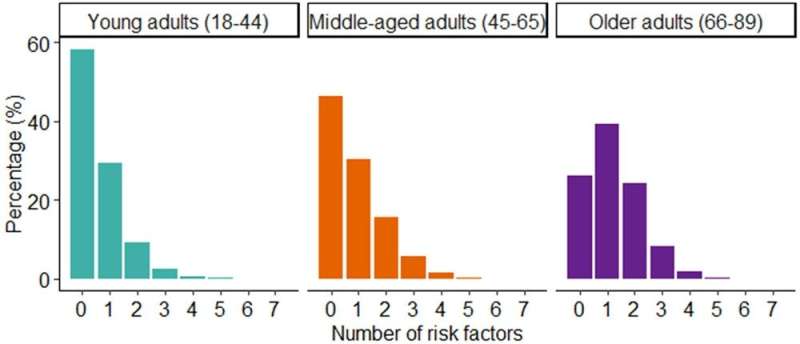
Prevalence (% frequency) of number of risk factors per age period. Credit: Alzheimer's & Dementia: Diagnosis, Assessment & Disease Monitoring (2022). DOI: 10.1002/dad2.12337

Individuals with no dementia risk factors, such as smoking, diabetes or hearing loss, have similar brain health as people who are 10 to 20 years younger than them, according to a new Baycrest study. The study found that a single dementia risk factor could reduce cognition by the equivalent of up to three years of aging.

31 jul 2022--"Our results suggest lifestyle factors may be more important than age in determining someone's level of cognitive functioning. This is great news, since there's a lot you can do to modify these factors, such as managing diabetes, addressing hearing loss, and getting the support you need to quit smoking," says Dr. Annalise LaPlume, Postdoctoral Fellow at Baycrest's Rotman Research Institute (RRI) and the study's lead author.

The study is one of the first to look at lifestyle risk factors for dementia across the entire lifespan.

"While most studies of this nature look at mid- and older-adulthood, we also included data from participants as young as 18, and we found that risk factors had a negative impact on cognitive performance across all ages. This is crucial as it means risk factors can and should be addressed as early as possible," says Dr. Nicole Anderson, Senior Scientist at the RRI, Associate Scientific Director of Baycrest's Kimel Family Center for Brain Health and Wellness, and senior author of this study.

The study, published today in the journal Alzheimer's & Dementia: Diagnosis, Assessment, and Disease Monitoring, a journal of the Alzheimer's Association, included data from 22,117 people aged 18 to 89 who completed the Cogniciti Brain Health Assessment, developed by Baycrest. Participants took the test in their own homes by going to the Cogniciti website. The test takes around 20 minutes to complete and consists of a background questionnaire and four cognitive tasks.

The researchers looked at participants' performance on memory and attention tests, and how this was impacted by eight modifiable risk factors for dementia: low education (less than a high school diploma), hearing loss, traumatic brain injury, alcohol or substance abuse, hypertension, smoking (currently or in the past four years), diabetes and depression.

Each factor led to a decrease in cognitive performance by as much as three years of aging, with each additional factor contributing the same amount of decline. For example, having three risk factors could lead to a decrease in cognitive performance equivalent to as much as nine years of aging. The effects of the risk factors increased with age, as did the number of risk factors people had.

"All in all, our research shows that you have the power to decrease your risk of cognitive decline and dementia," says Dr. LaPlume. "Start addressing any risk factors you have now, whether you're 18 or 90, and you'll support your brain health to help yourself age fearlessly."

The researchers are considering looking further into the differences between normal agers and "super agers"—people who have identical cognitive performance to those several decades younger than them.


More information: Annalise A. LaPlume et al, The adverse effect of modifiable dementia risk factors on cognition amplifies across the adult lifespan, Alzheimer's & Dementia: Diagnosis, Assessment & Disease Monitoring (2022). DOI: 10.1002/dad2.12337