Showing posts with label Caregivers. Show all posts

Tuesday, December 06, 2022


The real cost to unpaid caregivers
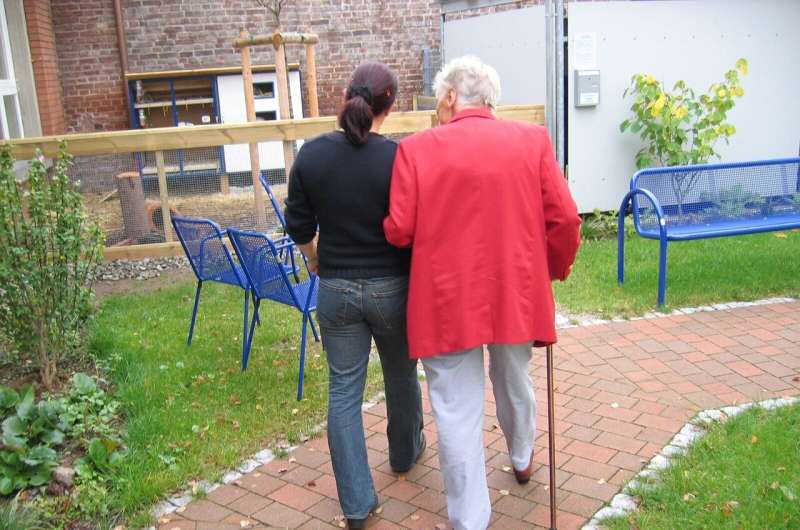
care for elderly
Credit: Pixabay/CC0 Public Domain

Imagine two billion people working eight hours per day for no pay whatsoever. The fact is, you don't have to imagine it because this is the reality of the global informal unpaid caregiving load.

05 dec 2022--Estimated to equal around 9% of the global gross domestic product (GDP), unpaid care contributes substantial benefits to economic and health care systems, but remains largely unrecognized.

Unpaid care work is variously defined but for the purposes of our latest research, informal caregiving is taken to be the provision of unpaid personal services to meet the physical, mental and emotional needs that allow a dependent person to function at an acceptable level of capability, comfort and safety.

As the COVID-19 pandemic highlighted, informal unpaid care is highly gendered. Women make up an estimated 80% of informal caregivers globally which includes physical care of a person—like their hygiene, medication and food—but also includes their emotional support and important decision-making.

In Australia, roughly one in 10 people (or 10% of the population) are informal caregivers—but this does not include childcare.

On top of this, more than a third of these caregivers are in their prime working years, aged between 35 and 54.

By providing much of the world's care needs, these informal caregivers suffer personal economic and paid workforce penalties. But importantly, providing this informal care can also negatively impact the physical and mental health of caregivers.

Our review, recently published in eClinicalMedicine, worked to gather all of the evidence looking at the link between unpaid caregiving and the mental health of working-age adults in high-income OECD countries.

While previous reviews have suggested a negative association between caregiving and mental health, stronger longitudinal evidence was needed to substantiate the theory. Moreover, despite the highly gendered nature of informal care, earlier reviews lacked a gender lens.

Our review aims to address these key gaps.

We searched six databases and screened more than 4,500 records to identify 13 eligible studies with 133,426 participants from countries including Australia, the United Kingdom, the United States, Canada, Israel, Japan and a number of European countries.

All the included studies had be from high-income OECD countries so our sample group was made up of like-for-like people, and studies had to be longitudinal in design and compare caregiving with non-caregiving.

Overwhelmingly, our team found that unpaid caregiving is detrimental to the mental health of working-age adults. Where studies could be ordered by gender, caregiving was consistently negatively associated with mental health for women.

While few studies examined men, this negative effect was also reported for them.

All of the studies we included used validated, self-reported, survey-based measures of mental health. These measures are well-recognized mental health measures for depressive symptoms and psychological distress which are used to assess common mental disorders.

Of the thirteen studies, only two studies reported no association between informal caregiving and mental health—and none found it was beneficial to mental health. The remaining eleven studies all reported a negative association between informal unpaid care and mental health in at least one category or gender subgroup.

Overall, our review found that among working-age adults, informal unpaid care was detrimental to their mental health.

Numerous theories attempt to explain why informal care provision may adversely affect caregivers' mental health. These include the multiple stressors many caregivers experience, the strain of juggling multiple roles that can lead to overload and the impact of time scarcity on the mental well-being of caregivers.

In addition, both the financial and time costs that come with the demands of caregiving can add to the negative impacts on mental health. Then there's also the fact that many caregivers prioritize the health of the person being cared for, which can mean they don't practice self-care or other positive health behaviors.

And finally, caregiving is emotionally laden. It's intrinsically interconnected with the relationship between the caregiver and the person they're looking after—a caregiver's mental health can be additionally affected by the sheer worry and stress of someone they love and care about being unwell—known as the family effect.

The health of caregivers is a vitally important issue, and we need to better understand how best to help current and future caregivers.

Our work identified several avenues for future research. These include a need for better baseline data and stratification by gender, the inclusion of men and an understanding of the importance of the family effect when examining the mental health of caregivers.

We also identified a lack of studies examining caregiving for "healthy" people—like children and healthy adults or elders, which remains a notable gap.

Ultimately, our findings highlight the pressing need to help alleviate the mental health risks of caregiving in working-age adults. This is especially important given informal care needs are only increasing worldwide, both with the aging global population, as well as the ongoing demands of the COVID-19 pandemic.

Finally, while we need to understand the role of male caregivers better, the most pressing and urgent matter for policy change is reducing the disproportionate caregiving load on working-age women, with the aim of lightening the mental health load they currently carry.

More information: Jennifer Ervin et al, Longitudinal association between informal unpaid caregiving and mental health amongst working age adults in high-income OECD countries: A systematic review, eClinicalMedicine (2022). DOI: 10.1016/j.eclinm.2022.101711
Provided by University of Melbourne 

Wednesday, October 19, 2016

Depression in caregivers of dementia patients, worse for daughters or daughters-in-law?

Depression in caregivers of dementia patients, worse for daughters or daughters-in-law?

Too often overlooked is the risk of depression in caregivers of patients with dementia, and a new study focuses on how depressive symptoms may differ depending on the familial relationship between caregiver and patient. The study shows how patients' behavioral symptoms are predictive of depression to different extents when the caregiver is the patient's daughter versus daughter-in-law, as reported in Journal of Women's Health.
19 oct 2016--In Asian societies, a daughter-in-law often takes on the caretaker role, rather than a spouse or child, note Juwon Lee, University of Kansas, Lawrence, Bo Kyung Sohn, MD, Sujeong Seong, MD, and Jun-Young Lee, MD, PhD, Seoul National University College of Medicine, Hyunjoo Lee, Daegu University, Gyeongsan, and Soowon Park, PhD, Seoul National University, Republic of Korea, coauthors of the article "Impact of Behavioral Symptoms in Dementia Patients on Depression in Daughter and Daughter-in-Law Caregivers." In both groups of caregivers, depressive symptoms increased as the frequency and severity of a patient's behavioral symptoms rose. But the level of depression was more strongly affected among one group of caregivers than the other, which the authors attribute to the relationship between patient and caregiver.
"This novel look at how factors such as relationship to the patient can affect caregiver depression offers valuable insights to help guide future studies and interventions aimed at understanding and safeguarding caregiver health," says Susan G. Kornstein, MD, Editor-in-Chief of Journal of Women's Health, Executive Director of the Virginia Commonwealth University Institute for Women's Health, Richmond, VA, and President of the Academy of Women's Health.

More information: Juwon Lee et al, Impact of Behavioral Symptoms in Dementia Patients on Depression in Daughter and Daughter-in-Law Caregivers, Journal of Women's Health (2016). DOI: 10.1089/jwh.2016.5831


Provided by Mary Ann Liebert, Inc

Wednesday, January 08, 2014

Growing number of seniors caring for other seniors


Growing number of seniors caring for other seniors


In this Nov. 21, 2013, photo, Paul Gregoline rests in his favorite chair as caregiver Warren Manchess leaves the room, in Noblesville Ind. Burgeoning demand for senior services like home health aides is being met by a surprising segment of the workforce: Other seniors. Twenty-nine percent of so-called direct-care workers are projected to be 55 or older by 2018 and in some segments of that population older workers are the single largest age demographic. With high rates of turnover, home care agencies have shown a willingness to hire older people new to the field who have found a tough job market as they try to supplement their retirement income.(AP Photo/Darron Cummings)
08 jan 2014--Burgeoning demand for senior services like home health aides is being met by a surprising segment of the workforce: Other seniors.
Twenty-nine percent of so-called direct-care workers are projected to be 55 or older by 2018. And in some segments of that population, older workers are the single largest age demographic.
Though the jobs are among the fastest-growing in the U.S., they may seem a curious choice for older workers for their physical demands, low pay and high rates of injury.
But with high rates of turnover, home care agencies have shown a willingness to hire older people new to the field who have found a tough job market as they try to supplement their retirement income.
© 2014 The Associated Press. All rights reserved.

Saturday, September 21, 2013

ALZHEIMER DAY SPECIALS NEWS

Alzheimer's 'epidemic' straining caregiver, community resources: report

Alzheimer's 'Epidemic' straining caregiver, community resources: report
Worldwide situation calls for comprehensive changes, authors say.
21 sept 2013—The so-called global Alzheimer's epidemic is leading to a shortage of caregivers for seniors and a lack of support for family members who look after elderly relatives, according to a new report.
Released Thursday, the report said the number of dependent older adults will increase to 277 million by 2050, and half of seniors who require personal care have dementia.
As the world's population ages, the traditional system of informal care provided by family, friends and the community will require much greater support from governments. This means leaders worldwide need to make dementia a priority by implementing national plans and having discussions about future strategies for long-term care, according to the World Alzheimer's 2013 report.
Worldwide, 13 percent of people 60 and older require long-term care, the report said. Between 2010 and 2050, the number of older adults with care needs will nearly triple, from 101 million to 277 million.
Long-term care is mainly about care for people with dementia, according to the report. About half of all older people who need personal care have dementia, and 80 percent of seniors in nursing homes have dementia. The worldwide cost of dementia is currently more than $600 billion.
More attention needs to be paid to helping dementia patients and their families "live well with dementia," the report said. It also called for a 10-fold increase in research funding to "re-energize" the work on dementia prevention, treatment and care.
Among specific recommendations are the following:
  • Having systems in place to monitor the quality of dementia care in all settings, whether in the community or care homes
  • Promoting autonomy and choice for patients at all stages of dementia and for their caregivers
  • Better integration and coordination between health and social care systems to meet patients' and caregivers' needs.
  • Adequately training frontline caregivers, with systems in place to ensure that paid and unpaid caregivers receive appropriate financial rewards—both to sustain the informal care system and improve recruitment and retention of paid caregivers
  • Properly valuing unpaid work of family caregivers. Although care in care homes is a preferred option for a significant minority, quality of life at home can be just as good and costs are comparable.
  • Monitoring quality of care in care homes through the quality of life and satisfaction of their residents, in addition to routine inspections.
"People with dementia have special needs. Compared with other long-term-care users they need more personal care, more hours of care and more supervision, all of which is associated with greater strain on caregivers, and higher costs," report author Martin Prince, a professor at the Institute of Psychiatry at King's College London, said in a college news release. "Their needs for care start early in the disease course, and evolve constantly over time, requiring advanced planning, monitoring and coordination."
"We need to value the unpaid contribution of family caregivers more, and reward paid caregivers better," Prince said. "We can build quality into our care systems, but to do so while containing costs and achieving equity of access for all will be a challenge."
More information: The U.S. National Institute on Aging has more about Alzheimer's disease.

Friday, August 05, 2011

Caregivers and their relatives disagree about care given, received

Caregivers and their relatives who suffer from mild to moderate dementia often have different perceptions regarding the amount and quality of care given and received. A study by researchers at Penn State and the Benjamin Rose Institute on Aging examined a major source of those differences -- caregivers do not understand the things that are important to their relatives with dementia.

05 aug 2011--"Family caregivers often become the surrogate decision makers of relatives who have dementia, so the two groups need to communicate well and to understand each other," said Steven Zarit, a professor and head of the Department of Human Development and Family Studies at Penn State and the study's leader. "Unfortunately, in our study we found that family caregivers and their relatives often do not understand each other well when it comes to the values they hold about giving and receiving care."

The team interviewed 266 pairs of people, each composed of an individual with mild to moderate dementia and his or her family caregiver. To participate in the study, caregivers had to be the primary family caregiver of the dementia patient and the dementia patient had to be living in his or her own home. The researchers interviewed members of the pairs separately, asking questions related to how much value they place on five core values: autonomy, burden, control, family and safety. For example, one question focused on the level of importance a dementia patient gave to the ability to spend his or her own money in the way he or she wants.

"Our results demonstrate that adult children underestimate the importance that their relatives with dementia placed on all five core values," said Zarit. "For example, the person with dementia might think it is very important to continue to be part of family celebrations, but his or her caregiver might not." The team's results will appear in the August issue of The Gerontologist.

According to Zarit, a major reason for differences in these perceptions is that caregivers come to view people with dementia as unable to make their own decisions about daily life. "That is something that does happen as the disease progresses, but the people in our study remained capable of making decisions for themselves and could express their values in a clear and direct way," said Zarit. "Caregivers who still saw the person with dementia as able to direct his or her daily life were also more in tune with that person's values and beliefs."

This lack of agreement about how care is provided has ominous implications for when the dementia worsens. "As people's cognitive abilities decline," Zarit said, "they can no longer express clearly what they want. Family members have to act as surrogate decision makers, but if they don't understand the dementia patients' preferences about care, they may not be able to make the best choices."

Zarit plans to continue this research by developing and evaluating protocols for improving communication between caregivers and their relatives to ensure that medical and social decisions are made in such a way that reflect dementia patients' actual values.

Provided by Pennsylvania State University

Friday, June 11, 2010

Two New Studies Reveal Well-Being Over A Lifetime And The Well-Being Challenges Faced By Caregivers

11 jun 2010-Studies published by Healthways Center for Health Research (CHR) in its May 2010 publication of Outcomes & Insights provide new knowledge of the impact of age on well-being, and the effect of caregiving on the well-being of the 52 million Americans providing care for an adult who is ill or disabled. The studies, based on more than 355,000 individual responses collected through 2008, leverage data from the Gallup-Healthways Well-Being Index™ (WBI), the largest survey of its kind, and the pulse of well-being in America.

The Impact of Caregiving and Employment on Well-Being

The first study, "Estimating the Impact of Caregiving and Employment on Well-Being," demonstrates those who provide care for other adults are in need of well-being support themselves. Employed non-caregivers experience significantly higher well-being than their employed caregiver counterparts.

"One in five American households is already providing support for a loved one (who is not a child) 18 hours or more each week," said Joseph Coughlin, an author of both CHR papers and Director of the Massachusetts Institute of Technology AgeLab. "The need for caregivers is not going away. We need to look now at how we can help these people who will be over worked and over stressed."

The ongoing call for caregivers will demand innovations in the workplace, Coughlin said. Jobs that provide flexible hours, unpaid family leave and paid sick or vacation days are more likely to retain caregivers as employees. Additionally, workplace wellness programs can provide a valuable resource to help employees maintain their own well-being while caring for someone else.

The study also shows caregivers worry more than non-caregivers and also experience less happiness. Employed non-caregivers reported feeling happiest (47.1 percent), with employed caregivers falling significantly behind (39.9 percent). The higher stress and lower happiness scores is even more apparent in non-employed caregivers, of which fewer than a third reported happiness the day before.

Overall, these results demonstrate caregivers are more in need of support systems to maintain their well-being. Although the financial and social support offered through employment appear to diminish some of the stress stemming from the caregiving role, employees who act as a caregiver are worse off than their counterparts who do not have to juggle both responsibilities.

The Impact of Age on Well-Being

The second study, "Facets of Well-Being Across the Age Spectrum in the American Population," shows well-being follows a U-shaped curve over the course of adulthood. While young, buoyed by physical health and optimism for the future, people generally have an intermediate (65.9) well-being score. Seniors, age 65 and up, have a significantly higher well-being score (68.8) than any other age group, despite reduced physical health. Those considered middle aged, ages 44 through 64, have the lowest well-being (64.8).

"These data are a wake up call to boomers, business leaders and policymakers," Coughlin said. "While it is great news that today's older adults 'feel better,' we also know that how we manage our well-being in mid life predicts personal health and public costs in late life. All middle-aged Americans should see these findings as a call to engage with their friends, employers, insurers and communities to invest in their well-being now to ensure quality living across the lifespan."

"Both the caregiver and age spectrum well-being studies underscore the importance of addressing the social and emotional factors that influence well-being," said Ben R. Leedle, Jr., CEO of Healthways. "The good news is that programs exist that effectively allow employers to enhance the well-being of their constituents and engage those in the greatest need of assistance."

Complementary research on well-being over a lifetime, also based on WBI data, was published in the May 2010 edition of Proceedings of the National Academy of Sciences. That study, "A Snapshot of the Age Distribution of Psychological Well-Being in the United States," supports the CHR conclusion that well-being follows a U-shaped curve over a lifetime, with highest well-being attained post age 50.

Complete content of "Estimating the Impact of Caregiving and Employment on Well-Being" and "Facets of Well-Being Across the Age Spectrum in the American Population" are available at http://www.healthways.com. Additional information about the Gallup-Healthways Well-Being Index is available at http://www.well-beingindex.com.

Source
Healthways

Tuesday, July 21, 2009

Straight Talk From Three Doctors About What We Should Expect As We Grow Older And How We Can Stay Healthy Despite Limitations Of Age

21 july 2009--As life expectancy continues to increase, millions are living well into their eighties and nineties. With the aging of the baby boomers, the population of senior citizens will swell dramatically in the coming decades. These statistics will inevitably draw more attention to the aging process. What should middle-aged people expect as they grow older? What should caregivers of the elderly know about normal aging? How can we all stay healthy despite the limitations of age? "The Real Truth About Aging: A Survival Guider For Older Adults and Caregivers" (ISBN 978-1-59102-719-5 Prometheus Books) answers crucial questions about aging - from the basics of preventative medicine to the most difficult end-of-life issues.

In this authoritative, user-friendly guide, three experts in geriatric medicine provide the latest evidence on: healthy aging, an understanding of the modern and often confusing health care system, and information about the medical issues affecting frail older adults.

"Accurate, concise, and easy to understand, The Real Truth About Aging is a 'must read' for the mature adult. This is a reference guide for how to maintain a healthful life," said Monica Willis Parker, MD, Assistant Professor of Medicine, Department of Geriatrics and Gerontology, Emory University School of Medicine.

The doctors begin with the basic facts of aging, distilling the current research on the underlying molecular mechanisms, organ system changes, and associated disease risks that occur as our bodies get older. They devote separate chapters to preventative medical testing, so-called anti-aging therapies, vitamin and herbal supplements, exercise, and medication problems. In the next section, they present an overview of the American healthcare system, from making the most of a doctor's visit and an explanation of various healthcare professionals involved in elder care to guidelines for choosing a nursing home or assisted care facility. They also discuss the health risks of a stay in the hospital, including antibiotic-resistant infections, temporary delirium, and bedsores.

"Quality healthcare in the U.S. today mandates that patients be educated, resourceful, and empowered," said Bruce L. Mondschain, President/CEO Catalyst Associates, Inc. "The Real Truth about Aging is written to be this generation's guide to better information and healthier living. Reading this book and using it as a 'go to' guide, supports what we all know and believe…that educated and knowledgeable people make the most informed decisions."

The doctors tackle the challenges of caring for a frail senior, covering a range of issues from falls, osteoporosis, and infections, to sleep difficulties, depression, and dementia. They review the last days of life and how hospice can help. The authors also discuss the need to plan ahead. Among the questions considered are: When should an advance directive be written? How much money will be needed for the elder years? When should a senior give up driving?

"It is refreshing to find a book that is honest and courageous enough to fly against the 'happy-talk' genre of books for the elderly. I've never seen anything to match the straight-talking authenticity that explodes off of every page," said Barry Farber, Veteran Radio Talk Show Host.

At a time when geriatric medicine is becoming a rare specialty and doctors receive little training in this area, the wealth of information compiled in this one book is invaluable. Senior citizens, their families, and even healthcare professionals will find it to be an unparalleled resource.

About the Authors

Neil Shulman, M.D. (Decatur, GA), is associate professor of medicine at Emory University School of Medicine. Among his many responsibilities, he was medical director of a nursing home for over 23 years. Dr. Shulman has published 21 books, including Your Body, Your Health (with Rowena Sobczyk, MD), Healthy Transitions (with Edmund S. Kim, MD), and Your Body's Red Light Warning Signals (now in its ninth printing). He is also the author or coauthor of over 100 scientific papers.

Michael Silverman, MD, MPH (Miami Beach, FL), is the president of the Florida Geriatrics society and a voluntary professor of clinical medicine at the University of Miami Miller School of Medicine. He is the medical director of the Miami Jewish Home and Hospital for the Aged.

Adam G. Golden, MD, MBA (Miami Beach, FL), is an Investigator in the Miami Geriatric Research, Education, and Clinical Center (GRECC) and an assistant professor of clinical medicine at the University of Miami Miller School of Medicine.

Source:
Jennifer Kovach
Prometheus Books

Thursday, July 02, 2009

Caregivers may benefit from adult day care

02 july 2009--Caring for an elderly family member can be stressful and can pose health threats to caregiver givers. Steven Zarit, professor and head, Department of Human Development and Family Studies, Penn State, received a $3 million grant from the National Institute on Aging to study the effects of caregiving on familial caregivers. He will look at people who care for family members with dementia and how adult day care impacts the stress levels of all individuals involved.

People with dementia experience progressive memory loss, which can lead them to act out in ways that are not always easy to handle. They may try to leave the house, struggle with dressing, reject help and become agitated. This erratic behavior requires constant surveillance and any lapses in vigilance could lead to danger. Trained professionals are more prepared to deal with these types of behaviors and often experience less stress than family members.

"Using adult day care can reduce stress for family members by lifting the burden of responsibility from them for a few hours," said Zarit. "At the same time, day care provides stimulating activities that promote sleep and well-being in those being cared for."

Zarit will interview and collect saliva samples from caregivers on eight consecutive days to test both self-perceptions of stress and physiological stress. Because adult day care is typically used only three or four days a week, he will be able to assess how stress levels fluctuate when day care is used or not used.

"In many studies that test stress in individuals, the subjects might only have one day that they experience high stress," said Zarit. "In this experiment, though, participants will experience several days of high stress. This should give us a better understanding of the mechanism through which stress affects our health and it will be able to tell us what happens physiologically when someone reports having a good or bad day."

Through his research, Zarit will be able to assess whether or not using day care truly improves the health of people suffering from dementia and their family members. He will work with 180 participants over three years, primarily with adult day care centers in New Jersey, which are known for providing excellent day care service.

Saturday, February 14, 2009

Caregivers not receiving the help they need, study shows

WINSTON-SALEM, N.C., 14 feb 2009 – Caregivers of children with special health care needs often do not get the respite care they need, according to the findings of a recent study by researchers at Wake Forest University Baptist Medical Center.

Researchers found that families with private insurance have more unmet respite care needs than those with public coverage. They also found that families or caregivers who need respite care the most – those caring for children with the most severe functional limitations and unstable conditions – often do not get it.

"This is an issue that doesn't get a lot of attention," said Savithri Nageswaran, M.D., M.P.H., lead researcher for the study and a pediatrician at Brenner Children's Hospital of Wake Forest Baptist.

The study grew out of discussions among members of Forsyth County's Pediatric Community Alliance, a coalition of parents, professionals and organizations committed to improving the quality of care for children with serious illnesses.

Nageswaran directs the pediatric palliative care program at Brenner Children's Hospital, a program that serves children with complex needs. These children are surviving and living longer today because of advances in technology, Nageswaran said. There has also been a shift from caring for children with complex needs in institutions to caring for them in the community, she added.

However, these patients have complicated health problems that require caregivers to use complex technology at home, Nageswaran said. The same health issues often also require the children to take 10 to 15 different medications, which means family members have to be alert every few hours to administer them.

Respite care, or temporary relief from caregiving, provides much needed help to families and caregivers in the form of a break from caregiving duties.

"These parents have to go through so much," Nageswaran said. "They do it with a lot of love. But caregiving is not an easy task, and families need help caring for their children with special needs."

For the study, Nageswaran analyzed data collected from the 2001 National Survey of Children with Special Health Care Needs. The study used a random sample of U.S. households with children younger than 18. The findings, recently published in the Archives of Pediatrics & Adolescent Medicine, showed that 24 percent of caregivers who need respite care have unmet needs.

Caregivers of children with severe functional limitations had greater unmet respite care needs than those without limitations, as did caregivers of children with unstable health conditions versus those with stable health conditions, according to the study. In addition, the study shows that caregivers with public insurance have far fewer unmet respite care needs than those with private insurance. Nageswaran suggested that this may be because many private insurance plans are not comprehensive enough to provide support services such as respite care for children with special needs.

"If it is not enough, we need to advocate for more comprehensive insurance coverage for our children," Nageswaran said.

The American Academy of Pediatrics recommends that support systems are in place to help caregivers of children with special needs. Yet, the study shows, the respite care needs of one out of four families of caregivers are not met. This translates to approximately 200,000 families with unmet respite care needs in the United States, according to the study.

Of those survey respondents who reported unmet respite care needs, 26 percent reported a lack of availability of services and transportation problems as the reason behind the unmet need, 22 percent said respite care would cost too much and 13 percent reported health care problems as the reason. There are also some caregivers who simply may not report their respite care needs, Nageswaran said, possibly because they feel that seeking such help is "giving up" on the child or because they lack awareness about respite care as a support service.

At a time of ongoing debate around improving the quality of American health care, Nageswaran said, future studies should explore the impact of respite care provisions in decreasing health care and societal costs in providing care to children with special needs.

###

Media Relations Contacts: Jessica Guenzel, jguenzel@wfubmc.edu, (336) 716-3487; Rae Bush, rbush@wfubmc.edu, (336) 716-6878; or Bonnie Davis, bdavis@wfubmc.edu, (336) 716-4977.

Sunday, January 25, 2009

Many Alzheimer's Caregivers Admit to Abusive Behavior

Actual physical abuse was rare, being reported by only three of the 220 caretakers in the study. But the researchers, who published their findings in the Jan. 23 online issue of BMJ, say that 115 (52.3 percent) of those surveyed acknowledged some abusive behavior toward the relative under care, with "significant" abusive behavior described by 74 (33.6 percent) of caregivers.

The results indicate "the extreme difficulty of caring for persons with dementia," said study author Dr. Claudia Cooper, a psychiatrist and research training fellow in health sciences research with the Medical Research Council, the British equivalent of the U.S. National Institutes of Health.

The most common form of abuse (26 percent) was screaming or yelling at the person with dementia. Insults or swearing accounted for 18 percent of reports, with threats of sending the person to a nursing home happening in 4.4 percent of cases.

"Mostly people said they wished it hadn't happened," Cooper said. "People with dementia can act aggressively. They [the caretakers] were reacting to being the subject of aggression or being in a difficult situation."

The British government is considering a revision of its policies for safeguarding vulnerable adults, focusing on paid caretakers. The newly reported study of family caretakers was done, because "previous smaller studies that asked about abusive behaviors reported high rates," Cooper said. "Given those studies, which indicated that about a third of family carers reported significant abuse, we needed to know more about it."

Cooper and her colleagues interviewed family members of people living at home with dementia in London and in Essex, a borough near London. The results were pretty much as expected, she said. "We predicted that a third of family carers would report significant abuse. We also expected few cases of physical abuse or frequent abuse."

The study is part of a larger program aimed at reducing abusive behavior in such families, Cooper said. "We need to know exactly what is going on before looking for ways to reduce it," she said.

The incidence of such abuse in the United States is not known, since comparable studies have not been done here, said Beth A. Kallmyer, director of client services at the Alzheimer's Association. But the association "gets a lot of questions about it," Kallmyer said, enough so that it maintains a 24-hour telephone service, at 800-272-3900.

"One of our messages is that people can't do this alone," Kallmyer said. "It is a progressive disease, so that the ability of the person being cared for diminishes with time. That creates great stress."

To help caretakers determine whether the stress has grown too great, the association has provided a caregiver stress test, at www.alz.org/stresscheck, she said.

"We want them to reach out, because if they don't reach out they get burnt out," Kallmyer said.

Another report in the same issue of BMJ dealt with a different matter of concern for the elderly: the effectiveness of specialized geriatric hospital units.

Older people who are cared for in such units have a better chance of returning home after discharge than those treated in conventional hospital facilities, said a report by physicians at the University Hospital of Getafe in Madrid.

A review of 11 studies that compared care provided by acute geriatric units run by specialists with conventional hospital units found elderly patients had a better ability to function back at home and a reduced risk of returning to the units in the three months after discharge.

But further studies are needed to determine if the benefits persist over the longer term, the report said.

More information

For more on elder abuse, go to the The AGS Foundation for Health in Aging.

Monday, December 01, 2008

More Men Take the Lead Role in Caring for Elderly Parents

By JOHN LELAND
01 dez 2008--When Peter Nicholson’s mother suffered a series of strokes last winter, he did something women have done for generations: he quit his job and moved into her West Hollywood home to care for her full time.
Since then, he has lost 45 pounds and developed anemia, in part because of the stress, and he is running out of money. But the hardest adjustment, Mr. Nicholson said, has been the emotional toll.
“The single toughest moment was when she said to me, ‘And now who are you?’ ” he said. “My whole world just dropped. That was the pinnacle of despair.”
Mr. Nicholson, 53, is part of a growing number of men who are providing primary care for their aging parents, usually their mothers.
The Alzheimer’s Association and the National Alliance for Caregiving estimate that men make up nearly 40 percent of family care providers now, up from 19 percent in a 1996 study by the Alzheimer’s Association. About 17 million men are caring for an adult.
“It used to be that when men said, ‘I’ll always take care of my mother,’ it meant, ‘My wife will always take care of my mother,’ ” said Carol Levine, director of the families and health care project at the United Hospital Fund. “But now, more and more men are doing it.”
Often they are overshadowed by their female counterparts and faced with employers, friends, support organizations and sometimes even parents who view caregiving as an essentially female role. Male caregivers are more likely to say they feel unprepared for the role and become socially isolated, and less likely to ask for help.
Women still provide the bulk of family care, especially intimate tasks like bathing and dressing. At support groups, which are predominantly made up of women, many women complain that their brothers are treated like heroes just for showing up.
But with smaller families and more women working full-time, many men have no choice but to take on roles that would have been alien to their fathers. Just as fatherhood became more hands-on in the baby boom generation, so has the role for many sons as their generation’s parents age.
Mr. Nicholson said his family had not discussed who would take care of his mother, Bernice, if she became frail. But as the unmarried child among his two siblings, and the one who was most readily available, he had spent increasing time with her as she aged.
Still, he was not prepared for the isolation of full-time care. “There’s absolutely no involvement in the outside world,” Mr. Nicholson said. “When I finally get out to a Dodgers game, walking to the car, I say, Oh, this is what life is about. I forgot about this. I can’t be doing myself any good by not getting out of here.”
Isolation affects women as well, but men tend to have fewer lifelines, said Donna Benton, an assistant research professor of gerontology at the University of Southern California and director of the Los Angeles Caregiver Resource Network. Men are less likely to have friends going through similar experiences, and depend more on their jobs for daily human contact.
“That’s the harder part for men, to find someone to talk to,” Dr. Benton said. “It’s the emotional side: the guilt, the sadness, the anger. For men it becomes more stressful because they can’t talk about it. They feel cut off.”
And then there is the inevitable question: What happens when I have to bathe her?
“That’s where the rubber meets the road,” said Donna Wagner, the director of gerontology at Towson University and one of the few researchers who has studied sons as caregivers.
For Mr. Nicholson, the whole experience has been a journey into the surreal, but especially at bath time.
Though he is not squeamish about it, he said: “The weirdness permeates our relationship. She doesn’t know if I’m her husband or her boyfriend or her neighbor. She knows she trusts me. But there are times when it’s very difficult. I need to keep her from embarrassing herself. She’ll say things like, ‘I adore you.’ I don’t know who she’s loving, because she doesn’t know who I am. Maybe I’m embarrassed about it — it’s my mom, for Christ sakes. But it’s weird how the oldest son becomes the spouse.”
Matt Kassin, 51, said he had no role model for male caregiver in his family. His father had been distant; he, in turn, had been the rebellious son.
“I was the son who went through divorce, who needed to separate from my mom when I was teenager,” Mr. Kassin said. “I’m the son that wanted distance. Now I’m the son who hears every morning, ‘It’s so nice to hear your voice.’ ”
On a recent evening, Mr. Kassin visited his mother, Doris Golden, in her Manhattan apartment. Ms. Golden, 82, is in the early stages of Alzheimer’s and still lives independently, but relies on Mr. Kassin to arrange her schedule, pay her bills and make sure she remembers her daily tasks (his sister also helps).
His care has surprised his mother. “When he was young, I couldn’t get him to raise a finger,” Ms. Golden said. Her conversation looped repeatedly back to this point, and with each return, Mr. Kassin grew more irritated. That was when he was a teenager, he said, sharply; hadn’t he been more attentive since?
Finally she looked at him tenderly and asked, “When did I start relying on you?”
Interviewed apart from his mother, Mr. Kassin said: “It’s kind of like living my nightmare situation. But it’s a great opportunity here. Here’s the woman who nurtured me. She now is the child. You worry if you’re up for the challenge. If I don’t make this challenge, what kind of human being am I?”
In past generations, men might have answered this question by pointing to their accomplishments as breadwinners or fathers. Now, some men say they worry about the conflict between caring for their parents and these other roles.
In a 2003 study at three Fortune 500 companies, Dr. Wagner found that men were less likely to use employee-assistance programs for caregivers because they feared it would be held against them.
“Even though the company has endorsed the program, your supervisors may have a different opinion,” Dr. Wagner said. “I had a man who worked for a large company with very generous benefits, and he was told that if he took more time to go with his dad to chemotherapy, he was at risk of losing his job. He ended up not going with his father.”
Mr. Kassin said that although his employer had been understanding, he was reluctant to talk about his caregiving because “I think it would be looked at like, when they hire a male, they expect him to be 100-percent focused.”
“I don’t want to appear to be someone who has distractions that detract from performance,” he said.
For many men, the new role means giving up their self-image as experts, said Louis Colbert, director of the office of services for the aging in Delaware County, Pa., who has shared care of his 84-year-old mother with his siblings since her Alzheimer’s made it necessary.
“I’ve been a professional for 32 years,” Mr. Colbert said, “but yet I remember the first time I was driving to my mother’s house, being afraid because I didn’t know if I knew what to do.”
Once a year, Mr. Colbert organizes a get-together for male caregivers. The concerns they raise, he said, are different from those of women in support groups. “Very clearly, they said they wanted their role as caregiver validated, because in our society, as a whole, men as caregivers have been invisible,” he said.
This invisibility can extend to hospitals and nursing homes, said Amy Torres, helpline director at Fria, a national nonprofit organization based in New York that represents family members and residents in long-term care facilities.
“Nursing homes have a very difficult time dealing with male caregivers,” Ms. Torres said. “It’s unusual for them. The male caregiver is made to feel their interest in their relative is inappropriate. Our male callers say they’re made to feel what they’re doing is unusual, that it’s wrong.”
She gave the example of a son who was the health care agent for his mother and wanted to be in the room when the staff changed her diaper because he was concerned about her skin condition. “The staff refused to allow it,” Ms. Torres said. “They said the mother’s dignity was at risk.”
After two weeks of pressing, she said, he finally got his way. With a daughter, this would not have been an issue, Ms. Torres said.
And even when they are acknowledged, for many male caregivers, as for women, there is the lingering sense that whatever they do is not enough.
Mr. Nicholson said he knew this feeling too well. As a teacher, he could measure his contribution by the students’ progress. But with his mother, he can only watch her decline.
“I’m always asking myself, Am I even qualified for this?” he said. “Just because I love her a lot doesn’t mean that I have any idea if I’m doing the right thing, or doing what’s best for her.”
He sounded exhausted, rattled even.
“I don’t know if this is just the musings of someone who’s on the verge of tossing everything and putting her in a home,” he said. “But this is a very revealing journey about who I am to me and my family, and what’s important to me.”

Tuesday, September 23, 2008


Caregivers Face Multiple Strains Tending Older Parents


23 sept 2008-- Middle-aged adults who regularly help their elderly parents get by experience a drop in health and well-being in their own lives, a new study shows.
The study, published earlier this year in the Journal of Gerontology: Social Sciences, found these adult children were often juggling multiple roles each day, sometimes causing conflicts in roles or feeling overloaded.
"The accumulation of small and large daily stressors such as work deadlines, PTA meetings, supporting family and friends as well as providing routine assistance to a parent living outside one's house can build up," study leader Jyoti Savla, assistant professor of human development and gerontology at Virginia Tech, said in a university news release. "Sooner or later, they can spill over into other areas of life with negative mental and physical consequences. Days when help is provided to parents are more stressful than days when it is not," Savla said.
Salva's team studied diaries of the individuals who provided help to parents, more than half of which did so on two or more days each week. They found several factors, such as having a spouse and higher education, could decrease the conflict and demands on time. Also, those who believed in personal growth, mastery and self-acceptance experienced fewer negative consequences from helping their parents.
"By building on an understanding of individual's experiences, this approach could make daily life easier for older adults and the individuals who support them and prevent the depletion of care resources," Savla said.
More information
The AARP has more about managing caregiver stress.

Monday, November 19, 2007

Study Finds Higher Costs for Caregivers of Elderly

By JANE GROSS
The out-of-pocket cost of caring for an aging parent or spouse averages about $5,500 a year, according to the nation’s first in-depth study of such expenses, a sum that is more than double previous estimates and more than the average American household spends annually on health care and entertainment combined.
Family members responsible for ailing loved ones provide not only “hands on” care but often reach into their own pockets to pay for many other expenses of care recipients, including groceries, household goods, drugs, medical co-payments and transportation. That nudges the average cost of providing long-distance care to $8,728 a year.
These caregivers, spending on average 10 percent of their household income, manage the financial burden by taking out loans, skipping vacations, dipping into savings or ignoring their own health care.
These findings and others, to be released today, came from a telephone survey of 1,000 adults caring for someone over age 50 who needs help with activities like bathing, using the toilet, preparing meals, shopping or managing finances. It is the first detailed look at out-of-pocket spending among the estimated 34 million Americans providing care for older family members or friends and builds on a 2004 study.
The survey was conducted by the National Alliance for Caregiving, a research and policy organization, and Evercare, a division of the UnitedHealth Group, which coordinates long-term care for 150,000 clients. The report urges government assistance for family caregivers, whether through tax deductions, tax credits or other stipends.
“Typically, when people talk about services for caregivers, they mean respite care, support groups and things like that,” said Gail Gibson Hunt, president of the National Alliance for Caregiving. “They don’t think of the financial side being tied into the burden. If you’re spending 10 percent of your income, that’s part of what’s weighing on you, and policymakers haven’t paid enough attention to that.”
Until now, all estimates of out-of-pocket spending were based on a single question buried in a broad 2004 survey of family caregivers, according to Ms. Hunt and Donna Wagner, a gerontologist at Towson University in Maryland who analyzed the data for the new report.
The 2004 survey, also the work of the National Alliance for Caregiving, had asked 1,247 caregivers to estimate their out-of-pocket expenses. Half said that they did have such expenses, averaging $2,400 a year.
By comparison, the new survey — with 29 questions devoted to this one subject — produced a markedly different result. Of the 1,000 respondents, only 2 said they had never laid out any money. The rest said they spent on average $5,531 a year, or 10 percent of their salary. The burden was heavier for those who earned less, 20 percent for respondents with incomes of $25,000.
Melissa Phillips, 45, a stay-at-home mother in Clayton, Ind., has spent $6,000 a year since her father moved from his own home into an assisted-living center, largely on groceries, incidental expenses and medical equipment like a wheelchair and a riser for the toilet seat. She helps out a bit with the monthly rent so his savings last longer and will pick up the slack if he runs out of money.
For Mrs. Phillips, a respondent in the survey, her present circumstances are an improvement over the 10 months before her father left his own house, when he was in and out of the hospital. She and her three children moved in with him, disrupting their home schooling, while her husband remained at home.
Costs ran higher then, Mrs. Phillips said, because she paid her father’s larger-than-usual utility bills, as well as gasoline and restaurant meals for her own family when she was running back and forth to the hospital.
But since Mrs. Phillips did not have a paying job, she lost no income — unlike the 37 percent of survey respondents who had to quit work or reduce their hours because of their care-giving responsibilities. That compares with 16 percent in the 2004 research.
These are among other findings in the latest survey:
¶The most common expenses for caregivers are household goods and food (42 percent of respondents), transportation (39 percent), medical co-payments and pharmaceuticals (31 percent), clothing (21 percent), and home repair and maintenance (13 percent).
¶The most common strategy for covering these costs is cutting back on discretionary spending. Respondents reduced spending on leisure activities (49 percent) and vacations (47 percent), and postponed major purchases or home improvements (34 percent).
¶Other strategies involve caregivers compromising their own retirement. Some dipped into savings (34 percent); others limited saving for the future (27 percent). And many neglected personal health care (23 percent).
¶The highest out-of-pocket costs were incurred by long-distance caregivers, followed by those who live with their ailing relative. Caregivers who live nearby spend the least.
In addition to the telephone part of the survey, the report also includes detailed information and narrative accounts from 41 men and women who were paid $100 to keep expense diaries over the course of a month. This subgroup — not a representative sample because they were self-selected and were paid — reported sharply higher expenses than the telephone respondents.
The diarists spent an average of $12,348 a year — more than double the annual expenses of the larger, randomly selected telephone sample. In addition, the diarists who lived with their older relatives, spent the most — $14,832 a year, followed by $14,064 for long-distance caregivers and $8,496 for those who lived nearby.
These discrepancies are not explained in the study, entitled “Family Caregivers: What They Spend, What They Sacrifice.” But both Ms. Hunt and Ms. Wagner speculated that the diarists’ situations were atypically complex or that day-to-day record-keeping produced more accurate information than did recollection.
Each diarist was assigned a researcher, who checked in regularly by phone or by e-mail. All the researchers found themselves consoling caregivers who welcomed their calls, Ms. Wagner said: “Having us care about their life was big plus.”
That was the case for Bill Camarata, 48, who has been living with his 77-year-old mother outside Cleveland since 2002 because of her dementia. Mr. Camarata’s out-of-pocket expenses are a low $2,400 a year because his mother has enough money to pay for most of her needs.
But he said in a telephone interview that he was drained by the responsibility, especially since he also worked a full-time job. He said he also was dispirited by marriage plans that have been indefinitely postponed.
Why did he agree to the extra chore of keeping the diary? And what did he get out of the experience other than $100?
“It’s the emotional part that’s so hard, so it was nice to get positive feedback,” Mr. Camarata said. “You never get enough reassurance that what you’re doing is right.”

Monday, July 09, 2007

Experts Offer Advice to Caregivers of Elderly
Sun Jul 8, 7:01 PM ET

SUNDAY, July 8 (HealthDay News) -- Geriatrics experts are offering a new easy-to-understand information sheet designed to help prevent burnout in people caring for elderly parents or other older loved ones.
The new information sheet, Caring for Mom and Dad, How to Avoid Caregiver Burnout, is available online from the American Geriatrics Society's Foundation for Health in Aging.
It's estimated that as many as 44 million Americans care for older loved ones, and the level of care ranges from occasional assistance with chores to 24-hour care. While providing care can be rewarding, it can also be stressful and frustrating.
"Increasingly, Americans are becoming caregivers to their aging loved ones. It's important that people taking on the role of caregiver understand what they should do to maintain their own physical and emotional health in the process," Jan Busby-Whitehead, a Foundation for Health in Aging board member and chair of the AGF's public education committee, said in a prepared statement.
The new information sheet offers advice on how to plan for older loved ones' changing care needs; making simple home modifications that ease the job of providing care; working with older loved ones' health-care providers; asking family and friends for help with caregiving; and the types of community services available for older adults and their caregivers.
The tip sheet, at http://www.healthinaging.org/public_education/tipsheet_caregiver.pdf, offers advice on planning for older loved ones' changing care needs