Showing posts with label Exercise. Show all posts

Tuesday, January 17, 2023


A prescription for prolonged sitting: A five-minute stroll every half hour


Mounting evidence suggests that prolonged sitting—a staple of modern-day life—is hazardous to your health, even if you exercise regularly. Based on these findings, doctors advise all adults to sit less and move more.

17 jan 2023--But how often do we need to get up from our chairs? And for how long?

Few studies have compared multiple options to come up with the answer most office workers want: What is the least amount of activity needed to counteract the health impact of a workday filled with sitting?

Now a study by Columbia University exercise physiologists has an answer: just five minutes of walking every half hour during periods of prolonged sitting can offset some of the most harmful effects.

The study, led by Keith Diaz, Ph.D., associate professor of behavioral medicine at Columbia University Vagelos College of Physicians and Surgeons, was published online in Medicine & Science in Sports & Exercise, the journal of the American College of Sports Medicine.

Unlike other studies that test one or two activity options, Diaz's study tested five different exercise "snacks": one minute of walking after every 30 minutes of sitting, one minute after 60 minutes; five minutes every 30; five minutes every 60; and no walking.

"If we hadn't compared multiple options and varied the frequency and duration of the exercise, we would have only been able to provide people with our best guesses of the optimal routine," Diaz says.

Each of the 11 adults who participated in the study came to Diaz's laboratory, where participants sat in an ergonomic chair for eight hours, rising only for their prescribed exercise snack of treadmill walking or a bathroom break. Researchers kept an eye on each participant to ensure they did not over- or under-exercise and periodically measured the participants' blood pressure and blood sugar (key indicators of cardiovascular health). Participants were allowed to work on a laptop, read, and use their phones during the sessions and were provided standardized meals.

The optimal amount of movement, the researchers found, was five minutes of walking every 30 minutes. This was the only amount that significantly lowered both blood sugar and blood pressure. In addition, this walking regimen had a dramatic effect on how the participants responded to large meals, reducing blood sugar spikes by 58% compared with sitting all day.

Taking a walking break every 30 minutes for one minute also provided modest benefits for blood sugar levels throughout the day, while walking every 60 minutes (either for one minute or five minutes) provided no benefit.

All amounts of walking significantly reduced blood pressure by 4 to 5 mmHg compared with sitting all day. "This is a sizeable decrease, comparable to the reduction you would expect from exercising daily for six months," says Diaz.

The researchers also periodically measured participants' levels of mood, fatigue, and cognitive performance during the testing. All walking regimens, except walking one minute every hour, led to significant decreases in fatigue and significant improvements in mood. None of the walking regimens influenced cognition.

"The effects on mood and fatigue are important," Diaz says. "People tend to repeat behaviors that make them feel good and that are enjoyable."

The Columbia researchers are currently testing 25 different doses of walking on  and testing a wider variety of people: Participants in the current study were in their 40s, 50s, and 60s, and most did not have diabetes or high  pressure.

"What we know now is that for optimal health, you need to move regularly at work, in addition to a daily  routine," says Diaz. "While that may sound impractical, our findings show that even small amounts of walking spread through the work day can significantly lower your risk of heart disease and other ."

The study is titled "Breaking Up Prolonged Sitting to Improve Cardiometabolic Risk: Dose-Response Analysis of a Randomized Cross-Over Trial."

The other contributors are Andrea T. Duran (Columbia), Ciaran P. Friel (Feinstein Institutes of Medical Research, Northwell Health), Maria A. Serafini (Columbia), Ipek Ensari (Columbia), and Ying Kuen Cheung (Columbia).

More information: Breaking Up Prolonged Sitting to Improve Cardiometabolic Risk: Dose-Response Analysis of a Randomized Cross-Over Trial, Medicine & Science in Sports & Exercise (2023).


Wednesday, March 09, 2022


30-60 mins of weekly muscle strengthening activity linked to 10-20% lower death risk

muscle strengthening
Credit: Unsplash/CC0 Public Domain

Between 30 and 60 minutes of muscle strengthening activity every week is linked to a 10-20% lower risk of death from all causes, and from cardiovascular disease, diabetes, and cancer, in particular, finds a pooled data analysis of the available evidence, published online in the British Journal of Sports Medicine.

The findings are independent of aerobic exercise. But the analysis points to a J-shaped curve for most outcomes, with no conclusive evidence that more than an hour a week of muscle strengthening activity reduces the risk further still.

Physical activity guidelines recommend regular muscle strengthening activities for adults, primarily because of the known benefits for skeletal muscle health. Examples of these activities include lifting weights; working with resistance bands; push-ups, sit-ups, and squats; and heavy gardening, such as digging and shoveling.

Previous research indicates that muscle strengthening activity is associated with a lower risk of death, but it's not known what the optimal 'dose' might be.

To try and find out, the researchers scoured research databases for relevant prospective observational studies that included adults without major health issues who had been monitored for at least 2 years.

The final analysis included 16 studies out of an initial cache of 29. The earliest study was published in 2012, and most studies were carried out in the U.S., with the rest from England, Scotland, Australia, and Japan. The maximum monitoring period lasted 25 years.

Study participant numbers varied from nearly 4000 to almost 480,000, and ranged in age from 18 to 97. Twelve studies included both men and women; two included men only while three included women only. All the studies considered aerobic or other types of physical activity as well as muscle strengthening activities.

The pooled data analysis showed that muscle strengthening activities were associated with a 10–17% lower risk of death from any cause, as well as death from heart disease and stroke, cancer, diabetes, and lung cancer.

No association was found between muscle strengthening and a reduced risk of specific types of cancer, including those of the bowel, kidney, bladder or pancreas.

A J-shaped curve emerged, with a maximum risk reduction of between 10–20% at approximately 30–60 minutes/week of muscle strengthening activities for death from any cause, cardiovascular disease, and all cancer.

An L-shaped association was observed for diabetes, with a large risk reduction up to 60 minutes/week of muscle strengthening activities, after which there was a gradual tapering off.

Joint analysis of muscle strengthening and aerobic activities showed that the reduction in risk of death from any cause, cardiovascular disease, and cancer was even greater when these two types of activities were combined: 40%, 46%, and 28% lower, respectively.

The researchers acknowledge certain limitations to their findings, the main one of which was that data from only a few studies were pooled for each of the outcomes studied. The included studies also relied on subjective assessment of muscle strengthening activities.

Because most of the studies were carried out in the US, the results might not be more widely applicable, caution the researchers, who add that the included studies were all observational rather than clinical trials.

Given the J-shaped associations, the potential of a higher volume of muscle strengthening activities on the reduction in risk of death is unclear, they write.

But they conclude: "The combination of muscle strengthening and aerobic activities may provide a greater benefit for reducing all-cause, [cardiovascular disease], and total cancer mortality.

"Given that the available data are limited, further studies—such as studies focusing on a more diverse population—are needed to increase the certainty of the evidence."


More information: Muscle-strengthening activities are associated with lower risk and mortality in major non-communicable diseases: a systematic review and meta-analysis of cohort studies, British Journal of Sports Medicine (2022). DOI: 10.1136/bjsports-2021-105061
Provided by British Medical Journal 

Sunday, February 20, 2022


No time to exercise? What about three seconds a day?

No time to exercise? What about THREE SECONDS a day?
Credit: Pexels

Lifting weights for as little as three seconds a day can have a positive impact on muscle strength, a new study from Edith Cowan University (ECU) has discovered.

20 feb 2022--A collaboration with researchers from Niigata University of Health and Welfare (NUHW) in Japan had 39 healthy university students perform one muscle contraction at maximum effort for three seconds per day, for five days a week over four weeks.

The participants performed either an isometric, concentric or eccentric bicep curl (see definitions below) at maximum effort, while researchers measured the muscles' maximum voluntary contraction strength before and after the four-week period.

Another 13 students performed no exercise over the same period and were also measured before and after the four weeks.

Muscle strength increased more than 10 percent for the group who performed the eccentric bicep curl after the four weeks, but less increase in muscle strength was found for the other two exercise groups.

The no exercise group saw no increase.

Lead researcher Professor Ken Nosaka from ECU's School of Medical and Health Sciences said the results showed people didn't need to spend vast amounts of time exercising to improve their muscle strength.

"The study results suggest that a very small amount of exercise stimulus—even 60 seconds in four weeks—can increase muscle strength," he said.

"Many people think you have to spend a lot of time exercising, but it's not the case. Short, good quality exercise can still be good for your body and every muscle contraction counts."

Isometric vs concentric vs eccentric

These three classifications relate to what the muscle is doing when being activated.

An isometric contraction is when the muscle is stationary under load, concentric is when the muscle is shortening and eccentric when the muscle is lengthening.

For a bicep curl, a dumbbell held with an arm by one's side, before lifting the weight upwards towards the chest and then lowering it back down via the elbow.

Lifting the weight sees the bicep in concentric contraction, lowering the weight sees it in eccentric contraction, while holding the weight parallel to the ground is isometric.

So which is best?

The study shows all three lifting methods had some benefit to muscle strength, however eccentric contraction easily produced the best results.

Researchers measured each group's concentric, isometric and eccentric strength.

The concentric lifting group improved slightly (6.3 percent) in isometric strength but saw no improvement elsewhere, while the isometric group only saw an increase in eccentric strength (7.2 percent).

However, the eccentric group saw significant improvements in strength across all three measurements: concentric increased 12.8 percent, isometric 10.2 percent and eccentric 12.2 percent.

The eccentric group's overall muscle strength improved 11.5 percent after 60 seconds of effort in total.

"Although the mechanisms underpinning eccentric contraction's potent effects are not clear yet, the fact only a three-second maximal eccentric contraction a day improves muscle strength in a relatively short period is important for health and fitness," Professor Nosaka said.

Time-poor no more

Professor Nosaka said the findings were exciting for promoting physical fitness and health, such as prevention of sarcopenia—a decrease in muscle mass and strength with aging.

"We haven't investigated other muscles yet, but if we find the three-second rule also applies to other muscles then you might be able to do a whole-body exercise in less than 30 seconds," he said.

"Also, performing only one maximal contraction per day means you don't get sore afterwards."

Professor Nosaka and NUHW's Dr. Masatoshi Nakamura designed the study and the data were collected by Dr. Nakamura and his Ph.D. and Masters students.

"Effect of daily 3-s maximum voluntary isometric, concentric or eccentric contraction on elbow flexor strength" was published in the Scandinavian Journal of Medicine and Science in Sports.


More information: Shigeru Sato et al, Effect of daily 3‐s maximum voluntary isometric, concentric or eccentric contraction on elbow flexor strength, Scandinavian Journal of Medicine & Science in Sports (2022). DOI: 10.1111/sms.14138
Provided by Edith Cowan University 


20 mins of daily exercise at 70 may best stave off major heart disease in late old age

exercise
Credit: Unsplash/CC0 Public Domain

Twenty minutes of daily moderate to vigorous exercise in early old age (70-75) may best stave off major heart disease, including heart failure, in late old age (80+), suggests research published online in the journal Heart.

20feb 2022--The findings reinforce the maxim of 'better late than never,' when it comes to exercise, but earlier on in older age is better still, concludes a linked editorial.

It's no secret that physical activity is associated with a lower risk of cardiovascular disease and a longer life, irrespective of gender and ethnicity, with the benefits accruing in tandem with the effort expended.

But relatively few studies have looked exclusively at whether exercise in later life can help ward off heart disease and stroke in old age.

To plug this knowledge gap, the researchers drew on data from the Progetto Veneto Anziani (ProVA), a study of 3099 older Italians (65 and above). 

Initial assessments, including a detailed medical history, physical examination, scans, and a battery of blood tests were carried out between 1995 and 1997, with two further assessments 4 and 7 years later. 

At the start of the study, women were more likely than men to have 4+ coexisting conditions, with a higher prevalence of osteoarthritis, osteoporosis, and chronic kidney disease; chronic obstructive pulmonary disease (COPD) and diabetes were more common among the men.

Participants filled in questionnaires on their physical activity levels at each of the time points. Moderate physical activity included walking, bowls, and fishing, while vigorous physical activity included gardening, gym work-outs, cycling, dancing, and swimming. 

Those whose physical activity added up to 20 or more minutes a day were defined as active; those who clocked up less than this were defined as inactive. Men were more likely to be physically active than women.

Changes in physical activity patterns were defined as: stable-low (inactive-inactive); high-decreasing (active-inactive); low-increasing (inactive-active); and stable-high (active-active). 

Other potentially key background information on household income, educational attainment, number of household members, and smoking and drinking was also collected.

The health of all the participants was then tracked through linkage to hospital discharge records and death certification up to the end of December 2018. The final analysis included 2754 participants with complete data, of whom 1398 were women (60%).

During the monitoring period, 1037 new diagnoses of heart disease, heart failure, and stroke were made.

Increasing levels of physical activity as well as maintaining an active lifestyle over time were associated with lower risks of cardiovascular disease and death in both men and women.

The largest reduction in risk was observed for new cases of coronary heart disease and heart failure in late old age. No significant association between physical activity and stroke was observed. 

Most of the participants had stable active physical activity patterns over time. Patterns of stable-high physical activity were associated with a significantly (52%) lower risk of cardiovascular disease among men compared with those with stable-low patterns.

The greatest benefits seemed to occur at the age of 70. Risk was only marginally lower at the age of 75, and no lower at the age of 80-85, suggesting that improving physical activity earlier in old age might have the most impact, say the researchers.

A J-shaped curve for exercise length was also observed, with the sharpest reduction in heart disease and heart failure associated with a period of between 20 and 40 minutes of moderate to vigorous physical activity every day.

While the observed associations were strongest among men, the researchers emphasise: "Women doing more physical activity had consistently lower incidence rates of almost all cardiovascular outcomes despite the fact that the risk reduction did not reach statistical significance, but when considering overall mortality, risks were significantly reduced."

This is an observational study, and as such, can't establish cause. The researchers acknowledge that the study relied on participant recall, that physical activity levels were subjectively assessed, and that no data were available on mid-life physical activity levels, all of which might have influenced cardiovascular risk profiles in late life.

Nevertheless, they conclude: "These results suggest that public health policies should be targeted at promoting or beginning physical activity in mid- and early late life, given a probable greater effectiveness in reducing cardiovascular risks.

"At least 20 minutes of moderate to vigorous physical activity per day should be recommended to achieve the greatest cardiovascular benefits."

In a linked editorial, Drs Enrico Fabris and Gianfranco Sinagra of the University of Trieste, Italy, explain that physical activity helps to improve arterial blood flow and may reduce its stickiness and so the formation of blood clots.

"However, the detailed mechanisms by which [physical activity] can reduce the future risk of [cardiovascular disease] remain not fully understood," they point out. 

"The favourable effect of [physical activity] may be simply explained by its capability of slowing down the atherosclerosis process through a better control of blood pressure, blood glucose level, and lipid profile."

But the findings show: "that 'movement is medicine' also in late life. Even a small amount of [physical activity] may confer beneficial effects in older people, but if undertaken early rather than late," they conclude. 


More information: Association of physical activity trajectories with major cardiovascular diseases in elderly people, Heart (2022). heart.bmj.com/lookup/doi/10.11 … heartjnl-2021-320013

Editorial, Heart (2022). heart.bmj.com/lookup/doi/10.11 … heartjnl-2021-320462


Provided by British Medical Journal 

Sunday, December 26, 2021


A 10-minute run can boost brain processing

A 10-minute run can boost brain processing
Credit: Pressmaster/Shutterstock

Running may be a useful activity to undertake for better mental health. University of Tsukuba researchers have found that only 10 minutes of moderate-intensity running increases local blood flow to the various loci in the bilateral prefrontal cortex—the part of the brain that plays an important role in controlling mood and executive functions. These findings may contribute to the development of a wider range of treatment recommendations to benefit mental health.

26 dec 2021--There's clear evidence that physical activity has many benefits, such as the ability to improve mood, but in previous studies, cycling was often the form of exercise studied. Running, however, has always played an important role in the well-being of humans. The unique form and efficiency of human running, which includes the ability to sustain this form of exertion (i.e., by jogging as opposed to sprinting), and the evolutionary success of humans are closely linked.

Despite this fact, researchers had not yet looked closely at the effects of running on brain regions that control mood and executive functions. "Given the extent of executive control required in coordinating balance, movement, and propulsion during running, it is logical that there would be increased neuronal activation in the prefrontal cortex and that other functions in this region would benefit from this increase in brain resources," explains Professor Hideaki Soya.

To test their hypothesis, the research team used the well-established Stroop Color-Word Test and captured data on hemodynamic changes associated with brain activity while participants were engaged in each task. For example, in one task, incongruent information was shown, i.e., the word "red" written in green, and the participant must name the color rather than read out the word. To do so, the brain must process both sets of information and inhibit the extraneous information. The Stroop interference effect was quantified by the difference in response times for this task and those for a simpler version of the task—stating the names of color swatches.

The results demonstrated that, after 10 minutes of moderate-intensity running, there was a significant reduction in Stroop interference effect time. Furthermore, bilateral prefrontal activation had significantly increased during the Stroop task. After running, participants reported being in a better mood. "This was supported by findings of coincident activations in the prefrontal cortical regions involved in mood regulation," first author Chorphaka Damrongthai adds.

Given that many characteristics of the human prefrontal cortex are uniquely human, this study not only sheds light on the present benefits of running but also on the possible role that these benefits may have played in the evolutionary past of humans.


More information: Chorphaka Damrongthai et al, Benefit of human moderate running boosting mood and executive function coinciding with bilateral prefrontal activation, Scientific Reports (2021). DOI: 10.1038/s41598-021-01654-z
Provided by University of Tsukuba 


Uncovered: Key to how exercise protects against consequences of ageing

Uncovered: Key to how exercise protects against consequences of ageing
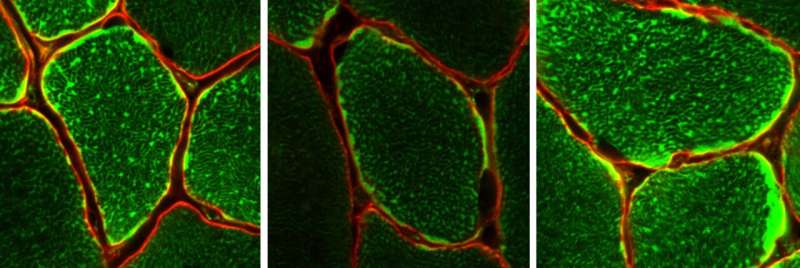
Staining showing mitochondria within individual muscle fibres. Credit: Monash University

Monash University, Australia scientists have discovered an enzyme that is key to why exercise improves our health. Importantly this discovery has opened up the possibility of drugs to promote this enzyme's activity, protecting against the consequences of aging on metabolic health, including type 2 diabetes.

26 dec 2021--The proportion of people worldwide over 60 years old will double in the next three decades and by 2031, more than six million Australians will be over 65 years old. The incidence of type 2 diabetes increases with age so this aging population will also result in an increased incidence of the disease globally.

One of the main reasons for the increased prevalence of type 2 diabetes with age is the development of insulin resistance, or an inability for the body to respond to insulin, and this is often caused by reduced physical activity as we age.

However, the precise mechanisms by which physical inactivity facilitates the development of insulin resistance has remained a mystery.

Now researchers from Monash University in Australia have discovered how  actually enhances insulin responsiveness and in turn promotes metabolic health. Importantly, the enzymes they have discovered that are key to this mechanism have the potential to be targeted by drugs to protect against consequences of aging such as muscle wasting and diabetes.

The team of scientists at the Monash University Biomedicine Discovery Institute (BDI), led by Professor Tony Tiganis, reveals that reductions in skeletal  reactive oxygen species (ROS) generation during aging is instrumental in the development of insulin resistanceAccording to Professor Tiganis, skeletal muscle constantly produces ROS and this is increased during exercise.

"Exercise-induced ROS drives adaptive responses that are integral to the health-promoting effects of exercise," he said.

In a paper published today (15 December) in the journal, Science Advances, the research team show how an enzyme called NOX-4 is essential for exercise-induced ROS and the adaptive responses that drive metabolic health.

In mice the researchers found that NOX4 is increased in skeletal muscle after exercise and that this then leads to increased ROS which elicits adaptive responses that protect mice from the development of insulin resistance, which otherwise occurs with aging or diet induced-obesity.

Importantly, the scientists have shown that the levels of NOX4 in skeletal muscle are directly related to age-associated decline in insulin sensitivity. "In this study we have shown, in animal models, that skeletal muscle NOX 4 abundance is decreased with aging and that this leads to a reduction in insulin sensitivity," Professor Tiganis said.

"Triggering the activation of the adaptive mechanisms orchestrated by NOX4 with drugs, might ameliorate key aspects of aging, including the development of insulin resistance and type 2 diabetes," he said.

"One of these compounds is found naturally, for instance, in cruciferous vegetables, such as broccoli or cauliflower, though the amount needed for anti-aging effects might be more than many would be willing to consume."


More information: Chrysovalantou Xirouchaki et al, Skeletal muscle NOX4 is required for adaptive responses that prevent insulin resistance, Science Advances (2021). DOI: 10.1126/sciadv.abl4988www.science.org/doi/10.1126/sciadv.abl4988
Provided by Monash University 

Thursday, March 21, 2019

Short walk once-a-week can lower risk of death: study

walking
Credit: CC0 Public Domain
A brisk stroll once or twice a week is enough to reduce the risk of dying from heart attack, stroke or cancer, according to a statistical study of nearly 90,000 people released Tuesday.
21 mar 2019--People who walked or gardened 10 minutes to an hour each week had an 18-percent lower risk of death from any cause compared to full-on couch potatoes, researchers reported in the British Journal of Sports Medicine.
Two-and-a-half to five hours weekly of such "moderate physical activity"—broken into segments of no less than 10 minutes—resulted in a 31 percent reduction in risk, they found.
And those who clocked up at least 25 hours almost halved the risk.
Not everyone, however, has that much time to spend on leisure-time exercise, the authors acknowledged.
Heart-pumping and pulse-quickening activities such as biking, running and competitive sports "are more time-efficient than moderate intensity activity," they said.
For cardiovascular disease alone, there was no additional benefit to be gained by graduating from five to 25 hours, they noted.
Researchers led by Bo Xi, a professor in the Department of Epidemiology at Shandong University in northern China, sifted through data collected annually on 88,140 people in the United States between 1997 and 2008 for the National Health Interview Surveys.
That data on excercise was then matched against registered deaths through 2011.
The authors cautioned that the study was observational, meaning that no firm conclusions can be drawn about cause and effect. The fact that exercise data was self-reported was also a potential weakness.
But the large number of people covered by the research goes a long way to compensate for these methodological limitations, they added.

More information: Beneficial associations of low and large doses of leisure time physical activity with all-cause, cardiovascular disease and cancer mortality: a national cohort study of 88,140 US adults, British Journal of Sports Medicine doi:10.1136/bjsports-2018-099254 , bjsm.bmj.com/lookup/doi/10.113 … bjsports-2018-099254

Sunday, February 24, 2019

Evening exercise will not ruin sleep and might even reduce appetite: study

exercise
Credit: CC0 Public Domain
Must cook dinner. Need to pick the kids up from school. Have to catch up on my favourite TV series. Live too far from the gym. Any of these sound familiar? With growing time demands, many middle-aged adults are finding time to engage in exercise increasingly difficult. For many, even the thought of fitting exercise in after a busy day at work can be as tiring as it is unappetising. The standing belief that high-intensity exercise should be avoided in the early evening due to its effect on sleep only serves to act as another barrier to exercise at this time.
24 feb 2019--However, encouraging new research published in Experimental Physiology has suggested that 30 minutes of high-intensity exercise performed in the early evening does not negatively affect subsequent sleep, and may also reduce feelings of hunger.
Researchers at Charles Sturt University in Australia recruited eleven middle-aged men to complete three experimental trials to investigate sleep and appetite responses to exercise performed in the morning (6—7 am), afternoon (2—4 pm) and evening (7—9 pm). Participants were required to perform high-intensity cycling involving six one-minute, maximal intensity sprints interspersed by four minutes of rest. Blood collections were taken prior to exercise and following exercise to examine appetite-related hormones, and multiple tests were performed during sleep to assess sleep stages.
The results not only showed that evening exercise did not have a detrimental impact on subsequent sleep, but also that afternoon and evening high-intensity exercise were associated with greater reductions of the hunger stimulating hormone, ghrelin. It is important to note that a single bout of exercise was not linked to reduced hunger, but nevertheless, the observations from this study support high-intensity exercise early in the evening as a viable time-of day for exercise.
As this study's sample size was relatively small, the findings extrapolated to other population groups beyond middle-aged men may be limited, given that sleep and appetite regulation are influenced by sex and age.
Penelope Larsen, lead author of the study, commented said:
"In the future, we hope to conduct similar studies recruiting women, to determine whether sleep and appetite responses may be different depending on sex. Also, this study only considered a single bout of exercise; therefore, it would be beneficial to investigate long-term sleep and appetite adaptations to high-intensity exercise training performed either in the morning, afternoon or evening."
Interestingly, power output during the sprint efforts was higher for the afternoon and evening trials compared to the morning trial, indicating that participants were able to perform better during latter parts of the day. Therefore, time-of-day may also need to be considered when planning training schedules."

More informationExperimental Physiologyphysoc.onlinelibrary.wiley.com … doi/10.1113/EP087455
Provided by The Physiological Society

Saturday, November 17, 2018

Exercise is medicine, and doctors are starting to prescribe it

Exercise is medicine, and doctors are starting to prescribe it
Exercise is an effective medicine for many patients dealing with heart disease, dementia, depression, stroke and cancer. Credit: Shutterstock
There is a movement afoot (pun intended) to get more people exercising by involving their family doctors.
In the United Kingdom, the government recently released Moving Medicine —an online resource to help doctors talk to their patients about the importance of exercise in relation to conditions as diverse as cancer and dementia. This is a welcome initiative given that physical inactivity is the fourth leading cause of death in the world, according to the World Health Organization.

17 nov 2018--The benefits of exercise have been proven over and over again: Exercise reduces risk of depressiontype 2 diabetesheart diseasestroke and many cancers, and prevents early death.
If it was a pill, exercise would be a trillion-dollar money-maker prescribed to everyone.
Exercise as a therapy is mentioned in almost all prevention and treatment guidelines, which are written by doctors themselves. Still, most patients never hear their doctor talk about it. And fewer than one in four Canadians meet current guidelines for physical activity, which recommend that people participate in moderate (such as brisk walking) and vigorous (such as jogging, swimming or running) activity for at least 150 minutes per week.
Part of the reason is that most doctors in practice today received little, if any, training on the role of exercise in managing disease. Years ago I taught a 30-minute lecture on the topic at a Canadian medical school and this was all the students got over their four-year program.
This is about to change.

Free gym prescriptions

In recent years, Canadian medical schools—such as the Cumming School of Medicine at the University of Calgary—have revised their curricula to incorporate aspects of exercise in the prevention and treatment of disease.
This is one part of growing initiatives like Exercise is Medicine that advocate for the role of exercise and encourage doctors to prescribe it.
Similarly, the Prescription to Get Active program in Alberta allows doctors to prescribe free 30-day gym memberships to patients.
A grassroots program called Walk with a Doc has local doctors walking with their patients. The program was begun by Dr. David Sabgir, a cardiologist in Columbus, Ohio, who was frustrated with his inability to affect behaviour change in the  and invited his patients to go for a walk with him in a local park one Saturday morning. More than 100 people showed up, and there are now 400 chapters worldwide.
There have also been calls for exercise to be considered a vital sign, much like blood pressure and heart rate. Health insurance provider Kaiser Permanente requires doctors in the United States to record how much physical activity a patient does.
Patients who receive exercise prescriptions and counselling from their doctors are more likely to be active, so these initiatives are a good start.
More needs to be done, however, when only one-third of doctors talk to their patients about exercise.

Reactionary health-care system

Not surprisingly, doctors who exercise themselves are more likely to counsel their patients about physical activity. Therefore, targeting doctors to be more active may provide a substantial population effect.
At the same time, doctors say they need more and better training with respect to the benefits of exercise and how to counsel patients.
The need for this change in approaching health and disease comes from two key realizations. One is that there are a growing number of people with preventable chronic illness, and our health-care system is not adequately prepared to deal with all these patients.
Our system is reactionary; it is designed to wait until someone has a disease instead of preventing it. But chronic illnesses are not like diseases of old. They cannot be cured, although many can be prevented. Exercise is increasingly recognized as important to this change.

Exercise for cancer care

Second, we have greater knowledge about the benefits of exercise in treating disease in addition to preventing it. Exercise is used for cardiac rehabilitation, after a heart attack.
Exercise works as well as drugs that lower cholesterol and blood pressure in preventing early death. And diabetics who exercise require less medication to manage their blood sugar.
Even in treating cancer, exercise can reduce the side-effects of treatment, such as anxiety, depression and fatigue. This has prompted the Clinical Oncology Society of Australia to release a position statement recommending exercise as part of regular cancer care. It is believed to be the first of its kind in the world, but hopefully not the last.
Doctors would benefit from additional incentives such as specific billing codes that allow for prescribing of exercise as well as more continuing medical education sessions on how to do so.
Educating current and future doctors that exercise is as good, if not better, than many medications will be essential to prevent the increasing burden of chronic illnesses.

This article is republished from The Conversation under a Creative Commons license. Read the original article.The Conversation

Provided by The Conversation

Monday, September 24, 2018

Crunched for time? High-intensity exercise = same cell benefits in fewer minutes

exercise
Credit: CC0 Public Domain
A few minutes of high-intensity interval or sprinting exercise may be as effective as much longer exercise sessions in spurring beneficial improvements in mitochondrial function, according to new research. The small study is published ahead of print in the American Journal of Physiology—Regulatory, Integrative and Comparative Physiology.

23 sept 2018--Mitochondria, the energy centers of the cells, are essential for good health. Previous research has found that exercise creates new mitochondria and improves the function of existing mitochondria. Altered mitochondrial function in response to a single session of exercise generates signals that may lead to beneficial changes in the cells, lowering the risk for chronic disease. High-intensity interval exercise consists of short bursts of high-intensity aerobic exercise—physical activity that raises the heart rate—alternating with brief recovery periods. Whether the intensity of a workout affects mitochondrial response is unclear.
A team of researchers studied eight young adult volunteers as they participated in cycling workouts of varying intensity.
  • Moderate intensity consisted of 30 minutes of continuous exercise at 50 percent peak effort.
  • High-intensity interval exercise consisted of five four-minute cycling sessions at 75 percent peak effort, each separated by one minute of rest.
  • Sprint cycling consisted of four 30-second sessions at maximum effort, each separated by 4.5 minutes of recovery time.
The research team measured the amount of energy the volunteers spent on each workout and compared mitochondrial changes in the participants' thigh muscles before and after each exercise session. The researchers found that levels of hydrogen peroxide—a type of molecule involved in cell signaling called "reactive oxygen species" that contains oxygen and hydrogen—in different parts of the mitochondria change after exercise. While too much reactive oxygen species can be damaging to the cells, the researchers noted that the volunteers' levels were an appropriate amount to potentially promote cell responses that benefit metabolic function rather than cause damage.
In addition, the research team found that fewer minutes of higher-intensity exercise produced similar mitochondrial responses compared to a longer moderate-intensity activity. "A total of only two minutes of sprint interval exercise was sufficient to elicit similar responses as 30 minutes of continuous moderate-intensity aerobic exercise," the researchers wrote. "This suggests that exercise may be prescribed according to individual preferences while still generating similar signals known to confer beneficial metabolic adaptions. These findings have important implications for improving our understanding of how exercise can be used to enhance metabolic health in the general population."

More information: Adam James Trewin et al, Acute HIIE elicits similar changes in human skeletal muscle mitochondrial H2O2 release, respiration and cell signaling as endurance exercise even with less work, American Journal of Physiology-Regulatory, Integrative and Comparative Physiology (2018). DOI: 10.1152/ajpregu.00096.2018


Provided by American Physiological Society

Thursday, July 26, 2018

Exercise cuts risk of chronic disease in older adults

physical activity
Credit: CC0 Public Domain
New research has shown that older adults who exercise above current recommended levels have a reduced risk of developing chronic disease compared with those who do not exercise.
Researchers at the Westmead Institute for Medical Research interviewed more than 1,500 Australian adults aged over 50 and followed them over a 10-year period.

26 july 2018--People who engaged in the highest levels of total physical activity were twice as lively to avoid stroke, heart disease, angina, cancer and diabetes, and be in optimal physical and mental shape 10 years later, experts found.
Lead Researcher Associate Professor Bamini Gopinath from the University of Sydney said the data showed that adults who did more than 5000 metabolic equivalent minutes (MET minutes) each week saw the greatest reduction in the risk of chronic disease.
"Essentially we found that older adults who did the most exercise were twice as likely to be disease-free and fully functional," she said.
"Our study showed that high levels of physical activity increase the likelihood of surviving an extra 10 years free from chronic diseases, mental impairment and disability."
Currently, the World Health Organization recommends at least 600 MET minutes of physical activity each week. That is equivalent to 150 minutes of brisk walking or 75 minutes of running.
"With aging demographics in most countries, a major challenge is how to increase the quality and years of healthy life," Associate Professor Gopinath said.
"Our findings suggest that physical activity levels need to be several times higher than what the World Health Organization currently recommends to significantly reduce the risk of chronic disease.
"Some older adults may not be able to engage in vigorous activity or high levels of physical activity.
"But we encourage older adults who are inactive to do some physical activity, and those who currently only engage in moderate exercise to incorporate more vigorous activity where possible," she concluded.
The research compiled data from the Blue Mountains Eye Study, a benchmark population-based study that started in 1992.
It is one of the world's largest epidemiology studies, measuring diet and lifestyle factors against health outcomes and a range of chronic diseases.

More information: Bamini Gopinath et al, Physical Activity as a Determinant of Successful Aging over Ten Years, Scientific Reports (2018). DOI: 10.1038/s41598-018-28526-3


Provided by Westmead Institute for Medical Research

Saturday, March 10, 2018

Exercise can slow the aging process – a professor explains how

Exercise can slow the aging process – a professor explains how
Credit: Shutterstock
The tradition of sending a telegram to every British citizen on their 100th birthday was started just over 100 years ago by George V, who sent out just nine letters. Last year, the Queen had to sign over 16,000 birthday letters. The UK has an ageing society, with falling birth rates and increasing life expectancy. Improvements in public health and medicine have helped to achieve this amazing effect on lifespan.

10 mar 2018--But for far too many, old age is endured and not enjoyed, being associated with disease and physical and mental frailty. Today's baby boomers may be less likely than previous generations to accept that old age is a time for taking it easy, getting to know your GP and developing a taste for the settee, slippers and daytime TV.
My latest research project, conducted with colleagues at the University of Birmingham and Professor Stephen Harridge at King's College London, aims to understand which aspects of human ageing are inevitable, and which are a result of our modern lifestyles – and therefore under our control.
Staying strong
Prehistoric hunter-gatherer tribes were highly active, spending a lot of time and energy sourcing their food. If they weren't successful, they would also spend days with or little or no food. By contrast, today we are a highly sedentary society; one study by the Heart Foundation revealed that most adults spend 15 hours a day sitting down. Together with eight hours of sleep, this leaves just one hour for physical activity.
Exercise can slow the aging process – a professor explains how
An MRI scan of the thigh: as people age, muscle mass declines and turns to fat. Credit: Janet Lord/University of Birmingham., Author provided
As we get older, our physical activity levels decline even further. In our research, we have tried to determine how much this low level of physical activity contributes to the ageing of many body systems, including muscle, bone and the immune system.
We examined 125 male and female cyclists, aged 55 to 79, who had maintained a high level of cycling throughout most of their adult lives. These were not Olympians, but very keen cyclists who were able to cycle 100km in under 6.5 hours for the men, and 60km in under 5.5 hours for the women.
We have previously looked at several body systems that we know decline with age, such as muscle and bone. At mid-life, people start losing muscle mass and strength at a rate of 1% to 2% per year, making it harder to carry out their normal activities such as climbing stairs. Our bones also become thinner with age and this can eventually lead to diseases such as osteoporosis.
We showed that the cyclists did not lose  or strength as they aged, and their bones only became slightly thinner. We then went on to examine a body system that was not so obviously influenced by physical activity – the immune system.
Exercise can slow the aging process – a professor explains how
The thymus shrinks with age, affecting immune system function. Credit: Janet Lord/University of Birmingham, Author provided
Start 'em young
The immune system declines with age, making older adults more susceptible to infections such as flu and pneumonia. They also respond less well to vaccines, so this preventive measure doesn't offer the same protection which it can to younger people. When we compared the immune system of the cyclists to older adults who had not done regular exercise, and to young people in their twenties we found that their immune systems looked most like the young persons'.
In particular, we found that the cyclists still made lots of new immune T cells, produced by an organ called the thymus, which normally starts to shrink after we reach puberty. The older cyclists seemed to have a thymus that was making as many new T cells as the young people's. The lifelong cycling seemed to have slowed down the ageing of their immune systems.
We investigated why this happened and found that the cyclists had high levels of a hormone called interleukin 7 in their blood, which helps to stop the thymus shrinking. Interleukin 7 is made by many cells in the body, including muscle cells, so we think that active muscles will make more of this hormone and keep the immune system, and especially the thymus, young.
So it is possible to take back control of your body, and prevent its deterioration with age. The UK's chief medical officer Sally Davies suggests that people do at least 150 minutes of aerobic exercise per week. We don't know if this is enough to protect your immune system, but it's a good place to start.
Our physical activity levels start to decline from the age of 25 in the UK, so don't leave exercise until old age – start now.
This article was originally published on The Conversation. Read the original article.The Conversation

Provided by The Conversation

Tuesday, February 20, 2018

Just a few minutes of light intensity exercise linked to lower death risk in older men

exercise
Clocking up just a few minutes at a time of any level of physical activity, including of light intensity, is linked to a lower risk of death in older men, suggests research published online in the British Journal of Sports Medicine
.
20 feb 2018--Providing the recommended 150 minute weekly tally of moderate to physical activity is reached, total volume, rather than activity in 10 minute bouts, as current guidelines suggest, might be key, the findings indicate.
This lower level of intensity is also likely to be a better fit for older men, most of whose daily physical activity is of light intensity, say the researchers.
Current exercise guidelines recommend accumulating at least 150 minutes a week of moderate to vigorous physical activity in bouts lasting 10 or more minutes. But such a pattern is not always easy for older adults to achieve, say the researchers.
To find out if other patterns of activity might still contribute to lowering the risk of death, the researchers drew on data from the British Regional Heart Study.
This involved 7735 participants from 24 British towns, who were aged between 40 and 59 when the study stated in 1978-80.
In 2010-12, the 3137 survivors were invited for a check-up, which included a physical examination, and questions about their lifestyle, sleeping patterns, and whether they had ever been diagnosed with heart disease.
They were also asked to wear an accelerometer—a portable gadget that continuously tracks the volume and intensity of physical activity—during waking hours for 7 days. Their health was then tracked until death or June 2016, whichever came first.
In all, 1566 (50%) men agreed to wear the device, but after excluding those with pre-existing heart disease and those who hadn't worn their accelerometer enough during the 7 days, the final analysis was based on 1181 men, whose average age was 78.
During the monitoring period, which averaged around 5 years, 194 of the men died.
The accelerometer findings indicated that total volume of physical activity, from light intensity upwards, was associated with a lower risk of death from any cause.
Each additional 30 minutes a day of light intensity activity, such as gentle gardening or taking the dog for a walk, for example, was associated with a 17 percent reduction in the risk of death. This association persisted even after taking account of potentially influential lifestyle factors, such as sedentary time.
Whilst the equivalent reduction in the risk of death was around 33 percent for each additional 30 minutes of moderate to vigorous intensity physical activity a day, the benefits of light intensity activity were large enough to mean that this too might prolong life.
And there was no evidence to suggest that clocking up moderate to vigorous activity in bouts of 10 minutes or more was better than accumulating it in shorter bouts. Sporadic bouts of activity were associated with a 41 percent lower risk of death; bouts lasting 10 or more minutes were associated with a 42 percent lower risk.
Sporadic bouts seemed easier to achieve as two thirds (66%) of the men achieved their weekly total of moderate to vigorous physical activity in this way while only 16% managed to do so in bouts of 10 or more minutes.
Finally, there was no evidence to suggest that breaking up sitting time was associated with a lower risk of death.
This is an observational study so no firm conclusions can be drawn about cause and effect. And those who wore the accelerometer tended to be younger and have healthier lifestyles than those who didn't, so this might have skewed the results, say the researchers. Nor is it clear if the findings would be equally applicable to younger age groups or older women.
Nevertheless, the results could be used to refine current physical activity guidelines and make them more achievable for older adults, suggest the researchers.
Future guidance might emphasise that all physical activity, however modest, is worthwhile for extending the lifespan—something that is particularly important to recognise, given how physical activity levels tail off rapidly as people age, they point out.
"[The ] results suggest that all activities, however modest, are beneficial. The finding that [low intensity physical activity] is associated with lower risk of mortality is especially important among older men, as most of their daily physical activity is of light intensity," write the researchers.
"Furthermore, the pattern of accumulation of physical activity did not appear to alter the associations with mortality, suggesting that it would be beneficial to encourage older men to be active irrespective of bouts," they add.

More information: Barbara J Jefferis et al. Objectively measured physical activity, sedentary behaviour and all-cause mortality in older men: does volume of activity matter more than pattern of accumulation?, British Journal of Sports Medicine (2018). DOI: 10.1136/bjsports-2017-098733


Provided by British Medical Journal

Tuesday, November 21, 2017

Study: For older women, every movement matters

aging

Folding your laundry or doing the dishes might not be the most enjoyable parts of your day. But simple activities like these may help prolong your life, according to the findings of a new study in older women led by the University at Buffalo.

In the U.S. study of more than 6,000 white, African-American and Hispanic women ages 63 to 99, researchers reported significantly lower risk of death in those who were active at levels only slightly higher than what defines being sedentary.
Women who engaged in 30 minutes per day of light physical activity—as measured by an accelerometer instead of a questionnaire—had a 12 percent lower risk of death. Women who were able to do a half-hour each day of moderate to vigorous activity had a 39 percent lower mortality risk, according to the study, published online ahead of print today in the Journal of the American Geriatrics Society.
For the age group in this study, light physical activities include regular chores such as folding clothes, sweeping the floor or washing the windows. Activities like these account for more than 55 percent of how older people spend their daily activity. Moderate to vigorous activities would be brisk walking or bicycling at a leisurely pace.
The bottom line? "Doing something is better than nothing, even when at lower-than-guideline recommended levels of physical activity," said the study's lead author, Michael LaMonte, research associate professor of epidemiology and environmental health in UB's School of Public Health and Health Professions. "To the best of our knowledge, this is the first study to show this."
Even when researchers simultaneously accounted for the amount of each type of activity (light and moderate-to-vigorous) a woman did, they still observed significantly lower mortality associated with each time, independently of the other.
"This is remarkable because current public health guidelines require that physical activity be of at least moderate or higher intensity to confer health benefits," LaMonte, PhD, said. "Our study shows, for the first time in older women, that health is benefited even at physical activity levels below the guideline recommendations."
"The mortality benefit of light intensity activity extended to all subgroups that we examined," added study principal investigator Andrea LaCroix, professor and chief of epidemiology at the University of California, San Diego.
The mortality benefit was similar for women younger than 80 compared to women over the age of 80. It was similar across racial/ethnic backgrounds, and among obese and non-obese women. "Perhaps most importantly for this population, the mortality benefit was similar among women with high and low functional ability," LaCroix, PhD, said.
While the study focused on older women, researchers say their findings send a powerful message to younger women and men - that it's important to develop healthy habits around physical activity while you are young so that you are more likely to maintain them when you get older.
Cross off that 'to do' list, study shows all daily activity can prolong life
A recent study at UC San Diego School of Medicine reports that light physical lowers mortality risks for women age 65 and older. 
Novel approach using motion sensing devices

The study incorporated a novel approach. Unlike the majority of previous studies on this issue in which physical activity was measured using questionnaires, researchers measured physical activity using accelerometers.
These motion-sensing devices electronically document and store daily movement patterns and intensity on a 24-hour clock for as many days as the device is worn. Women in this study wore the devices for between four and seven days. Researchers then downloaded the information and analyzed it.
To make their analysis of physical activity even more specific to older women, they also conducted a laboratory study in a subset of study participants during which they aligned the accelerometer information with completion of activity tasks germane to older women's usual daily activity habits.
"No other study as large as ours and specifically on older women has included this step to enhance interpretation of accelerometer data in a context relevant to the study participants," LaMonte said.

Aging well in an aging society

The findings could have implications for national public health guidelines for physical activity for older U.S. women, especially when considering the projected growth of this particular population over the next several decades.
The researchers' findings are being considered by the U.S. Department of Health and Human Services' 2018 Physical Activity Guidelines Advisory Committee. The guidelines were first introduced in 2008 under then-HHS Secretary Michael O. Leavitt.
By 2050, the population group aged 65 and older will have doubled since 2000, reaching nearly 77 million, according to LaMonte, adding that women in this age group will outnumber men 2-to-1 at the current expected growth pattern. "Our results suggest that the health benefits of lighter activity could reach a large swath of women in an aging society," LaMonte said.
"These findings are especially relevant to aging well in an aging society," he added. "Some people, because of age or illness or deconditioning, are not able to do more strenuous activity. Current guidelines do not specifically encourage light activity because the evidence base to support such a recommendation has been lacking."

More information: Michael J. LaMonte et al, Accelerometer-Measured Physical Activity and Mortality in Women Aged 63 to 99, Journal of the American Geriatrics Society (2017). DOI: 10.1111/jgs.15201


Provided by University at Buffalo