Showing posts with label chronic diseases. Show all posts

Saturday, September 05, 2020


Many countries falling behind on global commitments to tackling premature deaths from chronic diseases
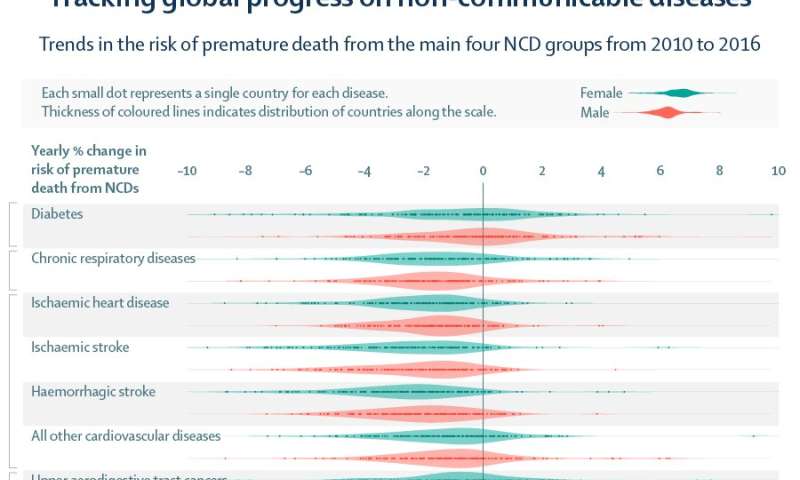
The Lancet: Many countries falling behind on global commitments to tackling premature deaths from chronic diseases, such as diab
Trends in the risk of premature death from the main four NCD groups from 2010 to 2016. Credit: The Lancet

Over the next two weeks, The Lancet will be publishing two reports calling for urgent global action on non-communicable diseases (NCDs).

05 september 2020--The NCD Countdown to 2030 tracks global progress on non-communicable diseases against commitments to reduce deaths from NCDs by a third by 2030. The report will publish Thursday 3rd September.

  • On Tuesday 14th September, The Lancet will publish a new Commission urging greater action to combat one of the world's biggest and most neglected health disparities: non-communicable diseases and injuries (NCDI) that kill and disable the poorest billion people, many of them children and young adults—and many of them at dire risk amid the COVID-19 pandemic.

Around the world, the risk of dying prematurely from preventable and largely treatable chronic diseases such as stroke, heart disease, and stomach cancer has declined steadily over the past decade, but death rates from other chronic diseases such as diabetes, lung cancer, colon cancer, and liver cancer are declining too slowly or worsening in many countries.

Many countries are falling short or behind on their commitments to reducing premature mortality from chronic diseases, or non-communicable diseases (NCDs). Among high-income countries, only Denmark, Luxembourg, New Zealand, Norway, Singapore, and South Korea are on track to meet the SDG target for both men and women if they maintain or surpass their recent rates of progress.

These are the findings of the 2nd edition of the NCD Countdown 2030 report, published today in The Lancet, ahead of the Global Week of Action on NCDs next week. The 1st NCD Countdown Report was released in 2018.

NCDs currently kill over 40 million people a year worldwide, making up seven out of ten deaths globally. 17 million of these deaths are of people younger than 70 years old and classed as premature; the great majority (15 million) of these deaths are between 30 and 70 years.

In 2015, world leaders signed up to achieve the United Nations' Sustainable Development Goal 3.4 of a one-third reduction in deaths between 30 and 70 years of age from four key NCDs—cancer, cardiovascular disease, chronic respiratory disease, and diabetes—by the year 2030. The NCD Countdown 2030 report, led by Imperial College London, World Health Organization, and the NCD Alliance, reveals that the global goal to reduce premature mortality from NCDs by one third by 2030 is still achievable but many countries are falling short.

"No country can reach that target by simply addressing a single disease—what is needed is a package of measures, a strong health system, which addresses prevention, early detection and treatment, tailored to the national situation," said Majid Ezzati, Professor of Global Environmental Health at Imperial College London, who led the study.

"Young people must lead the fight against NCDs. An estimated 150 million people will lose their lives too early from a noncommunicable disease over the next decade and right now NCDs are intensifying the impact of COVID-19," said Dr. Bente Mikkelsen, Director of Noncommunicable Diseases, World Health Organization. "We must ensure that all NCDs are addressed in COVID-19 recovery plans so that we can turn this deadly tide. We cannot allow NCDs to become a generational catastrophe, where human potential is wasted, and inequality is exacerbated."

NCDs in the context of the COVID-19 pandemic

People living with many NCDs are being disproportionately affected by COVID-19—they are at a considerably higher risk of suffering severe illness and dying from the disease. At the same time, the ability to reach the UN targets is being challenged by the added impact of the COVID-19 pandemic which is severely disrupting the capacity of national health services to deliver regular screening, diagnosis, treatment and prevention of NCDs.

"COVID-19 has exposed how a failure to invest in effective public health to prevent NCDs and provide health care for people living with NCDs can come back to bite us," said Katie Dain, CEO of the NCD Alliance. "The good news is that all countries can still meet the 2030 targets, with sound policies and smart investments. NCD prevention and treatment can no longer be seen a 'nice to have', it must be considered as part of pandemic preparedness."

In an editorial, The Lancet highlights that: "COVID-19 and NCDs form a dangerous relationship, experienced as a syndemic that is exacerbating social and economic inequalities... COVID-19 is a pandemic that must highlight the high burden that NCDs place on health resources. It should act as a catalyst for governments to implement stricter tobacco, alcohol, and sugar controls, as well as focused investment in improving physical activity and healthy diets. COVID-19 has shown that many of the tools required for fighting a pandemic are also those required to fight NCDs: disease surveillance, a strong civil society, robust public health, clear communication, and equitable access to resilient universal health-care systems... COVID-19 must stimulate far greater political action to overcome inertia around NCDs."

Tracking country progress on SDG 3.4

The UN measure of progress towards the SDG target 3.4 is reducing by one-third the risk of death between 30 and 70 years of age from four major groups of NCDs (cancers, cardiovascular diseases (CVDs), chronic respiratory diseases, and diabetes), termed NCD4. Based on recent (2010-2016) trends, the NCD Countdown 2030 report finds that:

  • Among high-income countries, only Denmark, Luxembourg, New Zealand, Norway, Singapore, and South Korea are on track to meet this target for both men and women if they maintain or surpass their 2010-16 average rates of decline.
  • 17 countries are already on track to reach the SDG target 3.4 for women: Belarus, Denmark, Iran, Kazakhstan, South Korea, Kuwait, Luxembourg, Latvia, Maldives, Norway, New Zealand, Russian Federation, Singapore, Serbia, Timor-Leste, Ukraine.
  • And 15 countries are on track for men: Bahrain, Belarus, Czech Republic, Denmark, Finland, Iran, Iceland, Kazakhstan, South Korea, Luxembourg, Maldives, Norway, New Zealand, Singapore, Slovakia.
  • The risk of dying prematurely from NCD4 is declining rapidly in central and eastern Europe.
  • However, large countries that showed stagnation or small increases in risk of premature death from these NCDs are Bangladesh (men), Egypt (women), Ghana (men and women), Cote d'Ivoire (men and women), Kenya (men and women), Mexico (men), Sri Lanka (women), Tanzania (men) and the USA (women).

Tracking progress on four major groups of NCDs

Worldwide, deaths from stroke, heart disease and stomach cancer are falling, although overall progress has slowed compared to the previous decade, according to WHO. Deaths from diabetes, lung cancer, colon cancer and liver cancer are stagnating or rising in many countries. The NCD Countdown 2030 report shows that:

  • The risk of premature death from ischaemic and haemorrhagic stroke, heart disease, chronic lung diseases and stomach cancer declined faster than that of other causes. However, heart disease remains the leading cause of premature death in most countries for men and in about half the countries for women.
  • In contrast, the risk of premature death from diabetes, colorectal cancer, liver cancer, breast cancer and prostate cancer declined more slowly than other causes, as did lung cancer among women.
  • For lung cancer in women and colorectal, liver and prostate cancers in men, the risk of premature death increased in more than half of countries.

Policies to accelerate decline in premature mortality

The report notes that although premature death from NCDs is declining in the majority of countries, the pace of change is too slow to achieve SDG target 3.4 in most. The authors used mathematical modelling to assess how many options countries have for accelerating mortality decline.

"To move forward we must learn from those countries that are doing well and replicate their strategies to NCD prevention and healthcare," said Professor Ezzati. "Our analysis shows that every country still has options to achieve SDG target 3.4 but they need to address multiple diseases and have strong health systems."

To that end the report highlights the set of interventions needed to move countries forward:

Tobacco and alcohol control and effective health system interventions, such as a ban on advertising, increasing taxes, plain packaging, public smoking/drinking bans.

  • Quality primary care—including equitable access to doctors' surgeries and community-based clinics.
  • Quality referral systems and consistent maintenance of people in care to help patients get the right treatment at the right time.
  • A range of medicines and techniques available for early diagnosis and treatment—such as increased equitable access to preventative cholesterol-lowering, hypertension and diabetes medicines.
  • Effective cancer screening and treatment—to diagnose and treat cancers earlier, reducing long-term health impacts and premature deaths.

More information: NCD Countdown 2030: pathways to achieving Sustainable Development Goal target 3.4, The Lancet (2020). DOI: 10.1016/S0140-6736(20)31761-X
Provided by Lancet 

Tuesday, June 25, 2019

Chronic conditions—not infectious diseases—are top five causes of early death in China

china
Credit: CC0 Public Domain
Chronic diseases, such as stroke, ischemic heart disease, and lung cancer, now represent the leading causes of premature death in China, according to a new scientific study.
25 jun 2019--The rise in non-communicable diseases reflects declines in maternal and child mortalityover nearly three decades, largely the result of economic growth and increasing levels of education. In addition, China has instituted national programs targeting infectious diseases.
"Like many countries, China has reached a tipping point over the past three decades," said Dr. Maigeng Zhou, a lead author on the study and Deputy Director, National Center for Chronic Non-Communicable Disease Control and Prevention at the Chinese Center for Disease Control and Prevention. "Going forward, the burden of chronic health problems, especially among the elderly, will far exceed infectious diseases."
A part of the Global Burden of Disease (GBD), the study spans 1990 to 2017, filling a major gap in understanding health problems at the local level. The analysis, published today in the international medical journal The Lancet, provides comparable estimates of mortality, disability, and associated risk factors for 34 provinces by age and sex. The GBD produces estimates for 359 diseases and injuries and 84 risk factors.
Zhou and co-authors found stroke and ischemic heart disease replaced lower respiratory infections and neonatal disorders as the leading causes of disease burden between 1990 and 2017.
In addition to stroke, ischemic heart disease, and lung cancer, the top five causes of premature death include chronic obstructive pulmonary disease (COPD) and liver cancer.
Compared to countries with similar levels of development, such as Russia, China has unusually high levels of stroke, COPD, lung cancer, liver cancer, neck pain, and stomach cancer. All provinces had higher-than-expected cases of liver cancer, with rates of disability-adjusted life years (DALYs) between two and seven times higher than would be expected based on their level of development.
The analysis demonstrates considerable variation in health problems at the provincial level, confirming that one's health depends on where one lives. People in urban, coastal, and wealthier provinces in eastern China generally are healthier than those in rural and poorer areas in the west.
"We are committed to achieving the goals of the Healthy China 2030 Plan," said Dr. Xiaofeng Liang, Deputy Director at the Chinese Center for Disease Control and Prevention, referring to an initiative announced in 2016 to improve health, control risk factors, and improve and enlarge the nation's health care system. "These detailed provincial findings will help us tailor evidence-based policies to the health needs of local communities."
Liver cancer ranked among the top five causes of DALYs in seven provinces, but in 11 provinces it did not rank in the top 10. The rank order for road injuries ranged from third to 20th leading cause of DALYs across all provinces; whereas hypertensive heart disease saw variation in rank order from seventh to 56th leading cause.
Nationally, smoking is the top risk factor in 21 provinces, and is ranked the second- or third-leading risk in all remaining provinces. Exposure to some risk factors is rising, particularly high blood sugar, high blood pressure, high body mass index (BMI), and, in many provinces, outdoor air pollution.
Additional findings include:
  • The suicide rate for females fell from 21.5 deaths per 100,000 people in 1990 to 7.5 deaths in 2017. This trend is partly explained by urbanization and development as well as improved opportunities for women and young people. Males also saw a decline, but to a lesser degree, dropping from 17.0 deaths per 100,000 to 10.7 deaths over the same time period.
  • After 2000, rates of diabetes increased more rapidly due to changing lifestyles, including increased consumption of red meat and decreased levels of physical activity. National diabetes rates increased by more than 50%, from 4,206 prevalent cases per 100,000 in 2000 to 6,336 prevalent cases in 2017.
  • The maternal mortality ratio declined by 86% during the study period, falling from 95 to 14 maternal deaths per 100,000 live births. At the same time, the under-5 mortality rate decreased by 76%, from 50 to 12 child deaths per 1,000 live births.
  • The top three disabling conditions in 1990 and 2017 were musculoskeletal disorders, mental disorders, and sense organ diseases (e.g., vision loss, hearing loss).
  • High blood pressure accounted for 2.5 million Chinese deaths in 2017, with nearly all (96%) resulting from cardiovascular diseases (CVD).
  • Beijing had significantly lower rates of premature death (age-adjusted) than the national average across all top 20 causes.
  • Ten provinces in mainland China had DALYs rates (age-adjusted) at least 30% lower than would be expected given their level of development. They include Chongqing (37%), Anhui (35%), Zhejiang (34%), Fujian (33%), Shanghai (33%), Guizhou (32%), Ningxia (31%), Jiangsu (30%), Hainan (30%), and Beijing (30%).
The study is entitled "Mortality, morbidity, and risk factors in China and its provinces, 1990-2017: a systematic analysis for the Global Burden of Disease Study 2017."
Journal information: The Lancet 
Provided by Institute for Health Metrics and Evaluation

Monday, September 03, 2018

Care coordination improves health of older patients with multiple chronic diseases

For older adults with multiple chronic diseases, such as diabetes, depression, heart disease and others, care coordination appears to have the biggest impact on better health, according to a study published in CMAJ (Canadian Medical Association Journal)

03 sept 2018--By 2050, there will be 2 billion people worldwide older than 60 years. Seniors are the fastest-growing demographic in Canada, and almost half have multiple chronic conditions and consume a substantial portion of health care spending. There will be a greater number of people with chronic diseases, yet there is a lack of understanding about the impact of effective approaches to managing multiple chronic diseases in patients.
To fill this gap, researchers conducted a systematic review of all studies on the topic published in any language between 1990 and 2017. In the final analysis, they included 25 studies, many of which were randomized controlled trials, with 12 579 older adults (average age 67 years). The authors found that care coordination strategies (i.e., organizing different providers and services to ensure timely and efficient health care delivery) have the greatest potential of improving health in seniors with multiple chronic diseases. For example, care coordination involving case management, patient self-management and education of patients and providers significantly reduced symptoms of depression in adults with combined depression and chronic obstructive pulmonary disease or in those with combined diabetes and heart disease.
"Our study highlights the lack of interventions specifically focused on managing co-existing chronic illnesses in older adults, especially those that appear in clusters, such as diabetes, depression, heart disease and chronic obstructive pulmonary disease. Depression is common in patients with diabetes and, because each can be a risk factor for the other, self-care and taking medications correctly can be challenging for improved health," says lead author Dr. Monika Kastner, North York General Hospital and the University of Toronto, Toronto, Ontario.
The authors point out that clinical guidelines usually focus on a single disease, so management of multimorbidity can be overwhelming for patients and difficult for health care providers because of the complexity of overlapping or conflicting treatments with potential adverse interactions. They suggest that interventions to manage multiple chronic diseases should not only focus on clinical aspects of care, but also consider patients' health priorities and goals and their social and emotional well-being.
In a related editorial, Dr. Ken Flegel, deputy editor, CMAJ, writes "when we are thinking about diagnosis, we usually consider one disease possibility at a time. When we are planning management—investigation or intervention—we do the same. This is essential for clarity of thought, but it does not account for the fact that one disease may influence the course of another co-existing one."

More information: Monika Kastner et al. Effectiveness of interventions for managing multiple high-burden chronic diseases in older adults: a systematic review and meta-analysis, Canadian Medical Association Journal (2018). DOI: 10.1503/cmaj.171391


Provided by Canadian Medical Association Journal

Thursday, July 26, 2018

Exercise cuts risk of chronic disease in older adults

physical activity
Credit: CC0 Public Domain
New research has shown that older adults who exercise above current recommended levels have a reduced risk of developing chronic disease compared with those who do not exercise.
Researchers at the Westmead Institute for Medical Research interviewed more than 1,500 Australian adults aged over 50 and followed them over a 10-year period.

26 july 2018--People who engaged in the highest levels of total physical activity were twice as lively to avoid stroke, heart disease, angina, cancer and diabetes, and be in optimal physical and mental shape 10 years later, experts found.
Lead Researcher Associate Professor Bamini Gopinath from the University of Sydney said the data showed that adults who did more than 5000 metabolic equivalent minutes (MET minutes) each week saw the greatest reduction in the risk of chronic disease.
"Essentially we found that older adults who did the most exercise were twice as likely to be disease-free and fully functional," she said.
"Our study showed that high levels of physical activity increase the likelihood of surviving an extra 10 years free from chronic diseases, mental impairment and disability."
Currently, the World Health Organization recommends at least 600 MET minutes of physical activity each week. That is equivalent to 150 minutes of brisk walking or 75 minutes of running.
"With aging demographics in most countries, a major challenge is how to increase the quality and years of healthy life," Associate Professor Gopinath said.
"Our findings suggest that physical activity levels need to be several times higher than what the World Health Organization currently recommends to significantly reduce the risk of chronic disease.
"Some older adults may not be able to engage in vigorous activity or high levels of physical activity.
"But we encourage older adults who are inactive to do some physical activity, and those who currently only engage in moderate exercise to incorporate more vigorous activity where possible," she concluded.
The research compiled data from the Blue Mountains Eye Study, a benchmark population-based study that started in 1992.
It is one of the world's largest epidemiology studies, measuring diet and lifestyle factors against health outcomes and a range of chronic diseases.

More information: Bamini Gopinath et al, Physical Activity as a Determinant of Successful Aging over Ten Years, Scientific Reports (2018). DOI: 10.1038/s41598-018-28526-3


Provided by Westmead Institute for Medical Research

Saturday, July 07, 2018

WHO calls for renewed effort to combat chronic disease

WHO calls for renewed effort to combat chronic disease
The World Health Organization (WHO) Independent High-Level Commission has proposed six recommendations to address the growing epidemic of non-communicable diseases (NCDs), according to a report published online June 1 in The Lancet.

07 july 2018--According to the Commission, nations are not on track to meet the Sustainable Development Goal for NCDs: to reduce premature deaths from NCDs (cardiovascular diseases, cancers, respiratory diseases, and diabetes) by one-third by 2030, reduce premature mortality from NCDs, and promote mental health. Because of this, the Commission urges governments and heads of state to take bold actions to meet the goal.
The report includes six recommendations: (1) increased political leadership and responsibility from heads of state and governments; (2) prioritization and scaling up of a specific set of priorities within the overall NCD and mental health agenda; (3) identification of synergies within existing chronic care platforms; (4) increased government regulation and collaboration with the private sector and civil society; (5) increased financing of programs addressing NCDs; and (6) improved accountability to ensure commitments made by governments and the private sector are delivered.
"The challenge is not only to gain political support, but also to guarantee implementation, whether through legislation, norms and standards setting, or investment," the authors write. "There is no excuse for inaction, as we have evidence-based solutions."

More information: Abstract/Full Text (subscription or payment may be required)

Tuesday, June 19, 2018

Bad habits that lead to cancer, chronic disease corrected by simple lifestyle intervention


Bad habits that lead to cancer, chronic disease corrected by simple lifestyle intervention
User interfaces in the Make Better Choices 2 app. (a) receiving behavioral feedback in simultaneous and sequential treatments; (b) reporting sedentary leisure screen time in simultaneous and sequential treatments; (c) receiving feedback in contact control treatment. Credit: Northwestern University
Does this sound like someone you know? He or she spends too much time in front of screens, gets little exercise and eats a diet high in fat and low in fruits and vegetables.
It likely sounds familiar because it describes a significant portion of the U.S. population.
A new Northwestern Medicine study found that a lifestyle intervention could fully normalize these four unhealthy behaviors, which put people at risk of developing heart disease and common cancers, including breast, colon and prostate.

19 jun 2018--The study will be published in the Journal of Medical Internet Research Tuesday, June 19.
"Our findings suggest that prevention of chronic disease through behavior change is feasible. They contradict the pessimistic assumption that it's not possible to motivate relatively healthy people to make large, long-lasting healthy lifestyle changes," said lead author Bonnie Spring, director of the Center for Behavior and Health in the Institute for Public Health and Medicine and professor of preventive medicine at Northwestern University Feinberg School of Medicine.
With the help of a smartphone app, a wearable activity tracker, some social support from a coach and a small financial incentive, study participants made large improvements in their eating and activity habits. From a starting point of less than two servings of fruits and vegetables per day, they increased their intake by 6.5 servings per day. They decreased saturated fat intake by 3.6 percent to consume less than 8 percent of their calories from saturated fat. From a baseline of 4.5 hours per day of leisure screen time, they decreased screen time by almost three hours and increased their moderate to vigorous exercise by 25 minutes per day over a nine-month trial.
Even better, participants were able to achieve the same gains whether they implemented all four diet and exercise changes simultaneously or sequentially (changing two or three first and then changing other behaviors later).

Bad habits that lead to cancer, chronic disease corrected by simple lifestyle intervention
A person uses the Make Better Choices 2 smartphone app to track the nutrition in what she wants to eat. Credit: Northwestern University
"When most people start a diet and exercise plan, they're excited to hit the ground running, but they can feel quickly defeated when they can't keep up with everything," Spring said. "The tech tools, support and incentives our intervention offered made the changes simple and motivating enough that our participants were able to start making them all at once without becoming overwhelmed."
Previous research has found that healthy behavior change usually reverts once financial incentives cease. But this study stopped offering the financial incentive after only 12 weeks, and participants still achieved positive results throughout the nine-month trial.
Additionally, the changes observed in this study and in a prior trial by the same group were larger and more sustained than what has been previously observed in studies of technology-supported interventions. Spring said she attributes this to two features of the intervention: modest early financial incentives that motivate participants to make changes larger than what they thought they could achieve; and giving digital feedback not only to participants but also to coaches.

How they conducted the study

Between 2012 and 2014, the study, Make Better Choices 2, enrolled 212 Chicago-area adults, primarily female (76 percent), minority (59 percent), college educated (69 percent) and with a mean age of 41 years old. All participants had low fruit and vegetable and high saturated fat intakes, low moderate to vigorous physical activity and high sedentary leisure screen time.
Participants used smartphones and accelerometers to track their activity and behavior, which they also sent to a coach who monitored whether they were tracking and how they were eating and being active. Perfect behavioral adherence was rewarded with an incentive of $5 per week for 12 weeks.
Based on the incoming data, the coach counseled people by telephone in 10- to 15-minute personalized sessions, weekly for three months, then biweekly for the next three months. Then, until nine months, they retained the intervention app but received no further coaching.
"We suggest that giving accelerometer feedback to both the participant and their coach is the way to improve diet and activity habits, because the coach can support, hold the person accountable and personalize coaching when they know what's going on," Spring said.

More information: Bonnie Spring et al, Multicomponent mHealth Intervention for Large, Sustained Change in Multiple Diet and Activity Risk Behaviors: The Make Better Choices 2 Randomized Controlled Trial, Journal of Medical Internet Research (2018). DOI: 10.2196/10528


Provided by Northwestern University

Friday, March 30, 2018

Self-managed health care technology should consider chronic disease patients' values


Self-managed health care technology should consider chronic disease patients' values
Interplay of the technologies participants, patients' values, information and activities involved in self-management. Credit: Washington State University
Helping patients better manage their own health is a crucial goal—both medically and economically—but achieving that goal will require health care technologies that are sensitive to patients' values, researchers at Washington State University are finding.

30 mar 2018--Chronic diseases, such as diabetes, asthma and heart disease are on the rise worldwide. The Centers for Disease Control and Prevention reports that chronic diseases are the most widespread and costly health problems facing the United States.
As a result, advancing patient-managed health with the use of technologies is a growing priority. While medical devices, Web solutions and mobile apps have empowered patients to manage their conditions, little is known about how their personal values are supported or constrained by these technologies.

Lower costs opening doors

"Chronic disease patients are in high need of technology systems that will more effectively help them deal with intrusive health problems," said researcher Majid Dadgar, a recent WSU graduate and assistant professor at the University of San Francisco School of Management.
With computing prices going down, health care technology is more available than ever to chronic disease patients, and it presents an opportunity where "we can make a positive impact in their management processes without interfering in their lives," said Dadgar. "It's not just about making a profit."
To inform the design of self-management technologies, Dadgar and coauthor K.D. Joshi, WSU Carson College of Business professor, analyzed data collected from people using "Glucose Buddy," a free mobile app commonly used by diabetes patients. Participants used the app on their own for a week while keeping diaries on its performance, then reported their experiences.

Implications for patients

The study showed that 12 values are specifically important to diabetes patients: accessibility, accountability, autonomy, compliance, dignity, empathy, feedback, hope, joy, privacy, sense-making and trust.
For example, patients' autonomy may be enhanced through a phone-based diary that enables them to input additional information while self-managing their glucose levels. It also empowers them to customize their routines. Additionally, patients with access to Web-based resources or mobile phone technology that connects them immediately to nurses, are more hopeful and confident about managing their chronic conditions.
Patients indicated that data connectivity, data analysis, data retrieval and data storage are critically important to self-management system features. These features provide patients with real-time communication with health care providers and health coaches and improve interpretation and storage of their personal health data, such as activity level, burned calories and potential impact on blood glucose levels. A comprehensive and automated food database, for example, could display calories and carbs, making it easier for patients to choose healthful foods.

Implications for health care providers and policy makers

The researchers suggest the values revealed in the study may be used to guide the design of value sensitive self-management technologies and encourage the use of them to drive certain health care outcomes. For instance, portion control is intertwined with the value of joy (i.e., patients eating food they enjoy). This insight could push health care providers to recommend using technologies to balance the ill effects of certain foods with the benefits of enjoying life as patients learn to live with their chronic condition. Additionally, examining the impact on patient outcomes could help health care providers harmonize priorities in order to manage symptoms in accordance with patients' concerns for their values.
"Our research aims to advance understanding of the complexity of self-management of chronic diseases," said Dadgar "Self-management involves a network of components," including:
  • The patients' family members or friends.
  • Adapting to a new life style, processes and activities.
  • Managing medications, products and services.
  • Interpreting information about the disease.
"Ideally, any suggested self-management system should consider the all these components and, most importantly, be attentive to patients' values," Dadgar said.

More information: "The Role of Information and Communication Technology in Self-Management of Chronic Diseases: An Empirical Investigation through Value Sensitive Design" Journal of the Association for Information Systems , DOI: 10.17705/1jais.00485 , http://aisel.aisnet.org/jais/vol19/iss2/2/


Provided by Washington State University

Sunday, June 04, 2017

Burden of multiple chronic illness told through new chartbook

Burden of multiple chronic illness told through new chartbook
From the report 'Multiple Chronic Conditions in the United States.' 
A new publication illustrates the burden that chronic illnesses impose on American society, demonstrating through charts and graphics how 60 percent of American adults suffer from at least one chronic health condition and 42 percent have more than one.

04 jun 2017--The chartbook updates previous compendiums with more-recent information about the prevalence of multiple chronic conditions, as well as the associated health care utilization and spending.
The data confirms that the prevalence of multiple chronic conditions is highest among older adults. Women are more likely than men to have multiple chronic conditions, as many women live longer than men do.
A chronic condition is a physical or mental health condition that lasts more than one year and causes functional restrictions or requires ongoing monitoring or treatment.
When a patient has more than one chronic condition—such as diabetes, high blood pressure and depression—treatment can be difficult to manage, researchers say. Treatment strategies or drug regimens may be similar, but one chronic condition often is managed better than the others.
"We hope this updated chartbook helps both health professionals and the public better understand that chronic disease is a burden not only for patients, but also for the health care system overall," said Christine Buttorff, lead author of the study and an associate policy researcher at RAND, a nonprofit research organization.
The project was supported by the Partnership to Fight Chronic Disease. The report, "Multiple Chronic Conditions in the United States," is available at http://www.rand.org. Other authors of the report are Teague Ruder and Melissa Bauman.


Provided by RAND Corporation

Monday, July 01, 2013

Nurse practitioners can boost quality of care for older patients with chronic conditions

U.S. residents today are living longer than previous generations, thanks to improved public health and medical treatment. But they're also living longer with chronic geriatric health conditions like dementia, urinary incontinence, depression and debilitating falls, which often require complex medical care.
01 july 2013--Doctors spend significant time and resources treating individuals with chronic conditions, and the average family physician can become severely overtaxed managing care for such patients. The picture becomes even worse with chronic geriatric conditions.
Several heath care treatment models have been designed over the years to improve medical care for chronic geriatric ailments. One model, for instance, helped improve patient care by teaming geriatricians in an academic medical center setting with nurse practitioners to co-manage care. But can the same model work in community-based primary care settings?
The answer is yes, according to a UCLA-led study published in the June issue of the Journal of the American Geriatrics Society. The study's findings highlight the crucial role nurse practitioners can play in treating chronic geriatric conditions.
"It is becoming increasingly clear that care of chronic geriatric conditions is better when it's done in teams," said the study's lead author, Dr. David Reuben, chief of the geriatrics division in the department of medicine at the David Geffen School of Medicine at UCLA. "There are some things that nurse practitioners do better than doctors and some things that doctors do better than nurse practitioners."
Reuben noted that while doctors are generally good at treating acute medical conditions and those requiring highly complex decision-making, some chronic conditions tend to be "swept by the wayside" because physicians either don't have the time or are simply not as skilled in dealing with them.
In addition, doctors often can't make the time to deal with both patient symptoms and the management of chronic illnesses that may not have acute symptoms. "There just isn't enough time in the office to do both," Reuben said.
For the current study, researchers screened 1,084 patients at two primary care facilities in Southern California for four chronic geriatric conditions: falls, urinary incontinence, dementia/Alzheimer's disease, and depression. Of those patients, 658 had at least one condition; 485 of the 658 patients were then randomly selected for medical review.
Of those 485 patients, 237 (49 percent) were seen by a nurse practitioner, for co-management with a primary care physician of at least one condition. The rest were seen only by a primary care physician.
The researchers examined whether a set of measures known as "quality indicators" were performed for each condition. For example, if a patient had a history of falls, did the care provider assess whether the patient might be taking medications that increase the risk of falls and assist the patient in reducing or stopping the use of that drug?
The study authors found that the percentage of quality indicators that were satisfied for patients whose cases were co-managed by a nurse practitioner and a physician was higher than for those seen only by a physician.
For falls, 80 percent of quality indicators were satisfied for co-managed cases, compared with 34 percent for physicians alone; for urinary incontinence, 66 percent of indicators were satisfied, compared with 19 percent; for dementia, 59 percent were satisfied, compared with 38 percent; and for depression, 63 percent were satisfied, compared with 60 percent.
Much of the difference was due to the fact that the nurses were likely to take far more detailed patient histories and to perform other assessments. For instance, the pass rates—that is, whether the measure was performed—for taking a patient's history of falls was 91 percent for co-managed cases, versus 47 percent; vision testing was 87 percent, versus 36 percent; and discussion of treatment options for urinary incontinence was 79 percent, versus 28 percent.
The findings were limited by several facts, the researchers said. Some cases that primary care physicians considered "mild" were not referred for co-management, the study was conducted in only two facilities within a single geographic area, and it was a one-time intervention with minor revisions as the study went along rather than a longer, continuous learning process.
Provided by University of California, Los Angeles

Saturday, December 15, 2012

We're living longer but with more disability


The Global Burden of Disease Study 2010 (GBD 2010), has found people around the world are living longer but often with many years of compromised health.
15 dec 2012--The study is co-authored by the Head of The University of Queensland's School of Population Health, Professor Alan Lopez and the Director for the Institute for Health Metrics and Evaluation (IHME) at the University of Washington, Dr Christopher Murray.
It reveals the leading causes of death, disability and injury.
GBD 2010 – set to be launched at London's Royal Society on 14 December - is the world's largest ever investigation of global health.
Involving 1000 collaborators over five years, the study examines 291 conditions and 67 risk factors for 21 global regions.
Professor Lopez said that the study's update was driven by need.
"We know that dozens of countries have taken the methodology of GBD and applied it to their own situation to better inform local health planning and policies. However, we knew we could improve it," Professor Lopez said.
"We knew we needed to update our 20-year-old estimates and make use of today's better methods, enhanced availability of data and increased expertise and there was a huge demand for it.
"Studies such as this which provide us with comprehensive and reliable health information are essential if countries are to be better informed about their health priorities and how these are changing."
Results of the study will be featured in a special issue of The Lancet, which will be devoted entirely to GBD 2010 findings.
These findings include: 
  • People are living longer all over the world but especially in high-income countries.
  • Life expectancy in Australia has risen so much since 1990 that the country now has among the 10 longest life expectancies in the world for both women and men.
  • The years that people are living with a disability is growing, particularly in high-income countries.
  • The increase in disability has largely been driven by increases in population and population ageing, and has important implications for health services.
  • Child mortality is do
  • Dietary risk factors and physical inactivity collectively caused 10 per cent of the disease burden.
  • wn, even in sub-Saharan Africa and other poor countries, but much less progress has been made in preventing death among young adults, particularly men, who are dying, mostly due to violence, injuries, suicide and HIV/AIDS.
  • High blood pressure is the world's leading cause of mortality and disability.
  • It is no longer just the rich world's problem, with a high salt diet seeing the issue surface in poor countries as well.
  • The second biggest burden on world health is tobacco smoking which is falling in the developed world but rising in the developing world.
  • Child malnutrition has decreased, as has the burden of disease from unsafe water and sanitation, showing global health progress has been made.
  • But while malnutrition is down, GBD 2010 found that rising rates of obesity and other lifestyle-related risk factors were becoming the dominant forces in disease.These latest findings update the original GBD 1990, which was the first study to measure not just mortality, but the impact of disease and years lived with disability.
It is one of the world's most cited investigations and has influenced health policies and budgets around the globe.
Provided by University of Queensland

Saturday, September 22, 2012


New strategies needed to combat disease in developing countries

So-called lifestyle diseases are gaining ground with epidemic speed in low-income countries. The traditional health focus in these countries has been to combat communicable diseases such as malaria, HIV and tuberculosis. However, research from the University of Copenhagen suggests that dividing campaigns into combating either non-communicable or communicable diseases is ineffective and expensive. A new article by Danish scientists published in the well-reputed journal Science provides an overview.
22 sept 2012--A prognosis from WHO in 2002 indicates that by 2030, we can expect the relationship between non-communicable and communicable diseases to have shifted so that non-communicable diseases are the most common cause of death in the world's poorest countries. The shift is anticipated due to longer lifespan as well as increased urbanisation in low-income countries:
"This development means that 57% of the world's deaths in 2030 will be due to the major non-communicable killers we know from the developed world: cardiovascular diseases, chronic lung diseases, diabetes and many types of cancer," explains Professor Ib Bygbjergfrom the Department of International Health, Immunology and Microbiology at the University of Copenhagen. In an article recently published in the well-reputed journal Science, he explains the need for new strategies to combat disease globally.
Ignoring new research
In 2011 the UN member countries drew up a political declaration on the prevention and control of non-communicable diseases. And even though it was a large step forward for the UN to put non-communicable disease on the agenda, the situation is still problematic, according to Professor Bygbjerg:
"The declaration continued an unfortunate tradition of dividing campaigns into communicable and non-communicable diseases. This practice ignores many new research results showing, among other things, that many types of cancer are caused by viral infections, while communicable diseases such as tuberculosis, for example, can only be fought effectively by also looking at tobacco and alcohol consumption," states Ib Bygbjerg.
In the article published in Science, Professor Bygbjerg gives several examples of the necessity of having a joint campaign against communicable and non-communicable diseases. The simplest example is probably that since we know that diabetes increases the risk of tuberculosis – just as tuberculosis can bring on or exacerbate diabetes – why do we try to combat them separately?
"Naturally the main idea is that since we know that patients often suffer from several diseases, and that various diseases and their treatments influence each other, it is pointless to continue to develop large health programmes that only focus on fighting one single disease," continues Ib Bygbjerg.
Integrated health programmes are the key
We can kill several birds with one stone by focusing on known common risk factors, such as poor nutrition, and developing strategies that integrate efforts to combat diabetes and tuberculosis, for example.
Stimulated by Danish support, China, India and other countries with major diabetes and tuberculosis problems have begun developing integrated health programmes with double-screening for these diseases. However, in many other cases, structural problems have prevented this type of integration.
"Researchers, healthcare workers and politicians are often forced to meet short-term results contracts as part of 'new public management'. This practice can easily turn efforts to deal with current and impending health problems into a battlefield over money needed to combat one disease or another, instead of addressing the actual double burden of communicable and non-communicable disease that will be borne by the large populations in developing countries, now and in future," concludes Professor Ib Bygbjerg.
Provided by University of Copenhagen

Friday, September 21, 2012


Non-communicable diseases prevention 'more important than life or death'

Proposals designed to prevent non-communicable diseases (NCDs) such as "fat taxes" will have wide-ranging effects on the economy and health but wider research is needed to avoid wasting resources on ineffective measures, according to an economist from the London School of Hygiene & Tropical Medicine.
21 sept 2012--Writing in Science, Professor Richard Smith says that effective prevention of the increasing problem of NCDs will require changes in how we live our lives, which will in turn lead to significant economic changes across populations, industries and countries. But unless evidence is provided about who and what is positively or negatively affected, it is impossible to know which policies will benefit both economies and health.
He calls for global studies concerning the whole economy and suggests lessons should be learned from infectious diseases such as AIDS where clear demonstration of the overall economic impact played a key role in securing funding initiatives at the highest level.
With increasing numbers of people in the developed and developing world suffering from ill health associated with both genetic and lifestyle factors, the problem is more than just a medical concern. NCDs affect the economy "profoundly and pervasively" and using the example of Liverpool Football Club manager Bill Shankly who said football was "not just a matter of life and death, it's more important than that", Professor Smith claims that for economists so are NCDs.
The target set at the 65th World Health Assembly to reduce premature deaths from NCDs by 25% by 2025 adds to the urgency and there is a growing swell of opinion about the importance of tackling the problem. The School's Centre for Global Non-Communicable Diseases is just one example of a high-level response to the worldwide call for action.
Purely micro-economic approaches will not work, however, Prof Smith argues. Prices are "pivotal" for economics and this concept provides the logic for the current enthusiasm for the introduction (already implemented in Denmark and Hungary) of a "fat tax" to reduce consumption of foods high in saturated fat by increasing their price through tax.
But Prof Smith sets out the various potential effects of such a mechanism which have not been analysed such as the alternative products consumers might turn to instead and changes in farming practices. According to the paper, there is a major gap in knowledge about the "macro-economic" big picture perspective which needs to be filled before society-wide NCD prevention can move forward.
He writes: "A food tax will affect the risk of NCDs in an unpredictable manner as it begins to indirectly influence other sectors in the national economy and interface with the rest of the world," he writes. "If the net effect is to increase health, then this should feed positively into theeconomy itself, by reducing healthcare costs and by improving workforce productivity. However, we do not know that this will be the effect, because we do not consider the broader macro-economic picture."
More information: "Can Noncommunicable Diseases Be Prevented? Lessons from Studies of Populations and Individuals," by M. Ezzati et al., Science, 2012.
Provided by London School of Hygiene & Tropical Medicine

Thursday, September 20, 2012


Diseases of aging map to a few 'hotspots' on the human genome

20 sept 2012—Researchers have long known that individual diseases are associated with genes in specific locations of the genome. Genetics researchers at the University of North Carolina at Chapel Hill now have shown definitively that a small number of places in the human genome are associated with a large number and variety of diseases. In particular, several diseases of aging are associated with a locus which is more famous for its role in preventing cancer.
For this analysis, researchers at UNC Lineberger Comprehensive Cancer Center catalogued results from several hundred human Genome-Wide Association Studies (GWAS) from the National Human Genome Research Institute. These results provided an unbiased means to determine if varied different diseases mapped to common 'hotspot' regions of the human genome. This analysis showed that two different genomic locations are associated with two major subcategories of human disease.
"Our team is interested in understanding genetic susceptibility to diseases associated with aging, including cancer," said PhD student William Jeck, who was first author on the study, published in the journal Aging Cell.
The team examined the large NHGRI dataset and first eliminated hereditable traits such as eye or hair color and other non-disease traits like drug metabolism. The group then focused on variants identified from GWAS that contributed to actual diseases. Combining results from all of these studies, there was enough data to arrive at statistically valid conclusions. The team then mapped the disease associations to the appropriate locations of the genome, counting the number of unique diseases mapping to specific genomic regions, in order to see if disparate diseases mapped randomly throughout the genome, or clustered in hotspots.
"What we ended up with is a very interesting distribution of disease risk across the genome. More than 90 percent of the genome lacked any disease loci. Surprisingly, however, lots of diseases mapped to two specific loci, which soared above all of the others in terms of multi-disease risk. The first locus at chromosome 6p21, is where the major histocompatibility (MHC) locus resides. The MHC is critical for tissue typing for organ and bone marrow transplantation, and was known to be an important disease risk locus before genome-wide studies were available. Genes at this locus determine susceptibility to a wide variety of autoimmune diseases such as arthritis, celiac disease, Type I diabetes, asthma, psoriasis, and lupus," said Jeck.
"The second place where disease associations clustered is the INK4/ARF (or CDKN2a) tumor suppressor locus. This area, in particular, was the location for diseases associated with aging: atherosclerosis, heart attacks, stroke, Type II diabetes, glaucoma and various cancers." he added.
"The finding that INK4/ARF is associated with lots of cancer, and MHC is associated with lots of diseases of immunity is not surprising—these associations were known. What is surprising is the diversity of diseases mapping to just two small places: 30 percent of all tested human diseases mapped to one of these two places. This means that genotypes at these loci determine a substantial fraction of a person's resistance or susceptibility to multiple independent diseases," said Ned Sharpless, MD, Wellcome Distinguished Professor of Cancer Research and Associate Director of Translational Research at UNC Lineberger.
Another interesting finding was the apparent role of two biological processes in multi-disease association. In addition to the MHC and INK4/ARF loci, five less significant hotspot loci were also identified. Of the seven total hotspot loci, however, all contained genes associated with either immunity or cellular senescence. Cellular senescence is a permanent form of cellular growth arrest, and it is an important means whereby normal cells are prevented from becoming cancerous. It has been long known that senescent cells accumulate with aging, and may cause aspects of aging. This new analysis provides evidence that genetic differences in an individual's ability to regulate the immune response and activate cellular senescence determine their susceptibility to many seemingly disparate diseases.
"We call the absence of disease 'wellness', and our results suggest the genetics of wellness may be much more simple than previously suspected. Put another way, these unbiased data from about two million people suggest that your eccentric Uncle Joe, who drank and smoked, but who also lived to be 110 and was never sick a day in his life—well Uncle Joe may have just been genetically fortunate at a couple of loci," said Sharpless.
Provided by University of North Carolina Health Care

Wednesday, June 13, 2012

WHO target to cut early chronic illness deaths


The World Health Organization announced on Friday it was set to approve a new target to reduce premature deaths from chronic illnesses such as heart disease by a quarter by 2025.

Cardiovascular disease, diabetes, cancer and chronic respiratory conditions are known in medical terms as noncommunicable diseases (NCDs) and represent the world's biggest killers -- accounting for 63 percent of all deaths.
About a quarter of victims die prematurely, between the ages of 30 and 70.
Late Thursday, WHO member states meeting in Geneva made a "landmark" decision to fix the 25 percent reduction target which is expected to be formally adopted on Saturday, the UN health agency said.
It was agreed along with a raft of measures to address the prevention and control of NCDs, which have rocketed in developing countries in recent years.
About 80 percent of premature deaths from NCDs now occur in low and middle-income countries.
"The focus of attention of the world community on the largest killer is now on course," said Douglas Bettcher from the WHO's chronic diseases unit.
"The architecture to support developing countries in addressing NCDs and their risk factors is now in place."
NCDs also constitute a massive financial burden. A recent Harvard study found that left unattended they could result in lost productivity in low and middle income countries worth $7 trillion up to 2025.
"This is something that would, in an era of globalisation and ongoing financial crisis, have major effects for the entire world," said Bettcher.
In the resolution adopted by WHO member states but yet to be formally approved, countries also backed further work aimed at producing targets on NCD risk factors, namely tobacco use, alcohol abuse, unhealthy diet and physical inactivity.
They called for a formal meeting to be held before the end of October to conclude work on a "global monitoring framework" to prevent and control NCDs.
The World Heart Federation said the adoption of the target would be a "significant milestone" but much work remained to be done.
"Although we applaud the progress made at the World Health Assembly this week, the global target in isolation is not enough to tackle one of the most complex health challenges facing the world today," said chief executive Johanna Ralston.
"Further targets are needed to shape a framework for action against NCD risk factors, and we urge world leaders to agree on these targets promptly."

Sunday, August 21, 2011

Switch in cell's 'power plant' declines with age, rejuvenated by drug

Researchers at the Johns Hopkins University School of Medicine have found a protein normally involved in blood pressure regulation in a surprising place: tucked within the little "power plants" of cells, the mitochondria. The quantity of this protein appears to decrease with age, but treating older mice with the blood pressure medication losartan can increase protein numbers to youthful levels, decreasing both blood pressure and cellular energy usage. The researchers say these findings, published online during the week of August 15, 2011, in the Proceedings of the National Academy of Sciences, may lead to new treatments for mitochondrial–specific, age-related diseases, such as diabetes, hearing loss, frailty and Parkinson's disease.

21 aug 2011--"We've identified a functional and independently operated system that appears to influence energy regulation within the mitochondria," explains Jeremy Walston, M.D., professor of geriatric medicine at Hopkins. "This mitochondrial angiotensin system is activated by commonly utilized blood pressure medications, and influences both nitric oxide and energy production when signaled."

Previous research showed that manipulating angiotensin in the body's cells had unexpectedly affected mitochondrial energy production, so Walston and Peter Abadir , M.D., an assistant professor of geriatric medicine, decided to examine the role of angiotensin within the mitochondria. Using high-powered microscopy, they and their collaborators found evidence within the mitochondria of angiotensin as well as one of the protein receptors that bind to and detect it. They also pinpointed the angiotensin receptor's exact locations within the mitochondria of mouse kidney, liver, neuron and heart cells as well as in human white blood cells.

The team then treated mitochondria with a chemical known to activate the angiotensin receptors and measured the cell's response. This resulted in a decrease in oxygen consumption by half and a small increase in nitric oxide production—indicating less energy made by the mitochondria and lowered blood pressure, respectively. Explains Walston, "Activating angiotensin receptors within the mitochondria with these agents led to lowered blood pressure and decreased cellular energy use."

But they found even more than just an energy-regulating mechanism; after testing the angiotensin system in mitochondria of both young and old mice, they noticed a decrease by almost a third of the amount of the angiotensin receptor type 2 in the mitochondria in older mice, meaning that cells in older mice were unable to control energy use as well. The researchers then tried treating these older mice with the blood pressure lowering drug losartan daily for 20 weeks and found that the number of these receptors increased. "Treatment of the old mice with losartan resulted in a marked increase in the number of receptors that are known to positively influence blood pressure and decrease inflammation," says Walston.

Declining mitochondria are known to influence chronic diseases in older adults, explains Walston, whose next step is to translate studies from cell culture and animal based studies to human studies in hopes of developing new therapies. "Our findings will help us determine if the drugs that interact with this receptor will also lead to improvement of mitochondrial function and energy production. This, in turn, could facilitate the treatment of a number of chronic diseases of older adults."

Provided by Johns Hopkins Medical Institutions

Friday, December 31, 2010

Team-based approach to care shows success in fight against depression with diabetes, heart disease

Many people in the U.S. have multiple common chronic diseases such as diabetes and heart disease, which complicates health care needs. When depression coexists with diabetes, heart disease, or both, health outcomes are often less favorable.

31 dec 2010--In a randomized controlled trial, testing a primary care intervention called TEAMcare, nurses worked with patients and health teams to manage care for depression and physical disease together, using evidence-based guidelines. The result for patients: less depression, and better control of blood sugar, blood pressure and cholesterol and improved quality of life.

Researchers at the University of Washington (UW) and Group Health Research Institute published their findings in the December 30, 2010 New England Journal of Medicine.

"Depressed patients with multiple uncontrolled chronic diseases are at high risk of heart attack, stroke and other complications," said Dr. Wayne J. Katon, a UW professor of psychiatry and behavioral sciences and an affiliate investigator at Group Health Research Institute. "We are excited about finding a new way to help patients control these chronic diseases, including depression. Then they can get back to enjoying what makes their lives worth living," he said.

Depression is common in patients with diabetes and heart disease, and it has been linked to worse self-management and more complications and deaths. Depression can make people feel helpless and hopeless about managing other chronic diseases. In turn, coping with chronic disease can worsen depression. This tangle of health problems can feel overwhelming—for patients, their families and their health care providers.

To explore possible solutions, the trial focused on 214 Group Health Cooperative patients who were randomly assigned to either standard care or the TEAMcare intervention. In the TEAMcare intervention, a nurse care manager coached each patient, monitored disease control and depression, and worked with the patient's primary care doctors to make changes in medications and lifestyle when treatment goals were not reached. Working together, the nurse and patient set realistic step-by-step goals: reductions in depression and blood sugar, pressure and cholesterol levels. Patients assigned to the standard care arm of the study did not receive the nurses' coaching and monitoring services.

To reach these goals, the nurse regularly monitored the patient's mental and physical health. Based on guidelines that promoted incremental improvements, the care team offered recommendations to the patient's primary care doctor to consider changes to the dose or type of medication used for managing blood pressure, blood sugar, lipids or depression. This process is called "treating to target."

Katon said that the "treating to target" approach helped boost patients' confidence as goals were accomplished. "It reverses what happens when they set overly ambitious goals they don't reach, which discourages them, their families, and health care providers."

At one year—compared with the standard care control group—patients with the TEAMcare intervention were significantly less depressed and also had improved levels of blood glucose, low-density lipoprotein (LDL) cholesterol, and systolic blood pressure. These differences are clinically significant, particularly if achieved in large numbers of patients, Katon said.

"Each of these four disease control measures has been linked to higher risks of complications and deaths from diabetes and heart disease," he added.

The researchers have not yet completed their analysis of possible cost savings from the intervention, but they estimated that the two-year TEAMcare intervention cost $1,224 per patient, on average. This is for patients whose medical care costs health care systems approximately $10,000 per year, said Katon.

TEAMcare intervention patients reported enhanced quality of life and satisfaction with care for depression and either diabetes, heart disease or both. Patients were more likely to have timely adjustment of glucose levels, high blood pressure, cholesterol and antidepressant medications.

"TEAMcare is a truly patient-centered approach that enhances a primary care team to deliver optimal care for both physical and mental health in a seamless manner," said co-author Elizabeth H.B. Lin, MD, MPH, Group Health family physician and an affiliate investigator at Group Health Research Institute. "It recognizes there can be no health without mental health."

This trial is the culmination of more than 25 years of collaboration between the UW and Group Health to improve care for patients with chronic diseases including depression in everyday primary care settings.

Provided by Group Health Research Institute

Monday, August 17, 2009

Study IDs four ways to cut disease risks


NEW YORK, 17 aug 2009– Want to take health care reform into your own hands? Don't smoke, lose weight, get exercise, and stick to a good diet, says a new study. The advice may sound familiar, but people with those four habits have a dramatically lower risk of chronic diseases such as diabetes and heart disease.

"Living a healthy lifestyle -- never smoking, maintaining a recommended (weight), performing adequate amounts of physical activity, and adhering to healthy dietary principles -- has a tremendous beneficial impact in preventing or delaying major chronic diseases," said Dr. Earl Ford, of the Centers for Disease Control and Prevention.

To give a sense of the benefit, the rate of chronic diseases ranged from about a half a percent per person per year studied for those with all four habits to about 3% per person per year studied for those who had none of them.

Ford and his colleagues recently completed a study in more than 23,000 middle-aged Germans which showed that people who adhered to all four healthy habits had a 78 percent lower risk of developing a chronic disease compared to study participants without any of the healthy habits.

Encouragingly, Ford points out, "Although the largest reduction in risk is found among people who practice all four of these lifestyle factors, benefits are also gained by adding one healthy behavior at a time."

On average, for example, the presence of just one healthy behavior as compared with none cut the chronic disease risk in half.

Between 1994 and 1998, Ford and colleagues from the German Institute of Human worked with 23,153 adults between the ages of 35 to 65 years, the researchers looked for the following characteristics: never smoked; had a body mass index (a measure of the ratio of weight to height) lower than 30; did at least three and a half hours per week of physical activity; and adhered to healthy dietary principles (high intake of fruits, vegetables, and whole grains, and low meat consumption).

Most participants had one to three of these health factors, fewer than 4 percent had zero healthy factors and 9 percent had all four factors.

Then, roughly eight years later, the investigators analyzed the relationship between these habits and participants' risk of developing diabetes, heart attack, stroke, and cancer.

In the intervening years, 871 participants (3.7 percent of the total) developed new cases of diabetes, 868 (3.8 percent) developed cancer, 214 (0.9 percent) had a first heart attack, and 195 (0.8 percent) had a stroke.

In the Archives of Internal Medicine, the researchers report that people with all four healthy lifestyle factors at the start of the study had a 93 percent lower risk of developing diabetes, an 81 percent lower risk of a heart attack, half the risk of stroke, and a 36 percent lower risk of cancer compared to subjects without any healthy factors.

The reductions in risk were similar for men and women.

Various combinations of healthy behaviors also improved individuals' risks. For example, compared to having no healthy lifestyle factors, having a BMI lower than 30 and participating in physical activity for at least three and a half hours/week reduced the risk of developing a chronic disease by 64 percent. Similarly, physical activity and good dietary behavior reduced the risk by 66 percent.

Some factors appeared to protect more against specific diseases than others. A BMI lower than 30 was a particularly strong protective factor against development of diabetes, for instance. Physical activity protected more strongly against diabetes and heart attack than against cancer. Following good dietary principles provided a similar degree of protection against diabetes, stroke, and cancer.

The largest reduction in risk was associated with having a BMI lower than 30, followed by never smoking, at least 3.5 hours of physical activity and then adhering to good dietary principles.

Admittedly, Ford said, the researchers only looked at participants' behaviors at the beginning of the study, without checking to see whether their habits had improved or worsened. "Thus," he said, "our results are probably most applicable to people who do not often change their behaviors for the better or the worse."

He added, however, that other studies have shown that risks for disease are reduced as healthy behavior improves.

Furthermore, while the study was done in Germany, its results match those of studies done in the US, Ford said, so "it is not unreasonable to think that the lessons from our study apply to United States adults as well. The exact risk estimates might vary a bit, but then such risk estimates also vary among United States studies."

SOURCE: Archives of Internal Medicine, August 10/24, 2009.