Showing posts with label telomere. Show all posts

Tuesday, May 25, 2021


Telomere length, a longevity measure, may be determined early in life
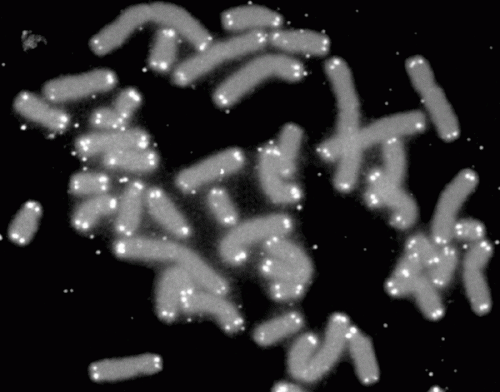
telomeres
Human chromosomes (grey) capped by telomeres (white). Credit: PD-NASA; PD-USGOV-NASA

Telomeres are protective caps on DNA that shorten as we grow older. Now, one of the first studies to examine telomere length (TL) in childhood finds that the initial setting of TL during prenatal development and in the first years of life may determine one's TL throughout childhood and potentially even into adulthood or older age. The study also finds that TL decreases most rapidly from birth to age 3, followed by a period of maintenance into the pre-puberty period, although it was sometimes seen to lengthen.

25 may 2021--The study, which followed children from birth to age 9, was led by researchers at the Columbia Center for Children's Environmental Health at Columbia University Mailman School of Public Health. Results appear in the journal Psychoneuroendocrinology.

The researchers discovered that a mother's TL is predictive of newborn TL and tracks with her child's TL through pre-adolescence. While all telomeres are expected to shorten with age, the reasons why some children have telomeres that shorten faster are unknown, one explanation may be that telomeres are susceptible to environmental pollutants. It is also unknown why some children had telomeres that lengthened across the study period though it is notable that this phenomenon has also been observed in other studies. 

"Given the importance of telomere length in cellular health and aging, it is critical to understand the dynamics of telomeres in childhood," says senior author Julie Herbstman, Ph.D., director of CCCEH and associate professor of environmental health science at Columbia Mailman School. "The rapid rate of telomere attrition between birth and age 3 years may render telomeres particularly susceptible to environmental influences during this developmental window, potentially influencing life-long health and longevity."

In the new study, researchers used polymerase chain reaction to measure TL in white blood cells isolated from cord blood and blood collected at ages 3, 5, 7, and 9, from 224 children. They also measured maternal TL at delivery in a subset of mothers.

The researchers say more research is needed to understand the biological mechanisms driving variability in the rate of TL change during the first years of life, as well as modifiable environmental factors that contribute to shifts in the rate of attrition. 


More information: Whitney Cowell et al, Telomere dynamics across the early life course: Findings from a longitudinal study in children, Psychoneuroendocrinology (2021). DOI: 10.1016/j.psyneuen.2021.105270
Provided by Columbia University's Mailman School of Public Health 

Monday, July 20, 2015

Defective telomeres are now being linked to dozens of diseases, including many types of cancer

Defective telomeres are now being linked to dozens of diseases, including many types of cancer


Studying telomeres, the structures that protect the ends of chromosomes, has become a key issue in biology. In recent years, not only has their relation to ageing been confirmed; defective telomeres seem to be linked to more and more illnesses, including many types of cancer. The review published by Paula Martínez and María Blasco from the CNIO in Trends in Biochemical Sciences, stresses the importance of investigating these structures to improve diagnoses and develop possible treatments for many diseases. Telomeres, in the opinion of these researchers, will become increasingly important in clinical studies.
20 july 2015--The chromosomes in every single cell are made up of DNA and shaped like strands, with a kind of protective cap at the end of each strand of DNA. Without this end protective cap, the DNA strands would chemically bond to other strands, i.e. the chromosomes would merge and that would be lethal for the cell. The structures that prevent this catastrophe are the telomeres. They were discovered in the 1930s but decades elapsed before someone decided to study them in any depth and since the late 1990s they have always been on the cutting edge of biology research. Biologists are often surprised by their amazing and unexpected complexity, and their health-related significance.
"The biology of telomeres is extremely complex and the more we discover the more we realise what remains to be discovered", says Paula Martínez from CNIO's Telomere and Telomerase Group. "What surprises me most is the high number of factors we are finding that are essential to the preservation of telomeres and, above all, the precise coordination that is required between them all".
The fact that telomeres have been tightly preserved throughout the evolutionary tree -in most eukaryotes: vertebrates, plants and even unicellular organisms such as yeast- indicates their importance. In addition to preventing the merger of chromosomes, telomeres are needed to prevent the loss of genetic information each time a cell divides.
Preventing Information Loss
When a cell replicates, the molecular machinery in charge of duplicating the chromosomes - so that each daughter cell has a copy -cannot reach the tip. This is inherently impossible due to the way the DNA replication machinery works, and it implies that any genetic material at the end of a chromosome with significant information for the cell would be lost. Telomeres prevent this from happening: they consist of a DNA sequence that does not contain genes and that is repeated numerous times- in humans and other species the sequence is TTAGGG; the letters correspond to three of the building blocks that make up the DNA: thymine, adenine and guanine.
Consequently, the shortening of the DNA with every division is not significant. At least not until a certain limit is reached. When the telomeres become too short, we see the problems associated with ageing: cells reach a point where they interpret critically short telomeres as irreparable damage and react by no longer dividing, which prevents tissue from regenerating.
This happens in healthy cells but not in cancer cells. There is an enzyme, telomerase, which is capable of lengthening the telomeres de novo. This enzyme is not present in most cells of an adult organism but it is active in tumour cells. By repairing the telomeres, the telomerase enables cancer cells to proliferate and become virtually immortal.
This link to ageing and cancer, has led to the intense study of telomere-based strategies to combat cancer and diseases associated with ageing. Blasco's group has recently shown that it is possible to make  mortal by acting on the telomeres.
Zooming In To The Tip Of The Buffer
The above-mentioned description of telomeres however is a simplified version of the story. We now know that there is a protective structure enveloping telomeric DNA consisting of six proteins known as shelterins, which are crucial. Another more recent discovery is that there are proteins that, although not in the telomeres themselves, interact with them at specific times to enable them to perform their functions.
These proteins enable the telomeres to unwind, for example; because, the sequence repeated in telomeres, TTAGGG, ends in a single strand of DNA that curves forming a loop and connects to the original strand of the double chain forming a triple chain. "Yes, it is very complicated", admits Martínez. "Structures of up to four chains of DNA can form".
When a cell divides, the telomeres are also replicated. This implies that the end loop must unwind first and then form again. This process also contributes to the shortening of telomeres and we now know that some of the shelterins as well as other associated proteins that interact with telomeres are key elements in this process.
Telomere Syndromes
According to Martínez, "there is now more evidence about relationship between telomere maintenance and several illnesses".
Telomere syndromes, or telomeropathies, have been identified in patients with mutations of the telomerase enzyme. This group includes, for example, pulmonary fibrosis and problems related to the malfunction of the bone marrow. A direct relationship between telomere dysfunctions and many types of cancer has also been found. More recently, we have also discovered that mutations of the proteins that protect telomeric DNA, the shelterins, and those that interact with the telomeres, are linked to various diseases, such as dyskeratosis congenita, Hoyeraal-Hreidarsson syndrome or Revesz syndrome.
"These discoveries underline the plethora of components and pathways that control telomere functions", write the authors in the paper. "In the future, research will bring to light more unknown factors that will improve our understanding of the mechanisms governing cancer and syndromes linked to the shortening of . We hope that this knowledge will be transferred to the clinic in order to improve the diagnosis and treatment of diseases".
Provided by Centro Nacional de Investigaciones Oncologicas

Tuesday, January 28, 2014

Telomere length prognostic for 50 to 75 year-old men with ACS


Telomere length prognostic for 50 to 75 year-old men with ACS

28 jan 2014—For men aged 50 to 75 years with acute coronary syndrome, short telomeres are independently associated with worse prognosis, according to a study published in the Feb. 1 issue of The American Journal of Cardiology.
Jose-Angel Perez-Rivera, M.D., from the University Hospital of Salamanca in Spain, and colleagues assessed the prognostic value of telomere length, measured by quantitative polymerase chain reaction in peripheral blood leukocytes of 203 men admitted with acute coronary syndrome. The men were classified into two groups according to age: 50 to 75 years, and older than 75 years. Patients underwent more than 600 days of clinical follow-up and a prognostic combined event was defined.
The researchers found that for men aged 50 to 75 years, those with short telomeres had significantly worse prognosis (P < 0.05), but this association was not seen for men aged older than 75 years (P = 0.91). For men aged 50 to 75 years, Cox analysis confirmed short telomeres as an independent prognostic risk factor.
"In conclusion, telomere length is a good predictor of cardiovascular prognosis in men admitted for acute coronary syndrome, but this relation depends on the chronological age of the population studied," the authors write.
More information: Abstract 

Wednesday, September 18, 2013

Lifestyle changes may lengthen telomeres, a measure of cell aging

A small pilot study shows for the first time that changes in diet, exercise, stress management and social support may result in longer telomeres, the parts of chromosomes that affect aging.
18 sept 2013--It is the first controlled trial to show that any intervention might lengthen telomeres over time.
The study will be published online on Sept. 16, 2013 in The Lancet Oncology.
The study was conducted by scientists at UC San Francisco and the Preventive Medicine Research Institute, a nonprofit public research institute in Sausalito, Calif. that investigates the effect of diet and lifestyle choices on health and disease. The researchers say they hope the results will inspire larger trials to test the validity of the findings.
"Our genes, and our telomeres, are not necessarily our fate," said lead author Dean Ornish, MD, UCSF clinical professor of medicine, and founder and president of the Preventive Medicine Research Institute.
"So often people think 'Oh, I have bad genes, there's nothing I can do about it,'" Ornish said. "But these findings indicate that telomeres may lengthen to the degree that people change how they live. Research indicates that longer telomeres are associated with fewer illnesses and longer life."
Telomeres are the protective caps on the ends of chromosomes that affect how quickly cells age. They are combinations of DNA and protein that protect the ends of chromosomes and help them remain stable. As they become shorter, and as their structural integrity weakens, the cells age and die quicker.
In recent years, shorter telomeres have become associated with a broad range of aging-related diseases, including many forms of cancer, stroke, vascular dementia, cardiovascular disease, obesity, osteoporosis and diabetes.
For five years, the researchers followed 35 men with localized, early-stage prostate cancer to explore the relationship between comprehensive lifestyle changes, and telomere length and telomerase activity. All the men were engaged in active surveillance, which involves closely monitoring a patient's condition through screening and biopsies.
Ten of the patients embarked on lifestyle changes that included: a plant-based diet (high in fruits, vegetables and unrefined grains, and low in fat and refined carbohydrates); moderate exercise (walking 30 minutes a day, six days a week); stress reduction (gentle yoga-based stretching, breathing, meditation). They also participated in weekly group support.
They were compared to the other 25 study participants who were not asked to make major lifestyle changes.
The group that made the lifestyle changes experienced a "significant" increase in telomere length of approximately 10 percent. Further, the more people changed their behavior by adhering to the recommended lifestyle program, the more dramatic their improvements in telomere length, the scientists learned.
By contrast, the men in the control group who were not asked to alter their lifestyle had measurably shorter telomeres – nearly 3 percent shorter – when the five-year study ended. Telomere length usually decreases over time.
The researchers say the findings may not be limited to men with prostate cancer, and are likely to be relevant to the general population.
"We looked at telomeres in the participants' blood, not their prostate tissue," said Ornish.
The new study is a follow up to a similar, three-month pilot investigation in 2008 in which the same participants were asked to follow the same lifestyle program. After three months, the men in the initial study exhibited significantly increased telomerase activity. Telomerase is an enzyme that repairs and lengthens telomeres.
The new study was designed to determine if the lifestyle changes would affect telomere length and telomerase activity in these men over a longer time period.
"This was a breakthrough finding that needs to be confirmed by larger studies," said co-senior author Peter R. Carroll, MD, MPH, professor and chair of the UCSF Department of Urology.
"Telomere shortening increases the risk of a wide variety of chronic diseases," Carroll said. "We believe that increases in telomere length may help to prevent these conditions and perhaps even lengthen lifespan."
Provided by University of California, San Francisco

Monday, October 01, 2012


Study discovers first real indicator of longevity in mammals

A team of researchers from the Spanish National Cancer Research Centre (CNIO), headed by CNIO Director María Blasco, has demonstrated in a pioneering study on mammals that longevity is defined at a molecular level by the length of telomeres. The work—which is published today in the online edition of the journal Cell Reports—opens the door to further study of these cellular components in order to calculate the rate at which cells age and thus be able to determine life expectancy for a particular organism.
01 oct 2012--Chromosomes—the cellular containers holding the genetic information in living creatures—have repetitive sequences of DNA at their extremities called telomeres. These sequences act as hoods that protect the genetic material in the face of any external agent which might damage it and compromise the function of the cells.
Several transversal population studies—measuring telomere length once over time in a large group of individuals—show a relationship between the length of the telomeres and the risk of suffering illnesses—cardiovascular disease or cancer, for example.
Until now, however, the use of telomeric measurements to predict real life expectancy in mammals had not been evaluated.
"In the transversal studies, it appears that individuals with short telomeres have a significantly increased probability of developing illnesses, including cancer. But this information is not applicable to a specific individual", says Blasco.
To determine a real ageing prediction method, the authors of the present study have carried out longitudinal studies of telomere length in mice, in which a single individual is followed over a period of time.
After taking periodic blood samples from the same individual, from which cells were extracted for study, they found that those mice which managed to live longer were not the ones that had longer telomeres at any given age but those in which showed less telomeric shortening over time.
"The important thing is not so much the long telomeres at any given time as the tendency or the evolution of the length of the telomeres over time", says Elsa Vera, lead author of the study.
NEW OPTIONS FOR STUDYING AGEING AND ITS CAUSES
With this study, Blasco's team suggests using mice as an animal model in longitudinal studies that allow for health prognoses in humans. Blasco says that: "while telomere length in normal mice is much greater than in humans, we have found, surprisingly, that the telomere shortening rate in mice is 100 times faster than in humans, so the old dogma of normal mice not getting old due to the shortening of their telomeres is wrong".
This study further opens the possibility of studying, via the longitudinal examination of these genetic guardians, the real effect of lifestyle choices such as diet, smoking or exercise on individual ageing rates.
These studies might therefore be crucial in preventing illnesses or in developing new medicines to treat them.
More information: The rate of increase of short telomeres predicts longevity in mammals. Elsa Vera, Bruno Bernades de Jesus, Miguel Foronda, Juana M. Flores, and Maria A. Blasco. Cell Reports (2012). doi: 10.1016/j.celrep.2012.08.023
Provided by Centro Nacional de Investigaciones Oncologicas (CNIO)

Monday, July 30, 2012


Shortened telomere length tied to dementia, mortality risk

30 july 2012-- Shortened telomere length (TL) is associated with risks for dementia and mortality in a population of older adults, according to a study published online July 23 in the Archives of Neurology.
Lawrence S. Honig, M.D., Ph.D., from the Columbia University College of Physicians and Surgeons in New York City, and colleagues used real-time polymerase chain reaction analysis to determine TL in stored leukocyte DNA from 1,983 participants in a community-based study of aging. Participants were 65 years or older and blood was drawn at a mean age of 78.3 years. Participants were followed for a median of 9.3 years for mortality, and 9.6 percent developed incident dementia.
The researchers found that TL correlated inversely with age and was shorter in men than women. TL was significantly shorter in persons dying during follow-up compared with survivors, even after adjusting for age, sex, education, and apolipoprotein E genotype. TL was significantly shorter in the participants with incident and prevalent dementia, compared with those who remained dementia-free. Shorter TL correlated with earlier onset of dementia but this association was significant in women only.
"Our results show an association between shortened TL and mortality, and more specifically an association of shortened TL with Alzheimer's disease, and are consistent with but not indicative of the possibility that TL may be a factor indicative of biological age," the authors conclude.
More information: Abstract
Full Text

Sunday, November 06, 2011

Alternate ending -- living on without telomerase

Scientists of the German Cancer Research Center have discovered an alternative mechanism for the extension of the telomere repeat sequence by DNA repair enzymes.

06 nov 2011--The ends of the chromosomes, the telomeres, are repetitive DNA sequences that shorten every time a cell divides during the process of duplicating its genome. Once the telomeres become very short the cell stops dividing. Thus, telomeres work like a cellular clock that keeps an eye on the number of cell divisions. And once the cell's time is over it can no longer divide. Circumventing this control mechanism is crucial for tumor cells in order to proliferate without limits.

In the majority of tumors this is accomplished by reactivating telomerase, an enzyme that normally extends the telomeres only in embryonic cells, and thus resets the cellular clock during development. However, a 10-15% fraction of tumors keeps on dividing without telomerase by making use of what is called the ALT-mechanism for "Alternative Lengthening of Telomeres". The hallmark of ALT cancer cells is a special type of complexes of promyelocytic leukemia (PML) protein at the telomeres that are termed ALT-associated PML nuclear bodies or APBs.

ALT-tumors can be identified by the presence of APBs on fluorescence microscopy images since normal cells do not have these structures. However, the function of APBs has remained mysterious. In a recent study, Inn Chung and Karsten Rippe from the German Cancer Research Center together with Heinrich Leonhard from the LMU in Munich applied a novel approach to study APBs. They succeeded in artificially making APBs in living cells by tethering PML and other APB proteins to the telomeres. In this manner they could not only trace the assembly of APBs but were able to investigate what happens after APB formation. They could show that the de novo formed APBs induced the extension of the telomere repeat sequence by a DNA repair synthesis mechanism.

This demonstrates for the first time that APBs have an important function for the alternative telomere lengthening mechanism, and suggests that disrupting APBs would stop proliferation of ALT-positive tumor cells once their telomeres become too short. This makes APBs a promising new target of cancer cells, in which the ALT mechanism is active.

More information: J. Cell Sci., doi: 10.1242/jcs.084681

Provided by Helmholtz Association of German Research Centres

Sunday, April 10, 2011

Chronic stress of cancer causes accelerated telomere shortening

Results of a study presented at the AACR 102nd Annual Meeting 2011, held here April 2-6, lend credence to the idea that improving quality of life affects stress-related biological markers and possibly the health of people with cancer.

Researchers know that telomeres shorten and deteriorate with aging, but they are learning that stress also affects telomere length.

10 april 2010--"We are trying to understand the interconnections between the mind and the body; that is, how does the diagnosis and treatment of cancer impact patients not only psychologically, but also physiologically and how can we improve their outcome. Cancer drives a chronic stress response in some patients," said Edward Nelson, M.D., division chief of hematology/oncology at the University of California, Irvine.

Just as aglets prevent a shoelace from unraveling or fraying, telomeres are structures on the ends of chromosomes that protect the chromosome from deteriorating, breaking apart or joining with other chromosomes, which can lead to mutations. Chromosomal rearrangements are seen in cancers and provided a biological reason to investigate this link, according Nelson.

"For this study, we wanted to know if chronic stress was associated with accelerated telomere shortening in cancer patients, and if a psychosocial intervention that modulates the stress response could also modulate telomere length," he said.

In this retrospective study, the researchers took biological samples from 31 women with cervical cancer who had been randomized to one of two groups — those who received six counseling sessions by telephone and those who received usual care without counseling.

The six sessions consisted of a quality of life and psychosocial profile, managing stress and emotions, enhancing health and wellness, addressing relational and sexual concerns, and integrating and summarizing the information. At enrollment and after four months, the researchers obtained biological samples from both groups and investigated changes over time to see if psychological counseling had any physical effects.

"Improved quality of life and reduced stress response was associated with changes in telomere length," Nelson said.

"It is important to recognize that this was an exploratory and preliminary analysis. We embarked on the first study of telomere length and chronic stress in a cancer population and the first longitudinal analysis in whether changes in quality of life and changes in the stress response would be associated with modulating the telomere length," he said.

Still, he added, "there is no doubt that offering psychological services has the potential to improve quality of life and outcomes of patients. After all, making patients feel better should be an outcome that a cancer team should want to have, but whether we can draw conclusions or make recommendations about the capacity of a behavioral intervention to modulate telomere length remains an open question."

Provided by American Association for Cancer Research

Monday, September 06, 2010

Healthy Lifestyle May Attenuate Short Telomere Associations

Appears to counterbalance link between shorter telomeres and coronary artery calcium

06 sept 2010-- Engaging in a healthy lifestyle might counterbalance the association between coronary artery calcium (CAC) and shorter telomeres in people who have the latter, according to research published in the Sept. 1 issue of the American Journal of Cardiology.

Vanessa A. Diaz, M.D., of the Medical University of South Carolina in Charleston, and colleagues studied the effect of healthy lifestyle behaviors (high fruit and vegetable consumption, low meat consumption, exercise, social support) on the association between telomere length and the presence of CAC in 318 subjects (aged 40 to 64) with no history of coronary heart disease, stroke, diabetes, or cancer.

After controlling for several factors, the researchers found that high social support, low meat consumption, and high fruit and vegetable consumption attenuated the relationship between shorter telomeres and the presence of CAC. Individuals with these healthy lifestyle characteristics and shorter telomeres did not differ significantly from those with longer telomeres. However, those with shorter telomeres and less healthy lifestyles were at a significantly higher risk for the presence of CAC (odds ratios, 3.30, 3.33, and 2.58 for low fruit and vegetable intake, high meat intake, and low social support, respectively). When individuals were stratified by gender, men had similar results, but only fruit and vegetable intake attenuated the shorter telomeres-CAC relationship in women.

"In conclusion, the results of the present study suggest that being involved in healthy lifestyle behaviors might attenuate the association between shorter telomere length and coronary atherosclerosis, as identified using CAC," the authors write.

Abstract