Saturday, February 22, 2020

Telemonitoring plus phone counseling lowers blood pressure among black and Hispanic stroke survivors

blood pressure
Credit: CC0 Public Domain
Adding phone-based lifestyle counseling to home blood pressure telemonitoring is an effective strategy to improve long-term blood pressure control among minority stroke survivors with uncontrolled high blood pressure, according to late breaking science presented today at the American Stroke Association's International Stroke Conference 2020.
22 feb 2020--Uncontrolled high blood pressure, or hypertension, is a major predictor of racial disparities in stroke outcomes in the United States. Improving blood pressure control among minority stroke survivors is key to secondary stroke prevention. Although home blood pressure telemonitoring and lifestyle counseling by nurses have proven effective in controlling blood pressure, this study is the first time this strategy has been tested specifically among minority stroke survivors.
Researchers randomly assigned 450 black and Hispanic stroke survivors with uncontrolled blood pressure (average age 62; 51% black; 44% women) to home blood pressure telemonitoring alone with monthly feedback to primary care providers, or home blood pressure telemonitoring plus telephone-based counseling by nurses. The nurses counseled patients via telephone on lifestyle behaviors and strategies to improve their blood pressure and reported the blood pressure readings to the patient's doctor.
After 12 months, patients who received the home blood pressure telemonitoring plus lifestyle counseling by nurses, experienced a 14-point reduction in their systolic blood pressure, while those who received only home blood pressure telemonitoring had only a 5-point drop in their systolic blood pressure.
"The magnitude of reduction in systolic blood pressure for those who received lifestyle counseling and support was much larger than we expected," said Gbenga Ogedegbe, M.D., M.P.H., lead study author, director, Division of Health and Behavior and the Center for Healthful Behavior Change in the Department of Population Health at NYU Grossman School of Medicine in New York City. "The reduction in systolic blood pressure of 14 mmHg among these patients would be expected to translate to at least a 20% decrease in stroke deaths and 34% fewer secondary strokes. These are pretty robust findings."
Ogedegbe said, "The results suggest that hypertension management in patients at high risk for recurrent stroke should involve telephone-based lifestyle counseling by a non-physician health worker coupled with home blood pressure telemonitoring. The role of the nurse case manager could be played by the patient's pharmacist or other trained non-physician health workers."

Provided by American Heart Association 

Thursday, February 20, 2020

Most coronavirus infections are mild, says Chinese study

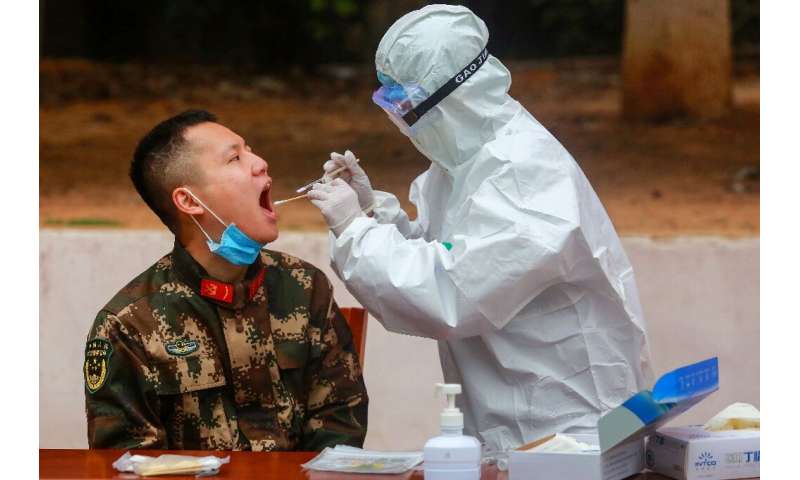
A medical worker takes a swab for testing from a Chinese paramilitary police officer in Shenzhen, Guangdong province
Most people infected by the new coronavirus in China have mild symptoms, with older patients and those with underlying conditions most at risk from the disease, according to a study by Chinese researchers.
20 feb 2020--The disease has now killed nearly 1,900 people and infected more than 72,000 in China since it first emerged in the central city of Wuhan late last year.
A paper published in the Chinese Journal of Epidemiology looked at 72,314 confirmed, suspected, clinically diagnosed, and asymptomatic cases of COVID-19 illness across China as of February 11.
It is the biggest study on novel coronavirus patients since the outbreak began in late December.
Here are the main findings from the paper by the Chinese Centre for Disease Control and Prevention (CCDC):
Elderly, sick at risk:
Some 80.9 percent of infections are classified as mild, 13.8 percent as severe and only 4.7 percent as critical.
The highest fatality rate is for people aged 80 and older, at 14.8 percent.
The study finds that patients with cardiovascular disease are most likely to die of complications from the novel coronavirus, followed by patients with diabetes, chronic respiratory disease and hypertension.
There were no deaths among children aged up to 9, despite at least two cases of newborn babies infected through their mothers.
Up to age 39, the death rate remains low at 0.2 percent.
The fatality rate increases gradually with age. For people in their 40s it is 0.4 percent, in their 50s it is 1.3 percent, in their 60s it is 3.6 percent and their 70s it is 8.0 percent.
Men are more likely to die (2.8 percent) than women (1.7 percent).
The overall death rate from the virus stood at 2.3 percent.
While the Severe Acute Respiratory Syndrome (SARS) outbreak of 2002-2003 affected fewer people, the fatality rate was nearly 10 percent.
The US Centres for Disease Control says between 26 million to 36 million Americans contracted seasonal flu between October 2019 and February 8 this year, and there were between 14,000 to 36,000 deaths—a fatality rate of around 0.1 percent.
'Wuhan exposure'
Nearly 86 percent of those who have contracted the illness had either lived in or travelled to Wuhan, where a seafood market that illegally sold wild animals is believed to be the original source of the virus.
The city in central China's Hubei province has been under lockdown since January 23.
Risk to medical workers
A total of 3,019 health workers have been diagnosed, 1,716 of whom were confirmed cases, and five had died as of February 11, the report said.
An analysis of 1,688 severe cases among medical staff showed that 64 percent of them were working in Wuhan.
"The percentage of severe cases among Wuhan medical staff has gradually decreased from 38.9 percent at the peak (on January 28) to 12.7 percent in early February," the report said.
A hospital director in Wuhan died from the illness on Tuesday.
Earlier this month Wuhan ophthalmologist Li Wenliang, who had been punished by authorities for sounding the alarm about the virus, also died.
'Downward trend'
The epidemic reached its "first peak" between January 24 and 26, the report said.
It suggests there is has been a "downward trend" in the overall epidemic curve since February 11—meaning the spread of the disease, especially outside Hubei province, was slowing.
On February 13, China broadened its definition of confirmed cases to include those who were clinically diagnosed through lung imaging, in addition to those with a positive lab test result.
The report hints that China's decision to lock down Wuhan—a city of 11 million people—and impose strict transport curbs in other affected areas may have paid off.
'Possible rebound'
The virus spread as millions of people criss-crossed the country for the Lunar New Year holiday in late January.
The authors warn that with many people returning from the holiday, the country needs to brace itself for a "possible rebound of the epidemic".
Coronaviruses may continue to "adapt over time and become more virulent", the report warns and urges doctors to "remain vigilant".

Saturday, February 15, 2020

As we age, women are frailer but more resilient than men

old person
Credit: CC0 Public Domain
Women tend to have poorer health status and are more frail, but are more resilient and have longer life expectancy than men, according to the authors of a narrative review on frailty, published online today by the Medical Journal of Australia.
15 feb 2020--Frailty can be defined as a state of increased vulnerability that is associated with adverse health outcomes.
"It has been estimated that just over 10% of community dwelling adults aged 65 years and over are frail," wrote the authors, Dr. Emily Gordon, a consultant geriatrician, and Professor Ruth Hubbard, from the Centre for Health Services Research at the University of Queensland.
"A frail older person takes longer to recover after any sort of insult (such as infection, infarction or adverse drug reactions) and during the period of recovery is more vulnerable to further stressors. Increasing frailty is associated with syndromic disease presentations; falls, delirium, functional decline and new urinary incontinence may reflect acute illness in a frail older person and should never be dismissed as 'normal for age.'"
Gordon and Hubbard described the differences in frailty between men and women as the "sex-frailty paradox."
"In community dwelling populations aged over 65 years, women are more likely to be frail and to have a greater burden of frailty than men of the same age. Yet women appear to be more resilient—at any given age or level of frailty, their mortality rates are lower," they wrote.
"In Australia, the life expectancy of females continues to be about four years longer than that of males. Yet throughout their lives, women are burdened by chronic disease and disability to a greater extent than men and, unsurprisingly, women have poorer self-rated health."
In their review Gordon and Hubbard examined the evidence about frailty interventions. Exercise and nutrition-based interventions were found to have the highest levels of evidence.
"Many of these interventions target phenotypic features of frailty, including weakness, slowness and wasting," they wrote.
"Yet frailty is more than just physical signs and symptoms. Cognitive training strategies and comprehensive geriatric assessment with interdisciplinary interventions address important non-physical health domains.
"More recently, researchers have reported benefits from multifactorial interventions incorporating exercise, a nutritional intervention, and cognitive training with social support or medication review.
"It is also important to note that very few studies have examined interventions to prevent the development of frailty in non-frail older adults. Further, the evidence-base for interventions to prevent or reduce frailty in institutionalized or hospitalized older adults is limited."
Some evidence implies that some interventions work better for one sex than the other, wrote Gordon and Hubbard.
"Sex differences in the effectiveness of interventions have not been specifically addressed by the research literature to date," they wrote.
"Exercise programs appear to be effective in both sexes. However, sarcopenia, low physical activity and functional impairment are more prevalent in older women than men, and it is possible that women may benefit from a different type or intensity of exercise intervention than men.
"With respect to nutrition, men may benefit from interventions to a greater extent than women. Several studies have indicated that men tend to have a poorer understanding of nutrition and make unhealthy dietary decisions.
"Sex differences in frailty highlight that older men and women may respond to interventions in different ways and may benefit from more sex-specific strategies."
The authors concluded that there was a scope and growing need for further research into frailty, and particularly the sex-frailty paradox.
"To provide optimal, patient-centered care, sex differences should inform our practice," they wrote.
"While the evidence base for sex-specific frailty interventions is lacking at the present time, the knowledge gleaned and hypotheses generated from observational data should inspire programs of research, instigate public health initiatives, and prompt reflection by health professionals."

More information: Emily H Gordon et al. Differences in frailty in older men and women, Medical Journal of Australia (2019). DOI: 10.5694/mja2.50466
Journal information: Medical Journal of Australia 
Provided by Medical Journal of Australia (MJA

Saturday, February 08, 2020

Coronavirus 2019-nCoV: The largest meta-analysis of the sequenced genomes of the virus

Coronavirus 2019-nCoV: the largest meta-analysis of the sequenced genomes of the virus
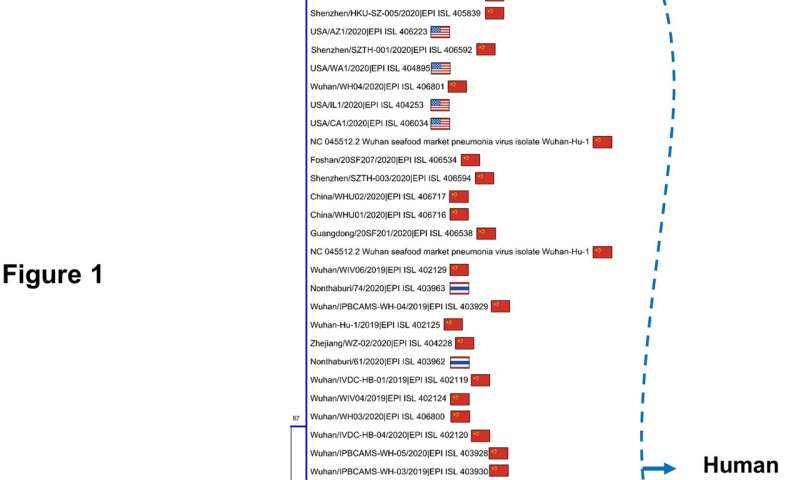
Phylogenetic tree of all the 2019-nCov sequences available at 02-Feb-2020 (branches shown in blue), plus six Bat coronavirus sequences (default black, as they are split in multiple taxa), six Human SARS (green) and 2 MERS (orange). The percentage of bootstraps supporting each branch is reported. Branches corresponding to partitions reproduced in less than 50% bootstrap replicates are collapsed. Credit: University of Bologna
The largest analysis of coronavirus 2019-nCoV genomes that have been sequenced so far confirms that the virus originates in bats and shows a low virus heterogeneity. At the same time, researchers identified a hyper-variable genomic hotspot in the proteins of the virus responsible for the existence of two virus subtypes. The leading author of this study, published in the Journal of Medical Virology, is Federico M. Giorgi, bioinformatics researcher at the Department of Pharmacy and Biotechnology of the University of Bologna.
08 feb 2020--The data released by the World Health Organization reveal that to date, the coronavirus 2019-nCoV has infected 28,276 people, of whom 565 died. This new study analyzed the genomes of the 56 coronavirus strains sequenced in different parts of the world, including those extracted from the two Chinese patients held at the Infectious Disease Ward of Lazzaro Spallanzani Hospital in Rome, Italy. This is the most comprehensive study of coronavirus genomes so far conducted.
Researchers confirmed the notion that the virus probably originates from a zoonotic pathogen: its closest relative, which was isolated in the past few weeks, matches the coronavirus sequence EPI_ISL_402131 found in the Rhinolophus affinis, a medium-size Asian bat of the Yunnan Province (China). The human coronavirus genome shares at least 96.2% of its identity with its bat relative, while its similarity rate with the human strain of the SARS virus (severe acute respiratory syndrome) is much lower, only 80.3%.
The researchers have also discovered that all the existing DNA sequences of coronavirus are very similar, even if they come from different regions of China and from various parts of the world—the genomes obtained from patients since the beginning of the outbreak share a sequence identity over 99%. "The virus shows low heterogeneity and variability—this is good news," explains Federico M. Giorgi. "With a homogeneous viral population, potential drug therapies are deemed to be more effective on everyone."
However, the study identified for the first time a hyper-variable hotspot in the virus proteins, eventually pinpointing two virus subtypes. The latter differ only by a single amino acid, which is able to change the sequence and the structure of ORF8-encoded protein, a  component yet to be characterized.

More information: Carmine Ceraolo et al. Genomic variance of the 2019‐nCoV coronavirus, Journal of Medical Virology (2020). DOI: 10.1002/jmv.25700
Provided by University of Bologna 

Fighting coronavirus fear with empathy: Lessons learned from how Africans got blamed for Ebola

Ebola
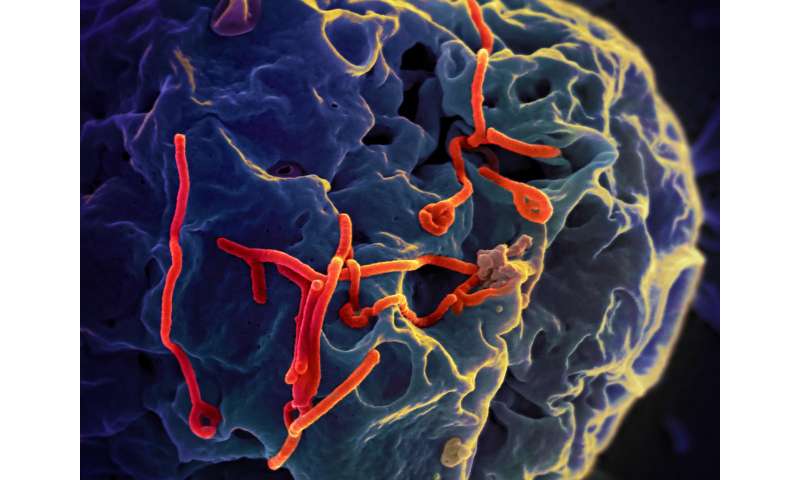
Ebola virus particles (red) on a larger cell. Credit: NIAID
With coronavirus cases exploding in China, the U.S. is once again responding to a global epidemic. Five years ago, when the Ebola virus infected more than 28,000 people in 10 countries, many people were surprised to learn that four of these cases were diagnosed on U.S. soil.
08 feb 2020--Based on research I conducted for a book about the Ebola crisis and prejudice against certain groups of people associated with it, I fear that Americans might make immigrants the villain instead of the virus during the coronavirus epidemic.
There's reason for concern. Since the first case of the coronavirus was discovered in December 2019, it has affected more than 20,000 peopleincluding 11 in the U.S.
If the U.S.' experience with epidemics tell us anything, it is that these events will be followed by increased public attention aimed at immigrants from China. This is because during epidemics, attention is typically focused on groups from countries where they started. And, this attention is rarely accompanied by an understanding of immigrants' complicated experiences.
More often, it is about blame. Chinese immigrants in Canada already are reporting examples of xenophobia. Several students at the University of California, Berkeley complained about what they considered to be a xenophobic Instagram post from the university after news of the coronavirus; the university deleted the post.
As I argue, based on research presented in my book "Global Epidemics, Local Implications: African Immigrants and the Ebola Crisis in Dallas," the experience of African immigrants during the Ebola epidemic in 2014 can provide us with important lessons about how the U.S. and its people should respond.
This does not imply that the Ebola virus and the new coronavirus are similar. Yet, there are important facets of African immigrants' experiences during the Ebola crisis that can inform how Americans think about the current experiences of Chinese immigrants.
Fear and concern for loved ones far away
For starters, the public tends to ignore the fears and traumas experienced by immigrants who see epidemics unfolding in their origin countries.
Some immigrants experience the devastation firsthand, because they had traveled to their countries of origin when the outbreak occurred. During the 2014 Ebola epidemic, for example, African immigrants visiting West Africa when the outbreak began lived through the ensuing social disorder, witnessed the rising death toll and feared infection from the deadly virus.
More often, however, immigrants experience outbreaks from afar. During the Ebola epidemic, my research shows that immigrants who remained in the U.S. were not spared from these emotional experiences. While advances in global travel and communications technology have helped immigrants maintain connections with these countries, they also provide channels through which the consequences of disease outbreaks abroad are experienced.
News of the mounting deaths of family members created a paralyzing feeling for immigrants in the U.S. who knew that they couldn't risk traveling to the endemic countries abroad. At the same time, they felt being guilty about their inability to participate in customary burial rites.
But worst of all, blame
In addition to fear and guilt, however, immigrants often experience a great deal of blame. During the Ebola crisis, negative responses from Americans who used caricatures of immigrants' ethnicity to stigmatize them as carriers of disease only worsened immigrants' stress and fear. For example, many heard racist tropes about Africans' presumed penchant for kissing corpses and their habit of consuming exotic beasts.
In this current coronavirus , we have already begun to see the rise of xenophobia and the use of ethnic stereotypes about Chinese consumption of exotic meats to link the presumed cultural practices of Chinese immigrants with the spread of the virus.
Such negative reactions are not new. They are similar to past public reactions that blamed Russian Jews for the 1892 typhoid epidemic and Italians for the spread of polio in 1916.
Stigmatizing immigrants does nothing to contribute to the fight against epidemics. Instead, such actions are usually counterproductive because they fail to incorporate immigrants into broader efforts to combat the spread of disease.
How immigrant communities help
Immigrant communities provide a critical line of defense for detecting, monitoring and preventing the spread of the disease, as I discuss in my book. With Ebola, these included the development of strategies to prevent the spread of the virus and improve public health by African immigrants after the first case of Ebola was discovered in the U.S.
Accordingly, African immigrant communities promoted initiatives to discourage travel to affected countries. They also helped develop systems for ensuring that Africans returning from these countries abide by quarantine period required by the Centers for Disease Control and Prevention.
Beyond these actions, West African immigrants took other practical steps to reduce person-to-person transmissions of Ebola, while also supporting efforts to address the consequences of the disease abroad. In addition, these immigrants promoted the practice of frequent hand-washing with chlorine-based solutions and discouraged social norms of hand-shaking withing their communities. These actions were complemented by efforts to assist in contact tracing, the identification of people who may have come in contact with infected persons.
Building on these initiatives, they also collaborated with local businesses and other mainstream institutions to care for families affected by Ebola and assisted humanitarian organizations working to combat the spread of disease in West Africa.
When a nation responds to epidemics by stigmatizing immigrants, it misses opportunities to build strategic coalitions for preventing the spread of viruses. Now that the first person-to-person transmission of the coronavirus has been confirmed in the U.S., the need for such coalitions has become more urgent.
In my view, our nation's response to Chinese immigrant communities should be based on actions informed by facts and not fear. Without such actions, we risk failure in our attempts to build the resilient communities needed to prevent the occurrence of a greater public health emergency within our borders.

Provided by The Conversation 

Radiologists describe coronavirus imaging features

Radiologists describe coronavirus imaging features
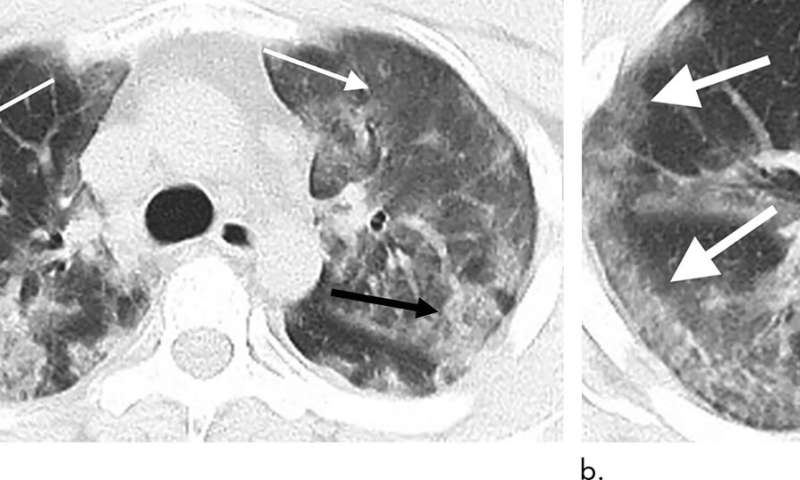
29-year old male with unknown exposure history, presenting with fever and cough, ultimately requiring intensive care unit admission. (a) Axial thin-section non-contrast CT scan shows diffuse bilateral confluent and patchy ground-glass (solid arrows) and consolidative (dashed arrows) pulmonary opacities. (b) The disease in the right middle and lower lobes has a striking peripheral distribution (arrow). Credit: Radiological Society of North America
In a special report published today in the journal Radiology, researchers describe CT imaging features that aid in the early detection and diagnosis of Wuhan coronavirus.
08 feb 2020--"Early disease recognition is important not only for prompt implementation of treatment, but also for patient isolation and effective public health surveillance, containment and response," said the study's lead author, Michael Chung, M.D., assistant professor in the Department of Diagnostic, Interventional and Molecular Radiology in the Mount Sinai Health System in New York, N.Y.
On December 31, 2019, the World Health Organization (WHO) learned of several cases of a respiratory illness clinically resembling viral pneumonia and manifesting as fever, cough, and shortness of breath. The newly discovered virus emerging from Wuhan City, Hubei Province of China, has been temporarily named "novel coronavirus" (2019-nCoV). This new coronavirus belongs to a family of viruses that include Severe Acute Respiratory Syndrome (SARS) and Middle East Respiratory Syndrome (MERS).
The outbreak is escalating quickly, with thousands of confirmed 2019-nCoV cases reported globally. On January 30, the U.S. reported the first confirmed instance of person-to-person spread of the virus.
In this retrospective case series, Dr. Chung and colleagues set out to characterize the key chest CT imaging findings in a group of patients infected with 2019-nCoV in China with the goal of familiarizing radiologists and clinical teams with the imaging manifestations of this new outbreak.
Radiologists describe coronavirus imaging features
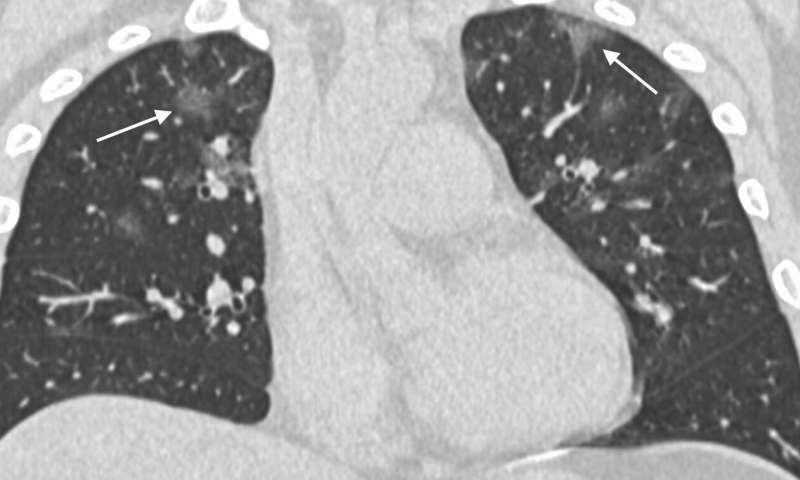
36-year old male with history of recent travel to Wuhan, presenting with fever, fatigue and myalgias. Coronal thin-section non-contrast CT image shows ground-glass opacities with a rounded morphology in both upper lobes (arrows). Credit: Radiological Society of North America
From January 18, 2020, until January 27, 2020, 21 patients admitted to three hospitals in three provinces in China with confirmed 2019-nCoV infection underwent chest CT. The 21 patients consisted of 13 men and 8 women ranging in age from 29 to 77 years old, with a mean age of 51.2 years. All patients were confirmed positive for infection via laboratory testing of respiratory secretions.
For each of the 21 patients, the initial CT scan was evaluated for the following characteristics: (1) presence of ground-glass opacities, (2) presence of consolidation, (3) number of lobes affected by ground-glass or consolidative opacities, (4) degree of lobe involvement in addition to overall lung "total severity score," (5) presence of nodules, (6) presence of a pleural effusion, (7) presence of thoracic lymphadenopathy (lymph nodes of abnormal size or morphology), and (8) presence of underlying lung disease such as emphysema or fibrosis. Any other thoracic abnormalities were also noted.
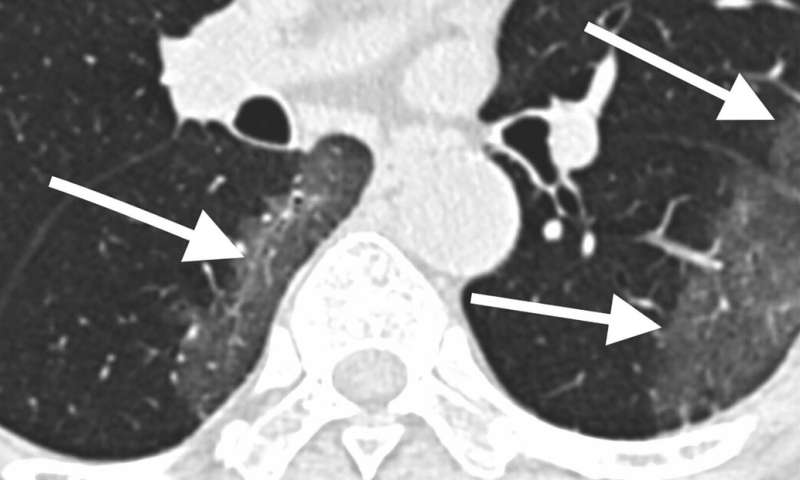
The analysis showed that 2019-nCoV typically manifests on CT with bilateral ground-glass and consolidative pulmonary opacities. Nodular opacities, crazy-paving pattern, and a peripheral distribution of disease may be additional features helpful in early diagnosis. The researchers also noted that lung cavitation, discrete pulmonary nodules, pleural effusions and lymphadenopathy are characteristically absent in cases of 2019-nCoV.
Follow-up imaging in seven of eight patients showed mild or moderate progression of disease as manifested by increasing extent and density of airspace opacities.
Dr. Chung cautioned that absence of abnormal CT findings upon initial examination does not rule out the presence of 2019-nCoV.
Radiologists describe coronavirus imaging features
69-year old male with history of recent travel to Wuhan, presenting with fever. Axial thin-section non-contrast CT scan shows ground-glass opacities in the lower lobes with a pronounced peripheral distribution (arrows). Credit: Radiological Society of North America
"Our patient population is unique from other published series on the Wuhan coronavirus in that three of our patients had normal initial chest CTs," he said. "One of these patients progressed three days later and developed a solitary nodular ground-glass lesion in the right lower lobe, indicating this pattern may represent the very first radiologically visible manifestation of disease in some patients infected with Wuhan coronavirus."
He added that a second patient had a normal follow-up chest CT four days after her initial normal imaging exam.
"This suggests that chest CT lacks complete sensitivity and does not have a perfect negative predictive value," Dr. Chung said. "We can't rely on CT alone to fully exclude presence of the virus."
This finding may be related to the fact that infection with 2019-nCoV is characterized by an incubation period of several days, and there may be a phase where viral infection manifests with symptoms prior to visible abnormalities on CT.
The researchers note that further study is required to understand how patients fare after treatment but suggest that experience and imaging findings from MERS and SARS epidemics might be helpful in managing the current outbreak.

More information: Michael Chung et al, CT Imaging Features of 2019 Novel Coronavirus (2019-nCoV), Radiology (2020). DOI: 10.1148/radiol.2020200230
Journal information: Radiology 
Provided by Radiological Society of North America 

Novel coronavirus case numbers 'stabilising': WHO

virus
Credit: CC0 Public Domain
The number of cases of the deadly novel coronavirus being reported on a daily basis in China is "stabilising", the World Health Organization said on Saturday.
08 feb 2020--The UN health agency said this was "good news" but cautioned that it was too early to make any predictions about whether the virus might have peaked.
"There has been a stabilisation in the number of cases reported from Hubei," Michael Ryan, head of WHO's Health Emergencies Programme, said at a briefing in Geneva.
The central Chinese province of Hubei has been at the epicentre of the virus outbreak and has been placed under lockdown by the authorities in an effort to contain the virus.
"We're in a four-day stable period where the number of reported cases hasn't advanced. That's good news and may reflect the impact of the control measures that have been put in place," Ryan said.
But he added that it was "very early to make any predictions".
WHO chief Tedros Adhanom Ghebreyesus said the trend was "not really accelerating" but also called for "caution".
The coronavirus has infected more than 34,500 people and killed more than 700.
Tedros warned against misinformation about the virus, saying it made the work of healthcare staff harder.
"We're not just battling the virus, we're also battling the trolls and conspiracy theorists that push misinformation and undermine the outbreak response," he said.
Asked about a planned WHO-led international mission to China, he also said a list of names had been submitted to Chinese authorities and the team leader would be travelling there on Monday or Tuesday.
"The rest of the experts will also follow after that," he said.
Asked if the mission would include members of the US Centers for Disease Control and Prevention (CDC), he said: "I hope so".
China has been critical of measures taken by the United States in response to the virus and has so far rejected an offer of assistance from the CDC.

New ACIP adult immunization schedule recommends changes to several vaccines

The Advisory Committee on Immunization Practices (ACIP) released its 2020 Recommended Immunization Schedule for adults with changes to the administration of the influenza, human papillomavirus (HPV), hepatitis A, hepatitis B, meningococcal B, and pneumococcal conjugate vaccines. The schedule, which can be complex and challenging to implement, features revised content, format, and graphics to make it easier to follow. The complete schedule, including changes in the vaccine notes section, is being simultaneously published in Annals of Internal Medicine and on the Centers for Disease Control and Prevention (CDC) web site.
08 feb 22020--The schedule is streamlined for ease of reference. Physicians should pay careful attention to the details found in the vaccine notes section, as they clarify who needs what vaccine, when, and at what dose.
In addition to changes in the administration of some vaccines, the 2020 schedule includes new instructions for shared clinical decision-making for several vaccines. First, the HPV vaccine is recommended for some patients aged 27 through 45 who are not adequately vaccinated. Clinicians should consider discussing HPV vaccination with those who are most likely to benefit from it based on a detailed list of considerations. Second, the pneumococcal 13-valent conjugate vaccine (PCV13) should be discussed with adults 65 years or older who do not have an immunocompromising condition, cerebrospinal fluid leak, or cochlear implant, and who have not previously received PCV13. And third, clinicians should consider discussing the meningitis B vaccine with adolescents and young adults age 16 through 23 who are not at increased risk for meningococcal disease.
The ACIP is comprised of 15 voting members, ex officio members who represent other federal agencies, and non-voting representatives of liaison organizations, including the American College of Physicians, that bring related immunization expertise. Each year, ACIP reviews the CDC's Recommended Adult Immunization Schedule to ensure it reflects current clinical recommendations for licensed vaccines. The recommendations are intended to guide physicians and other clinicians about the appropriate vaccines for their adult patients.
More information: Annals of Internal Medicine (2020). http://annals.org/aim/article/doi/10.7326/M20-0046
Journal information: Annals of Internal Medicine 


Wednesday, February 05, 2020

Safely aging: Growing old in a smart home requires technology to monitor health and behavior

old person
Credit: CC0 Public Domain
With an aging population, there is an increasing need for a smart home to be able to monitor health and behavior with a view to allowing people to continue to live in their homes independently. Research published in the International Journal of Ad Hoc and Ubiquitous Computing shows how motion sensors, actuators, and surveillance systems can be used in different rooms in a home to monitor people are they carry out household chores, such as cooking and cleaning, and other activities, such as using the bathroom, watching television, partaking of hobbies, and sleeping.
05 feb 2020--Yo-Ping Huang of the Department of Electrical Engineering at the National Taipei University of Technology, in Taiwan, and colleagues suggest that the outputs from sensors and monitors can be fed to an algorithm trained to recognize normal behavior and to flag issues when a person is unexpectedly immobilized or carrying out an unusual activity in a part of their home where such activities are not commonly undertaken. The system can then alert healthcare workers or family members that there may be a crisis underway and the elderly person can be contacted or emerging services sent to assist.
The team has simulated behavior and tested the system and its results show that the proposed system outperforms support vector machines in terms of score and accuracy in identifying daily activities.
The researchers add that they will next integrate the system with voice recognition to allow the remote control of appliances used in daily life as well as making wireless and mobile devices connectable so that carers can be availed of potentially hazardous or life-threatening situations as they arise in the person's home without the carer needing to be in the home continuously to look after the person.

More information: Yo Ping Huang et al. Sensor-based detection of abnormal events for elderly people using deep belief networks, International Journal of Ad Hoc and Ubiquitous Computing (2020). DOI: 10.1504/IJAHUC.2020.104714
Provided by Inderscience

Tuesday, February 04, 2020

Quarantines have been used for thousands of years

Quarantines have been used for thousands of years
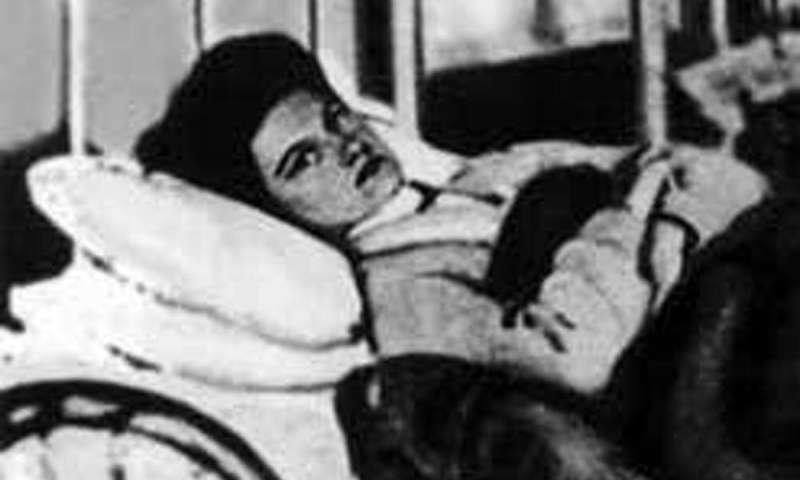
Officials quarantined ‘Typhoid’ Mary Mallon in a hospital. Credit: Wikimedia Commons
The recent global spread of a deadly coronavirus originating in Wuhan, China, has led world leaders to invoke an ancient tradition to control the spread of illness: quarantine.
04 feb 2020--The practice is first recorded in the Old Testament where several verses mandate isolation for those with leprosy. Ancient civilizations relied on isolating the sick, well before the actual microbial causes of disease were known. In times when treatments for illnesses were rare and public health measures few, physicians and lay leaders, beginning as early as the ancient Greeks, turned to quarantine to contain a scourge.
In January, Chinese authorities attempted to lock down millions of residents of Wuhan and the surrounding area, to try to keep the new coronavirus from spreading outward. The country's neighbors are closing borders, airlines are canceling flights, and nations are advising their citizens against traveling to China, a modern instance of the old impulse to restrict people's movements in order to stop .
U.S. authorities are holding travelers returning from China in isolation for two weeks as an effort to halt coronavirus' spread. Always at the center of the policy of quarantine is the tension between individual civil liberties and protection of the public at risk.
Keeping contagion at bay
The meaning of quarantine has evolved from its original definition "as the detention and segregation of subjects suspected to carry a contagious disease."
Now it represents a period of isolation for persons or animals with a contagious disease—or who may have been exposed but aren't yet sick. Although in the past it may have been a self-imposed or voluntary separation from society, in more recent times quarantine has come to represent a compulsory action enforced by health authorities.
Leprosy, mentioned in both Old and New testaments, is the first documented disease for which quarantine was imposed. In the Middle Ages, leper colonies, administered by the Catholic Church, sprung up throughout the world. Although the causative agent of leprosy—the bacterium Mycobacterium leprae – was not discovered until 1873, its disfiguring and incurable nature made civilizations wrongly believe it was easily spread.
The plague of the 14th century gave rise to the modern concept of quarantine. The Black Death first appeared in Europe in 1347. Over the course of four years, it would kill between 40 million and 50 million people in Europe and somewhere between 75 million and 200 million worldwide.
In 1377, the seaport in Ragusa, modern day Dubrovnik, issued a "trentina"—derived from the Italian word for 30 (trenta). Ships traveling from areas with high rates of plague were required to stay offshore for 30 days before docking. Anyone onboard who was healthy at the end of the waiting period was presumed unlikely to spread the infection and allowed onshore.
Thirty was eventually extended to 40 days, giving rise to the term quarantine, from the Italian word for 40 (quaranta). It was in Ragusa that the first law to enforce the act of quarantine was implemented.
Over time, variations in the nature and regulation of quarantine emerged. Port officials asked travelers to certify they hadn't been to areas with severe disease outbreaks, before allowing them to enter. In the 19th century, quarantine was abused for political and economic reasons, leading to the call for international conferences to standardize quarantine practices. Cholera epidemics throughout the early 19th century made clear the lack of any uniformity of policy.
Imported to America
The United States has also had its share of epidemics, beginning in 1793, with the outbreak of yellow fever in Philadelphia. A series of further disease outbreaks led Congress in 1878 to pass laws that mandated involvement of the federal government in quarantine. The arrival of cholera to the United States, in 1892, prompted even greater regulation.
Perhaps the best known example of quarantine in American history, pitting an individual's civil liberties against public protection, is the story of Mary Mallon, aka "Typhoid Mary." An asymptomatic carrier of typhoid fever in the early 20th century, she never felt sick but nevertheless spread the disease to families for whom she worked as a cook.
Officials quarantined Mary on North Brother Island in New York City. Released after three years, she promised never to cook for anyone again. Breaking her vow and continuing to spread the disease, she was returned to North Brother Island, where she remained for the remainder of her life in isolation.
More recently, in 2007, public health officials quarantined a 31-year-old Atlanta attorney, Andrew Speaker, who was infected with a drug-resistant form of tuberculosis. His case grabbed international attention when he traveled to Europe, despite knowing he had and could spread this form of TB. Fearing quarantine in Italy, he returned to the United States, where he was apprehended by federal authorities and quarantined at a medical center in Denver, where he also received treatment. Following release, deemed no longer contagious, he was required to report to local health officials five days a week through the end of his treatment.
Quarantine today continues as a public health measure to limit the spread of contagious disease, including not just coronavirus, but Ebola, flu and SARS.
Its stigma has largely been removed by emphasizing not only the benefits of quarantine to society, by removing contagious individuals from the general population, but also the benefit of treatment to those who are ill.
In the United States, where the Constitution guarantees personal rights, it's a serious decision to restrict an individual's freedom of travel and compel medical treatment. And quarantine is not an ironclad way to prevent the spread of disease. But it can be a useful tool for public health officials working to stop the spread of a contagious disease.

Provided by The Conversation 

Saturday, February 01, 2020

Doctors urged to recognize post-antidepressant sexual dysfunction

antidepressant
Credit: CC0 Public Domain
A psychiatrist specialising in sexual dysfunction caused by antidepressants is calling for greater recognition of the problems that can endure after treatment stops. Professor David Healy, writing in the Journal of the Royal Society of Medicine, said problems may begin after only a few doses and leave someone affected for life, or a relatively mild dysfunction can worsen dramatically when the person stops treatment.
01 feb 2020--Called Post-SSRI Sexual Dysfunction (PSSD), the core features of the condition are genital numbing, loss or muting of orgasm and loss of libido. According to Professor Healy many patients are just as concerned by additional features like emotional numbing or derealisation. Both sexes, all ages and every ethnic group can be affected.
Professor Healy, of Bangor University, said: "10% of people of sexually active years in developed countries are on antidepressants chronically. Nearly 20% of the population, therefore, may not be able to make love the way they want. In some deprived areas, the figure may be much higher. Some likely comfort themselves with the thought that once they stop treatment, they will get back to normal, when in fact they may be even less able to function."
In June 2019, in response to a petition lodged by Professor Healy and colleagues in 2018, the European Medicines Agency asked pharmaceutical companies to warn that sexual dysfunction can endure after antidepressant treatment stops.
Professor Healy said: "There is a great need to recognise these treatment-related enduring sexual dysfunctions and pinpoint how they arise and might be treated."
More information: David Healy, Antidepressants and sexual dysfunction: a history, Journal of the Royal Society of Medicine (2020). DOI: 10.1177/0141076819899299
Journal information: Journal of the Royal Society of Medicine 
Provided by SAGE Publications