Sunday, October 06, 2019

Want to reduce suicides? Follow the data to medical offices, motels and even animal shelters

suicide
Credit: CC0 Public Domain
On Kimberly Repp's office wall is a sign in Latin: Hic locus est ubi mors gaudet succurrere vitae. This is a place where the dead delight in helping the living.
06 oct 2019--For medical examiners, it's a mission. Their job is to investigate deaths and learn from them, for the benefit of us all. Repp, however, isn't a medical examiner; she's a Ph.D. microbiologist. And as the Washington County epidemiologist, she was most accustomed to studying infectious diseases like flu or norovirus outbreaks among the living.
But in 2012 she was asked by county officials to look at suicide. The request led her into the world of death investigations, and also appears to have led to something remarkable: In this suburban county of 600,000 just west of Portland, the suicide rate now is going down. It's remarkable because national suicide rates have risen despite decadeslong efforts to reverse the deadly trend.
While many factors contribute to suicide, officials here believe they've chipped away at this problem through Repp's initiative to use data—very localized data that any jurisdiction could collect. Now Repp's mission is to help others learn how to gather and use it.
New York state has just begun testing a system like hers. Humboldt County, Calif., is implementing it. She's gotten inquiries from Utah and Kentucky. Colorado, meanwhile, is using its own brand of data collection to try to achieve the same kind of turnaround.
Back in 2012, when Repp looked at the available data—mostly statistics reported periodically to the federal Centers for Disease Control and Prevention—she could see that suicide was a big problem and that rates were highest among older white men. But, beyond that, the data didn't offer a lot of guidance. Plus, it lagged two years behind.
She returned to her bosses. "I can tell you who has the highest suicide rate, but I can't tell you what to do about it," she recalled telling them. "It's too broad."
So she turned to the county medical examiner's death investigators. They gather information at every unnatural death scene to determine the cause (say, drowning or gunshot) and manner (homicide, suicide, accident). It's an important job, but a grim one, and it tends to attract unusual personalities.
Repp mustered the courage to introduce herself to one of the investigators, Charles Lovato. "I said, 'Hi, my name is Kim and I was hoping to go on a death investigation with you.' And he's like, 'You're that weirdo that does outbreak investigations, aren't you?' And I'm like, 'You're the weirdo that does death investigations.'"
The gambit worked. Repp accompanied Lovato on his grim rounds for more than a year. "Nothing can prepare you for what you're going to see," she said. "It gave me a very healthy dose of respect for what they do."
She studied the questions Lovato asked friends and family of the deceased. She watched how he recorded what he saw at the scene. And she saw how a lot of data that helped determine the cause and manner of death never made it into the reports that state and federal authorities use to track suicides. It was a missed opportunity.
Repp worked with Lovato and his colleagues to develop a new data collection tool through which investigators could easily record all those details in a checklist. It included not only age and cause of death, but also yes/no questions on things like evidence of alcohol abuse, history of interpersonal violence, health crises, job losses and so on.
In addition, the county created a procedure, called a suicide fatality review, to look more closely at these deaths. The review is modeled on child fatality reviews, a now-mandatory concept that dates to the 1970s. After getting the OK from family members, key government and community representatives meet to investigate individual suicides with an eye toward prevention. The review group might include health care organizations to look for recent visits to the doctor; veterans' organizations to check service records; law enforcement; faith leaders; pain clinic managers; and mental health support groups.
The idea, Repp said, isn't to point fingers. It's to look for system-level interventions that might prevent similar deaths.
"We were able to identify touchpoints in our community that we had not seen before," Repp said.
For example, data revealed a surprising number of suicides at hotels and motels. It also showed a number of those who killed themselves had experienced eviction or foreclosure or had a medical visit within weeks or days of their death. It revealed that people in crisis regularly turn their pets over to the animal shelter.
But what to do with that information? Experts have long believed that suicide is preventable, and there are evidence-based programs to train people how to identify and respond to folks in crisis and direct them to help. That's where Debra Darmata, Washington County's suicide prevention coordinator, comes in. Part of Darmata's job involves running these training programs, which she described as like CPR but for mental health.
The training is typically offered to people like counselors, educators or pastors. But with the new data, the county realized they were missing people who may have been the last to see the decedents alive. They began offering the training to motel clerks and housekeepers, animal shelter workers, pain clinic staffers and more.
It is a relatively straightforward process: Participants are taught to recognize signs of distress. Then they learn how to ask a person if he or she is in crisis. If so, the participants' role is not to make the person feel better or to provide counseling or anything of the sort. It is to call a crisis line, and the experts will take over from there.
Since 2014, Darmata said, more than 4,000 county residents have received training in suicide prevention.
"I've worked in suicide prevention for 11 years," Darmata said, "and I've never seen anything like it."
The sheriff's office has begun sending a deputy from its mental health crisis team when doing evictions. On the eviction paperwork, they added the crisis line number and information on a county walk-in mental health clinic. Local health care organizations have new procedures to review cases involving patient suicides, too.
From 2012 to 2018, Washington County's suicide rate decreased by 40%, preliminary data shows. To be sure, though, 68 people died by suicide here last year, so preventing even a handful of cases can lower the rate quite a bit.
Repp cautions that the findings can't be generalized. What's true in suburban Portland may not be true in rural Nebraska or the city of San Francisco or even suburban New Jersey, for that matter. Every community needs to look at its own data.
Still, Jay Carruthers, who runs New York's Office of Suicide Prevention, saw the potential. "To be able to close the loop and connect [the data] to prevention? That's the beauty," he said. This year, the state is beginning to test a similar system in several counties.
In Northern California's Humboldt County, public health manager Dana Murguia had been frustrated for some time that local prevention plans weren't making a dent. "I said, 'We don't need another plan. We need an operations manual.' That's what I feel Dr. Repp has given us."
Humboldt began using a Washington County-style checklist this year, and county officials have identified several unexpected touchpoints, including public parks and motels where people have died by suicide. Now, those sad facts can become action plans.
In Colorado, a different effort to reduce suicides also began with extensive data analysis. There, they realized that while youth suicide has understandably been a focus, the biggest numbers are among older men. They've not only crafted materials specifically for men in crisis, but they've also created materials for specialized groups, such as veterans, farmers and construction workers.
"What was unexpected to me was how empowering these data would be to so many different people to make change," Repp said—including Lovato and the other death investigators. "To know that they're actually keeping the living alive is really powerful."

Long-term study data shows DBS is effective treatment for most severe form of depression

depression
Credit: CC0 Public Domain
A study published online on Friday, October 4, in the American Journal of Psychiatry found that deep brain stimulation (DBS) of an area in the brain called the subcallosal cingulate (SCC) provides a robust antidepressant effect that is sustained over a long period of time in patients with treatment-resistant depression—the most severely depressed patients who have not responded to other treatments.
06 oct 2019--The long-term data presented in this study, conducted at Emory University and led by Helen S. Mayberg, MD, now Professor of Neurology, Neurosurgery, Psychiatry, and Neuroscience, and Founding Director of the Nash Family Center for Advanced Circuit Therapeutics at the Icahn School of Medicine at Mount Sinai, validates earlier work conducted by the research team and lays the foundation for additional studies to refine and optimize DBS for these patients.
Deep brain stimulation, currently approved by the U.S. Food and Drug Administration to treat essential tremor, Parkinson's disease, epilepsy, and obsessive-compulsive disorder, is a neurosurgical procedure involving the placement of a neurostimulator (sometimes referred to as a "brain pacemaker"), which sends high-frequency electrical impulses through implanted electrodes deep in the brain to specific brain areas responsible for the symptoms of each disorder.
Dr. Mayberg led the first trial of DBS of the subcallosal cingulate white matter, known as Brodmann Area 25, for treatment-resistant depression patients in 2005, demonstrating that it could have clinical benefit. Subsequent small open-label trials produced similarly favorable results, yet despite these encouraging open-label results, a multi-center, randomized trial was halted early due to a lack of statistically significant antidepressant response at the designated, six-month a priori time point.
"Despite the fact that larger trials were halted early, what my colleagues and I were seeing as we continued to follow patients from our initial trials was that over time, they were getting better and not only that, they were staying better. So we stayed the course," says Dr. Mayberg. "Over eight years of observation, most of our study participants experienced an antidepressant response to the deep brain stimulation of Area 25 that was robust and sustained. Given that patients with treatment-resistant depression are highly susceptible to recurrent depressive episodes, the ability of DBS to support long-term maintenance of an antidepressant response and prevention of relapse is a treatment advance that can mean the difference between getting on with your life or always looking over your shoulder for your next debilitating depressive episode."
Specifically, the study documents the long-term outcome data (4-8 years) for 28 patients who were enrolled in an open-label clinical trial of SCC DBS for treatment-resistant depression. Response and remission rates were maintained at or above 50 percent and 30 percent, respectively, through years 2-8 of the follow-up period. Three-quarters of all participants met the treatment response criterion for more than half of their participation in the study, with 21 percent of all participants demonstrating continuous response to treatment from the first year forward. Of 28 participants, 14 completed at least eight years of follow-up, 11 others completed at least four years, and three dropped out prior to eight years of participation. Data presented through this study support the long-term safety and sustained efficacy of SCC DBS for treatment-resistant depression.
"While clinical trials generally are structured to compare active and placebo treatments over the short term, our research results suggest that the most important strength of DBS in this hard-to-treat clinical population lies in its sustained effects over the long term," says Andrea Crowell, MD, Assistant Professor of Psychiatry and Behavioral Health Sciences at Emory University School of Medicine. "For people suffering from inescapable depression, the possibility that DBS can lead to significant and sustained improvement in depressive symptoms over several years will be welcome news."
All study participants met criteria for either major depressive disorder or bipolar disorder type 2 and were in a current depressive episode of at least 12 months duration with non-response to at least four antidepressant treatments, psychotherapy, and electroconvulsive therapy. All study participants underwent SCC DBS surgery at Emory University School of Medicine with the same surgeon and received the same device. The first 17 participants were implanted between 2007-2009 in an open-label trial with a one-month, single-blind, stimulation-off, lead-in period. An additional 11 participants with major depressive disorder were implanted using tractography-guided anatomical targeting between 2011 and 2013. A total of 178 patient-years of data were collected and combined for analysis in this long-term follow-up study. Participants were seen by a study psychiatrist weekly for 32 weeks, starting at least four weeks prior to surgery. Visits were then tapered to every six months for years 2-8 of the study. Currently, 23 patients continue in long-term follow-up.
"At the Center for Advanced Circuit Therapeutics at Mount Sinai, we are currently gearing up for the next phase of this research, now funded by the National Institutes of Health Brain Initiative. Our new study will recruit treatment-resistant depression patients, as before, but they will be implanted with a new research prototype DBS system (Summit RC+S) that allows simultaneous recordings of brain activity directly from the site of stimulation during active DBS therapy. Advanced imaging, behavioral, and physiological assessments will also be performed at regular intervals in the lab. These studies will provide an unprecedented opportunity to monitor the trajectory of recovery over days, weeks, and months at the neural level," says Dr. Mayberg. "Building on preliminary findings from Emory, we anticipate that these brain signatures will provide important new insights into DBS mechanisms and, importantly, will help guide future decisions about DBS management that can further optimize clinical outcomes in our patients."

Journal information: American Journal of Psychiatry 
Provided by The Mount Sinai Hospital 

Number of depressed over 65s unchanged but antidepressant use soars

drug
Credit: CC0 Public Domain
The proportion of people aged over 65 on antidepressants has more than doubled in two decades—according to new research led by the University of East Anglia.
06 oct 2019--Despite a rise in antidepressant use, there was little change in the number of older people diagnosed with depression.
The findings are based on the Cognitive Function and Ageing Studies, conducted at two time points—between 1991 and 1993, and between 2008 and 2011.
Researchers interviewed more than 15,000 over 65s in England and Wales to see whether the prevalence of depression and antidepressant use is changing.
Lead author Prof Antony Arthur, from UEA's School of Health Sciences, said: "Depression is a leading cause of poor quality of life worldwide and we know that older people may be less likely than other age groups to go to their GP with symptoms of depression.
"Until now, little was known about how the relationship between the prevalence of depression and antidepressant use among older people has changed over time. The Cognitive Function and Ageing Studies led by the University of Cambridge have the ability to exam changes in the health needs of older people across generations based on random sampling and diagnostic methods held constant over time.
"We asked participants about their health, daily activities, use of health and social care services, and the medications they were taking.
"We used a standardized interview process to ascertain the presence or absence of symptoms of depression and then applied diagnostic criteria to see whether the participant was considered to have 'case level' depression, a level of depression more severe than that characterized by minor mood symptoms, such as loss of energy, interest or enjoyment."
The study's lead investigator Prof Carol Brayne, director of the Cambridge Institute of Public Health, said: "Our research has previously shown a dramatic age-for-age drop in dementia occurrence across generations. This new work reveals that depression has not shown the same reduction even in the presence of dramatically increased prescribing, itself not without concern given potential adverse effects we have also shown that are associated with polypharmacy."
Key findings—The proportion of older people receiving anti-depressant medication more than doubled over two decades—from 4.2 percent in the early nineties to 10.7 percent 20 years later.
  • The estimated prevalence of depression among over 65s in the early 1990s was 7.9 percent, compared to 6.8 percent 20 years later.
  • Depression and antidepressant use was more common in women than men at both time points.
  • Depression was associated with living in a more deprived area.
  • The proportion of over 65s living in care homes declined, but prevalence of depression in care homes remained unchanged—affecting around one in ten residents.
  • Across both time periods, most people with case-level depression were not on antidepressants, while most of those on antidepressants did not have depression.
Prof Arthur said: "Depression affects one in 15 people aged over 65, and its impact is felt by the individual, their families and friends.
"Between two comparable samples interviewed 20 years apart (1990-93 and 2008-11) we found little change in the prevalence of depression, but the proportion of participants taking antidepressants rose from 4 percent to almost 11 percent. This could be due to improved recognition and treatment of depression, overprescribing, or use of antidepressants for other conditions.
"Whatever the explanation, substantial increases in prescribing has not reduced the prevalence of depression in the over-65 population. The causes of depression in older people, the factors that perpetuate it, and the best ways to manage it remain poorly understood and merit more attention."
The research was led by the University of East Anglia in collaboration with the University of Cambridge, the University of Newcastle and the University of Nottingham.
"Changing prevalence and treatment of depression among the over-65s over two decades: findings from the Cognitive Function and Ageing Studies" is published in the British Journal of Psychiatry.

More information: Arthur, Antony, et al. Changing prevalence and treatment of depression among the over-65s over two decades:findings from the Cognitive Function and Ageing Studies. The British Journal of Psychiatry. ISSN 0007-1250 (In Press) ueaeprints.uea.ac.uk/id/eprint/71914
Journal information: British Journal of Psychiatry 
Provided by University of East Anglia 

Thursday, September 26, 2019

Truly smart homes could help dementia patients live independently

Truly smart homes could help dementia patients live independently
Credit: PixOfPop/Shutterstock
You might already have what's often called a "smart home," with your lights or music connected to voice-controlled technology such as Alexa or Siri. But when researchers talk about smart homes, we usually mean technologies that use artificial intelligence to learn your habits and automatically adjust your home in response to them. Perhaps the most obvious example of this are thermostats that learn when you are likely to be home and what temperature you prefer, and adjust themselves accordingly without you needing to change the settings.
26 sept 2019--My colleagues and I are interested in how this kind of true smart home technology could help people with dementia. We hope it could learn to recognize the different domestic activities a dementia sufferer carries out throughout the day and help them with each one. This could even lead up to the introduction of household robots to automatically assist with chores.
The growing number of people with dementia is encouraging care providers to look to technology as a way of supporting human carers and improving patients' quality of life. In particular, we want to use technology to help people with dementia live more independently for as long as possible.
Dementia affects people's cognitive abilities (things like perception, learning, memory and problem-solving skills). There are many ways that smart home technology can help with this. It can improve safety by automatically closing doors if they are left open or turning off cookers if they are left unattended. Bed and chair sensors or wearable devices can detect how well someone is sleeping or if they have been inactive for an unusual amount of time.
Lights, TVs and phones can be controlled by voice-activated technology or a pictorial interface for people with memory problems. Appliances such as kettles, fridges and washing machines can be controlled remotely.
People with dementia can also become disoriented, wander and get lost. Sophisticated monitoring systems using radiowaves inside and GPS outside can track people's movements and raise an alert if they travel outside a certain area.
All of the data from these devices could be fed in to complex artificial intelligence that would automatically learn the typical things people do in the house. This is the classic AI problem of pattern matching (looking for and learning patterns from lots of data). To start with, the computer would build a coarse model of the inhabitants' daily routines and would then be able to detect when something unusual is happening, such as not getting up or eating at the usual time.
A finer model could then represent the steps in a particular activity such as washing hands or making a cup of tea. Monitoring what the person is doing step by step means that, if they forget halfway through, the system can remind them and help them continue.
Truly smart homes could help dementia patients live independently
Future smart homes could include robot carers. Credit: Miriam Doerr Martin Frommherz/Shutterstock
The more general model of the daily routine could use innocuous sensors such as those in beds or doors. But for the software to have a more detailed understanding of what is happening in the house you would need cameras and video processing that would be able to detect specific actions such as someone falling over. The downside to these improved models is a loss of privacy.
The smart home of the future could also come equipped with a humanoid robot to help with chores. Research in this area is moving at a steady, albeit slow, pace, with Japan taking the lead with nurse robots.
The biggest challenge with robots in the home or care home is that of operating in an unstructured environment. Factory robots can operate with speed and precision because they perform specific, pre-programmed tasks in a purpose-designed space. But the average home is less structured and changes frequently as furniture, objects and people move around. This is a key problem which researchers are investigating using artificial intelligence techniques, such as capturing data from images (computer vision).
Robots don't just have the potential to help with physical labor either. While most smart home technologies focus on mobility, strength and other physical characteristics, emotional well-being is equally important. A good example is the PARO robot, which looks like a cute toy seal but is designed to provide therapeutic emotional support and comfort.
Understanding interaction
The real smartness in all this technology comes from automatically discovering how the person interacts with their environment in order to provide support at the right moment. If we just built technology to do everything for people then it would actually reduced their independence.
For example, emotion-recognition software could judge someone's feelings from their expression could adjust the house or suggest activities in response, for example by changing the lighting or encouraging the patient to take some exercise. As the inhabitant's physical and cognitive decline increases, the smart house would adapt to provide more appropriate support.
There are still many challenges to overcome, from improving the reliability and robustness of sensors, to preventing annoying or disturbing alarms, to making sure the technology is safe from cybercriminals. And for all the technology, there will always be a need for a human in the loop. The technology is intended to complement human carers and must be adapted to individual users. But the potential is there for genuine  to help people with dementia live richer, fuller and hopefully longer lives.
Provided by The Conversation 
This article is republished from The Conversation under a Creative Commons license. Read the original article.The Conversation

First systematic review and meta-analysis suggests AI may be as effective as health professionals at diagnosing disease

Artificial Intelligence
Credit: CC0 Public Domain
Artificial intelligence (AI) appears to detect diseases from medical imaging with similar levels of accuracy as health-care professionals, according to the first systematic review and meta-analysis, synthesising all the available evidence from the scientific literature published in The Lancet Digital Health journal.
26 sept 2019--Nevertheless, only a few studies were of sufficient quality to be included in the analysis, and the authors caution that the true diagnostic power of the AI technique known as deep learning—the use of algorithms, big data, and computing power to emulate human learning and intelligence—remains uncertain because of the lack of studies that directly compare the performance of humans and machines, or that validate AI's performance in real clinical environments.
"We reviewed over 20,500 articles, but less than 1% of these were sufficiently robust in their design and reporting that independent reviewers had high confidence in their claims. What's more, only 25 studies validated the AI models externally (using medical images from a different population), and just 14 studies actually compared the performance of AI and health professionals using the same test sample," explains Professor Alastair Denniston from University Hospitals Birmingham NHS Foundation Trust, UK, who led the research.
"Within those handful of high-quality studies, we found that deep learning could indeed detect diseases ranging from cancers to eye diseases as accurately as health professionals. But it's important to note that AI did not substantially out-perform human diagnosis."
With deep learning, computers can examine thousands of medical images to identify patterns of disease. This offers enormous potential for improving the accuracy and speed of diagnosis. Reports of deep learning models outperforming humans in diagnostic testing has generated much excitement and debate, and more than 30 AI algorithms for healthcare have already been approved by the US Food and Drug Administration.
Despite strong public interest and market forces driving the rapid development of these technologies, concerns have been raised about whether study designs are biased in favour of machine learning, and the degree to which the findings are applicable to real-world clinical practice.
To provide more evidence, researchers conducted a systematic review and meta-analysis of all studies comparing the performance of deep learning models and health professionals in detecting diseases from medical imaging published between January 2012 and June 2019. They also evaluated study design, reporting, and clinical value.
In total, 82 articles were included in the systematic review. Data were analysed for 69 articles which contained enough data to calculate test performance accurately. Pooled estimates from 25 articles that validated the results in an independent subset of images were included in the meta-analysis.
Analysis of data from 14 studies comparing the performance of deep learning with humans in the same sample found that at best, deep learning algorithms can correctly detect disease in 87% of cases, compared to 86% achieved by health-care professionals.
The ability to accurately exclude patients who don't have disease was also similar for deep learning algorithms (93% specificity) compared to health-care professionals (91%).
Importantly, the authors note several limitations in the methodology and reporting of AI-diagnostic studies included in the analysis. Deep learning was frequently assessed in isolation in a way that does not reflect clinical practice. For example, only four studies provided health professionals with additional clinical information that they would normally use to make a diagnosis in clinical practice. Additionally, few prospective studies were done in real clinical environments, and the authors say that to determine diagnostic accuracy requires high-quality comparisons in patients, not just datasets. Poor reporting was also common, with most studies not reporting missing data, which limits the conclusions that can be drawn.
"There is an inherent tension between the desire to use new, potentially life-saving diagnostics and the imperative to develop high-quality evidence in a way that can benefit patients and health systems in clinical practice," says Dr. Xiaoxuan Liu from the University of Birmingham, UK. "A key lesson from our work is that in AI—as with any other part of healthcare—good study design matters. Without it, you can easily introduce bias which skews your results. These biases can lead to exaggerated claims of good performance for AI tools which do not translate into the real world. Good design and reporting of these studies is a key part of ensuring that the AI interventions that come through to patients are safe and effective."
"Evidence on how AI algorithms will change patient outcomes needs to come from comparisons with alternative diagnostic tests in randomised controlled trials," adds Dr. Livia Faes from Moorfields Eye Hospital, London. "So far, there are hardly any such trials where diagnostic decisions made by an AI algorithm are acted upon to see what then happens to outcomes which really matter to patients, like timely treatment, time to discharge from hospital, or even survival rates."
Writing in a linked Comment, Dr. Tessa Cook from the University of Pennsylvania, USA, discusses whether AI can be effectively compared to the human physician working in the real world, where data are "messy, elusive, and imperfect". She writes: "Perhaps the better conclusion is that, the narrow public body of work comparing AI to human physicians, AI is no worse than humans, but the data are sparse and it may be too soon to tell."

More information: The Lancet Digital Health, www.thelancet.com/journals/lan … (19)30123-2/fulltext
Provided by Lancet 

Cellular aging is linked to structural changes in the brain

Cellular aging is linked to structural changes in the brain
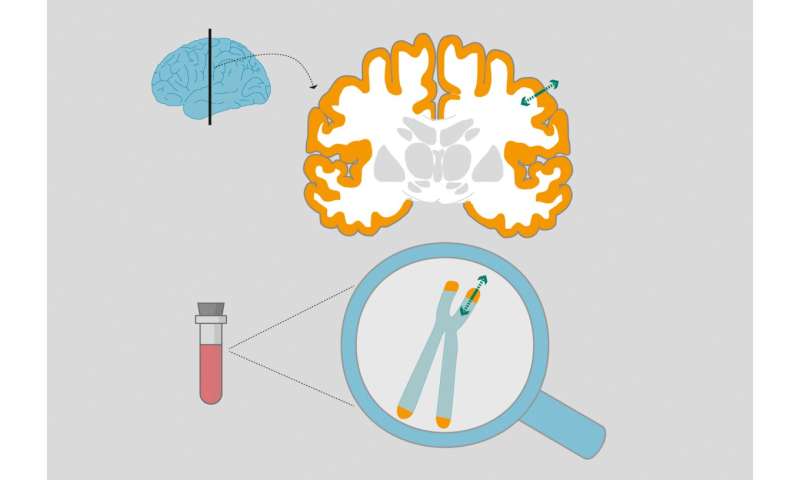
To determine the role of telomer length on brain structure scientists measured their length with the DNA of leukocytes from the blood using a polymerase chain reaction. Additionally, they calculated the thickness of the cerebral cortex with MRI scans of study participants. Credit: MPI CBS
Telomeres are the protective caps of our chromosomes and play a central role in the aging process. Shorter telomeres are associated with chronic diseases and high stress levels can contribute to their shortening. A new study now shows that if telomeres change in their length, that change is also reflected in our brain structure. This association was identified by a team of scientists including Lara Puhlmann and Pascal Vrtička from the Max Planck Institute for Cognitive Brain Sciences in Leipzig together with Elissa Epel from the University of California and Tania Singer from the Social Neuroscience Lab in Berlin as part of Singer's ReSource Project.
26 sept 2019--Telomeres are protective caps at the ends of chromosomes that become shorter with each cell division. If they become so short that the genes they protect could be damaged, the cell stops dividing and renewing. Consequently, the cell is increasingly unable to perform its functions. This mechanism is one of the ways in which we age.
Telomere length is therefore regarded as a marker for the biological age of a person—in contrast to their chronological age. For two people of the same chronological age, the person with shorter telomeres has an increased risk of developing age-related diseases such as Alzheimer's or cancer, and even a shorter life expectancy.
Telomere lengthening?
One key to staying younger longer therefore seems to be related to the question: How do we slow down, stop, or even reverse the shortening of telomeres? Genetics and unhealthy lifestyle are important contributors to telomere shortening, along with psychological stress. Based on this knowledge, researchers have examined how much lifestyle can influence telomere length. Recent studies suggest that telomeres can change faster than previously thought, possibly taking just one to six months of mental or physical training to elongate. The exciting premise is that telomere lengthening may represent a reversal of biological aging processes. However, it remains unclear if telomere elongation actually reflects any improvement in a person's overall health and aging trajectory.
"To explore whether a short-term change in telomere length, after only a few months, might actually be associated with changes in a person's biological age, we linked it to another biomarker of aging and health: brain structure," explains Lara Puhlmann, now a member of the Research Group "Social Stress and Family Health' led by Veronika Engert at the Leipzig Max Planck Institute. The project had been initiated by Tania Singer as part of the ReSource Project.
Participants of the researchers' study underwent four MRI examinations, each spaced three months apart, and provided blood samples on the same dates. Using the DNA of leukocytes from the blood, the scientists were able to determine telomere length using a polymerase chain reaction. The MRI scans were used to calculate the thickness of the cerebral cortex of each participant. This outer layer of gray matter becomes thinner with age. It is also known that some neurological and age-related diseases are associated with faster cortical thinning in certain brain regions.
Fast changes in biological aging
The result: "Across systems, our biological aging appears to change more quickly than we thought. Indices of aging can vary together significantly in just three months," says Puhlmann. If the telomeres changed in length, this was associated with structural changes in the brain. In a period when participants' telomeres lengthened during the study, it was also more likely that their cortex had thickened at the same time. On the other hand, telomere shortening was associated with reductions of gray matter. This association occurred specifically in a brain region called the precuneus, which is a central metabolic and connectional hub.
The above results suggest that even short-term changes in telomere length over just three months might reflect general fluctuations in the body's health- and aging status. Many other questions, however, remain open. "We do not know, for example, which biological mechanism underlies the short-term changes in telomere length," explains the scientist, "or whether the short-term changes really have a longer-term effect on health."
Mental training
At the same time, the team of researchers investigated whether telomere length could be altered by nine months of mindfulness- and empathy-based mental training, and whether such systematic change in telomere length would also be reflected in cortical thickening or thinning. Previous data from the ReSource Project, which was supported by the European Research Council (ERC), had already shown that certain regions of the cortex can be thickened by training, depending on the respective mental training contents of three distinct modules, each lasting for three months. The physiological stress response could also be reduced by mental training with social aspects.
In contrast to their earlier work and previous findings from other groups, the team did not find any training effects on telomeres. Future studies will need to continue to address the question of which measures or behaviors most effectively stop or even reverse telomere shortening, and the biological aging process.

More information: Lara M. C. Puhlmann et al. Association of Short-term Change in Leukocyte Telomere Length With Cortical Thickness and Outcomes of Mental Training Among Healthy Adults, JAMA Network Open (2019). DOI: 10.1001/jamanetworkopen.2019.9687
Journal information: JAMA Network Open 
Provided by Max Planck Society 

The dangers of vaping

e-cigarette
Credit: CC0 Public Domain
It's an increasingly common sight around the nation: A person lifts a device to their mouth, and suddenly their head appears engulfed in a vapor cloud.
26 sept 2019--Electronic cigarettes, which give rise to those drifts of fleeting, smokeless vapors, have exploded in popularity, introduced to the market in the early 2000s. A 2017 survey by the United States Centers for Disease Control and Prevention (CDC) indicated that 7 million U.S. adults used e-cigarettes, but the practice is growing fastest among young people. A survey from 2018 found that 37% of 12th graders had reported using the products in the past year. This rise comes as rates of cigarette smoking among young people have fallen significantly in recent years.
Makers of electronic cigarettes have billed them as a safer alternative to cigarettes. But with eight deaths and more than 500 instances of lung injury now linked to their use, the products are under scrutiny from the public as well as the CDC and U.S. Food and Drug Administration (FDA).
"The public health community used to feel that tobacco equals death, and it followed that not-tobacco equals not-death," says Frank Leone, director of Penn's Comprehensive Smoking Treatment Program and a pulmonologist at the Perelman School of Medicine. "Now that calculus is changing. People are starting to recognize that, sure, cigarette smoking has its risk profile, but electronic cigarettes have their own risk profile."
Electronic cigarettes, or e-cigarettes, are hand-held, battery-powered devices. Unlike cigarettes, they do not burn tobacco but rather contain a heating element that aerosolizes a nicotine-containing solution into a vapor, which users then inhale.
At Penn, physicians and other health workers have been seeing the nationwide trends in e-cigarette use reflected in the student population. Leone points to a recent survey, conducted by the Student Health Service, that suggested that undergraduates who began using the devices on campus were well informed about the dangers of smoking.
"These are people who have gotten the message that cigarettes are gross," says Leone. "They don't want to smoke. But they don't think of this as smoking."
According to the survey and Leone's experience, students don't necessarily even consider their habit as vaping. "They think of it as "Juuling,"" he says, referring to the maker of sleek e-cigarettes that can be charged in USB ports and have commandeered roughly a third of the market.
Juul and similar companies claim their devices are intended to help adult cigarette users quit. Yet aspects of the products make them appealing to use, particularly for younger people. For one, they use a single type of nicotine salt, nicotine benzoate, which is tasteless and doesn't elicit a caustic sensation when it hits the back of the throat, as many other types of naturally occurring nicotine salts do. Nicotine benzoate is also able to quickly traverse the blood-brain barrier, making it "precisely the right product for a young person to get maximum impact with minimum aversive sensations," Leone says.
What's more, their cartridges come in a variety of appealing flavors.
"Out of one side of their mouth Juul is all about helping adults have a choice," says Leone, "and out the other side they're selling mango- and crème brûlée- and strawberry shortcake-flavored solutions."
This facet of products of Juul and other manufacturers has led the FDA to consider a ban on flavored nicotine products, which seem to target young—even underage—users.
Leone notes that the flavors may also enhance the irresistible pull of the products on a biological level.
"Nicotine hooks itself onto sensory inputs to create its addictive potential," Leone says. "So it turns out that adding specific flavors to nicotine products enhances the nicotine's reinforcing capacity."
Perhaps in part for these reasons, while some individuals say e-cigarettes helped them quit smoking, Leone says researchers have not been able to reproduce those successes. Some evidence even suggests that e-cigarette use can actually impede smoking-cessation efforts.
What's clear is that vaping can cause harm and that the people who have died or experienced serious lung injuries from using e-cigarettes don't fit into a single bucket, says Leone: They have used different products for different lengths of time in different ways. This makes it hard to point a finger at one chemical, or one product, to blame. Rather, it suggests that the act of vaping itself is the problem.
"There's this false calculus that e-cigarettes have to be less harmful than cigarettes," he says. "They are harmful, period. You just can't mess with the lungs in any old way you want to and expect to get away with it."
As a part of promoting the safety and health of the whole community, Penn's Tobacco-Free Campus designation extends to electronic cigarette use. For students, staff, and faculty who want to stop using e-cigarettes, a variety of wellness resources are available. These programs rely on an incentivizing approach to quitting, focused on positively reinforcing healthy behaviors instead of eliciting a sense of fear or shame around them.
Students can tap the Student Health Service for support. "They're keyed into this problem, they're aware of it, they're looking out for it, and they know how to help people," says Leone.

More information: Teresa W. Wang et al. Tobacco Product Use Among Adults—United States, 2017, MMWR. Morbidity and Mortality Weekly Report (2018). DOI: 10.15585/mmwr.mm6744a2
Provided by University of Pennsylvania 

Friday, September 20, 2019

Surgery may benefit women with two types of urinary incontinence

surgery
Credit: CC0 Public Domain
Surgery for stress urinary incontinence (leaking that occurs with a cough or sneeze) improves symptoms of another form of incontinence, called urgency urinary incontinence, in women who have both types, according to a study supported by the National Institutes of Health. The findings challenge current treatment guidelines, which suggest that the surgery may worsen urgency urinary incontinence in women with both forms, also called mixed urinary incontinence. The study appears in the Journal of the American Medical Association. Funding was provided by NIH's Eunice Kennedy Shriver National Institute of Child Health and Human Development (NICHD) and Office of Research on Women's Health.
20 sept 2019--"Women with mixed urinary incontinence may have more bothersome symptoms than women with either stress or urgency urinary incontinence alone," said Donna Mazloomdoost, M.D., study author and program director of the NICHD Pelvic Floor Disorders Network. "The findings show promise in treating a condition that can be hard to manage under existing practices."
Roughly one-third to one-half of all women with urinary incontinence have mixed urinary incontinence. Urgency urinary incontinence results from the spontaneous contraction of bladder muscles, leading to a strong and sudden need to urinate. Stress urinary incontinence occurs when urine leaks out after abdominal pressure increases following a sneeze, cough, laugh or movement, which squeezes the bladder.
Standard treatment guidelines for mixed urinary incontinence often involve treating the two forms of incontinence independently. Urgency urinary incontinence often is first treated with behavioral techniques, such as trying to delay urinating for a brief period after feeling the urge, reducing liquid consumption, exercises to strengthen muscles around the bladder (involving pelvic floor physical therapy) and with medication. Surgery is not usually recommended early on. Stress incontinence also can be treated with exercises, and many women experience symptom improvement. However, in women who do not improve or opt out of the exercises, surgery may be offered.
The Effects of Surgical Treatment Enhanced with Exercise for Mixed Urinary Incontinence (ESTEEM) study is a randomized clinical trial that recruited 480 women with mixed urinary incontinence at centers across the United States. All participants underwent mid-urethral sling surgery, a well-established method that places a thin strip of mesh under the urethra; this helps prevent urine from leaking out during an exertion, such as a sneeze or cough. Participants were randomized to surgery alone or surgery with behavioral and pelvic floor muscle therapy, which included six visits with a trained health professional. They were followed for one year.
The women responded to a questionnaire, the urogenital distress inventory (UDI), which inquired about urinary symptoms. Symptoms are ranked from 0-300 points, depending on severity. They also responded to surveys on quality of life and perceptions of surgical success.
The study team found that both groups had significant improvements in their incontinence symptoms after surgery. The average UDI score for the surgery alone group was 176.8 before surgery and 40.3 a year after surgery; for the surgery and therapy combined group, the UDI score dropped from 178.0 to 33.8. According to the researchers, because the post-treatment UDI scores between the two groups did not differ greatly, adding behavioral and pelvic floor muscle therapy to the treatment may not result in better clinical outcomes.
However, the study team did find differences in other self-reported outcomes. The combined surgery and physical therapy group had fewer instances of incontinence a year after surgery and were less likely to receive additional treatment for urinary tract symptoms, suggesting they had more quality of life improvement than the surgery alone group.
"Current practice guidelines may be unnecessarily delaying surgery for women with mixed urinary incontinence," said Vivian W. Sung, M.D., M.P.H., the study's lead author and a professor at the Warren Alpert Medical School of Brown University in Providence, Rhode Island. "We hope these findings will improve how patients are counseled and treated."
The researchers called for additional research to identify which patients with mixed urinary incontinence are at risk for continued symptoms after surgery and to identify effective treatments for them.

Explore further
Clinical review published in JAMA

More information: Vivian W. Sung et al. Effect of Behavioral and Pelvic Floor Muscle Therapy Combined With Surgery vs Surgery Alone on Incontinence Symptoms Among Women With Mixed Urinary Incontinence, JAMA (2019). DOI: 10.1001/jama.2019.12467
Journal information: Journal of the American Medical Association 
Provided by National Institutes of Health 

AAN recommends people 65+ be screened yearly for memory problems

memory decline
Credit: Public Domain
People with mild cognitive impairment have thinking and memory problems but usually do not know it because such problems are not severe enough to affect their daily activities. Yet mild cognitive impairment can be an early sign of Alzheimer's disease or other forms of dementia. It can also be a symptom of sleep problems, medical illness, depression, or a side effect of medications.
20 sept 2019--To help physicians provide the highest quality patient-centered neurologic care, the American Academy of Neurology (AAN) is recommending physicians measure how frequently they complete annual assessments of people age 65 and older for thinking and memory problems. This metric for yearly cognitive screening tests is part of an AAN quality measurement set published in the September 18, 2019, online issue of Neurology, the medical journal of the American Academy of Neurology.
A quality measure is a mathematical tool to help physicians and practices understand how often health care services are consistent with current best practices and are based on existing AAN guideline recommendations. Quality measures are intended to drive quality improvement in practice. Physicians are encouraged to start small using one or two quality measures in practice that are meaningful for their patient population, and measure use is voluntary.
"Since thinking skills are the most sensitive indicator of brain function and they can be tested cost-effectively, this creates an enormous opportunity to improve neurologic care," said author Norman L. Foster, MD, of the University of Utah in Salt Lake City and a Fellow of the American Academy of Neurology. "The American Academy of Neurology is recommending the measurement of annual cognitive screenings for everyone age 65 and older because age itself is a significant risk factor for cognitive decline and mild cognitive impairment is increasingly prevalent with older age. The measure complements past American Academy of Neurology quality measures released for Parkinson's disease, multiple sclerosis and stroke, and allows for a doctor to meet the measure with a recommended periodic three-minute cognitive test."
According to the 2018 AAN guideline on mild cognitive impairment, nearly 7 percent of people in their early 60s worldwide have mild cognitive impairment, while 38 percent of people age 85 and older have it.
The new AAN quality measurement set recommends doctors measure how often they conduct annual screenings to improve the recognition of mild cognitive impairment and allow for earlier intervention.
"We cannot expect people to report their own memory and thinking problems because they may not recognize that they are having problems or they may not share them with their doctors," said Foster. "Annual assessments will not only help identify mild cognitive impairment early, it will also help physicians more closely monitor possible worsening of the condition."
The new measurement set states that documenting mild cognitive impairment in a person's medical record can be invaluable in alerting other physicians and medical staff so that the best care is provided to that patient.
Early diagnosis can help identify forms of mild cognitive impairment that may be reversible, including those caused by sleep problems, depression or medications, and lead to treatments that can improve a person's quality of life such as correcting hearing loss and avoiding social isolation.
When mild cognitive impairment is not reversible and could develop into more severe forms of dementia like Alzheimer's disease, the quality measurement set recommends measuring how frequently people are given information about their condition as early as possible, so they can take steps to avoid exploitation, plan for their care and monitor their condition.
It is also important not to forget about family and caregivers. The measurement set also asks doctors to identify care partners to help describe symptoms. Doctors should quantify involvement with family and caregivers and provide them with information so that they too receive support and get access to services to help them cope if person's illness progresses and to improve their well-being.

Explore further
Can computer use, crafts and games slow or prevent age-related memory loss?

Journal information: Neurology 
Provided by American Academy of Neurology