Showing posts with label caloric restriction. Show all posts

Sunday, February 20, 2022


Calorie restriction rewires metabolism, immunity for longer health span
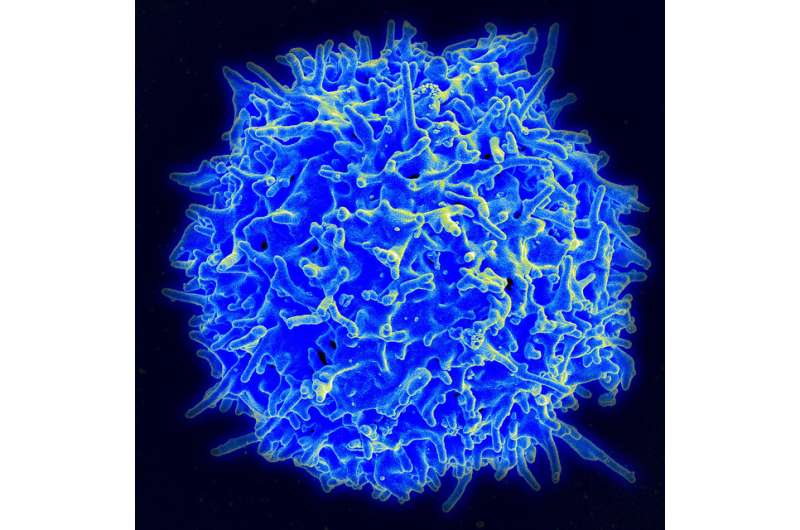
T cell
Scanning electron micrograph of a human T lymphocyte (also called a T cell) from the immune system of a healthy donor. Credit: NIAID

Calorie restriction improves metabolic and immune responses that help determine both how long a person lives and how many years of good health they enjoy, a new study shows.

20 feb 2022--"Two years of modest calorie restriction reprogrammed the pathways in fat cells that help regulate the way mitochondria generate energy, the body's anti-inflammatory responses, and potentially longevity," said Eric Ravussin, Ph.D., Associate Executive Director for Clinical Science at Pennington Biomedical Research Center. "In other words, calorie restriction rewires many of the metabolic and immune responses that boost lifespan and health span."

The new study used data gathered by Pennington Biomedical's CALERIE 2 (Comprehensive Assessment of the Long-Term Effects of Reducing Intake of Energy), the longest-running calorie restriction trial in humans. The new study is published in the journal Science.

The study found that people who cut their calorie intake by about 14 percent over two years generated more T cells, which play a key role in immune function and slow the aging process.

"As people age, their thymuses shrink and produce fewer T cells. As a result, older people have a harder time fighting off infections and certain cancers," said Eric Ravussin, Ph.D., Associate Executive Director for Clinical Science at Pennington Biomedical Research Center. "Calorie restriction helps prevent the thymus from shrinking so the person generates more T cells."

In addition to improving immunity, an increase in T cells is associated with an improved ability to burn stores of fatty acids for energy, Dr. Ravussin said. That's important because if a person doesn't burn this fuel, the fat may build up in organs such as the muscle and liver, leading to insulin resistance, obesity, type 2 diabetes and aging.

The study had another important finding: a potential treatment to reduce age-related inflammation and improve metabolic health.

Studies have shown that restricting calories by 40 percent in rodents extended their lives. But there were tradeoffs in in growth, reproduction, and immunity.

However, calorie restriction also reduces the levels of gene encoding platelet activating factor acetyl hydrolase (PLA2G7). Reducing PLA2G7 produces health benefits that include lowering age-related inflammation and improving metabolic health.

"If researchers can find a way to harness PLA2G7, they could create a treatment to extend a person's health span, the time an individual experiences good health," said Pennington Biomedical Executive Director John Kirwan, Ph.D.

More information: O. Spadaro et al, Caloric restriction in humans reveals immunometabolic regulators of health span, Science (2022). DOI: 10.1126/science.abg7292
Provided by Pennington Biomedical Research Center

Wednesday, March 16, 2016

The up- and downside of caloric restriction for aging and health

The Up- and Downside of Caloric Restriction for Aging and Health
It's already well known that a diet may have a life-extending effect. Researchers from Leibniz Institute on Aging – Fritz Lipmann Institute (FLI) in Jena, Germany, now showed that besides improving the functionality of stem cells in mice, a caloric restriction also leads to a fatale weakening of their immune system – counteracting the life-lengthening effect of a diet. The results are published in the Journal of Experimental Medicine on March, 14. 2016.

16 mar 2016--Only few years ago, researchers succeeded in prolonging the lifespan of worm C. elegans, fruit fly D. melongaster and rats by almost 50% through a simple caloric restriction – which immediately fueled hopes for having found one key to a longer life also for humans. However, transferring these results to long-lived primates short after was not equally successful and cooled down enthusiasms quite quickly. Now, aging researcher Karl Lenhard Rudolph, Scientific Director at the Leibniz Institute on Aging – Fritz Lipmann Institute (FLI) in Jena, Germany, and his team showed that caloric restriction even has a severe downside. In feeding experiments, the stem cells of mice, which were set on a diet, were found to age slower – but the murine immune system was almost completely cut down. Outside of optimal, sterile laboratory conditions, this could lead to severe live-shortening infections. The results of the study are published in the Journal of Experimental Medicine's current issue.

Caloric restriction slows down the aging of blood stem cells

The study focused on the effects of caloric restriction on blood stem cells (so-called hematopoietic stem cells, HSC) that are responsible for building red blood cells or lymphocytes (immune cells). Like for any other adult stem cell, HSC functionality decreases with every single cell division – the stem cells age. This is why they stay in a resting phase (quiescence) most of the time and are only activated when a massive cell reproduction is required (e.g. after acute blood loss). In their study, the researchers from Jena investigated how a 30% food restriction effects stem cell aging in mice. One main result was that the HSC stayed in a quiescent state even if simulated stress would have required their activation. This effect was found regardless of how long the diet lasted. Thus, during diet, the blood stem cells did not age at all and their functionality to build new blood cells remained increased even one year after diet.

Caloric restriction weakens the immune system

But the long-term diet had a downside, as well: The mice's immune system almost completely was cut down. Although the diet had no strong effect on the overall cell number of blood cells, the production of lymphocytes – needed for immune defense – was decreased by up to 75%. As a consequence, mice were particularly prone to bacterial infections.

Slowing down aging under laboratory conditions is not yet transferable to humans

"The study provides the first experimental evidence that long-term caloric restriction – as intervention to slow down aging – increases stem cell functionality, but results in immune defects in the context of prolonged bacterial infection, too. Thus, positive effects of a diet are not transferable to humans one to one", Rudolph sums up the study results. Even if – under laboratory conditions – aging of single cells or tissues may be slowed down through a diet, the immune suppression may have fatal consequences in real life. To benefit from caloric restriction or medicinal mimetika aiming at increasing health in the elderly, possible risks of such interventions to come down with life-threatening infections remain to be elucidated. "In sepsis patients, we see a higher survival rate for those with a higher body weight than for patients who are very lean", Prof. Dr. Michael Bauer, Director of the Center for Sepsis Control and Care at University Hospital Jena (UKJ), concurs.

More information: Duozhuang Tang et al. Dietary restriction improves repopulation but impairs lymphoid differentiation capacity of hematopoietic stem cells in early aging, The Journal of Experimental Medicine (2016). DOI: 10.1084/jem.20151100


Provided by Leibniz Institute on Aging

Friday, May 29, 2015

Benefits of calorie restriction on par with balancing protein and carb intake in mice

Benefits of calorie restriction on par with balancing protein and carb intake in mice

Solon-Biet et al. find that short-term ad libitum lowprotein, high-carbohydrate diets improve levels of insulin, glucose, lipids, and HOMA. LPHC diets under ad-libitumfed conditions generate the metabolic benefits of caloric restriction without a 40 percent reduction in total caloric intake. Credit: Solon-Biet et al./Cell Reports 2015
Cutting calories through dietary restriction has been shown to lower cholesterol, improve insulin sensitivity, and even prolong life in mammals. Now, new research publishing on May 28th in Cell Reports shows that, at least in mice, low protein, high carbohydrate diets can provide benefits similar to those obtained with calorie restriction.
29 may 2015--"We've shown that when compared head-to-head,  got the same benefits from a low protein, high carbohydrate diet as a 40% caloric restriction diet," says senior author Stephen Simpson, Academic Director of the University of Sydney's Charles Perkins Centre. "Except for the fanatical few, no one can maintain a 40% caloric reduction in the long term, and doing so can risk loss of bone mass, libido, and fertility."
The investigators compared three 8-week diets varying in protein-to-carbohydrate ratio under conditions where food was restricted or food was available at all times. Of the three, low protein, high carbohydrate (LPHC) diets offered when food was always available delivered similar benefits as  in terms of insulin, blood sugar, and cholesterol levels, despite increased food intake.
Even though the mice on LPHC diets ate more when food was always available, their metabolism was higher than that of mice on the calorie-restricted diet, and they did not gain more weight. Calorie restriction did not provide any additional benefits for LPHC mice.
Additional research is needed to determine how LPHC diets affect long-term metabolic health and survival, as well as to what extent the type and quality of proteins and carbohydrates matter. "An important next step will be to determine exactly how specific amino acids, the building blocks of proteins, contribute to overall health span and lifespan," says lead author Samantha Solon-Biet, also of the Charles Perkins Centre.
If the study's results apply to humans, adjusting protein and carbohydrate intake could lead to healthier aging in a more realistic manner than drastically cutting calories. "It still holds true that reducing food intake and body weight improves metabolic health and reduces the risk of diseases like type 2 diabetes, obesity, and fatty liver disease," says Simpson. "However, according to these mouse data and emerging human research, it appears that including modest intakes of high-quality protein and plenty of healthy carbohydrates in the diet will be beneficial for health as we age."
More information: Cell Reports, Solon-Biet et al.: "Dietary protein to carbohydrate ratio and caloric restriction: comparing metabolic outcomes in mice" dx.doi.org/10.1016/j.celrep.2015.05.007
Provided by Cell Press

Monday, December 10, 2012


Scientists discover novel mechanism by which calorie restriction influences longevity

Scientists at the Gladstone Institutes have identified a novel mechanism by which a type of low-carb, low-calorie diet—called a "ketogenic diet"—could delay the effects of aging. This fundamental discovery reveals how such a diet could slow the aging process and may one day allow scientists to better treat or prevent age-related diseases, including heart disease, Alzheimer's disease and many forms of cancer.
10 dec 2012--As the aging population continues to grow, age-related illnesses have become increasingly common. Already in the United States, nearly one in six people are over the age of 65. Heart disease continues to be the nation's number one killer, with cancer and Alzheimer's close behind. Such diseases place tremendous strain on patients, families and our healthcare system. But today, researchers in the laboratory of Gladstone Senior Investigator Eric Verdin, MD, have identified the role that a chemical compound in the human body plays in the aging process—and which may be key to new therapies for treating or preventing a variety of age-related diseases.
In the latest issue of the journal Science, available online today, Dr. Verdin and his team examined the role of the compound β-hydroxybutyrate (βOHB), a so-called "ketone body" that is produced during a prolonged low-calorie or ketogenic diet. While ketone bodies such as βOHB can be toxic when present at very high concentrations in people with diseases such as Type I diabetes, Dr. Verdin and colleagues found that at lower concentrations, βOHB helps protect cells from "oxidative stress"—which occurs as certain molecules build to toxic levels in the body and contributes to the aging process.
"Over the years, studies have found that restricting calories slows aging and increases longevity—however the mechanism of this effect has remained elusive" Dr. Verdin said. Dr. Verdin, the paper's senior author, directs the Center for HIV & Aging at Gladstone and is also a professor at the University of California, San Francisco, with which Gladstone is affiliated. "Here, we find that βOHB—the body's major source of energy during exercise or fasting—blocks a class of enzymes that would otherwise promote oxidative stress, thus protecting cells from aging."
Oxidative stress occurs as cells use oxygen to produce energy, but this activity also releases other potentially toxic molecules, known as free radicals. As cells age, they become less effective in clearing these free radicals—leading to cell damage, oxidative stress and the effects of aging.
However, Dr. Verdin and his team found that βOHB might actually help delay this process. In a series of laboratory experiments—first in human cells in a dish and then in tissues taken from mice—the team monitored the biochemical changes that occur when βOHB is administered during a chronic calorie-restricted diet. The researchers found that calorie restriction spurs βOHB production, which blocked the activity of a class of enzymes called histone deacetylases, or HDACs.
Normally HDACs keep a pair of genes, called Foxo3a and Mt2, switched off. But increased levels of βOHB block the HDACs from doing so, which by default activates the two genes. Once activated, these genes kick-start a process that helps cells resist oxidative stress. This discovery not only identifies a novel signaling role for βOHB, but it could also represent a way to slow the detrimental effects of aging in all cells of the body.
"This breakthrough also greatly advances our understanding of the underlying mechanism behind HDACs, which had already been known to be involved in aging and neurological disease," said Gladstone Investigator Katerina Akassoglou, PhD, an expert in neurological diseases and one of the paper's co-authors. "The findings could be relevant for a wide range of neurological conditions, such as Alzheimer's, Parkinson's, autism and traumatic brain injury—diseases that afflict millions and for which there are few treatment options."
"Identifying βOHB as a link between caloric restriction and protection from oxidative stress opens up a variety of new avenues to researchers for combating disease," said Tadahiro Shimazu, a Gladstone postdoctoral fellow and the paper's lead author. "In the future, we will continue to explore the role of βOHB—especially how it affects the body's other organs, such as the heart or brain—to confirm whether the compound's protective effects can be applied throughout the body."
Provided by Gladstone Institutes

Thursday, August 30, 2012


Low-calorie diet may not prolong life: study

A low-calorie diet boosts health but does not prolong life, at least not in rhesus monkeys, scientists reported Wednesday in a new study into a long-held link between food restriction and longevity.
30 aug 2012--Spanning 23 years, the research found monkeys that ate fewer calories than non-dieting counterparts were healthier but did not live any longer.
Rhesus monkeys are a preferred choice for lab study, as they are long-lived primates like humans—their average lifespan in captivity is 27 years and the usual maximum is 40 years.
The exceptionally long study, launched at the National Institute on Aging (NIA) in Maryland in 1987, saw monkeys of different ages fed a diet 30 percent lower in calories than others that followed a "normal," nutritious diet.
Animals in both groups lived on average longer than wild rhesus monkeys and were heavier too. None was malnourished, and they were given vitamin and mineral supplements, the researchers wrote in the journal Nature.
Those on the calorie-restricted diet had a lower incidence of diabetes, cardiovascular disease and cancer than the rest, and dieting males also had lower cholesterol.
"However, these effects did not translate directly to a beneficial effect in longevity," over the control monkeys, Rafael de Cabo of the NIA's Laboratory of Experimental Gerontology, told AFP.
The study was not designed to explain this phenomenon, and the authors say matching research to measure the impact of calorie restriction on longevity in humans was unlikely.
The findings seem to contradict those of other projects, including an ongoing study at the Wisconsin National Primate Research Centre (WNPRC) which has shown that rhesus monkeys placed on a restricted calorie diet lived longer.
These "mixed results" raised intriguing questions about the benefits of calorie restriction in primates, Steven Austad of the University of Texas' Barshop Institute for Longevity and Aging Studies wrote in a comment on the study, also published by Nature.
WNPRC senior scientist Ricki Colman told AFP there were many differences between the two studies that may explain the conflicting outcomes.
Importantly, the WNPRC control monkeys (those whose calorie intake was not restricted) were allowed free access to food, therefore mimicking a human in charge of his own nutrition intake.
In contrast, the NIA control group were given a limited amount of food, thus resembling an ideal human diet—which may explain why they lived as long as the monkeys on the low-calorie diet.
They were also given vitamin and mineral supplements and the WNPRC group not.
Comparing the two approaches, a compelling picture emerges, said De Cabo: a healthy diet does improve longevity, and eating less of it may slow the onset of some diseases but will not actually prolong life.
More information: DOI: 10.1038/nature11432

Monday, October 31, 2011

Live longer with fewer calories

By consuming fewer calories, ageing can be slowed down and the development of age-related diseases such as cancer and type 2 diabetes can be delayed. The earlier calorie intake is reduced, the greater the effect. Researchers at the University of Gothenburg have now identified one of the enzymes that hold the key to the ageing process.

31 oct 2011--"We are able to show that caloric restriction slows down ageing by preventing an enzyme, peroxiredoxin, from being inactivated. This enzyme is also extremely important in counteracting damage to our genetic material," says Mikael Molin of the Department of Cell and Molecular Biology.

By gradually reducing the intake of sugar and proteins, without reducing vitamins and minerals, researchers have previously shown that monkeys can live several years longer than expected. The method has also been tested on everything from fishes and rats to fungi, flies and yeasts with favourable results. Caloric restriction also has favourable effects on our health and delays the development of age-related diseases. Despite this, researchers in the field have found it difficult to explain exactly how caloric restriction produces these favourable effects.

Using yeast cells as a model, the research team at the University of Gothenburg has successfully identified one of the enzymes required. They are able to show that active peroxiredoxin 1, Prx1, an enzyme that breaks down harmful hydrogen peroxide in the cells, is required for caloric restriction to work effectively.

The results, which have been published in the scientific journal Molecular Cell, show that Prx1 is damaged during ageing and loses its activity. Caloric restriction counteracts this by increasing the production of another enzyme, Srx1, which repairs Prx1. Interestingly, the study also shows that ageing can be delayed without caloric restriction by only increasing the quantity of Srx1 in the cell. Repair of the peroxiredoxin Prx1 consequently emerges as a key process in ageing.

"Impaired Prx1 function leads to various types of genetic defects and cancer. Conversely, we can now speculate whether increased repair of Prx1 during ageing can counteract, or at least delay, the development of cancer."

Peroxiredoxins have also been shown to be capable of preventing proteins from being damaged and aggregating, a process that has been linked to several age-related disorders affecting the nervous system, such as Alzheimer's and Parkinson's. The researchers are accordingly also considering whether stimulation of Prx1 can reduce and delay such disease processes.

More information: The article 'Life Span Extension and H2O2 Resistance Elicited by Caloric Restriction Require the Peroxiredoxin Tsa1 in Saccharomyces cerevisiae' has been published in the journal Molecular Cell.

Expert comments in the same issue "Translating a Low-Sugar Diet into a Longer Life by Maintaining Thioredoxin Peroxidase Activity of a Peroxiredoxin"

Provided by University of Gothenburg

Sunday, May 15, 2011

Restricting calories lowers body temperature, may predict longer lifespan

15 may 2011-- Nutrition and longevity researchers have found more evidence that eating less may help people live longer.

The research team at Washington University School of Medicine in St. Louis reports in the journal Aging that individuals who significantly reduce their calorie intake have lower core body temperatures compared to those who eat more.

The new finding matches research in animals. Mice and rats consuming fewer calories also have lower core body temperatures, and those animals live significantly longer than littermates eating a standard diet.

The investigators compared core body temperatures of 24 people in their mid 50s who had practiced calorie restriction for at least six years to 24 others of the same age who ate a standard Western diet with higher calorie and fat intake. The researchers also measured core body temperatures in 24 endurance runners of the same age to determine if being lean — like both the calorie restriction group and the runners — was linked to lower body temperature or whether calorie restriction itself was necessary.

This video is not supported by your browser at this time.

“The people doing calorie restriction had a lower average core body temperature by about 0.2 degrees Celsius, which sounds like a modest reduction but is statistically significant and similar to the reduction we have observed in long-lived, calorie-restricted mice,” says principal investigator Luigi Fontana, MD, PhD. “What is interesting about that is endurance athletes, who are the same age and are equally lean, don’t have similar reductions in body temperature.”

Organisms from yeast to rodents to humans all benefit from cutting calories. In simple organisms, restricting calories can double or even triple lifespan. It’s not yet clear just how much longer calorie restriction might help humans live, but those who practice the strict diet hope to survive past 100.

Those on calorie restriction cut their daily caloric intake by 25 percent or more, but they also carefully track vitamins and nutrients in the diet in order to avoid malnutrition. In this study, all of those in the group practicing calorie restriction were members of the CR Society, and they refer to themselves as CRONies (Calorie Restriction with Optimal Nutrition).

A person’s core body temperature is the temperature at which all of the functions in the body can operate with maximum efficiency. The temperature of the human body is not uniform throughout, and internal readings tend to be higher than those taken closer to the skin. Although the ideal core body temperature is considered to be 98.6 degrees Fahrenheit or 37.7 degrees Celsius, body temperatures vary from about 96 degrees to almost 100 degrees.

For this study, investigators measured core body temperature using telemetric capsules that participants swallowed, which then recorded and transmitted internal body temperatures every minute.

Fontana, a research associate professor of medicine at Washington University and a senior investigator at the Istituto Superiore di Sanità in Rome, Italy, says he does not know whether severely limiting calories is lowering body temperatures or whether something else is causing core temperature to drop, but he says the reduced temperature is a key to increased longevity in animals.

“What we don’t know is whether there is a cause/effect relationship or whether this is just an association,” he says. “But in animal studies, it’s been consistently true that those with lower core body temperatures live longer.”

The researchers also note that in an unrelated study called the Baltimore Longitudinal Study of Aging, scientists found that men who had lower core body temperatures, probably for genetic reasons, lived significantly longer than men with higher body temperatures. So it appears body temperature may predict longevity in humans, too, Fontana says.

What is not yet understood is how much longer people with lower body temperatures might live. Rodents on a calorie-restricted diet have been known to live up to 50 percent longer, but those increases can be measured in months.

For now, animal models suggest that simply lowering body temperature isn’t enough to increase lifespan. In mice and rats that regularly swam in cold water, core body temperature dropped due to exposure to the cold water. But those animals didn’t live any longer than normal rodents. Fontana says it appears that how lower temperatures are achieved is important.

“I don’t think it ever will be possible to be overweight and smoking and drinking and then take a pill, or several pills, to lower body temperature and lengthen lifespan,” he says. “What may be possible, however, is to do mild calorie restriction, to eat a very good diet, get mild exercise and then take a drug of some kind that could provide benefits similar to those seen in severe calorie restriction.”

More information: Soare A, Cangemi R, Omedei D, Holloszy JO, Fontana L. Long-term calorie restriction, but not endurance exercise, lowers core body temperature in humans. Aging, vol. 3 (3) March 2011. http://www.impactaging.com

Provided by Washington University School of Medicine in St. Louis

Tuesday, August 03, 2010

Exercise and caloric restriction rejuvenate synapses in lab mice

03 aug 2010-- Harvard University researchers have uncovered a mechanism through which caloric restriction and exercise delay some of the debilitating effects of aging by rejuvenating connections between nerves and the muscles that they control.
The research, conducted in the labs of Joshua Sanes and Jeff Lichtman and described this week in the journal Proceedings of the National Academy of Sciences, begins to explain prior findings that exercise and restricted-calorie diets help to stave off the mental and physical degeneration of aging.
"Caloric restriction and exercise have numerous, dramatic effects on our mental acuity and motor ability," says Sanes, a professor of molecular and cellular biology and director of the Center for Brain Science at Harvard. "This research gives us a hint that the way these extremely powerful lifestyle factors act is by attenuating or reversing the decline in our synapses."
Sanes says their research, conducted with mice genetically engineered so their nerve cells glow in fluorescent colors, shows some of the debilitation of aging is caused by deterioration of connections that nerves make with the muscles they control, structures called neuromuscular junctions. These microscopic links are remarkably similar to the synapses that connect neurons to form information-processing circuits in the brain.
In a healthy neuromuscular synapse, nerve endings and their receptors on muscle fibers are almost a perfect match, like two hands placed together, finger to finger, palm to palm. This lineup ensures maximum efficiency in transmitting the nerve's signal from the brain to the muscle, which is what makes it contract during movement.
As people age, however, the neuromuscular synapses can deteriorate in several ways. Nerves can shrink, failing to cover the muscle's receptors completely. The resulting interference with transmission of nerve impulses to the muscles can result in wasting and eventually even death of muscle fibers. This muscle wasting, called sarcopenia, is a common and significant clinical problem in the elderly.
The new work showed that mice on a restricted-calorie diet largely avoid that age-related deterioration of their neuromuscular junctions, while those on a one-month exercise regimen when already elderly partially reverse the damage.
"With calorie restriction, we saw reversal of all aspects of the synapse disassembly. With exercise, we saw a reversal of most, but not all," Sanes says.
Because of the study's structure -- mice were on calorie-restricted diets for their whole lives, while those that exercised did so for just a month late in life -- Sanes cautions against drawing conclusions about the effectiveness of exercise versus calorie restriction. He notes that longer periods of exercise might have more profound effects, a possibility he and Lichtman are now testing.
Though much of Sanes and Lichtman's work focuses on brain synapses, both have investigated neuromuscular synapses for many years. Neuromuscular junctions are large enough to be viewed by light microscopy, and can be a jumping-off point for brain study, highlighting areas of inquiry and potential techniques.
"These findings in neuromuscular synapses make us curious to know whether similar effects might occur in brain synapses," Sanes says.
While the changes to the synapses through caloric restriction and exercise were clear in the images the researchers obtained, Sanes cautioned that their work was structural, not functional, and they have not yet tested how well the synapses worked.
Provided by Harvard University

Tuesday, July 14, 2009

Caloric Restriction Linked to Slowed Aging in Monkeys

Rhesus monkeys on program had less death from age-related disease, less muscle-mass decline

14 july 2009-- Caloric restriction is associated with a delayed onset of age-related disease and less age-related death in rhesus monkeys, according to research published in the July 10 issue of Science.

Ricki J. Colman, Ph.D., of the University of Wisconsin in Madison, and colleagues analyzed data from 76 rhesus monkeys that were randomized in the late 1980s and mid 1990s to a control diet or a caloric restriction diet.

The researchers found that 37 percent of controls and 13 percent of the caloric restriction group died of age-related causes. At any point in time, the control animals' rate of age-related death was three times higher. Age-related diseases, such as cancer, cardiovascular disease, and diverticulosis, were also found in control animals at nearly three times the rate compared to caloric restriction animals. The authors further note that animals in the caloric restriction group also had less decline in muscle mass and none developed diabetes or pre-diabetes.

"Our data indicate that adult-onset moderate caloric restriction delays the onset of age-associated pathologies and promotes survival in a primate species," Colman and colleagues conclude. "Given the obvious parallels between rhesus monkeys and humans, the beneficial effects of caloric restriction may also occur in humans. This prediction is supported by studies of people on long-term caloric restriction, who show fewer signs of cardiovascular aging. The effect of controlled long-term caloric restriction on maximal life span in humans may never be known, but our extended study will eventually provide such data on rhesus monkeys."

Abstract
Full Text (subscription or payment may be required)

Wednesday, January 28, 2009

Another Potential Benefit of Cutting Calories: Better Memory

By PAM BELLUCK

28 jan 2009--The study, published Monday in The Proceedings of the National Academy of Sciences, appears to be the first to link calorie-restricted diets with improved memory in people. Studies with animals have shown memory improvement, but there is debate about the impact of calorie restriction on humans’ cognitive function.

The study was small, involving 50 men and women ages 50 to 72 who ranged from normal weight to overweight.

Members of one group ate food they normally ate but were instructed to cut their calories by 30 percent, primarily by eating smaller portions, said Dr. Agnes Flöel of the University of Münster in Germany, a neurologist and one of the researchers. Members of a second group kept their calories the same but were instructed to increase the unsaturated fat (healthy fat) they ate by 20 percent. A third group made no dietary changes.

Participants were advised by dietitians but monitored their own eating over three months, Dr. Flöel said. Then they took tests involving memorizing words. The calorie-restricted group averaged 20 percent improvement in memory performance. The other groups showed no significant change.

Dr. Flöel said the memory improvement might be linked to a decrease in insulin and inflammation in the calorie-restricted participants, who lost four to seven pounds.

She said lower insulin levels might “increase the sensitivity of receptors” in the brain and improve insulin signaling, allowing memories to be maintained longer. She said inflammation was believed to “promote aggregation of toxic proteins and promote insulin resistance,” so decreased inflammation would help brain function.

Other scientists said the results were intriguing.

“This is the first that I know of in humans that is showing that effect,” said Grant Brinkworth, a research scientist at the Commonwealth Scientific and Industrial Research Organization in Australia. “The fact that they saw these correlations and quite strong correlations between memory and insulin, and also inflammation markers, suggests that there may be some physiological underpinning to the effect.”

Calorie restriction is being studied intently by researchers. Animal studies have shown that eating less leads to less disease and longer life, but human studies have been mixed on that question.

Its effect on cognitive function is unclear. Some studies have associated self-policed dieting with cognitive decline, but some experts say those dieters might have been preoccupied with thoughts of food and weight loss.

Other research, including part of a federally financed study of calorie restriction over two years, called Calerie, found no decline in cognitive performance, but no improvement either.

A principal investigator on the Calerie study, Eric Ravussin, a professor of human physiology at the Pennington Biomedical Research Center in Baton Rouge, La., said Calerie’s results did not undercut the new study. Calerie “didn’t have the same hard testing” on cognitive function, he said, it did not test memory, and “our subjects were much younger,” ages 20 to 50.

Dr. Flöel said researchers were surprised that participants in the unsaturated fat group showed no memory improvement, but that might have occurred because most did not get their unsaturated fats from fish, which is considered beneficial because it is high in omega-3 fatty acids.

She said her team was conducting a larger study in which the unsaturated fat group is eating a lot of omega-3 fats, and was also planning to study calorie cutting and omega-3 in elderly people with mild cognitive impairment, a precursor to dementia.

Saturday, January 24, 2009

Eating less may not extend life

Caloric restriction only benefits obese mice: The Journal of Nutrition

24 jan 2009--If you are a mouse on the chubby side, then eating less may help you live longer.

For lean mice – and possibly for lean humans, the authors of a new study predict – the anti-aging strategy known as caloric restriction may be a pointless, frustrating and even dangerous exercise.

"Today there are a lot of very healthy people who look like skeletons because they bought into this," said Raj Sohal, professor at the University of Southern California's School of Pharmacy.

He and Michael Forster, of the University of North Texas Health Science Center, compared the life span and caloric intake of two genetically engineered strains of mice.

The "fat" strain, known as C57BL/6, roughly doubles in weight over its adult life. That strain benefited from caloric restriction, Sohal said.

The "lean" strain, DBA/2, does not become obese. Caloric restriction did not extend the life of these mice, confirming previous work by Forster and Sohal.

The results appeared online Jan. 13 in advance of print publication in the Journal of Nutrition.

"Our study questions the paradigm that caloric restriction is universally beneficial," Sohal said. "Contrary to what is widely believed, caloric restriction does not extend (the) life span of all strains of mice."

By measuring the animals' metabolic rate, Sohal and his colleagues came to a deceptively simple conclusion: Caloric restriction is only useful when, as in the case of the obese mice, an animal eats more than it can burn off.

"Your energy expenditure and your energy intake should be in balance," Sohal said. "It's as simple as that. And how do you know that? By gain or loss of weight.

"The whole thing is very commonsensical."

For humans of normal weight, Sohal strongly cautions against caloric restriction. In a 2003 study, he and Forster found that caloric restriction begun in older mice – both in DBA and leaner C57 individuals – actually shortened life span.

However, Sohal said that obese individuals are probably better off cutting calories than increasing their exercise to make up for overeating. Overly vigorous exercise can lead to injuries and long-term wear and tear.

In other words, it is better to skip the double cheeseburger than to turn up the treadmill after binging at Carl's Jr.

Sohal's study is not the first to question the allegedly universal benefits of caloric restriction. A study by Ross et al. published in Nature in 1976 ("Dietary practices and growth responses as predictors of longevity") found that caloric restriction works best in mice that gain weight rapidly in early adulthood, Sohal said.

Studies of caloric restriction in wild types of mouse strains have shown minimal life span extension, he added.

Next, the researchers want to understand why the obese mice have a lower metabolic rate that promotes weight gain.

###

The other members of the research team were Melissa Ferguson and Barbara Sohal of the USC School of Pharmacy.

Funding for the study came from the National Institute on Aging, part of the National Institutes of Health.

Read the study at http://jn.nutrition.org/cgi/content/abstract/jn.108.100313v1