Wednesday, February 17, 2021

5 things you need to know about the AstraZeneca vaccine
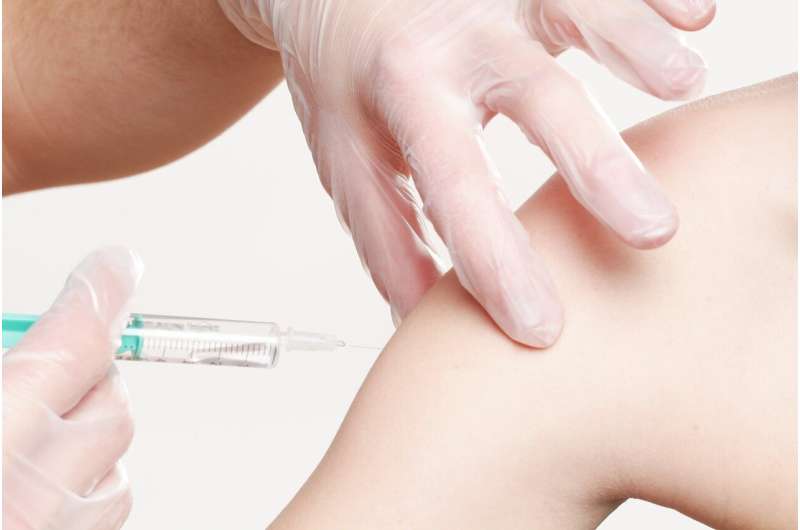
vaccine
Credit: Pixabay/CC0 Public Domain

The Therapeutic Goods Administration (TGA) yesterday announced it has provisionally approved AstraZeneca's COVID vaccine for use in Australia.

17 feb 2021--The approval applies to people over 18, including adults older than 65. The recommended interval between the two doses is 12 weeks, but the second dose can be administered a minimum of four weeks after the first.

We now have two vaccines provisionally approved, which is welcome news for Australia's vaccine rollout. Vaccinations with the Pfizer shot are set to begin next week, and we should see inoculation with the AstraZeneca  start some time in March.

Here are five things to know about the AstraZeneca vaccine.

1. Storage and distribution

The Oxford/AstraZeneca vaccine, also known as ChAdOx1 nCoV-19, or AZD1222, is a viral vector vaccine. Scientists used an adenovirus, originally derived from chimpanzees, and modified it with the aim of training the immune system to mount a strong response against SARS-CoV-2 (the virus that causes COVID-19).

One key characteristic of this vaccine is that it can be stored at 2-8℃ (so, in a normal fridge). This is distinct from some of the other COVID-19 vaccines—such as Pfizer's mRNA vaccine—which must be stored at ultra-cold temperatures. So the AstraZeneca vaccine can be widely distributed with relative ease.

Additionally, AstraZeneca has multiple supply chains. Around the world they have multiple manufacturing sites, partners from whom to source ingredients, and distributors who can deploy the vaccine. These partnerships will accelerate production and distribution.

At this stage, the AstraZeneca vaccine will be the only locally available vaccine manufactured in Australia. Biotechnology company CSL has been working to upgrade its facilities so it can produce the vaccine locally at scale. It expects up to two million doses will be available by the end of March.

2. Safety and efficacy in people over 65

Phase 2 human trials tested safety and immune responses of the AstraZeneca vaccine, including in people over 65. The vaccine was found to be safe, showing just some mild and moderate reactions, and it induced similar immune responses across age groups.

Although the subsequent phase 3 trials included much larger numbers of people, they didn't include as many older people as trials for some of the other vaccines. So researchers couldn't confidently assess efficacy in this group at the time. Studies are ongoing, and there's still some uncertainty about the vaccine's efficacy in older people.

There are no specific safety concerns (especially based on overseas data) and the vaccine induces good immune responses, which is a positive indicator it could be effective in the elderly population. Therefore, the TGA has ruled the vaccine should be administered to elderly people "on a case-by-case basis" where the benefits outweigh the possible risks.

The person, their family and medical professionals might make the decision not to vaccinate if, say, the person is very elderly and frail, or has multiple medical conditions.

3. Timing of doses

In initial studies, the vaccine's efficacy was 62% with two standard doses. However, there was some variability depending on the dosage and timing.

Since then, scientists have asked questions about the optimal dose and interval. A preprint manuscript in The Lancet shows the vaccine demonstrated 82.4% efficacy after two standard doses three months apart. The efficacy was lower if the doses were closer together: 54.9% if the interval was less than six weeks.

Although this data is yet to be peer-reviewed, it suggests the timing between doses is a key factor in this vaccine's efficacy. The TGA has reflected this in its advice.

But will a person be protected already after one immunization, while waiting for the second boosting jab? The preprint study shows the vaccine has 76% efficacy after a single dose, when assessed over the first 90 days after vaccination.

4. Protection against different strains

As viruses mutate and give rise to new variants, this can affect how well certain vaccines work against them.

We've seen this with the B.1.351 variant of SARS-CoV-2, originally identified in South Africa. Following a multi-center clinical trial in South Africa, researchers concluded two doses of the AstraZeneca vaccine had minimal efficacy in mild to moderate COVID-19 cases, specifically due to the B.1.351 variant.

There's still hope the vaccine will be effective against more severe cases of COVID-19. But South Africa has halted the rollout of the AstraZeneca vaccine for now.

The news is looking better for the UK strain, B.1.1.7. In a phase 2/3 clinical trial in the UK, researchers concluded the AstraZeneca vaccine had an efficacy against the B.1.1.7 variant similar to that of other variants—74.6% compared with 84%. It's important to note this study is also a preprint, so it hasn't yet received the same scrutiny as other published research.

Interestingly, both the UK and South African variants have the same mutation—the N501Y mutation—but the south African variant has an additional mutation, E484K. Research shows this mutation contributes to the virus evading antibodies from COVID-19 patients against SARS-CoV-2.

5. Can it reduce transmission as well as disease?

This question has been asked of all COVID-19 vaccines, and emerging data for the AstraZeneca vaccine is encouraging. The Lancet preprint we mentioned earlier has shown this vaccine may block transmission after a single dose.

The researchers derived this data by taking weekly nose swabs from both symptomatic and asymptomatic cases and testing for the presence of the virus. (If a person has virus in their nose and are breathing it out, they're more likely to infect someone else.) They observed a 67% fall in swabs positive for the virus after one immunization.

In a separate preprint, people who received the AstraZeneca vaccine (as opposed to the placebo) and were swab positive showed reduced periods of viral shedding, which could also have a positive impact on transmission of disease.

This data suggests the AstraZeneca vaccine also has potential to substantially affect virus transmission, by reducing the number of highly infectious people in a population.

Provided by The Conversation 

Tuesday, February 16, 2021

Global weekly COVID cases are falling, WHO says—but 'if we stop fighting it on any front, it will come roaring back'

Global weekly COVID cases are falling, WHO says — but 'if we stop fighting it on any front, it will come roaring back'

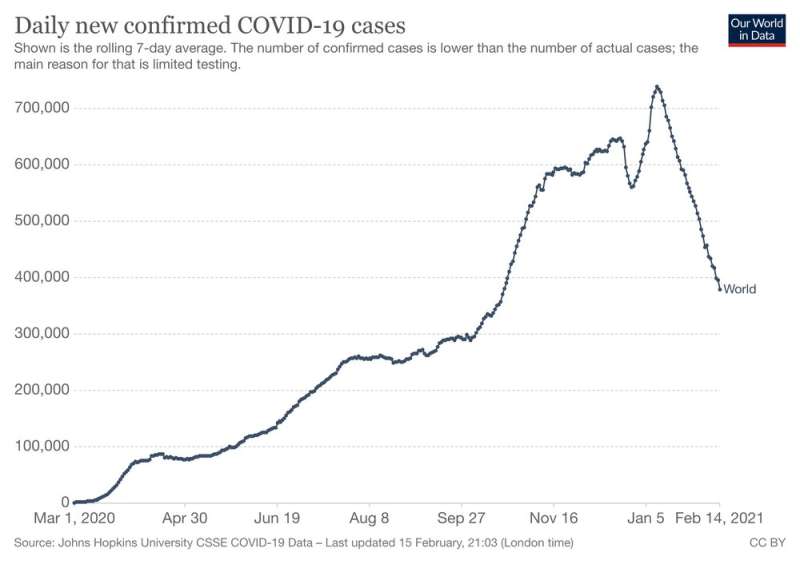
The number of reported global weekly COVID cases is falling and has dropped nearly 50% this year, the World Health Organization (WHO) said overnight. This incredibly encouraging news shows the power of public health measures—but we must remain vigilant. Letting our guard down now, when new variants are emerging, could easily reverse the trend.

16 feb 2021--According to a WHO press release: "Last week saw the lowest number of reported weekly cases since October", Tedros Adhanom Ghebreyesus, Director-General of the World Health Organization (WHO) told journalists at a regular press briefing in Geneva.

Noting a nearly 50% drop this year, he stressed that "how we respond to this trend" is what matters now.

While acknowledging that there is more reason for hope of bringing the pandemic under control, the WHO chief warned, "the fire is not out, but we have reduced its size".

"If we stop fighting it on any front, it will come roaring back".

This welcome news shows that when governments respond rapidly by putting in place public health measures, we reap the benefits even before widespread vaccine rollouts. That's a really important message now, and for when the next pandemic hits (and another one eventually will).

As good as this news is, though, we are still seeing infections in fairly large numbers worldwide. And, as we have regrettably seen in the past, subsequent waves of infection can easily emerge.

We also now have a series of variants to contend with. Even as begin to understand how the variants now circulating will affect the effectiveness of current vaccines, it's possible we could see yet another new variant emerge that would reverse the downward trend. This remains a real risk when there are still so many new infections worldwide and when so few countries have been able to start vaccinating.

Global weekly COVID cases are falling, WHO says — but 'if we stop fighting it on any front, it will come roaring back'

It's too early to see vaccine effect

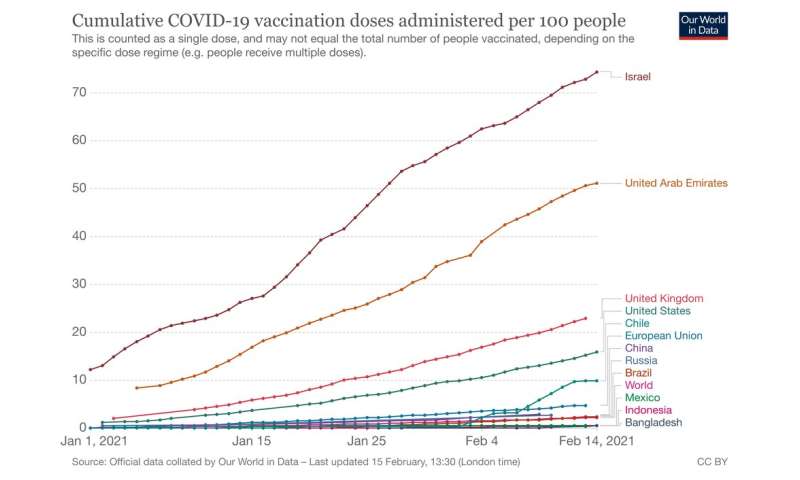
Some countries, such as Israel and the United Kingdom, have already vaccinated huge swathes of their population. That's a tremendous achievement and we will start to see the benefits in the coming months. But fundamentally, it's too early to see the effect of the vaccine rollout in widespread reduction of infection.

On the other hand, we have recently seen a much greater focus on public health measures in places such as Europe, the Middle East and the United States. These places have been significantly affected by COVID outbreaks and are dealing with third waves, as some are preparing for their fourth.

It's likely these public health measures—such as lockdowns, physical distancing, mask-wearing and increased hygiene measures—are what's driving the global downward trend. That shows the benefit when leaders do engage and bring their populations with them.

To keep that trend going in the right direction, we need high levels of public compliance with those public health measures and more equitable access to vaccines globally.

Unequal global access to vaccines is a major risk

Very few low-income countries have started a widespread vaccine rollout, and many are struggling to secure doses. Having unequal access globally to vaccines is obviously morally wrong and dangerous—but it also represents a great economic risk to high income countries like Australia.

Having high-income countries buying up all the stock of vaccines and leaving poorer nations with little recourse will prolong the pandemic. And that's bad news for the global economy, with estimates suggesting the pandemic will cost US$16 trillion dollars.

Even if Australia were able to maintain its success so far, having the pandemic run out of control in other countries means no travel, will continue to make it hard for Australians to return home, and could lead to shortages of products and materials from other countries. As the global financial crisis showed, economic strife in other parts of the world can have profound impact locally, even when Australia is doing relatively OK.

The risk this poses to lives and to the global economy is one reason the WHO has called for vaccine rollouts to begin in all countries in the first 100 days of 2021, and for health-care workers in lower- and middle-income countries to be protected first.

The WHO has issued a vaccine equity declaration calling for, among other things, world leaders to increase contributions to the UN-led vaccine equity initiative, COVAX, and to share doses with COVAX even as they roll out their own national campaigns.

We also clearly need to upscale vaccine research and manufacturing capacity around the world, which would also help us respond to the next pandemic, too.

There's still a lot of work to be done.

Relaxing too soon can undo our progress

As the WHO's Director-General said overnight, the fire is not out and "if we stop fighting it on any front, it will come roaring back".

That's why sticking to the fundamentals of infection control is so important. That means keeping up with the hand-washing and physical distancing. It means wearing a mask if you can't physically distance and complying with lockdowns and other public health orders. Yes, it's hard to maintain a high level of commitment, but the alternative is far worse.

When people start to hear that global case numbers are improving, there's a tendency to relax—and that's risky. Now is the time we need to work together to see this contained, and ideally suppressed.

We may never completely eradicate this virus. But if we stick with the public health measures, and vaccinate as many people as possible worldwide, we can keep the trend going in the right direction.


Provided by The Conversation 

Thursday, February 11, 2021

At least 50% of COVID-19 infections come from people who aren't showing symptoms: study

crowd
Credit: CC0 Public Domain

A new study out of the University of Chicago has found that during the initial wave of the COVID-19 outbreak in New York City, only 1 in 5 to 1 in 7 cases of the virus was symptomatic. The research team found that non-symptomatic cases substantially contribute to community transmission, making up at least 50% of the driving force of SARS-CoV-2 infection. The results were published on Feb. 10 in the Proceedings of the National Academy of Sciences.

11 feb 2021--When the COVID-19 epidemic arrived in the U.S., the investigators noticed that it was very difficult to estimate what proportion of people infected with SARS-CoV-2 would go on to develop symptoms, partially due to the initial challenges with testing capacity.

"Without testing capacity data, it's very difficult to estimate the difference between cases that were unreported due to a lack of testing and cases that were actually asymptomatic," said first author Rahul Subramanian, a Ph.D. student of epidemiology at UChicago. "We wanted to disentangle those two things, and since New York City was one of the first cities to report the daily  of tests completed, we were able to use those numbers to estimate how many COVID-19 cases were symptomatic."

While there are a number of existing models that use epidemiological data to estimate undetected case numbers and transmission rates, this is the first peer-reviewed model to incorporate data about daily testing capacity and changes in testing rates over time to provide a more accurate picture of what proportion of SARS-CoV-2 infections are symptomatic in a large U.S. city.

"Incorporating these data into the model showed that the proportion of individuals who are symptomatic for COVID-19 is somewhere between 13% and 18%," said senior author Mercedes Pascual, Ph.D., the Louis Block Professor of Ecology and Evolution at UChicago. "And regardless of uncertainty in all other parameters, we can tell that more that 50% of the transmission happening in the community is from people without symptoms ¬— those who are asymptomatic and pre-symptomatic."

While this data analysis does not indicate how infectious asymptomatic individuals are, nor account for the new variants of the virus currently spreading in the U.S., the model provides additional support for the importance of following public health guidelines to reduce community transmission of the virus, whether individuals show symptoms.

"Even if asymptomatic people aren't transmitting the virus at high rates, they constitute something like 80% of all infections," said co-author Qixin He, now an assistant professor at Perdue University. "This proportion is quite surprising. It's crucial that everyone—including individuals who don't show symptoms—adhere to public health guidelines, such as mask wearing and social distancing, and that mass testing is made easily accessible to all."

The investigators say that these results also demonstrate that public health agencies need to make their testing protocols and numbers publicly available to allow these data to be incorporated into existing transmission models.

"Making this information available is as important as reporting the number of cases," said Pascual. "Otherwise, we have a discrepancy between the number and type of cases that are reported over time and the underlying transmission dynamics. These data are critical for epidemiological modeling."


More information: Rahul Subramanian et al, Quantifying asymptomatic infection and transmission of COVID-19 in New York City using observed cases, serology, and testing capacity, PNAS March 2, 2021 118 (9) e2019716118; doi.org/10.1073/pnas.2019716118
Provided by University of Chicago Medical Center 

Monday, February 08, 2021


WHO warns against dismissing AstraZeneca vaccine after setbacks

covid
Credit: Unsplash/CC0 Public Domain

The World Health Organization and its Covax partners cautioned Monday against dismissing AstraZeneca's COVID vaccine after several setbacks, insisting it remained an important, life-saving tool.

08 feb 2021--The AstraZeneca vaccine is currently a vital part of Covax, which was set up to procure COVID-19 vaccines and ensure their equitable distribution around the world.

It accounts for almost all of the 337.2 million vaccine doses Covax is preparing to begin shipping to some 145 countries during the first half of the year, once it receives WHO authorisation, which is expected next week.

But the vaccine has run into several setbacks.

"It is vastly too early to be dismissing this vaccine," said Richard Hatchett, who heads the Coalition for Epidemic Preparedness Innovations (CEPI), which co-leads the Covax vaccine facility with the WHO and Gavi.

"It is absolutely crucial to use the tools that we have as effectively as we possibly can," he said, speaking at the WHO's regular bi-weekly press briefing on the coronavirus pandemic.

Regulatory authorities in several European nations have refused to authorise the vaccine for use among the over-65s—by far the most vulnerable age group for serious COVID-19 disease—due to a lack of data proving its efficacy among older people.

And South Africa said Sunday it would suspend the start of its COVID-19 vaccinations with the AstraZeneca jab after a study showed the jab failed to prevent mild and moderate cases of the virus variant that has appeared in the country.

'Concerning news'

WHO chief Tedros Adhanom Ghebreyesus told reporters that the study's findings were "clearly concerning news."

But he stressed that there were "some important caveats", pointing in particular to the small size of the study with only 2,000 participants, urging more research.

Other WHO experts also pointed out that the interval used between the two doses of the vaccine in the study was just a month—far shorter than what has been deemed to be optimal to enhance its efficacy.

WHO's vaccines chief Kate O'Brien pointed to other studies showing the vaccine could have a "meaningful impact against severe disease", including with the B.1.351 variant of the SARS-CoV-2 virus, first detected in South Africa.

She said the organisation's vaccine expert group, which met earlier Monday to discuss its recommendations on the use of the jab, had appeared optimistic about its prospects against the variant.

The 15-member Strategic Advisory Group of Experts on Immunization (SAGE) is due to render its verdict later this week.

However O'Brien said the experts had expressed "a very positive view on proceeding with the use of the vaccine including in settings where variants are circulating".

Gavi chief Seth Berkley agreed that current evidence indicated the jab "is an efficacious vaccine."

At the same time, he underscored the need to continue monitoring all the COVID vaccines, and possibly adapting them to better battle new variants "if found to be scientifically necessary."

The WHO's emergencies director Michael Ryan meanwhile said it was vital to use the tools available now to save lives.

"The primary job of vaccines right now is to reduce hospitalisations and deaths, and right now... they are working to do that," he said.

"We may need better vaccines to do more than just stop deaths and hospitalisations."

But "in emergency management you have got to do what you can do now," he added.

Sunday, February 07, 2021

Severely frail individuals with COVID-19 are three times more likely to die, study finds

Severely frail individuals with COVID-19 are three times more likely to die, study finds
Frailty. Credit: University of Birmingham

New research led by the University of Birmingham has revealed for the first time the extent to which frailty increases the risk of mortality in COVID-19 patients.

07 feb 2021--The clinical observational study, involving 5,711 patients with COVID-19 at 55 hospitals across 12 countries, found that very severely frail individuals with COVID-19 are three times more likely to die than those who were not frail, even taking into account their age. It also found that those with severe frailty who survived the virus were seven times more likely to go on to need increased care at home or in care homes.

The Geriatric Medicine Research Collaborative (GeMRC) - the group of experts behind the study—are now calling for improved global public health policy after their research showed that frailty, independently of older age, increases the risk of death from COVID-19.

Frailty is a state where the body becomes more vulnerable to the effects of illness. It is identified by clinicians using a holistic assessment that considers how much support the person needs from others in their daily living before becoming unwell—not just their medical problems, but the person as a whole. The risk of frailty increases as we get older, but it can develop at different ages.

Senior author Dr. Carly Welch, clinical research fellow in geriatric medicine at the University of Birmingham's Institute of Inflammation & Ageing, and Chair and Co-Founder of GeMRC, said: "It was identified very early in the pandemic that older age was a significant risk factor for a higher chance of death with Covid-19.

"However, not all older people are the same, we all age differently—some people can live well into their 90s without developing frailty, and it can develop even without the presence of other long-term conditions.

"Our findings are important as we have been able to demonstrate that not only older age but also frailty, independently from one another, increase the risk of death from COVID-19 and also a subsequent increased need in care for survivors."

Dr. Daisy Wilson, clinical research fellow at the University of Birmingham, added: "We now have evidence to show that those most at risk from COVID-19 are those who are older, or living with frailty, or have underlying health conditions."

GeMRC hopes the research findings will influence public health policy, including advice on shielding and recommendations for prioritisation on vaccination for those with frailty.

Dr. Mary Ni Lochlainn, of King's College London, added: "We hope that this research will help to enable increased understanding of frailty as occurring separately to age and that frailty can be considered alongside age in policies both in and outside of hospital.

"Increased understanding of frailty within the general public will enable improved communication between clinicians, patients, and their relatives or carers, and can be used in thinking about how we ensure that the right treatment is given for all patients in line with their wishes."

The research, published today (Feb 5th) in Age and Ageing and supported by the National Institute for Health Research (NIHR), is the largest international study of its kind to date.

The results also showed that delirium—a state of clouding of the mind and extremely prevalent in patients with COVID-19—is not itself independently associated with increased risk of mortality.

Meanwhile, the findings also showed an increased likelihood of transition to a higher level of care on discharge from hospital for those COVID-19 patients with increasing age, frailty, delirium, dementia, and mental health problems.

Further research is encouraged to understand what factors affect recovery of physical function and quality of life with COVID-19, and the inclusion of older adults with frailty in such research is paramount.


More information: Wilson et al (Feb, 2021). 'Age and frailty are independently associated with increased COVID-19 mortality and increased care needs in survivors: results of an international multi-centre study' Age And Ageing (2021). DOI: 10.1093/ageing/afab026

Saturday, February 06, 2021


AstraZeneca vaccine effective against UK variant: Oxford University

vaccine
Credit: Pixabay/CC0 Public Domain

Britain's Oxford University said on Friday its researchers behind the joint AstraZeneca Covid-19 vaccine had found it to be effective against the UK virus variant now dominant across the country.

06 feb 2021--The university, which developed the jab with the British-Swedish pharmaceutical firm, said an ongoing assessment of its effectiveness showed that it has "similar efficacy" to other coronavirus strains.

"Data from our trials... in the United Kingdom indicate that the vaccine not only protects against the original pandemic virus, but also protects against the novel variant," said Andrew Pollard, co-chief investigator on the Oxford vaccine trial.

The analysis, which relied on samples taken between October and mid-January, also indicated the jab reduces "duration of shedding and viral load", which may translate into reduced virus transmission, the university said.

The preliminary findings, which still need to be peer reviewed, are the first to report on the efficacy of the Oxford-AstraZeneca vaccine against new variants, it noted.

The more contagious British virus variant, which first emerged in southeast England in late September, has since become the most common strain detected in new UK infections, and spread to scores of other countries.

However, it is less clear how well the vaccines developed so far will work against several other variants that have emerged around the world, in particular a strain from South Africa that is causing concern.

Oxford said vaccine researchers are looking at ways to modify existing inoculations "quickly and simply" to protect against new variants.

"We have always expected that as the pandemic continues, new variants will begin to become dominant amongst the viruses that are circulating and that eventually a new version of the vaccine... would be required," said Sarah Gilbert, co-chief investigator of the Oxford trial.

"We are working with AstraZeneca to optimize the pipeline required for a strain change should one become necessary."


Friday, February 05, 2021

Neural roots and origins of alcoholism identified

Neural roots and origins of alcoholism identified
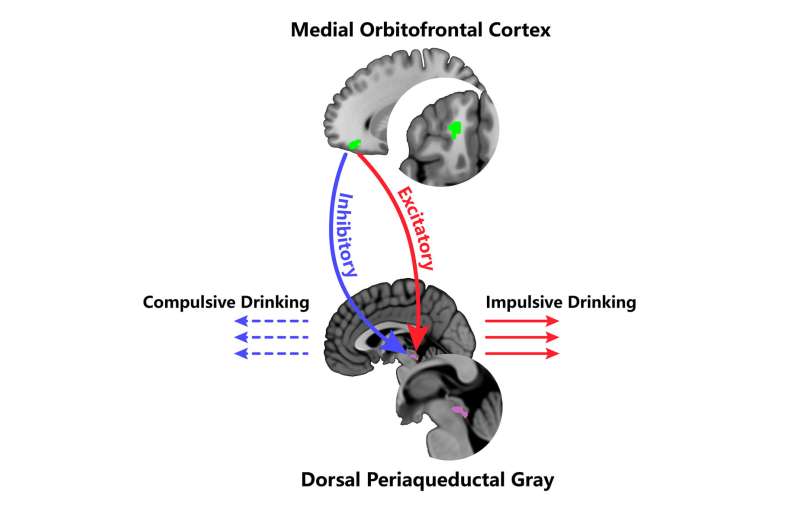
The medial orbitofrontal cortex – dorsal periaqueductal gray top-down regulations are linked to impulsive and compulsive drinking. Credit: University of Warwick

The physical origin of alcohol addiction has been located in a network of the human brain that regulates our response to danger, according to a team of British and Chinese researchers, co-led by the University of Warwick, the University of Cambridge, and Fudan University in Shanghai.

05 feb 2021--The medial orbitofrontal cortex (mOFC) at the front of the brain senses an unpleasant or emergency situation, and then sends this information to the dorsal periaqueductal gray (dPAG) at the brain's core, the latter area processing whether we need to escape the situation.

A person is at greater risk of developing alcohol use disorders when this information pathway is imbalanced in the following two ways:

  • Alcohol inhibits the dPAG (the area of the brain that processes adverse situations), so that the brain cannot respond to negative signals, or the need to escape from danger—leading a person to only feel the benefits of drinking alcohol, and not its harmful side effects. This is a possible cause of compulsive drinking.
  • A person with alcohol addiction will also generally have an over-excited dPAG, making them feel that they are in an adverse or unpleasant situation they wish to escape, and they will urgently turn to alcohol to do so. This is the cause of impulsive drinking.

Professor Jianfeng Feng, from the Department of Computer Science at the University of Warwick and who also teaches at Fudan University, says, "I was invited to comment on a previous study on mice for the similar purpose: to locate the possible origins of alcohol abuse. It is exciting that we can replicate these murine models in humans, and, of course, go a step further to identify a dual-pathway model that links alcohol abuse to a tendency to exhibit impulsive behavior."

Professor Trevor Robbins from the Department of Psychology at the University of Cambridge says, "It is remarkable that these neural systems in the mouse concerned with responding to threat and punishment have been shown to be relevant to our understanding of the factors leading to alcohol abuse in adolescents."

Dr. Tianye Jia from the Institute of Science and Technology for Brain-inspired Intelligence at Fudan University, also affiliated with King's College London, says, "We have found that the same neural top-down regulation could malfunction in two completely different ways, yet leading to similar alcohol abuse behavior."

Published in the journal Science Advances, the research is led by an international collaboration, co-led by Dr. Tianye Jia from Fudan University, Professor Jianfeng Feng from the University of Warwick and Fudan University, and Professor Trevor Robbins from the University of Cambridge and Fudan University.

The research team had noticed that previous rodent models showed that the mPFC and dPAG brain areas could underlie precursors of alcohol dependence.

They then analyzed MRI brain scans from the IMAGEN dataset—a group of 2000 individuals from the UK, Germany, France and Ireland who take part in scientific research to advance knowledge of how biological, psychological and environmental factors during adolescence may influence brain development and mental health.

The participants undertook task-based functional MRI scans, and when they did not receive rewards in the tasks (which produced negative feelings of punishment), regulation between the mOFC and dPAG was inhibited more highly in participants who had exhibited alcohol abuse.

Equally, in a resting state, participants who demonstrated a more overexcited regulation pathway between the mOFC and dPAG, (leading to feelings of needing urgently to escape a situation), also had increased levels of alcohol abuse.

Alcohol use disorder (AUD) is one of the most common and severe mental illnesses. According to a WHO report in 2018, more than 3 million deaths every year are related to alcohol use worldwide, and harmful alcohol use contributes to 5.1% of the global burden of disease. Understanding how alcohol addiction forms in the human brain could lead to more effective interventions to tackle the global problem of alcohol abuse.


More information: Tianye Jia et al. Neural network involving medial orbitofrontal cortex and dorsal periaqueductal gray regulation in human alcohol abuse, Science Advances (2021). DOI: 10.1126/sciadv.abd4074
Provided by University of Warwick 

Wednesday, February 03, 2021

Early anticoagulation may not up survival in severe COVID-19

Early anticoagulation may not up survival in severe COVID-19

Early therapeutic anticoagulation does not appear to affect survival among critically ill adults with COVID-19, according to a study published online Jan. 26 in the Annals of Internal Medicine.

03 feb 2021--Hanny Al-Samkari, M.D., from Massachusetts General Hospital and Harvard Medical School in Boston, and colleagues evaluated the incidence of venous thromboembolism (VTE) and major bleeding in 3,239 critically ill adults with COVID-19 (67 hospitals; median age, 61 years; 64.5 percent men) and examined the effect of early therapeutic anticoagulation (within the first two days of intensive care unit [ICU] admission) on survival.

The researchers found that 204 patients (6.3 percent) developed VTE and 90 patients (2.8 percent) developed a major bleeding event. Male sex and higher D-dimer level on ICU admission were independent predictors of VTE. The analysis included 2,809 patients in the target trial emulation, with 11.9 percent receiving early therapeutic anticoagulation. During a median follow-up of 27 days, patients who received early therapeutic anticoagulation had a similar risk for death as those who did not (hazard ratio, 1.12; 95 percent confidence interval, 0.92 to 1.35).

"Our findings do not support early empirical use of therapeutic anticoagulation in critically ill patients with COVID-19," the authors write. "These findings highlight the need for well-designed, adequately powered randomized clinical trials of therapeutic anticoagulation in critically ill patients with COVID-19."

More information: Abstract/Full Text

Journal information: Annals of Internal Medicine 

Tuesday, February 02, 2021

Common drug colchicine brings hope to COVID fight: Canadian research

COVID-19
Credit: CC0 Public Domain

A major clinical trial in Canada shows that an inexpensive anti-inflammatory drug called colchicine can significantly reduce the risk of complications and death from COVID-19, bringing "important hope" to sufferers, the lead researcher said .

02 feb 2021--Jean-Claude Tardif, head of the Montreal Heart Institute (ICM), led the study named "Colcorona," whose preliminary results were published Friday evening.

The complete results will be made public "as quickly as possible," he said during an interview with AFP.

Q: What are the main conclusions of your study, conducted on 4,488 patients throughout the world since March 2020?

A: The Colcorona study provided convincing results of a more than 20 percent reduction in hospitalizations or deaths related to COVID-19 with colchicine, compared to the placebo... When dealing with patients who have had a test that officially proves their COVID-19 diagnosis, the result with colchicine is even better, that is, a reduction of 25 percent in hospitalizations, 50 percent in need for a ventilator and 44 percent in deaths.

The hypothesis behind the study was that the reason patients develop complications from COVID is the exaggerated inflammatory response that a patient's white blood cells develop in reaction to the virus... Our intuition was that by using a drug like colchicine to reduce this exaggerated inflammatory reaction, known as "cytokine storms," could prevent complications.

Q: Why do you think the results are so important in the global fight against the pandemic?

A: Colchicine is a powerful anti-inflammatory drug that has been known for a very long time, it was discovered 150 years ago. It's extracted from a plant called Colchicum autumnale and is used to treat various diseases such as gout, an inflammatory arthritis, and pericarditis among others.

The beauty of the study's results is that colchicine is already available in pharmacies, since it is used safely and inexpensively for many diseases... Our discovery won't just be useful in France, Canada and the US and G8 countries, but (also in) developing nations, poor countries, Africa, Asia will quickly benefit from inexpensive colchicine, which is taken orally in tablet form.

Our results bring important hope for patients, healthcare systems and governments. Finally, we are providing part of a significant solution to reduce hospitalizations and eventually reduce congestion in the hospital system.

Q: Scientists are waiting now for the complete results of your study, when do you plan to publish them?

A: We are submitting the manuscript to a major scientific journal today (Sunday). I obviously can't presume the publication date, the journal will do its work, it's one of the biggest journals in the world. We will share the rest of the results as fast as possible, possibly even before the final publication (in the journal). We are convinced that our results are conclusive, convincing and can be used immediately to benefit patients.

There will probably be a rapid review by regulatory agencies, EMA (European Medicines Agency), Health Canada in Canada, the FDA in the US, who will quickly review the data... Now I think that doctors don't have to wait for this regulatory review by the agencies... Doctors, health practitioners, will be able to prescribe it immediately because it is already available.

Thursday, January 28, 2021

AstraZeneca, UK PM defend Covid jab's effectiveness

COVID-19
Credit: Pixabay/CC0 Public Domain

AstraZeneca and British Prime Minister Boris Johnson on Thursday defended the effectiveness of the company's COVID-19 vaccine after regulators in Germany said it should not be given to over-65s.\

28 jan 2021--A spokesperson for the UK-based company said the latest clinical trial data for its vaccine, developed with Oxford University, "support efficacy in the over 65 years age group".

The company is awaiting a decision from the EU's medicines regulator, the spokesperson added.

Johnson meanwhile told reporters that the UK's own regulator had established "that they think the Oxford/AstraZeneca vaccine is very good and efficacious, gives a high degree of protection".

A panel of scientific experts in Germany said the vaccine should only be used for "persons aged 18 to 65 years old based on available data", citing "insufficient data" to assess its efficacy for older people.

Britain has been using the Oxford/AstraZeneca jab along with another developed by Pfizer/BioNTech across all older age groups as it bids to immunise the most vulnerable 15 million people by mid-February.

Mary Ramsay, head of immunisations at the government agency Public Health England, also backed the AstraZeneca vaccine for older recipients.

"Both the AstraZeneca and Pfizer/BioNTech vaccines are safe and provide high levels of protection against COVID-19, particularly against severe disease," she said.

"There were too few cases in older people in the AstraZeneca trials to observe precise levels of protection in this group, but data on immune responses were very reassuring," Ramsay added.

"The risk of severe disease and death increase exponentially with age—the priority is to vaccinate as many vulnerable people as possible with either vaccine, to protect more people and save more lives.

German draft doesn't recommend AstraZeneca jab for over-65s

German draft doesn't recommend AstraZeneca jab for over-65s
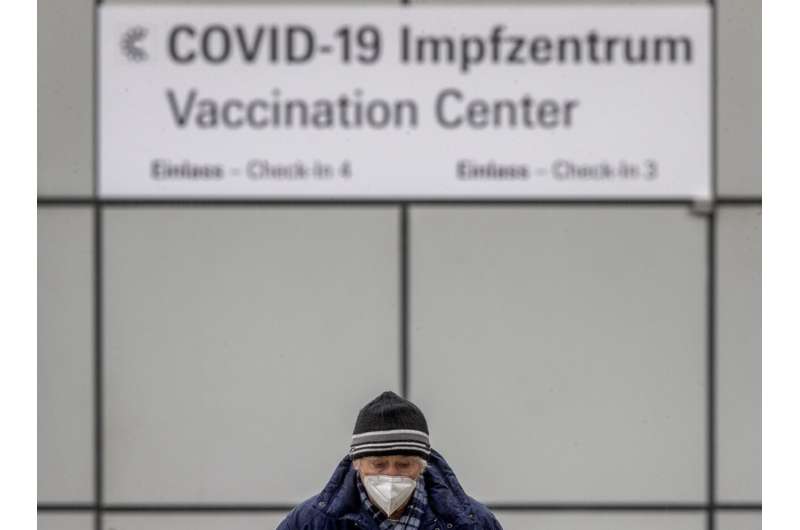
A man wears a face mask as he comes back from the vaccination center in Frankfurt, Germany, Thursday, Jan. 28, 2021. (AP Photo/Michael Probst)

A draft recommendation from Germany's vaccination advisory committee calls for offering the AstraZeneca vaccine only to people aged 18-64 for now, citing what it says is insufficient data to judge its effectiveness for older people.

28 jan 2021--The European Medicines Agency is expected to approve the AstraZeneca  for use in the 27-nation European Union on Friday. It would be the third cleared for use in the EU after the BioNTech-Pfizer and Moderna vaccines.

In a draft recommendation released on Thursday ahead of that decision, Germany's permanent vaccination commission called for using AstraZeneca's vaccine for the 18-64 age group on the basis of currently available information. It said that "there currently is not sufficient data to assess the vaccination effectiveness from 65 years."

AstraZeneca noted earlier this week that British regulators supported its use in the older age group despite lack of late-stage effectiveness data. The company pointed to earlier-stage data published in the journal Lancet in November "demonstrating that older adults showed strong immune responses to the vaccine, with 100% of older adults generating spike-specific antibodies after the second dose."

But questions remain about how well the vaccine protects older people. Only 12% of participants in the AstraZeneca research were over 55 and they were enrolled later, so there hasn't been enough time to see whether they get sick at a lower rate than those who didn't get the vaccine.

German Health Minister Jens Spahn stressed that the committee's recommendation isn't its final decision, and that will be made only after the vaccine is cleared for use.

But he said there had been a discussion since autumn about there being "few data—this isn't about bad data, but few data" in studies on the AstraZeneca vaccine's effectiveness in older groups.

"It was to be expected that this would have an influence on the decision of the regulatory authorities and then the permanent vaccine commission," Spahn said. "We just don't know yet how concretely—so let's wait for the decision tomorrow on clearance and then the final recommendation from the permanent vaccine commission."

When Britain approved the AstraZeneca vaccine for emergency use last month, it acknowledged that data regarding its effectiveness in older people was "limited."

The vaccination committee, known by its German acronym STIKO, is an independent expert panel that provides advice to the government and the medical profession on which immunizations should be given to whom. It doesn't play a direct role in the vaccine approval process, but its advice determines what vaccines are considered standard for which groups, and therefore covered by health insurance.

Tuesday, January 26, 2021

Afternoon napping linked to better mental agility

nap
Credit: CC0 Public Domain

Taking a regular afternoon nap may be linked to better mental agility, suggests research published in the online journal General Psychiatry.

26 jan 2021--It seems to be associated with better locational awareness, verbal fluency, and working memory, the findings indicate.

Longer life expectancy and the associated neurodegenerative changes that accompany it, raise the prospect of dementia, with around 1 in 10 people over the age of 65 affected in the developed world.

As people age, their sleep patterns change, with afternoon naps becoming more frequent. But research published to date hasn't reached any consensus on whether afternoon naps might help to stave off cognitive decline and dementia in older people or whether they might be a symptom of dementia.

The researchers explored this further in 2214 ostensibly healthy people aged at least 60 and resident in several large cities around China, including Beijing, Shanghai, and Xian.

In all, 1534 took a regular afternoon nap, while 680 didn't. All participants underwent a series of health checks and cognitive assessments, including the Mini Mental State Exam (MMSE) to check for dementia.

The average length of night time sleep was around 6.5 hours in both groups.

Afternoon naps were defined as periods of at least five consecutive minutes of sleep, but no more than 2 hours, and taken after lunch. Participants were asked how often they napped during the week; this ranged from once a week to every day.

The dementia screening tests included 30 items that measured several aspects of cognitive ability, and higher function, including visuo-spatial skills, working memory, attention span, problem solving, locational awareness and verbal fluency.

The MMSE cognitive performance scores were significantly higher among the nappers than they were among those who didn't nap. And there were significant differences in locational awareness, verbal fluency, and memory.

This is an observational study, and so can't establish cause. And there was no information on the duration or timing of the naps taken, which may be important.

But there are some possible explanations for the observations found, say the researchers.

One theory is that inflammation is a mediator between mid-day naps and poor health outcomes; inflammatory chemicals have an important role in sleep disorders, note the researchers.

Sleep regulates the body's immune response and napping is thought to be an evolved response to inflammation; people with higher levels of inflammation also nap more often, explain the researchers.

More information: Relationship between afternoon napping and cognitive function in the ageing Chinese population, General PsychiatryDOI
: 10.1136/gpsych-2020-100361
Provided by British Medical Journal 

Saturday, January 23, 2021

Physical frailty syndrome: A cacophony of multisystem dysfunction

elderly
Credit: CC0 Public Domain

In the inaugural issue of the journal Nature Aging a research team led by aging expert Linda P. Fried, MD, MPH, dean of Columbia University Mailman School of Public Health, synthesizes converging evidence that the aging-related pathophysiology underpinning the clinical presentation of phenotypic frailty (termed as "physical frailty" here) is a state of lower functioning due to severe dysregulation of the complex dynamics in our bodies that maintains health and resilience. When severity passes a threshold, the clinical syndrome and its phenotype are diagnosable. This paper summarizes the evidence meeting criteria for physical frailty as a product of complex system dysregulation. This clinical syndrome is distinct from the cumulative-deficit-based frailty index of multimorbiditys.

23 jan 2021--Physical frailty is defined as a state of depleted reserves resulting in increased vulnerability to stressors that emerges during aging independently of any specific disease. It is clinically recognizable through the presence of three or more of five key clinical signs and symptoms: weakness, slow walking speed, low physical activity, exhaustion and unintentional weight loss.

The authors of this Perspectives article integrate the scientific evidence of physical frailty as a state, largely independent of chronic diseases, that emerges when the dysregulation of multiple interconnected physiological and biological systems crosses a threshold to critical dysfunction that severely compromises homeostasis, or stability among the body's physiological presses. The physiology underlying frailty is a critically dysregulated complex dynamical system. This conceptual framework implies that interventions such as physical activity that have multisystem effects are more promising to remedy frailty than interventions targeted at replenishing single systems.

Fried and colleagues then consider how this framework can drive future research to optimize understanding, prevention and treatment of frailty, which will likely preserve health and resilience in aging populations.

"We hypothesized that when Individual physiological systems decline in their efficiency and communication between cells and between systems deteriorate, this results in a cacophony of multisystem dysregulation which eventually crosses a severity threshold and precipitates a state of highly diminished function and resilience, physical frailty," said Fried, who is also director of the Robert N. Butler Columbia Aging Center.

"The key insight is simply that one's physiological state results from numerous interacting components at different temporal and spatial scales (e.g., genes, cells, organs) that create a whole unpredictably more than the parts," observes Fried.

For example, Fried notes that physical frailty prevalence and incidence has been linked to the interconnected dynamics of three major systems, altered energy metabolism through both metabolic systems, including glucose/insulin dynamics, glucose intolerance, insulin resistance, alterations in energy regulatory hormones such as leptin, ghrelin, and adiponectin, and through alterations of musculoskeletal systems function, including efficiency of energy utilization and mitochondrial energy production and mitochondrial copy number. Notably, across these systems, both energy production and utilization are abnormal in those who are physically frail.

The aggregate stress response system and its subsystems are also abnormal in physical frailty. Specifically, inflammation is consistently associated with being frail, including significant associations with elevated inflammatory mediators such as C-reactive protein, Interleukin 6 (IL-6, and white blood cells including macrophages and neutrophils, among others, in a broad pattern of chronic, low-grade inflammation. Each of these three systems mutually regulate and respond to the others in a complex dynamical system.

The authors recommend that multisystem fitness is needed to maintain resilience and prevent physical frailty, including macro-level interventions such as activities to improve physical activity or social engagement; the latter, apart from contributing to psychological well-being, also can increase physical and cognitive activity.

"There is strong evidence that frailty is both prevented and ameliorated by physical activity, with or without a Mediterranean diet or increased protein intake," noted Fried.

"These model interventions to date are nonpharmacologic, behavioral ones, emphasizing the potential for prevention through a complex systems approach."

"This work, conducted under the leadership of Dr. Linda Fried, is the culmination of nearly two decades of research characterizing the pathophysiology of the frailty syndrome. It should pave the way for further elucidating the underlying mechanisms of frailty pathogenesis," said Ravi Varadhan, Ph.D., Ph.D., Sidney Kimmel Comprehensive Cancer Center, Johns Hopkins University, and a co-author. "The paper postulates that energetics—the totality of the processes involved in the intake, utilization, and expenditure of energy by the organism—is the key driver of . Testing this hypothesis would be an important area of future research in aging."


More information: Fried, L.P., Cohen, A.A., Xue, QL. et al. The physical frailty syndrome as a transition from homeostatic symphony to cacophony. Nat Aging 1, 36–46 (2021). doi.org/10.1038/s43587-020-00017-z
Provided by Columbia University's Mailman School of Public Health 

Wednesday, January 13, 2021

Use of telehealth jumped as pandemic shutdown began

telehealth
Credit: Unsplash/CC0 Public Domain

Use of telehealth jumped sharply during the first months of the coronavirus pandemic shutdown, with the approach being used more often for behavioral health services than for medical care, according to a new RAND Corporation study

13 jan 2021--Between mid-March and early May 2020, telehealth was used by more than 40% of patients with a chronic physical health condition and by more than 50% of those with a behavioral health condition, according to findings published in the Journal of General Internal Medicine.

Overall, almost half of the people who were undergoing treatment when the pandemic shutdown began reported using some form of telemedicine.

Researchers found that the use of telehealth for behavioral health conditions was lower among women and among people over the age of 60. Use of telehealth also was lower among Non-Hispanic Whites relative to Non-Hispanic Blacks, and was lower among those with less than a high school education relative to those with a college degree.

"While the increased use of telehealth was widespread, some groups of Americans reported using the services less often than others," said Dr. Shira H. Fischer, the study's lead author and a physician researcher at RAND, a nonprofit research organization. "If telehealth use is going to remain high, we need to ensure equity of access, particularly for behavioral health care where education, age and gender were all associated with levels of use."

In a finding with important implications for the future of telehealth, researchers also found that during the pandemic a large majority of telehealth users connected with their own doctor rather than a new or unfamiliar doctor.

Prior to the pandemic, patients frequently were reluctant to use telehealth because it often meant seeing a provider other than their own physician. According to researchers, sustaining the ability to see one's own doctor through telehealth may be critical to making telehealth a permanent part of routine health care.

Many reports have documented a spike in the use of telehealth services after the shutdown prompted by the coronavirus pandemic. The increase was made possible by emergency regulatory changes that were adopted to promote use of telehealth.

RAND researchers examined the increase in telehealth by surveying 2,052 adults who are a part of the RAND American Life Panel, a nationally representative internet panel. The questions about use of telehealth were part of a larger survey about life during the pandemic that was fielded between May 1 and May 6.

When the pandemic began, nearly 40% of the Americans surveyed were being treated for a chronic physical health condition, while 15% were being treated for a behavioral health condition. Since the pandemic started, 16% had considered seeking care for a new or recurrent condition.

The study found that among patients who were receiving care when the pandemic began, 11% had used telehealth that included video conferencing from the middle of March to early May, a period of less than two months. In contrast, a survey conducted with the same panel in 2019 found that fewer than 4% had ever used video conferencing with a doctor.

Among people who used telehealth services, researchers found that the use of video telehealth was less common for physical health care (14% of patients) than for behavioral health care (30% of patients).

Lack of insurance was associated with lower telehealth use for new conditions, while use of telehealth was more common in the Northeast than other parts of the nation.

"There is a wide expectation that telehealth will continue after the pandemic ends. Lessons from the use of telehealth during this period should inform policy for the post-COVID-19 era," Fischer said.

Provided by RAND Corporation