8,000 steps once or twice a week cuts mortality risk: Study
Credit: Unsplash/CC0 Public Domain
Walking 8,000 steps—about four miles (6.4 kilometers)—one or two days a week may significantly reduce the risk of an early death, according to a study released on Tuesday.
09 april 2023--Whileregular exerciseis known to lowermortality risk, the study published in the journalJAMA Network Openlooked at thehealth benefitsof walking intensively only a few days a week.
For the study, the researchers from Kyoto University and the University of California, Los Angeles analyzed data from 3,100 American adults.
They found that those who walked 8,000 steps or more one or two days a week were 14.9 percent less likely to die over a 10-year period than those who never reached that mark.
For those who walked 8,000 steps or more three to seven days a week, the mortality risk was even lower—16.5 percent.
The health benefits of walking 8,000 steps or more one or two days a week appeared higher for participants aged 65 years and older.
"The number of days per week taking 8,000 steps or more was associated with a lower risk of all-cause and cardiovascular mortality," the researchers said.
"These findings suggest that individuals may receive substantial health benefits by walking just a couple of days a week."
For the study, the researchers used daily step counts from the 3,100 participants in 2005 and 2006 and examined their mortality data 10 years later.
Among the participants, 632 took 8,000 steps or more zero days a week, 532 took 8,000 steps or more one to two days a week and 1,937 took 8,000 or more steps three to seven days a week.
The average American walks 3,000-4,000 steps a day, according to the Mayo Clinic, which says walking for regular activity can reduce the risk of heart disease, obesity, diabetes, high blood pressure and depression.
More information: Kosuke Inoue et al, Association of Daily Step Patterns With Mortality in US Adults, JAMA Network Open (2023). DOI: 10.1001/jamanetworkopen.2023.5174
Journal information: JAMA Network Open
Researchers identify specific regions of the brain damaged by high blood pressure, involved in mental decline, dementia
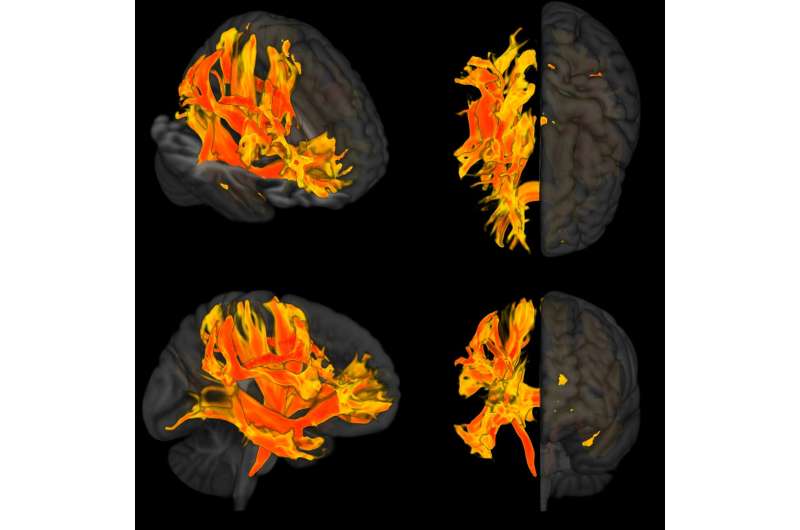
3D reconstruction show how high systolic blood pressure has affected the main tracts of white matter in the brain. The red shows the areas most affected by high blood pressure while the yellow areas are also affected but to a lesser extent. The study shows that high systolic blood pressure causes damage to the white matter and its connections with other parts of the brain and this is linked to worse cognitive functions in the people analysed. For the first time, specific brain areas which are the culprit of this disease are identified. Credit: (c) Dr Lorenzo Carnevale, IRCCS INM Neuromed, Pozzilli, Italy. (used with permission)
For the first time, researchers have identified specific regions of the brain that are damaged by high blood pressure and may contribute to a decline in mental processes and the development of dementia.
09 april 2023--Highblood pressureis known to be involved in causing dementia and damage to brain function. The study, which is published in theEuropean Heart Journaltoday, shows how this happens. It gathered information from a combination of magnetic resonance imaging (MRI) of brains,genetic analysesandobservational datafrom thousands of patients to look at the effect ofhigh blood pressureon cognitive function. The researchers then checked their findings in a separate, large group of patients in Italy.
Tomasz Guzik, Professor of Cardiovascular Medicine at the University of Edinburgh (UK) and Jagiellonian University Medical College, Krakow (Poland), who led the research, said, "By using this combination of imaging, genetic and observational approaches, we have identified specific parts of the brain that are affected by increases in blood pressure, including areas called the putamen and specific white matter regions. We thought these areas might be where high blood pressure affects cognitive function, such as memory loss, thinking skills and dementia. When we checked our findings by studying a group of patients in Italy who had high blood pressure, we found that the parts of the brain we had identified were indeed affected.
"We hope that our findings may help us to develop new ways to treat cognitive impairment in people with high blood pressure. Studying the genes and proteins in these brain structures could help us understand how high blood pressure affects the brain and causes cognitive problems. Moreover, by looking at these specific regions of the brain, we may be able to predict who will develop memory loss and dementia faster in the context of high blood pressure. This could help with precision medicine, so that we can target more intensive therapies to prevent the development of cognitive impairment in patients most at risk."
High blood pressure is common and occurs in 30% of people worldwide, with an additional 30% showing the initial stages of the disease. Studies have shown that it affects how well the brain works and that it can cause long-term changes. However, until now it was not known exactly how high blood pressure damages the brain and which specific regions are affected.
Prof. Guzik and an international team of researchers used brain MRI imaging data from over 30,000 participants in the UK Biobank study, genetic information from genome-wide association studies (GWAS) from UK Biobank and two other international groups (COGENT and the International Consortium for Blood Pressure), and a technique called Mendelian randomization, to see if high blood pressure was actually the cause of changes to specific parts of the brain rather than just being associated with these changes.
"Mendelian randomization is a way of using genetic information to understand how one thing affects another," said Prof. Guzik. "In particular, it tests if something is potentially causing a certain effect, or if the effect is just a coincidence. It works by using a person's genetic information to see if there is a relationship between genes predisposing to higher blood pressure and outcomes. If there is a relationship, then it is more likely that the high blood pressure is causing the outcome. This is because genes are randomly passed down from parents, so they are not influenced by other factors that could confuse the results. In our study, if a gene that causes high blood pressure is also linked to certain brain structures and their function, then it suggests that high blood pressure might really be causing brain dysfunction at that location, leading to problems with memory, thinking and dementia."
The researchers found changes to nine parts of the brain were related to higher blood pressure and worse cognitive function. These included the putamen, which is a round structure in the base of the front of the brain, responsible for regulating movement and influencing various types of learning. Other areas affected were the anterior thalamic radiation, anterior corona radiata and anterior limb of the internal capsule, which are regions of white matter that connect and enable signaling between different parts of the brain. The anterior thalamic radiation is involved in executive functions, such as the planning of simple and complex daily tasks, while the other two regions are involved in decision-making and the management of emotions.
The changes to these areas included decreases in brain volume and the amount of surface area on the brain cortex, changes to connections between different parts of the brain, and changes in measures of brain activity.
The first author of the study, Associate Professor Mateusz Siedlinski, also a researcher at Jagiellonian University Medical College, said, "Our study has, for the first time, identified specific places in the brain that are potentially causally associated with high blood pressure and cognitive impairment. This was uniquely possible thanks to the availability of data from UK Biobank, including MRI brain images, and thanks to previous research identifying genetic variants that affect the structure and function of over 3000 areas of the brain."
Co-author of the study Professor Joanna Wardlaw, Head of Neuroimaging Sciences at the University of Edinburgh, said, "It has been known for a long time that high blood pressure is a risk factor for cognitive decline, but how high blood pressure damages the brain was not clear. This study shows that specific brain regions are at particularly high risk of blood pressure damage, which may help to identify people at risk of cognitive decline in the earliest stages, and potentially to target therapies more effectively in future."
Limitations of the study include that participants in the UK Biobank study are mainly white and middle-aged, so it might not be possible to extrapolate the findings to older people.
An accompanying editorial is written by Dr. Ernesto Schiffrin, from Sir Mortimer B. Davis-Jewish General Hospital and McGill University, Montreal, (Canada), and Dr. James Engert, from the McGill University Health Centre Research Institute, Montreal. They observe that "further mechanistic studies of the effects of BP [blood pressure] on cognitive function are required to determine precise causal pathways and relevant brain regions."
They also highlight one of the study's findings about systolic and diastolic blood pressure (SBP and DBP): "Perhaps one of the more interesting results in this study is the possible distinct causal effects of SBP vs. DBP. The authors observed some overlapping results for SBP and DBP on cognitive function when analyzed in isolation. However, when each parameter is analyzed after adjusting for the other, or in multivariable models, intriguing findings begin to emerge. DBP alone does not predict a decline in cognitive function, but in fact, is protective when adjusted for SBP. This result was true both observationally and when using Mendelian randomization," they write, and continue by discussing the possible reasons for this.
More information: Tomasz J Guzik et al, Genetic analyses identify brain structures related to cognitive impairment associated with elevated blood pressure, European Heart Journal (2023). DOI: 10.1093/eurheartj/ehad101
Ernesto L. Schiffrin et al, Hypertension, brain imaging phenotypes and cognitive impairment: lessons from Mendelian randomisation, European Heart Journal (2023). DOI: 10.1093/eurheartj/ehad187
Provided by European Society of Cardiology
Looking for cancer information: Can ChatGPT be counted on?
by Huntsman Cancer Institute
Credit: Pixabay/CC0 Public Domain
A study in the Journal of The National Cancer Institute Cancer Spectrum looked at chatbots and artificial intelligence (AI), as they become popular resources for cancer information. They found these resources give accurate information when asked about common cancer myths and misconceptions. In the first study of its kind, Skyler Johnson, MD, physician-scientist at Huntsman Cancer Institute and assistant professor in the department of radiation oncology at the University of Utah (the U), evaluated the reliability and accuracy of ChatGPT's cancer information.
09 april 2023--Using the National Cancer Institute's (NCI) common myths and misconceptions about cancer, Johnson and his team found that 97% of the answers were correct. However, this finding comes with some important caveats, including a concern amongst the team that some of the ChatGPT answers could be interpreted incorrectly. "This could lead to some bad decisions by cancer patients. The team suggested caution when advising patients about whether they should use chatbots for information about cancer," says Johnson.
The study found reviewers were blinded, meaning they didn't know whether the answers came from the chatbot or the NCI. Though the answers were accurate, reviewers found ChatGPT's language was indirect, vague, and in some cases, unclear.
"I recognize and understand how difficult it can feel for cancer patients and caregivers to access accurate information," says Johnson. "These sources need to be studied so that we can help cancer patients navigate the murky waters that exist in the online information environment as they try to seek answers about their diagnoses."
Incorrect information can harm cancer patients. In a previous study by Johnson and his team published in the Journal of the National Cancer Institute, they found that misinformation was common on social media and had the potential to harm cancer patients.
The next steps are to evaluate how often patients are using chatbots to seek out information about cancer, what questions they are asking, and whether AI chatbots provide accurate answers to uncommon or unusual questions about cancer.
More information: Skyler B Johnson et al, Using ChatGPT to evaluate cancer myths and misconceptions: artificial intelligence and cancer information, JNCI Cancer Spectrum (2023). DOI: 10.1093/jncics/pkad015
Skyler B Johnson et al, Cancer Misinformation and Harmful Information on Facebook and Other Social Media: A Brief Report, JNCI: Journal of the National Cancer Institute (2021). DOI: 10.1093/jnci/djab141
Provided by Huntsman Cancer Institute
Frequent socializing linked to longer lifespan of older people
Frequent socializing may extend the lifespan of older people, suggests a study of more than 28,000 Chinese people, published online in the Journal of Epidemiology & Community Health.
09 april 2023--Socializing nearly every day seems to be the most beneficial for along life, the findings suggest.
In 2017, 962 million people around the globe were over 60, and their number is projected to double by 2050. Consequently, considerable attention has focused on the concept of "active" or "successful" aging, an important component of which seems to be an active social life, note the researchers.
But most of the evidence for the health benefits of socializing is based on people in Western countries, with little published data on people in Asia.
To try and plug this knowledge gap, the researchers wanted to explore whether the frequency of socializing might be linked to overall survival in a relatively large group of older people living in China.
They drew on participants of the Chinese Longitudinal Healthy Longevity Survey (CLHLS), an ongoing, prospective nationally representative study of older people living independently, which began in 1998.
Information on the frequency of socializing only started being collected in 2002, and the current study focuses on 5 separate waves of data collection up to 2018-19, involving a total of 28,563 participants with an average age of 89.
Participants were asked how often they engaged in social activities: almost every day; at least once a week; at least once a month; occasionally; and never. Information on potentially influential factors was also collected, including sex, education, marital status; household income; fruit and vegetable intake; lifestyle; and poor health.
Survival was tracked for an average of 5 years or until death.
Over the first 5 years 25,406 people said they didn't engage in any social activities; 1,379 reported doing so sometimes; 693 at least once a month; 553 at least once a week; and 532 almost daily.
During the entire monitoring period, 21,161 (74%) participants died, 15,728 of whom died within the first 5 years.
Overall, more frequent social activity was associated with significantly longer survival. The greater the frequency, the greater the likelihood of living longer.
Up to 5 years from the start of the monitoring period standardized death rates were 18.4 per 100 people monitored for a year among those who never socialized; 8.8 among those who did so occasionally; 8.3 among those who did so at least monthly; 7.5 among those who socialized at least once a week; and 7.3 among those who did so nearly every day.
Time to death was delayed by 42% in those who socialized occasionally, by 48% in those who did at least monthly, by 110% in those who did so at least weekly, and by 87% in those who did so nearly every day, compared with those who said they never socialized.
After 5 years, the survivors included 8,420 people who said they never socialized, 688 who did so occasionally, 350 who did so at least monthly, 295 who did so at least weekly, and 272 who did so nearly every day.
Standardized death rates were 6.2 per 100 people monitored for a year among those who never socialized; 4.8 among those who did so occasionally; 5 among those socializing at least once a month; 5.4 among those doing so at least once a week; and 3.6 among those who did so nearly every day.
A threshold effect was evident: Only socializing nearly every day was associated with significantly longer survival in this group among whom time to death was delayed by 204%.
Factors associated with being more socially active were male sex, younger age, a higher level of education, marriage, living in a town/city and/or with relatives, and actual/self-rated good health.
When the data were further stratified by age, social activity seemed to be even more strongly associated with extended survival within the first 5 years for the oldest old, suggesting that strategies to promote the maintenance of an active social life in very old people, should be encouraged, say the researchers.
This is an observational study, so can't establish cause. And the researchers acknowledge they weren't able to include possible changes in socializing or health behaviors over time.
Nor is it clear exactly why socializing in older age might extend survival. The explanations mooted include enhancing healthy behaviors, such as more physical activity and a better diet. Socializing may also mitigate the impact of chronic stressors, say the researchers.
"In our study, although the association between social activity frequency and overall survival attenuated after adjusting for sociodemographic factors, socioeconomic status, healthy behaviors and several morbidities, it still remained statistically significant, which indicated that social activity participation per se was an independent predictor for overall survival in older people," they conclude.
More information: Association between social activity frequency and overall survival in older people: results from the Chinese Longitudinal Healthy Longevity Survey (CLHLS), Journal of Epidemiology & Community Health (2023). DOI: 10.1136/jech-2022-219791
Provided by British Medical Journal
Sunday, February 26, 2023
Calorie restriction slows pace of aging in healthy adults
In a first of its kind randomized controlled trial an international team of researchers led by the Butler Columbia Aging Center at the Columbia University Mailman School of Public Health shows that caloric restriction can slow the pace of aging in healthy adults. The CALERIE intervention slowed pace of aging measured from participants' blood DNA methylation using the algorithm DunedinPACE (Pace of Aging, Computed from the Epigenome). The intervention effect on DunedinPACE represented a 2-3 percent slowing in the pace of aging, which in other studies translates to a 10-15 percent reduction in mortality risk, an effect similar to a smoking cessation intervention. The results are published online in the journal Nature Aging.
26 fev "In worms, flies, and mice,calorie restrictioncan slowbiological processesof aging and extend healthy lifespan" says senior author Daniel Belsky, Ph.D., associate professor of epidemiology at Columbia Mailman School and a scientist with Columbia's Butler Aging Center. "Our study aimed to test if calorie restriction also slows biological aging in humans."
The CALERIE Phase-2 randomized controlled trial is the first ever investigation of the effects of long-term calorie restriction in healthy, non-obese humans. The trial randomized 220 healthy men and women at three sites in the U. S. to a 25 percent calorie-restriction or normal diet for two years. CALERIE is an acronym for 'Comprehensive Assessment of Long-Term Effects of Reducing Intake of Energy'.
To measure biological aging in CALERIE Trial participants, Belsky's team analyzed blood samples collected from trial participants at pre-intervention baseline and after 12- and 24-months of follow-up. "Humans live a long time," explained Belsky, "so it isn't practical to follow them until we see differences in aging-related disease or survival. Instead, we rely on biomarkers developed to measure the pace and progress of biological aging over the duration of the study." The team analyzed methylation marks on DNA extracted from white blood cells. DNA methylation marks are chemical tags on the DNA sequence that regulate the expression of genes and are known to change with aging.
In the primary analysis Belsky and colleagues focused on three measurements of the DNA methylation data, sometimes known as "epigenetic clocks". The first two, the PhenoAge and GrimAge clocks, estimate biological age, or the chronological age at which a person's biology would appear "normal". These measures can be thought of as "odometers" that provide a static measure of how much aging a person has experienced. The third measure studied by the researchers was DunedinPACE, which estimates the pace of aging, or the rate of biological deterioration over time. DunedinPACE can be thought of as a "speedometer".
"In contrast to the results for DunedinPace, there were no effects of intervention on other epigenetic clocks," noted Calen Ryan, Ph.D., Research Scientist at Columbia's Butler Aging Center and co-lead author of the study. "The difference in results suggests that dynamic 'pace of aging' measures like DunedinPACE may be more sensitive to the effects of intervention than measures of static biological age."
Our study found evidence that calorie restriction slowed the pace of aging in humans" Ryan said. "But calorie restriction is probably not for everyone. Our findings are important because they provide evidence from a randomized trial that slowing human aging may be possible. They also give us a sense of the kinds of effects we might look for in trials of interventions that could appeal to more people, like intermittent fasting or time-restricted eating."
A follow-up of trial participants is now ongoing to determine if the intervention had long-term effects on healthy aging. In other studies, slower DunedinPACE is associated with reduced risk for heart disease, stroke, disability, and dementia. "Our study of the legacy effects of the CALERIE intervention will test if the short-term effects observed during the trial translated into longer-term reduction in aging-related chronic diseases or their risk factors," says Sai Krupa Das, a senior scientist and CALERIE investigator who is leading the long-term follow up of CALERIE participants.
DunedinPACE was developed by Daniel Belsky and colleagues at Duke University and the University of Otago. To develop DunedinPACE, researchers analyzed data from the Dunedin Longitudinal Study, a landmark birth cohort study of human development and aging that follows 1000 individuals born in 1972-73 in Dunedin, New Zealand. Researchers first analyzed the rate of change in 19 biomarkers across 20 years of follow-up to derive a single composite measure of the Pace of Aging. Next, the researchers used machine-learning techniques to distill this 20-year Pace of Aging into a single-time-point DNA methylation blood test. The values of the DunedinPACE algorithm correspond to the years of biological aging experienced during a single calendar year, providing a measure of the pace of aging.
Telomeres protect the ends of chromosomes from damage. This image shows telomeres (green) and DNA (blue) during DNA repair activities. Credit: Salk Institute
As we age, the end caps of our chromosomes, called telomeres, gradually shorten. Now, Salk scientists have discovered that when telomeres become very short, they communicate with mitochondria, the cell's powerhouses. This communication triggers a complex set of signaling pathways and initiates an inflammatory response that destroys cells that could otherwise become cancerous.
26 fev 2023--The findings, published inNatureon February 8, 2023, could lead to new ways of preventing and treatingcanceras well as designing better interventions to offset the harmful consequences of aging.
The discovery is the result of a collaboration between co-senior authors and Salk Professors Jan Karlseder and Gerald Shadel, who teamed up to explore similarities they had each found in inflammatory signaling pathways. Karlseder's lab studies telomere biology and how telomeres prevent cancer formation. Shadel's lab studies the role mitochondria play in human disease, aging, and the immune system.
"We were excited to discover that telomeres talk to mitochondria," says Karlseder, holder of the Donald and Darlene Shiley Chair. "They clearly synergize in well-controlled biological processes to initiate cellular pathways that kill cells that could cause cancer."
When telomeres shorten to a point where they can no longer protect chromosomes from damage, a process called "crisis" occurs and cells die. This beneficial natural process removes cells with very short telomeres and unstable genomes and is known to be a powerful barrier against cancer formation. Karlseder and the study's first author Joe Nassour, a senior research associate in the Karlseder lab, previously discovered that cells in crisis are removed by a process called autophagy, in which the body rids itself of damaged cells.
In this illustration, shortened telomeres are represented as the ends of the two sparklers. The telomeres sendoff inflammatory communication signals, represented as sparkler paths, to mitochondria. The telomere-to-mitochondria communication activates the immune system which destroys cells that might become cancerous. Credit: Salk Institute
In this study, the team wanted to know how autophagy-dependent cell-death programs are activated during crisis, when telomeres are extremely short. By conducting a genetic screen using human skin cells called fibroblasts, the scientists discovered interdependent immune sensing and inflammatory signaling pathways—similar to the ones by which the immune system combats viruses—that are crucial for cell death during crisis. Specifically, they found that RNA molecules emanating from short telomeres activate immune sensors called ZBP1 and MAVS in a unique way on the outer surface of mitochondria.
The findings demonstrate important links between telomeres, mitochondria, and inflammation and underscore how cells can bypass crisis (thereby evading destruction) and become cancerous when the pathways are not functioning properly.
"Telomeres, mitochondria, and inflammation are three hallmarks of aging that are most often studied in isolation," says Shadel, holder of the Audrey Geisel Chair in Biomedical Science and director of the San Diego Nathan Shock Center of Excellence in the Basic Biology of Aging. "Our findings showing that stressed telomeres send an RNA message to mitochondria to cause inflammation highlights the need to study interactions between these hallmarks to fully understand aging and perhaps intervene to increase health span in humans."
"Cancer formation is not a simple process," says Nassour. "It is a multistep process that requires many alterations and changes throughout the cell. A better understanding of the complex pathways linking telomeres and mitochondria may lead to the development of novel cancer therapeutics in the future."
Next, the scientists plan to further examine the molecular basis of these pathways and explore the therapeutic potential of targeting these pathways to prevent or treat cancer.
Other authors included Lucia Gutierrez Aguiar, Adriana Correia, Tobias T. Schmidt, Laura Mainz, Sara Przetocka, Candy Haggblom, Nimesha Tadepalle, April Williams, and Maxim N. Shokhirev of Salk, and Semih C. Akincilar and Vinay Tergaonkar of the Institute of Molecular and Cell Biology, Singapore.
Many people are unaware that some antidepressants (medications used to treat people living with depression) are also being prescribed to treat certain chronic pain conditions.
26 fev 2023--One in five people experiences chronic pain in Australia and globally, and treatment of chronic pain is often suboptimal, with commonly used medicines having limited or unknown benefits. The use of antidepressants to help manage a person's painis on the rise, even when they do not have a mood disorder like depression.
An international team of researchers has found that some classes of antidepressants were effective in treating certain pain conditions in adults, but others were either not effective, or the effectiveness was unknown.
Published in The BMJ, the study reviewed the safety and effectiveness of antidepressants in the treatment of chronic pain.
The researchers say the results show that clinicians need to consider all the evidence before deciding to prescribe antidepressants for chronic pain management.
"This review, for the first time, brings together all the existing evidence about the effectiveness of antidepressants to treat chronic pain in one comprehensive document," said lead author Dr. Giovanni Ferreira from The Institute for Musculoskeletal Health and Sydney Musculoskeletal Health at the University of Sydney.
The review examined 26 systematic reviews from 2012 to 2022 involving over 25,000 participants. This included data from 8 antidepressant classes and 22 pain conditions including back pain, fibromyalgia, headaches, postoperative pain, and irritable bowel syndrome.
Serotonin-norepinephrine reuptake inhibitors (SNRI) antidepressants such as duloxetine were found to be effective for the largest number of pain conditions, such as back pain, knee osteoarthritis, postoperative pain, fibromyalgia, and neuropathic pain (nerve pain).
By contrast tricyclic antidepressants, such as amitriptyline, are the most commonly used antidepressant to treat pain in clinical practice, but the review showed that it is unclear how well they work, or whether they work at all for most pain conditions.
The use of antidepressants as a treatment for pain has recently gained attention globally. A 2021 guideline for chronic primary pain management published by The National Institute for Health and Care Excellence (NICE) recommends against using pain medicines with the exception of antidepressants. The guideline recommends different types of antidepressants, such as amitriptyline, citalopram, duloxetine, fluoxetine, paroxetine or sertraline for adults living with chronic primary pain.
Dr. Ferreira said a more nuanced approach to prescribing antidepressants for pain is needed.
"Recommending a list of antidepressants without careful consideration of the evidence for each of those antidepressants for different pain conditions may mislead clinicians and patients into thinking that all antidepressants have the same effectiveness for pain conditions. We showed that is not the case."
Co-author Dr. Christina Abdel Shaheed, from The School of Public Health and Sydney Musculoskeletal Health at the University of Sydney, said, "The findings from this review will support both clinicians and patients to weigh up the benefits and harms of antidepressants for various pain conditions so that they can make informed decisions about whether and when to use them."
Dr. Ferreira said that there are multiple treatment options for pain, and people should not rely solely on pain medicines for pain relief.
"Some pain medicines may have a role in pain management, but they need to be considered as only part of the solution. For some pain conditions, exercise, physiotherapy, and lifestyle changes may also help. Speak to your health professional to learn more about what alternatives might be appropriate for you," Dr. Ferreira said.
Professor Christopher Maher, Co-Director of Sydney Musculoskeletal Health at the University of Sydney, said, "This review distilled the evidence from over 150 clinical trials into an accessible summary that clinicians can use to help them make better decisions for their patients with chronic pain."
The current status of antidepressants in Australia and globally
Most antidepressant prescriptions for pain are "off-label," which is when antidepressants have not been approved to be prescribed for pain.
Many antidepressants are thought to help with pain by acting on chemicals in the brain that can assist with pain relief, such as serotonin. However, it is unknown exactly why some antidepressants improve pain. In Australia, the only antidepressant approved for treating pain is duloxetine, which is approved for diabetic neuropathic pain (nerve pain caused by diabetes).
Amitriptyline is approved in the United Kingdom for some pain conditions, such as neuropathic pain (nerve pain), tension-type headaches and migraines, but it is not approved for treating any pain conditions in Australia.
The use of antidepressants has doubled in OECD countries from 2000 to 2015, and the use of "off-label" prescriptions of antidepressants for pain is considered a contributing factor to this increase. Data from Canada, the United States, the United Kingdom and Taiwan, suggest that among older people, chronic pain was the most common condition leading to an antidepressant prescription, even more so than depression.
Currently, no data from Australia shows how many antidepressant prescriptions are for pain.
More information: Giovanni E Ferreira et al, Efficacy, safety, and tolerability of antidepressants for pain in adults: overview of systematic reviews, The BMJ (2023). DOI: 10.1136/bmj-2022-072415
Digital foot could revolutionize bionic limbs and other assistive technologies
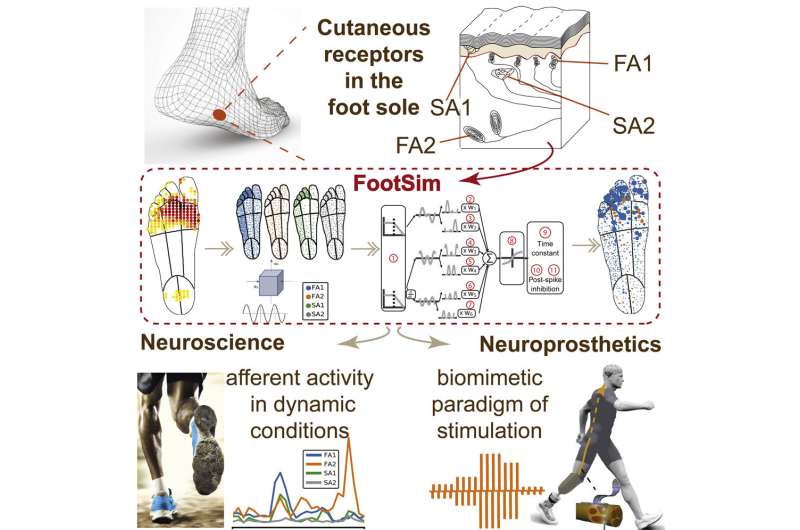
A digital foot sole that enables scientists to see the neurological signals that control how we walk and maintain balance, has been developed by researchers at the University of Sheffield.
26 fev 2023--The groundbreaking computational model, which provides a digital simulation of the signals that continuously flow through the body from the foot to the brain, could be used to design more sophisticated neuroprosthetics—artificial limbs that can give the brain feedback about the world around us, in electrical form.
Called FootSim, the model allows scientists to map how our nervous system continuously responds to contact with the soles of our feet and changes in pressure points in unprecedented detail.
The digital sole model has been developed by Dr. Rodrigo Kazu Siqueira, a Computational Neuroscientist at the University of Sheffield, and Natalija Katic, a Ph.D. student at ETH Zurich and the University of Belgrade.
Dr. Kazu Siqueira, from the University of Sheffield, said, "To walk and maintain balance, humans rely on continuous feedback from the soles of our feet. This information is sent in the form of electronic signals that travel through neurological pathways between our feet and brain.
"Until now, it has been incredibly difficult for scientists to study these signals, which makes it difficult to fix them when they're disrupted or replicate them, for example in the use of bionic limbs.
"The model we've developed here at Sheffield now enables us to replicate the signals that allow the nervous system to walk and maintain balance in unprecedented detail. This level of insight opens up a world of possibilities, particularly for the future of healthcare. It could be used to help design new, more sophisticated assistive technologies that are more stable, responsive and reliable."
Dr. Kazu Siqueira is part of Dr. Hannes Saal's Active Touch Laboratory, and together with Luke Cleland, a Ph.D. student from the group, programmed the model in Sheffield's Insigneo Institute for in silico Medicine—Europe's first research institute dedicated to using new digital technologies to transform the future of healthcare. The work was done in collaboration with Canadian researchers from Guelph and Calgary universities and with a group led by Dr. Stanisa Raspopovic at ETH Zürich that has a history of successful and impactful research in prosthetics.
The FootSim model is described in a new paper published in the journal iScience.
More information: Natalija Katic et al, Modeling foot sole cutaneous afferents: FootSim, iScience (2022). DOI: 10.1016/j.isci.2022.105874
Guidelines for providing remote care to seniors
by West Health Institute
Credit: Pixabay/CC0 Public Domain
The COVID-19 pandemic put extraordinary strain on the U.S. health care system, but it also accelerated the adoption of telehealth—especially among older adults, who were the least likely to engage in remote care beforehand.
26 fev 2023--For these patients,telehealthhas proven to offer faster referral times, reduced travel, lower costs and a host of other benefits that make it an attractive option for a wide range of health care needs. Yet, many challenges have emerged for older adults who engage in remote care—challenges that telehealth services simply weren't designed to address.
For example, older adults are far more likely than the average patient to experience technological barriers, cognitive issues, and physical limitations such as poor eyesight or hearing that can disrupt their telehealth experience. They also tend to have more complex medical histories, requiring greater coordination with other health care providers.
A first-ever set of principles and guidelines for providing telehealth to older patients is laid out in a new article published in the Journal of the American Geriatrics Society, a first step in ensuring that regardless of age, patients are able to reap the benefits of high-quality remote care.
"We've seen how telehealth can be a vital tool for caring for older adults, particularly those who are homebound, lack transportation, have mobility challenges or live in rural areas where specialists may be non-existent or difficult to access," says Liane Wardlow, Ph.D., senior director of Clinical Research and Telehealth at West Health and a lead author of the study. "The challenges older patients experience with telehealth aren't insurmountable; they can be addressed by designing remote care in a more intentional way."
Weighing the vast potential of telehealth against the ongoing challenges of serving older patients, West Health in September 2021 convened a group of cross-disciplinary experts to produce the first-ever guidelines for offering telehealth safely and effectively to seniors. The group, called the Collaborative for Telehealth and Aging, includes health care providers, patient advocates and experts in geriatrics, telemedicine and more.
The principles and guidelines spelled out in the new article are the result of more than a year of iterative, consensus-driven work. The three principles offer general rules to guide behavior, while the guidelines provide specificity for each principles, with individual goals that programs and providers should aim to achieve. The principles state that telehealth care should be:
Person-centered. Telehealth programs should be designed to meet the needs and preferences of older adults by considering their goals, family and caregivers, linguistic characteristics, and readiness and ability to use technology.
Equitable and accessible. Telehealth programs should address individual and systemic barriers to care for older adults by considering issues of equity and access.
Integrated and coordinated across systems and people. Telehealth should limit fragmentation, improve data sharing, increase communication across stakeholders, and address both workforce and financial sustainability.
As a next step, members of the Collaborative for Telehealth and Aging are working to create implementation strategies focused on how to operationalize the current recommendations.
"We recognize that creating and implementing solutions that adhere to the general principles and guidelines will depend greatly upon local context and the unique circumstances of health systems and the patients they serve," Wardlow says.
"A solution for a healthy 95-year-old may be vastly different than a solution for a homebound 65-year-old, and a solution in a rural area may be quite different from a solution in an urban area. Our goal is to leave room for flexibility while keeping a constant commitment to addressing health care disparities."
More information: Liane Wardlow et al, Development of telehealth principles and guidelines for older adults: A modified Delphi approach, Journal of the American Geriatrics Society (2022). DOI: 10.1111/jgs.18123
Study shows that listening to music during stressful times can boost your mood and reduce stress
by Bob Yirka , Medical Xpress
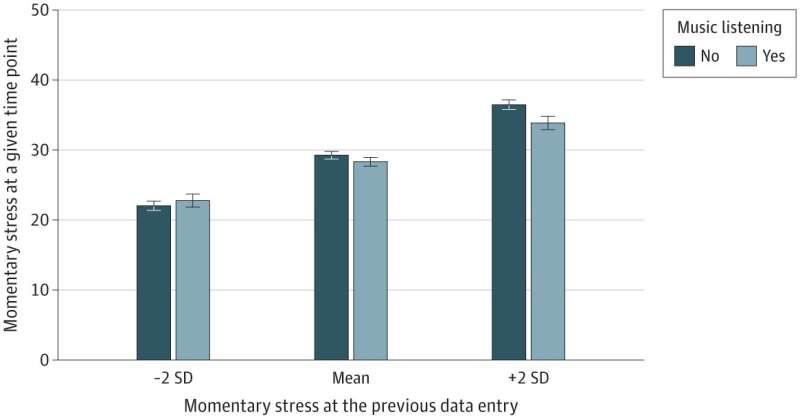
Differential Associations Between Music Listening and Momentary Stress Depending on Prior Stress Levels Momentary stress varied as a function of music listening and prior stress levels. The y-axis displays momentary stress assessed at a given time point. The x-axis displays categories of momentary stress levels at the previous data entry. Error bars represent SEs. Credit: JAMA Network Open (2023). DOI: 10.1001/jamanetworkopen.2022.50382
A team of researchers at the University of Vienna has found evidence showing that listening to music when stressed can boost a person's mood and help them relax. In their paper published on the JAMA Network Open site, the group describes an experiment they conducted with volunteers under stress caused by living under the rules of the lockdown during the early days of the global pandemic.
26 fev 2023--Prior research has suggested that listening to music can temporarily reduce feelings ofstress, but as the researchers note, most such studies have been cross-sectional or retrospective, which they note can lead to unintentional biases. Anecdotal evidence has also suggested that music effectively reduces stress. In this new effort, the researchers sought to find more concrete evidence of the mental health benefits of listening to music.
To that end, they designed and executed a study that involved creating a smartphone app for use by volunteers. The app allowed 711 adult participants to record their mood and music listening habits five times a day for one week. During each query, each volunteer was chose a current level of stress from a menu; likewise, they rated their momentary mood from a menu. All the volunteers lived either in Austria or Italy. The researchers carried out the study during the early days of the pandemic when people were told to stay in their homes and businesses closed, creating a global environment of enormous fear, tension and stress.
The researchers found what they describe as a correlation between lowered stress levels and instances of listening to music—most particularly when listening to uplifting or happy music. The researchers note that prior research has shown that happy music can activate parts of the brain associated with mood regulation.
The researchers also found that the impact of listening to music over a period of time can impact a person's memories. Those volunteers who listened to more happy music during the lockdown reported feeling less anxious after it was all over than other volunteers. They conclude that clinicians working with stressed clients might find it useful to suggest they put on some happy music.
More information: Anja C. Feneberg et al, Perceptions of Stress and Mood Associated With Listening to Music in Daily Life During the COVID-19 Lockdown, JAMA Network Open (2023). DOI: 10.1001/jamanetworkopen.2022.50382
For shared decision-making, telemedicine may be as effective as in-person appointments
Telemedicine may be just as effective as in-person visits when it comes to shared decision-making and communication for patients undergoing a first-time surgery consultation, according to a study published as an "article in press" in the Journal of the American College of Surgeons and presented at the Southern Surgical Association 134th Annual Meeting in December 2022.
26 fev 2023--Telemedicine (also known as telehealth) has become an established part of patient care. However, its effectiveness to achieve proper shared-decision making betweenpatientsand clinicians—an essential part of quality care—had not been thoroughly studied previously. The COVID-19 pandemic necessitated a rapid expansion of the use oftelemedicinevisits, which allows patients and their health care teams to meet remotely through secure video-based platforms. It also makes specialty care, typically offered in cities, more accessible to patients living in rural areas.
"We see patients that live hours away. When the COVID-19 pandemic hit, it threw fuel on the fire of our telehealth program," said study co-author Alexander T. Hawkins, MD, MPH, FACS, associate professor of surgery at Vanderbilt University Medical Center in Nashville, Tennessee.
"Across the entire health care system, we now do about 20,000 telehealth visits a month. Previously, there had been concerns about whether we could effectively communicate with patients remotely, but we found that patients are just as satisfied with telehealth visits as in-person appointments."
For the study, researchers compared video appointments with in-patient visits for level of shared decision-making and quality of communication, hypothesizing that telemedicine would be less effective. Researchers enrolled 387 patients participating in first-time visits between May 2021 and June 2022 at general surgery clinics across Vanderbilt University Medical Center in Nashville.
Participants were categorized by type of visit: in-person or telemedicine. The aim was to evaluate the level of shared decision-making, as measured by a validated questionnaire called the collaboRATE Top Box score. Additionally, the 9-item Shared Decision-Making Questionnaire was used to assess patient satisfaction. An analysis of responses to open-ended questions about visits by both patients and surgeons was also performed.
Key findings
The study included 301 (77.8%) patients who underwent an in-person visit and 86 (22.2%) who underwent a telemedicine visit. The two groups had similar demographic backgrounds, including age, gender, employment status, and education.
Patients in both groups reported high levels of quality communication during these appointments.
In an adjusted analysis to account for various factors, levels of shared decision-making and quality of communication were similar between remote visits and in-person care. Telemedicine was not associated with less satisfactory communication when compared to in-person visits.
Patient responses to open-ended questions about their telehealth experience included positive statements about its convenience and usefulness. Negative comments about these visits included the inability to be physically present and experiencing technical difficulties.
"I was surprised by the qualitative responses. I expected that telemedicine visits would result in an inferior quality of communication. While we did see that in some responses, we also saw some very positive perspectives on telemedicine visits both in terms of how the actual interaction went and the overall convenience of the process. Many patients really enjoyed having this as an option," said study co-author Thomas Ueland, a third-year medical student at Vanderbilt University School of Medicine.
Since telehealth visits do not allow for in-office physical exams, there are situations when it's not appropriate. To that end, some surgeons reported that telemedicine should be used for follow-up care, after they have already established the relationship, instead of for first-time consultations.
"We believe these results suggest that either method, in-person or telehealth, is appropriate. Ultimately, it very much depends upon what the surgeon and the patient think is the best way to communicate," Dr. Hawkins said.
"Going forward, we need to determine what is most appropriate for telehealth, and what is most appropriate for in-person visits. The data we generated in this study do give folks support, so that if they prefer telehealth appointments, they can be confident that they will not be sacrificing quality of communication or shared decision-making."
Next, the research team will conduct more in-depth studies to identify a condition-by-condition guide for when telemedicine should be used, such as when patients are consulting for hernia surgery where a physical exam is required. For other patients, such as those needing follow-up care for routine operations, telehealth may be a viable option.
The major limitations of the study include the fact that the non-response rate from participants was more than 50 percent and that the patient population came mostly from middle Tennessee, southern Kentucky, and northern Alabama. These results may not apply to patients from other regions and of different demographic backgrounds.
More information: Alexander T. Hawkins et al, Shared Decision-Making in General Surgery: A Prospective Comparison of Telemedicine vs In-Person Visits, Journal of the American College of Surgeons (2023). DOI: 10.1097/XCS.0000000000000538