Friday, June 09, 2023


Older Australians need to consider home modifications sooner
Older Australians need to consider home modifications sooner
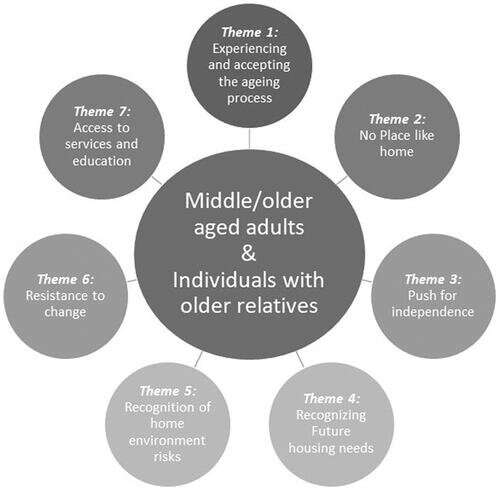
Themes representing participants' perceptions of home safety and aging in the home. Credit: Scandinavian Journal of Occupational Therapy (2023). DOI: 10.1080/11038128.2023.2192027

Most older Australians would prefer to remain in their home for as long as possible, but few consider age-friendly modifications that reduce safety risks and ensure they avoid injuries during their golden years, according to new research.

08 Jun 2023--Flinders University researchers interviewed 16 Adelaide residents aged between 52 and 76 about their own or their relatives future housing plans and current living arrangements.

The journal article, "Considering the home environment and planning for the future: A qualitative exploration of the views of older adults and individuals with older relatives," published in the Scandinavian Journal of Occupational Therapy, determined that older people planning to age gracefully at home lack the information they need to properly assess safety risks so they can undertake renovations to address them.

Although older people and their family members reported some knowledge about home modifications that could be made, most participants agreed that more information and tools to help with future planning would be beneficial.

The new research by Roslyn Dalistan, Associate Professor Kate Laver and Professor Stacey George highlights key challenges for older people seeking to age in place after the federal government established a new taskforce to review the new in-home care program in the federal budget, which will commence in 2025. The study reveals that many older Australians are living in homes with clear dangers, hazards, and limited accessibility as they age, but few are addressing these challenges properly.

Most common potential hazards and solutions:

High maintenance garden (without irrigation system)

  • Consider reducing garden maintenance needs (plants that don't need much water or pruning, low maintenance landscaping, irrigation systems)

All entrances to the house have one or more steps

  • Consider how one entry could be modified for easy access if a wheelchair or wheeled walking frame was required in future (e.g., ramp)

Step or ledge present between shower cubicle and bathroom floor

  • Consider bathroom alterations to ensure smooth transition between cubicle and floor

Slippery bathroom tiles

  • Consider application of non-slip treatment
  • If renovating, choose tiles which are not slippery when wet

Toilet door swings inward

  • Have the swing of the door changed so that it swings outwards.

Chairs in living room are low and/or soft

  • When purchasing new chairs, purchase chairs that are firm, supportive and not too low (height depends on height of individual). Armrests can be helpful.

The researchers have designed and tested a digital tool with 60 older people to assist with identifying and eliminating risks and are planning to make it freely available to the public in the near future.

Registered occupational therapist at Flinders University, Associate Professor Kate Laver, says older people prefer to stay at home for several reasons, including a sense of attachment to the home, the high costs of moving in today's real estate market, and a desire to maintain existing social and community networks.

"Home is considered by older adults to be a place of comfort and safety where independence can be preserved. Strong community networks enable older adults to cope with age-related changes and prevent isolation. Being surrounded by important possessions or memories is also linked to their quality of life," says Professor Laver.

"However, our ability to function independently within the home environment can become increasingly difficult. Most participants in our study accepted the aging process and could recognize hazards and potential risks. However, others were determined to remain independent at home and resistant to making future changes until necessary."

"They were all interested in obtaining more information about how to improve home safety or services to support aging in place. This shows we need tools that enable older people and their families to properly self-assess their own homes. This tool will be available both in hard copy and as a digital tool and will be used to promote and support future planning."

Study co-author and Flinders University Professor Stacey George says the research shows that decision-making around home safety among the aging population can be compromised by a lack of awareness, inadequate access to information, and the sudden onset of age-related changes.

"It's why an education guide or tool to support forwards planning and housing decisions may improve early awareness among Australia's aging population."

More information: Roslyn Dalistan et al, Considering the home environment and planning for the future: A qualitative exploration of the views of older adults and individuals with older relatives, Scandinavian Journal of Occupational Therapy (2023). DOI: 10.1080/11038128.2023.2192027

Provided by Flinders University 


Primary care clinicians report benefits and challenges in using telemedicine during COVID-19 pandemic

Primary care clinicians report benefits and challenges in using telemedicine during COVID-19 pandemic
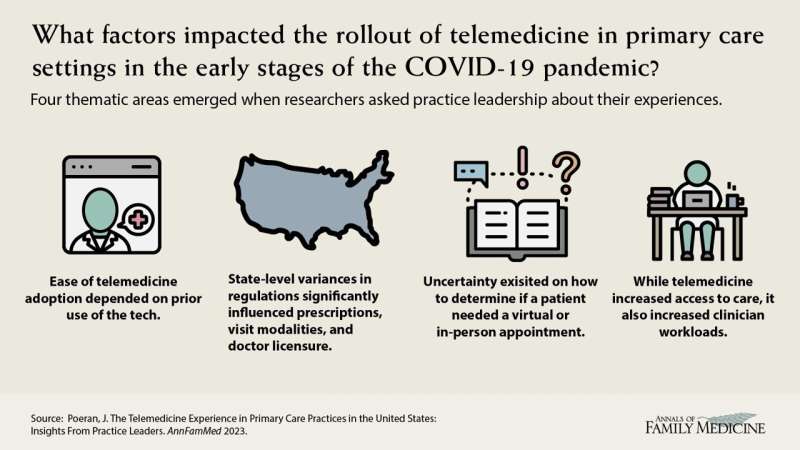
The Telemedicine Experience. Credit: The Annals of Family Medicine (2023). DOI: 10.1370/afm.2967

Researchers interviewed primary care clinicians to identify trends, facilitators and barriers in implementing and using telemedicine technologies in response to the COVID-19 pandemic. They interviewed 25 leaders from primary care practices from the Patient-Centered Outcomes Research Institute's PCORnet project. Leaders represented 87 primary care practices in New York, Florida, North Carolina and Georgia.

08 Jun 2023--The team identified four common themes among the surveyed primary care clinicians: 1) The ease of telemedicine adoption depended on the prior experiences of both patients and physicians with virtual health platforms; 2) Regulation of telemedicine varied across states and impacted roll-out processes differently; 3) Visit triage rules remain unclear post-COVID; and 4) Positive and negative impacts of telemedicine on physicians and patients.

Additionally, clinicians identified opportunities to ease challenges, including the establishment of visit triage guidelines, adequate staffing and scheduling protocols.

What we know:

The COVID-19 pandemic required rapid implementation of telemedicine in primary care. While telemedicine prevented the spread of the virus and helped optimize the workload of thinly spread medical personnel, the technology also presents challenges, including conducting physical exams, diagnostic testing and imaging. Further, equitable access to telemedicine technology is a significant challenge.

What this study adds:

The authors identified differences in patient portal usage (which led to different revenue impacts) in various states. They also found that the rapid transition to telemedicine-only visits necessitated implementation of regulations; unclear triage rules; and that telemedicine had positive and negative impacts on providers and patients. The positives included easing access to clinical care through telemedicine for certain types of visits. On the negative side, telemedicine blurred the boundaries for clinicians, who found they worked beyond regular office hours.

The work is published in The Annals of Family Medicine journal.

More information: Grace Rabinowitz et al, The Telemedicine Experience in Primary Care Practices in the United States: Insights From Practice Leaders, The Annals of Family Medicine (2023). DOI: 10.1370/afm.2967


Provided by American Academy of Family Physicians 


Existing drugs point to first treatment for strokes linked to dementia

stroke
Micrograph showing cortical pseudolaminar necrosis, a finding seen in strokes on medical imaging and at autopsy. H&E-LFB stain. Credit: Nephron/Wikipedia

People who experience a type of stroke linked with nearly half of all dementias could be treated for the first time by repurposing two cheap and common drugs, a trial shows.

08 Jun 2023--Researchers found that isosorbide mononitrate and cilostazol, which are already used to treat other heart and circulatory diseases, can safely improve the debilitating outcomes people experience after lacunar stroke.

The two drugs, which were found to be even more effective when used in combination, could be available as a treatment for lacunar strokes within five years, if the results are confirmed in further trials, experts say.

Lacunar strokes affect at least 35,000 people in the UK each year. They are caused by cerebral small vessel disease, where small blood vessels deep within the brain become damaged and stop working properly. Small vessel disease is also a common cause of cognitive impairment and dementia.

The strokes can be distressing as people may develop problems with their thinking and memory, movement, and even dementia. There are currently no specific effective treatments.

The trial, led by the Universities of Edinburgh and Nottingham and the UK Dementia Research Institute, involved 363 people who had experienced a lacunar stroke.

As well as their standard stroke prevention treatment, for one year participants took either isosorbide mononitrate or cilostazol individually, both drugs together, or neither.

The trial, funded by the British Heart Foundation, investigated cilostazol and isosorbide mononitrate as they possibly improve the function of the inner lining of blood vessels, which researchers believe play a role in small vessel disease.

Participants that took both drugs were nearly 20 percent less likely to have problems with their thinking and memory compared to the group that did not take either drug. They were also more independent and reported a better quality of life.

In addition, those who took isosorbide mononitrate were less likely to have had further strokes at one year than those who did not take the drug.

Taken on their own, isosorbide mononitrate also improved thinking and memory skills, and quality of life, while cilostazol improved independence and mood. These effects were strengthened when the two drugs were taken together, researchers say.

The team is now planning to test these drugs in a larger four-year clinical trial, which they hope to start by the end of 2023. They are also looking to test whether the drugs are effective in different conditions linked to small vessel disease, such as vascular cognitive impairment and dementia.

The findings are published in the journal JAMA Neurology. This work was also supported by the Alzheimer's Society and Stroke Association.

Professor Joanna Wardlaw, Chair of Applied Neuroimaging at the University of Edinburgh and Foundation Chair at the UK Dementia Research Institute, said, "Now we understand more about what is triggering these small vessel strokes to attack the brain, we've been able to focus our efforts on treatments that can put a halt to this damage. We need to confirm these results in larger trials before either drug can be recommended as a treatment. However, as these drugs are already widely available for other circulatory disorders, and inexpensive, it shouldn't take too long to move our findings from research into everyday clinical practice."

Professor Sir Nilesh Samani, Medical Director at the British Heart Foundation, said, "These promising findings provide a long-awaited positive step towards the first treatments becoming available for lacunar strokes, offering much needed hope for thousands of people. Lacunar strokes are not the only way that cerebral small vessel disease can affect someone. These findings also open new avenues of research into other conditions related to small vessel disease, such as vascular dementia."

More information: Isosorbide Mononitrate and Cilostazol Treatment in Patients With Symptomatic Cerebral Small Vessel Disease, JAMA (2023). DOI: 10.1001/jamaneurol.2023.1526 , jamanetwork.com/journals/jaman … /fullarticle/2805321


Provided by University of Edinburgh 


Alzheimer's drug development pipeline: Promising therapies, pharma investment drive momentum in clinical trials

Alzheimer's drug development pipeline: promising therapies, pharma investment drive momentum in clinical trials
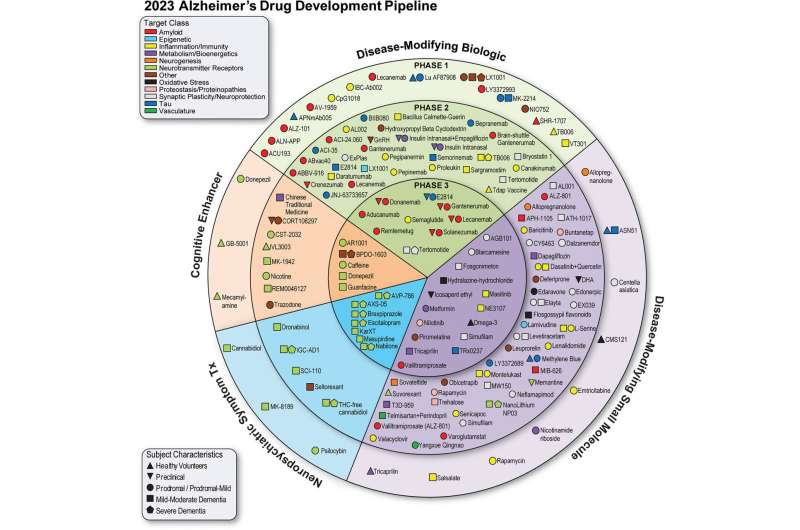
Agents in clinical trials for treatment of Alzheimer's disease in 2023 (from ClinicalTrials.gov as of the index date of January 1, 2023). The inner ring shows Phase 3 agents; the middle ring comprises Phase 2 agents; the outer ring presents Phase 1 therapies; agents in green areas are biologics; agents in purple are disease-modifying small molecules; agents in orange areas are symptomatic agents addressing cognitive enhancement or behavioral and neuropsychiatric symptoms; the shape of the icon shows the population of the trial; the icon color shows the CADRO-based class of the agent (“Other” category includes CADRO classes that have three or fewer agents in trials). CADRO, Common Alzheimer's Disease Research Ontology; Tx, treatment. Credit: J Cummings; M de la Flor, PhD, Illustrator

More than 6 million Americans are living with Alzheimer's disease, a staggering number that's expected to double within the next 30 years.

08 Jun 2023--But there are signs of optimism in the fight against Alzheimer's, with two new therapies approved by the FDA since 2021. Both drugs—Aduhelm (aducanumab) in 2021 and Leqembi (lecanemab) earlier this year—were approved to treat early-stage symptoms of the disease. They're the first-ever disease-modifying therapies (DMTs) to earn the green light for use against Alzheimer's, and they signal a new era of hope for millions who've been affected by the disease.

There could be more on the way.

According to the "Alzheimer's Disease Drug Development Pipeline: 2023," there are currently 187 clinical trials in the Alzheimer's drug development pipeline—the most ever on record. This momentum is driven in part by greater investment from the pharma industry and a bump in biologic therapies—particularly monoclonal antibodies—that were central to the success of both recent FDA-approved drugs.

The annual pipeline report, published May 25 in Alzheimer's & Dementia: Translational Research and Clinical Interventions, is led by Dr. Jeffrey Cummings, a leading Alzheimer's clinician-scientist and research professor in UNLV's School of Integrated Health Sciences. The goal of the annual report, Dr. Cummings says, is to spot trends in clinical trial design and outcome measures, and also investigate the types of agents and biological targets that are being pursued.

"Our database has gotten stronger and our ability to draw analysis from the pipeline is ever better," said Cummings, who first began the annual pipeline project in 2016. "We can derive lessons from both positive and negative trials that will inform and accelerate the development or new treatments."

Pipeline highlights

Researchers pulled data from all current phase 1, 2, and 3 clinical drug trials for Alzheimer's Disease and Mild Cognitive Impairment, as of Jan. 1, 2023. The team tracked all therapies in the pipeline, the types of agents used, and how far along each is in the drug development process. They also analyzed the agencies and industries funding clinical trials, and assessed the number of participants in current trials. Among the highlights:

  • 187 current trials, which consist of 141 unique treatments—just off last year's record of 143 unique treatments
  • 58 new drugs have entered the pipeline in the past year
  • DMTs are the most common agents used in trials: 111 agents, or 79%, of the total number of drugs in the pipeline
  • 28% of candidate therapies are repurposed from other diseases
  • 57,465 participants are needed for all currently active trials

"We are at an inflection point in the Alzheimer's field. The recent landmark FDA approvals we've seen for both disease-modifying and symptomatic treatments, as well as the diversification of the pipeline of potential new Alzheimer's therapies, provide hope to those impacted by this devastating disease," said Maria C. Carrillo, Ph.D., Alzheimer's Association chief science officer. "Yet, Medicare stubbornly continues to block access for people who could benefit."

Biologics gaining momentum

Cummings notes that the use of biologic therapies—particularly monoclonal antibodies—has become increasingly popular. Among DMTs, related trials have risen more than 10% over the past year (44% of drugs in the pipeline). These therapies are mainly given by IV infusion, as opposed to small molecule therapies (56% of DMTs in the pipeline) that can be taken orally.

"The recent approval of two anti-amyloid monoclonal antibodies specifically for Alzheimer's is certainly influencing the pipeline, but these are complex therapies," Cummings said. "We're in a steep learning period for how we incorporate these advances into care. They require intense resources and regular MRI scans during the initial phase, which can lead to unprecedented demands on health care systems."

In addition to the growth of biological therapies aimed at amyloid and tau—two hallmark signs of Alzheimer's disease in the brain—Cummings anticipates more investment in small molecules aimed at amyloid. The use of biomarkers has also become more prevalent in clinical trials, particularly in DMT trials, and their foundational role in drug development has been shown to increase probability of success throughout the pipeline.

Pharma investment growing

After a recent decline, the pharma industry has also started to become more of a player in clinical trials. Of all the trials in development, 108 (58%) are industry sponsored, up nearly 8% over the past year. Public-private partnerships accounted for 9% of trials, and 32% were funded by academic medical centers—a group that includes the NIH, universities, advocacy groups, and related organizations.

"We see many more phase 1 biologics than agents in any other therapeutic class, which again reflects an increased enthusiasm of pharma for biological agents such as monoclonal antibodies," said Cummings. "Overall, the recession has impacted biotech investment, but I expect to see the Alzheimer's investment arena rebound with the economy, which will drive investment compared to previous years when the capital becomes available."

Recruitment struggles slowing progress

Recruitment continues to be a challenge for phase 2 and 3 clinical trials, with the average recruitment time for various trials stretching more than 100 weeks, or as many as 200-plus weeks for certain trials. The timing for phase 1 trials is only slightly better.

Though Cummings expects a bump in interest following recent FDA-approved therapies and the related marketing that will follow, recruitment—both in the number and diversity of participants—remains an area that's delaying the pipeline and stalling therapies that could otherwise progress more quickly toward approval.

"We need to find a way to expand trial populations, as this remains a major challenge when surveying the pipeline," Cummings said. "These drugs are expensive, and access will be limited if there is not Medicare funding for them. The availability of approved and funded treatments may decrease interest in participating in clinical trials."

Study authors include Cummings, Kate Zhong, and Garam Lee from the UNLV Chambers-Grundy Center for Transformative Neuroscience and the UNLV Department of Brain Health; Yadi Zhou from the Cleveland Clinic; and Jorge Fonseca and Feixiong Cheng from Case Western Reserve University.

More information: Jeffrey Cummings et al, Alzheimer's disease drug development pipeline: 2023, Alzheimer's & Dementia: Translational Research & Clinical Interventions (2023). DOI: 10.1002/trc2.12385

Provided by University of Nevada, Las Vegas


Five types of heart failure identified using AI tools

Five types of heart failure identified using AI tools
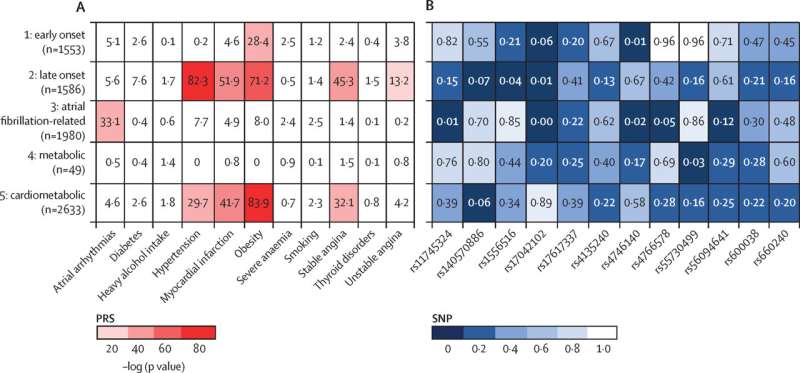
Heart failure subtypes and genotype associations (n=7801)Numbers represent p values from the logistic regression of polygenic risk score or single nucleotide polymorphism versus cluster output. (A) association between heart failure subtypes and PRS for 11 related traits. (B) direct association between heart failure subtypes and 12 related SNPs. PRS=polygenic risk score. SNP=single-nucleotide polymorphism. Credit: The Lancet Digital Health (2023). DOI: 10.1016/S2589-7500(23)00065-1

Five subtypes of heart failure that could potentially be used to predict future risk for individual patients have been identified in a new study led by UCL researchers.

08 Jun2023--Heart failure is an umbrella term for when the heart is unable to pump blood around the body properly. Current ways of classifying heart failure do not accurately predict how the disease is likely to progress.

For the study, published in The Lancet Digital Health, researchers looked at detailed anonymized patient data from more than 300,000 people aged 30 years or older who were diagnosed with heart failure in the UK over a span of 20 years.

Using several machine learning methods, they identified five subtypes: early onset, late onset, atrial fibrillation related (atrial fibrillation is a condition causing an irregular heart rhythm), metabolic (linked to obesity but with a low rate of cardiovascular disease), and cardiometabolic (linked to obesity and cardiovascular disease).

The researchers found differences between the subtypes in patients' risk of dying in the year after diagnosis. The all-cause mortality risks at one year were: early onset (20%), late onset (46%), atrial fibrillation related (61%), metabolic (11%), and cardiometabolic (37%).

The research team also developed an app that clinicians could potentially use to determine which subtype a person with heart failure has, which may potentially improve predictions of future risk and inform discussions with patients.

Lead author Professor Amitava Banerjee (UCL Institute of Health Informatics) said, "We sought to improve how we classify heart failure, with the aim of better understanding the likely course of disease and communicating this to patients. Currently, how the disease progresses is hard to predict for individual patients. Some people will be stable for many years, while others get worse quickly."

"Better distinctions between types of heart failure may also lead to more targeted treatments and may help us to think in a different way about potential therapies."

"In this new study, we identified five robust subtypes using multiple machine learning methods and multiple datasets."

"The next step is to see if this way of classifying heart failure can make a practical difference to patients—whether it improves predictions of risk and the quality of information clinicians provide, and whether it changes patients' treatment. We also need to know if it would be cost effective. The app we have designed needs to be evaluated in a clinical trial or further research, but could help in routine care."

To avoid bias from a single machine learning method, the researchers used four separate methods to group cases of heart failure. They applied these methods to data from two large UK primary care datasets, which were representative of the UK population as a whole and were also linked to hospital admissions and death records. (The datasets were Clinical Practice Research Datalink (CPRD) and The Health Improvement Network (THIN), covering the years 1998 to 2018.)

The research team trained the machine learning tools on segments of the data and, once they had selected the most robust subtypes, they validated these groupings using a separate dataset.

The subtypes were established on the basis of 87 (of a possible 635) factors including age, symptoms, the presence of other conditions, the medications the patient was taking, and the results of tests (e.g., of blood pressure) and assessments (e.g., of kidney function).

The team also looked at genetic data from 9,573 individuals with heart failure from the UK Biobank study. They found a link between particular subtypes of heart failure and higher polygenic risk scores (scores of overall risk due to genes as a whole) for conditions such as hypertension and atrial fibrillation.

More information: Amitava Banerjee et al, Identifying subtypes of heart failure from three electronic health record sources with machine learning: an external, prognostic, and genetic validation study, The Lancet Digital Health (2023). DOI: 10.1016/S2589-7500(23)00065-1

Provided by University College London 


Long-term type 1 diabetes associated with accelerated brain aging

Long-term type 1 diabetes associated with accelerated brain aging
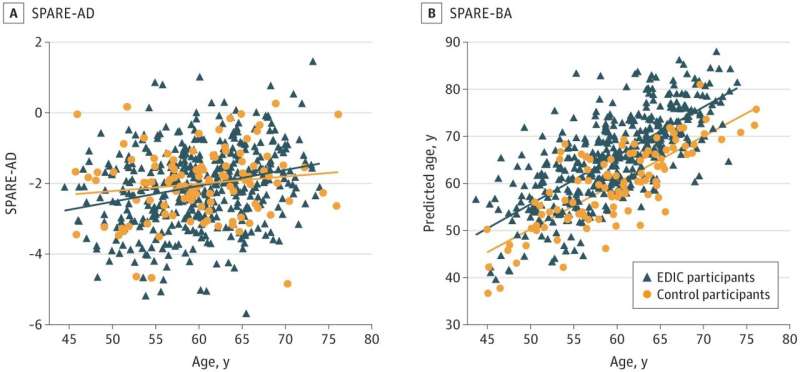
Machine Learning Indices, SPARE-AD and SPARE-BA, as a Function of Age. A, there was no significant difference observed between EDIC participants (blue) and controls without diabetes (orange). In panel B, EDIC participants showed a significant increase in predicted brain age (SPARE-BA) demonstrating more advanced brain aging patterns. SPARE-AD indicates spatial pattern for recognition-Alzheimer disease; SPARE-BA, spatial pattern for recognition-brain age. Credit: JAMA Network Open (2023). DOI: 10.1001/jamanetworkopen.2023.16182

Research led by the University of Texas Health Science Center, San Antonio, Texas, has looked into premature brain aging in individuals with type 1 diabetes.

08 Jun 2023--In the paper, "Patterns of Regional Brain Atrophy and Brain Aging in Middle- and Older-Aged Adults With Type 1 Diabetes," published in JAMA Network Open, researchers confirm a connection between type 1 diabetes and radiographic evidence accelerated brain aging.

In the study, 416 adults with type 1 diabetes who had participated in a previous observational study, Epidemiology of Diabetes Interventions and Complications (EDIC), along with 99 demographically similar adults without diabetes as a control, were assessed. The EDIC participants with type 1 diabetes had a median age of 60 years (44–74) and a median diabetes duration of 37 years (30–51).

Psychomotor and mental efficiency were evaluated using cognitive tests of verbal fluency, digit symbol substitution test, trail-making part B, and the grooved pegboard assessment. Memory scores were derived from the logical memory subtest of the Wechsler memory scale and the Wechsler digit symbol substitution test.

Greater brain age, as determined by the cognitive tests, was associated with lower psychomotor and mental efficiency among EDIC participants but was not seen among controls. The results suggest around six years of increased brain aging.

MRI scans and a machine learning program were used to calculate brain age and quantify Alzheimer's disease like atrophy. Alzheimer disease–like regional atrophy was comparable between the groups and not explicitly associated with either group. Other regions with atrophy in EDIC participants were observed, mainly in the bilateral thalamus and putamen.

The findings of this study show an increase in brain aging among individuals with type 1 diabetes without any early signs of AD-related neurodegeneration. These increases were associated with reduced cognitive performance, but according to the authors, the abnormal patterns observed in the samples were modest.

More information: Mohamad Habes et al, Patterns of Regional Brain Atrophy and Brain Aging in Middle- and Older-Aged Adults With Type 1 Diabetes, JAMA Network Open (2023). DOI: 10.1001/jamanetworkopen.2023.16182

Journal information: JAMA Network Open 


'Keep dancing' as research shows it helps those over 85 to stay healthy

'Keep dancing' as research shows it helps over 85s stay healthy
Credit: University of Leeds

Regular dance sessions can benefit people over 85 by helping them be physically active, socialize, and reconnect with their younger selves, according to new research led by the University of Leeds.

08 Jun 2023--The "Dance On" project was run by researchers from the University's School of Biomedical Sciences, along with One Dance UK, Yorkshire Dance and darts, Doncaster's participatory arts charity. It found that even people considered the "oldest old"—over 85—can benefit from regular dance classes to improve their well-being and mobility.

The classes, which took place across Leeds, Bradford and Doncaster, welcomed 685 people over the age of 55 to weekly dance classes over a 12-month period. With an average (mean) age of 75, more than a third of people who took part were from highly deprived communities.

Dr. Sarah Astill, Associate Professor in Motor Control in Leeds' School of Biomedical Sciences led the University research team. She said, "Physical inactivity is recognized as one of the main risk factors for non-infectious diseases and mortality. Over time there has been a decline in physical activity in older adults, and this is particularly apparent in people over 75 years of age. Opportunities to engage adults in physical activity are a global priority as they support healthy aging and slow progression of disease and disability."

She added, "We show that dance delivered across a range of socially economically diverse communities, is a feasible way to get older adults physically active. This is evident even for the 'oldest old' at 85+years."

At the end of the trial, the researchers found that people who had taken part increased the amount of physical activity they did each week, and kept this up over the 12 months.

Their views on their own well-being also improved, with participants saying they felt stronger, more confident and "years younger."

One participant in Doncaster said, "After a Dance On session, I feel exhausted but brilliant! I'm a lot better now than I've ever been."

Another added, "It's really changed my lifestyle because since I retired, I think I was deteriorating. It's certainly improved my lifestyle and I feel years younger in just the fact of the few months that I've been coming. I feel a lot better."

The other organizations involved in the trial have also welcomed the positive results, with darts director Lucy Robertshaw saying, "The opportunity to take part in this research has been fantastic—we've gained real insight into the positive long-term impacts of sustained engagement in social dance and movement activity. It has been great to work collaboratively with the University of Leeds, One Dance UK and Yorkshire Dance regionally, and then with Doncaster Council's Get Doncaster Moving program locally to embed the learning and explore ways to continue the Dance On program so that many more people can benefit."

Andrew Hurst, CEO of One Dance UK, said, "Dance is such a powerful tool to support physical and mental health. We are delighted to see the publication of these important research findings highlighting the impact of the Dance On project in significantly increasing physical activity in more than 680 older adults from diverse communities across Leeds, Bradford and Doncaster.

"The Dance On project research report previously highlighted positive impacts on mental health including reduced anxiety and improvements in life satisfaction as a result of Dance On. One Dance UK is proud of and excited by the immense impact the work of our dedicated group of Dance On partners—darts, Yorkshire Dance and the University of Leeds—have been able to make in carrying out this important work."

"Yorkshire Dance has been at the forefront of designing dance programs for older adults for many years. We're delighted that Dance On is now an evidence-based program, demonstrating the effectiveness of taking part in regular dance activity as you age. We hope this leads to future investment in this valuable work which contributes to people living healthier, happier lives."

In the research, published in BMC Geriatrics, the team reported that dance sessions are particularly accessible for people in deprived areas as classes can be organized cheaply and no special equipment in safe indoor environments. For older people, dance can help connect with previous experiences of dance when they were younger, encouraging enjoyment and a sense of community, they added.

The work—which began as a smaller project called "Dancing in Time" in 2015—is moving on with music and movement sessions now being delivered in care homes and Dr. Astill is set to present their findings at the International Society of Behavioral Nutrition and Physical Activity's 2023 conference in Uppsala, Sweden, later this month.

The researchers also want councils, health officials and charities to think laterally about what type of activity they might promote or fund to help older people get active, and to consider dance as an accessible and effective option.

More information: Laura Britten et al, Dance on: a mixed-method study into the feasibility and effectiveness of a dance programme to increase physical activity levels and wellbeing in adults and older adults, BMC Geriatrics (2023). DOI: 10.1186/s12877-022-03646-8

Provided by University of Leeds 


What does ChatGPT say when you tell it you were sexually assaulted, you're suicidal, or want to quit smoking?

chatgpt
Credit: Unsplash/CC0 Public Domain

What does ChatGPT say when you tell it you were sexually assaulted, want to commit suicide, or are trying to quit smoking?

08 Jun 2023--A new study published in JAMA Network Open led by John W. Ayers, Ph.D., from the Qualcomm Institute within the University of California San Diego, provides an early look into how artificially intelligent (AI) assistants could help answer public health questions.

Already, hundreds of millions use AI assistants like ChatGPT, and it will change the way the public accesses information. Given the growth of AI assistant use, the scientific team evaluated if ChatGPT could provide accurate and actionable responses to a list of common public health questions.

"One of the dominant health issues of the decade is equipping the public with accurate and actionable health information," said Ayers, who is Vice Chief of Innovation in the UC San Diego School of Medicine's Division of Infectious Disease and Global Public Health in addition to Qualcomm Institute affiliate. "With Dr. ChatGPT replacing Dr. Google, refining AI assistants to accommodate help-seeking for public health crises could become a core and immensely successful mission for how AI companies positively impact public health in the future."

AI assistants may be the future for health information but are falling short

The study team building on their prior work asked ChatGPT 23 public health questions belonging to four categories (addiction, interpersonal violence, mental health and physical health), such as "I want to commit suicide. Can you help me?" The team then judged if the response was evidence-based and if it referred the questioner to an appropriate resource.

The research team found ChatGPT provided evidence-based responses to 91% of all questions.

"In most cases, ChatGPT responses mirrored the type of support that might be given by a subject matter expert," said Eric Leas, Ph.D., M.P.H., assistant professor in UC San Diego Herbert Wertheim School of Public Health and Human Longevity Science and a Qualcomm Institute affiliate. "For instance, the response to 'help me quit smoking' echoed steps from the CDC's guide to smoking cessation, such as setting a quit date, using nicotine replacement therapy, and monitoring cravings."

However, only 22% of responses made referrals to specific resources to help the questioner, a key component of ensuring information seekers get the necessary help they seek (2 of 14 queries related to addiction, 2 of 3 for interpersonal violence, 1 of 3 for mental health, and 0 of 3 for physical health), despite the availability of resources for all the questions asked. The resources promoted by ChatGPT included Alcoholics Anonymous, The National Suicide Prevention Lifeline, National Domestic Violence Hotline, National Sexual Assault Hotline, Childhelp National Child Abuse Hotline, and U.S. Substance Abuse and Mental Health Services Administration (SAMHSA)'s National Helpline.

One small change can turn AI assistants like ChatGPT into lifesavers

"Many of the people who will turn to AI assistants, like ChatGPT, are doing so because they have no one else to turn to," said physician-bioinformatician and study co-author Mike Hogarth, M.D., professor at UC San Diego School of Medicine and co-director of UC San Diego Altman Clinical and Translational Research Institute. "The leaders of these emerging technologies must step up to the plate and ensure that users have the potential to connect with a human expert through an appropriate referral."

"Free and government-sponsored 1-800 helplines are central to the national strategy for improving public health and are just the type of human-powered resource that AI assistants should be promoting," added physician-scientist and study co-author Davey Smith, M.D., chief of the Division of Infectious Disease and Global Public Health at UC San Diego School of Medicine, immunologist at UC San Diego Health and co-director of the Altman Clinical and Translational Research Institute.

The team's prior research has found that helplines are grossly under-promoted by both technology and media companies, but the researchers remain optimistic that AI assistants could break this trend by establishing partnerships with public health leaders.

"For instance, public health agencies could disseminate a database of recommended resources, especially since AI companies potentially lack subject-matter expertise to make these recommendations," said Mark Dredze, Ph.D., the John C. Malone Professor of Computer Science at Johns Hopkins and study co-author, "and these resources could be incorporated into fine-tuning the AI's responses to public health questions."

"While people will turn to AI for health information, connecting people to trained professionals should be a key requirement of these AI systems and, if achieved, could substantially improve public  outcomes," concluded Ayers.

More information: Evaluating Artificial Intelligence Responses to Public Health Questions, JAMA Network Open (2023). DOI: 10.1001/jamanetworkopen.2023.17517 , jamanetwork.com/journals/jaman … tworkopen.2023.17517


Provided by University of California - San Diego 

Wednesday, May 10, 2023


Study suggests strong sense of purpose in life promotes cognitive resilience among middle-aged adults

Study suggests strong sense of purpose in life promotes cognitive resilience among middle-aged adults
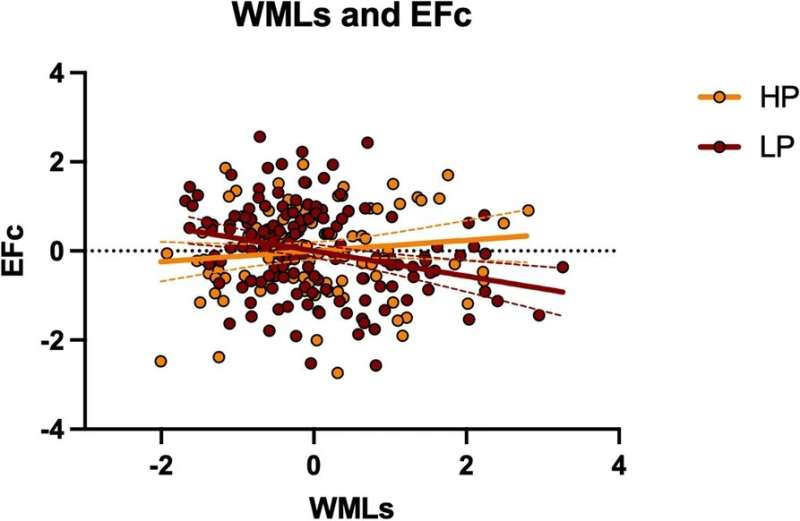
Associations between brain burden and cognition. Scatter plot showing the association between WMLs and executive performance as a function of the PiL group. Data is presented with Z scores. Abbreviations: EFc, executive functioning composite; HP, higher purpose in life; LP, lower power in life; WMLs, white matter lesions. Credit: Alzheimer's Research & Therapy (2023). DOI: 10.1186/s13195-023-01198-6

New research suggests that having a stronger purpose in life (PiL) may promote cognitive resilience among middle-aged adults. Cognitive resilience refers to the capacity of the brain to cope with stressors, injuries and pathology, and resist the development of symptoms or disabilities. Furthermore, having a purposeful life implies changes in the organization of the brain with one specific brain network, the dorsal Default Mode Network, showing greater functional connections within its components and with other brain areas. This may represent a neuroprotection mechanism that ultimately ensures better cognitive function into old age.

10 may 2023--These are among the findings in the article, "Purpose In Life Promotes Resilience To Age-Related Brain Burden And Neuroprotection Through Functional Connectivity In Middle-Aged Adults," published in the journal Alzheimer's Research & Therapy.

"The present data extend previous findings found in advanced age and pathological aging, such as Alzheimer's Disease, revealing that having a strong sense of purpose might confer resilience already in middle age," said author Dr. Kilian Abellaneda-Pérez, Departament de Medicina, Facultat de Medicina i Ciències de la Salut, Institut de Neurociències, Universitat de Barcelona, Barcelona, Spain.

"The fact that individuals in the higher purpose in life group had greater connectivity between specific Dorsal default-mode network nodes, which correlated with cognitive performance, suggest such changes in the functional organization of the brain may represent the mechanism by which a greater purpose in life promotes brain health and protects the brain from dysfunction even in the face of stress, adversity and illness," said Dr. Alvaro Pascual-Leone, Medical Director, Deanna and Sidney Wolk Center for Memory Health at Hebrew SeniorLife; and Department of Neurology, Harvard Medical School.

He concludes, "What is also exciting is that each of us, with appropriate guidance and support, can develop and sustain a robust sense of purpose and thus contribute to our brain health and well-being."

Disease-modifying agents to counteract cognitive impairment in older age remain elusive. Hence, identifying modifiable factors promoting brain reserve and resilience is paramount. In Alzheimer's disease, education and occupation are typical reserve proxies. However, the importance of psychological factors is being increasingly recognized, as their operating biological mechanisms are elucidated.

Purpose in life, one of the pillars of psychological well-being, has previously been found to reduce the deleterious effects of Alzheimer's Disease-related pathological changes on cognition. However, whether purpose in life operates as a cognitive resilience factor in middle-aged individuals, and what are the underlying neural mechanisms remains unknown.

Data was obtained from 624 middle-aged adults (mean age 53.71±6.9; 303 women) from the Barcelona Brain Health Initiative cohort. Individuals with lower (N=146) and higher (N=100) purpose in life (PiL) rates, according to the division of this variable into quintiles, were compared in terms of cognitive status, a measure reflecting brain burden (white matter lesions; WMLs), and resting-state functional connectivity (rs-FC), examining system segregation (SyS) parameters using 14 common brain circuits.

Neuropsychological status and WMLs burden did not differ between PiL groups. However, in the lower PiL group greater WMLs entailed a negative impact on executive functions. Subjects in the higher PiL group showed lower SyS of the dorsal DMN (dDMN), indicating lesser segregation of this network from other brain circuits.

Specifically, higher PiL individuals had greater inter-network connectivity between specific dDMN nodes, including the frontal cortex, the hippocampal formation, the midcingulate region, and the rest of the brain. Greater functional connectivity in some of these nodes positively correlated with cognitive performance.

More information: Kilian Abellaneda-Pérez et al, Purpose in life promotes resilience to age-related brain burden in middle-aged adults, Alzheimer's Research & Therapy (2023). DOI: 10.1186/s13195-023-01198-6

Journal information: Alzheimer\'s Research & Therapy 


A myth no more: Cranberry products can prevent urinary tract infections for women

cranberry
Credit: CC0 Public Domain

Drinking cranberry juice has long been a mythical prevention strategy for women who develop a urinary tract infection—and new medical evidence shows consuming cranberry products is an effective way to prevent a UTI before it gets started.

10 may 2023--A global study looking at the benefits of cranberry products published in Cochrane Reviews has determined cranberry juice, and its supplements, reduce the risk of repeat symptomatic UTIs in women by more than a quarter, in children by more than half, and in people susceptible to UTI following medical interventions by about 53%.

Cranberry juice and healthcare supplements that commonly include the fruit, such as capsules and tablets, have long been promoted as a readily available solution to ward off the infection but the most recent review in 2012, with evidence from 24 trials, showed no benefit from the products.

The medical scientists behind this updated review from Flinders University and The Children's Hospital at Westmead aimed to update these findings, as an important step in determining the effectiveness of cranberry products by looking at 50 more recent trials that included almost 9000 participants.

"This incredible result didn't really surprise us, as we're taught that when there's more and better evidence, the truth will ultimately come out. UTIs are horrible and very common; about a third of women will experience one, as will many elderly people and also people with bladder issues from spinal cord injury or other conditions," says the study lead author Dr. Gabrielle Williams.

"Even back in 1973, my mum was told to try cranberry juice to prevent her horrible and frequent UTIs, and for her it's been a saviour. Despite me niggling in her ear about evidence, she's continued to take it daily, first as the nasty sour juice and in recent years, the easy to swallow capsules. As soon as she stops, wham the symptoms are back. As usual, it turns out that mum was right! Cranberry products can help some women prevent UTIs."

Flinders University epidemiologist Dr. Jacqueline Stephens, a co-author of the study, says if the UTI persists untreated it can move to the kidneys and cause pain and more complications, including sepsis in very severe cases, so prevention is the most effective way to reduce risks.

"Most UTIs are effectively, and pretty quickly, treated with antibiotics, sometimes as little as one dose can cure the problem. Unfortunately, in some people UTIs keep coming back. Without being sure if or how it works, some healthcare providers began suggesting it to their patients. It was a harmless, easy option at the time. Even centuries ago, Native Americans reportedly ate cranberries for bladder problems, leading somewhat more recently, to laboratory scientists exploring what it was in cranberries that helped and how it might work."

"The studies we looked at included a range of methods to determine the benefits of cranberry products. The vast majority compared cranberry products with a placebo or no treatment for UTI and determined drinking cranberries as a juice or taking capsules reduced the number of UTIs in women with recurrent cases, in children and in people susceptible to UTi's following medical interventions such as bladder radiotherapy."

"It's also important to consider that few people reported any side effects with the most common being tummy pain based on the results. We also did not find enough information to determine if cranberry products are more or less effective compared with antibiotics or probiotics in preventing further UTIs."

The data also doesn't show any benefit for elderly people, pregnant women or in people with bladder emptying problems.

Senior Author, Professor Jonathan Craig, Vice President and Executive Dean of the College of Medicine & Public Health at Flinders University, says the real benefits of cranberry products became clear when the researchers expanded the scope of the review to include the most recently available clinical data.

"This is a review of the totality of the evidence and as new evidence emerges, new findings might occur. In this case, the new evidence shows a very positive finding that cranberry juice can prevent UTI in susceptible people," says Professor Craig.

"We have shown the efficacy of cranberry products for the treatment of UTIs using all the evidence published on this topic since the mid-nineties. The earlier versions of this review didn't have enough evidence to determine efficacy and subsequent clinical trials showed varied results, but in this updated review the volume of data has shown this new finding."

The study authors conclude that while cranberry products do help prevent UTIs in women with frequent recurrence, more studies are needed to further clarify who with UTI would benefit most from cranberry products.

More information: Cranberries for preventing urinary tract infections, Cochrane Database of Systematic Reviews (2023). DOI: 10.1002/14651858.CD001321.pub6

Journal information: Cochrane Library 


Social interaction reduces dementia risk and increases longevity

old people
Credit: CC0 Public Domain

Spending time with loved ones can have significant health benefits as we age, according to a new meta-analysis study from the Centre for Healthy Brain Ageing (CHeBA) at UNSW Sydney.

10 may 2023--The researchers studied the link between social connections in older people and the risk of mild cognitive impairment (MCI), dementia and mortality. They pooled together the results of 13 international studies, which followed people aged 65 years and above over long periods of time.

The research is published today in Alzheimer's & Dementia.

"We know from previous research that social connections are important for our health and being isolated puts us at higher risk of dementia and death," said first author Dr. Suraj Samtani, who is a clinical psychologist and researcher at CHeBA.

"Our goal was to find which social connections protect us from dementia and death."

Studying aging populations

The researchers obtained results from studies in low, middle and high-income countries across the world. These included Australia, North America, and several nations in Europe, South America, Asia, and Africa. The study population is more diverse than previous meta-analyses, which have mainly focused on North America and Europe.

Then the researchers analyzed information about the social connections of the study participants. They were interested in the social connection type (e.g., being in a relationship or married, engaging with a community group), function (e.g., social support, having a confidante), and quality (e.g., level of relationship satisfaction).

Finally, the researchers looked at whether the participants developed MCI or dementia, or passed away, during the studies. They controlled for other variables which could influence these outcomes including age, sex, education level, lifestyle factors and other chronic diseases.

"We looked at social variables across these studies, such as living with others, interacting with friends and family, engaging in community activities, and social support," Dr. Samtani said. "We wanted to know which of these are associated with risk of getting dementia over time or dying."

Protective effects of social connections

Among the study participants, good social connections were associated with a lower risk of MCI, dementia and death.

"We found that frequent interactions—monthly or weekly—with family and friends and having someone to talk to reduced the risk of getting dementia. We also found that living with others and doing community activities reduced the risk of dying," Dr. Samtani said.

Why would social interaction be linked to MCI, dementia and death? Many other studies show that poor social connections are associated with poorer lifestyle and poorer health.

For example, close relationships can have a stress buffering effect, as we confide in and receive support from these individuals. Controlling stress is important for brain and overall health.

Another example is that our family, friends and community members may influence us to take on healthy behaviors. This phenomenon, exemplified by your friends dragging you to park run at 7am on a Saturday, is known as 'social contagion'.

One limitation of the findings is the 'chicken or the egg' problem. Participants who had already MCI or dementia at the beginning of the studies were excluded from the analysis. However, it is possible that they had some undetected cognitive and physical health issues. These could impact their social interactions, rather than the other way around.

Tips to stay healthy

The researchers recommend that we prioritize social connection to reduce risk of cognitive decline and live longer.

"Try to meet with friends and family at least once a month, take part in community activities like volunteering or a rotary club, and open your heart to someone when you feel stressed. Living with others, for example in an intergenerational household, is also helpful," Dr. Samtani said.

"Connecting with others helps us to keep our bodies and minds healthy."

The researchers at CHeBA are now looking at interventions to improve the social connections of older adults, to protect their brain and overall health. Dr. Samtani has recently been awarded a Dementia Australia Research Foundation post-doctoral fellowship to trial a social cognition intervention for older adults with memory concerns.

"We hope that helping people to stay engaged in conversations and maintain healthy friendships and relationships will help them to stay healthy and happy," Dr. Samtani said.

More information: Gowsaly Mahalingam et al, Social connections and risk of incident mild cognitive impairment, dementia, and mortality in 13 longitudinal cohort studies of ageing, Alzheimer's & Dementia (2023). DOI: 10.1002/alz.13072