Monday, November 11, 2019

Where does Parkinson's disease start: In the brain, gut, or both?
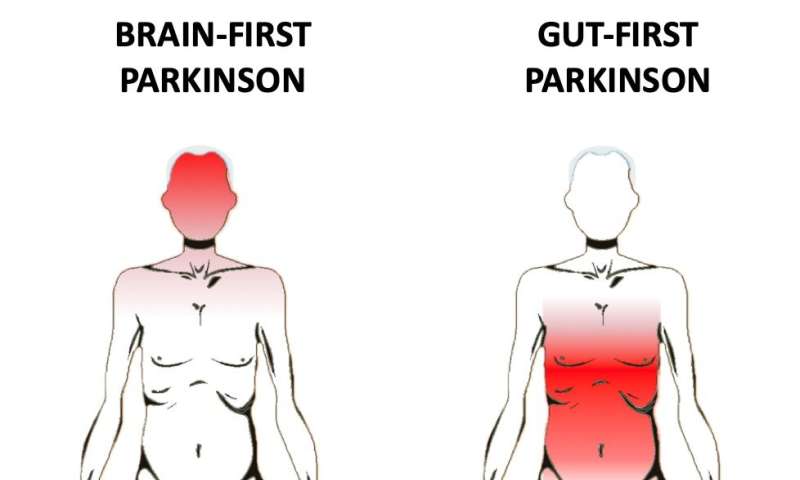
Where does Parkinson's disease start? In the brain or gut? Or both?
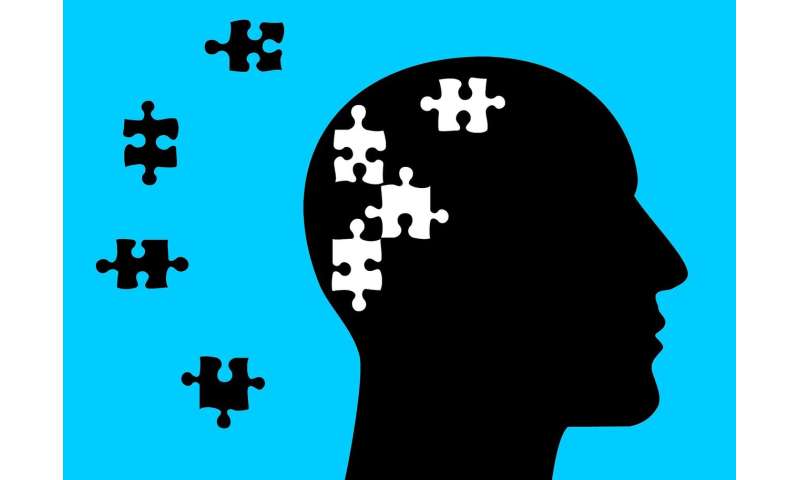
Leading experts in Parkinson's disease explore the hypothesis that Parkinson's disease can be divided into two subtypes: brain-first, and gut-first. Credit: Lundbeck Foundation.
Does Parkinson's disease (PD) start in the brain or the gut? In a new contribution published in the Journal of Parkinson's Disease, scientists hypothesize that PD can be divided into two subtypes: gut-first, originating in the peripheral nervous system (PNS) of the gut and spreading to the brain; and brain-first, originating in the brain, or entering the brain via the olfactory system, and spreading to the brainstem and peripheral nervous system.
11 nov 2019--Per Borghammer, MD, Ph.D., DMSc, Nuclear Medicine & PET, Aarhus University Hospital, Denmark, and Nathalie Van Den Berge, MSc, Ph.D., Department of Clinical Medicine, Aarhus University, Denmark, explore the origins of PD onset. They review the evidence that Lewy body disorders (LBD), including PD and dementia with Lewy bodies (DLB), comprise two distinct subtypes: (1) a gut-first phenotype in which marked damage to the peripheral autonomic nervous system precedes measurable damage to the brain itself, including the dopamine cells; and (2) a brain-first phenotype, in which marked damage to the brain precedes measurable damage to the peripheral autonomic nervous system.
"Evidence from autopsy studies of brains from PD patients has suggested that PD may start in the peripheral nervous system of the gut and nose. The pathology then spreads via the nerves into the brain. However, not all autopsy studies agree with this interpretation," explained Dr. Borghammer. "In some cases, the brains do not contain pathology at the important 'entry points' into the brain, such as the dorsal vagus nucleus at the bottom of the brainstem. The gut-first versus brain-first hypothesis posited in this review provides a scenario that can reconcile these discrepant findings from the neuropathological literature into one single coherent theory about the origins of PD."
"The discussion about the origins of PD is often framed as an 'either-or', i.e., either all PD cases start in the gut or all cases start in the brain," added Dr. Van Den Berge. "However, much of the evidence seems compatible with both these interpretations. Thus, we need to entertain the possibility that both scenarios are actually true."
The review summarizes existing evidence from imaging studies from humans and tissue studies from humans and animal models. The imaging and histology studies are generally compatible with the brain-first vs body-first hypothesis. If this hypothesis is correct, it suggests that PD is more complicated than originally thought. If the disease starts in the gut in only a fraction of patients, it is likely that interventions targeting the gut might only be effective for some PD patients, but not for individuals in which the disease starts in the brain itself.
"If the brain-first vs body-first hypothesis is correct, we need to intensify the research into understanding risk factors and triggering factors for these two subtypes," noted Dr. Van Den Berge.
"It is probable that these different types of PD need different treatment strategies," commented Dr. Borghammer. "It may be possible to prevent the 'gut-first' type of PD through interventions targeting the gut, such as probiotics, fecal transplants, and anti-inflammatory treatments. However, these strategies might not work with respect to treating and preventing the brain-first type. Thus, a personalized treatment strategy will be required, and we need to be able to identify these subtypes of PD in the individual patient."
PD is a slowly progressive disorder that affects movement, muscle control and balance. It is the second most common age-related neurodegenerative disorder affecting about three percent of the population by the age of 65 and up to five percent of individuals over 85 years of age. During the 20th century, PD was thought to be primarily a  disorder characterized mainly by loss of pigmented dopaminergic neurons residing in the substantia nigra, a basal ganglia structure located in the midbrain that plays an important role in reward and movement. More recently, it has become clear that PD is highly varied and probably consists of several subtypes.

More information: Per Borghammer et al, Brain-First versus Gut-First Parkinson's Disease: A Hypothesis, Journal of Parkinson's Disease (2019). DOI: 10.3233/JPD-191721
Journal information: Journal of Parkinson's Disease 
Provided by IOS Press 

Alzheimer's treatments: What's on the horizon?


alzheimers
Credit: CC0 Public Domain
Current Alzheimer's treatments temporarily improve symptoms of memory loss and problems with thinking and reasoning.
11 nov 2019--These Alzheimer's treatments boost performance of chemicals in the brain that carry information from one brain cell to another. However, these treatments don't stop the underlying decline and death of brain cells. As more cells die, Alzheimer's disease continues to progress.
Experts are cautiously hopeful about developing Alzheimer's treatments that can stop or significantly delay the progression of Alzheimer's. A growing understanding of how the disease disrupts the brain has led to potential Alzheimer's treatments that short-circuit basic disease processes.
Future Alzheimer's treatments may include a combination of medications, similar to how treatments for many cancers or HIV/AIDS include more than a single drug.
The following treatment options are among the strategies currently being studied.
Taking Aim At Plaques
Some of the new Alzheimer's treatments in development target microscopic clumps of the protein beta-amyloid (plaques). Plaques are a characteristic sign of Alzheimer's disease.
Strategies aimed at beta-amyloid include:
- Recruiting the immune system. Several drugs—known as monoclonal antibodies—may prevent beta-amyloid from clumping into plaques or remove beta-amyloid plaques that have formed and help the body clear the beta-amyloid from the brain. Monoclonal antibodies mimic the antibodies your body naturally produces as part of your immune system's response to foreign invaders or vaccines.
The monoclonal antibody solanezumab did not demonstrate any benefit for individuals with mild or moderate Alzheimer's disease. It's possible that solanezumab may be more effective when given earlier in the course of the disease. The drug seemed safe in recent studies, and solanezumab continues to be evaluated in the preclinical stage of the disease.
Aducanumab is another drug that has shown promise in preliminary studies. Study participants taking aducanumab had reduced amyloid plaque levels and a suggestion of possible delayed cognitive decline. More studies are underway for this treatment.
- Preventing destruction. Several years ago, researchers learned that beta-amyloid interacts with another protein called Fyn. When combined with beta-amyloid, Fyn is over-activated, which triggers a destruction of connections between nerve cells (synapses) in the brain. Studies are currently in progress for drugs that inhibit the Fyn protein. A drug initially developed as a possible cancer treatment—saracatinib—is now being tested in Alzheimer's disease. In mice, the drug turned off Fyn, which allowed synapses to start working again, and the animals experienced a reversal of some memory loss. Human trials for saracatinib as a possible Alzheimer's disease treatment are now underway.
- Production blockers. These therapies may reduce the amount of beta-amyloid formed in the brain. Research has shown that beta-amyloid is produced from a "parent protein" in two steps performed by different enzymes. Several experimental drugs aim to block the activity of these enzymes. They're known as beta- and gamma-secretase inhibitors. Recent studies showed that the beta-secretase inhibitor verubecestat did not slow down cognitive decline and was associated with several side effects in those with mild or moderate Alzheimer's.
Keeping Tau From Tangling
A vital brain cell transport system collapses when a protein called tau twists into microscopic fibers called tangles, which are another common brain abnormality of Alzheimer's. Researchers are looking at a way to prevent tau from forming tangles.
Tau aggregation inhibitors and tau vaccines are currently being studied in clinical trials.
Reducing Inflammation
Alzheimer's causes chronic, low-level brain cell inflammation. Researchers are studying ways to treat inflammatory processes at work in Alzheimer's disease. The drug sargramostim (Leukine) is currently in research. It's thought that the drug may stimulate the immune system to protect the brain from harmful proteins.
Researchers studied the diabetes drug pioglitazone (Actos) because it may lessen beta-amyloid and inflammation in the brain, but this trial was negative.
Researching insulin resistance
Researchers are studying the effects of insulin on the brain and brain cell function, and insulin changes in the brain that may be related to Alzheimer's. A trial testing an insulin nasal spray to determine whether it slows the progression of Alzheimer's was recently reported as negative.
Studying the heart-head connection
Growing evidence suggests that brain health is closely linked to heart and blood vessel health. The risk of developing Alzheimer's appears to increase as a result of many conditions that damage the heart or arteries. These include high blood pressure, heart disease, stroke, diabetes and high cholesterol.
A number of studies are exploring how best to build on this connection. Strategies under investigation include:
- Current drugs for heart disease risk factors. Researchers are investigating whether drugs such as blood pressure medications now used to treat vascular disease may also help people with Alzheimer's or reduce the risk of developing the disease.
- Drugs aimed at new targets. Additional projects are looking more closely at how the connection between heart disease and Alzheimer's works at the molecular level to find new drug targets.
- Lifestyle choices. Research suggests that lifestyle choices with known heart benefits, such as exercising on most days and eating a heart-healthy diet, may help prevent Alzheimer's disease or delay its onset.
Hormones
In one study, taking estrogen-based hormone therapy for at least a year during perimenopause or early menopause appeared to protect thinking and memory in women with a higher risk of Alzheimer's disease.
But further research has been conflicting, with some studies indicating that estrogen didn't offer any benefit. More research and a better understanding of the relationship between estrogen and cognitive function are needed before any recommendations can be made.
Speeding Treatment Development
Developing new medications is a slow and painstaking process. The pace can be especially frustrating for people with Alzheimer's and their families who are waiting for new treatment options.
To help accelerate discovery, the Coalition Against Major Diseases (CAMD), an alliance of pharmaceutical companies, nonprofit foundations and government advisers, has forged a first-of-its-kind partnership to share data from Alzheimer's clinical trials.
The CAMD has also collaborated with the Clinical Data Interchange Standards Consortium (CDISC) to create data standards. Researchers anticipate that these data standards and the sharing of data from more than 6,500 study participants will speed development of more-effective therapies.
©2019 Mayo Foundation for Medical Education and Research

Saffron effectively complements antidepressant medications

saffron
Credit: CC0 Public Domain
New research has shown that saffron may assist adults with depression when it is taken in conjunction with pharmaceutical antidepressants.
11 nov 2019--Murdoch University researchers Dr. Adrian Lopresti and Professor Peter Drummond, and UWA researcher Professor Sean Hood found greater reductions in depressive symptoms when adults with persistent depression, and currently taking a pharmaceutical antidepressant, complement their depression medication with saffron capsules.
Dr. Lopresti said that the trial was the largest of its kind to date and the first study looking at the effects of saffron as an add-on to pharmaceutical antidepressants. Previous research has only investigated the antidepressant effects of saffron as a stand-alone treatment.
"In our research, depressive symptoms decreased more in participants taking saffron compared with a placebo, with reductions of 41 and 21%, respectively on the clinician-rated scale," Dr. Lopresti said.
"In addition, improvements occurred in sleep quality, initiative and motivation, and interest and pleasure in activities."
Dr. Lopresti said that the study indicated that saffron could be used as a natural supplement given at the beginning of antidepressant treatment to increase its effectiveness and to possibly reduce potential adverse effects which are sometimes experienced when one is prescribed antidepressants.
"Saffron can be used at the outset in conjunction with antidepressants or it can be added to antidepressants if symptoms do not fully resolve," Dr. Lopresti said.
"At the moment, if pharmaceutical antidepressants aren't working the options are to increase the dose or to try a new antidepressant. This increases the likelihood of side effects. Now a new option is to take antidepressants and saffron together."
Background
  • Participants in the survey were randomly allocated to one of two trial groups, one taking a placebo and one taking a standardized saffron extract.
  • Participants were required to be physically healthy, aged 18–65 years and were taking a stable dose (at least eight weeks) of a single pharmaceutical antidepressant
  • More research needs to be undertaken to replicate these findings and to determine the longer-term benefits of saffron in treating symptoms of depression.
  • The findings do not mean the addition of saffron to cooking would necessarily promote antidepressant effects given the significant variance associated with the quality of saffron stigmas and the variability in extracts available on the market.
  • This study was funded by the manufacturer of the saffron extract, Pharmactive Biotech Products SL. However, Pharmactive Biotech Products was not involved in the design of the research, analysis of data, or in the writing of the report.

More information: Adrian L Lopresti et al. Efficacy of a standardised saffron extract (affron®) as an add-on to antidepressant medication for the treatment of persistent depressive symptoms in adults: A randomised, double-blind, placebo-controlled study, Journal of Psychopharmacology (2019). DOI: 10.1177/0269881119867703
Journal information: Journal of Psychopharmacology 
Provided by Murdoch University 

Sunday, November 03, 2019

High-tech 'Smart Care' apartment aims to improve health care for seniors

High-tech 'Smart Care' apartment aims to improve health care for seniors
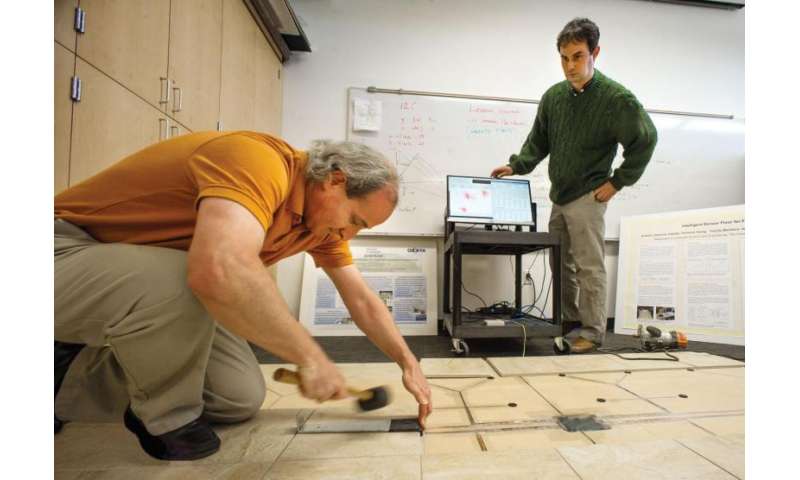
UT Arlington Computer Science and Engineering Professors Manfred Huber and Gergely Zaruba test flooring with special sensors that will enable researchers to measure and evaluate changes in walking gaits and weight that might suggest illness or injury in residents. Credit: UT Arlington
University of Texas at Arlington nursing and engineering researchers will unveil a model "Smart Care" apartment next month that is infused with intelligent care technology designed to reduce risks encountered by older adults and those with disabilities who want to live independently in their own homes.
03 nov 2019--The federal Health Resources and Services Administration provided more than $600,000 in funding for the five-year project, which has been a collaborative effort involving premier faculty from the UT Arlington College of Nursing and Health Innovation and the College of Engineering. U.S. Rep Joe Barton, R-Arlington, advocated for the funding and said he is eager to see how the project - described as the first of its kind in Texas - will improve lives.
A grand opening event is scheduled at the Smart Care apartment at 10 a.m. May 7, 2015, at the Lakewood Village Senior Living Community, 5100 Randol Mill Road?in Fort Worth.
"UT Arlington is at the forefront of life-changing and innovative research in the area of Health and the Human Condition," Barton said. "Ultimately, Smart Care will positively impact senior citizens, people with disabilities, and injured veterans. It will also save money for people across the Dallas-Fort Worth area and nationwide by reducing the number of repeated trips to hospitals for some residents."
Christian Care Senior Living Communities generously contributed use of a 900-square foot, two-bedroom apartment at its Lakewood Village Senior Living Community in Fort Worth for the project.
"The entire Smart Care concept attracted us from the beginning because it just truly aligned with our mission to compassionately care for adults well into their golden years," said Phil Elmore, president and chief executive officer of Christian Care Senior Living Communities. "This has been a wonderful symbiotic partnership and we are proud to be a part of the work that UT Arlington is doing to expand horizons for senior citizens and people with physical challenges."
Carolyn Cason, co-principal investigator and professor of nursing, created the concept for establishing a Smart Care center at UT Arlington and a Smart Care apartment. She said the growing senior population and increasing number of Americans living with disabilities urgently demand research such as this.
"The technologies developed in the context of Smart Care will enable a significant improvement in preventive in-home health care for the aging, improve the efficiency and cost effectiveness of care by health care professionals, and improve the ability to directly involve family and friends into the care process."
Among other technologies, the Smart Care apartment includes:
  • Sensors underneath tiles on the floor that will allow researchers to measure and evaluate changes in walking gaits and weight that might suggest illness or injury;
  • A special camera embedded in a bathroom mirror that will tell researchers about day-to-day heart rate, facial expression, and skin color. Changes in expression and skin color can reveal aspects of the overall health status as well as about oxygen content of the blood;
  • Lift chair to help residents stand;
  • Smart appliances such as an LG microwave, range and refrigerator;
  • Connected exercise equipment, including a recumbent bike and interactive Kinect-based Tai Chi trainer;
  • Other systems that will detect whether medication is being properly managed or if the resident is not sleeping well or staying in bed too long.
Kathryn Daniel, an associate professor and director of the Adult-Gerontology Primary Care Nurse Practitioner Program in the College of Nursing and Health Innovation, serves as program manager for Smart Care. During a tour of the apartment in early April, she provided a behind-the-scenes look at the technology and explained how it will benefit clinicians, patients, families, and facility administrators. Watch a short video here.
The congressionally earmarked funding that Barton championed was used to purchase the high-tech kitchen appliances, a special toilet, automated beds, living room furniture, and other equipment in use at the Smart Care apartment, as well as at the center located in the UT Arlington Engineering Research Building.
The lab serves as mission control where researchers can unobtrusively monitor patients, interpret behavioral information and other data, and evaluate remote capabilities, health technologies and other protocols.
"Ultimately, the goal is to have these technologies in homes so that people could have warning signs if something is changing; you could also detect if something has already happened and there is a need to call for help," said Manfred Huber, co-principal investigator and professor in the UT Arlington Department of Computer Science and Engineering. "Again, the hope is that people can stay home much longer than they can currently." Watch a short video here.
Provided by University of Texas at Arlington 

High-salt diet promotes cognitive impairment through the Alzheimer-linked protein tau

salt
Credit: CC0 Public Domain
A high-salt diet may negatively affect cognitive function by causing a deficiency of the compound nitric oxide, which is vital for maintaining vascular health in the brain, according to a new study in mice from Weill Cornell Medicine researchers. When nitric oxide levels are too low, chemical changes to the protein tau occur in the brain, contributing to dementia.
03 nov 2019--In the study, published Oct. 23 in Nature, the investigators sought to understand the series of events that occur between salt consumption and poor cognition and concluded that lowering salt intake and maintaining healthy blood vessels in the brain may "stave off" dementia. Accumulation of tau deposits has been implicated in the development of Alzheimer's disease in humans.
"Our study proposes a new mechanism by which salt mediates cognitive impairment and also provides further evidence of a link between dietary habits and cognitive function," said lead study author Dr. Giuseppe Faraco, an assistant professor of research in neuroscience in the Feil Family Brain and Mind Research Institute at Weill Cornell Medicine.
The new study builds upon research published last year in Nature Neuroscience by Dr. Faraco and senior author Dr. Costantino Iadecola, director of the Feil Family Brain and Mind Research Institute and the Anne Parrish Titzell Professor of Neurology at Weill Cornell Medicine.
The 2018 study found that a high-salt diet caused dementia in mice. The rodents became unable to complete daily living tasks such as building their nests and had problems passing memory tests. The research team determined that the high-salt diet was causing cells in the small intestine to release the molecule interleukin-17 (IL-17), which promotes inflammation as part of the body's immune response.
IL-17 then entered the bloodstream and prevented the cells in the walls of blood vessels feeding the brain from producing nitric oxide. This compound works by relaxing and widening the blood vessels, allowing blood to flow. Conversely, a shortage of nitric oxide can restrict blood flow.
Based on these findings, Dr. Iadecola, Dr. Faraco and their colleagues theorized that salt likely caused dementia in mice because it contributed to restricted blood flow to the brain, essentially starving it. However, as they continued their research, they realized that the restricted blood flow in mice was not severe enough to prevent the brain from functioning properly.
"We thought maybe there was something else going on here,'" Dr. Iadecola said. In their new Nature study, the investigators found that decreased nitric oxide production in blood vessels affects the stability of tau proteins in neurons. Tau provides structure for the scaffolding of neurons. This scaffolding, also called the cytoskeleton, helps to transport materials and nutrients across neurons to support their function and health.
"Tau becoming unstable and coming off the cytoskeleton causes trouble," Dr. Iadecola said, adding that tau is not supposed to be free in the cell. Once tau detaches from the cytoskeleton, the protein can accumulate in the brain, causing cognitive problems. The researchers determined that healthy levels of nitric oxide keep tau in check. "It puts the brakes on activity caused by a series of enzymes that leads to tau disease pathology," he said.
To further explore the importance of tau in dementia, the researchers gave mice with a high-salt diet and restricted blood flow to the brain an antibody to promote tau stability. Despite restricted blood flow, researchers observed normal cognition in these mice. "This demonstrated that's what's really causing the dementia was tau and not lack of blood flow," Dr. Iadecola said.
Overall, this study highlights how vascular health is important to the brain. "As we demonstrated, there's more than one way that the blood vessels keep the brain healthy," Dr. Iadecola said.
Although research on salt intake and cognition in humans is needed, the current mouse study is a reminder for people to regulate salt consumption, Dr. Iadecola said. "And the stuff that is bad for us doesn't come from a saltshaker, it comes from processed food and restaurant food," he said. "We've got to keep salt in check. It can alter the  vessels of the  and do so in vicious way."
More information: Dietary salt promotes cognitive impairment through tau phosphorylation, Nature (2019). DOI: 10.1038/s41586-019-1688-z , https://www.nature.com/articles/s41586-019-1688-z
Journal information: Nature  , Nature Neuroscience 
Provided by Weill Cornell Medical College 

The first test to detect dysphagia in patients with cognitive problems

Scientists design first test to detect dysphagia in patients with cognitive problems
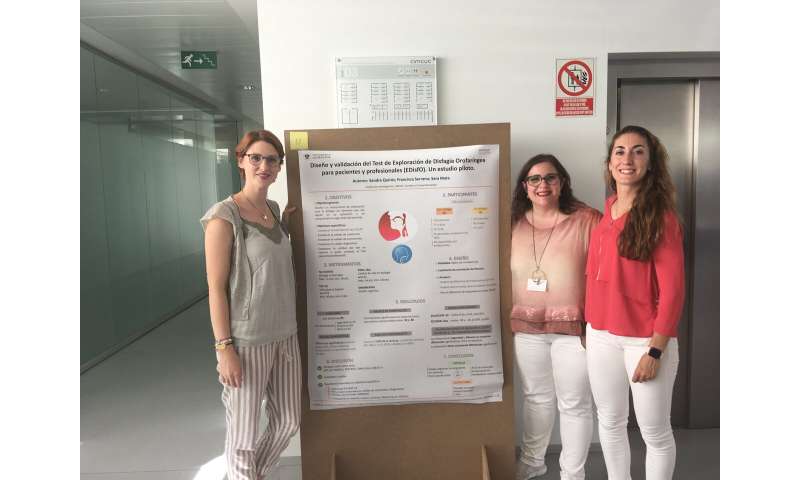
The UGR researchers who conducted this study. Credit: University of Granada
Researchers from the Mind, Brain and Behaviour Research Centre (CIMCYC) of the University of Granada (UGR) have designed a test to detect dysphagia, a disorder that prevents people from swallowing when eating. It affects 8 percent of the world's population.
03 nov 2019--Dysphagia is prevalent among older people in particular (30 percent to 40 percent of the elderly people admitted to hospitals or care homes) and patients with neurological or neurodegenerative disorders and diseases such as Alzheimer's, Parkinson's or multiple sclerosis, amyotrophic lateral sclerosis, cerebral palsy or strokes.
This difficulty in swallowing is due to the fact that the process of passing food or liquids from the mouth to the stomach requires more time and effort for these patients. Many die from aspiration pneumonia as a result of dysphagia. Yet dysphagia remains underdiagnosed because many of these patients suffer from cognitive disorders and cannot respond to functional evaluation processes.
To address this, the UGR researchers have designed and validated an early detection test for oropharyngeal dysphagia—called EdisfO—for patients with preserved cognitive status (that is, with no cognitive problems) that has also proven valid in patients with impaired cognitive status. This is the first time an assessment measure has been designed that successfully addresses this need.
The overarching aim of this research is to position the EdisfO as a widely-used tool that facilitates the diagnosis of possible dysphagia—a quick, safe, and effective test to screen for this disorder. It is currently being adapted and validated among the Turkish population, thanks to collaboration with Hacettepe University.
More information: Sandra Quirós et al. Design and Validation of the Oropharyngeal Dysphagia Screening Test for Patients and Professionals: A Preliminary Study, Dysphagia (2019). DOI: 10.1007/s00455-019-09999-4
Provided by University of Granada 

Wearable activity trackers a reliable tool for predicting death risk in older adults

elderly
Credit: CC0 Public Domain
A federally funded study by Johns Hopkins Medicine researchers shows that wearable accelerometers—mechanical sensors worn like a watch, belt or bracelet to track movement—are a more reliable measure of physical activity and better than patient surveys and other methods used by physicians at assessing five-year risk of death in older adults.
03 nov 2019--The research also added to evidence that an accurate and objective accounting of physical activity outperforms traditional predictors of mortality within five years, such as age, smoking, diabetes, alcohol use, or history of cancer or heart disease.
Based on these findings, the researchers say physicians could confidently use the devices' fitness profiles to help patients change unhealthy behaviors, increase physical activity and, potentially, extend healthy lifespans.
While their study is far from the first to report an association between physical activity and risk of death, the investigators say their findings, reported in the Oct. 15 issue of The Journal of Gerontology: Medical Sciences, is among the first to offer solid evidence that wearable activity trackers provide key predictors of mortality that outperform other measures.
"People can overestimate or underestimate on surveys how much and when they move, but wearable devices provide accurate data that cuts through the bias and guesswork," says Jacek Urbanek, Ph.D., assistant professor of medicine at the Johns Hopkins University School of Medicine and a member of the research team. "The technology is readily available and relatively inexpensive, so it seems feasible to be able to incorporate recommendations for its use into a physician's practice."
"We've been interested in studying physical activity and how accumulating it in spurts throughout the day could predict mortality because activity is a factor that can be changed, unlike age or genetics," says Ciprian Crainiceanu, Ph.D., professor of biostatistics at the Johns Hopkins Bloomberg School of Public Health, who is also a member of the research team.
For the new study, the researchers focused on the total amount of physical activity and times the participants were most active during the day.
First, using data from the National Health and Nutrition Examination Survey (NHANES) conducted by the U.S. Centers for Disease Control and Prevention (CDC), researchers looked at 33 predictors of five-year all-cause mortality, including 20 objective measures of physical activity, such as total activity, amount of time not moving or amount of time doing moderate to vigorous activity. In this way, they ranked physical activity and other factors, such as total cholesterol, smoking status, and having cancer or diabetes, to identify which ones best predict mortality within the following five years of the study population.
For their look at physical activity, the researchers used accelerometry data from nearly 3,000 adult Americans collected during the NHANES 2003-2004 and NHANES 2005-2006 surveys. Individual data came from responses to demographic, socioeconomic and health-related survey questions, along with information accessed from medical records and clinical laboratory test results. Participants were asked to wear an accelerometer device at the hip for seven consecutive days, removing it only when sleeping, showering or swimming.
The average age the study group was 65.9, and all participants were between 50 and 84 years old. While the gender proportion was nearly even—men made up 51%—a larger percentage of the men, 65%, died within five years of the study's follow up efforts.
After studying each individual variable associated with mortality—including education, sedentary time, and ethnicity—the researchers concluded that the total measure of physical activity accumulated during each day was the strongest predictor of five-year mortality, followed by age and moderate-to-vigorous activity. When comparing the data of a person who died within five years and a person who survived, researchers said they were able to correctly rank the mortality risk using accelerometers 30% more accurately than using information about smoking status and 40% better than using information about whether a person suffered a stroke or had cancer.
With a focus on fragmented activity, researchers also collected data for two-hour spans throughout the day in order to look at patterns in physical activities. Their analysis showed that physical activity—or lack thereof—between noon and 2 p.m. was the highest predictor of mortality risk, outperforming more commonly considered risk factors such as diabetes, cancer and alcohol consumption.
The researchers caution that their study wasn't designed to establish cause and effect, however, they did note that their data suggests that being more sedentary during the day is linked with higher mortality.
"The most surprising finding was that a simple summary of measures of activity derived from a hip-worn accelerometer over a week outperformed well-established mortality risk factors such as age, cancer, diabetes and smoking," says Ekaterina Smirnova, M.S., Ph.D., assistant professor of biostatistics at Virginia Commonwealth University and the lead author on the paper.
"While this study affirmed a link between physical activity and short-term mortality risk in an older population, the data don't guarantee that one's risk of mortality is going to be lower with more physical activity," noted Andrew Leroux, a Ph.D. candidate at Johns Hopkins and co-author of the study report. "However, our findings do indicate that an accurate measure of physical activity is a more reliable way for doctors and patients to assess physical activity and intervene to increase it as a potential way to improve health."
The researchers hope to use their data to help design clinical trials that could confirm the potential for physical activity to increase lifespan. One caveat to the study is that researchers aren't able to distinguish sedentary behavior from sleep or if someone has removed the device.

More information: Ekaterina Smirnova et al, The Predictive Performance of Objective Measures of Physical Activity Derived From Accelerometry Data for 5-Year All-Cause Mortality in Older Adults: National Health and Nutritional Examination Survey 2003–2006, The Journals of Gerontology: Series A (2019). DOI: 10.1093/gerona/glz193

Wednesday, October 30, 2019

Smart homes enhance seniors' safety


In Singapore, as well as many other countries, ensuring a high quality of life for an expanding elderly population demands that community eldercare providers strike a delicate balance between frequently competing factors. For instance, safety is sometimes at odds with privacy; providing comprehensive care may erode an elderly person's cherished sense of independence; and a sense of security may give rise to a sense of being controlled.
30 oct 2019--Project SHINESeniors, which is focused on resolving these contradictions, does so by creating a "smart home" for older people living alone. Driven by a research team at Singapore Management University (SMU)'s iCity Lab (co-founded by SMU and Tata Consultancy Services), the project is funded by the Singapore Ministry of National Development and National Research Foundation under the Land and Liveability National Innovation Challenge (L2NIC) grant.
As part of the three-year project, the team has equipped 50 one-bedroom apartments with motion sensors that can detect unusual periods of inactivity – a possible indication that the tenant has either fallen or suffered a health crisis. This information is then fed to a Voluntary Welfare Organisation (VWO) for its staff and volunteers to react to the potential emergency.
Although other projects in Singapore are testing similar technologies, what makes Project SHINESeniors unique is its focus on how the technological tools can enhance the efforts of community caregivers who provide the crucial, person-to-person contact with elderly tenants.
"What we are providing that's of value is tying the technology to care provisioning," says Associate Professor Tan Hwee Pink, Academic Director of iCity Lab. "We see it as a more complete, holistic, and end-to-end evidence-based approach to ageing. The technology enables community organisations to improve their operations and increase their effectiveness with the limited number of staff and volunteers they have, while still catering to the elderly person's individual needs."
Staying in place is preferable
The research proposes that the best approach to deal with a growth in an ageing population is to allow as many people to stay in their homes as possible.
With senior citizens set to account for 20 percent of Singapore's population by 2030, the concept of "ageing in place" becomes key to dealing with "the fact that healthcare resources and assisted living facilities are becoming more limited," says Professor Tan. "We don't want our population to be over-stressing the hospitals, and we want them to have a good quality-of-life in the community they are living in. That's why care is being moved away from the hospitals and nursing homes and into the community, with the help of community-based VWOs."
Interviews with participants of the iCity pilot project indicate that "most of the elderly prefer to be living by themselves rather than living in an assisted living facility," he says.
Yet, living alone is not without risk. In fact, the government initiated the current research in response to the tragic realisation that, over a five year period, "about 50 elderly residents in Singapore passed away in their homes, and it had taken days, or sometimes up to a few weeks, to find out that they were dead," according to Professor Tan.
To reduce such incidents, a sensor-enhanced "smart home" is designed. The first line of defense is a 'panic button' that a resident can push to alert the community caregivers that he or she has fallen or is facing some kind of problem. And if the elderly person is not carrying the panic button, there is still the sensor system to detect the conditions that point to an emergency, analyse the data, and sound the alarm.
Door contacts at the main door detect the opening and closing of doors, indicating whether the tenant is inside or outside the apartment. If the resident remains inside, motion sensors on the walls of each room will determine whether the person is moving according to normal patterns, or if there is an unexpected absence of movement.
SMU research fellow Dr. Alvin Valera says a common scenario that it is crucial to have the sensor system is when the resident has encountered trouble after entering the toilet.
"The reason we monitor inactivity," he explains, "is that there are situations where the person might not have access to the button. If the person is in the toilet and has fallen, he or she has probably left the panic button outside. In this case, the system will detect that the last activity was in the toilet and that there was no motion afterwards. After a certain period of inactivity, an alert will be sent to the caregivers."
Dr. Valera stresses that the "unobtrusive" nature of this motion-detecting system reassures residents that their privacy is not being violated.
"We don't use vision-based or camera-based sensors, or even those that record audio precisely because of this concern with privacy," he says. "The unobtrusiveness of the system means that elderly are much more likely to accept the technology. And because the sensors are passive—installed on the walls—they don't have to do anything to change their lifestyles."
Refining the system for scale-up
A key objective of the current iCity Lab pilot project is to refine the technology to distinguish better between normal and abnormal periods or inactivity, so as to reduce the number of false alarms.
"We want to make sure that alerts are sent in a timely way, so that they don't swamp the caregivers with false alerts," Dr. Valera explains. So we looked at the historical data of each resident's movement patterns to determine a personalized threshold that would give us a better indication of how long it should be before an alert is sent."
A second technological enhancement is a personalised, sensor-equipped medication box that is being tested in ten apartments. Unlike those off-the-shelf pillboxes, the 'sensorised' medication box has been customised to the needs and preferences (e.g. size and colour) of the individual user. Such customisation has been shown to be effective in encouraging elderly to use these technologically enhanced box.
"Whenever the person opens up the medication box, we can infer that medication has been taken," says SMU research scientist Dr. Tan Hwee Xian. "We are able to look at the frequency and timing of the medication intake, to determine if the elderly person is adhering to their medication schedule."
This is an important issue since controlling chronic diseases such as diabetes and high blood pressure requires medication to be taken and at the right times.
The monitoring of pillbox use has also uncovered helpful information that was not anticipated. Dr. Tan recalls the case of a woman who had been using the pillbox frequently in the middle of the night. "We thought something must be wrong," Dr. Tan recounts.
The researchers informed caregivers, who then spoke to the tenant. They discovered that the lady was suffering from insomnia and leg pain, and hence was taking painkillers from the pillbox in the middle of the night to relieve the pain. She would also repack her medication in the pillbox when she couldn't sleep, creating a false response that the pillbox was used frequently." With the truth uncovered, caregivers could better help the lady with her conditions.
After its three-year trial, there are hopes that the implementation of the smart home systems will be scaled up throughout Singapore. In the interim, improvements have been made to increase the effectiveness of the technology. For instance, the system's interface has been redesigned to provide information to caregivers in a more usable form, while VWOs now receive alerts directly, without researchers acting as intermediaries.
Responses from elderly participants have also been encouraging. No one has dropped out of Project SHINESeniors, and many seniors have also urged their friends to sign up for the pilot test.
"What touches me most," says Dr. Tan, "is to hear from the elderly that the system makes them feel safe."

Provided by ResearchSEA 

Tuesday, October 29, 2019

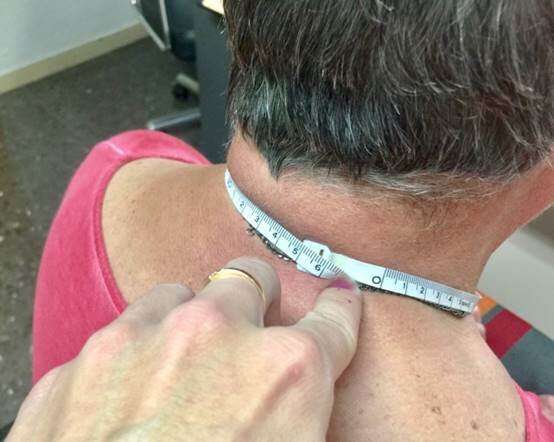
Neck circumference of the elderly is associated with their nutritional status

Neck circumference of the elderly is associated with their nutritional status
Researchers have discovered that the circumference of the neck serves as a reference to detect possible cases of malnutrition. Credit: Beatriz Lardiés
Researchers at the Miguel Servet University Hospital in Zaragoza (Spain) have analysed the ratio between the perimeter of the neck of people living in old people's homes and the probability of malnutrition. Values below 37.8 cm in males and 35.2 cm in females indicate risk.
29 oct 2019--Professionals working in nursing homes often detect possible cases of malnutrition by measuring certain body circumferences of the elderly, such as the arm or calf. Now, a team of researchers from Zaragoza has found another part of the body that can serve as a reference: the neck.
To carry out their study, the authors cross-checked the anthropometric data of 352 elderly people from five public homes in Zaragoza and with an average age of 83, with their results in a questionnaire called Mini Nutritional Assessment (MNA). This assessment tool is commonly used to identify malnourished elderly people or those at risk of being malnourished.
Statistical methods were then applied to find the association between these two parameters, and the results, published in the journal Nutrition, confirm that the circumference of the neck -together with that of the calf- presents the best predictive value when diagnosing the risk of malnutrition among residents.
"In our study, the cut-off point for detecting the risk of malnutrition was 37.8 cm in men and 35.2 cm in women, a limit to be taken into account by the staff of the homes," says Beatriz Lardiés, a researcher at the Miguel Servet University Hospital and co-author of the study.
Once the risk of malnutrition—which affected 48.3% of the women and 45.5% of the men analysed—is detected, it is necessary to carry out a complete nutritional assessment and to consider other clinical and analytical parameters in order to check whether a patient is really malnourished. If this turns out to be the case, the necessary measures to reverse this situation should be taken immediately.
"The diagnosis of malnutrition cannot be made with a single anthropometric parameter, like the perimeter of the calf or the circumference of the arm, but it can help identify it," Lardiés says.
The researcher points out that, as this study has been carried out in nursing homes, "its results can be extrapolated to populations with similar characteristics, but we cannot ensure that the cut-off points detected are valid in other population groups."
In any case, the authors conclude that anthropometry is an easy and non-invasive method for rapidly assessing the nutritional status of older people, a group that is growing all over the world.

More information: Beatriz Lardiés-Sánchez et al. Neck circumference is associated with nutritional status in elderly nursing home residents, Nutrition (2019). DOI: 10.1016/j.nut.2019.01.015
Provided by Plataforma SINC 

Thursday, October 24, 2019

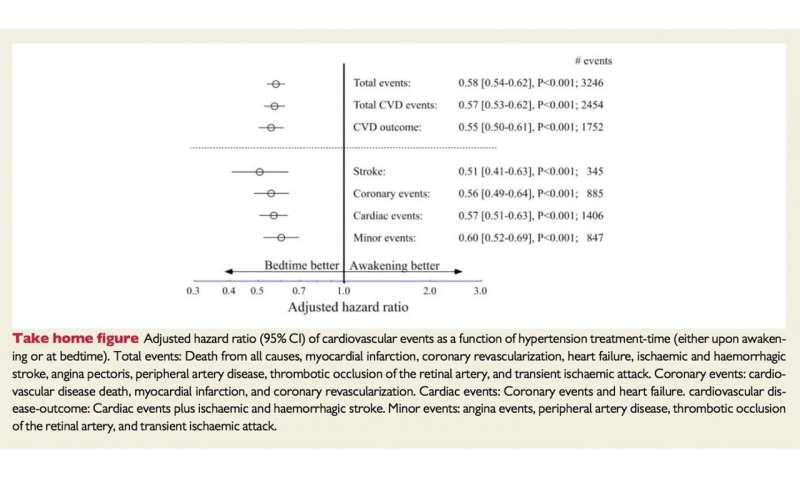
Bed time is the best time to take blood pressure medication

Bed time is the best time to take blood pressure medication
Adjusted hazard ratio (95% CI) of cardiovascular events as a function of hypertension treatment-time (either upon awakening or at bedtime). Total events: Death from all causes, myocardial infarction, coronary revascularization, heart failure, ischaemic and haemorrhagic stroke, angina pectoris, peripheral artery disease, thrombotic occlusion of the retinal artery, and transient ischaemic attack. Coronary events: cardiovascular disease death, myocardial infarction, and coronary revascularization. Cardiac events: Coronary events and heart failure. cardiovascular disease-outcome: Cardiac events plus ischaemic and haemorrhagic stroke. Minor events: angina events, peripheral artery disease, thrombotic occlusion of the retinal artery, and transient ischaemic attack. Credit: European Heart Journal
People with high blood pressure who take all their anti-hypertensive medication in one go at bedtime have better controlled blood pressure and a significantly lower risk of death or illness caused by heart or blood vessel problems, compared to those who take their medication in the morning, according to new research.
24 oct 2019--The Hygia Chronotherapy Trial, which is published in the European Heart Journal today, is the largest to investigate the effect of the time of day when people take their anti-hypertensive medication on the risk of cardiovascular problems. It randomised 19,084 patients to taking their pills on waking or at bedtime, and it has followed them for the longest length of time—an average of more than six years—during which time the patients' ambulatory blood pressure was checked over 48 hours at least once a year.
The researchers, who are part of the Hygia Project led by Professor Ramón C. Hermida, Director of the Bioengineering and Chronobiology Labs at the University of Vigo, Spain, found that patients who took their medication at bedtime had nearly half the risk (45% reduction) of dying from or suffering heart attacks, myocardial infarction, stroke, heart failure or requiring a procedure to unblock narrowed arteries (coronary revascularisation), compared to patients who took their medication on waking.
The researchers had adjusted their analyses to take account of factors that could affect the results, such as age, sex, type 2 diabetes, kidney disease, smoking and cholesterol levels.
When they looked at individual outcomes, they found that the risk of death from heart or blood vessel problems was reduced by 66%, the risk of myocardial infarction was reduced by 44%, coronary revascularisation by 40%, heart failure by 42%, and stroke by 49%.
Prof Hermida said: "Current guidelines on the treatment of hypertension do not mention or recommend any preferred treatment time. Morning ingestion has been the most common recommendation by physicians based on the misleading goal of reducing morning blood pressure levels. However, the Hygia Project has reported previously that average systolic blood pressure when a person is asleep is the most significant and independent indication of cardiovascular disease risk, regardless of blood pressure measurements taken while awake or when visiting a doctor. Furthermore, there are no studies showing that treating hypertension in the morning improves the reduction in the risk of cardiovascular disease.
"The results of this study show that patients who routinely take their anti-hypertensive medication at bedtime, as opposed to when they wake up, have better-controlled blood pressure and, most importantly, a significantly decreased risk of death or illness from heart and blood vessel problems."
The Hygia Project is composed of a network of 40 primary care centres within the Galician Social Security Health Service in northern Spain. A total of 292 doctors are involved in the project and have been trained in ambulatory blood pressure monitoring, which involves patients wearing a special cuff that records blood pressure at regular intervals throughout the day and night. The Hygia Chronotherapy Trial is unusual in monitoring blood pressure for 48 hours, rather than the more usual 24 hours.
Between 2008 and 2018, 10,614 men and 8,470 women of Caucasian Spanish origin, aged 18 or over, who had been diagnosed with hypertension by means of ambulatory blood pressure monitoring, were recruited to the trial; they had to adhere to a routine of daytime activity and night-time sleep, which means that it is not possible to say if the study findings apply to people working night shifts.
Doctors took the patients' blood pressure when they joined the study and at each subsequent clinic visit. Ambulatory blood pressure monitoring over a 48-hour period took place after each clinic visit and at least once a year. This gave doctors accurate information on average blood pressures over the 48 hours, including how much blood pressure decreased or 'dipped' while the patients were asleep.
During a median (average) of 6.3 years follow-up, 1752 patients died from heart or blood vessel problems, or experienced myocardial infarction, stroke, heart failure or coronary revascularisation. Data from ambulatory blood pressure monitoring showed that patients taking their medication at bedtime had significantly lower average blood pressure both at night and during the day, and their blood pressure dipped more at night, when compared with patients taking their medication on waking. A progressive decrease in night-time systolic blood pressure during the follow-up period was the most significant predictor of a reduced risk of cardiovascular disease.
Prof Hermida concluded: "The findings from the Hygia Chronotherapy Trial and those previously reported from the Hygia Project indicate that average blood pressure levels while asleep and night-time blood pressure dipping, but not day-time blood pressure or blood pressure measured in the clinic, are jointly the most significant blood pressure-derived markers of cardiovascular risk. Accordingly, round-the-clock ambulatory blood pressure monitoring should be the recommended way to diagnose true arterial hypertension and to assess the risk of cardiovascular disease. In addition, decreasing the average systolic blood pressure while asleep and increasing the sleep-time relative decline in blood pressure towards more normal dipper blood pressure patterns are both significantly protective, thus constituting a joint novel therapeutic target for reducing cardiovascular risk."
The Hygia Project is currently investigating what the best blood pressure levels should be while asleep in order to reduce cardiovascular risk most effectively in the THADEUS Trial (Treatment of Hypertension During Sleep).
Limitations of the Hygia Chronotherapy Trial include that it requires validation in other ethnic groups; the question of whether the same results would be seen in shift workers also requires investigation; and patients were not assigned to specific hypertension medication classes or specific lists of medications within each class—their treatment was chosen by their doctors according to current clinical practice.

More information: Ramón C Hermida et al, Bedtime hypertension treatment improves cardiovascular risk reduction: the Hygia Chronotherapy Trial, European Heart Journal (2019). DOI: 10.1093/eurheartj/ehz754
Ramón C Hermida et al. Asleep blood pressure: significant prognostic marker of vascular risk and therapeutic target for prevention, European Heart Journal (2018). DOI: 10.1093/eurheartj/ehy475
Journal information: European Heart Journal 
Provided by European Society of Cardiology