The "secrets" to healthy aging are anything but secret. They're the conventional medical recommendations most people will hear from their doctor at a typical checkup: exercise, eat a healthy diet and keep up-to-date with your doctors' visits and vaccinations.
26 sep 2021--Each year, more evidence emerges to help us determine what that healthy diet should look like and how much exercise is enough to age better and live longer.
"You need to do more exercise than you think," says Dr. Jorge Camilo Mora, director of geriatric medical education at the Herbert Wertheim College of Medicine.
Thirty minutes of exercise five days a week has traditionally been the recommendation for adults. But Mora said many people don't realize their daily walks are probably not enough.
"Exercise has to be more intense than a walk," he said. "Ideally, it would combine flexibility, strength, and balance."
A moderate-intensity, brisk 30-minute walk five days a week, plus a muscle-strengthening workout twice a week meets the Centers for Disease Control's recommendations, for example.
For diet, Mora recommends moving toward more plant-based meals. That is, getting more of your daily nutrition from fruits and vegetables and less of it from meat.
Adopting a plant-based diet is associated with a reduced risk of type 2 diabetes, cancer, heart disease and Alzheimer's disease, according to a 2020 article published in the Journal of the American College of Nutrition.
Mora notes that people who live in "Blue Zones," the parts of the world where people live longest, tend to eat diets rich in plant-based foods. These people have a much higher-than-average number of centenarians—people who live to 100 years or more. Why not borrow a bit of their wisdom and incorporate more vegetarian meals into your diet?
As we observe Healthy Aging Month this September, here are Mora's tips:
Exercise! At least 150 minutes per week of moderate-intensity activity. Try to find activities that will also work on your strength and flexibility.
Eat more plant-based foods rich in antioxidants and vitamins.
Get your COVID-19 booster shot around 6 months after your completed dose. Not only are older adults more susceptible to the novel coronavirus, but their immune response to the vaccine is less than in younger people.
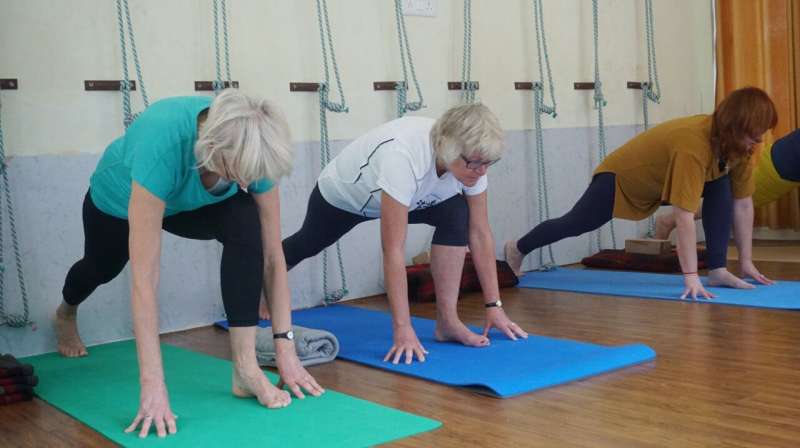
Get social! Social isolation is a risk factor similar to smoking in older adults. Mora's advice? Join a group exercise class—You'll meet your exercise goals AND keep up your social life.
More information: Hana Kahleova et al, Plant-Based Diets for Healthy Aging, Journal of the American College of Nutrition (2020). DOI: 10.1080/07315724.2020.1790442
Provided by Florida International University
New non-drug treatment holds promise for preventative therapies for Alzheimer's
Figure 1. HBOT reduces amyloid plaques in the hippocampal area of 6-month old 5XFAD mice. Amyloid plaques were visualized by immunostaining with anti-Aβ antibodies (4G8). (A) Representative images of Aβ in the hippocampal field of HBO-treated 5XFAD (n=10, lower panel) and control 5XFAD mice (n=10, upper panel); left and middle panels, x4 magnification, scale bar: 1000 μm; right panel, x20 magnification, scale bar: 200 μm. (B) Quantification of the percentage of hippocampal area occupied by plaques. (C) Number of plaques. (D) Mean size of plaques. (E, F) Soluble Aβ was initially extracted from hippocampi with TBS by ultracentrifugation and then insoluble Aβ was extracted with 70% formic acid (FA) after ultra-centrifugation. ELISA analysis of soluble (E) and insoluble (F) Aβ40 and Aβ42 in hippocampal lysates of HBO-treated 5XFAD and control 5XFAD mice (n = 5/group). (B, C, F) -t-test, (D, F)- welch correction t-test. Values represent means ± SEM. *P < 0.05, ** P < 0.01. Credit: DOI: 10.18632/aging.203485
Approximately 50 million people worldwide live with Alzheimer's or other related forms of dementia. Alzheimer's disease leads to memory loss and impairment in cognitive function, and is the most common cause of dementia among older adults. While certain treatments can help reduce symptoms and sometimes reduce disease progression, there is currently no way to prevent or cure Alzheimer's.
26 sep 2021--Amid that backdrop, researchers from Tel Aviv University have developed a process for reversing the precursors of the disease, providing a promising foundation for new preventative therapies. This marks the first time that a non-drug therapyhas proven effective in preventing the core biological processes that lead to the development of Alzheimer's, providing hope that we will now be able to fight one of the greatest challenges to the Western world.
Targeting the root of Alzheimer's
Using hyperbaric oxygen therapy (HBOT), in which subjects breathe 100% oxygen in a special chamber of high atmospheric pressure, the researchers were able to reverse brain damages associated with the biological hallmarks of Alzheimer's.
"By treating the root problem that causes cognitive deterioration with age, we are in fact mapping out the way to prevention," says co-lead researcher Prof. Shai Efrati.
Often used to treat carbon monoxide poisoning and infections that starve tissues of oxygen, hyperbaric therapy, when applied in a specific way, has previously been found capable of repairing damaged brain tissue and renewing growth of blood vessels and nerve cells in the brain. Therefore, the researchers tested its potential for Alzheimer's.
"After a series of hyperbaric treatments, elderly patients who were already suffering from memory loss showed an improvement of blood flow to the brain as well as a real improvement in cognitive performance," said co-lead investigator Prof. Uri Ashery.
The new approach devised by the researchers unequivocally improved characteristics commonly associated with Alzheimer's disease. Specifically, the hyperbaric treatment resulted in:
Improved memory in 16.5% of patients on average
Increased blood flow in 16%-23% of cases
Improved attention and concentration in 6% of patients
Improved information processing speed in 10.3% of all cases
A future without Alzheimer's?
"Our findings provide hope that we will now be able to fight one of the greatest challenges to the Western world. According to our findings, hyperbaric therapy given at a young age is likely to prevent this severe disease entirely," explains TAU team member Dr. Ronit Shapira.
The approach was first tested in laboratory settings followed by testing in patients over the age of 65 in stages of deteriorating mental function that often precede Alzheimer's and dementia. The therapy included a series of 60 treatments in hyperbaric chambers over a period of 90 days.
The study is part of a comprehensive research program focused on reversing processes of aging and its accompanying ailments. The researchers note that the findings are an encouraging step toward new approaches to preventing Alzheimer's by addressing not only the symptoms or targeting biomarkers, but the core pathology and biology responsible for the disease's development.
The findings were published in the journal Aging.
More information: Ronit Shapira et al, Hyperbaric oxygen therapy alleviates vascular dysfunction and amyloid burden in an Alzheimer's disease mouse model and in elderly patients, Aging (2021). DOI: 10.18632/aging.203485
Provided by Tel Aviv University
Postural hypotension in older adults related to poor cognition
Postural hypotension, a drastic drop in blood pressure when standing up, is linked to an increased risk of dementia and accelerated progression from cognitive impairment to dementia, even in the absence of symptoms, for instance when feeling dizzy or faint. In a study published in the journal Hypertension, researchers from Karolinska Institutet show that postural hypotension could anticipate worse cognition in old age.
26 sep 2021--Postural hypotension has already been linked with falls and cardiovascular disease. Thestudyfurther showed that postural hypotension, even asymptomatic, could anticipate worse cognition in old age.
Potential implications for the public
"Older adults should actively assess their postural blood pressure to detect this condition and implement a timely intervention," says Xin Xia, Ph.D. student at the Aging Research Center, Departmant of Neurobiology, Care Sciences and Society, and co-author of the study.
This is particularly relevant since postural hypotension is usually asymptomatic, and many older adults with this condition may not seek medical help. The study shows that postural hypotension, even asymptomatic, appears to be harmful to cognitive function (for example memory and thinking) among older adults. This has potential implications for health care practice.
"Healthcare professionals should pay attention to the detection of postural hypotension and offer advice for timely intervention, if postural hypotension is detected," Xin Xia says.
Population-based cohort study
The study used data from from the Swedish National study on Aging and Care in Kungshomen (SNAC-K), where approximately 2500 subjects (age ≥60 years) were regularly followed. At the beginning of the follow-up, the physicians measured the participants' blood pressure when they lie down and then when they stand up after lying down for five minutes.
The drop in blood pressure was calculated when the participants stood up. The participants were then divided into two groups, one group with postural hypotension, and one without. The participants were followed for approximately 12 years, period after which the dementia risk was compared between the two groups. Later on, the subjects were divided into three groups, one group without postural hypotension, one with symptom-free postural hypotension and one with symptomatic hypotension, and subsequently their dementia risk was compared.
What happens now?
Postural hypotension in older adults may reflect poor cardiovascular health, which is what Xin Xia's research project is focused on.
"In the next step, we plan to further evaluate if ideal cardiovascular health is related to better cognitive function and a reduced risk of dementia in older adults," Xin Xia says.
More information: Xin Xia et al, From Normal Cognition to Cognitive Impairment and Dementia: Impact of Orthostatic Hypotension, Hypertension (2021). DOI: 10.1161/HYPERTENSIONAHA.121.17454
Provided by Karolinska Institutet
Using internet in retirement boosts cognitive function
Using the internet during your retirement years can boost your cognitive function, a new study has found.
26 sep 2021--Researchers from Lancaster University Management School, the Norwegian University Science and Technology and Trinity College Dublin examined the cognitive function of more than 2,000 retired people from across Europe, and found that post-retirement internet usage is associated with substantially higher scores on tests.
The study, published in the Journal of Economic Behavior and Organization, uses data drawn from the Survey of Health, Aging and Retirement in Europe (SHARE) that collects information about the health, employment history and socio-economic status of older people.
Focusing on a sample of 2,105 older people from Austria, Belgium, Denmark, France, Germany, Italy, Israel, Spain, Sweden and Switzerland who have been retired since 2004, researchers examined retirees' cognitive function in both 2013 and 2015. They specifically focused on a word recall test, where individuals were asked to recall a list of 10 words immediately, and then again five minutes later.
Results found that, on average, people who used the internet after they retired were able to recall 1.22 extra words in the recall test compared to non-internet users. However, retirees who used the internet were also more likely to be male, younger, better educated, and have been retired for a shorter period. They also appear to be in better health—even though they drink and smoke more.
Dr. Vincent O'Sullivan, a co-author from Lancaster University Management School said: "Our results reveal that using the internet, post-retirement, leads to a marked reduction in the rate of cognitive decline.
"Interestingly, this protective effect was found to be most significant amongst women, with female retirees who regularly surfed the internet able to recall 2.37 more words compared to women who didn't go online. The results were also consistent among men, with retired internet users able to recall 0.94 more words than men with similar characteristics who didn't use the internet.
"We also found that retirees who used computers in their jobs before retirement were more likely to keep using computers once they retired, and hence had better cognitive function."
Researchers compared the cognitive function of retirees who used to work in jobs where computers were commonplace to retirees who worked in jobs where computers weren't often used. For example, among teachers, computers became common in the workplace much later than sectors such as financial services. Their results revealed that people with pre-retirement exposure to computers were more likely to continue to use them once they retired.
Among the overall results, the researchers also found a stark difference in the patterns of internet usage between European countries, with no more than 12% of retirees using the internet in Italy, compared to over 60% in Denmark.
"Research has shown that retirement from the workforce is a critical period for cognitive function, which declines with age and can be a predictor for a range of key health outcomes among older people," said co-author Likun Mao, formerly a Ph.D. student at Lancaster but now at Trinity College Dublin. "Although there is a widespread belief that computer usage improves older people's cognitive function—such as memory, attention, spatial abilities and problem solving—there has been mixed evidence from previous studies.
"We were able to discern that pre-retirement computer usage does not directly influence post-retirement cognitive decline, and we ensured our results referred only to post-retirement internet usage."
Professor Colin Green, of the Norwegian University Science and Technology, added: "Within our study we estimated statistical models which controlled for individuals' ages, education levels, occupational skills and years since retirement, so we are confident that our results are robust and relate only to the use of the internet, post retirement.
"This sets it apart from other studies and raises the interesting question of what it is about internet use exactly, that drives this positive effect on cognitive function. Interacting with others online, finding out information in order to attend social activities or simple tasks like shopping online can all make life easier for retirees, but we are yet to understand which, if any, of these tasks actually go as far as improving cognitive performance."
More information: Colin P. Green et al, Internet usage and the cognitive function of retirees, Journal of Economic Behavior & Organization (2021). DOI: 10.1016/j.jebo.2021.08.013
Aging takes a toll on the body and on the mind. For example, the tissue of aging human brains sometimes develops abnormal clumps of proteins that are the hallmark of Alzheimer's disease. How can you protect your brain from these effects?
26 sep 2021--Researchers at Rush University Medical Center have found thatolder adultsmay benefit from a specific diet called the MIND diet even when they develop these protein deposits, known as amyloid plaques and tangles. Plaques and tangles are a pathology found in thebrainthat build up in between nerve cells and typically interfere with thinking and problem-solving skills.
Developed by the late Martha Clare Morris, ScD, who was a Rush nutritional epidemiologist, and her colleagues, the MIND diet is a hybrid of the Mediterranean and DASH (Dietary Approaches to Stop Hypertension) diets. Previous research studies have found that the MIND diet may reduce a person's risk of developing Alzheimer's disease dementia.
Now a study has shown that participants in the study who followed the MIND diet moderately later in life did not have cognition problems, according to a paper published on Sept. 14 in the Journal of Alzheimer's Disease.
"Some people have enough plaques and tangles in their brains to have a postmortem diagnosis of Alzheimer's disease, but they do not develop clinical dementia in their lifetime," said Klodian Dhana, MD, Ph.D., lead author of the paper and an assistant professor in the Division of Geriatrics and Palliative Medicine in the Department of Internal Medicine at Rush Medical College .
"Some have the ability to maintain cognitive function despite the accumulation of these pathologies in the brain, and our study suggests that the MIND diet is associated with better cognitive functions independently of brain pathologies related to Alzheimer's disease.
In this study, the researchers examined the associations of diet—from the start of the study until death—brain pathologies and cognitive functioning in older adults who participated in the Rush Alzheimer's Disease Center's ongoing Memory and Aging Project, which began in 1997 and includes people living in greater Chicago. The participants were mostly white without known dementia, and all of them agreed to undergo annual clinical evaluations while alive and brain autopsy after their death.
The researchers followed 569 participants, who were asked to complete annual evaluations and cognitive tests to see if they had developed memory and thinking problems. Beginning in 2004, participants were given an annualfoodfrequency questionnaire about how often they ate 144food itemsin previous year.
Using the questionnaire answers, the researchers gave each participant a MIND diet score based on how often the participants ate specific foods. The MIND diet has 15 dietary components, including 10 "brain-healthy food groups" and five unhealthy groups—red meat, butter and stick margarine, cheese, pastries and sweets, and fried or fast food.
To adhere to and benefit from the MIND diet, a person would need to eat at least three servings of whole grains, a green leafy vegetable and one other vegetable every day—along with a glass of wine—snack most days on nuts, have beans every other day or so, eat poultry and berries at least twice a week and fish at least once a week. A person also must limit intake of the designated unhealthy foods, limiting butter to less than 1 1/2 teaspoons a day and eating less than a serving a week of sweets and pastries, whole fat cheese, and fried or fast food.
Based on the frequency of intake reported for the healthy and unhealthy food groups, the researchers calculated the MIND diet score for each participant across the study period. An average of the MIND diet score from the start of the study until the participant's death was used in the analysis to limit measurement error. Seven sensitivity measures were calculated to confirm accuracy of the findings.
"We found that a higher MIND diet score was associated with better memory and thinking skills independently of Alzheimer's disease pathology and other common age-related brain pathologies. The diet seemed to have a protective capacity and may contribute to cognitive resilience in the elderly." Dhana said.
"Diet changes can impact cognitive functioning and risk of dementia, for better or worse," he continued. "There are fairly simple diet and lifestyle changes a person could make that may help to slow cognitive decline with aging, and contribute to brain health."
More information: Klodian Dhana et al, MIND Diet, Common Brain Pathologies, and Cognition in Community-Dwelling Older Adults, Journal of Alzheimer's Disease (2021). DOI: 10.3233/JAD-210107
Provided by Rush University Medical Center
Important signs of blood clots in the lungs missed in patients with dementia
Patients with dementia who had signs and risk factors of a pulmonary embolism, or a blood clot in the lungs, were much less likely to be tested for pulmonary embolism than patients without dementia who had the same signs and risk factors. For example, physicians at baseline were about 1 percentage point less likely to test patients with dementia for pulmonary embolism than patients without dementia, and physicians were an additional 2.6 percentage points less likely to test patients with dementia who had an elevated heart rate—a possible sign of a pulmonary embolism—than to test those without dementia who had an elevated heart rate.
26 sep 2021--The researchers sought to determine if the presence of dementia makes a difference in how physicians evaluatepatientswith shortness of breath for their risk of a potentially fatalpulmonary embolism. Specifically, they examined ifclinical signsandrisk factorsof pulmonary embolism, such as a prior history ofblood clots, recent cancer, recent surgery, and elevated heart rate, were evaluated differently for patients with dementia.
The researchers studied 593,000 emergency department visits to 104 Veterans Affairs hospitals between 2011 and 2018. The sample included 7100 physicians. Patients were age 60 and older and presented with shortness of breath.
The researchers note that the study was observational and there may have been other, non-observable factors that contributed to these results. The data also did not include care wishes of patients or their caregivers, and the results may be specific to VA patients and physicians and not applicable to non-VA populations.
Physicians may miss factors associated with pulmonary embolisms, or fail to use these factors in making medical decisions, in patients who have dementia. An understanding of how physicians evaluate and make decisions in these circumstances may lead to improved care for patients with dementia.
The study is published in the peer reviewed Journal of the American Geriatrics Society.
More information: Dan P. Ly et al, How physicians evaluate patients with dementia who present with shortness of breath, Journal of the American Geriatrics Society (2021). DOI: 10.1111/jgs.17438
Provided by University of California, Los Angeles
Intermittent fasting can help manage metabolic disease
Eating your daily calories within a consistent window of 8-10 hours is a powerful strategy to prevent and manage chronic diseases such as diabetes and heart disease, according to a new manuscript published in the Endocrine Society's journal, Endocrine Reviews.
26 sep 2021--Time-restricted eating is a type ofintermittent fastingthat limits your food intake to a certain number of hours each day. Intermittent fasting is one of the most popular diet trends, and people are using it to lose weight, improve their health and simplify their lifestyles.
"People who are trying to lose weight and live a healthier lifestyle should pay more attention to when they eat as well as what they eat. Time-restricted eating is an easy-to-follow and effective dietary strategy that requires less mental math than counting calories," said Satchidananda Panda, Ph.D., of the Salk Institute for Biological Studies in La Jolla, Calif. "Intermittent fasting can improve sleep and a person's quality of life as well as reduce the risk of obesity, diabetes and heart disease."
In the manuscript, the researchers explore the science behind time-restricted eating, recent clinical studies and the scope for future research to better understand its health benefits. Recent research has revealed that genes, hormones and metabolism rise and fall at different times of the 24-hour day. Aligning our daily habit of when we eat with the body's internal clock can optimize health and reduce the risk or disease burden of chronic conditions like diabetes, heart disease and liver disease.
"Eating at random times breaks the synchrony of our internal program and make us prone to diseases," said Panda. "Intermittent fasting is a lifestyle that anyone can adopt. It can help eliminate health disparities and lets everyone live a healthy and fulfilling life."
More information: Emily Manoogian et al, Time-restricted eating for the prevention and management of metabolic diseases, Endocrine Reviews (2021). doi.org/10.1210/endrev/bnab027
Provided by The Endocrine Society
Pelvic floor experts issue new recommendations for magnetic resonance defecography
Magnetic resonance defecography (MRD) has emerged as a powerful, noninvasive imaging technique to evaluate the many possible causes of problems in passing bowel movements. A new set of consensus recommendations for performing and interpreting the results of MRD has been published by Diseases of the Colon & Rectum (DC&R), the official journal of the American Society of Colon and Rectal Surgeons (ASCRS).
26 sep 2021--The recommendations were developed by the Pelvic Floor Disorders Consortium (PFDC), a multidisciplinary organization representing the wide range of professionals involved in diagnosis and treatment of pelvic floor disorders. The new recommendations are now available on theDC&Rwebsite and appear in the journal's October issue. Liliana Bordeianou, MD, MPH, of Massachusetts General Hospital Pelvic Floor Disorders Center and Harvard Medical School was senior author of the consensus statement.
Recommendations include consensus definitions and interpretation templates for MRD
Magnetic resonance defecography is a special type of MRI scan that provides detailed, high-contrast images of the complex anatomy of the pelvic floor. Images are obtained at various stages of defecation, providing detailed information for physicians to diagnose the cause of incontinence, constipation, pelvic organ prolapse, and other conditions that interfere with the ability to pass stool. Compared to other tests, MRD provides both functional and structural information in patients with symptoms of defecatory dysfunction
Previous guidelines for performing MRD have lacked input from the many specialties—including colon and rectal surgeons, gynecologists, radiologists, urologists, and others—involved in the diagnosis and treatment of pelvic floor disorders. Differences between and among specialties may lead to variations in how the physicians interpret and use the findings of MRD. That's a special concern in the care of patients with pelvic floor disorders, who often have complex symptoms and seek care from several different professionals.
The recommendations were developed "with the explicit goal of inviting and including representatives from all relevant clinical specialties for whom MRD holds clinical significance," according to the new statement. The PFDC Working Group comprised an international roster of 24 multidisciplinary experts, who followed a formal process to develop and approve consensus recommendations in key areas.
The recommendations address important factors in performing the MRD technique, including patient positioning and the use of contrast material to provide high-quality images of the pelvic floor anatomy and function. The Working Group emphasizes the importance of education and coaching to ensure that patients understand and can follow the maneuvers needed to perform the examination.
The new document includes recommendations for interpretation of MRD scans, enabling identification and grading of any abnormalities: For example, problems with movement of the pelvic floor muscles (dyssynergia) or abnormalities interfering with stool evacuation (such as rectocele, intussusception, or rectal prolapse).
Figures and videos illustrating the MRD appearance of these findings are included in the print and online versions of the new document. The report also presents a standard template for reporting the findings and interpretation of the MRD, with the goal of promoting shared understanding and improved communication among all professionals involved in the care of patients with pelvic floor disorders. Endorsed by six national and international medical societies including ASCRS, the consensus statement is being simultaneously published in four leading specialty journals.
"The goal of this effort was to create a universal set of recommendations and language for MRD technique, interpretation, and reporting that can be utilized and carry the same significance across disciplines," Dr. Bordeianou and coauthors conclude. While the recommendations are not comprehensive, they "should be advocated as the minimum requirements when performing and interpreting MRD in patients with evacuation disorders of the pelvic floor."
More information: Brooke H. Gurland et al, Consensus Definitions and Interpretation Templates for Magnetic Resonance Imaging of Defecatory Pelvic Floor Disorders, Diseases of the Colon & Rectum (2021). DOI: 10.1097/DCR.0000000000002155
Friday, August 27, 2021
New report reveals hopes and resilience of older adults through COVID
Researchers at the Irish Longitudinal Study on Aging (TILDA) at Trinity have released a new report which offers fresh insight into how older adults grappled with the COVID crisis during the first wave of the public health emergency (July—October 2020). The report, In Their Own Words: The Voices of Older Irish People in the COVID-19 Pandemic, surveys 4,000 participants from TILDA's nationally representative group of people aged 60 and over in Ireland, recording first-hand accounts of their experiences. The contributions in the report reveal the impact of COVID-19 and diversity of experiences, showing the challenges faced by older people in Ireland but also recording their hopes, determination and resilience during the first wave of the pandemic.
26 aug 2021--Since the COVID-19 pandemic was declared a global health crisis by the World Health Organisation in 2019, older adults have carried the greatest risk and burden of serious infection and ill-health from the virus. Globally, over 95% of COVID-19 related deaths occurred among those over 70, in Ireland, 93% of COVID-19 deaths were comprised of adults over 70. As a consequence of public health restrictions including national lockdowns, many people struggled with the abrupt disruption to everyday routines, social outlets and activities. In a previous TILDA COVID-19 report of adults over 60, 29% reported high stress levels, while 21% reported depressive symptoms.
What does the report reveal?
In this new report, TILDA participants tell of the impact of COVID-19 "in their own words," so we hear the voices of those most affected by policy restrictions. One of the dominant themes of the report is social isolation. Many participants were deeply impacted by restrictions, reporting heightened feelings of loneliness, isolation, a lost sense of dignity and challenges ensuing from the enforced restrictions in social contact. However, many also shared coping strategies, demonstrating remarkable resilience throughout; they speak of maintaining a positive outlook, optimism and a sense of gratitude while adapting to public health measures. The research shows how these positive dispositions served as coping strategies to help maintain respondents' wellbeing in challenging circumstances. The study also reveals the adaptability of older adults, with many developing new skills and hobbies, using the events of lockdown to engage with new activities.
Key findings
20% indicated a capacity to cope or demonstrated resilience to the challenges of the pandemic.
20% referred to increased feelings of social isolation or loneliness. Participants regularly voiced that their greatest challenge was coping with the loneliness which was brought with the pandemic.
Some participants commented on their frustration at feeling neglected and disregarded by the media or public health commentators; dislike of the word "cocooning" was frequently expressed.
55% referred to hope and optimism for the future when asked what they most looked forward to once the pandemic had ended.
Most participants had strong desires and aspirations to meet up with children and grandchildren, as well as other family and friends.
Many participants who were working at the time of the pandemic discussed the challenges of losing their jobs or experiencing an increase in working hours due to their role as essential workers.
Many voiced a desire to re-engage with activities suspended due to COVID-19.
A number of participants commented on their hope to see a more just society emerge once the pandemic had finally ended.
Dr. Mark Ward, senior research fellow at TILDA and lead author, said: "Sixteen months on from the emergence of COVID-19 in Ireland, the negative consequences of the crisis and subsequent impact on the health and wellbeing of older adults is clear. However, thanks to the successful rollout and uptake of the COVID-19 vaccination program, hope and optimism are now returning to the lives of older adults. TILDA's report not only reveals lessons to be learned for the future but offers important insights from the unique experiences and diverse perspectives of older adults impacted by the COVID-19 emergency."
Professor Rose Anne Kenny, principal investigator of TILDA, said: "Not only have older adults been disproportionately impacted by the fallout of the COVID-19 crisis, but the sacrifices they have had to make throughout have been enormous. Disruptions to daily routines, an increasing sense of loneliness, isolation and fear, as well as increased risk of severe illness from the virus are just some of the waysolder adultshave been deeply impacted. What is most striking in this report is their strong, resilient nature in response to thepandemic. Many have lost friends and loved ones due to COVID-19 and faced a loss of independence, separation from family, and even ageism in the media and in many of the policy initiatives, all of which takes its toll on overall health and wellbeing.
"Indeed, the case is strong for our society to review our attitudes to aging and be alert to covert ageism in how we address or represent older people. What, for example, are the implications of a 'cocooning' policy for those it affects? The covert message may be that the over 70s have less worth than others in society and therefore can be excluded from active participation, despite strong evidence to the contrary from TILDA and many other studies."
More information: Mark Ward et al, Altered lives in a time of crisis: The impact of the COVID-19 pandemic on the lives of older adults in Ireland. Findings from The Irish Longitudinal Study on Ageing, (2021). DOI: 10.38018/TildaRe.2021-01
Provided by Trinity College Dublin
Telehealth helped physical therapists support patients virtually during pandemic, study finds
As a pediatric physical therapist in Clinton, Missouri, Jessica Luechtefeld was used to a hands-on coaching approach whenever meeting with her patients at their preschools, in their homes or at the Child's Play Therapy clinic. But the COVID-19 pandemic forced physical therapists like Luechtefeld to cancel in-person sessions and quickly transition to telehealth appointments to continue providing essential care.
26 aug 2021--While the switch totelehealthshowcased new opportunities for how critical therapy services can still be delivered virtually, a new study at the University of Missouri found it also exposed some technical issues for patients in rural areas.
"When meeting with patients virtually, I would demonstrate to the parents or caregivers what I wanted them to do to coach their child through the exercises, and we would try to come up with fun games to keep the child engaged," Luechtefeld said. "For example, I might tell them to roll up some towels and line them up end to end to make a balance beam, placing a toy car on one end and a racetrack on the other end so the child had an incentive for practicing his balance while walking."
Curious about how other pediatric physical therapists were adjusting to providing virtual services during the pandemic, Luechtefeld collaborated with Jamie Hall, an assistant teaching professor in the MU School of Health Professions, to create and distribute a survey to pediatric physical therapists to better understand their successes and challenges using telehealth. While caregiver engagement was reported as the biggest facilitator to successful telehealth therapy sessions, access to reliable Wi-Fi was a common challenge, particularly for rural families.
"The switch happened so suddenly that many pediatric physical therapists had no training, experience or support with telehealth, but we all desperately wanted to continue providing these much-need services to our patients as they are developing so early on in their lives," Hall said. "We see a wide variety of patients. While some kids might be recovering from a sports injury, other children might be born with early onset conditions, such as cerebral palsy, Down syndrome or muscular dystrophy."
Luechtefeld saw firsthand the challenges that arise when physical therapists are so heavily reliant on technology, as broadband internet can be limited in rural areas and Wi-Fi can be spotty at times.
"Sometimes a parent or caregiver would ask me what step they should do next to help their child through an exercise, and the video would start buffering, so it was harder to track the child's progress," Luechtefeld said. "Another thing we noticed was using a laptop or tablet would work better since the screen is larger and you can set it down without holding it, but not every family can afford those devices, so access remains a big issue, particularly in rural areas."
Hall found that a silver lining that discovered during the pandemic was the convenience and flexibility telehealth may provide for families who often drive long distances to and from physical therapy clinics for their children to receive hands-on, in-person appointments.
"Going forward, we can consider a hybrid model where patients come into the clinic once a month and then they can do a telehealth visit from home twice a month as well," Hall said. "Telehealth can help cut down on travel time and improve efficiency while still delivering the essential services kids need to support their mobility, balance, posture and overall development."
As a pediatric physical therapist, Hall is passionate about the role telehealth will play for younger physical therapists like Luechtefeld moving forward.
"I have been able to impact families one at a time as a clinician," Hall said. "Now as a researcher and assistant teaching professor, I can help the next generation of physical therapists, so it feels great to help out as many families as possible."
"Pediatric physical therapy telehealth and COVID-19: Factors, facilitators, and barriers influencing effectiveness—a survey study" was recently published in Pediatric Physical Therapy.
More information: Jamie B. Hall et al, Pediatric Physical Therapy Telehealth and COVID-19: Factors, Facilitators, and Barriers Influencing Effectiveness—a Survey Study, Pediatric Physical Therapy (2021). DOI: 10.1097/PEP.0000000000000800
Provided by University of Missouri
Tailoring wearable technology and telehealth in treating Parkinson's disease
Wearable health technologies are vastly popular with people wanting to improve their physical and mental health. Everything from exercise, sleep patterns, calories consumed and heart rhythms can be tracked by a wearable device.
26 aug 2021--But timely andaccurate datais also especially valuable for doctors treating patients with complicated health conditions using virtual care.
A new study from the Southern Medical Program (SMP), based at UBC Okanagan, has examined the use of wearable health technology and telehealth to treat patients with Parkinson's disease.
Dr. Daryl Wile, a movement disorder specialist and SMP clinical assistant professor, routinely uses telehealth to connect with Parkinson's patients across the vast and rugged landscape of British Columbia's interior.
"Even prior to the pandemic, telehealth helped deliver specialized care to patients living in remote and rural settings," says Wile, a clinical investigator with the Centre for Chronic Disease Prevention and Management. "But with the complex nature of Parkinson's, we wanted to enhance these appointments to better understand how movements vary throughout a patient's entire day."
To add a new layer of health information, Wile and the research team added wearable technology to the equation.
"We recruited Parkinson's patients with either tremors or involuntary movements," says Joshua Yoneda, SMP student and co-author of the study. "We then divided them into two groups—some using telehealth and device-based health tracking and others attending traditional face-to-face appointments."
The telehealth group wore wearable devices to track their movements, involuntary or not, throughout waking hours. The reported data was then reviewed during telehealth appointments to identify peak times patients experienced Parkinson's symptoms.
"With the integration of accurate and reliable data from wearable devices, we were able to tailor a patient's medication to better manage their symptoms throughout the day," adds Wile.
As part of the study, patients were asked a series of questions from the standardized Parkinson Disease Quality of Life Index. Both study groups were assessed at intervals of six weeks, three months and six months.
Overall, the patients using the wearable devices reported positive experiences and health outcomes in combination with telehealth appointments to access specialized care.
"There's definitely a strong case to leverage multiple technologies to improve a patient's quality of life and limit the added stress and cost associated with travel," says Yoneda.
More information: Dakota Peacock et al, Tailoring the use of wearable systems and telehealth for Parkinson's disease, Parkinsonism & Related Disorders (2021). DOI: 10.1016/j.parkreldis.2021.07.004
Provided by University of British Columbia
How older people are mastering technology to stay connected after lockdown
It's a well-worn stereotype: the image of an elderly person fiddling with technology that leaves them completely bamboozled. The media often depict older people struggling to use or manage digital technology. While this is often designed to be humorous, it can undermine them as users of technology. And that's a problem if it turns older people off from trying to engage with digital devices, as it can affect their wellbeing.
26 aug 2021--Older adults are already at a digital disadvantage:18% of over-65sdo not have internet access. Propelled by enforced isolation, older people increasinglyturned to technologyduring the pandemic, but not all were able to connect or communicate with friends and family via the internet.
Of course some older people have less experience of digital technology than others, and unsurprisingly describe mixed emotions regarding the use of everyday devices such as smartphones, laptops, e-readers and tablets. They also report not having much confidence when it comes to using them. Lack of control, a sense of being overwhelmed, and poor product design can lead to feelings of being incompetent, alone and even trapped.
Yet for those who persevere, the rewards can be plentiful: completing tasks more easily, communicating more effectively, increased independence and a sense of achievement. These things are important if this growing part of the population is to experience aging in a more positive and empowering way.
Through our research we wanted to examine these mixed emotions that older people have about using technology, and how they develop ways to combat the challenges they face. While digital technology has been shown to alleviate pressure on health and social care, until now there's been a limited understanding of how using technology influences the way older adults live.
Attitudes towards technology
While many see digital technology as a challenge to be conquered, there are different ways of overcoming or confronting the obstacles. Some may view the challenge as a personal goal, using instruction manuals or simply trial and error to prevail over software updates, unwanted viruses or junk mail.
Others view digital technology as a collective endeavor, asking friends and family for help. Not only is this the most successful strategy, it also fosters important interaction with others. For example, during the pandemic many younger people acted as IT support for older friends and relatives.
Not all elderly people have this kind of network, but arguably they can benefit most from greater use of the internet to feel connected and keep loneliness at bay. In these situations, there are useful schemes run by charities such as Age UK, where digital champions can help older adults master technology.
Adopting strategies
Understandably frustrations emerge when learning a new skill, but some older people have shown how they overcome their exasperation by developing a relationship with their devices. Naming their tablet or humanizing their phone helps to bond older people to technology.
In our study different devices were often referred to as having a personality, gender, or even a mind of their own. This strategy brings a little levity to a situation that could otherwise be stressful.
Once these people become more used to digital technology, familiarity can encourage continued use. With a new device, software and apps they know and understand can be downloaded so that it feels less alien. Similarly, if a touchscreen is problematic, some older people might decide to use a keyboard and mouse instead.
Breeding confidence
Using technology at any age can have its pros and its cons, but our research reveals that older adults can offer a unique perspective. Using lifelong wisdom, they can take a step back and acknowledge that technology has its faults. If things go wrong, their judgment and experience is useful in helping to understand that the key to using technology is persistence. One participant, Christopher, 83, said: "There's one sure thing: life will come to an end, and technology will always go wrong. My son's partner sends me texts from their holiday in Tunis. When I try to reply I keep getting 'no service' and my message is refused … [but] I know they will be worried if they don't get a reply. When I was a kid, Tunis was a distant desert war zone, with cinema newsreels a week later … and here's me now, whingeing about lack of instant contact."
These findings are significant for technology development, marketing and customer services. Designing technology for older people should be based on their experiences and offer continuity. Digital devices need to include familiar commands, buttons, screens, and add-ons to previous models. This will enhance the ability to get to grips with updates and developments. And in turn this will help foster social connections as well as boost independence and confidence.
Stereotyping of older people also needs to stop. Experience and perspective should be acknowledged, respected and reflected in marketing campaigns. Messaging should underscore the potential benefits of mastering technology, emphasizing the importance of being connected and socially involved to a person's independence.
Finally, customer service should be easily accessible and well versed in issues older people face to provide the necessary support, building on schemes offered by Age UK's digital champions. Clearly there is a crucial role for friends, family, and communities to ensure that older people remain socially active, engaged and connected through technology. Their wellbeing may depend on it.