Saturday, March 07, 2020

Physiotherapy could be done at home using virtual reality

Physiotherapy could be done at home using virtual reality
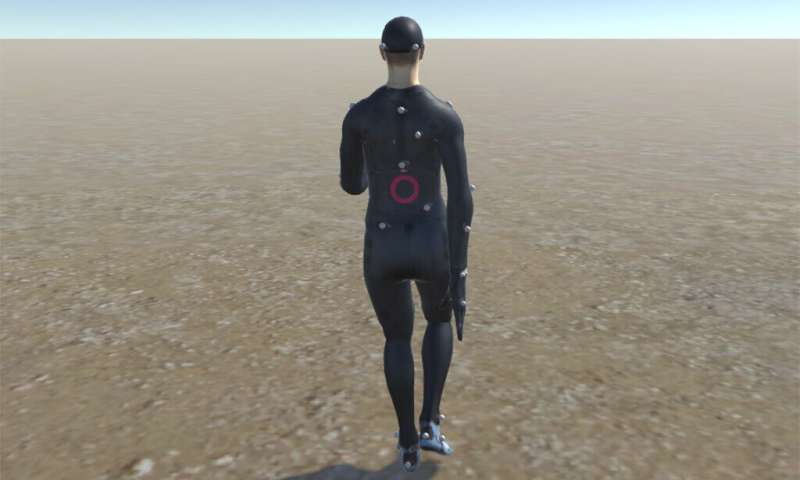
A screenshot of the avatar that patients would follow. Credit: University of Warwick
Virtual reality could help physiotherapy patients complete their exercises at home successfully thanks to researchers at WMG, University of Warwick, who managed to combine VR technology with 3-D motion capture.
07 mar 2020--Currently prescribed physiotherapy often requires patients to complete regular exercises at home. Outside of the clinic, patients rarely receive any guidance other than a leaflet of sketches or static photographs to instruct them how to complete their exercises. This leads to poor adherence, with patients becoming anxious about not getting the exercise right, or simply getting bored by the repetitiveness of the movements.
The advent of consumer virtual reality technology combined with 3-D motion capture allows real movements to be accurately translated onto an avatar that can be viewed in a virtual environment. Researchers at the Institute of Digital Healthcare, WMG, University of Warwick are investigating whether this technology can be used to provide guidance to physiotherapy patients, by providing a virtual physiotherapist in the home to demonstrate the prescribed exercises.
Their paper, 'Timing and correction of stepping movements with a virtual reality avatar' published today the 28th of February, in the Journal PLOS ONE, has focused on whether people are able to accurately follow the movements of a virtual avatar.
Researchers had to investigate whether people were able to accurately coordinate and follow the movements of an avatar in a virtual environment. They asked participants to step in time with an avatar viewed through a VR headset.
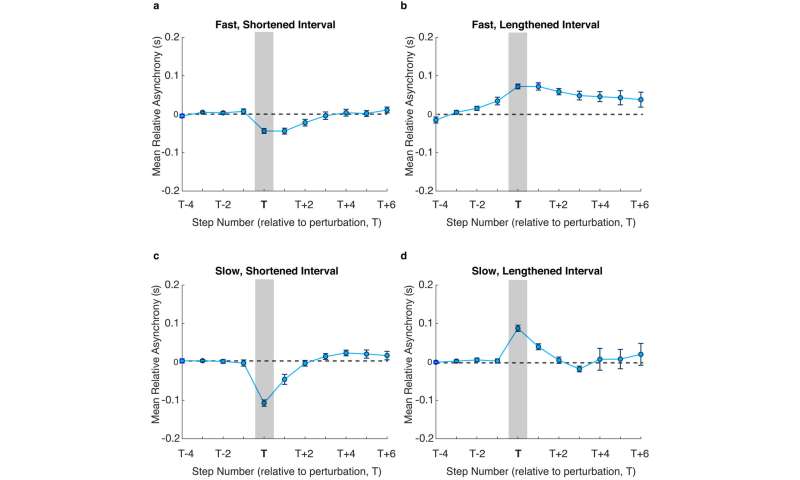
Unknown to the participants, the researchers subtly slowed down or speeded up one of the avatar's steps, such that the participants would have to correct their own stepping movement to stay in time. The effect this correction had on their step timing and synchronisation with the avatar was measured.
Physiotherapy could be done at home using virtual reality
The key findings displayed in a graph. Credit: University of Warwick
Lead author, Omar Khan from WMG, University of Warwick commented:
"If participants were observed to correct their own stepping to stay in time with the avatar, we knew they were able to accurately follow the movements they were observing.
"We found that participants struggled to keep in time if only visual information was present. However, when we added realistic footstep sounds in addition to the visual information, the more realistic multisensory information allowed participants to accurately follow the avatar."
Dr. Mark Elliott, Principal investigator on the project at WMG, University of Warwick added:
"There is huge potential for consumer VR technologies to be used for both providing guidance to physiotherapy exercises, but also to make the exercises more interesting. This study has focused on the crucial question of how well people can follow a virtual guide."
Prof. Theo Arvanitis, co-author and Director of the Institute of Digital Healthcare, said:
"Our work and digitally-enabled technological solution can underpin transformative health innovations to impact the field of physiotherapy, and have a direct benefit to patients' rehabilitation. "We now plan to investigate other types of movements working closely in partnership with physiotherapists, to establish the areas of physiotherapy that will benefit most from this technology."

More information: PLOS ONE (2020). journals.plos.org/plosone/arti … journal.pone.0229641
Journal information: PLoS ONE 
Provided by University of Warwick 
Wearable sensor powered by AI predicts worsening heart failure before hospitalization

Wearable sensor powered by AI predicts worsening heart failure before hospitalization
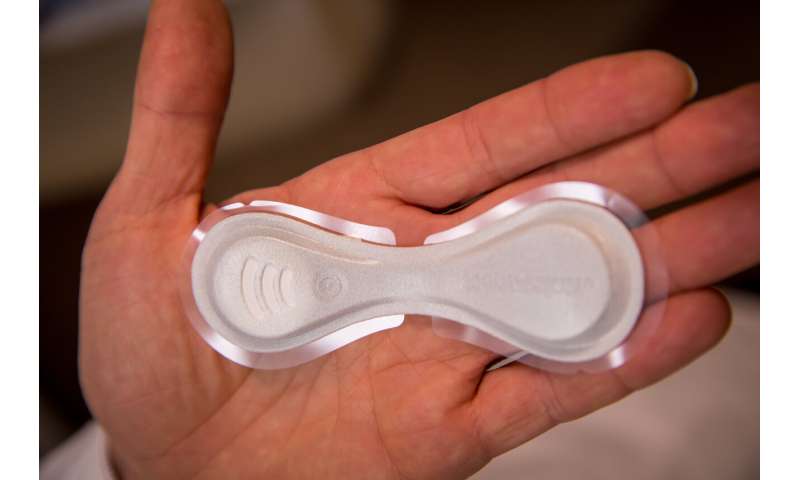
Wearable sensors like this one could help doctors remotely detect cardiovascular changes in heart failure patients days before a crisis occurs. Credit: Charlie Ehlert/University of Utah Health
A new wearable sensor that works in conjunction with artificial intelligence technology could help doctors remotely detect critical changes in heart failure patients days before a health crisis occurs and could prevent hospitalization, according to a study led by University of Utah Health and VA Salt Lake City Health Care System scientists. The researchers say the system could eventually help avert up to one in three heart failure readmissions in the weeks following initial discharge from the hospital and help patients sustain a better quality of life.
07 mar 2020--"This study shows that we can accurately predict the likelihood of hospitalization for heart failure deterioration well before doctors and patients know that something is wrong," says the study's lead author, Josef Stehlik, M.D., M.P.H, co-chief of the advanced heart failure program at U of U Health.
"Being able to readily detect changes in the heart sufficiently early will allow physicians to initiate prompt interventions that could prevent rehospitalization and stave off worsening heart failure," adds Stehlik, who also serves as medical director of the heart failure and heart transplant program at George E. Wahlen VA Medical Center in Salt Lake.
The study appears in Circulation: Heart Failure, an American Heart Association journal.
About 6.2 million Americans live with heart failure and it is the top hospital discharge diagnosis in the U.S. Up to 30% of these patients will likely be readmitted to the hospital within 90 days of discharge with recurrent symptoms including shortness of breath, fatigue and fluid buildup. In many cases, hospitalization diminishes a patient's ability to care for themselves independently.
"Those individuals who have repeated hospitalizations for heart failure have significantly higher mortality" says Biykem Bozkurt, M.D., Ph.D., a study co-author, director of the Winters Center for Heart Failure Research at the Baylor College of Medicine in Houston. "Even if patients survive, they have poor functional capacity, poor exercise tolerance and low quality of life after hospitalizations. This patch, this new diagnostic tool, could potentially help us prevent hospitalizations and decline in patient status."
The researchers followed 100 heart failure patients, average age 68, who were diagnosed and treated at four VA hospitals in Salt Lake City, Utah; Houston, Texas; Palo Alto, California; and Gainesville, Florida. After discharge, participants wore an adhesive sensor patch on their chests 24 hours a day for up to three months. The sensor monitored continuous electrocardiogram (ECG) and motion of each subject.
This information was transmitted from the sensor via Bluetooth to a smartphone and then passed on to an analytics platform, developed by PhysIQ, on a secure server, which derived heart rate, heart rhythm, respiratory rate, walking, sleep, body posture and other normal activities. Using artificial intelligence, the analytics established a normal baseline for each patient. When the data deviated from normal, the platform generated an indication that the patient's heart failure was getting worse.
Overall, the system accurately predicted the impending need for hospitalization more than 80 percent of the time. On average, this prediction occurred 10.4 days before a readmission took place (median 6.5 days).
"There's a high risk for readmission in the 90 days after initial discharge," Stehlik says. "If we can decrease this readmission rate through monitoring and early intervention, that's a big advance. We're hoping even in patients who might be readmitted that their stays are shorter, and the overall quality of their lives will be better with the help of this technology."
Next, the researchers plan to conduct a large clinical trial that will not only use the system to alert doctors of changes in a patient's condition but also track if early intervention based on these alerts lead to fewer rehospitalizations for heart failure.

Explore further
Heart failure readmissions reduced with new optimization approach

More information: Circulation: Heart FailureDOI: 10.1161/CIRCHEARTFAILURE.119.006513
Provided by University of Utah Health Sciences

Friday, March 06, 2020

Coronavirus mutations 'no cause for alarm'

Coronavirus mutations ‘no cause for alarm’
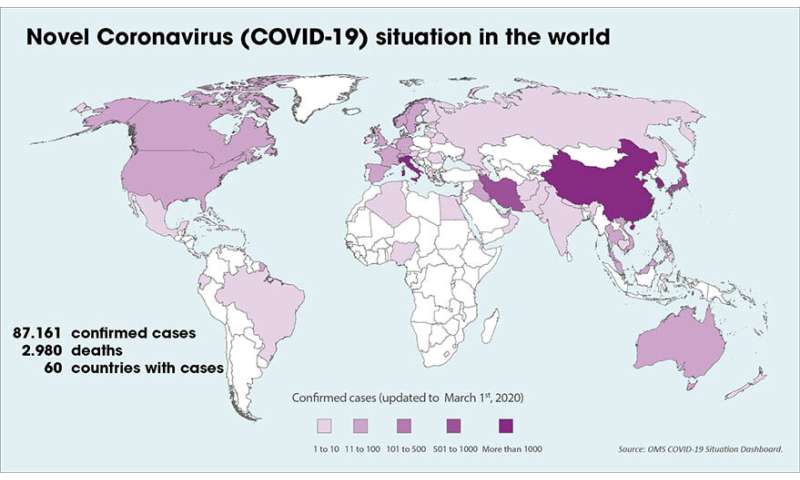
Coronavirus COVID-19 around the world, as of March 1, 2020. Credit: Data from COVID-19 Situation Dashboard
Mutations discovered in the first Brazilian case of coronavirus are no cause for alarm, a leading virologist says, as the virus seems to be remaining stable enough for a single vaccine to work.
06 mar 2020--"Nothing has occurred that is major and this virus appears to be stable," David Heymann, professor of infectious disease epidemiology at London School of Hygiene and Tropical Medicine, tells SciDev.Net.
"Small mutations are normal, especially with RNA [Ribonucleic acid] viruses."
In under 48 hours, genetic analysis was performed on a sample from a 61-year-old man from São Paulo, who returned from Italy with a confirmed diagnosis of severe acute respiratory syndrome coronavirus type 2 (SARS-CoV-2).
According to the researchers, this is the first complete genome analysis of the virus found in Lombardy, the heart of Italy's coronavirus outbreak.
Preliminary genetic analysis indicated the genome differs by three mutations from the original Wuhan reference strain.
Despite the mutations, a vaccine would likely be effective for multiple strains of COVID-19, Heymann says.
When developing a vaccine, "we look for the parts of the virus that are most sustained," Heymann explained.
Scientists are still learning about the virus, but it is evolving in a way that the strains can be traced back to the initial patient in China's Hubei province, he says.
A report on the data from Brazil was published Friday by virological.org, a forum for the analysis and interpretation of virus molecular evolution and epidemiology.
"Continued monitoring of new suspected cases will be critical to monitor new virus importations in Brazil and also to identify initial clusters of local transmission in the country," the researchers said.
The virus genome was sequenced at the Adolfo Lutz Institute under the scope of the Brazil-UK Centre for Arbovirus Discovery, Diagnosis, Genomics and Epidemiology (CADDE).
"We live in a global world where sharing information and knowledge during epidemic outbreaks, especially in public health emergencies, is crucial for us to have answers for the rapid control of these outbreaks," said Nuno Rodrigues Faria, from the University of Oxford, who is a coordinator of CADDE and co-author of the report on the Lombardy genome.
"We need good resources to allow dialogue, collaborations and information exchange, because only by working together can we find faster solutions to public health problems."
Ana Tereza Vasconcelos, from Rio de Janeiro's National Laboratory of Scientific Computing, who did not participate in the study, told SciDev.Net the quick response after diagnosis "shows that we [in Brazil] have the ability to act in real time and face various epidemics."
Vasconcelos says that in addition to helping scientists understand how the  is spreading throughout the world, genome sequencing is vital for the development of diagnostic tests and vaccines.

More information: Report on data from Brazil: virological.org/t/first-cases- … s-3rd-march-2020/409
Provided by SciDev.Net

Predicting the COVID-19 outbreak: How AI connects the dots to warn about disease threats


Predicting the coronavirus outbreak: How AI connects the dots to warn about disease threats
Connecting the dots. Credit: majcot/Shutterstock.com
Canadian artificial intelligence firm BlueDot has been in the news in recent weeks for warning about the new coronavirus days ahead of the official alerts from the Centers for Disease Control and Prevention and the World Health Organization. The company was able to do this by tapping different sources of information beyond official statistics about the number of cases reported.
06 mar 2020--BlueDot's AI algorithm, a type of computer program that improves as it processes more data, brings together news stories in dozens of languages, reports from plant and animal disease tracking networks and airline ticketing data. The result is an algorithm that's better at simulating disease spread than algorithms that rely on public health data—better enough to be able to predict outbreaks. The company uses the technology to predict and track infectious diseases for its government and private sector customers.
Traditional epidemiology tracks where and when people contract a disease to identify the source of the outbreak and which populations are most at risk. AI systems like BlueDot's model how diseases spread in populations, which makes it possible to predict where outbreaks will occur and forecast how far and fast diseases will spread. So while the CDC and laboratories around the world race to find cures for the novel coronavirus, researchers are using AI to try to predict where the disease will go next and how much of an impact it might have. Both play a key role in facing the disease.
However, AI is not a silver bullet. The accuracy of AI systems is highly dependent on the amount and quality of the data they learn from. And how AI systems are designed and trained can raise ethical issues, which can be particularly troublesome when the technologies affect large swathes of a population about something as vital as public health.
It's all about the data
Traditional disease outbreak analysis looks at the location of an outbreak, the number of disease cases and the period of time—the where, what and when—to forecast the likelihood of the disease spreading in a short amount of time.
More recent efforts using AI and data science have expanded the what to include many different data sources, which makes it possible to make predictions about outbreaks. With the advent of Facebook, Twitter and other social and micro media sites, more and more data can be associated with a location and mined for knowledge about an event like an outbreak. The data can include medical worker forum discussions about unusual respiratory cases and social media posts about being out sick.
Much of this data is highly unstructured, meaning that computers can't easily understand it. The unstructured data can be in the form of news stories, flight maps, messages on social media, check ins from individuals, video and images. On the other hand, structured data, such as numbers of reported cases by location, is more tabulated and generally doesn't need as much preprocessing for computers to be able to interpret it.
Newer techniques such as deep learning can help make sense of unstructured data. These algorithms run on artificial neural networks, which consist of thousands of small interconnected processors, much like the neurons in the brain. The processors are arranged in layers, and data is evaluated at each layer and either discarded or passed onto the next layer. By cycling data through the layers in a feedback loop, a deep learning algorithm learns how to, for example, identify cats in YouTube videos.
Researchers teach deep learning algorithms to understand unstructured data by training them to recognize the components of particular types of items. For example, researchers can teach an algorithm to recognize a cup by training it with images of several types of handles and rims. That way it can recognize multiple types of cups, not just cups that have a particular set of characteristics.
Any AI model is only as good as the data used to train it. Too little data and the results these disease-tracking models deliver can be skewed. Similarly, data quality is critical. It can be particularly challenging to control the quality of unstructured data, including crowd-sourced data. This requires researchers to carefully filter the data before feeding it to their models. This is perhaps one reason some researchers, including those at BlueDot, choose not to use social media data.
One way to assess data quality is by verifying the results of the AI models. Researchers need to check the output of their models against what unfolds in the real world, a process called ground truthing. Inaccurate predictions in public health, especially with false positives, can lead to mass hysteria about the spread of a disease.
AI for the common good
AI holds great promise for identifying where and how fast diseases are spreading. Increasingly, data scientists are using these techniques to predict the spread of diseases. Similarly, researchers are using these techniques to model how people move around within cities, potentially spreading pathogens as they go.
However, AI doesn't eliminate the need for epidemiologists and virologists who are fighting the spread on the front lines. For example, BlueDot uses epidemiologists to confirm its algorithm's results. AI is a tool to provide more advanced and more accurate warnings that can enable a rapid response to an outbreak. The key is bringing AI's forecasting and prediction prowess to public health officials to improve their ability to respond to outbreaks.
Even if all else was perfect and AI were a technological silver bullet, the AI field would still face ethical challenges. We have to be more vigilant against phenomena like digital redlining, the computerized version of the practice of denying resources to marginalized populations, that can creep into AI outcomes. Entire regions or demographics could be sidelined, for example, from access to health care if the data used to train an AI system failed to include them.
In the case of AI models collating social media data, digital redlining can exclude entire populations with limited internet access. These populations might not be posting to social media or otherwise creating the digital fingerprints many AI models rely on. This could lead AI systems to make flawed recommendations about where resources are needed.
While researchers are continuously creating new AI algorithms, some of the foundational issues like understanding what's going on inside the models, minimizing false positives and identifying and avoiding ethical issues are not well understood and require more research.
AI is a powerful tool for predicting and forecasting disease spread. However, it's not likely to completely replace the tried-and-true combination of statistics and epidemiology first used when John Snow tracked down and removed the handle from the pump of a cholera-ridden water supply in 1854 London.

Provided by The Conversation 

Chinese researchers detail chest CT findings in coronavirus disease (COVID-19) pneumonia

Chinese researchers detail chest CT findings in coronavirus disease (COVID-19) pneumonia
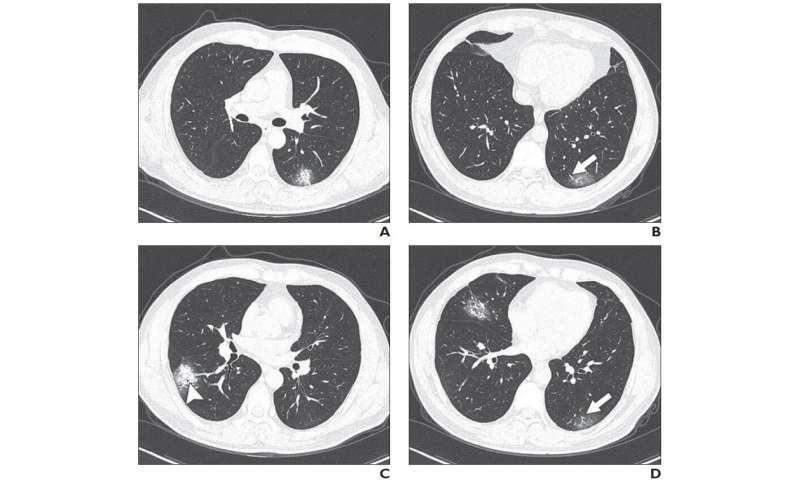
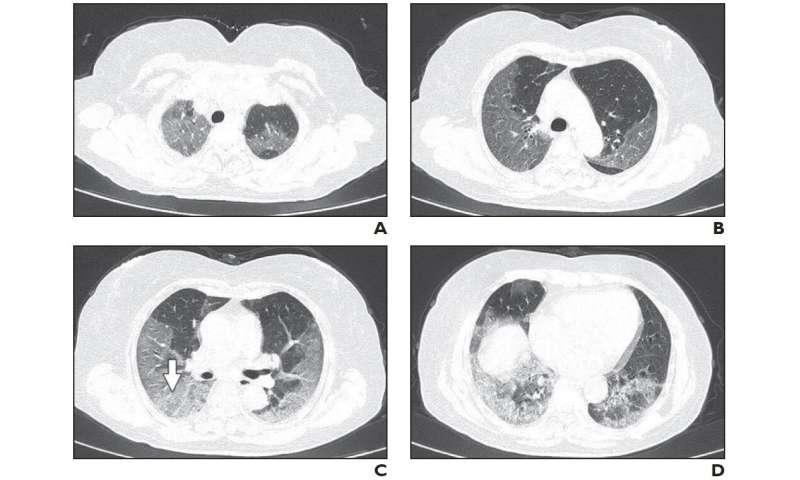
Patient had short-term exposure history to Wuhan and onset symptoms of fever (38°C) and cough. CT was performed on day of admission. A-D, CT images show bilateral multifocal ground-glass opacities (GGO) and mixed GGO and consolidation lesions. Traction bronchiectasis (arrowhead, C) and vascular enlargement (arrow, B and D) are also present. CT involvement score is 5. Credit: American Journal of Roentgenology (AJR)
A multi-center study (n=101) of the relationship between chest CT findings and the clinical conditions of coronavirus disease (COVID-19) pneumonia—published ahead-of-print and open-access in the American Journal of Roentgenology (AJR)—determined that most patients with COVID-19 pneumonia have ground-glass opacities (GGO) (86.1%) or mixed GGO and consolidation (64.4%) and vascular enlargement in the lesion (71.3%).
06 mar 2020--In addition, lead authors Wei Zhao, Zheng Zhong, and colleagues revealed that lesions present on CT images were more likely to have peripheral distribution (87.1%) and bilateral involvement (82.2%) and be lower lung predominant (54.5%) and multifocal (54.5%).
Zhao, Zhong, et al. collected their 101 cases of COVID-19 pneumonia across four institutions in China's Hunan province, comparing clinical characteristics and imaging features between two groups: nonemergency (mild or common disease) and emergency (severe or fatal disease).
Accordingly, most of the cohort (70.2%) were 21-50 years old, and most patients (78.2%) had fever as the onset symptom. Only five patients showed disease associated with a family outbreak.
While the emergency group patients were older than the patients in the nonemergency group, the rate of underlying disease was not significantly different in the two groups—suggesting that viral load could be a better reflection of the severity and extent of COVID-19 pneumonia.
As Zhao and Zhong explained further: "Architectural distortion, traction bronchiectasis, and pleural effusions, which may reflect the viral load and virulence of COVID-19, were statistically different between the two groups and may help us to identify the emergency type disease."
The authors of this AJR article also noted that CT involvement score can help evaluate the severity and extent of COVID-19 pneumonia.
Chinese researchers detail chest CT findings in coronavirus disease (COVID-19) pneumonia
Patient had long-term exposure history to Wuhan and onset symptoms of fever and cough. CT was performed 1 day after admission. A-D, CT images show bilateral diffuse ground-glass opacities and reticulation (arrow, C). CT involvement score is 18. Credit: American Journal of Roentgenology (AJR)


More information: Wei Zhao et al, Relation Between Chest CT Findings and Clinical Conditions of Coronavirus Disease (COVID-19) Pneumonia: A Multicenter Study, American Journal of Roentgenology (2020). DOI: 10.2214/AJR.20.22976
Journal information: American Journal of Roentgenology 
Provided by American Roentgen Ray Society 

Saturday, February 29, 2020

Coronavirus is a breeding ground for conspiracy theories

Coronavirus is a breeding ground for conspiracy theories – here's why that's a serious problem
Credit: Angelina Bambina / Shutterstock
The novel coronavirus continues to spread around the world, with new cases being reported all the time. Spreading just as fast, it seems, are conspiracy theories that claim powerful actors are plotting something sinister to do with the virus. Our research into medical conspiracy theories shows that this has the potential to be just as dangerous for societies as the outbreak itself.
29 feb 2020--One conspiracy theory proposes that the coronavirus is actually a bio-weapon engineered by the CIA as a way to wage war on China. Others are convinced that the UK and US governments introduced the coronavirus as a way to make money from a potential vaccine. Some people even suggest that Bill Gates is sponsoring the coronavirus.
Although many of these conspiracy theories seem far-fetched, the belief that evil powers are pursuing a secret plan is widespread in every society. Often these relate to health. A large 2019 YouGov poll found 16% of respondents in Spain believe that HIV was created and spread around the world on purpose by a secret group or organisation. And 27% of French and 12% of British respondents were convinced that "the truth about the harmful effects of vaccines is being deliberately hidden from the public."
The spread of fake news and conspiracy theories around the coronavirus is such a significant problem that the World Health Organisation (WHO) has created a "myth busters" webpage to try and tackle them.
Spread of conspiracy theories
Research shows that conspiracy theories have a tendency to arise in relation to moments of crisis in society – like terrorist attacks, rapid political changes or economic crisis. Conspiracy theories bloom in periods of uncertainty and threat, where we seek to make sense of a chaotic world. These are the same conditions produced by virus outbreaks, which explains the spread of conspiracy theories in relation to coronavirus.
Similar conditions occurred with the 2015-16 outbreak of Zika virus. Zika conspiracy theories proposed that the virus was a biological weapon rather than a natural occurrence. Research examining comments on Reddit during the Zika virus outbreak found conspiracy talk emerged as a way for people to cope with the extreme uncertainty they felt over Zika.
Trust in the recommendations from health professionals and organisations is an important resource for dealing with a health crisis. But people who believe in conspiracy theories generally do not trust groups they perceive as powerful, including managers, politicians and drug companies. If people do not trust, they are less likely to follow medical advice.
Researchers have shown that medical conspiracy theories have the power to increase distrust in medical authorities, which can impact people's willingness to protect themselves. People who endorse medical conspiracy theories are less likely to get vaccinated or use antibiotics and are more likely to take herbal supplements or vitamins. Plus, they are more likely to say they would trust  from nonprofessionals such as friends and family.
Severe consequences
In light of these results, people who endorse conspiracy theories about the coronavirus may be less likely to follow health advice like frequent hand-cleaning with alcohol-based hand rub or soap, or self-isolating after visiting at-risk areas.
Instead, these people may be more likely to have negative attitudes towards prevention behaviour or use dangerous alternatives as treatments. This would increase the likelihood of the virus spreading and put more people in danger.
Already, we can see "alternative healing approaches" to coronavirus cropping up—some of them very dangerous. Promoters of the popular QAnon conspiracy theory, for example, have said the coronavirus was planned by the so-called "deep state" and claimed the virus can be warded off by drinking bleach.
The spread of medical conspiracy theories can also have severe consequences for other sections of society. For example, during the Black Death in Europe, Jews were scapegoated as responsible for the pandemic. These conspiracy theories led to violent attacks and massacres of Jewish communities all over Europe. The outbreak of the coronavirus has led to a worldwide increase in racist attacks targeted towards people perceived as East Asian.
It is possible to intervene and halt the spread of conspiracy theories, however. Research shows that campaigns promoting counterarguments to medical conspiracy theories are likely to have some success in rectifying conspiracy beliefs. Games such as Bad News, in which people can take the role of a fake news producer, have been shown to improve people's ability to spot and resist misinformation.
Conspiracy theories can be very harmful for society. Not only can they influence people's health choices, they can interfere with how different groups relate to each other and increase hostility and violence towards those who are perceived to be "conspiring." So as well as acting to combat the spread of the coronavirus, governments should also act to stop misinformation and conspiracy theories relating to the virus from getting out of hand.

Provided by The Conversation 

Friday, February 28, 2020

First-ever pathology of the early phase of lung infection with the 2019 novel coronavirus (COVID-19)

patient
Credit: CC0 Public Domain
An international team of clinicians and researchers for the first time have described the pathology of the SARS-CoV-2, or coronavirus, and published their findings in the Journal of Thoracic Oncology, the journal of the International Association for the Study of Lung Cancer.
28 feb 2020--The article's senior author, Shu-Yuan Xiao, M.D., from the University of Chicago Medicine in Chicago, teamed up with a small group of clinicians from the Zhongnan Hospital of Wuhan University, in Wuhan, China.
"This is the first study to describe the pathology of disease caused by SARS-CoV-2, or COVID-19 pneumonina, since no autopsy or biopsies had been performed thus far," Dr. Xiao said. "This would be the only descriptions of early phase pathology of the disease due to this rare coincidence. There would be no other circumstance that this will happen. Autopsies will only show late or end stage changes of the disease."
The article describes two patients who recently underwent lung lobectomies for adenocarcinoma and were retrospectively found to have had COVID-19 at the time of surgery. Pathologic examinations revealed that, apart from the tumors, the lungs of both patients exhibited edema, proteinaceous exudate, focal reactive hyperplasia of pneumocytes with patchy inflammatory cellular infiltration, and multinucleated giant cells. Fibroblastic plugs were noted in airspaces.
"Since both patients did not exhibit symptoms of pneumonia at the time of surgery, these changes likely represent an early phase of the lung pathology of COVID-19 pneumonia," Dr. Xiao said.
CASE 1 was a female patient of 84 years of age who was admitted for treatment evaluation of a tumor measuring 1.5 centimeters in the right middle lobe of the lung. The tumor was discovered on chest CT scan at an outside hospital. She had a past medical history of hypertension for 30 years, as well as type 2 diabetes. Despite comprehensive treatment, assisted oxygenation, and other supportive care, the patient's condition deteriorated, and she died. Subsequent clinical information confirmed that she was exposed to another patient in the same room who was subsequently found to be infected with the 2019 novel coronavirus.
CASE 2 was a male patient of 73 years of age, who presented for elective surgery for lung cancer, in the form of a small in the right lower lobe of the lung. He had a past medical history of hypertension for 20 years, which had been adequately managed. Nine days after lung surgery, he developed a fever with dry cough, chest tightness, and muscle pain. A nucleic acid test for SARS-CoV-2 came back as positive. He gradually recovered and was discharged after twenty days of treatment in the infectious disease unit.
According to the study, these two incidences also typify a common scenario during the earlier phase of the SARS-CoV-2 outbreak, during which a significant number of healthcare providers became infected in hospitals in Wuhan, and patients in the same hospital room were cross-infected, as they were exposed to unknown infectious sources. The presence of early lung lesions days before the patients developed symptoms, corresponds to the long incubation period (usually 3-14 days) of COVID-19. Making it difficult to prevent transmission during the early days of this outbreak, as many healthcare workers in Wuhan became infected, when they were seeing patients without sufficient protection, according to Dr. Xiao. As of today, more than 15 doctors in Wuhan died of COVID-19, from infections while they were taking care of patients. Some of them were previously healthy and as young as 29 years old.
"We believe it is imperative to report the findings of routine histopathology for better understanding of the mechanism by which the SARS-CoV-2 causes lung injury in the unfortunate tens and thousands of patients in Wuhan and worldwide," Dr. Xiao said. Further studies by Dr. Xiao's team and collaborators on COVID-19 pathology through postmortem biopsies are ongoing, which should provide data on the late changes of this disease.

More information: Sufang Tian et al, Pulmonary pathology of early phase 2019 novel coronavirus (COVID-19) pneumonia in two patients with lung cancer, Journal of Thoracic Oncology (2020). DOI: 10.1016/j.jtho.2020.02.010
Journal information: Journal of Thoracic Oncology 
Provided by International Association for the Study of Lung Cancer

Wednesday, February 26, 2020

Brazil confirms Latin America's first coronavirus case

Brazil
Credit: CC0 Public Domain
Brazil's health ministry said on Wednesday a Sao Paulo resident has been diagnosed with the novel coronavirus, the first such case recorded in Latin America.

26 feb 2020--The 61-year-old patient had returned on February 21 from the Lombardy region of Italy, the epicenter of an outbreak in the European country, Brazil's Health Minister Luiz Henrique Mandetta said.
Mandetta said authorities were trying to identify people that had been in contact with the patient as well as his family members.
The man had visited a doctor complaining of flu symptoms. He has been placed in home isolation but is said to be "fine."
Sao Paulo is Brazil's largest city with 12 million inhabitants.
Another 20 cases are under investigation, said health ministry official Wanderson Kleber de Oliveira.
Twelve of those had traveled to Italy while one was in China, the origin of the outbreak.
Before confirming the case, Mandetta had spoken to CBN radio station downplaying the virus as a simple "flu."
"We need to stay calm, it's a flu and we'll overcome it," he said.
However, he added that it was a virus that appeared in a northern hemisphere winter and there was no way to predict how it would react to a southern hemisphere summer.
"It could be better, or worse," he said.
Coronavirus has killed over 2,700 people and infected more than 80,000, the vast majority in China.

© 2020 AFP

Sunday, February 23, 2020

Number of people with dementia is set to double by 2050, according to new report


Despite a marked reduction in the prevalence of dementia, the number of people with dementia is set to double by 2050 according
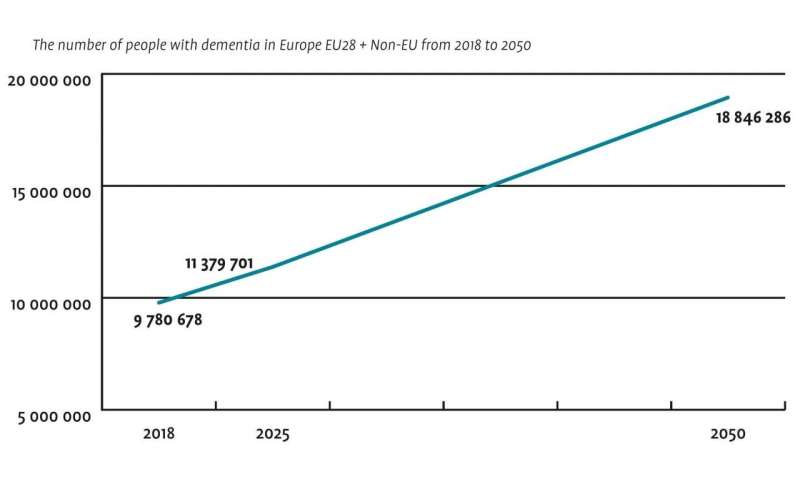
The number of people with dementia in EU28 + Non-EU, from 2018 to 2050. Credit: Alzheimer Europe
Today, at a European Parliament lunch debate hosted by Christophe Hansen MEP (Luxembourg), Alzheimer Europe launched a new report presenting the findings of its collaborative analysis of recent prevalence studies and setting out updated prevalence rates for dementia in Europe.
23 feb 2020--Over the past three decades, a number of significant pieces of work have been undertaken to estimate the prevalence of dementia at a European level, including:
  • EURODEM study in the early 80s (updated in 2000)
  • Alzheimer Europe's project European Collaboration on Dementia—EuroCoDe (2006-2008)
  • ALCOVE, the 1st EU Joint Action on Dementia (2011-2013).
As the most recent of these studies is six years old, Alzheimer Europe recognised the importance of establishing more recent dementia prevalence estimates, using the most up-to-date academic literature on the subject.
The findings presented below are based on a collaborative analysis of prevalence studies published since the conclusion of the EuroCoDe project. A total of 16 studies meeting predefined quality criteria were included in the collaborative analysis.
The key findings of this new Alzheimer Europe report include:
  • For men, there has been a reduction in the prevalence of dementia across all age groups over the past ten years when compared to Alzheimer Europe's 2008 EuroCoDe estimates.
  • For women, apart from the age group of women between 75 and 79 years, there has been a reduction in the prevalence of dementia over the past ten years when compared to EuroCoDe.
  • The number of people living with dementia in the European Union (EU27) is estimated to be 7,853,705 and in European countries represented by AE members, 9,780,678. Compared to its earlier estimates, this constitutes a significant reduction from 8,785,645 for the EU27 and from 10,935,444 for the broader European region.Women continue to be disproportionately affected by dementia with 6,650,228 women and 3,130,449 men living with dementia in Europe.
  • The number of people with dementia in Europe will almost double by 2050, increasing to 14,298,671 in the European Union and 18,846,286 in the wider European region.

Alzheimer Europe's Yearbook also highlighted significant limitations in the available research into dementia prevalence and a lack of research into:
  • the prevalence of younger people with dementia (i.e. those aged under 65)
  • the prevalence of different types of dementia
  • the number of people affected by different stages of dementia including mild cognitive impairment
  • the prevalence of dementia of people from ethnic minority groups.
Commenting on the findings, Alzheimer Europe Executive Director, Jean Georges, said:
"It is promising to see that healthier lifestyles, better education and improved control of cardiovascular risk factors seem to have contributed to a reduction of the prevalence of dementia. However, our report also demonstrates that the number of people living with the condition is set to increase substantially in the years ahead, which will only place greater pressure on care and support services unless better ways of treating and preventing dementia are identified. If people with dementia, their families and carers are to receive the high-quality and person-centred care they need, governments must ensure their health and care systems are ready to meet this demand and greater investments in research into the treatment and prevention of dementia are needed."

More information: www.alzheimer-europe.org/Publi … eimer-Europe-Reports
Provided by Alzheimer Europe 

Saturday, February 22, 2020

Telemonitoring plus phone counseling lowers blood pressure among black and Hispanic stroke survivors


blood pressure
Credit: CC0 Public Domain
Adding phone-based lifestyle counseling to home blood pressure telemonitoring is an effective strategy to improve long-term blood pressure control among minority stroke survivors with uncontrolled high blood pressure, according to late breaking science presented today at the American Stroke Association's International Stroke Conference 2020.
22 feb 2020--Uncontrolled high blood pressure, or hypertension, is a major predictor of racial disparities in stroke outcomes in the United States. Improving blood pressure control among minority stroke survivors is key to secondary stroke prevention. Although home blood pressure telemonitoring and lifestyle counseling by nurses have proven effective in controlling blood pressure, this study is the first time this strategy has been tested specifically among minority stroke survivors.
Researchers randomly assigned 450 black and Hispanic stroke survivors with uncontrolled blood pressure (average age 62; 51% black; 44% women) to home blood pressure telemonitoring alone with monthly feedback to primary care providers, or home blood pressure telemonitoring plus telephone-based counseling by nurses. The nurses counseled patients via telephone on lifestyle behaviors and strategies to improve their blood pressure and reported the blood pressure readings to the patient's doctor.
After 12 months, patients who received the home blood pressure telemonitoring plus lifestyle counseling by nurses, experienced a 14-point reduction in their systolic blood pressure, while those who received only home blood pressure telemonitoring had only a 5-point drop in their systolic blood pressure.
"The magnitude of reduction in systolic blood pressure for those who received lifestyle counseling and support was much larger than we expected," said Gbenga Ogedegbe, M.D., M.P.H., lead study author, director, Division of Health and Behavior and the Center for Healthful Behavior Change in the Department of Population Health at NYU Grossman School of Medicine in New York City. "The reduction in systolic blood pressure of 14 mmHg among these patients would be expected to translate to at least a 20% decrease in stroke deaths and 34% fewer secondary strokes. These are pretty robust findings."
Ogedegbe said, "The results suggest that hypertension management in patients at high risk for recurrent stroke should involve telephone-based lifestyle counseling by a non-physician health worker coupled with home blood pressure telemonitoring. The role of the nurse case manager could be played by the patient's pharmacist or other trained non-physician health workers."

Provided by American Heart Association